World ‘population bomb’ may never go off as feared, finds study | Population

World ‘population bomb’ may never go off as feared, finds study | Population

The long-feared “population bomb” may not go off, according to the authors of a new report that estimates that human numbers will peak lower and sooner than previously forecast.

The study, commissioned by the Club of Rome, projects that on current trends the world population will reach a high of 8.8 billion before the middle of the century, then decline rapidly. The peak could come earlier still if governments take progressive steps to raise average incomes and education levels.

The new forecasts are good news for the global environment. Once the demographic bulge is overcome, pressure on nature and the climate should start to ease, along with associated social and political tensions.

But the authors caution that falling birthrates alone will not solve the planet’s environmental problems, which are already serious at the 8 billion level and are primarily caused by the excess consumption of a wealthy minority.

Declining populations can also create new problems, such as a shrinking workforce and greater stress on healthcare associated with an ageing society, as countries like Japan and South Korea are finding.

One of the authors of the report, Ben Callegari, said the findings were cause for optimism – but there was a catch. “This gives us evidence to believe the population bomb won’t go off, but we still face significant challenges from an environmental perspective. We need a lot of effort to address the current development paradigm of overconsumption and overproduction, which are bigger problems than population.”

Previous studies have painted a grimmer picture. Last year, the UN estimated the world population would hit 9.7 billion by the middle of the century and continue to rise for several decades afterwards.

The new projection, released on Monday, was carried out by the Earth4All collective of leading environmental science and economic institutions, including the Potsdam Institute for Climate Impact Research, Stockholm Resilience Centre and the BI Norwegian Business School. They were commissioned by the Club of Rome for a followup to its seminal Limits to Growth study more than 50 years ago.

The report is based on a new methodology which incorporates social and economic factors that have a proven impact on birthrate, such as raising education levels, particularly for women, and improving income. It sketches out two scenarios depending on the extent to which such policies are pursued.

In the business-as-usual case, it foresees existing policies being enough to limit global population growth to below 9 billion in 2046 and then decline to 7.3 billion in 2100. This, they warn, is too little too late: “Although the scenario does not result in an overt ecological or total climate collapse, the likelihood of regional societal collapses nevertheless rises throughout the decades to 2050, as a result of deepening social divisions both internal to and between societies. The risk is particularly acute in the most vulnerable, badly governed and ecologically vulnerable economies.”

skip past newsletter promotion

In the second, more optimistic scenario – with governments across the world raising taxes on the wealthy to invest in education, social services and improved equality – it estimates human numbers could hit a high of 8.5 billion as early as 2040 and then fall by about a third to about 6 billion in 2100. Under this pathway, they foresee considerable gains by mid-century for human society and the natural environment.

“By 2050, greenhouse gas emissions are about 90{515baef3fee8ea94d67a98a2b336e0215adf67d225b0e21a4f5c9b13e8fbd502} lower than they were in 2020 and are still falling,” according to the report. “Remaining atmospheric emissions of greenhouse gases from industrial processes are increasingly removed through carbon capture and storage. As the century progresses, more carbon is captured than stored, keeping the global temperature below 2C above pre-industrial levels. Wildlife is gradually recovering and starting to thrive once again in many places.”

This article was amended on 27 March 2023. An earlier version gave a figure of 7.8 billion for current world population; that should have said 8 billion. It also referred to an estimated decrease of “more than a third” from 8.5 billion to 6 billion people; that fall would be just under a third.

‘A swipe at fashion capitalism’: Telfar’s experiment lets customers set prices | Fashion

‘A swipe at fashion capitalism’: Telfar’s experiment lets customers set prices | Fashion

Demi Elder owns 16 Telfar bags. The 31-year-aged from Crown Heights, Brooklyn, tries to catch each drop she can from the brand name, which has been name-checked in Beyoncé lyrics and seen on everyone from Lil Nas X to Alexandria Ocasio-Cortez.

“I love that it is Black-owned, unisex, thoroughly inclusive, and intended for all genders,” she claims.

The brand’s rectangular browsing luggage are notably well-liked, designed in 38 hues and a few dimensions that array in price from $150 to $257 new hues provide out in seconds.

On Monday, shortly soon after noon, Elder extra to her selection. In its place of baggage, she hit the internet site for its most current garments fall, and uncovered easy black T-shirts emblazoned with the brand’s emblem for $50, cropped crew-necks for $65, and “gown-duration basketball tops” at $150 just about every. The bulk of things experienced sold out in the hour.

Elder still left Telfar.internet feeling content, bagging a pair of heather gray sweatpants for the wholesale rate of $80. That was about $240 significantly less than the total price tag of the pants, mainly because Elder was browsing Telfar’s “live pricing” experiment.

Demi Elder at home with her collection of Telfar pieces.
Demi Elder at property with her collection of Telfar parts. Photograph: Demi Elder

The model let consumers decide the cost of 29 new items of sportswear by listing them at wholesale selling prices at midday on Monday. (Wholesale can expense in excess of 50{515baef3fee8ea94d67a98a2b336e0215adf67d225b0e21a4f5c9b13e8fbd502} much less than what shoppers would generally spend on the brand’s web site.) As consumers shopped, the wholesale price tag went up in modest increments until eventually the inventory offered out. The additional people who extra a piece to their cart, the a lot more possible buyers would get it at a discount. For occasion: the sweatpants Elder obtained would have cost $320 full value. The rate set by client demand would become the “forever price” for all restocks of that item likely ahead.

By early Monday afternoon, most of the stock experienced sold out. Anybody who missed the option can appear back again up coming 7 days: new merchandise will fall each individual 7 days by 24 April.

As Babak Radboy, resourceful director of Telfar, instructed Rapid Business, the brand’s stunt reveals just how arbitrary some of the fees in trend can be. Radboy and Telfar Clemens, the manufacturer founder, came up with the idea when they were being designing a hoodie and “realized the brand could charge $100 or $600 for it”.

man in front of plants
Telfar Clemens, founder of the manufacturer. Photograph: Eugene Gologursky/Getty Visuals for Funds App

“If we charge $600 for the hoodie, then only a single course of human being would invest in it – the individual who can afford it,” Radboy informed the publication. So they came up with a pricing product to assistance maintain things economical and accessible to the widest swath of consumers. “Many models use rate as a barrier to entry,” Clemens said. “I hardly ever needed that for my brand name.” In a way, the new pricing product exposes just how considerably the classic manner procedure marks up garments.

This, clearly, goes from decades of style world logic that in-demand from customers issues need to have to price tag plenty of dollars. “Most models use the recognition of a item to maximize charges and check the restrict of shopper loyalty,” claimed Louis Pisano, a style reporter for Nylon France. “But all those manufacturers are not Telfar. When Telfar lowers the rates of preferred goods, it doesn’t have the same detrimental impact and fall in model notion as it would for other buzzy names.”

Rachel Tashjian, the style information director at Harper’s Bazaar, claimed that Radboy after explained to her that he and Clemens set out to make “an avant-garde Fashion Nova”. Most couture houses would not dare to review themselves to a quickly style empire, and that’s section of Telfar’s appeal.

“Dynamic pricing is just amazing, and a rare legitimate swipe at capitalism in manner, to make a procedure in which the bestselling things in a collection are the most economical,” Tashjian said.

Andrea Bossi, a author at Fashionista, thinks the fall is a different way for the brand name to hoopla up its fanbase, which sees alone less as prospects and much more as a group. “I surprise if this model is an ode or a adore letter to their enthusiasts. Even nevertheless the brand name is about accessibility, you just cannot often drop $200 for a bag.”

Balancing couture and currently being neighborhood-oriented can be tricky. When Telfar’s buzzy faux leather Circle bag was unveiled very last year, on the web critics spoke out against its $567 price tag tag, expressing the accent went against the brand’s initial ethos. But other individuals defended Telfar, including the editor Shelton Boyd-Griffith, who wrote: “The conversation all around Telfar’s Circle bag value position is loaded since it poses the perilous false impression that Black luxury models just can’t expand and scale.”

The debacle did not suppress interest in the brand. Radboy explained to the Guardian that Telfar “will in all probability try reside pricing with our duffels and circle bags” at some place in the long term. Why begin this experiment with clothing? Radboy explained that the luggage have been previously ubiquitous, specially in resourceful circles.

“We want the dresses to have the opportunity to do the exact same,” he mentioned. “If you wander five blocks in any course in New York, you will see a Telfar bag. We want to see the complete glance out here.”

Alexandria Ocasio-Cortez leaves the Capitol toting a Telfar bag.
Alexandria Ocasio-Cortez leaves the Capitol toting a Telfar bag. Photograph: Tom Williams/CQ-Roll Contact, Inc/Getty Visuals

There are also logistical factors it tends to make perception for Telfar to let customers established their possess price ranges. The model will help the model collect data about what pieces clients want the most. “This will give us info about how substantially of every merchandise we should purchase in the long run,” Radboy instructed Rapid Organization. “And the greater the order, the more affordable it fees to manufacture.”

Considering the fact that commencing his eponymous line in 2005, Clemens has constantly dismissed the thought that significant style was synonymous with costly goods. Clemens, born in Queens to Liberian immigrant mother and father, embraces operating-class references in his style and design. He’s created uniforms for White Castle staff and held style week occasions at Rainbow Stores, an cheap retail chain. Admirers generally issue to the brand’s motto as its guiding light-weight, when it arrives to inclusion: “It’s not for you, it is for everyone.”

Announcing new roles on the technology team

Announcing new roles on the technology team

Comment

Announcement from Organization Editor Lori Montgomery:

We are pleased to announce a new editing construction on the Small business desk aimed at elevating the operate of our growing technological know-how group, a important pillar of Washington Article journalism. This new framework will develop clearer lanes of authority on the tech workforce, while concentrating clean focus on our superb personalized finance protection.

Christina Passariello will turn into deputy small business editor for know-how and personalized finance, operating alongside Deputy Company Editor Damian Paletta, who will keep duty for economics, well being coverage and breaking information. In her new position, Christina will go on to oversee the technology crew, assisting to set tactic, information coverage and progress our most bold projects. She also will acquire on the particular finance portfolio, drawing on her knowledge launching Help Desk, our signature private tech vertical, to broaden and elevate the team we’re making close to our award-successful own finance columnist, Michelle Singletary. In addition, Christina will guide an inside organization activity drive concentrated on how the AI revolution will have an impact on The Post’s journalism and its digital approach, particularly research. In this initiative, which is individual from our news protection of AI, she will function intently with Sally.

Christina has led The Post’s engineering staff for 5 years, overseeing a period of time of quick development and accomplishment. Amongst other achievements, she edited “Secret Everyday living of Your Data,” a series by columnist Geoff Fowler that received a 2020 Loeb Award for commentary. She also edited a groundbreaking 2022 tale by reporter Nitasha Tiku about a Google engineer who assumed the company’s chatbot experienced come to existence. And she conceived our unique technique to personalized tech protection, casting Help Desk as an initiative that would empower tech end users instead of advertising and marketing the most current gadget. Right before The Article, Christina used 14 decades at the Wall Avenue Journal, wherever she was deputy tech editor and a overseas correspondent in Paris, between other roles. A graduate of the University of California at Berkeley and a John S. Knight fellow at Stanford, she is centered in San Francisco.

Various of the tech editors, who will carry on to report to Christina, also will presume new roles.

Laura Stevens will become technologies sector editor, driving news protection across the tech group, which encompasses just about 50 percent the Enterprise staff and has outposts in Washington, New York, Florida and Texas. In this part, Laura will condition our day-to-day report, pushing to established the news agenda on our most critical lines of protection, from the increase of synthetic intelligence to the progressively grim financial periods in Silicon Valley, although wanting for alternatives to illuminate other important developments, these as the modern collapse of Silicon Valley Lender. Laura will continue to direct a crew of reporters trained on providing scoops and organization on the evolution of the tech giants – like Apple, Amazon and Google – as perfectly as the drama at Tesla, Twitter and other firms owned by Elon Musk, with a sharp target on stories that reveal how Significant Tech influences modern society and our life.

Due to the fact joining The Post in 2019 as deputy tech editor, Laura has founded herself as a tenacious competitor and valued mentor to reporters throughout the Enterprise team keen to develop sources inside of corporate America. Among other achievements, Laura aided manual our sweeping 2021 dive into the Frances Haugen Fb Papers, which unveiled how the social media firm uncovered susceptible communities all around the globe to a cocktail of dangerous content. Laura also drove our market-primary coverage of Elon Musk, his Twitter takeover and his troubled tenure at Tesla. Just before coming to The Write-up, Laura used nine several years at the Wall Avenue Journal, covering Amazon in San Francisco, UPS and FedEx in Atlanta, and Deutsche Lender in Frankfurt, Germany. She also labored at the Arkansas Democrat-Gazette. Laura is graduate of the College of Central Florida and a Fulbright scholar who speaks fluent German.

Yun-Hee Kim, our personal technologies editor and the founding editor of Assistance Desk, will continue to oversee our stellar private tech coverage even though functioning with me and Christina to develop initiatives. Yun-Hee has exhibited fantastic ability at scaling and expanding the Support Desk mission and guiding a team of reporters and editors who tap into the requires of our viewers in refreshing, innovative and urgent strategies. In the coming yr, Yun-Hee will develop on this results by top an growth of The Post’s ambitions to extend our brand name digitally to boost the personalities of our tech reporters and editors in San Francisco, New York and Washington and to experiment with exclusive written content, such as video clip, social media, podcasts and live situations, aimed at cementing The Post’s name as a destination for tech coverage.

Yun-Hee joined The Publish in June 2021 and practically instantly launched Assist Desk, constructing it into a must-go through location for readers on the lookout to make knowledgeable options about the engineering in their life. Less than her leadership, the Help Desk crew has shipped actionable advice on these types of subject areas as whether or not you actually should give up Fb or TikTok as properly as deep-dive stories of nationwide value on the privacy implications of the repeal of Roe vs. Wade and the knowledge-sharing practices of health and fitness apps. Working with colleagues throughout the newsroom, Yun-Hee has championed new story formats, top her crew to create award-winning interactive quizzes engaging and useful social films a new tech column sequence “The Tech Friend,” a new 2 times-weekly newsletter and our just-released project on the long run of perform. She has worked at the Wall Avenue Journal and Dow Jones, where she expended more than two decades as a reporter and editor in New York, Hong Kong and Seoul masking know-how and small business and foremost news groups. Yun-Hee is a graduate of Columbia Journalism School.

Lisa Bonos, our assistant tech editor, will proceed to provide enhancing assistance on a variety of stories, from breaking news to attributes. Given that joining the crew in the tumble, Lisa has guided our coverage of crypto, which include the implosion of the FTX cryptocurrency exchange, the downfall of FTX founder Sam Bankman-Fried and the legal threats dealing with these types of superstar crypto promoters as Tom Brady. Lisa also frequently pitches in as a reporter, masking the assault on Paul Pelosi, a mass shooting in 50 {515baef3fee8ea94d67a98a2b336e0215adf67d225b0e21a4f5c9b13e8fbd502} Moon Bay, Calif., and Stanford’s fascination with SBF.

In advance of joining the tech workforce, Lisa worked in the Design and style portion, covering dating and relationships. In almost 18 decades at The Article, she also has labored as an assistant editor on Outlook and a multiplatform editor on the Feeling and Small business desks. Lisa, a graduate of UCLA, will report to Laura.

Mark Seibel, our indispensable tech plan editor, will continue being focused on the intersection concerning tech firms and governing administration regulation, privacy and surveillance, digital threats and election protection. In four several years at The Put up, Mark has established himself as a grasp of investigative company, in particular swift-reaction tales that both illuminate occasions in the information or anticipate them. Beneath his management, his reporters developed a single of the earliest items on the increase of TikTok, a thorough search at the surveillance networks that aided the FBI catch the Jan. 6 rioters and a revelatory tale about the astonishing failure of the Jan. 6 Home committee to address social media’s part in whipping up the mob that assaulted the U.S. Capitol in 2021. Right after Russia invaded Ukraine, Mark’s reporters sent scoops about the devastated Russian economic system, Ukraine’s controversial use of social media to undermine Russian President Vladimir Putin’s war and the part of satellites in the conflict. Mark also was a principal editor on the Pegasus Undertaking, a 2021 investigation into spyware used to hack journalists, human rights activists and two ladies near to murdered Saudi journalist Jamal Khashoggi, which won a George Polk Award.

Mark arrived to The Article from BuzzFeed News, where by he was countrywide security editor, taking care of reporters from San Francisco to Brussels. Ahead of that, he put in approximately 35 a long time at the Miami Herald and its associated Washington bureau (managed to start with by Knight-Ridder and afterwards McClatchy), wherever he led reporting initiatives that received three Pulitzer Prizes, 3 Polk awards and a few Abroad Press Club awards. He has also worked at the Los Angeles Periods, the San Jose Mercury Information, the Dallas Instances Herald and the Dallas Early morning Information. Mark graduated from Southern Methodist College and examined Russian as a Nieman fellow.

Alexis Sobel Fitts will become tech enterprise editor, a new job that recognizes her enormous expertise for executing and elevating our most formidable business. In addition to working with other tech editors to shape and progress our greatest thoughts, Alexis will lead our coverage of artificial intelligence, coordinating reporters across the staff to give readers a vivid and detailed check out of a technologies whose impression on society guarantees to rival that of the individual personal computer and the Environment Vast Website. Alexis will provide as a touchpoint and resource for reporters and editors in other departments searching to publish about AI, even as she proceeds to edit the well-known Tech 202 publication and travel our reporting on the uneasy connection amongst Silicon Valley and Washington.

Given that becoming a member of The Submit in July 2021 as deputy tech coverage editor, Alexis has spearheaded some of our most ambitious assignments, which include our protection of the Fb Papers (with Laura) and our exclusive 2022 report on “Mudge,” the Twitter whistleblower. In amongst, Alexis has shown an spectacular capability to nurture reporters and assist them execute their most effective suggestions, which include Gerrit De Vynck’s well timed profile of crypto antagonist Molly White, Lizza Dwoskin’s exploration of the political transformation of Peter Thiel, Cat Zakrzewski’s investigation into Facebook’s foray into Astro-turf lobbying and Taylor Lorenz’s exposé of a movie app that misled dozens of Black influencers. Alexis previously was deputy editor of Jezebel, a senior editor at Wired and a senior author at the Columbia Journalism Assessment. She retains a master’s diploma in science and engineering journalism from Columbia College and a bachelor’s degree in English literature from Yale College, and will continue on to report to Mark.

Remember to sign up for me in congratulating all people on their new roles, which acquire influence promptly.

Ottawa Co. board focuses on public comment, health officer

Ottawa Co. board focuses on public comment, health officer

OLIVE TOWNSHIP, Mich. (Wood) — In a Tuesday night Ottawa County Board of Commissioners conference, a movement passed in attempt to suppress the extensive wait time visitor speakers have to go through even though waiting for community remark.

Over 40 folks spoke throughout the to start with general public comment session at Tuesday night’s meeting. Of the commenters, some men and women spoke out against what they termed commissioner comment suppression. Some pointed out a deficiency of transparency and complained about restricting free of charge speech.

In lots of Ottawa County meetings since the board manufactured sweeping changes on January 3, community remark has lasted various hours.

By the close of the conference, the movement to go correspondence just before community remark was permitted, in accordance to Commissioner Roger Belknap. Commissioner Doug Zylstra said the movement was intended to assist reduce the long hold out prior to visitor speakers make a public remark.

Through community remarks Tuesday night, some men and women spoke in assistance of overall health division and latest administrative overall health officer Adeline Hambley.

There ended up opinions for and in opposition to a Range, Equity, and Inclusion place of work. Allendale resident Kathy Schmidt study a statement from an organization she did not identify.

“A community Allendale corporation with extra than 35 staff members posted this on the site, ‘Diversity, Fairness, and Inclusion (DEI) play a considerable position in the society and main values … We are greater since of our DEI attempts and we feel Ottawa County is as very well. Therefore, we are deeply unhappy in the Ottawa County Board of Commissioners to dissolve the county’s DEI office environment. We are pleased to see our shoppers, these kinds of as Miller Knoll and other individuals communicate about this situation,’” mentioned Schmidt.

People today also voiced their thoughts on new County Administrator John Gibbs and his ask for for an administrator aide with an amplified budget for the place. Motion requests for the neighborhood psychological health board and the floor h2o board also produced the agenda.

But most of the responses had been in aid of Nathaniel Kelly as the wellness administrator and talked over his skills. Nathaniel Kelly’s wife Kristen also spoke out in his protection.

“The people of this county have earned the report to be corrected. Media retailers have made bogus claims, skewing the public’s check out of no matter whether or not he is knowledgeable and if Columbia Southern College is a diploma mill,” stated Kristen Kelly.

Columbia Southern College is an on-line university based in Orange Beach, Alabama. The Ottawa County Board of Commissioners have reported Nathaniel Kelly holds a diploma from there in occupational overall health and a master’s in public health.

“Regarding Nate’s education and learning, the media likes to position out that CSU is an on-line establishment with for-profit status and lacks knowledge of it is accreditations … I couldn’t obtain any of these attempted attacks on CSU when the former emergency management director, who is also a graduate of CSU was hired in 2018,” Kristen Kelly claimed.

Ottawa County’s unexpected emergency administration director from 2018 to 2020 was Nick Bonstell, who retains an affiliate diploma in fireplace science, a bachelor’s degree in occupational wellness and safety/chemistry and a master’s diploma in public administration all from Columbia Southern College, according to his LinkedIn page.

“We shouldn’t deal with a university that accommodates the lifestyles of energetic-obligation military services veterans and initial responders as less than,” reported Kristen Kelly. “Our county demands a gap examination on our wellbeing department, and I know that my partner, Nate Kelly, is the male for that task.”

A number of commenters voiced their help for Adeline Hambley, who was demoted to an interim administrative health and fitness officer place whilst the board attempts to approve Nathaniel Kelly.

“I’m in this article tonight to assist Adeline Hambley and the health office workers. In the Ottawa Effects majority’s ongoing endeavor to diminish skip Hambley’s capacity to do her career, you’re blocking the regular essential performing of the health and fitness department,” reported Cindy Spielmaker of Grand Haven.

In 2024, Republicans may complete a historic foreign policy reversal

In 2024, Republicans may complete a historic foreign policy reversal


CNN
 — 

The GOP in 2024 is moving toward a reprise of its most consequential foreign policy debate ever in a presidential primary. Only this time, the results may be reversed.

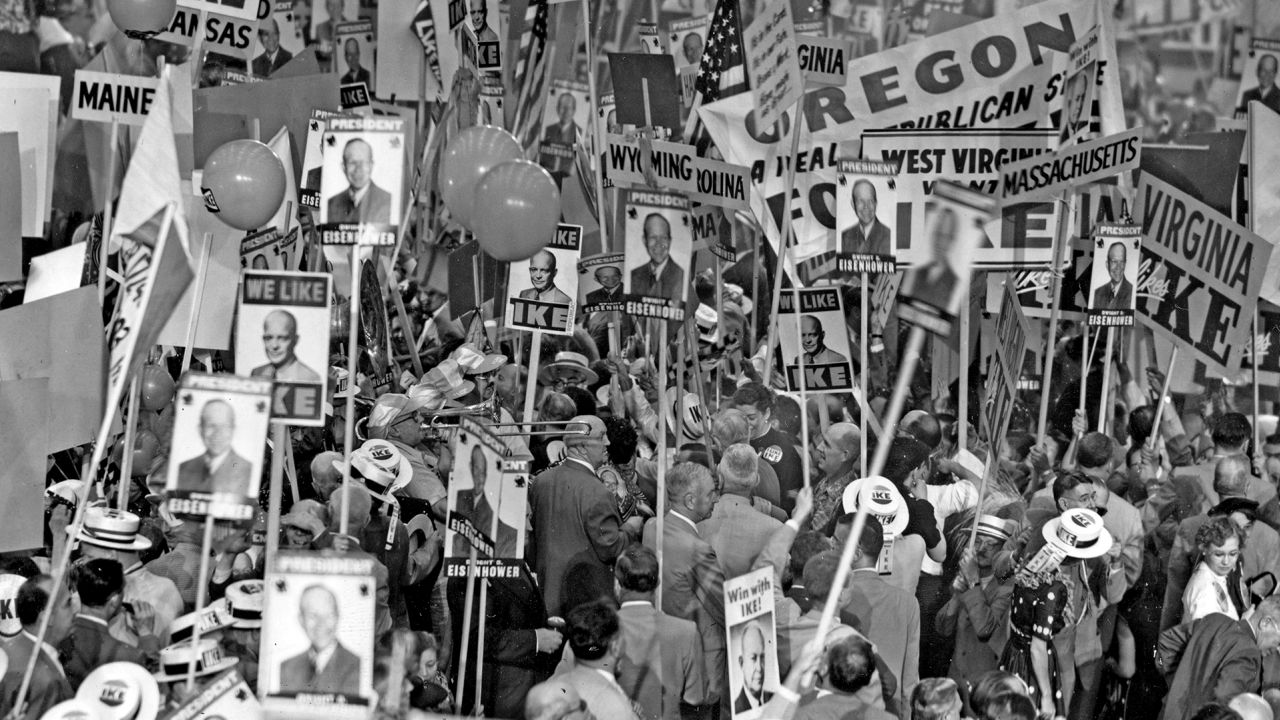
The 1952 GOP presidential nomination fight proved a turning point in the party’s history, when Dwight Eisenhower, a champion of internationalism and alliance with Europe to contain the Soviet Union, defeated Sen. Robert Taft, a skeptic of international alliances who wanted to shift America’s focus from defending Europe toward confronting communist China.

A similar divide is opening within the GOP now. In a distant echo of Taft, former President Donald Trump and Florida Gov. Ron DeSantis, the race’s two front-runners have both declared that defending Ukraine against Russia is not an American “vital interest” and “distracts” (as DeSantis put it) from the more important challenge of confronting China. Other likely 2024 candidates, such as former Vice President Mike Pence and former UN Ambassador Nikki Haley, come closer to upholding the Eisenhower position that the US must remain steadfast in protecting Europe against Russian aggression – and insisting that abandoning Ukraine would embolden China and other potential US adversaries.

Delegates, many of whom support Dwight David Eisenhower as their candidate for President, gather at the Republican National Convention in Chicago in July 1952.

After Eisenhower’s landmark victory over Taft in 1952, every Republican presidential nominee over the next six decades – a list that extended from Richard Nixon through Ronald Reagan to George W. Bush, John McCain and Mitt Romney – identified more with the internationalist than isolationist wing of the party.

But Trump broke that streak when he won the nomination in 2016 behind a message of brusque economic nationalism and skepticism of international alliances. Now, the GOP appears on track for a 2024 nomination fight which may demonstrate that Trump’s rise has lastingly shifted the party’s balance of power on foreign policy – and ended the long era of GOP internationalism Eisenhower’s victory began.

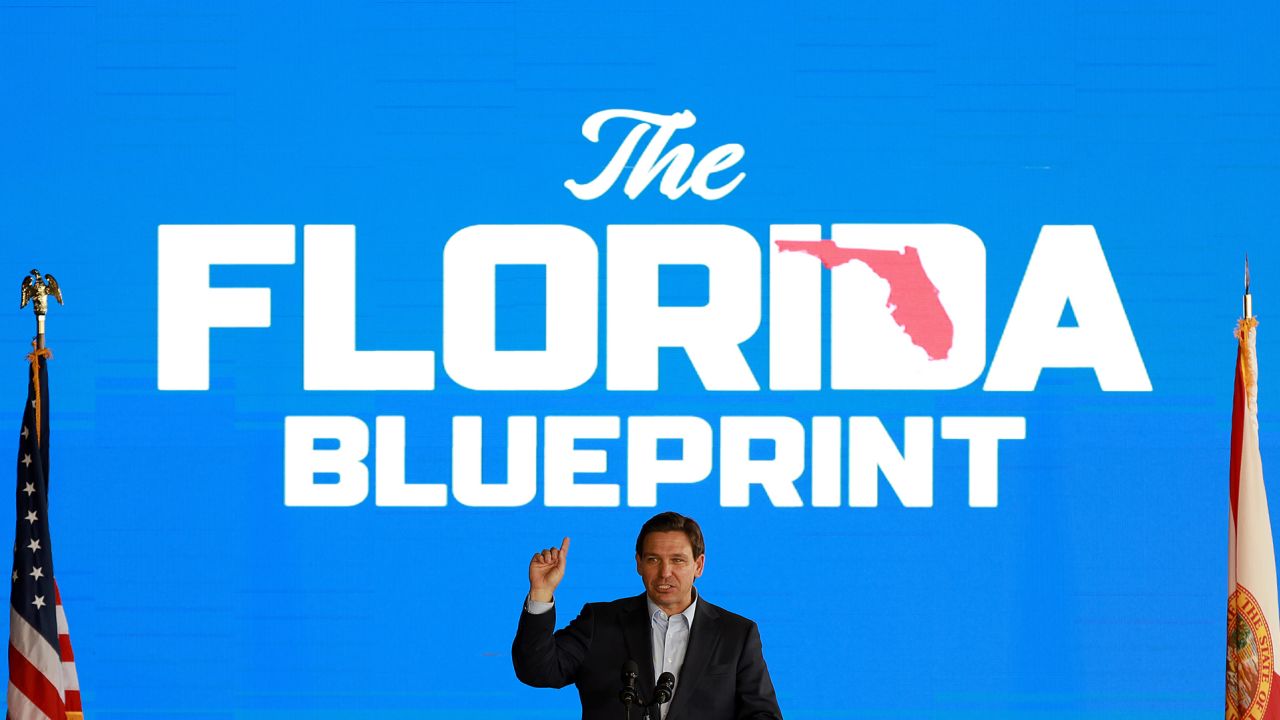
The fact that DeSantis unveiled his views about Ukraine in a statement to Fox News host Tucker Carlson, a fierce opponent of American engagement with allies, underscored the governor’s determination to court Trump’s base with his provocative remarks. After several days of intense criticism from Republican internationalists, DeSantis retreated last week from his description of the war as a “territorial dispute” and called Russian President Vladimir Putin “a war criminal,” much harsher language than Trump has ever used. But DeSantis, in his interview with British journalist Piers Morgan for another Fox outlet, also reiterated his skepticism of open-ended US support for Ukraine. “I just don’t think that’s a sufficient interest for us to escalate more involvement,” the governor said.

 Florida Gov. Ron DeSantis speaks during an event spotlighting his newly released book,

Even with his qualifying statements last week, DeSantis’ skeptical posture toward Ukraine shows the magnetic pull that Trump has exerted on his party, tugging it away from the Eisenhower tradition.

“Trump-ism is the dominant tendency in Republican foreign policy and it’s isolationist, its unilateralist, its amoral,” said Richard Haass, president of the Council on Foreign Relations and former director of policy planning at the State Department under George W. Bush. The “traditional institutional approach to the world [which was] … the dominant Republican approach since World War II … has clearly been eclipsed for now,” said Haass, who also held foreign policy positions in the Ronald Reagan and George H.W. Bush administrations.

Ivo Daalder, president of the Chicago Council on Global Affairs and former US permanent representative to NATO under Barack Obama, agrees. The fact that both 2024 GOP front-runners are expressing a broad skepticism about US engagement abroad, he said, raises the possibility that Republican “internationalists have not only lost in ’16 and ‘20” when Trump headed the GOP ticket, “but have lost the party forever.”

The 1952 presidential election, by contrast, was the moment when GOP internationalists seemed to win the party forever. Leading into World War II, the party had been closely split between an internationalist wing determined to counter Adolf Hitler and imperial Japan and an isolationist faction resistant to entanglement in the intensifying confrontation with fascism, especially in Europe. The divide was both ideological and geographic, pitting generally more moderate internationalist East Coast Republicans (many of them tied to Wall Street and international finance) against more conservative isolationist forces centered in the small towns and small businesses of the Midwest and the far West.

The Japanese surprise attack that triggered the US entry into World War II ended the political viability of a purely isolationist stance.

“After Pearl Harbor there was no way to be a strict isolationist and a national political [figure],” said Joyce Mao, an associate professor of history at Middlebury College and author of the book “Asia First,” which recounts the GOP foreign policy debates of that era.

After World War II, Republican internationalists joined with Democratic presidents Franklin Roosevelt and Harry Truman to build the international institutions meant to prevent another global war: the United Nations, the Marshall Plan to economically rebuild Europe and the North Atlantic Treaty Organization to militarily defend it from the Soviet Union. Eisenhower, who had organized the Allied invasion of Europe on D-Day in 1944, was firmly in that camp and, in fact, returned to Europe in January 1951 to serve as NATO’s first supreme commander.

But Robert Taft led a block of “old guard” congressional Republicans that remained much more skeptical of European commitments. Taft, a senator from Ohio and the son of former Republican president William Howard Taft, had generally opposed American aid to Europe before Pearl Harbor and even after the war he pushed to reduce the Marshall Plan and voted against the creation of NATO. Like many of the Republicans who initially resisted involvement in World War II, Mao noted, Robert Taft in the post-war period tried to separate himself both from that isolationist past and the contemporary priorities of GOP internationalists like Eisenhower by arguing for an “Asia First” foreign policy that would shift resources and emphasis from defending Europe to confronting the Communists who had seized control of China.

“Eisenhower was viewed by Taft and his colleagues as much too moderate,” Mao said. “His European focus was deemed by that conservative wing of the party as much too similar to the liberal Democrats. If this was going to be a moment for conservatism to reassert itself not only against liberalism but also against the moderates in the Republican Party, China provided an ideal plank” to do so.

All these strains culminated in the landmark battle for the 1952 GOP presidential nomination. Taft, the Republican Senate leader, was a passionate favorite of conservatives. Eisenhower, still in Europe as NATO supreme commander, was in many respects a reluctant candidate. But as Stephen Ambrose showed in his classic biography, Eisenhower felt compelled to run largely from fear that Taft would lead the US out of NATO, while simultaneously risking a catastrophic war in China. (Eisenhower was also deeply disenchanted with Truman’s leadership.) Eisenhower resigned his NATO position, returned to the US, mobilized enough support from the GOP’s internationalist wing to beat Taft at the 1952 Republican convention, and then decisively won the presidency that November. “Eisenhower became president precisely because he did not trust this version of isolationism in Taft,” said Peter Feaver, a Duke University political scientist who served as a senior adviser for strategic planning on the National Security Council under George W. Bush.

Both as a general election candidate and as president, Eisenhower tried to minimize his public conflicts with his party’s “old guard.” But he unmistakably steered the party (and the nation) toward acceptance of American global leadership within a robust international system of alliances. With only modest variation, that became the dominant foreign policy ideology of the GOP for the next 60 years under Presidents Richard Nixon, Gerald Ford, Ronald Reagan and George H.W. Bush. Late in that period, George W. Bush offered a different emphasis by stressing unilateral American action over coordination with allies, but even he emphasized the need for the US to remain engaged with the world. “It’s a pretty unbroken streak,” said Geoffrey Kabaservice, author of “Rule and Ruin,” a history of the struggles between GOP conservatives and moderates.

Taft-like isolationism, coupled with nativist opposition to immigration and protectionist opposition to free trade, first resurfaced as a major force in the GOP with the long-shot presidential campaigns of conservative commentator Patrick J. Buchanan in 1992 and 1996. Two decades later, Trump revived that same triumvirate of isolationism, protectionism and nativism – what scholars sometimes call “defensive nationalism” – in his winning drive for the 2016 GOP nomination.

Though some traditional GOP internationalists had hoped that Trump in office might moderate those impulses, as president he barreled down all those roads, repeatedly clashing with traditional allies. Now, DeSantis’ choice to echo Trump in devaluing Ukraine – following the calls from so many House conservatives to reduce the US commitment there – is deflating another hope of the GOP’s beleaguered internationalist wing: that Trump’s ascent represented a temporary detour and the party would snap back to its traditional support for international engagement once he left office.

“Trump-ism has to be taken seriously,” as a long-term force in GOP thinking about the world, Haass said. The foreign policy center of gravity in the Republican Party, he added, has moved toward “a much more pinched or minimal American relationship with the world, [with] not a lot of interest in contributing to global responses to challenges like climate change or pandemics.”

Even before DeSantis qualified his comments in the interview with Morgan, Feaver believed the Florida governor was trying to find a position on Ukraine somewhere between Trump’s undiluted skepticism and the unreserved support of Sens. Lindsey Graham of South Carolina and Mitch McConnell of Kentucky. But, Feaver said, by including such inflammatory language as “territorial dispute” in his initial comments, DeSantis demonstrated the risks of pursuing such a strategy of “triangulation.”

“Triangulation is a risky game because if you get the language off, you may commit yourself in a campaign to a line that makes no sense when you are governing,” Feaver said. “This is one of the hardest problems for newcomers and challengers when they are campaigning for president. By giving applause lines that work for the narrow segments of ideologically hardened factions that they are trying to win over for the primary, they can lock themselves into policy positions that are not sound when they actually win.”

As an example, Feaver said DeSantis’ insistence that the US should shift more attention from countering Russia to containing China – an argument he repeated with Morgan – was illogical because “abandoning Ukraine assists China’s most significant ally, Russia.” Haley made a similar case in her recent Wall Street Journal article criticizing DeSantis (though not by name) for his comments to Carlson. “It’s naive to think we can counter China by ignoring Russia,” Haley wrote.

Daalder points out another logical flaw in the updated “Asia First” arguments from DeSantis and Trump. “If the US were to abandon its allies in Europe … our allies in Asia are going to ask, ‘What’s to say they are not going to do the same with regards to China?’” Daalder said. “By demonstrating your willingness to stand up to Russia you are also strengthening the view that in Asia that when it comes to it that we will be there to help them.”

But polls leave no doubt that both prongs of the modern Robert Taft position – that the US should reduce its commitment to Europe-focused international alliances and harden its resistance to China – have a substantial base of support in the contemporary Republican coalition. In a Gallup poll released earlier this month, by a lopsided margin of 76{515baef3fee8ea94d67a98a2b336e0215adf67d225b0e21a4f5c9b13e8fbd502} to 12{515baef3fee8ea94d67a98a2b336e0215adf67d225b0e21a4f5c9b13e8fbd502}, Republican voters were more likely to identify China than Russia as the principal US adversary in the world. (More Democrats picked Russia than China.) Polls have also found a steady decline in Republican support for US aid to Ukraine: polls this year by both the Pew Research Center and Quinnipiac University found that the share of GOP voters who believe the US is doing too much now equals the combined percentage who think it is doing too little or the right amount. (Quinnipiac found big majorities of Democrats and independents still believe the US is doing the right amount or not enough.)

The latest Chicago Council on Global Affairs annual survey also tracks a broader retreat from the world among GOP voters. In that poll, conducted last November, the share of Republicans who said the US should take an active role in world affairs fell to 55{515baef3fee8ea94d67a98a2b336e0215adf67d225b0e21a4f5c9b13e8fbd502} – the lowest the survey has ever recorded. Underscoring that erosion, a slight majority of Republicans in the poll said the costs of an active US international role now exceed the benefits.

Opinions in the GOP about whether the US should do more or less in Ukraine don’t vary much along lines of education or age, the Pew poll found. But generally, these surveys show that the turn away from global leadership is most powerful among two distinct groups of Republicans: those who are younger, and those who lack college degrees. While a solid three-fifths of Republicans with a college degree in the Chicago Council poll said the benefits of US leadership exceed the costs, for instance, a majority of non-college Republicans disagreed. Younger Republicans were also much more likely than those over 60 to say the costs exceed the benefits.

It’s probably no coincidence that those two groups – Republicans without a college degree and those who are younger – have consistently registered as Trump’s strongest supporters in early polls about the 2024 race.

Former President Donald Trump arrives during a rally at the Waco Regional Airport on March 25 in Texas.

Trump is signaling that in a second term he will likely push even further in an isolationist and protectionist direction. John Bolton, Trump’s former national security adviser, has said he believed the former president came close to withdrawing the US from NATO and would likely do so if elected to a second term. Trump certainly hinted at that possibility in a recent campaign video in which he declared, “we have to finish the process we began under my administration of fundamentally reevaluating NATO’s purpose and NATO’s mission.” Trump has also said he would impose a four-year plan “to phase out all Chinese imports of essential goods, everything from electronics to steel to pharmaceuticals.” That would be a wrenching change in the global economy.

In all these ways, Trump is promising to fulfill Robert Taft’s vision from seven decades ago – and to erase Eisenhower’s lasting victory in setting the GOP’s direction. DeSantis does not appear to have decided to jump entirely on that Trump train – but neither is he lying down on the tracks to stop it. With these two men far ahead of any potential rival, it seems highly likely that the GOP in 2024 will continue to move away from Eisenhower-style international cooperation toward a volatile compound of isolationism and unilateralism. And that could generate enormous turbulence across the globe.

Trump’s first term, as Daalder noted, was a chaotic time for the international order and traditional US alliances. But “If an isolationist leader gets elected president in 2024,” Daalder added, “you haven’t seen nothing yet.”