Bringing Medicaid behind bars has wide bipartisan support : Shots

Bringing Medicaid behind bars has wide bipartisan support : Shots

When he was in prison, Lee Reed was in agonizing back pain. His doctors there told him he needed back surgery, but because he was so close to his release date, they said he’d have to get it done on the outside. Reed saw that surgery as his ticket to being able to get a job and effectively reenter society.

Amy Osborne for Tradeoffs


hide caption

toggle caption

Amy Osborne for Tradeoffs


When he was in prison, Lee Reed was in agonizing back pain. His doctors there told him he needed back surgery, but because he was so close to his release date, they said he’d have to get it done on the outside. Reed saw that surgery as his ticket to being able to get a job and effectively reenter society.

Amy Osborne for Tradeoffs

Lee Reed spent his first night after getting out of a state prison sleeping in the stairwell of a parking garage in downtown San Francisco.

Just a few days shy of his 62nd birthday, Reed had nowhere else to go. During his two decades in prison, his mom and wife had died, and he’d lost touch with most of his family.

“I had nothing. I had nobody,” Reed said.

But he wasn’t alone on that first night. He had the same companion he’d had for years: agonizing back pain.

“Imagine somebody standing on your foot, and you can’t stop that pain,” Reed said. “It’s going to be there when you wake up. It’s going to be there when you go to sleep. Half the time I never even got out of bed while I was in prison because I couldn’t stand up, it was so painful.”

Reed’s doctors in prison told him he needed back surgery, but because he was so close to his release date, they said he’d have to get it done on the outside. Reed saw that surgery as his ticket to being able to get a job and effectively reenter society.

But without health insurance or a support network, being able to do any kind of work seemed impossible as he laid down in the concrete stairwell, his prison-issued walker his only blanket.

“I was tired, and I was literally ready to give up,” Reed said.

Medicaid can be a bridge to a healthy life outside

Around 600,000 people leave prison in the U.S. every year, and another 10 million are released from county jails. Like Reed, many of them suffer from chronic physical, mental and substance use conditions. Research shows they are also at an extremely high risk of hospitalization and death; one study from Washington state found that recently incarcerated people were 12 times more likely to die in their first two weeks after release from prison than the general population.

That’s why in January, federal health officials for the first time signed off on having Medicaid pay for services for some people in state or local jails, prisons or juvenile facilities. The goal is to use the time before someone leaves a corrections facility to connect them with medical providers in the community and limit any disruption in their care as they transition out of incarceration.

Most people who are incarcerated are eligible for Medicaid based on their low income, but a provision known as the “inmate exclusion policy” prohibits federal Medicaid dollars from being spent on a person’s care while incarcerated. (The only exception is for an overnight hospital stay.) Many counties and states try to connect people to Medicaid as soon as they’re released, but it can be a bureaucratic nightmare, and even if it works, people often have other priorities like finding a job, food and a place to live.

Some states like Arizona require private Medicaid plans to connect with incarcerated people before they are released, which state officials say helps individuals get care more quickly when they get out. And small pilot programs in California and New Mexico showed offering care coordination before release led to more primary care visits, less recidivism and fewer ER trips. But the inmate exclusion policy remains a significant barrier.

In 2018, Congress directed federal health officials to help states figure out a better transition plan for people leaving incarceration. Since then, 15 states from across the political spectrum have asked the Centers for Medicare and Medicaid Services to let them test what would happen if they turned Medicaid on before people leave jail, prison and juvenile facilities. In January, California became the first state to get the green light.

“We hope that what we are approving today is an exciting model for what we are able to partner [on] with states across the country,” said Dan Tsai, deputy administrator and director of the Center for Medicaid and CHIP Services at CMS.

States are taking differing approaches

All of the proposals pending before CMS share a common goal: bridging care between incarceration and the community for the more than 10 million people who leave incarceration each year. Many policymakers also see this as a way to improve health equity — people of color are disproportionately incarcerated in the U.S.

In theory, getting people connected to care sooner and keeping them on their medications should improve health outcomes and, over time, help state Medicaid programs save money, because fewer people will end up needing expensive hospital and ER visits. But with limited previous experience to guide them, states are having to guess at the best way to use finite Medicaid dollars when it comes to who should receive these new benefits, what benefits they should receive and when those benefits should start.

“If you are providing and paying for the Medicaid services, you want to ensure that you are focused on those that truly need it,” said California Medicaid Director Jacey Cooper.

Most states, including California, would limit eligibility to incarcerated people with documented health needs, such as chronic physical and mental health conditions or substance use disorder. Cooper estimates around 70{515baef3fee8ea94d67a98a2b336e0215adf67d225b0e21a4f5c9b13e8fbd502} of people incarcerated in California meet this criteria.

In West Virginia and Kentucky, only people with a substance use disorder would be eligible, as part of those states’ broader efforts to address addiction. Research shows drug overdose is one of the most common ways people die after leaving prison, with studies suggesting returning prisoners are 40 to 129 times more likely to fatally overdose in their first two weeks after release.

Rhode Island, Vermont, Washington and Oregon would offer pre-release services to everyone in jail and prison who is eligible for Medicaid.

“The odds are so high that people in that situation are going to need the support that it didn’t seem to make sense to us to be trying to distinguish who did and who did not meet some threshold or have a particular condition,” said Amy Katzen, the director of policy and strategy for Rhode Island’s Medicaid program.

Rhode Island is one of four states — along with Massachusetts, Utah and Vermont — that would offer people soon to leave jails and state prisons the same Medicaid benefits as anyone else in the community.

“This is going to be so complicated to implement,” said Mike Levine, director of MassHealth, Massachusetts’ Medicaid program. “When we finally do, there’s something to be said for just if you are a MassHealth member, you’re getting the MassHealth benefit.”

The other 11 states would offer a more limited set of services for people in the weeks or months before they leave incarceration, focused on transitioning someone back into the community. Services would include connecting them to new doctors, making sure they can get their prescriptions filled and helping them find housing.

In most of these states’ proposals, services like addiction treatment and daily medications would continue to be provided and paid for by the jail or prison. However, Rahul Gupta, the director of the White House Office of National Drug Control Policy, said on Tuesday that states would be required at a minimum to provide mental health and drug treatment services in this pre-release period. CMS would not confirm Gupta’s statement and said the agency plans to release further guidance for states soon.

Some advocates believe Medicaid should take a larger role in health care during incarceration, pointing to numerous reports of inadequate and negligent health care behind bars.

“I’ve seen people wither away — literally, people who were 280 pounds solid, healthy-looking individuals, wither all the way down to skin and bones. And that was because something that they had was diagnosed late or was misdiagnosed in the beginning,” said Khalil Cumberbatch, who served 6½ years in a New York prison before becoming the director of strategic partnerships at the Council on Criminal Justice.

For now, states are unwilling to go that far. Most are asking for Medicaid to start paying for services 30 days before someone is released, but a few have asked for more, including California, which has been approved to start coverage 90 days pre-release. Medicaid Director Cooper said that’s a more realistic window to build a trusting clinical relationship with someone, get all their appointments set up and make sure they have everything they need before they’re released.

Medicaid experts suggested the quickest way for the other 14 states to win CMS approval may be to follow California’s lead on these questions, but they believe federal health officials might want to let states make different choices so they can gather more evidence about what works best.

Implementation challenges await

In California, the first incarcerated people won’t receive Medicaid services until April 2024, Cooper said, with full implementation expected to take until 2026. That’s in part due to the daunting task of integrating the health care and criminal justice systems. The state asked for and received $561 million from the federal government to help providers and correctional facilities build up the infrastructure to do things like share data and bill appropriately.

Massachusetts’ Mike Levine said his team has been working closely with law enforcement and corrections officials for years. “You can’t wait to engage correctional partners when it’s time to implement,” Levine said. “They have to be involved in the policy design because this is going to require so much change within their workflows and their daily business that they have to be at the table.”

Advocates insist that people who are incarcerated or formerly incarcerated need to be included in these conversations too. “If we want people to use that Medicaid card to engage in services in the community, we need to ask them, what is it you need? How can we support you best in coming home?” said Shira Shavit, a professor of family and community medicine at the University of California San Francisco and executive director of the Transitions Clinic Network, which specializes in caring for people post-incarceration.

Including those perspectives, Shavit said, could prevent unintended consequences, like people becoming less likely to engage with Medicaid because they see it as a part of a criminal justice system they don’t trust.

Help came late, but Reed has hope for the future

This entire conversation is coming too late for Lee Reed. No one reached out to him before he got out of prison. He spent two days sleeping in that parking garage stairwell before a security guard pointed him toward a nearby homeless shelter.

A few weeks later, a doctor at the shelter restarted Reed’s medications for diabetes and high blood pressure, and referred him to a specialist who scheduled his back surgery for early 2023 — more than six months after Reed had been released from prison.

Six months after he was released, Reed finally got his back surgery. He’s in less pain now, but he’s still homeless, jobless and struggling to find purpose in his life.

Amy Osborne for Tradeoffs


hide caption

toggle caption

Amy Osborne for Tradeoffs


Six months after he was released, Reed finally got his back surgery. He’s in less pain now, but he’s still homeless, jobless and struggling to find purpose in his life.

Amy Osborne for Tradeoffs

But his pain continued to get worse. The constant agony and Reed’s inability to support himself took a toll on his mental health, occasionally making him wonder if his life was worth living.

“Who would want to live this? This is horrible, man,” he said. “I can’t do anything to protect myself. I can’t do anything to feed myself. How the hell am I a man?”

The doctor at the shelter referred Reed to Shira Shavit’s Transitions program at the Southeast Family Health Center, a community clinic run by the San Francisco Department of Public Health. Shavit prescribed a medication patch for Reed’s back and scheduled follow-up appointments for his diabetes. The program also gave him a bag of groceries, a bus card and ordered him a winter coat.

“When people come out of prison, they have so many needs,” Shavit said. “[We’re] just trying to bring people to the starting line to kind of get them to where they need to be to then even start to be able to become successful in the community.”

Reed finally got his surgery at the end of January, the day after CMS approved California’s request to bring Medicaid behind bars. He’s in less pain now and dreams of moving back to Arkansas to spend time with his grandchildren.

But his challenges are far from over. He’s still living at the homeless shelter without a job and struggling to find purpose. He said if someone had reached out to him before he left prison and helped him get his surgery sooner, there’s a better chance he’d be supporting himself by now.

“I’m trying to keep a positive attitude on everything because my whole world feels like it’s falling apart,” he said a week after his surgery. “I have no control over my own life right now. I’m just like a child. I’m just helpless.”

This story comes from the health policy podcast Tradeoffs. Dan Gorenstein is Tradeoffs’ executive editor, and Ryan Levi is a reporter/producer for the show, where a version of this story first appeared.

Bernie Sanders chairs Senate committee looking to fix the health worker shortage : Shots

Bernie Sanders chairs Senate committee looking to fix the health worker shortage : Shots

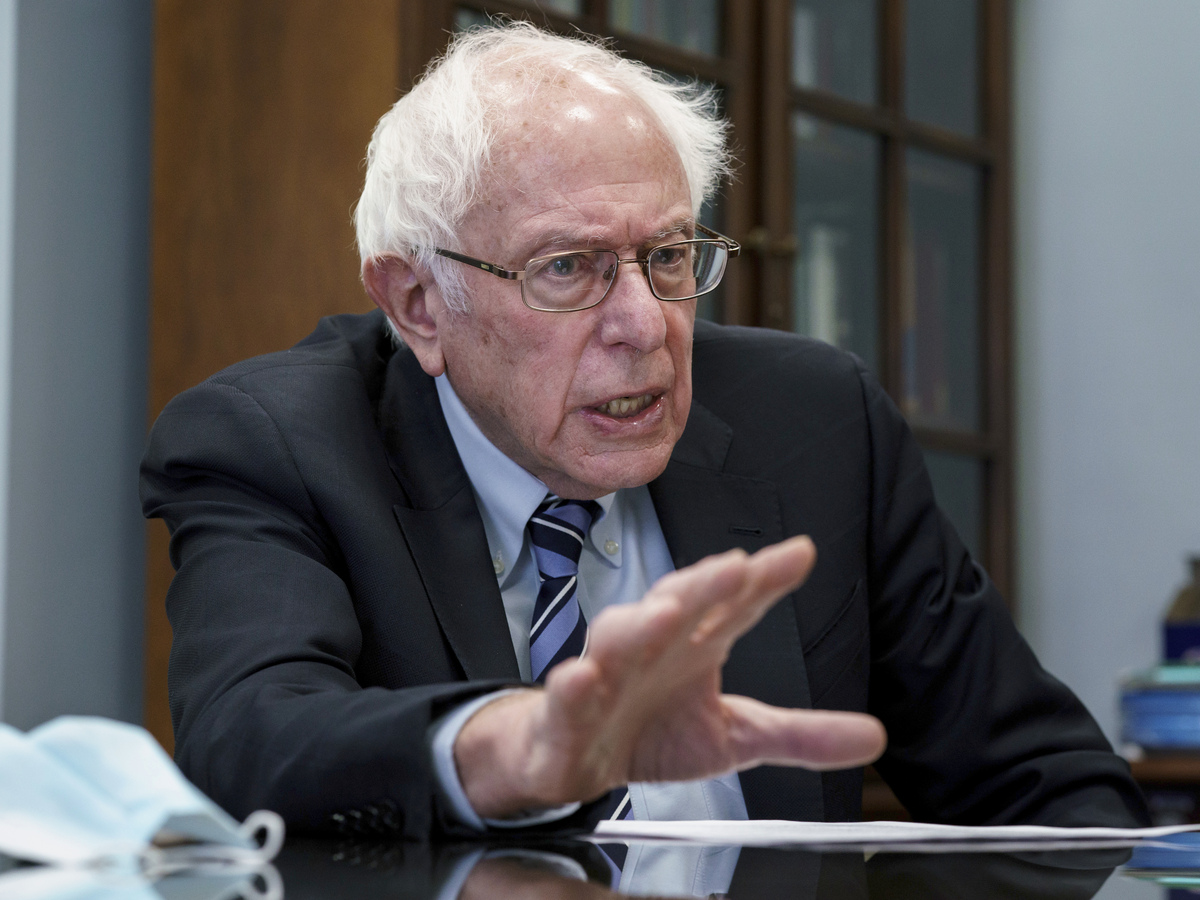
Sen. Bernie Sanders, I-Vt., is chairing the Senate’s top health committee which is targeted on solving the U.S. health care employee scarcity.

J. Scott Applewhite/AP


cover caption

toggle caption

J. Scott Applewhite/AP


Sen. Bernie Sanders, I-Vt., is chairing the Senate’s top wellbeing committee which is concentrated on fixing the U.S. wellness treatment employee scarcity.

J. Scott Applewhite/AP

Senators are eying the rising lack of wellness treatment personnel in the United States as 1 of the few problems exactly where there is space for bipartisan remedies, even in a deeply divided Congress gearing up for a presidential election cycle.

The scarcity which is only worsened due to the fact the pandemic is a prescription for skyrocketing prices, struggling, and unnecessary demise, warned Sen. Bernie Sanders, I-Vt., who is the new chairman of the Senate’s major health and fitness committee. He spoke in his committee’s 1st listening to past 7 days.

“We are heading to make legislation, and I assume individuals will be stunned about the level of bipartisan supporters,” Sanders explained in a transient interview all through a crack from the listening to. He called for the committee to “make a thing meaningful.”

The shortage of health and fitness treatment employees of all kinds is a common dilemma, but is specifically acute in rural areas and minority communities. Sanders pointed to the startling numbers of People residing in health-related treatment deserts to illustrate the issue. There are almost 100 million people who do not have quick obtain to a major treatment medical doctor, pretty much 70 million with no dentist at hand, and some 158 million people today who have couple neighborhood psychological overall health suppliers, Sanders mentioned.

The COVID pandemic contributed to the nation’s present worker lack as many still left the workforce as the disaster worsened. Some contracted the virus themselves, and huge quantities of overall health care suppliers died. An investigation by KHN and The Guardian uncovered more than 3,600 health and fitness workers in the United States died through the pandemic’s initially yr by yourself. Quite a few other people obtained burnt out or sought increased-spending jobs elsewhere.

“Irrespective of all of our wellness care paying, we never have plenty of medical doctors, nurses, nurse practitioners, dentists, dental hygienists, pharmacists, mental health and fitness companies, and other clinical specialists,” Sanders stated, pointing to data that propose the nation faces a shortfall of about 450,000 nurses and 120,000 doctors in the coming several years, and 100,000 dentists now.

Although Democrats and Republicans alike acknowledged the shortages hobbling treatment for hundreds of hundreds of thousands of People in america, any legislative resolution must pass not only the Senate Well being, Instruction, Labor and Pensions Committee, but also the whole Senate and Residence of Associates.

Significantly-proper Residence Republicans have threatened to go so considerably as forcing the federal federal government to default on its money owed as they desire paying out cuts, and substantial federal government spending on wellness care could make new laws a ripe target.

Sen. Invoice Cassidy of Louisiana, the committee’s top rated Republican who is also a health care provider, cited a couple packages the committee is responsible for updating this 12 months, these types of as an expiring plan that trains a lot of of the nation’s pediatricians. He mentioned funding ought to replicate what works in the wellness care program and come “with the suitable investing offsets.”

“We have to make guaranteed that we are not squandering the dollars we’re attempting to productively expend,” he claimed.

None of the senators in the listening to disagreed with the essential problem that way too several clinical industry experts are leaving their fields and that instructional establishments are not graduating plenty of new kinds to switch them and satisfy the growing requirements of an aging inhabitants.

Customers on the two sides of the aisle identified increasing concentrations of burnout in the health care professions improved threats confronted by wellness care workers the prices and problems of working underserved regions and economical incentives that steer youthful specialists towards extra worthwhile specialties and greater-money parts.

Senators agreed on some methods to boost quantities of well being workers, these as encouraging more lower-price tag instructional options like community university and making certain that existing packages are prolonged this calendar year, these kinds of as the Nationwide Well being Company Corps that trains physicians for underserved areas and graduate training courses.

A whiff of partisan contemplating drifted into the dialogue, with some Republicans targeted a lot more on decrying federal government interference in overall health treatment. Sen. Mitt Romney, R-Utah, prompt the State Section really should do a much better job clearing overseas pupils and practitioners to immigrate here. Cassidy lifted digital wellbeing information prerequisites as a contributor to medical doctor burnout, declaring they eat also a great deal time.

Even in those people regions, there were signs lawmakers could agree. Sen. Tim Kaine, D-Va., also raised the notion of unjamming the immigrant backlog.

Sen. Rand Paul, R-Ky., explained vaccine prerequisites were being an impediment. Sen. Roger Marshall, R-Kan., raised laws barring some surprise healthcare expenses as hazardous to physicians.

“I feel the point that the committee has made this the first listening to usually means a amount of us have payments. We might check out to get a bunch of them up together and see if we can merge them into one thing,” reported Kaine, pointing in distinct to the notion of growing mortgage forgiveness for folks prepared to go into areas with shortages. “I think there’s great prospective customers for bipartisan progress on this.”

Some of the senators credited Sanders with the preliminary progress toward a compromise. He expended his 1st months in his submit assembly with committee customers from both of those get-togethers to discover places of bipartisan settlement.

Sen. Lisa Murkowski, R-Alaska, explained Sanders achieved out to meet up with with her and focus on her priorities. They equally named workforce shortages as a top rated challenge, she said, including, “We have bought very good things to function on.”

“In my conversation with him just on the flooring this 7 days, about what we could be ready to do with the workforce concern, I feel he was type of probing to see if we could set together some endeavours to just emphasis on these workforce shortages,” Murkowski explained to KHN. “There is a terrific offer of curiosity in legislating in this house.”

“What it really is going to glance like, I are unable to inform you nevertheless,” she included.

“We are going to make legislation,” Sanders reported as the listening to finished. “I don’t do hearings for the sake of hearings.”

KHN (Kaiser Well being Information) is a nationwide newsroom that creates in-depth journalism about overall health troubles. Jointly with Plan Examination and Polling, KHN is 1 of the three major operating courses at KFF (Kaiser Household Foundation). KFF is an endowed nonprofit organization supplying data on wellbeing challenges to the country.

Irregular sleeping habits may increase risk

Irregular sleeping habits may increase risk

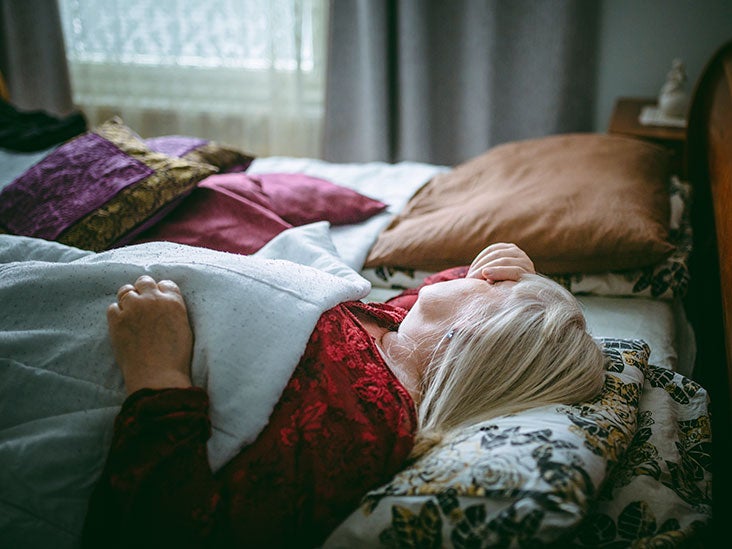
an older woman with gray hair sleeps or naps in bed under the covers with one hand covering her eyesShare on Pinterest
A research discovered a backlink concerning irregular sleeping designs and an enhanced hazard of atherosclerosis in more mature grownups. Milamai/Getty Photographs
  • A new review finds a website link involving irregular sleeping styles and subclinical signs of atherosclerosis in more mature persons.
  • Atherosclerosis-related ailments are the leading cause of loss of life in the United States.
  • The study underscores the great importance of establishing regularity in one’s sleep routine.

A modern study explores a relationship amongst atherosclerosis, not protecting a typical bedtime, and sleeping for inconsistent durations of time.

The review identified that more mature individuals who various rest time by an regular of two several hours inside a single 7 days and those people who modified their bedtimes by an hour and a fifty percent ended up appreciably much more possible to show subclinical signs or symptoms of atherosclerosis.

According to a push launch, here’s what the researchers measured to look into the existence of plaque in the arteries:

  • calcified fatty plaque buildup in arteries — coronary artery calcium
  • fatty plaque buildup in neck arteries — carotid plaque existence
  • thickness of the internal two levels of the neck arteries — carotid intima-media thickness
  • narrowed peripheral arteries — the ankle brachial index

They detected calcified plaque in arteries, the most important fundamental result in of strokes and coronary heart attacks. When they measured participants’ blood tension at their arms and in contrast that figure to blood pressure at their ankles, the ensuing superior ankle brachial indexes indicated stiffness in their blood vessels. Both equally indications could be signs of developing atherosclerosis.

Atherosclerosis is a affliction in which cholesterol, fatty deposits, and mobile waste goods in your blood form sticky plaques on the insides of your arteries. The plaques consequently thicken artery partitions and can lead to them to harden. The issue inhibits blood move, blocking enough oxygen from being shipped to your organs.

In accordance to the United States National Institutes of Overall health (NIH), fifty percent of Us citizens aged 45-84 have atherosclerosis devoid of realizing it, and the illness connected to atherosclerosis is the leading cause of death in the U.S.

The study appears in the Journal of the American Coronary heart Affiliation.

The analyze associated 2032 participants in the different community‐based MESA (Multi‐Ethnic Analyze of Atherosclerosis). MESA aimed to examine the features and risk elements of subclinical signs or symptoms of atherosclerosis throughout a various inhabitants of more mature individuals.

To that conclude, just around half of the contributors in MESA have been ladies. Thirty-8 p.c of the contributors self-recognized as White, 28{515baef3fee8ea94d67a98a2b336e0215adf67d225b0e21a4f5c9b13e8fbd502} as Black or African American, 23{515baef3fee8ea94d67a98a2b336e0215adf67d225b0e21a4f5c9b13e8fbd502} as Hispanic, and 11{515baef3fee8ea94d67a98a2b336e0215adf67d225b0e21a4f5c9b13e8fbd502} as Chinese. They had been also geographically various, recruited from St. Paul, MN Baltimore City and Baltimore County, MD Chicago, IL Forsyth County, NC Los Angeles County, CA Northern Manhattan and the Bronx, NY.

The contributors ranged from 45 to 84 many years old, with an normal age of 69, and all have been free of charge of identified cardiovascular ailment.

Every single participant wore a wrist unit for 7 times that tracked their durations of getting awake or asleep. They also completed snooze diaries.

At last, each person participated in 1 night of in-household slumber monitoring that calculated their respiration, sleep stages, slumber period, heart rate, and the time they went to bed.

In the present-day analyze, people whose rest period varied by an regular of two several hours per 7 days were being 1.33 periods more most likely to have significant coronary artery calcium scores than those with extra standard snooze designs. They have been also 1.75 times extra probably to have irregular ankle brachial indexes.

When examining persons whose bedtimes varied by an regular of 90 minutes over the program of a 7 days, scientists found a 1.39 situations raise in the likelihood of calcified artery plaques.

“Our outcomes insert to growing proof from the latest experiments that have linked irregular sleep styles to cardiovascular danger,” reported the study’s lead creator, Dr. Kelsie M. Comprehensive of Vanderbilt College.

Other scientific tests, Dr. Comprehensive noted, previously connect lousy sleep to cardiovascular situations this sort of as hypertension, form 2 diabetes, and coronary heart condition.

“Our bodies have a all-natural 24-hour internal clock, identified as the circadian rhythm, that regulates numerous physiological processes, including rest-wake cycles. When we continuously go to bed and wake up at unique times, it can disrupt our circadian rhythm and lead to what’s known as ‘social jet lag,’” stated Dr. José M. Ordovás of Tufts College, who was not involved in the examine.

Interventional cardiologist Dr. Hoang Nguyen, not involved in the study, told Health care Information Today:

“The authors advised that disturbance in sleep regularity promotes cardiovascular illness by disturbing the purely natural circadian rhythm of the body, therefore impacting inflammation, glucose metabolic rate and sympathetic neurohormal response. All of these things are recognized to bring about cardiovascular disease.”

“During rest, the sympathetic nervous system (SNS) exercise is generally lowered, making it possible for the overall body to relaxation and get well,” Dr. Ordovás discussed.

“However, snooze disorders this sort of as snooze apnea can direct to elevated SNS activity, which can result in hypertension and other CVD danger components,” he extra.

The push launch mentioned that owing to the limitation of snooze and atherosclerosis being calculated concurrently, the scientists were unable to evaluate “if greater snooze irregularity leads to the development of atherosclerosis.”

Dr. Entire pointed out that their research tracked folks who typically got much less or much more slumber than normal and discovered no big difference in their atherosclerosis indicators.

The NIH endorses that older grown ups, like all other older people, get in between seven and nine hours of slumber just about every working day.

It is achievable to get too a great deal slumber, according to other analysis. Dr. Ordovás claimed that equally a shorter snooze period of fewer than 7 hours for every night and a extended rest period of far more than 9 hrs per night have each been associated with an elevated hazard of CVD.

“What is interesting about this analyze is that the authors went past the high-quality of sleep, and investigated the regularity of slumber,” claimed Dr. Nguyen.

“I uncover this portion fascinating, as it opens up a myriad of questions on the underlying good reasons for this, and has implications on possible interventions from a health treatment supplier standpoint to boost cardiovascular wellness.”

“Addressing slumber challenges,” stated Dr. Ordovás, “and promoting healthful sleep routines may perhaps aid to lessen the threat of CVD by decreasing inflammation, oxidative tension, and other danger components involved with snooze disturbances.”

China Medical University Hospital ranks global third in 2022 HIMSS Digital Health Indicator

China Medical University Hospital ranks global third in 2022 HIMSS Digital Health Indicator

China Professional medical University Medical center in Taichung, Taiwan has established its capability in electronic wellness by scoring very well above the world-wide normal in the most current HIMSS Electronic Wellness Indicator.

The DHI actions an organisation’s development in building a digital health ecosystem in 4 dimensions: predictive analytics, interoperability, predictive analytics, man or woman-enabled wellness and governance and workforce.

Dependent on HIMSS’s assessment, CMUH scored 348/400 for the DHI, which was previously mentioned the worldwide median score of 170 and the Asia-Pacific median rating of 163 in 2022. The clinic did pretty well in enabling interoperability although it proved to be great in the places of man or woman-enabled wellness, predictive analytics, and governance and workforce.

CMUH attributes this achievement to its progress and implementation of 3 good platforms that have led to clinical follow improvements. One of them is the AI-driven Smart Anti-Microbial Method, which helps with the early and fast detection of a causative bacterial strain. Considering the fact that applying this know-how, it has diminished its close to-overlook price in antibiotic prescriptions from 12.1{515baef3fee8ea94d67a98a2b336e0215adf67d225b0e21a4f5c9b13e8fbd502} to {515baef3fee8ea94d67a98a2b336e0215adf67d225b0e21a4f5c9b13e8fbd502}. 

The clinic also credits its two other platforms, the Distant Myocardial Infarction Diagnostic Method and the Integrated Intelligent ARDS Lifesaver, to its large DHI ranking. 

HIMSS also recommended the clinic for its affected individual-centric solutions, such as its sensible wards which have realised performance in patient administration utilizing a solitary observe and the CMUH mobile app that streamlines affected person admission and permits remote care checking. 

WHY IT Issues

CMUH’s goal is to measure its electronic health ability in opposition to worldwide specifications and identify areas for advancement. The hospital views its DHI score as an prospect to partner with HIMSS and other foremost global wellness devices to generate its electronic transformation. 

In addition, CMUH seeks possibilities to boost its digital health ecosystem and acquire aid in building the proper expense conclusions by figuring out precedence regions. 

“We made a decision to go by way of the DHI assessment as we are certain that the scores and rating of intelligent hospitals by HIMSS will be objective and unbiased,” stated CMUH superintendent Professor Der-Yang Cho.

THE More substantial Pattern

A info-pushed treatment product underpins CMUH’s electronic transformation. Since introducing 5G throughout its community, it has been equipped to obtain information from wearable units through the cloud, enabling remote healthcare. It was also equipped to streamline its workflow and give personalised health care.

In 2019, CMUH attained Stage 7 accreditation for the HIMSS Electronic Healthcare Report Adoption Model, which has been a big contributor to its existing DHI ranking.

The healthcare facility has now positioned itself between the course of top world overall health devices – all coming from the Asia-Pacific – that have accomplished higher scores in the DHI. Based mostly on the scores of organisations that underwent the DHI evaluation in 2022, Samsung Health care Middle from South Korea qualified prospects the world wide position at 365/400, followed by Chang Gung Memorial Medical center (349/400), also from Taiwan.

Florida surgeon general, again questioning COVID vaccines, sends letter to CDC, FDA

Florida surgeon general, again questioning COVID vaccines, sends letter to CDC, FDA

Florida’s major health official despatched a letter this 7 days to the heads of the Food stuff and Drug Administration and the Facilities for Disorder Management and Prevention warning that mRNA COVID-19 vaccines could be risky.

It’s the most recent occasion of Surgeon General Joseph Ladapo, who runs the Florida Office of Health and fitness, questioning the basic safety of the vaccines. In the letter, he cites an improve in the variety of reviews from Florida submitted to the federal government’s Vaccine Adverse Event Reporting System, or VAERS, as proof of a problem with the photographs.

“Academic researchers in the course of our state and all around the globe have found troubling security indicators of adverse events surrounding this vaccine. Their considerations are corroborated by the significant enhance in VAERS studies from Florida, including daily life-threatening disorders,” Ladapo wrote in the letter, dated Wednesday.

The CDC suggests everybody keep up to day with COVID-19 pictures, which it states secure towards intense ailment, hospitalization and loss of life in all age teams.

The letter — and a subsequent Department of Health information release — stated Florida had seen a 4,400{515baef3fee8ea94d67a98a2b336e0215adf67d225b0e21a4f5c9b13e8fbd502} raise in the VAERS reporting of “life-threatening problems.”

Proportion will increase do not on your own give an knowledge of the magnitude of an function. According to the VAERS database, 14 lifestyle-threatening situations next any vaccination (not just the coronavirus photographs) ended up noted in Florida in 2020. In 2021, the range was 695, in accordance to the database. In 2022, the quantity was 177. Just about 42 million COVID-19 vaccine doses have been administered in Florida, according to the CDC.

A spokesperson for the Office of Well being confirmed just after this tale was at first released that the VAERS numbers relevant to all vaccinations were being the ones the state applied to estimate the share increase Ladapo cited. The spokesperson observed that the improve in daily life-threatening functions from 2020 to 2021 was about 4,900{515baef3fee8ea94d67a98a2b336e0215adf67d225b0e21a4f5c9b13e8fbd502}.

Any person can report a relating to clinical situation to the federal database. The ailment could or might not be associated to vaccination.

A spokesperson for the Fda mentioned that the federal govt has viewed an uptick in COVID-19 VAERS reviews across the nation. The spokesperson attributed that boost to the enhanced community consciousness about the vaccines, and the simple fact that there are a lot more stringent VAERS reporting necessities for the coronavirus photographs than for other vaccines.

“COVID-19 vaccines have undergone—and continue on to undergo—the most intensive vaccine basic safety monitoring in U.S. historical past,” the spokesperson wrote in an electronic mail. “Clinical exploration has demonstrated the basic safety and success of the recommended COVID-19 major series vaccines, as effectively as the advised updated vaccines.”

William Schaffner, an infectious ailment professional at Vanderbilt University Professional medical Center in Tennessee, claimed Ladapo’s letter “speaks (to) a misunderstanding of the VAERS info and how they are made use of, and that’s unfortunate.”

“Just seeking at figures of experiences I assume is intriguing,” but it is only the start of examining submissions, said Schaffner, a liaison to the federal Advisory Committee on Immunization Practices, a team of independent professionals who make vaccine recommendations. “You really don’t draw conclusions from that. That is really a misuse of VAERS information.”

Keep up with Tampa Bay’s top headlines

Retain up with Tampa Bay’s major headlines

Subscribe to our free DayStarter publication

We’ll deliver the most recent news and info you need to have to know every weekday early morning.

You’re all signed up!

Want more of our cost-free, weekly newsletters in your inbox? Let’s get started.

Examine all your possibilities

For instance, if a death occurs 4 times after an individual will get vaccinated, researchers can not right away conclude that the fatality was brought on by immunization, he claimed.

“All you know is that you have two coincidental events,” he claimed. It is a “logical fallacy” to conclude that “because ‘B’ follows ‘A,’ ‘A’ brought about ‘B.’”

Ladapo is “strongly implying” a causal relationship concerning coronavirus vaccines and the spike in VAERS submissions, Schaffner stated.

Two elements have “undoubtedly” led to a rise in reports to the database, Schaffner said: the sheer number of shots in arms for the duration of the vaccine rollout and the publicity surrounding the immunization marketing campaign.

Ladapo’s letter said the enhance in adverse activities goes beyond what would be predicted supplied the vaccination marketing campaign.

“These findings … extra probably mirror a pattern of enhanced risk from mRNA COVlD-19 vaccines,” Ladapo wrote, calling for bigger “transparency” from the federal authorities about the dangers associated with the vaccines.

Ladapo, an appointee of Gov. Ron DeSantis, has gone further than most general public health officers in advising in opposition to acquiring a COVID-19 vaccine. In March, he mentioned healthier little ones need to not get the photographs. In October, the Section of Wellness produced a review of death certificates that it made use of as justification for steerage warning males ages 18-39 against mRNA COVID-19 vaccines.

Those people moves ended up heavily criticized by some associates of the scientific local community — such as some of the scientists cited by the Department of Health as it built its advice for young children.

Ladapo, who is also a professor at the University of Florida, was also criticized by his college colleagues for the dying certificate examine. In a report created by a faculty committee, professors reported the state’s function was of “highly questionable advantage.”

Ditch junk foods for these healthy snacks while travelling

Ditch junk foods for these healthy snacks while travelling

Vacation is remarkable in additional methods than just one, and what tends to make it even additional enjoyable-filling is food stuff! Getting claimed that, it does not mean that you go on an consuming spree without the need of pondering about the dietary material of the foodstuff. As these, Lovneet Batra, a nutritionist, shared a handful of healthy snacks that you ought to carry when travelling. “One of the most essential and enjoyment pieces of journeys is snacking, But it is really important to adhere to healthier snacks, specially when you are travelling as it will also aid you resist the temptation to buy a thing harmful,” she reported in her Instagram put up.

If you are planning to vacation at any time before long, carry these healthier snacks along and prevent ingesting harmful meals.

Amaranth Chikki: If you crave sweets while travelling, pick much healthier types this sort of as amaranth chikki. “They are superior in protein and fibre, which stimulates starvation and decreases appetite and calorie intake,” wrote Lovneet.

Buttermilk: The first choice of consume although travelling is possibly a cold consume or a packaged juice, which is not healthy at all. So what is the tastier and healthier option? As for each Lovneet, it is recommended to make pals with buttermilk. “Move about sugary drinks and decide for buttermilk. Buttermilk can make a wonderful consume while travelling. It is significant in protein and calcium, and superior for meals digestion,” she wrote. Also, you can incorporate spices like cumin to make it even better and tastier. “So, alternatively of having in soda or sugary drinks, go for buttermilk,” she additional.

Roasted makhana is just one of the healhiest treats. (Resource: Getty/Thinkstock Visuals)

Roasted Makhana: Pop in some roasted makhanas as you appreciate your vacation journey. “Roasted makhana make a typical snack for any person looking for a quick chunk on the road. Makhanas can retain you fuller for longer many thanks to the existence of ample quantities of protein. Protein assists stop you from overeating and cravings,” stated the nutritionist.

Fruits: Another much healthier and fuss-absolutely free snack is fruits. Fruits are the ideal companions although on a extended journey. They are not only hugely nutritious but also very easily moveable. “During highway excursions, munching on hydrating, higher-fibre meals like fruit may well continue to keep your bowel movements standard and aid prevent constipation brought about by absence of action,” wrote the professional.

Roasted chickpeas: Roasted chickpeas also make for a wonderful snacking solution. “Chickpeas are really nutritious, offering protein, fiber, magnesium, folate, and zinc,” stated Loveneet.

📣 For additional life-style news, follow us on Instagram | Twitter | Facebook and do not miss out on the newest updates!