Ottawa Co. board focuses on public comment, health officer

Ottawa Co. board focuses on public comment, health officer

OLIVE TOWNSHIP, Mich. (Wood) — In a Tuesday night Ottawa County Board of Commissioners conference, a movement passed in attempt to suppress the extensive wait time visitor speakers have to go through even though waiting for community remark.

Over 40 folks spoke throughout the to start with general public comment session at Tuesday night’s meeting. Of the commenters, some men and women spoke out against what they termed commissioner comment suppression. Some pointed out a deficiency of transparency and complained about restricting free of charge speech.

In lots of Ottawa County meetings since the board manufactured sweeping changes on January 3, community remark has lasted various hours.

By the close of the conference, the movement to go correspondence just before community remark was permitted, in accordance to Commissioner Roger Belknap. Commissioner Doug Zylstra said the movement was intended to assist reduce the long hold out prior to visitor speakers make a public remark.

Through community remarks Tuesday night, some men and women spoke in assistance of overall health division and latest administrative overall health officer Adeline Hambley.

There ended up opinions for and in opposition to a Range, Equity, and Inclusion place of work. Allendale resident Kathy Schmidt study a statement from an organization she did not identify.

“A community Allendale corporation with extra than 35 staff members posted this on the site, ‘Diversity, Fairness, and Inclusion (DEI) play a considerable position in the society and main values … We are greater since of our DEI attempts and we feel Ottawa County is as very well. Therefore, we are deeply unhappy in the Ottawa County Board of Commissioners to dissolve the county’s DEI office environment. We are pleased to see our shoppers, these kinds of as Miller Knoll and other individuals communicate about this situation,’” mentioned Schmidt.

People today also voiced their thoughts on new County Administrator John Gibbs and his ask for for an administrator aide with an amplified budget for the place. Motion requests for the neighborhood psychological health board and the floor h2o board also produced the agenda.

But most of the responses had been in aid of Nathaniel Kelly as the wellness administrator and talked over his skills. Nathaniel Kelly’s wife Kristen also spoke out in his protection.

“The people of this county have earned the report to be corrected. Media retailers have made bogus claims, skewing the public’s check out of no matter whether or not he is knowledgeable and if Columbia Southern College is a diploma mill,” stated Kristen Kelly.

Columbia Southern College is an on-line university based in Orange Beach, Alabama. The Ottawa County Board of Commissioners have reported Nathaniel Kelly holds a diploma from there in occupational overall health and a master’s in public health.

“Regarding Nate’s education and learning, the media likes to position out that CSU is an on-line establishment with for-profit status and lacks knowledge of it is accreditations … I couldn’t obtain any of these attempted attacks on CSU when the former emergency management director, who is also a graduate of CSU was hired in 2018,” Kristen Kelly claimed.

Ottawa County’s unexpected emergency administration director from 2018 to 2020 was Nick Bonstell, who retains an affiliate diploma in fireplace science, a bachelor’s degree in occupational wellness and safety/chemistry and a master’s diploma in public administration all from Columbia Southern College, according to his LinkedIn page.

“We shouldn’t deal with a university that accommodates the lifestyles of energetic-obligation military services veterans and initial responders as less than,” reported Kristen Kelly. “Our county demands a gap examination on our wellbeing department, and I know that my partner, Nate Kelly, is the male for that task.”

A number of commenters voiced their help for Adeline Hambley, who was demoted to an interim administrative health and fitness officer place whilst the board attempts to approve Nathaniel Kelly.

“I’m in this article tonight to assist Adeline Hambley and the health office workers. In the Ottawa Effects majority’s ongoing endeavor to diminish skip Hambley’s capacity to do her career, you’re blocking the regular essential performing of the health and fitness department,” reported Cindy Spielmaker of Grand Haven.

Why antibiotics may not help patients survive their viral infections: new research

Why antibiotics may not help patients survive their viral infections: new research

Most sufferers who are admitted to hospitals with acute viral infections are supplied antibiotics by their medical professionals or health treatment vendors as a precaution in opposition to bacterial co-an infection.

Nevertheless new investigation indicates this follow may perhaps not strengthen their survival costs. 

Researchers investigated the impression of antibiotic use on survival in a lot more than 2,100 sufferers in a medical center in Norway among the several years 2017 and 2021, Reuters described. 

‘SILENT PANDEMIC’ WARNING FROM WHO: Microbes KILLING As well Quite a few People today Thanks TO ANTIMICROBIAL RESISTANCE

The scientists uncovered that supplying antibiotics to people with prevalent respiratory bacterial infections was not likely to reduce the possibility of loss of life within 30 times.

At the height of the COVID-19 pandemic, antibiotics were recommended for all around 70{515baef3fee8ea94d67a98a2b336e0215adf67d225b0e21a4f5c9b13e8fbd502} of COVID-19 sufferers in some nations, Reuters also said.

Researchers found that giving antibiotics to people with common respiratory infections was unlikely to lower the risk of death within 30 days.

Researchers discovered that supplying antibiotics to folks with typical respiratory bacterial infections was not likely to lessen the threat of death within 30 days. (iStock)

This most likely has contributed to the scourge of antibiotic-resistant pathogens regarded as superbugs.

The new information has not been released in a medical journal to date.

CDC Troubles Alert ABOUT DRUG-RESISTANT Tummy BUG’S Distribute

It indicates that there is “a huge overuse of antibiotics,” said direct writer Dr. Magrit Jarlsdatter Hovind from Akershus College Medical center and the College of Oslo, Norway, in accordance to Reuters.

It implies there is “a big overuse of antibiotics.”

Microbes have turn into resistant to several solutions, specified the overuse and misuse of antibiotics. 

Experts think about this advancement a great threat to world overall health, given that the pipeline of alternative therapies in development is alarmingly sparse, Reuters also famous.

Research will be presented following thirty day period

The newest exploration is to be offered at subsequent month’s European Congress of Medical Microbiology & Infectious Disorders in Copenhagen.

It involved people who tested optimistic by using nasal or throat swab for viral bacterial infections these kinds of as the flu, RSV or COVID-19. 

These with verified bacterial bacterial infections were being excluded from the evaluation.

In complete, 63{515baef3fee8ea94d67a98a2b336e0215adf67d225b0e21a4f5c9b13e8fbd502} of the 2,111 sufferers been given antibiotics for their respiratory infections during their clinic remain. 

The new research involved patients who tested positive via nasal or throat swab for viral infections such as the flu, RSV or COVID-19. 

The new exploration included patients who tested optimistic via nasal or throat swab for viral infections these as the flu, RSV or COVID-19.  (iStock)

Total, 168 patients died in just 30 days — of which only 22 had not been recommended antibiotics.

Immediately after accounting for elements this kind of as sex, age, severity of illness and underlying health problems between the clients, the researchers uncovered all those approved antibiotics in the course of their healthcare facility remain were being two times as most likely to die in just 30 days than those people not specified antibiotics.

“Health professionals have to dare to not give antibiotics, as an alternative of doubting and providing antibiotics just in situation.”

Both equally the sicker clients and all those with far more underlying illnesses were far more very likely to get antibiotics and to die, the exploration staff observed.

EYE Fall BACTERIAL CONTAMINATION ‘COULD HAVE Happened ANYWHERE’ — This is HOW TO Defend Against IT 

Other things this kind of as patients’ smoking cigarettes position could have also performed a job, they mentioned.

“Medical doctors have to dare to not give antibiotics, in its place of doubting and giving antibiotics just in scenario,” Hovind reported, according to Reuters.

Should patients admitted to the hospital with common respiratory infections be treated with antibiotics? A new study is seeking to determine the answer.

Really should patients admitted to the clinic with common respiratory bacterial infections be dealt with with antibiotics? A new review is in search of to figure out the response. (iStock)

There are restrictions of a retrospective study these types of as this one particular.

It is why a scientific demo, which Hovind and colleagues a short while ago initiated, is desired to decide regardless of whether patients admitted to the clinic with common respiratory infections need to be addressed with antibiotics, she reported, as Reuters documented.

Tackling the shortages of antibiotics

In the meantime, in late January 2023, a team of European client and consumer groups informed the European Union’s drug regulator that it desires to do far more to deal with shortages of some broadly employed antibiotics in the area, in accordance to a letter despatched and reviewed by Reuters.

The letter to the European Medications Company (EMA) will come as antibiotics, which include amoxicillin, have been in shorter offer due to the fact last Oct, as Reuters reported.

There has been a spike in demand for certain drugs linked to the resurgence of respiratory infections after two years of COVID restrictions, said Reuters.

There has been a spike in desire for specified prescription drugs joined to the resurgence of respiratory infections immediately after two decades of COVID limits, mentioned Reuters. (iStock)

The letter explained actions like substituting amoxicillin with other antibiotics have squeezed source of some other medicine — and that the existing measures in put to offer with the shortages have not contained the crisis.

There has been a spike in demand for specified drugs connected to the resurgence of respiratory bacterial infections following two decades of COVID restrictions, placing extra stress on global materials. 

At the peak of the COVID-19 pandemic, drugmakers minimize output. 

Drugmakers also slash output when demand from customers dipped at the height of the pandemic.

But the letter highlighted growing concerns about extended shortages in the location even as the wintertime comes to an finish.

Click Right here TO GET THE FOX News App

In one more recent study on a relevant subject, children who contracted reduce respiratory tract infection (LRTI) at two yrs of age or youthful ended up observed to be additional probably to die prematurely from that same situation as grown ups.

These styles of bacterial infections have been linked to a person-fifth of the deaths.

Click on Right here TO Sign UP FOR OUR Health and fitness Publication

The review was performed by a group of London scientists and led by Dr. James Peter Allinson of the Nationwide Coronary heart and Lung Institute at Imperial School London. It was published in The Lancet in early March. 

The eight-ten years review analyzed facts from the Medical Exploration Council National Study of Well being and Development, which followed 3,589 individuals in England, Scotland and Wales all born in March 1946. 

Melissa Rudy of Fox News Digital, as effectively as Reuters, contributed reporting to this report.

Scientists warned a decade ago American lives were shortening. Then it got worse : Shots

Scientists warned a decade ago American lives were shortening. Then it got worse : Shots

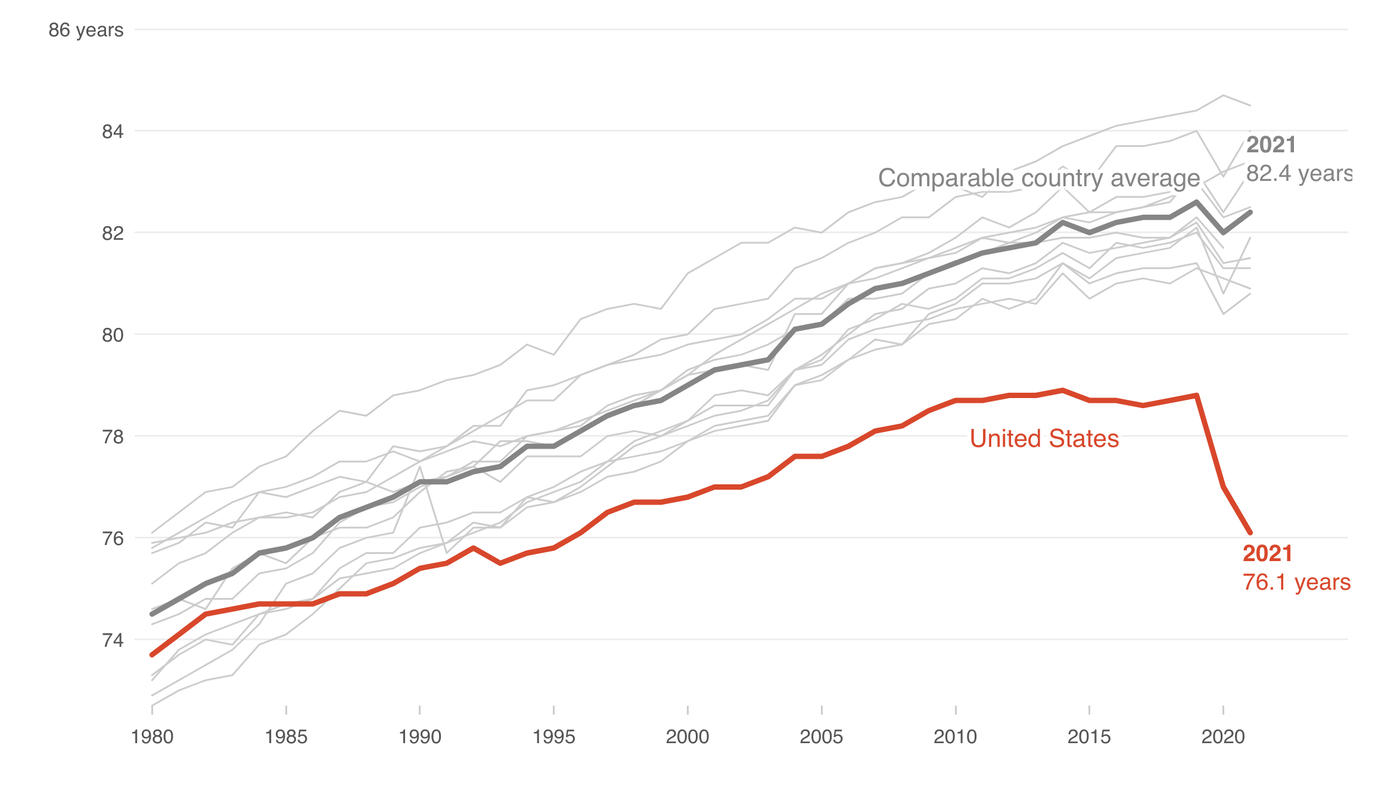
Just before Christmas, federal health officials confirmed life expectancy in America had dropped for a nearly unprecedented second year in a row – down to 76 years. While countries all over the world saw life expectancy rebound during the second year of the pandemic after the arrival of vaccines, the U.S. did not.

Then, last week, more bad news: Maternal mortality in the U.S. reached a high in 2021. Also, a paper in the Journal of the American Medical Association found rising mortality rates among U.S. children and adolescents.

“This is the first time in my career that I’ve ever seen [an increase in pediatric mortality] – it’s always been declining in the United States for as long as I can remember,” says the JAMA paper’s lead author Steven Woolf, director emeritus of the Center on Society and Health at Virginia Commonwealth University. “Now, it’s increasing at a magnitude that has not occurred at least for half a century.”

Across the lifespan, and across every demographic group, Americans die at younger ages than their counterparts in other wealthy nations.

How could this happen? In a country that prides itself on scientific excellence and innovation, and spends an incredible amount of money on health care, the population keeps dying at younger and younger ages.

An unheard alarm

One group of people are not surprised at all: Woolf and the other researchers involved in a landmark, 400-page study ten years ago with a name that says it all: “Shorter Lives, Poorer Health.” The research by a panel convened by the National Academy of Sciences and funded by the National Institutes of Health compared U.S. health and death with other developed countries. The results showed – convincingly – that the U.S. was stalling on health advances in the population while other countries raced ahead.

The authors tried to sound an alarm, but found few in the public or government or private sectors were willing to listen. In the years since, the trends have worsened. American life expectancy is lower than that of Cuba, Lebanon, and Chechnya.

Ten years later, here’s a look back at what that eye-popping study found, and why the researchers involved believe it’s not too late to turn the trends around.

Beyond bad habits

Americans are used to hearing about how their poor diets and sedentary lifestyles make their health bad. It can seem easy to brush that off as another scold about eating more vegetables and getting more exercise. But the picture painted in the “Shorter Lives” report could shock even those who feel like they know the story.

“American children are less likely to live to age 5 than children in other high-income countries,” the authors write on the second page. It goes on: “Even Americans with healthy behaviors, for example, those who are not obese or do not smoke, appear to have higher disease rates than their peers in other countries.”

The researchers catalog what they call the “U.S. health disadvantage” – the fact that living in America is worse for your health and makes you more likely to die younger than if you lived in another rich country like the U.K., Switzerland or Japan.

“We went into this with an open mind as to why it is that the U.S. had a shorter life expectancy than people in other countries,” says Woolf, who chaired the committee that produced the report. After looking across different age and racial and economic and geographic groups, he says, “what we found was that this problem existed in almost every category we looked at.”

That’s why, says Eileen Crimmins, professor of gerontology at the University of Southern California who was also on the panel that produced the report, they made a deliberate choice to focus on the health of the U.S. population as a whole.

“That was a decision – not to emphasize the differences in our population, because there is data that actually shows that even the top proportion of the U.S. population does worse than the top proportion of other populations,” she explains. “We were trying to just say – look, this is an American problem.”

Digging into the ‘why’

The researchers were charged with documenting how Americans have more diseases and die younger and to explore the reasons why.

“We were very systematic and thorough about how we thought about this,” says Woolf. The panel looked at American life and death in terms of the public health and medical care system, individual behaviors like diet and tobacco use, social factors like poverty and inequality, the physical environment, and public policies and values. “In every one of those five buckets, we found problems that distinguish the United States from other countries.”

Yes, Americans eat more calories and lack universal access to health care. But there’s also higher child poverty, racial segregation, social isolation, and more. Even the way cities are designed makes access to good food more difficult.

A fruit seller at Dom Pedro market in Coimbra, central Portugal. A lack of access to fresh fruits and vegetables in the U.S. may contribute to Americans shorter lifespan.

PATRICIA DE MELO MOREIRA/AFP via Getty Images


hide caption

toggle caption

PATRICIA DE MELO MOREIRA/AFP via Getty Images


A fruit seller at Dom Pedro market in Coimbra, central Portugal. A lack of access to fresh fruits and vegetables in the U.S. may contribute to Americans shorter lifespan.

PATRICIA DE MELO MOREIRA/AFP via Getty Images

“Everybody has a pet thing they worry about and say, ‘it’s oral health’ or ‘it’s suicides’ – everyone has something that they’re legitimately interested in and want to see more attention to,” says John Haaga, who was the director of the Division of Behavioral and Social Research at the National Institute on Aging at NIH, before he retired. “The great value of an exercise like this one was to step back and say, ‘OK, all of these things are going on, but which of them best account for these long-term population level trends that we’re seeing?’ “

The answer is varied. A big part of the difference between life and death in the U.S. and its peer countries is people dying or being killed before age 50. The “Shorter Lives” report specifically points to factors like teen pregnancy, drug overdoses, HIV, fatal car crashes, injuries, and violence.

“Two years difference in life expectancy probably comes from the fact that firearms are so available in the United States,” Crimmins says. “There’s the opioid epidemic, which is clearly ours – that was our drug companies and other countries didn’t have that because those drugs were more controlled. Some of the difference comes from the fact that we are more likely to drive more miles. We have more cars,” and ultimately, more fatal crashes.

“When we were doing it, we were joking we should call it ‘Live free and die,’ based on the New Hampshire slogan, [‘Live free or die’],” Crimmins says. “The National Academy of Sciences said, ‘That’s outrageous, that’s too provocative.’ “

There are some things Americans get right, according to the “Shorter Lives” report: “The United States has higher survival after age 75 than do peer countries, and it has higher rates of cancer screening and survival, better control of blood pressure and cholesterol levels, lower stroke mortality, lower rates of current smoking, and higher average household income.” But those achievements, it’s clear, aren’t enough to offset the other problems that befall many Americans at younger ages.

All of this costs the country tremendously. Not only do families lose loved ones too soon, but having a sicker population costs the country as much as $100 billion every year in extra health care costs.

“Behind the statistics detailed in this report are the faces of young people – infants, children, and adolescents – who are unwell and dying early because conditions in this country are not as favorable as those in other countries,” the paper’s authors wrote.

Little action, despite the stakes

“Shorter Lives” is filled with recommended next steps for the government, especially the NIH, which has a budget of more than $40 billion annually to conduct research to improve Americans’ health.

The NIH should undertake a “thorough examination of the policies and approaches that countries with better health outcomes have found useful and that may have application, with adaptations, in the United States,” the authors wrote.

In other words: let’s figure out what they are doing that works in other places, and do it over here.

Dr. Ravi Sawhney, who helped conceive of and launch the “Shorter Lives” study at NIH before he left the agency, had high hopes that the report would make a mark. “I really thought that when the results came out, they would be so obvious that people would say: Let’s finally do this,” he says.

Ten years on, how much of the detailed action plan has been done?

“To be brief, very little of that happened,” Woolf says. At the time, he says, NIH officials didn’t seem very interested in raising awareness about the panel’s findings or in following up on its proposed research agenda. “There was some media coverage at the time that the report rolled out, but NIH was not involved in trying to promote awareness about the report.”

Crimmins agrees. “There was a little bit more research, but there wasn’t any policy reaction,” she says. “I thought there might be, because it’s embarrassing, but it just tends to be ignored.” Those who are interested in this issue, she notes, tend to be those invested in “marvelous things they think are going to delay aging,” even though people older than 75 are the only age group in the country that already does comparatively well.

Haaga, the former NIH division director, also thinks the response at the agency was lacking. “Not nearly enough has been done, given the stakes and given what we could learn,” he says.

In response to NPR’s request for comment for this story, NIH pointed to a subsequent panel on midlife mortality, several initiatives the agency has undertaken on disparities between subgroups within the U.S., and a recent paper funded by NIH that looked again at international life expectancy.

Outgoing NIH Director Francis Collins told NPR in 2021 that it bothered him that there hadn’t been more gains to American life expectancy during his tenure. In his view, the success of NIH in achieving scientific breakthroughs hadn’t translated to more gains because of problems in society that the research agency had little power to change.

Woolf calls it a misconception to assume that America’s great scientific minds and medical discoveries translate to progress for the health of the population. “We are actually very innovative in making these kinds of breakthroughs, but we do very poorly in providing them to our population,” he says.

‘We can’t touch everything’

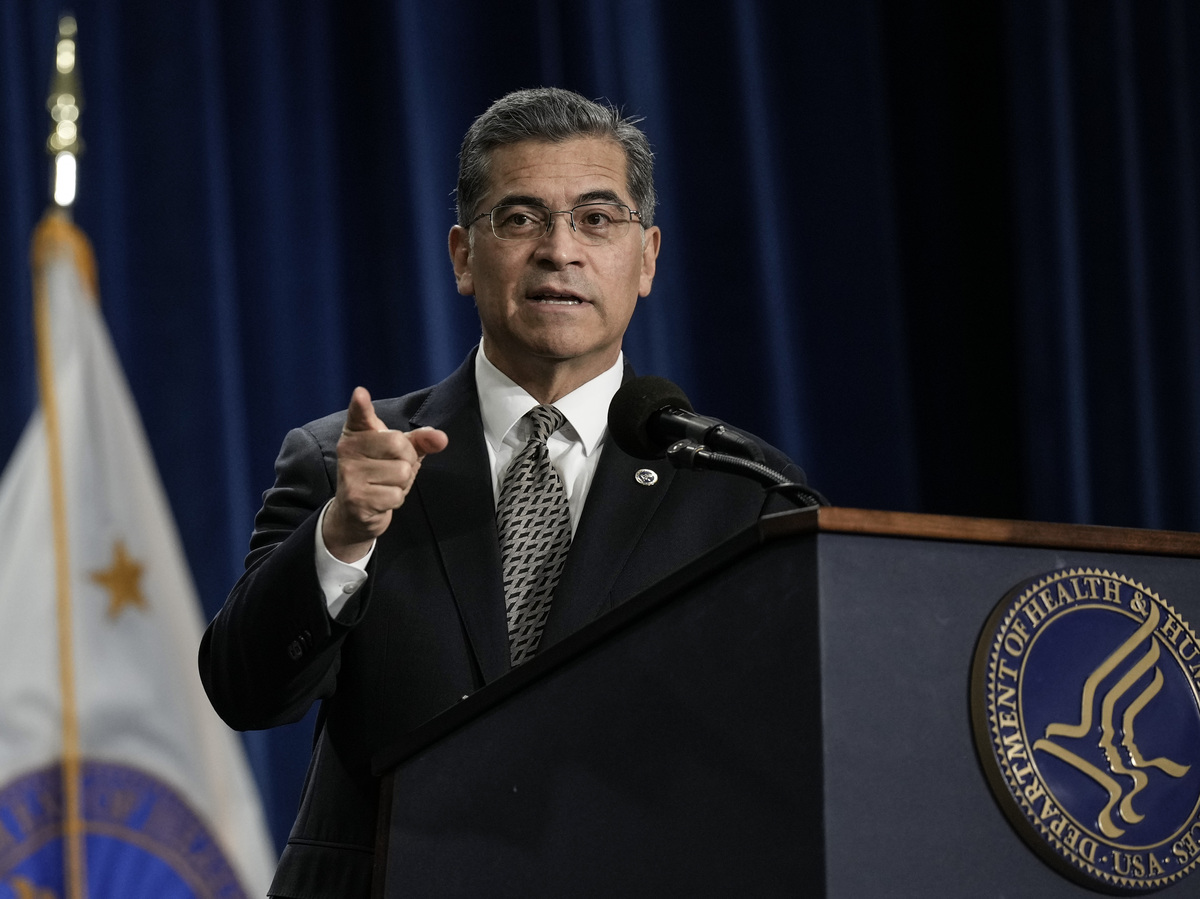
Department of Health and Human Services Secretary Xavier Becerra answered NPR’s question at a press conference earlier this month about work the agency was doing to address lagging life expectancy by mentioning COVID-19 and vaccine hesitancy, along with mental health issues and gun violence.

“There’s so many things that we’re doing,” Becerra said. “We can’t touch everything. We can’t touch state laws that allow an individual to buy an assault weapon and then kill so many people. We can only come in afterwards.”

Secretary of the Department of Health and Human Services Xavier Becerra at a news conference at HHS headquarters in Washington, DC on March 9, 2023. Becerra said gun violence contributes to shorter lifespans in the U.S.

Drew Angerer/Getty Images


hide caption

toggle caption

Drew Angerer/Getty Images


Secretary of the Department of Health and Human Services Xavier Becerra at a news conference at HHS headquarters in Washington, DC on March 9, 2023. Becerra said gun violence contributes to shorter lifespans in the U.S.

Drew Angerer/Getty Images

CDC Director Rochelle Walensky responded by listing some of the agency’s work on mental health and vaccines, and acting NIH director Larry Tabak pointed to research on health disparities.

HHS did not answer a follow up question about whether the agency has considered a national commission or similar effort to address American life expectancy and poor health.

Sawhney thinks the federal government should try harder to fix the problems documented in the “Shorter Lives” report. He doesn’t think lack of public awareness is the problem. “I really think that most Americans know that Americans are more overweight and obese and that we have higher rates of disease and live shorter lives than other countries,” he says, “It’s just the NIH and the CDC that don’t want to take the responsibility for that failure or to do anything about it.”

Crimmins says, in her experience, lawmakers and federal health officials don’t like talking about how the U.S. is lagging behind other countries.

“I convened a meeting in Washington with the National Center for Health Statistics [part of CDC] about increasing healthy life expectancy,” she recalls. “It was a relatively small meeting, but we brought experts from Canada.” An official at the time gave what she calls a “typical” response, saying: “Oh, we can’t have anything but an American solution to these issues – we can’t listen to other countries.”

“International studies are not the flavor of the month – they never will be,” says Haaga. “The problem with foreign countries is that they’re not in someone’s congressional district.”

It’s more than a missed opportunity, says Woolf. It’s a tragedy.

“If you add up the excess deaths that have occurred in the United States because of this unfolding problem, it dwarfs what happened during COVID-19, as horrible as COVID-19 was,” Woolf says. “We’ve lost many more Americans cumulatively because of this longer systemic issue. And if the systemic issue is unaddressed, it will continue to claim lives going forward.”

Small victories are possible

Taking stock of the many ways in which Americans are sicker and die younger can be overwhelming, says Haaga. “It’s such a long list, that might partly be why the issue doesn’t grab people,” he says. “They just go, ‘Oh, my gosh, that’s depressing, what’s on the other channel?’ But there’s a lot of things that could be done, and small victories are victories.”

According to the “Shorter Lives” report, “the important point about the U.S. health disadvantage is not that the United States is losing a competition with other countries, but that Americans are dying and suffering at rates that are demonstrably unnecessary.”

Rather than feel overwhelmed at the immensity of the problems, Sawhney suggests, the focus should instead be on the fact that every other rich country has been able to figure out how to help people live longer, healthier lives. That means that Americans could do it too, he says.

He believes that the changes might not be as hard as some policymakers and health officials seem to think. “You look at these healthier countries, they’re free countries – England, France, Italy – they’re not banning delicious foods. They’re not chaining people to treadmills,” he says. “Americans love to travel to Europe, to Australia, to Canada to enjoy their foods and their lifestyles, and so the idea that we might say, ‘Hey, maybe we could bring some of those lifestyles back’ – I don’t think people are going to go up in arms that we’re taking away their freedoms.”

Getting policy ideas from other countries is just an obvious move, Woolf adds. “If a martian came down to earth and saw this situation, it would be very intuitive that you [would] look at other countries that have been able to solve this problem and apply the lessons learned,” he says.

In historical research he’s been doing, “I found that there are dozens and dozens of countries on almost every continent of the world that have outperformed the United States for 50 years,” he says. “It’s worth taking a look at what they’ve done and Americanizing it – you don’t have to take it right off the shelf.”

Some of the policies he’s identified as helpful include universal, better coordinated health care, strong health and safety protections, broad access to education, and more investments to help kids get off to a healthy start. These policies are “paying off for them,” he says, and could for Americans, too.

Graphic by Ashley Ahn; Edited by Diane Webber

End of Covid Emergency Will Usher in Changes Across the US Health System

End of Covid Emergency Will Usher in Changes Across the US Health System

The Biden administration’s final decision to conclude the covid-19 public wellness emergency in Might will institute sweeping variations across the overall health treatment program that go considerably outside of lots of individuals possessing to spend much more for covid exams.

In reaction to the pandemic, the federal government in 2020 suspended several of its guidelines on how care is shipped. That reworked essentially every corner of American health and fitness care — from hospitals and nursing residences to public well being and remedy for persons recovering from habit.

Now, as the governing administration prepares to reverse some of those methods, here’s a glimpse at approaches clients will be impacted:

Teaching Principles for Nursing Property Employees Get Stricter

The finish of the crisis implies nursing homes will have to meet up with higher standards for instruction staff.

Advocates for nursing home residents are eager to see the old, tougher coaching prerequisites reinstated, but the sector states that move could worsen staffing shortages plaguing services nationwide.

In the early times of the pandemic, to assistance nursing households operate underneath the virus’s onslaught, the federal federal government peaceful instruction demands. The Facilities for Medicare & Medicaid Services instituted a national coverage stating nursing residences needn’t follow laws demanding nurse aides to bear at least 75 hours of condition-accepted coaching. Commonly, a nursing household could not utilize aides for extra than four months except if they met those needs.

Previous yr, CMS resolved the peaceful coaching rules would no more time implement nationwide, but states and services could talk to for permission to be held to the lower expectations. As of March, 17 states experienced these exemptions, in accordance to CMS — Georgia, Indiana, Louisiana, Maryland, Massachusetts, Minnesota, Mississippi, New Jersey, New York, Oklahoma, Pennsylvania, Rhode Island, South Carolina, Tennessee, Texas, Vermont, and Washington — as did 356 unique nursing houses in Arizona, California, Delaware, Florida, Illinois, Iowa, Kansas, Kentucky, Michigan, Nebraska, New Hampshire, North Carolina, Ohio, Oregon, Virginia, Wisconsin, and Washington, D.C.

Nurse aides usually supply the most direct and labor-intense care for people, such as bathing and other cleanliness-connected responsibilities, feeding, monitoring critical signals, and preserving rooms clean up. Investigation has proven that nursing residences with staffing instability keep a decreased quality of treatment.

Advocates for nursing house citizens are delighted the training exceptions will close but concern that the quality of care could yet deteriorate. That’s mainly because CMS has signaled that, after the looser requirements expire, some of the hours that nurse aides logged through the pandemic could count toward their 75 hrs of needed teaching. On-the-work practical experience, nevertheless, is not always a seem substitute for the instruction workers skipped, advocates argue.

Enough teaching of aides is vital so “they know what they are executing prior to they present treatment, for their have fantastic as effectively as for the inhabitants,” said Toby Edelman, a senior plan attorney for the Center for Medicare Advocacy.

The American Wellness Treatment Association, the biggest nursing house lobbying group, released a December study locating that approximately 4 in 5 services have been dealing with average to large concentrations of staff shortages.

Cure Threatened for Persons Recovering From Addiction

A looming rollback of broader obtain to buprenorphine, an significant treatment for individuals in restoration from opioid dependancy, is alarming individuals and medical practitioners.

Through the public overall health emergency, the Drug Enforcement Administration explained providers could prescribe sure managed substances nearly or more than the cellphone without first conducting an in-human being clinical analysis. One particular of these medicine, buprenorphine, is an opioid that can reduce debilitating withdrawal indications for people today trying to recover from addiction to other opioids. Investigate has proven using it far more than halves the chance of overdose.

Amid a nationwide epidemic of opioid habit, if the expanded policy for buprenorphine finishes, “thousands of people are likely to die,” explained Ryan Hampton, an activist who is in recovery.

The DEA in late February proposed laws that would partly roll again the prescribing of managed substances by telemedicine. A clinician could use telemedicine to buy an initial 30-day provide of medicines such as buprenorphine, Ambien, Valium, and Xanax, but patients would have to have an in-person analysis to get a refill.

For a further group of medications, including Adderall, Ritalin, and oxycodone, the DEA proposal would institute tighter controls. Individuals looking for individuals drugs would will need to see a health care provider in individual for an preliminary prescription.

David Herzberg, a historian of medicine at the College at Buffalo, stated the DEA’s strategy displays a elementary obstacle in acquiring drug coverage: conference the demands of people today who rely on a drug that can be abused without the need of generating that drug way too conveniently readily available to others.

The DEA, he additional, is “clearly severely wrestling with this trouble.”

Hospitals Return to Normal, Fairly

For the duration of the pandemic, CMS has experimented with to limit challenges that could arise if there weren’t sufficient wellness treatment personnel to address individuals — particularly right before there have been covid vaccines when staff were at bigger threat of obtaining unwell.

For example, CMS permitted hospitals to make broader use of nurse practitioners and doctor assistants when caring for Medicare sufferers. And new doctors not nonetheless credentialed to work at a individual medical center — for instance, due to the fact governing bodies lacked time to carry out their opinions — could nevertheless observe there.

Other changes throughout the public wellness emergency were meant to shore up clinic potential. Important accessibility hospitals, compact hospitals found in rural places, did not have to comply with federal regulations for Medicare stating they ended up limited to 25 inpatient beds and patients’ stays could not exceed 96 hours, on normal.

After the unexpected emergency finishes, all those exceptions will vanish.

Hospitals are hoping to persuade federal officials to sustain several covid-era guidelines further than the crisis or function with Congress to alter the legislation.

Surveillance of Infectious Conditions Splinters

The way point out and local community health departments monitor the distribute of sickness will adjust soon after the crisis ends, due to the fact the Office of Health and fitness and Human Solutions won’t be able to have to have labs to report covid screening details.

Without a uniform, federal need, how states and counties track the unfold of the coronavirus will range. In addition, though hospitals will nonetheless give covid facts to the federal government, they could do so a lot less usually.

Public well being departments are however obtaining their arms all over the scope of the adjustments, claimed Janet Hamilton, government director of the Council of Condition and Territorial Epidemiologists.

In some techniques, the conclude of the emergency gives general public overall health officers an chance to rethink covid surveillance. As opposed with the pandemic’s early times, when at-home checks had been unavailable and individuals relied greatly on labs to identify no matter if they ended up infected, testing details from labs now reveals significantly less about how the virus is spreading.

Public wellness officers really do not assume “getting all check outcomes from all lab exams is potentially the correct technique any more,” Hamilton said. Flu surveillance offers a possible option product: For influenza, public wellness departments request examination final results from a sampling of labs.

“We’re even now seeking to function out what’s the most effective, steady strategy. And I really do not assume we have that however,” Hamilton mentioned.

KHN (Kaiser Overall health News) is a countrywide newsroom that generates in-depth journalism about wellness issues. With each other with Plan Investigation and Polling, KHN is just one of the a few key operating courses at KFF (Kaiser Family Basis). KFF is an endowed nonprofit corporation giving facts on wellbeing difficulties to the country.

USE OUR Content material

This story can be republished for cost-free (facts).

Medical residents unionize at hospitals around the country : Shots

Medical residents unionize at hospitals around the country : Shots

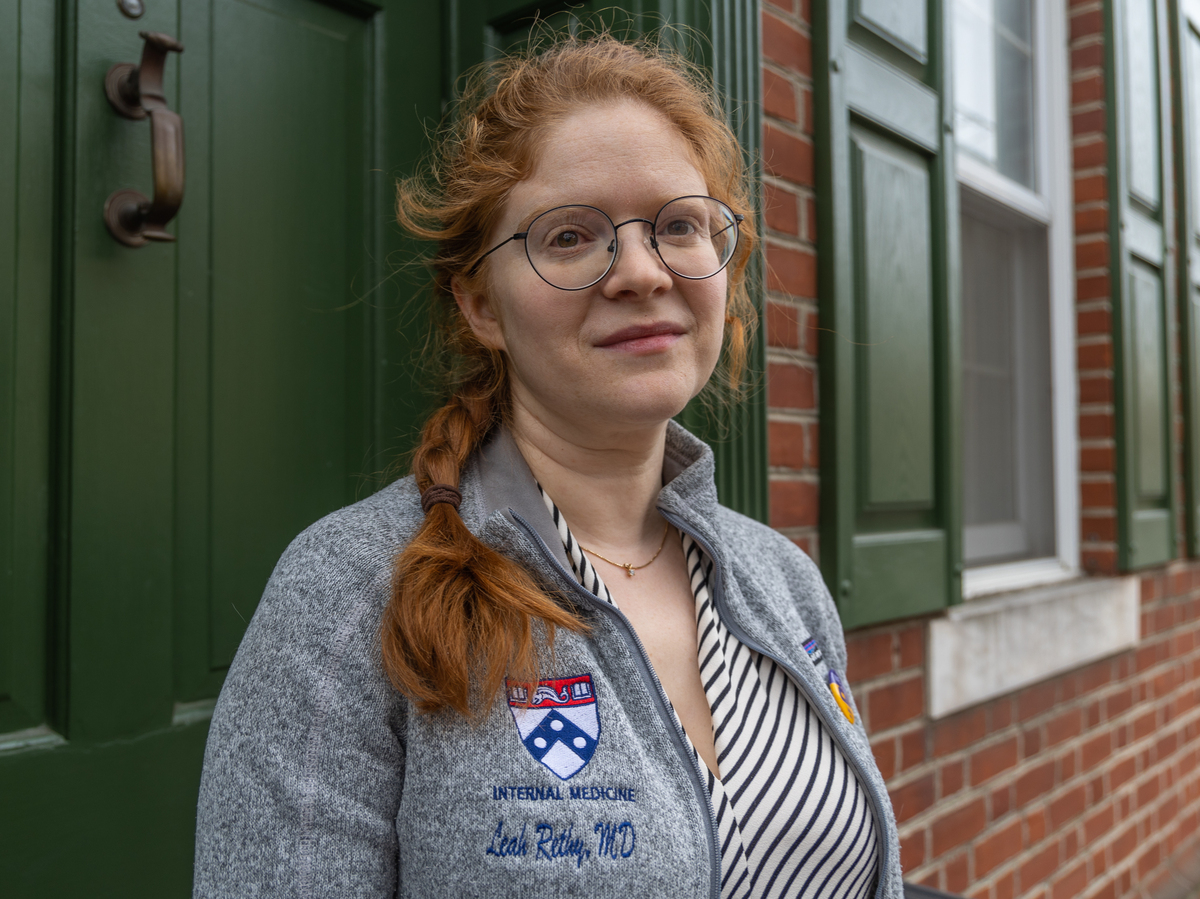
Dr. Leah Rethy is an internal medicine resident with Penn Medicine.

Kimberly Paynter/WHYY


hide caption

toggle caption

Kimberly Paynter/WHYY


Dr. Leah Rethy is an internal medicine resident with Penn Medicine.

Kimberly Paynter/WHYY

Dr. Leah Rethy was pregnant during the first year of her internal medicine residency at the Hospital of the University of Pennsylvania in Philadelphia. She gave birth during her second year. She worked through her 40th week of pregnancy so she could save her time off and spend more time with her newborn.

Now she’s back at work and needs child care. A lot of child care. Medical residents often work long and irregular hours, sometimes as many as 80 hours a week. And child care is one of the main issues motivating Rethy to push for a union at her hospital.

In February, most residents at two major Penn Medicine hospitals decided to form a union, and the National Labor Relations Board will conduct their election in early May. They join a wave of other residents unionizing at programs around the country, most recently at Montefiore hospital in New York, George Washington University in Washington, DC, and Mass General Brigham in Boston.

If successful, these residents would join the Committee of Interns and Residents, the union for medical residents. According to the union’s figures, the number of campaigns spiked from two in 2021, to eight in 2022, an unprecedented increase.

Child care challenges

Rethy says her problem with child care is not unusual — residency follows undergraduate education, and usually four years of medical school, so it overlaps with childbearing years for most people.

“I know a lot of people who’ve delayed having children,” she says. “And I also have heard a number of stories of people delaying having children and then, ultimately, having real challenges getting pregnant because of being older and various factors.”

Dr. Leah Rethy, an internal medicine resident with Penn Medicine, holds her 17 month-old son, Peter.

Kimberly Paynter/WHYY


hide caption

toggle caption

Kimberly Paynter/WHYY


Dr. Leah Rethy, an internal medicine resident with Penn Medicine, holds her 17 month-old son, Peter.

Kimberly Paynter/WHYY

Rethy laments the waiting lists for child care affiliated with Penn Medicine, and says finding her own child care is prohibitively expensive.

“The cost of day care … in a month is about half of my salary in total, and the cost of a nanny is essentially the entirety of my salary,” says Rethy.

She says this experience led her to believe unionizing is the best way for residents to demand better working conditions and higher pay, which would lead to better patient care.

A workforce that can’t leave

Sunyata Altenor is the communications director of Committee of Interns and Residents, or CIR, as the union is known. She says residents who want to unionize understand the program is supposed to be hard work, with long hours. But they want to be treated fairly for their efforts, at a workplace they cannot just choose to leave, as it’s a required part of their training.

“It’s easy to exploit physicians during this time in their career,” Altenor says. “They’re only going to be there for a few years. It’s sort of expected that you go through this hard, hazing culture, and then you come out at the other end an attending physician.”

Prominently, Stanford Medicine did not include residents in their COVID-19 vaccination plans in 2020, leading to protests, and later, a successful unionization drive.

Dr. Chantal Tapé, a third-year resident in family medicine at Penn Medicine, said residents expect challenging work and long shifts, but they would also like to be able to be healthy and financially stable so they can focus on taking care of patients.

She said it is “frustrating as someone who is a prenatal care provider,” to watch colleagues struggle during pregnancy make it to prenatal care appointments and during early parenthood to afford child care. Her colleagues can’t follow advice she recommends for her patients.

Parking, mice and roaches, too

Penn Medicine residents cite many issues for their decision to form a union, such as: the upcoming loss of parking benefits that would lead to an extra $200 monthly cost for residents; and dirty call rooms, which are rooms where residents stay and rest if they have to work overnight.

Residents say some current call rooms have mice and cockroaches.

Dr. Madison Sharp, a third-year OB-GYN resident, recalls not even having a call room to sleep in during a 24-hour rotation.

“So I tried to sleep in a dialysis chair that didn’t lie flat in a conference room off to the side,” she said. “Two years later, residents on that same rotation still don’t have a place to sleep for a few hours on a 24-hour call shift … keep in mind that Penn just opened a billion-dollar hospital but neglected to create physical space for us.”

Medical residents at Penn Medicine say cockroaches and mice have been seen in the “call rooms” where doctors rest during 24-hour shifts.

Resident at Penn Medicine


hide caption

toggle caption

Resident at Penn Medicine


Medical residents at Penn Medicine say cockroaches and mice have been seen in the “call rooms” where doctors rest during 24-hour shifts.

Resident at Penn Medicine

In a prepared statement, Penn Medicine says it values residents and is “proud of the ways in which we have sought to continually improve resident life and wellness.” The statement maintains it provides benefits and increased salaries to offer competitive working conditions. Starting July 1, resident salaries will start at a little more than $69,000 a year, according to Penn Medicine. They also say “trainees” should bring their concerns to administrators through an existing advisory council.

“I was the president of this council last year, and I can tell you firsthand that the House staff governing council is extremely limited in what we could accomplish,” Sharp said. “It was incredibly frustrating to advocate for residents and fellows and not be heard or have our concerns brushed aside or dismissed.”

Residents at the University of Vermont Medical Center voted to form a union last year. Following the successful union vote for residents, support staff including maintenance workers and technicians are unionizing as well.

The union for residents at Jersey City Medical Center has already argued for a better work environment in the years since they’ve organized, said Dr. Andrea Attenasio, a fourth-year resident in orthopedic surgery. For instance, she said they recently managed to ask the hospital to provide food for residents who work after hours; to provide bedsheets for the rooms where residents stay if they work overnight; and to stop tying salary increases for residents to overall hospital performance, a major concern with rising inflation and cost of living.

Attenasio said the bargaining power and strength in numbers that comes from being a union member makes a difference for residents:.

“It’s an automatic support system and it allows you to go to your hospital administration as a united front.”

Social frailty comes with health risks for older adults

Social frailty comes with health risks for older adults


CNN
 — 

Consider three hypothetical women in their mid-70s, all living alone in identical economic circumstances with the same array of ailments: diabetes, arthritis and high blood pressure.

Ms. Green stays home most of the time and sometimes goes a week without seeing people. But she’s in frequent touch by phone with friends and relatives, and she takes a virtual class with a discussion group from a nearby college.

Ms. Smith also stays home but rarely talks to anyone. She has lost contact with friends, stopped going to church and spends most of her time watching TV.

Ms. Johnson has a wide circle of friends and a busy schedule. She walks with neighbors regularly, volunteers at a local school twice a week, goes to church and is in close touch with her children, who don’t live nearby.

Three sets of social circumstances, three levels of risk should the women experience a fall, bout of pneumonia or serious deterioration in health.

Of the women, Ms. Johnson would be most likely to get a ride to the doctor or a visit in the hospital, experts suggest. Several people may check on Ms. Green and arrange assistance while she recovers.

But Ms. Smith would be unlikely to get much help and more likely than the others to fare poorly if her health became challenged. She’s what some experts would call “socially vulnerable” or “socially frail.”

Social frailty is a corollary to physical frailty, a set of vulnerabilities (including weakness, exhaustion, unintentional weight loss, slowness and low physical activity) shown to increase the risk of falls, disability, hospitalization, poor surgical outcomes, admission to a nursing home and earlier death in older adults.

Essentially, people who are physically frail have less physiological strength and a reduced biological ability to bounce back from illness or injury.

Those who are socially frail similarly have fewer resources to draw upon but for different reasons — they don’t have close relationships, can’t rely on others for help, aren’t active in community groups or religious organizations, or live in neighborhoods that feel unsafe, among other circumstances. Also, social frailty can entail feeling a lack of control over one’s life or being devalued by others.

Many of these factors have been linked to poor health outcomes in later life, along with so-called social determinants of health — low socioeconomic status, poor nutrition, insecure housing and inaccessible transportation.

Social frailty assumes that each factor contributes to an older person’s vulnerability and that they interact with and build upon each other.

“It’s a more complete picture of older adults’ circumstances than any one factor alone,” said Dr. Melissa Andrew, a professor of geriatric medicine at Dalhousie University in Halifax, Nova Scotia, who published one of the first social vulnerability indices for older adults in 2008.

This way of thinking about older adults’ social lives, and how they influence health outcomes, is getting new attention from experts in the United States and elsewhere. In February, researchers at Massachusetts General Hospital and the University of California, San Francisco published a 10-item “social frailty index” in the Proceedings of the National Academy of Sciences journal.

Using data from 8,250 adults 65 and older who participated in the national Health and Retirement Study from 2010 to 2016, the researchers found that the index helped predict an increased risk of death during the period studied in a significant number of older adults, complementing medical tools used for this purpose.

“Our goal is to help clinicians identify older patients who are socially frail and to prompt problem-solving designed to help them cope with various challenges,” said Dr. Sachin Shah, a coauthor of the paper and a researcher at Massachusetts General Hospital.

“It adds dimensions of what a clinician should know about their patients beyond current screening instruments, which are focused on physical health,” said Dr. Linda Fried, a frailty researcher and dean of the Mailman School of Public Health at Columbia University.

Beyond the corridors of medicine, Fried said, “we need society to build solutions” to issues raised in the index — the ability of older adults to work, volunteer and engage with other people; the safety and accessibility of neighborhoods in which they live; ageism and discrimination against older adults; and more.

Meanwhile, a team of Chinese researchers recently published a comprehensive review of social frailty in adults age 60 and older, based on results from dozens of studies with about 83,900 participants in Japan, China, Korea and Europe. They determined that 24{515baef3fee8ea94d67a98a2b336e0215adf67d225b0e21a4f5c9b13e8fbd502} of these older adults, assessed both in hospitals and in the community, were socially frail — a higher portion than those deemed physically frail (12{515baef3fee8ea94d67a98a2b336e0215adf67d225b0e21a4f5c9b13e8fbd502}) or cognitively frail (9{515baef3fee8ea94d67a98a2b336e0215adf67d225b0e21a4f5c9b13e8fbd502}) in separate studies. Most vulnerable were people 75 and older.

What are the implications for health care? “If someone is socially vulnerable, perhaps they’ll need more help at home while they’re recovering from surgery. Or maybe they’ll need someone outside their family circle to be an advocate for them in the hospital,” said Dr. Kenneth Covinsky, a geriatrician at UC San Francisco and coauthor of the recent Proceedings of the National Academy of Sciences article.

“I can see a social frailty index being useful in identifying older adults who need extra assistance and directing them to community resources,” said Jennifer Ailshire, an associate professor of gerontology and sociology at the University of Southern California Leonard Davis School of Gerontology.

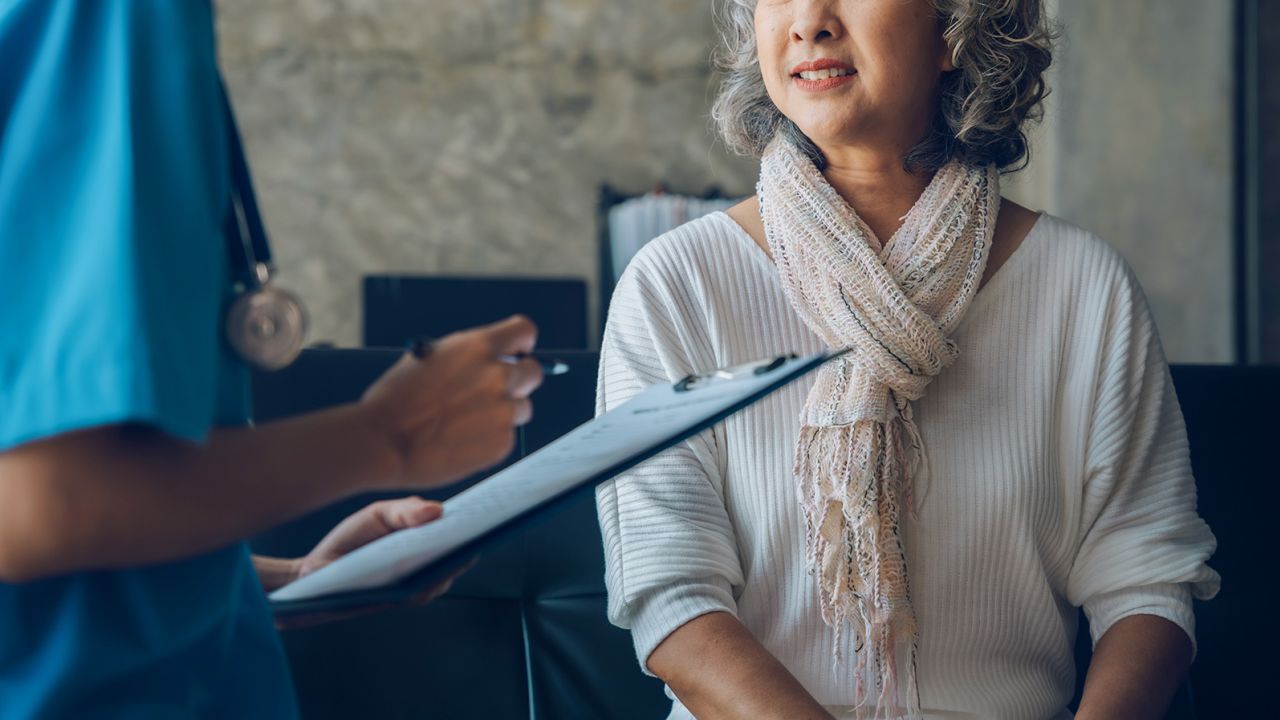
Older people who are socially vulnerable may need more assistance with health care.

Unlike other physicians, geriatricians regularly screen older adults for extra needs, albeit without using a well-vetted or consistent set of measures. “I’ll ask, ‘Who do you depend on most and how do you depend on them? Do they bring you food? Drive you places? Come by and check on you? Give you their time and attention?’ ” said Dr. William Dale, the Arthur M. Coppola family chair in supportive care medicine at City of Hope, a comprehensive cancer center in Duarte, California.

Depending on the patients’ answers, Dale will refer them to a social worker or help modify their plan of care. But he cautioned that primary care physicians and specialists don’t routinely take the time to do this.

Oak Street Health, a Chicago-based chain of 169 primary care centers for older adults in 21 states and recently purchased by CVS Health, is trying to change that in its clinics, said Dr. Ali Khan, the company’s chief medical officer of value-based care strategy.

At least three times a year, medical assistants, social workers or clinicians ask patients about loneliness and social isolation, barriers to transportation, food insecurity, financial strain, housing quality and safety, access to broadband services and utility services.

The organization combines these findings with patient-specific medical information in a “global risk assessment” that separates older people into four tiers of risk, from very high to very low. In turn, this informs the kinds of services provided to patients, the frequency of service delivery and individual wellness plans, which include social as well as medical priorities.

The central issue, Khan said, is “what is this patient’s ability to continue down a path of resilience in the face of a very complicated health care system?” and what Oak Street Health can do to enhance that.

What’s left out of an approach such as this, however, is something crucial to older adults: whether their relationships with other people are positive or negative. That isn’t typically measured, but it’s essential in considering whether their social needs are being met, said Linda Waite, the George Herbert Mead distinguished service professor of sociology at the University of Chicago and director of the National Social Life, Health, and Aging Project.

For older adults who want to think about their own social vulnerability, consider this five-item index, developed by researchers in Japan.

1. Do you go out less frequently compared with last year?

2. Do you sometimes visit your friends?

3. Do you feel you are helpful to friends or family?

4. Do you live alone?

5. Do you talk to someone every day?

Think about your answers. If you find your responses unsatisfactory, it might be time to reconsider your social circumstances and make a change.