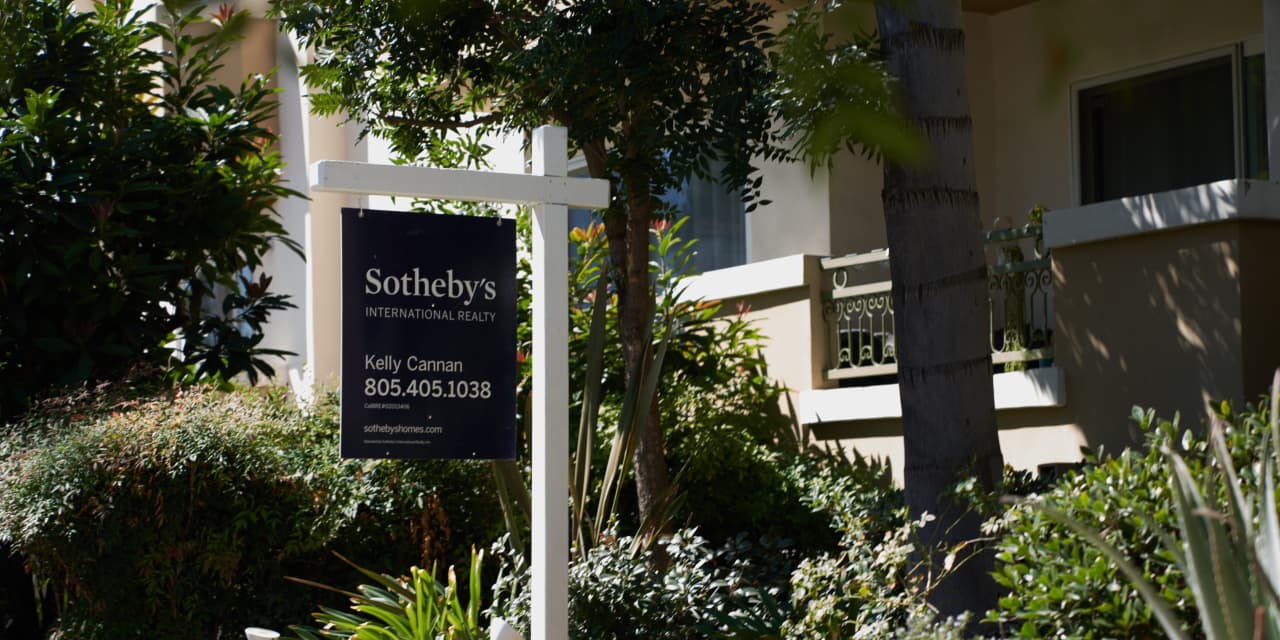
The other day, Linda, the real-estate agent whom my wife and I used to buy our home, called me out of the blue. It was the first anniversary of our closing. I had forgotten. She had not.
As she asked about my family and how we were liking the house, I remembered her salty, knowing, singsong voice. She’d been a comfort to us, offering advice during some tough moments when I was stressed out and wrangling with the sellers. I’m pretty sure there was a point when I had broken down in tears. She’d also kicked the tires on the asking price, abrasively noting — in front of the seller’s agent — that the house lacked a doorbell, and that the first digit of the asking price, in the high six figures, needed to come down from a 9 to an 8. So she had worked hard for her end of the commission — $26,250, the full 3{515baef3fee8ea94d67a98a2b336e0215adf67d225b0e21a4f5c9b13e8fbd502} that remains customary among agents, especially in major cities.
The way real-estate transactions are structured, I never saw that number until closing day. Both agents were paid out of the seller’s account, which created the appearance that Linda’s services didn’t cost me anything. But of course, all of that money had been generated by our down payment, and by the mortgage we took out on the place.
Three percent was a lot. It was more than the principal we would be paying down on the mortgage during the first year we owned the house. But I never challenged or even mentioned the commission, because I didn’t want to wreck the deal. I was also worried about offending Linda, who had been the first agent to mention the listing to me.
Besides, as a first-time homebuyer, I had pretty much zero idea of how the whole thing worked. Cutting a better deal with Linda would have been like trying to negotiate with our obstetrician over the $10,000 we had paid out of pocket, on top of our insurance premium, for delivering our youngest child. While technically feasible, it was, all practical purposes, unimaginable.
But as with healthcare, there is ample evidence that America’s housing market is more or less designed to rip off consumers. Real-estate agents, like doctors, are the friendly, knowledgeable face of a bewildering, price-gouging system. The industry effectively operates as a monopoly that works to keep fees high, stifle competition, and control access to the best listings. In some cases, real-estate agents even drive up the cost of homes by pushing for all-cash offers and “escalation clauses” that trigger automatic bidding wars — moves that, in turn, drive up their commissions. And while homebuyers aren’t required by law to use an agent, few have the time or expertise to navigate the complexities of the housing market on their own, any more than they could deliver their own babies. As a result, Americans pay far more for real-estate agents than homebuyers in most other developed nations, robbing them of a significant portion of what is often the biggest investment of their lives. If Americans paid the same rate as the British, they would save more than $72 billion a year in real-estate commissions.
“On the sale of a million-dollar home, at 6{515baef3fee8ea94d67a98a2b336e0215adf67d225b0e21a4f5c9b13e8fbd502}, did the buyer and seller receive $60,000 worth of service?” asks Stephen Brobeck, a senior fellow at the Consumer Federation of America. “That $60,000 would buy you two new cars. It just doesn’t make sense, the whole compensation system. There’s no question that most agents are overcompensated, sometimes grossly, for the services they perform in helping consumers buy or sell homes.”
Your agent is not your friend
There are plenty of reasons to use an agent when buying or selling a home. Real-estate deals involve a lot of legal intricacy and emotional nuance. For most people, paying an agent to help them navigate a costly, once-in-a-lifetime transaction seems like a worthwhile investment.
It certainly was in my case. I’m a hot-tempered, impulsive negotiator, even when I don’t have my hands full dealing with things like mortgage rates, title insurance, inspections, and overnighting five-figure cashier’s checks. The sellers had their own quirks. When we asked that they clean out the piles of leaves in the house’s gutters, their agent wound up paying for it out of his own pocket. Without two full-time professionals working to hammer out a deal that benefited everyone but thrilled no one, the sale almost certainly would have fallen through.
The question is, how much are those services worth? According to an international survey of brokers conducted by a discount brokerage in 2015, American buyers and sellers, on average, pay a combined commission of 5.5{515baef3fee8ea94d67a98a2b336e0215adf67d225b0e21a4f5c9b13e8fbd502}. In the United Kingdom, by contrast, the average fee is only 1.5{515baef3fee8ea94d67a98a2b336e0215adf67d225b0e21a4f5c9b13e8fbd502}. Commissions run as low as 2{515baef3fee8ea94d67a98a2b336e0215adf67d225b0e21a4f5c9b13e8fbd502} in Finland and Australia and 3{515baef3fee8ea94d67a98a2b336e0215adf67d225b0e21a4f5c9b13e8fbd502} in Canada and Italy. (As of 2020, according to industry data, the average US rate has dipped slightly, to 4.94{515baef3fee8ea94d67a98a2b336e0215adf67d225b0e21a4f5c9b13e8fbd502}.)
To keep prices inflated, American agents have used two time-tested methods. At the federal and state levels, the National Association of Realtors routinely lobbies against regulations that would protect consumers and spur competition. (Last year, the Justice Department announced that it was broadening its investigation of the association for violating antitrust laws.) And at the local level, according to economists, agents systematically hog the most valuable listings for themselves and steer buyers away from sellers who dare to offer a discount on commissions.
The irony is, there’s nothing that requires Americans to fork over 3{515baef3fee8ea94d67a98a2b336e0215adf67d225b0e21a4f5c9b13e8fbd502} for an agent. “Consumers have the choice of who they want to pay and how they want to pay them,” a spokesperson for the National Association of Realtors told Insider. But many consumers aren’t aware that brokers and their fees are optional.Max Besbris, a sociologist at the University of Wisconsin who is the author of “Upsold: Real Estate Agents, Prices, and Neighborhood Inequality,” says US consumers are at a disadvantage because they have little information about how real-estate transactions actually work. “When you’re a buyer and you ask, ‘How do I pay you?’ they say, ‘Oh, I split 6{515baef3fee8ea94d67a98a2b336e0215adf67d225b0e21a4f5c9b13e8fbd502} commission with the seller’s agent.’ They don’t tell you that it’s negotiable. I don’t think consumers understand that it’s a norm, not a law.”
The high commissions, coupled with the soaring cost of housing, have made brokering real estate more lucrative than ever. Last year, total compensation for agents ballooned to nearly $105 billion, up from $90.5 billion in 2020. That’s a lot of money — more than America pays its firefighters, and more than half of what it pays public-school teachers.
The potential for big money, in turn, has led more and more Americans to become real-estate agents. In 2020, for the first time, the number of dues-paying Realtors surpassed the number of active listings. The following year, as the coronavirus pandemic dragged on, as America binged episodes of reality-TV shows like “Million Dollar Listing” and “Selling Sunset,” the top job-related search on Google was “how to become a real estate agent.”
It’s not hard to do — all it takes is a two-week course and passing a state exam. But because both commissions and the stock of available housing are fixed, the market isn’t able to correct for the sudden glut of brokers by regulating supply or demand. As a result, newcomers to the profession have almost no chance of making a living. Agents with less than two years of experience, who are often forced to share their commissions with a more senior team leader, earn a median income of only $8,800. Seven out of eight agents quit before they reach their sixth year in the business. It’s a tough racket in which a few get rich and everyone struggles to eke by. “The industry and its underlying model monetizes failure,” says Mike Maher, the CEO of Houwzer, one of a new raft of startups trying to disrupt the system.
Monopoly rules
The reason for all of this is simple. In America, the real-estate market essentially operates as a cartel — a group of independent firms that collude to fix prices and stifle competition. How do they do it? Through a mechanism called the Multiple Listing Service. The MLS includes more than 600 private databases, each controlled by a local association of Realtors, that list which houses are for sale in a local market. Some of that information is used to populate the listings you see on Zillow, Trulia, Redfin, and Realtor.com. But the MLS also contains a lot of information that isn’t public. On many systems, agents can post properties for sale under a category called “Coming Soon” that is visible only to other agents who pay to subscribe to the MLS. Buyers who want to compete for “coming soon” listings — often some of the fastest selling and most desirable properties — have no choice but to use an agent who has MLS access.
Agents argue that the MLS is part of the value they provide to their customers. “Use me,” the line goes, “and you’ll have inside access to the hottest homes.” I ran into this market pressure when I turned up for scheduled open houses, only to find the door locked and the house already sold. It’s not a free and open market when one group of agents controls the keys to the best properties.
In a statement to Insider, the National Association of Realtors maintained that the curent system is designed to give consumers “the best, most efficient, and transparent experience in buying or selling a home.” The association also said that it’s unfair to compare broker commissions in the US to those in other countries, because laws and markets differ widely. “The US housing market is unique, efficient, and innovative,” the spokesperson said. “Most countries want to copy our practices, not the other way around.”
But using an agent doesn’t mean you’ll get a better deal. One study found that sellers actually received a lower price for their properties when using an agent — as much as 7.7{515baef3fee8ea94d67a98a2b336e0215adf67d225b0e21a4f5c9b13e8fbd502} less. That’s in part because agents for buyers tend to steer their clients away from properties on the MLS that offer lower commission rates, where they stand to make less money. Another study found that homes with discounted commission took 12{515baef3fee8ea94d67a98a2b336e0215adf67d225b0e21a4f5c9b13e8fbd502} longer to sell.
“How does the industry sustain high commissions? Well, how does a cartel stay in place?” asks Ben Keys, who teaches real estate and finance at the Wharton School of the University of Pennsylvania. “Think of them like OPEC, coordinating the price of oil. There has to be a carrot and a stick. People are steered away from properties where the commission is 2{515baef3fee8ea94d67a98a2b336e0215adf67d225b0e21a4f5c9b13e8fbd502} rather than 3{515baef3fee8ea94d67a98a2b336e0215adf67d225b0e21a4f5c9b13e8fbd502}. That can harm both buyer and seller. Buyers might not see a house they would really like, and sellers would have fewer bidders. So there’s a conflict of interest between the intermediary party and the buyers and sellers they’re representing.”
Other conflicts of interest are even more blatant. Some states permit dual agency — allowing one agent to represent both the buyer and the seller, which is a recipe for disaster. In other instances, which agents gleefully refer to as “double dipping” or “double popping,” both agents come from the same brokerage, enabling them to keep the entire 6{515baef3fee8ea94d67a98a2b336e0215adf67d225b0e21a4f5c9b13e8fbd502} commission in-house. Consumer advocates say that dual agency encourages overcompensation and creates conflicts of interest. In one undercover investigation, double-dipping agents were caught on camera breaking the law by revealing confidential information to buyers and plotting to push sellers to accept low offers.
Even the all-powerful internet hasn’t been able to break the grip of the real-estate cartel. When Zillow and Redfin launched two decades ago, part of their promise was to disrupt the existing model by providing the same service at a lower price. In its early years, Redfin listed properties for a flat fee of $2,000 and rewarded buyers with lavish rebates. But over time, the rebates have gotten smaller, and the company’s business model has drifted closer to that of a conventional brokerage, albeit one that charges sellers a discounted commission of 1{515baef3fee8ea94d67a98a2b336e0215adf67d225b0e21a4f5c9b13e8fbd502}. Zillow, meanwhile, is mainly an advertising platform, enticing prospective buyers with listings and then encouraging them to sign with agents and lenders who pay Zillow to generate leads.
“I have been surprised by US commissions not changing,” says David Eraker, one of Redfin’s founders. “The entrepreneurial mantra was to disrupt industries with technology to the benefit of consumers.”
How to beat the system
One indication of the power of the real-estate cartel is how hard it is to break out of it. There’s nothing that requires you to use an agent when you buy or sell a home; legally, you can handle the process yourself. Yet last year, transactions listed as “for sale by owner” represented only 7{515baef3fee8ea94d67a98a2b336e0215adf67d225b0e21a4f5c9b13e8fbd502} of all real-estate listings — the lowest level on record.
But that doesn’t mean you’re powerless in the face of the real-estate monopoly. For starters, if you’re selling your home, it’s important to understand that you don’t have to sign what’s known as an “exclusive right-to-sell” agreement, under which the agent gets their commission even if you wind up bringing in the buyer. Instead, you can sign a contract that gives you the option to pay no seller’s commission if you find your own buyer. You can also do an open listing, which enables you to work with multiple agents. In that scenario, you may find yourself having to pay for things like staging and photos, but competition between agents helps open the door to a frank conversation about adjusting their commission prices.
If you’re willing to do some of the work yourself, a number of startups — including Redfin, Houwzer, UpNest, Rex, Redfy, and ListingSpark — offer discounted commissions for sellers. And if you decide to handle the sale on your own, you may be able to use what are known as Flat Fee MLS companies to make sure your property shows up on websites and MLS databases. (In some states, seeking to maintain their monopoly, agents have successfully lobbied to ban Flat Fee options.) But keep in mind that “for sale by owner” involves not only hiring a photographer to shoot your home but also paying a lawyer to handle the closing paperwork. And you’ll still have to pay a commission to the buyer’s agent, if they have committed to one.
Buyers also have options. With so many new agents flooding the market, you can start by making sure the one you pick brings serious expertise to the table. You can also shop around for a discount. “I will cut commission all the time,” says Charlie Cohen, an independent agent who uses his Instagram account to market midcentury properties around Chicago. “I’ll take 2.5{515baef3fee8ea94d67a98a2b336e0215adf67d225b0e21a4f5c9b13e8fbd502} from a buyer. Then, when they’re ready to sell, I’ll do it again for 1 to 2{515baef3fee8ea94d67a98a2b336e0215adf67d225b0e21a4f5c9b13e8fbd502}. People would rather pay less in commission than me trying to justify all this smoke and mirrors when they’re not going to get a better result.”
You can also handle the purchase yourself, by paying a lawyer for a few hours of work to handle all the documents. On a $500,000 home, that can save you $10,000 or more. The tricky part is getting past the seller’s agent, who may badmouth your offer to the seller if they feel as if you’re skirting established industry practices. “It’s a matter of how you comport yourself,” says Eraker, the cofounder of Redfin. “You have to know what you’re doing.”
Finally, don’t listen if the seller’s agent tells you not to worry about the commission because you’re not the one paying it. Every dollar that is paid out in a real-estate transaction — to sellers, agents, inspectors, insurers, and the IRS — comes from you, the buyer. You have to either come up with the money yourself, or borrow it. “The buyer is paying all the commissions,” Eraker says. “It’s baked into the housing price.” Part of the reason, in fact, that both brokers are paid out of the seller’s proceeds is that it allows their commissions to be financed by the buyer’s mortgage. Banks wouldn’t allow buyers to borrow directly to pay brokers, and many buyers don’t have the money to cover broker commissions out of pocket.
But there’s only so much that individual consumers can do to fix a broken system, especially when their home and savings are on the line. Real estate is a hyperlocal, face-to-face business. If a savvy agent has control of a particular house, neighborhood, or network of buyers, the benefits of paying full commission can easily outweigh the costs of trying to hack your way to a better deal. What’s needed, ultimately, is better regulation.
For example, under the rules of the National Association of Realtors, the seller’s agent is the one who sets the commission for the buyer’s agent — paying them, in effect, for delivering a client who’s willing and able to purchase the property. “That’s open-market capitalism,” the association’s spokesperson told Insider. “Stopping that would go against ensuring the idea of a free and open market.” But the arrangement deprives buyers — the ones paying for the entire service — of the ability to negotiate directly with their own agent on price. It’s inherently anticompetitive, and it needs to change.
Regulation is also needed to protect real-estate startups and discounted commission models from being pushed out of the marketplace by the incumbents. It should be clear now that technology alone won’t be enough to bring US commission prices in line with the rest of the developed world, where governments help ensure fair prices by cracking down on anticompetitive behavior.
I don’t regret having used Linda as my agent when we bought our home, even though the system was clearly rigged against me as a consumer. And Linda, for her part, did a lot of work to make me feel as if our relationship wasn’t about money. After the deal closed, she gave us a cutting board, two children’s books, and a bottle of Champagne. It was a friendly gesture, but it was also a smart business move. Besbris, the sociologist, describes such gifts as a tool that agents use to generate “a series of successful service interactions with buyers and sellers, leading to more referrals, with the network of people ever expanding.”
There’s nothing wrong with that — or with Linda. But the business she’s in is a monopoly that’s every bit as skilled as Amazon on quashing competition and driving up prices. And until it’s reformed, Americans will continue to lose tens of billions of dollars a year to an industry that, Champagne and children’s books aside, is no one’s friend.
Mattathias Schwartz is a senior correspondent at Insider.