The offseason is coming to an end and spring training is right around the corner. Spring training camps open across Arizona and Florida later this week, then, next weekend, the Cactus League and Grapefruit League seasons begin. Real live baseball is less than two weeks away, even if the games are meaningless.
When exhibition games begin, fans and players alike will get their first look at MLB’s newest rule changes. Specifically, there will be a pitch clock, larger bases, and a limit on extreme infield shifts. The new rules are all part of the league’s efforts to improve pace of play and create more action on the field by rewarding contact and encouraging more aggressive base running.
There is another, much more subtle rule change coming as well. According to ESPN, MLB’s joint competition committee has unanimously approved a rule change designed to reduce the number of position player pitching appearances. Last year, position players could pitch when the score was separated by at least six runs. Here’s the new rule, per ESPN:
Under the new guidelines, leading teams have to be up by 10 or more runs in the ninth inning in order to let a position player pitch while trailing teams can use a position player anytime it’s down by eight or more runs. Position players are also allowed to pitch anytime in extra innings.
Not including Shohei Ohtani, there were a record 132 position player pitching appearances in 2022, or slightly less than one per day. That number was 89 in 2021. There were 93 position player pitching appearances total from 2010-15, and there were 57 total during the entire 1990s. Putting a position player on the mound used to be the ultimate humiliation. Now it’s a strategy.
Case in point: Hanser Alberto. The Los Angeles Dodgers put Alberto, a career utility infielder, on the mound 10 times last season, including eight times in wins. The new rule limiting position player pitchers to games their team is leading by at least 10 runs would have reduced that number to four, which is still a ton, but the new rule would have cut into the strategy quite a bit.
Point is, position players pitchers used to be a fun novelty, but now they’re commonplace even though position players don’t train to pitch and are at increased risk of injury, which is the MLBPA’s primary concern. The union is also concerned about players getting dinged by defensive stats, which could hurt them in arbitration.
MLB and the MLBPA were motivated to get a new position player pitching rule in place that won’t outlaw the practice entirely, but will reduce the number of times it happens overall. It happened and that’s good news for the sport’s competitive landscape.
In July, 2015, Stephen Casper, a healthcare historian, received a shocking e-mail from a workforce of legal professionals. They have been representing a team of retired hockey gamers who were suing the Nationwide Hockey League their match argued that the N.H.L. had failed to alert them about how regime head punches and jolts in hockey could set them at danger for degenerative mind problems. The legal professionals, unusually, desired to hire a historian. A sort of dementia called chronic traumatic encephalopathy, or C.T.E., experienced not too long ago been posthumously identified in dozens of previous professional football and hockey players diagnosable only by a mind autopsy, it was thought to be induced by concussions—injuries in which the brain is twisted or bumped from the inside of of the skull—and by recurring subconcussive blows to the head. In the media, C.T.E. was remaining described as a shocking syndrome that had by no means been discovered in sporting activities outside the house of boxing. In essence, the lawful staff needed a historian to explain to them what science experienced acknowledged about head trauma, and when.
Casper, a background professor at Clarkson University, in upstate New York, experienced majored in neuroscience and biochemistry, labored in a lab finding out dementia in mice, and attained his Ph.D. in the background of medicine from University College or university London. His dissertation explored the emergence of neurology in the U.K.—a record that included the analyze of shell shock and head injury in the 1st and 2nd Planet Wars. Casper agreed to do the job for the hockey gamers. He turned his attention to a broad archive of scientific and medical papers going again much more than a century. In constructing a time line of how knowledge on head injuries progressed from the eighteen-seventies onward, he drew on extra than a thousand main resources, including health care-journal content articles, textbooks, and monographs.
Looking through the research in chronological buy was like listening to physicians and researchers conversing across time. The dialogue spanned several eras, just about every charting climbing worries about head accidents from various causes—from railroad and factory mishaps to fight in the Earth Wars, and from crashes in newfangled vehicles to the increase of faculty and skilled sporting activities. Casper identified that medical professionals experienced started to fear about repeated head accidents as early as the eighteen-hundreds. In 1872, for instance, the director of the West Driving Lunatic Asylum, in England, experienced warned that concussions, and primarily repeated concussions, could consequence in psychological infirmity and “moral delinquency.” Other asylum doctors called the ailment “traumatic insanity” or “traumatic dementia.” From that time onward, dialogue of the extended-phrase results of head accidents in various contexts, together with sports, surfaced again and once again. Medical professionals acknowledged lasting sequelae of extreme head trauma, and often expressed issue about the implications of milder head blows, as well.
Currently, C.T.E. is the issue of furious controversy. Some of the debate has been stoked by researchers affiliated with the athletics sector, who argue that we nevertheless really do not know for positive that head blows in soccer, hockey, soccer, or rugby can lead, many years later, to the remarkable temper issues, the individuality alterations, and the cognitive deterioration affiliated with C.T.E. These gurus retain that, just before we rethink our connection with these sports, we will need scientific inquiries that meet up with very rigorous standards—including longitudinal experiments that would choose fifty to seventy a long time or additional to entire. In the meantime, millions of small children and substantial-school, faculty, and professional athletes would continue butting heads on the subject.
Casper believes that the science was convincing plenty of long ago. “The scientific literature has been pointing in essence in the very same direction considering that the eighteen-nineties,” he instructed me. “Every technology has been doing extra or significantly less the very same variety of studies, and every technology has been getting far more or much less the exact same kinds of effects.” His operate suggests that, even as scientific inquiry proceeds, we know enough to intervene now, and have recognised it for decades. It also raises critical concerns about how, and how substantially, previous know-how need to make a difference to us in the present. If Casper is suitable, then how did we forget about what is very long been known? And when does scientific know-how, nonetheless incomplete, compel us to modify?
In accordance to Casper and other historians, the collision involving sports and concussions started all over the eighteen-eighties. American-fashion football, a descendant of rugby, was getting in acceptance at Ivy League schools, and violence was essential to its attract. Gamers who wore stocking caps but no padding executed mass performs, such as the “flying wedge,” that led to savage clashes. At times, youthful gentlemen died on the subject. “Concern about concussions has a record in soccer as long as the video game of soccer alone,” Emily Harrison, a historian who teaches epidemiology and world-wide wellness at the Harvard College of Public Overall health, instructed me.
Football’s “first concussion crisis”—which Harrison wrote about in 2014—ensued after a study of Harvard’s football squad in 1906 noted a hundred and forty-five accidents in a person year, nineteen of them concussions. In a commentary, the editors of the Journal of the American Health-related Affiliation (JAMA) singled out instances in which “a guy so harm continued instantly to go by the motions of playing until eventually his mates recognized that he was mentally irresponsible.” This behavior, they mentioned, advised “a extremely serious shaking up” of the central anxious system, which, they argued, may possibly have significant repercussions afterwards in existence. Soccer, they concluded, was “something that have to be significantly modified or abandoned if we are to be regarded as a civilized people today.”
According to Harrison’s investigate, some leaders within the Progressive political movement had been contacting for football’s abolition, on pacifist grounds. But that year President Teddy Roosevelt, the nation’s foremost mainstream Progressive, spearheaded the institution of the Intercollegiate Athletic Association—a precursor to the Countrywide Collegiate Athletic Affiliation. The association launched reforms this kind of as protecting gear and the ahead move, which fairly lessened bodily accidents and deaths. But the changes also released unintended outcomes. The incidence of concussions actually increased as gamers crashed into heavier system padding. As the First Environment War started, pacifism fell out of vogue, and soccer was valorized as a means of instilling manly values in boys. At the exact time, ice hockey, which experienced to start with appeared in the late nineteenth century, became infamous for its violence, such as brutal fistfights. Observers begun calling for compulsory helmets in hockey in the nineteen-twenties. But the about-all trend was toward normalization: it became increasingly program to hear about head injuries in sports. (The N.C.A.A. commenced demanding headgear in football in 1939 the N.H.L. wouldn’t mandate helmets—which can avert skull fractures but not concussions—for hockey players right until 1979.)
In 1928, in JAMA, a pathologist named Harrison Martland posted the to start with professional medical report on punch-drunk syndrome. Martland, who was the main medical examiner of Essex County, New Jersey, had executed hundreds of brain autopsies on individuals with head injuries, together with a boxer. “For some time combat supporters and promoters have identified a peculiar situation occurring amid prize fighters which, in ring parlance, they communicate of as ‘punch drunk,’ ” he wrote boxers with obvious early signs and symptoms have been “said by the lovers to be ‘cuckoo,’ ‘goofy,’ ‘cutting paper dolls,’ or ‘slug nutty.’ ” Drawing on his own investigations and these of his colleagues, Martland concluded that the issue likely arose from single or repeated head blows which designed microscopic brain accidents. With time, these smaller injuries would come to be “a degenerative progressive lesion.” Moderate signs manifested as “a slight unsteadiness in gait or uncertainty in equilibrium,” he discovered, although critical circumstances caused staggering, tremors, and vertigo. “Marked mental deterioration may possibly established in, necessitating dedication to an asylum,” he warned.
In his research, Casper seemed deeply into Martland’s get the job done. Amazed by its high-quality, he discovered that the pathologist experienced begun with a wider inquiry into brain injuries, then experienced turned to the activity of boxing as an illustrative case for the dangers of head trauma. In Martland’s time, it was clear that boxers weren’t the only athletes in hazard: another researcher, Edward Carroll, Jr., pointed out that “punch-drunk is explained to come about among the qualified soccer gamers also,” and urged officers to make it clear to laypeople and athletes that “repeated small head impacts” could expose them to “remote and sinister effects.” (Today, top researchers think that repetitive subconcussive hits—impacts that jar the mind but never induce symptoms—are a key induce of C.T.E.) Martland’s do the job was a broadly publicized landmark. In 1933, the N.C.A.A. released a healthcare handbook on athletic injuries, penned by three leaders in the emerging field of athletics medicine—Edgar Fauver of Wesleyan College, Joseph Raycroft of Princeton, and Augustus Thorndike of Harvard—which cautioned that concussions “should not be regarded flippantly,” and observed that “there is unquestionably a ailment described as ‘punchdrunk’ and often recurrent concussion circumstances in football and boxing reveal this.”
As portion of his skilled-witness research for a different lawsuit—Gee v. N.C.A.A., the only sports-concussion case to full a jury trial—Casper received proceedings from the once-a-year N.C.A.A. conference held in December of 1932, a number of months before the health care handbook was released. At the conference, Fauver, the Wesleyan health practitioner, spoke about the hazard of very long-term brain harm: “As a professional medical guy, it is correctly obvious to me that particular accidents that appear to be to be instead gentle when they occur may perhaps demonstrate up five, 10, fifteen, or twenty many years later, and turn out to be really a great deal much more major than first predicted,” he stated. “This is specially true of head accidents.” Fauver cited the hazards of each blows in boxing and “repeated concussions in soccer.” Twelve many years later on, in 1944, one more crew health practitioner wrote in the N.C.A.A.’s formal boxing guideline that, whilst the punch-drunk condition wasn’t prevalent in beginner boxers, conditions experienced been regarded “to come about between wrestlers, expert football gamers, victims of car or industrial accidents, and many others.”
By the fifties, punch-drunk syndrome was getting explained as dementia pugilistica and long-term traumatic encephalopathy. At that level, Casper instructed me, “there was a apparent consensus that repeated concussions generate both of those acute and very long-phrase problems.” In a 1952 journal short article, Thorndike, the Harvard physician, reviewed “serious recurrent injuries” across college athletics. He suggested that athletes who experienced additional than 3 head injuries, or who suffered a concussion that resulted in a a lot more-than-momentary loss of consciousness, ought to prevent even further get hold of sports entirely. “The school health and fitness authorities are acutely aware of the pathology of the ‘punch-drunk’ boxer,” he wrote.
Casper’s historic work, started in 2015, painted a apparent image: for at least 7 a long time, if not for a longer time, numerous notable doctors and sports activities companies, which includes the N.C.A.A., experienced been effectively mindful that concussions from a selection of sports could trigger cumulative, crippling brain harm. “People who required to know could know,” Casper explained to me. “People who needed to warn could alert.” The reality ongoing to be acknowledged as the twentieth century drew to a shut. “The blow is the exact no matter if it is in boxing or in football,” a physician with the American Health-related Association explained to Congress, at a 1983 listening to on boxing security cumulative nerve-cell hurt from recurring impacts, he went on, “may guide in some people to the punch-drunk syndrome.” As an case in point of a major football head damage, the medical doctor talked about previous Giants star Frank Gifford, who experienced taken a year-prolonged hiatus from the match following remaining “knocked cold for 20-four hrs.” Gifford would afterwards be identified with C.T.E. following his dying, in 2015.
There are 363 Division I teams in college basketball. Only 68 of them will get into the NCAA Tournament field this year. And only a fraction of those 68, if I’m being truthful, are legitimate contenders fit to wear the crown.
So who are they?
By my count, only seven teams have the goods to be the last team standing on the first Monday night of April in Houston. They are (no surprise) called “contenders.” Just below them is another bucket of good — but not great — teams called “pretenders.” These are teams that can make a run in March but don’t quite have the goods to win it all. I am sorry in advance if your team falls into that category and your feelings are hurt. The truth isn’t always stuffed with empathy.
Let’s start with the contenders and work our way down to the pretenders. In the contenders column, I’ll rank each team from most to least likely to win the title – led, of course, by my current pick to win it all — along with accompanying title odds courtesy of Caesars Sportsbook.
Contenders
1. Houston
Odds to win title: +700
The only team in America with a top-10 offense and top-10 defense in adjusted efficiency, according to KenPom metrics. Houston has a healthy balance on both ends and plays a physical, disciplined style that grinds teams down throughout the game. The Cougars have a superstar vet in Marcus Sasser, a one-and-doner in Jarace Walker and experience littered throughout the roster.
2. Purdue
Odds to win title: +1000
A No. 1 seed has won the championship 24 of the last 37 tournaments since the NCAA Tournament’s bracket expansion in 1985. That’s a bright green flashing GO sign for Purdue, the likeliest No. 1 overall seed at this juncture. Historical data aside, this Boilermakers team is exactly the type of team that can win in March, too. Zach Edey — the frontrunner for Player of the Year who stands at a towering 7-foot-4 — is a nightmare matchup. Matt Painter, perennially underrated, may be the best coach in college basketball this year. And the supporting cast of characters fits perfectly around Edey with Fletcher Loyer, Braden Smith, Mason Gillis blending smarts, length and depth.
3. Arizona
Odds to win title: +1000
The Wildcats have tightened up their defense lately, boasting the top-rated unit at BartTorvik.com since giving up 87 points to Oregon on Jan. 14 — its last loss. They also rank No. 1 across the metrics spectrum at the site overall. This team took some time to find itself, but boy it has found itself an identity behind the lethal quartet of Azuolas Tubelis, Oumar Ballo, Kerr Kriisa and Courtney Ramey. Tubelis is playing like a top-three player in college basketball and raising this team’s postseason ceiling.
4. UCLA
Odds to win title: +1200
Coach Mick Cronin knows defense, and this UCLA team has embraced its identity on that side of the ball with one of the most fearsome units in college basketball. The roster is good enough to win big in March thanks to elite guard play from Jaime Jaquez Jr., Tyger Campbell and Jaylen Clark, plus an emerging freshmen duo of Amari Bailey and Adem Bona.
5. Alabama
Odds to win title: +1200
Nate Oats’ Alabama team has a rep for being explosive and devastating on offense — which is true of this year’s team — but its ability to lean into its defense is what makes it truly dangerous. It’s no one-trick pony. The Crimson Tide play with the quickest tempo in college hoops. They can bury you on offense with star freshman Brandon Miller and get after you on defense with top-two marks in 2-point defense and 3-point defense in percentage allowed.
6. Kansas
Odds to win title: +1600
Whatever Kansas stock was sold after the Jayhawks lost four in six outings during conference play, I’m willing to buy. This team still has the goods to defend its national championship. Dajuan Harris has improved, providing a floor for two talented shot-makers next to him in Gradey Dick and Jalen Wilson. The Jayhawks lack size, but they’re bringing along 6-foot-11 freshman Ernest Udeh Jr. to be a nice complementary piece to small-ball do-it-all weapon KJ Adams in the frontcourt.
7. Texas
Odds to win title: +2500
It was between Texas and Baylor for this seventh and final spot, but I gave the Longhorns the nod here. Sir’Jabari Rice is playing like a star and Marcus Carr is a microwave scorer who can heat up any night. The depth of Timmy Allen, Tyrese Hunter and Christian Bishop is a luxury few teams have in their back pockets — not to mention five-star freshman Dillon Mitchell, who has shown flashes and is probably the most talented X-factor in America. This team has won four times on the road in Big 12 play — the toughest conference in the sport — and remained a contender even with internal turmoil following Chris Beard’s in-season firing. It is resilient, not just frontrunners.
Pretenders
1. Tennessee
Odds to win title: +1200
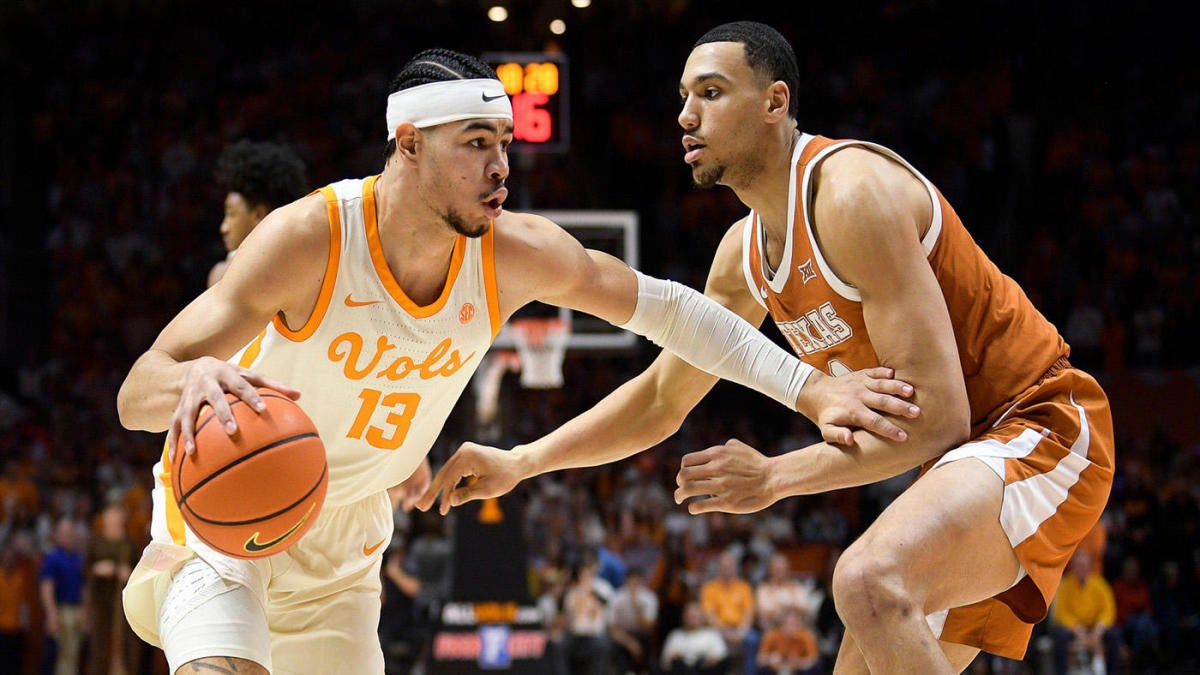
Tennessee has the fourth-best odds to win the national championship, but … yeah … I’m not buying at that price. The Volunteers have an elite defense, sure, but their offense is shaky at best. That’s cost them in two of their last three losses against unranked SEC foes Florida and Vanderbilt. The Vols have also scored fewer than 60 points twice in the last three games. This is a team that can be great in the regular season but — much like its head coach — seems destined to fall short of expectations in the postseason.
2. UConn
Odds to win title: +1800
It pains me as a UConn truther to say it, but the Huskies might be pretenders. The 14-0 start to the season was fabulous, and the 15-point home win over Marquette this week was euphoria wrapped inside some early-season nostalgia. However, what we saw to open the 2023 calendar year — the Hukies lost five of their first seven games — was alarming. If this team gets its act together and starts rounding into form again, I’ll happily jump back onto the UConn wagon. For now, I’m regretfully hedging my Huskies bets.
3. Creighton
Odds to win title: +4000
Another team that I love but have to fade. Creighton’s won seven in a row after some fits and starts in December thanks to the return of Ryan Kalkbrenner, but this team fits the very definition of a good-not-great team. If the bracket breaks right, I’ll pick it to make it to the second weekend, but beyond that I’m not sold it has the goods to really challenge for a national title.
4. Gonzaga
Odds to win title: +1800
No team has more NCAA Tournament wins over the last decade than Gonzaga, so I’ll acknowledge that factoid right off the top and admit that I am very much a Zags truther. Unfortunately, this is an easy fade. Gonzaga has two elite talents in Julian Strawther and Drew Timme, but its guard play this season has been well beneath recent standards for the program.
5. Virginia
Odds to win title: +4000
It’s become fashionable to fade Virginia in March even after it won the whole thing in 2019 in part because its offense has not quite been good enough to complement its defense. This season, its offense statistically is the best it has had since it won the title. Defensively, however, this team is worse at defending the 3 than any team since the title team under coach Tony Bennett. On top of that, the Cavaliers don’t have enough size or play with enough physicality to overcome their shortcomings. A matchup against a team that’s good at defending at the rim or dominant on the glass — or both — will likely be what sends UVa packing. My guess is that it winds up being earlier than most people will predict in their brackets.
U.S. soccer star Alex Morgan on Wednesday supported the inclusion of transgender children enjoying youth athletics in competitions towards the gender they determine with as an alternative of their biological sexual intercourse.
Morgan advised reporters ahead of the impending SheBelieves Cup future 7 days, she and her teammates are not heading to “shy absent” from tough discussions or “getting a stand for what is correct.” Her feedback come soon after Becky Sauerbrunn wrote an op-ed in assist of trans young ones playing sporting activities as very well.
Simply click Below FOR A lot more Sports Protection ON FOXNEWS.COM
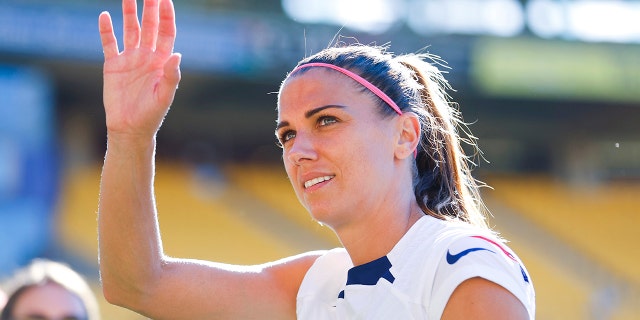
Alex Morgan waves to admirers through the Global friendly fixture match between the New Zealand Soccer Ferns and the United States at Sky Stadium on Jan. 18, 2023 in Wellington, New Zealand.(Hagen Hopkins/Getty Photographs)
“Participating in in Florida and Texas, that is a thing that the group unquestionably desires to look at,” she stated of bills in state legislature that restrict transgender girls from participating in in opposition to biological girls.
“The inclusion of trans youngsters in sporting activities is the inclusion of young children in athletics. Everybody need to have the ability to participate in activity. And the fact that it’s becoming taken into politics so major is seriously unfortunate. And I assume it is at the price of trans kids’ life. It is seriously unhappy, and I truly feel like what Becky said was wonderful. And for this staff, we’ve constantly been incredibly vocal with wherever we stand and I imagine we’ll continue to do that.”
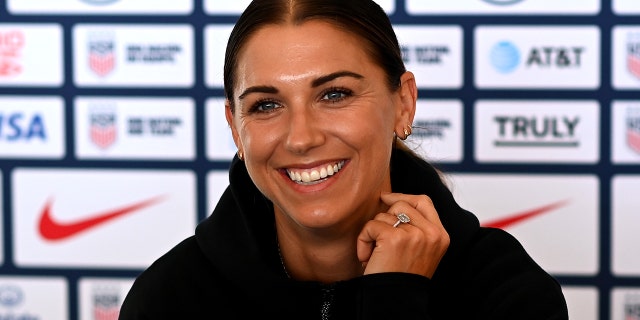
Alex Morgan is interviewed by media for the duration of a United states of america Nationwide Women’s Group participant training camp at The Cloud on Jan. 13, 2023 in Auckland, New Zealand.(Hannah Peters/Getty Pictures)
RILEY GAINES, EX-KENTUCKY SWIMMING STAR, Phone calls ON These WHO PRIVATELY SUPPORTED TO Step OUT OF THE SHADOWS
Former Penn swimmer Lia Thomas’ emergence in the pool during the 2021-22 swimming season ignited the discussion when she started out to defeat opponents soundly. The transgender athlete and the raging discussion about her eligibility and whether it was truthful for her to contend sparked change in sporting bodies.
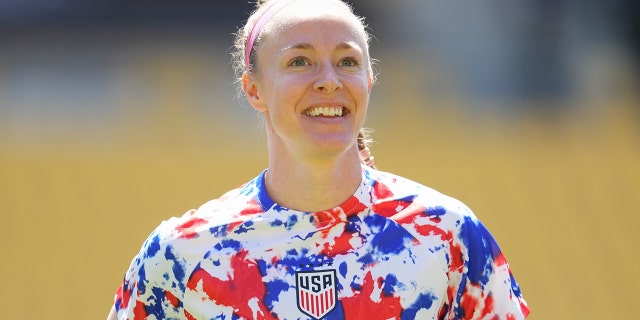
Becky Sauerbrunn, #4 of the United States, warms up ahead of a match among New Zealand and United states of america at Sky Stadium on Jan. 17, 2023 in Wellington, New Zealand.(Brad Smith/ISI Images/Getty Images)
Simply click Below TO GET THE FOX Information Application
Sauerbrunn was the newest to appear out and guidance trans little ones. The 37-calendar year-old center again wrote in the Springfield Information-Chief she can “guarantee you that enjoying with or from transgender ladies and girls is not a threat to women’s sports activities” without the need of detailing why.
The Connected Push contributed to this report.
Ryan Gaydos is the sports activities editor for Fox Information Electronic.
The Pac-12 may need to commit to conference expansion first before achieving its compensation target in a new media rights deal, sources with knowledge of the situation tell CBS Sports. In an effort to return to 12 members following the departures of USC and UCLA, the Pac-12 has focused its efforts on evaluating San Diego State and SMU.
Pac-12 commissioner Georgia Kliavkoff has already toured San Diego State, CBS Sports previously learned. He is planning to visit SMU on Wednesday, according to Brett McMurphy.
The Pac-12’s next media rights deal will be heavily reliant on a digital streaming partner. Significantly more than half of each season’s Pac-12 football games will be primarily available via streaming as part of the conference’s next rights deal, sources tell CBS Sports.
Such a ratio is unprecedented for a Power Five conference and for whichever streaming giant becomes the first to more fully embrace college sports. The move would likely upset Pac-12 coaches, athletic directors and administrators who rely on widespread visibility for their games via linear (cable) and network platforms for everything from athletic recruitment to university enrollment.
The Pac-12 has long suffered from substandard distribution resulting after deciding to go with the standalone, wholly owned Pac-12 Networks. A heavy streaming deal would further limit the conference’s visibility.
The next Pac-12 deal is expected to be split between a streaming service and ESPN. With the Pac-12 seemingly unable to reach its compensation target — believed to be approximately $30 million to $35 million per program annually — it appears to be urgent for the conference to expand as a condition of completing a deal in the monetary range it seeks.
Conferences that find themselves in this situation typically negotiate a new rights deal prior to completing a separate deal for expansion. That order establishes value for existing conference members prior to adding new members.
It is not known whether San Diego State or SMU — two Group of Five schools — would receive full media rights shares if the Pac-12 chooses them for expansion. Adding the programs would increase annual Pac-12 game inventory 20{515baef3fee8ea94d67a98a2b336e0215adf67d225b0e21a4f5c9b13e8fbd502} from 75games per season to 90.
Which streaming giant is in the lead to ultimately carry Pac-12 games is unknown. Amazon was successful last season with its NFL “Thursday Night Football” package. Apple recently signed a 10-year contract with MLS. However, neither platform has shown much interest in college sports to this point. (Industry experts project most major sports will be viewed on streaming in coming years.)
The Pac-12 is only major conference to not yet renew its media rights this cycle. Critics say the league missed its most lucrative window as negotiations drag on.
Not helping matters is that far more lucrative properties are coming available, including UFC, NASCAR, NBA and WWE, the latter of which is seeking a sale to a content provider. .
Despite the loss of Texas and Oklahoma to the SEC, the Big 12 was able to sign a deal late last year that was worth more than its prior contract. The current Pac-12 contract with Fox and ESPN, which expires on July 1, 2024, is valued at approximately $21 million per school not including revenue from the NCAA Tournament, College Football Playoff or bowl games.
ESPN is believed to be interested in the Pac-12 because of the “fourth window” — games that begin after 10 p.m. ET. The network would have a hole in college football broadcast day beginning in 2024 if it does not pick up some Pac-12 games. It already missed out on getting a piece of the Big Ten deal signed with CBS, Fox and NBC.
San Diego State makes sense in Pac-12 expansion. There already is a hole in Southern California given the Pac-12 has lost USC and UCLA to the Big Ten.
The addition of SMU would be non-contiguous (not bordering a state with a Pac-12 school) with the university 820 miles from Colorado, the league’s closest program. However, in at least some small way, SMU might establish a recruiting foothold for the Pac-12 in Texas.
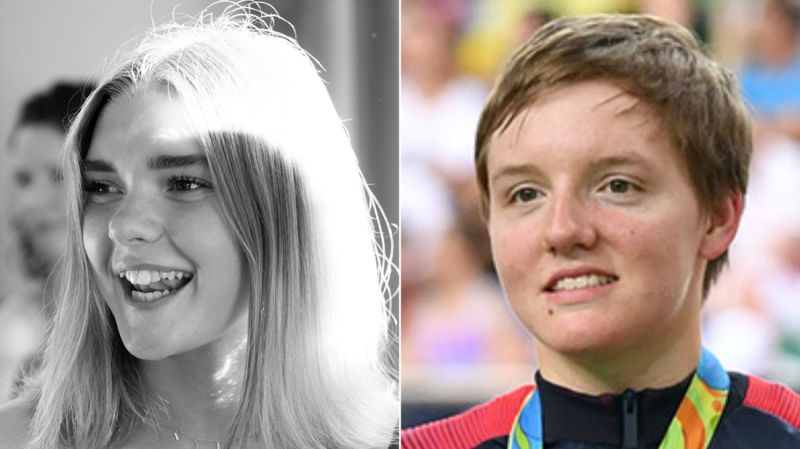
Kelly Catlin and Ellie Soutter never met, but they had a lot in common.
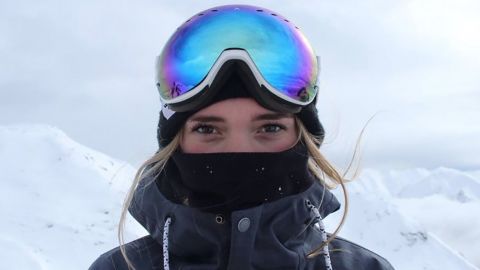
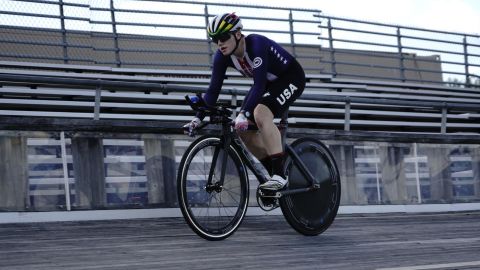
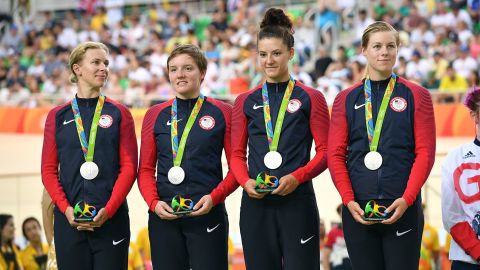
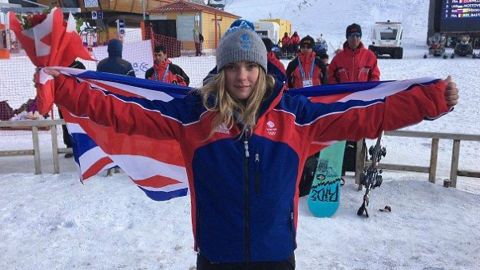
Both were commanding athletes: Catlin, a US track cyclist, was a three-times world champion and Olympic silver medalist, and Soutter, a snowboarder, was tipped to be one of Team Great Britain’s strongest contenders for the 2022 Winter Olympics, having already won a bronze medal at the 2017 European Youth Olympic Festival.
Both were incredibly smart – Catlin was studying for a master’s degree in computational and mathematical engineering at Stanford University, while Soutter learned to speak French in about six months, according to her father.
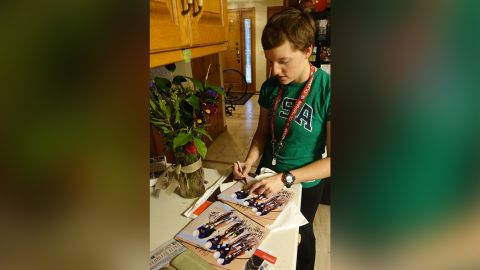
At times they almost seemed superhuman. In 2013, after only three weeks of formal training and having broken her wrist, Soutter became British Champion with her arm in a cast. Meanwhile, Catlin, who had a tenderness for children, once rode 80 miles through sleet and snow to speak to a grade school about her Olympic experience.
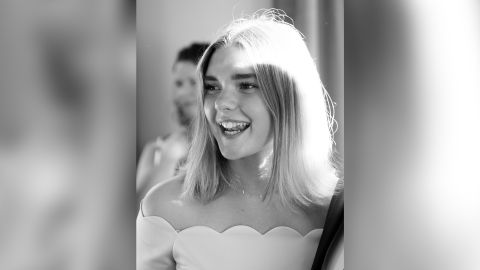
Yet these two women’s lives were tragically cut short after they sustained serious head injuries in their pursuit of sporting greatness and then took their own lives. Catlin was 23, while Soutter died by suicide on her 18th birthday.
Females may be more susceptible to concussion, and they also have worse and prolonged symptoms after their injury than men, according to a review of 25 studies of sport-related concussion published in the Orthopaedic Journal of Sports Medicine.
However, women remain significantly underrepresented within sport and exercise science research. This, leading experts warn, means they often do not get the treatment or aftercare they need following a head injury.
Women’s sports have historically not received the same attention or funding as men’s sports, Dr. Ann McKee, Director of the Boston University Chronic Traumatic Encephalopathy (CTE) Center told CNN.
“It’s been shown that women athletes are more likely to get a concussion, they tend to have longer recovery periods,” McKee added.
“We do not have enough information about what happens in the female brain. We don’t know if women are biologically more susceptible to these injuries,” she said, adding that some research suggests the size and musculature of women’s necks could play a part.
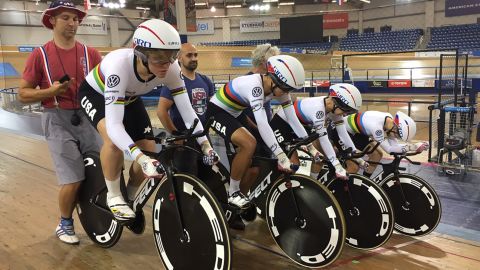
Before becoming a track cyclist, Catlin, a triplet, was a national champion road cyclist and time trial national champion, her father Mark, told CNN. After winning a Canadian international race at 17 she was invited to an Olympic training camp for a try out, where, impressed by her performance numbers, coaches immediately offered her a position on the track pursuit team.
Catlin’s father, Mark, told CNN, that his daughter was “intense” and “ambitious,” attributes she channeled into her sporting life.
Her life changed irrevocably in January 2019. Practicing fast downhill descents in the hills near Los Angeles, she crashed and went skidding down the road. Despite suffering road rash, Catlin got back on her bike, and finished the ride. It wasn’t her first crash – she had experienced 4 or 5 hard crashes before this, her father said, and after the latest, she didn’t have any symptoms at the time.
But soon after, at a World Cup track event in Berlin, Catlin was gripped by a sudden and severe headache.
“She couldn’t compete,” her father said. “Kelly is kind of this stoical individual. And if she’s rolling around on the ground, clutching her head, it has to be a severe thing.”
On closer inspection, Catlin’s helmet from LA had dents in it. Her father told CNN that this, coupled with her symptoms, caused her family to become aware she had suffered a concussion, which was later confirmed with a diagnosis from Stanford’s Health Centre.
A concussion is a brain injury which happens after a hit to the head or body causes the brain to move back and forth inside the skull, according to the CDC.
When Catlin returned to the US, her father says she was examined by the track training center in Colorado. It was confirmed she suffered a concussion, and a return to training protocol was advised, but not implemented or communicated to her coach, he said.
“There wasn’t any follow-up from Colorado after this. I believe they assumed she would seek care at Stanford,” he told CNN.
CNN has reached out to Stanford and USA Cycling for comment.
Catlin’s symptoms didn’t improve, and in weekly phone calls with her parents, she admitted she was struggling with schoolwork and was unable to concentrate.
Stanford Health Center, having diagnosed Catlin with concussion with ongoing symptoms, recommended that she decrease her training for 2 weeks and then gradually build back up and start sessions with an athletic trainer, medical documents sent to CNN by her father show. She was referred to a concussion specialist, the document adds.
She tried to train, but “she would have to stop because she got a severe headache just from walking,” according to her father. Her heart rate would also accelerate rapidly from even the smallest exertion, leaving her with “no exercise tolerance whatsoever,” he added.
Her injury had other consequences.
“As far as we knew she was never a person that suffered from depression. She had an interesting sense of humor. She was always upbeat and bubbly about things,” her father told CNN.
“She basically thought her life was over. She was no longer able to be the athlete that she was, she was failing her teammates. And she wasn’t able to succeed in school now. And I think ultimately, that’s why she took her life, because she thought her life was over,” he added.
At the end of January, Catlin made a serious but non-fatal suicide attempt, and was involuntarily admitted to the locked psychiatric ward at Stanford, her father told CNN.
A month after that attempt, she took her own life.
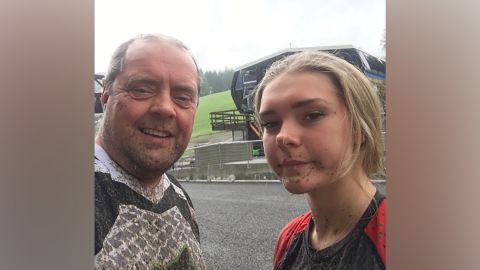
Soutter’s father Tony said there were many dimensions to his young daughter – not only was she an “adrenaline junkie,” but she was “very conscientious” and excelled in school, even after moving from England to France.
Aged 12, Soutter took up snowboarding at school – and just months later, she was spotted in her hometown resort of Les Gets and trialed by Team Great Britain in February 2013.
“It was quite obvious why she kept winning competitions because she just made it easy,” her father said. “She just made it look graceful and beautiful.”
But training took its toll – Soutter told CNN that his daughter suffered seven major concussions in five years, between 2013 and 2018.
“I was being advised by doctors “Oh, don’t worry, she’s young enough she’ll bounce back. As she progressed, becoming an elite athlete starting on the World Cup circuit, every time she had another concussion, they got worse, and they took longer to recover from,” he told CNN.
“With every concussion, with the exception of a few minor knocks, Ellie saw a doctor in person,” he added. “I was always told that she was young enough to bounce back to full health after each case and therefore never consulted with the doctors that I met, about any previous concussions.”
But Soutter’s final concussion was so “huge” that she spent two nights in the hospital.
“When I got there, she didn’t even know who I was or where she was,” her father said.
Soutter was then selected for the Junior Snowboard World Championships in New Zealand August 2018. But a month before the competition, she died by suicide.
Her father said a neurologist conducted a CT scan of her brain and reaction tests three months after her final concussion, but said she was “absolutely fine” and could continue competing.
Like Catlin, Soutter had issues with studying and concentrating, becoming more insular as she suffered from crippling headaches. She also started suffering from insomnia.
“She would literally sit with the tutor a good month after a concussion, and suddenly, she’d go blind. She’d not be able to see – everything would go black and dark,” her father said.
After missing a flight to snowboard training, Soutter died by suicide on her 18th birthday.
Team GB referred CNN to GB Snowsport when approached for comment, adding that Ellie only competed for Team GB at one event.
In order to represent Britain in international competitions, GB Snowsport says athletes or their coaches are required to demonstrate that the athlete has reached established performance criteria, is of the relevant technical ability to compete, and has appropriate medical clearance to compete. A large number of athletes can represent Britain at different levels of international competition but are not part of a programme delivered and overseen by GB Snowsport.
“As Ellie was not part of the GB Snowsport programme, we were unable to implement a personalised recovery and management programme for Ellie,” a spokesperson for GB Snowsport told CNN in an email.
“She was, however, covered by national policies and protocols around fitness to compete, and would not have been cleared for any activity – training or competition – overseen by GB Snowsport without being able to demonstrate appropriate medical sign-off,” they added.
The spokesperson for GB Snowsport told CNN: “We take concussions and head injuries incredibly seriously, and in reviewing contemporaneous records from the time that Ellie was involved in snowsport we are confident that GB Snowsport staff applied and followed every appropriate process.”
Catlin and Soutter aren’t the only young sporting women whose lives have been cut short in this way.
After 29-year-old Australian rules football player Jacinda Barclay took her life in 2020, post-mortem research by scientists found that she had degradation to her cerebral white matter unusual for someone her age.
“For someone her age, you would expect to see lovely pristine white matter, and hers looked like she was an old woman in that it was basically degraded,” Michael Buckland, founder and Executive Director of the Australian Sports Brain Bank, who studied Barclay’s brain, told CNN.
“We haven’t gone back and done specific white matter studies on our donors,” he told CNN, adding that the bank hasn’t done peer reviewed research on this. “But what struck me, just as someone that sees a lot of brains – this is not normal for someone of that age.”
Damage to white matter has been associated with dementia, according to research published in the Journal of the American Medical Association.
Suicide after concussion is rare. However patients diagnosed with concussion or mild traumatic brain injury had double the risk of suicide and a higher risk of suicide attempts and suicidal thoughts than people without brain injuries, a 2018 study from researchers at the University of Harvard published in JAMA Neurology found.
Dr. Robert Cantu, clinical professor of neurology at the Center for the Study of Traumatic Encephalopathy at Boston University School of Medicine told CNN that there are several theories as to why incidence of suicide is higher in people who have suffered concussion.
One theory, he explained, is that those suffering from persistent post-concussion symptoms may have structural or functional brain damage and could be experiencing “behavioral dysregulation: short fuse, irritability, [and] can’t suppress impulses the way you normally could.”
With these emotional problems, “they would be more prone to perhaps do something impulsive, like commit suicide,” Cantu, medical director of the Concussion Legacy Foundation, told CNN.
A second theory, Cantu noted, is that post-concussive symptoms prevent people from getting back into their sport and stop them “from being the person that they were before their injury.”
Neither theory is proven to the exclusion of the other, Cantu said, adding he thinks increased suicidality was “a combined factor involving both in many, if not most cases.”
There are also differences in the way brain injuries affect women.
A study of female soccer players across US high schools found they are nearly twice as likely to suffer concussion as their male counterparts, according to research that looked at over 80,000 adolescent athletes, published in the journal JAMA Network Open.
Women remain significantly underrepresented within sport and exercise science research: a 2021 study examining papers from some of the most influential sports medical journals found that only 6{515baef3fee8ea94d67a98a2b336e0215adf67d225b0e21a4f5c9b13e8fbd502} of the studies were solely focused on women, compared with 31{515baef3fee8ea94d67a98a2b336e0215adf67d225b0e21a4f5c9b13e8fbd502} of studies that included just men.
Other researchers have pointed to female sex hormones, with risk of concussion changing with hormone levels during a menstrual cycle.
McKee said all athletes can also experience “non-concussive” injuries: “hits to the head that can be of the same magnitude as concussion, but they don’t rise to the level of symptoms for whatever reason, so a player tends to play right through it.”
Cumulative exposure to repetitive head impacts – including concussion and non- concussive injuries – increases the risk for the neurodegenerative brain disease chronic traumatic encephalopathy, known as CTE, McKee said.
The disease, which can only be formally diagnosed with an autopsy, has mostly been seen in either veterans or people who played contact sports, particularly American football, say researchers. The disease occurs when the brain starts to degenerate likely due to repeated head traumas, according to the Mayo Clinic, which notes CTE is “associated with recurrent concussions.”
But scientists aren’t only concerned about concussions.
Previous studies have shown subconcussive head impacts – repetitive hits to the head and body that do not cause symptoms – can still result in long-term neurological disease.
According to The Concussion Legacy Foundation, “the best available evidence suggests that subconcussive impacts, not concussions, are the driving force behind CTE.”
There have been cases of CTE discovered in athletes who have never been diagnosed with a concussion, according to the Concussion Legacy Foundation.
And other changes in the brain after repetitive head impacts aside from CTE are likely “equally important,” McKee said.
“We also see damage to the white matter. And that appears to be mostly in the frontal lobe, but also in the temporal lobes,” she said.
“We’re trying to understand the relationship of those white matter changes to behavioral and mood symptoms, perhaps even suicidality,” she said.
McKee stressed that concussion management is important, but physicians and athletes should also be aware of other injuries.
“The problem is the subclinical hits – the non-concussive injuries that aren’t detected, you don’t pull the player off the field – and they can be in the hundreds or even the 1000s in a single season,” she explained.
Though a growing body of data suggests women in sport are more likely to sustain a concussion, have more severe symptoms, and to take longer to recover, most sports-related concussions protocols are based on data from men.
In a review in the British Journal of Sports Medicine, researchers looked at 171 concussion studies written since 1967 which are used to inform the most influential consensus and position statements in treating sports-related concussions.
Clinicians rely on these documents to guide their medical practice when treating athletes – but most of the studies are focused on men. Only 1{515baef3fee8ea94d67a98a2b336e0215adf67d225b0e21a4f5c9b13e8fbd502} of them was looking exclusively at concussions in women and 40{515baef3fee8ea94d67a98a2b336e0215adf67d225b0e21a4f5c9b13e8fbd502} of them didn’t have any women in a sample of participants at all.
There is another risk factor for women in sport when they sustain head injuries, Katherine Snedaker, founder and executive director of PINK Concussions, a non-profit dedicated to women’s health and brain injury, told CNN.
There is a gulf of millions of dollars separating women and men when it comes to average annual salaries in most professional sports.
Outside of elite sport, Snedaker says, female athletes often don’t have access to the same medical care as men, meaning head injuries aren’t spotted as routinely.
“They tend to push really hard through the injury,” she said.
And many women can’t afford to take time out to recover: even professional athletes will supplement their sports income with other jobs, she added, and many are caregivers.
“When they really crater, it’s a couple of days or weeks later.”
Snedaker said female athletes often weren’t aware they had suffered a head injury.
If they were, she said, there were no appropriate medical or sporting staff to inform.
The families of Catlin and Soutter feel the young women didn’t get enough support after their injuries.
After Catlin’s first suicide attempt, she was released from an involuntary admission to the psychiatric ward after threatening legal action, and a conference between psychiatrists, her coach and her parents.
She attended therapy sessions, which she agreed to attend during the conference, but found “they were geared toward suicidal freshman with a whole set of different issues than an elite Olympic athlete,” her father told CNN.
She got a referral to a sports psychologist that worked with the Stanford athletic department, but the department forbade the psychologist from seeing Catlin because she was not a varsity athlete, her father added.
She contacted the office of a sports psychologist with whom she had developed a rapport while in the hospital – but, his appointment secretary said he had no openings for six months, her father told CNN.
“Wherever she turned she could not find help,” he said, adding that his daughter tried a suicide hotline several times: she was once put on hold and once received no answer.
Catlin described his daughter as a “stoic, female warrior type person that isn’t going to admit that she’s struggling.”
“She needed a sports psychiatrist that really could understand what she was going through and understand the rigors of her life in terms of preparation for competitions and the athletic side of it and what it could potentially do to you.”
Her father said a major factor in his daughter’s death was “a lack of communication between the facilities that were involved in Kelly’s care. No one was in charge and they assumed the other institutions were following up when they weren’t,” he added.
In a statement sent to CNN, Luisa Rapport, director of emergency communications and media relations at Stanford University did not address any of the specific allegations made by Catlin’s family. She said while the university does not discuss in the media the details of individual students’ experiences, “supporting the mental and emotional health of students is a critical priority for Stanford.”
“Students in need of mental health crisis assistance – including students having suicidal thoughts – and those who are concerned about students in need of assistance, can contact the University’s Counseling and Psychological Services (CAPS) 24 hours-a-day, seven days-a-week,” she added.
Rapport said that in addition to this, “there are multiple places where psychological services may be provided for students depending on individualized need and treatment recommendations, including, for example, affiliated hospital services and clinics through Stanford’s Department of Psychiatry and Behavioral Sciences, and mental health programs and clinicians in the community.”
In a statement sent to CNN, USA Cycling said it was “devastated” by Catlin’s death, adding: “She brought focus and determination to everything she did, and served as an inspiration to everyone who knew her.
“As the National Governing Body for the sport of cycling, USA Cycling prioritizes the holistic wellbeing of the riders on the U.S. National Team and has a longstanding commitment to providing both physical and mental health resources to members of the team,” a representative for USA Cycling added.
After his daughter Ellie’s death, Soutter was contacted by the UNITE Brain Bank, who wanted to study her brain as part of their research into CTE.
But even in that facility – the biggest of its kind in the world – of some 1,300 brains, only 3{515baef3fee8ea94d67a98a2b336e0215adf67d225b0e21a4f5c9b13e8fbd502} belonged to women, Ann McKee, Director of the Boston University Chronic Traumatic Encephalopathy (CTE) Center told CNN.
“When I actually started looking into CTE – all of the work that they’ve done with the footballers in America, she had every single symptom and more,” Soutter told CNN.
“It was quite obvious to me that there was a definite link in her starting to get into dark places and feeling bad and anxious and not sleeping properly. All of those symptoms … Every one that’s involved in CTE was part of Ellie’s life,” he added.
“I truly believe today that my daughter would be alive had I had any inkling, you know, even the smallest bit of information.”
Editor’s Note: If you are in the US and you or a loved one have contemplated suicide, call The National Suicide and Crisis Lifeline at 988 or 1-800-273-TALK (8255) to connect with a trained counselor.
For support outside of the US, a worldwide directory of resources and international hotlines is provided by the International Association for Suicide Prevention. You can also turn to Befrienders Worldwide.
Correction: A previous version of this story incorrectly stated the number of brains held at the Unite Brain Bank. It has now been updated.