Former Pope Benedict XVI dies in Vatican monastery aged 95

Former Pope Benedict XVI dies in Vatican monastery aged 95


CNN
 — 

Pope Francis led tributes to his predecessor on Saturday, after Pope Emeritus Benedict XVI died in a monastery in the Vatican at the age of 95.

“We are moved as we recall him as such a noble person, so kind and we feel such gratitude in our hearts, gratitude to god for giving him to the church, and to the world,” Francis said in Saint Peter’s Basilica while leading traditional vespers ceremony ahead of New Year’s Day.

“Gratitude to him for all the good he accomplished and above all for his witness of faith and prayer, especially in these last years of his life. Only God knows the value of his sacrifices for the good of the church,” Francis added.

Benedict, who was the first pontiff in almost 600 years to resign his position, rather than hold office for life, passed away on Saturday, according to a statement from the Vatican.

“With sorrow I inform you that the Pope Emeritus, Benedict XVI, passed away today at 9:34 in the Mater Ecclesiae Monastery in the Vatican,” the Director of the Press Office of the Holy See, Matteo Bruni said.

The funeral of Pope Emeritus Benedict XVI will be held on Thursday in St. Peter’s Square in the Vatican City at 9:30 a.m. local time, Bruni said. The funeral will be led by Pope Francis.

The former pope’s body will lie in state in St. Peter’s Basilica in the Vatican from Monday for the faithful to bid farewell, Vatican News reported. As per the wish of Pope Emeritus, his funeral will be “simple,” Bruni said.
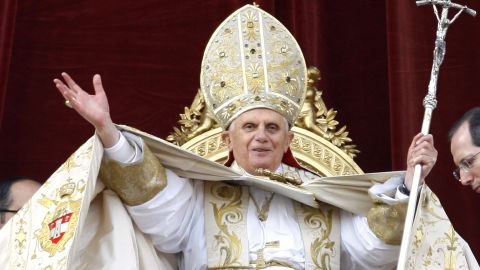
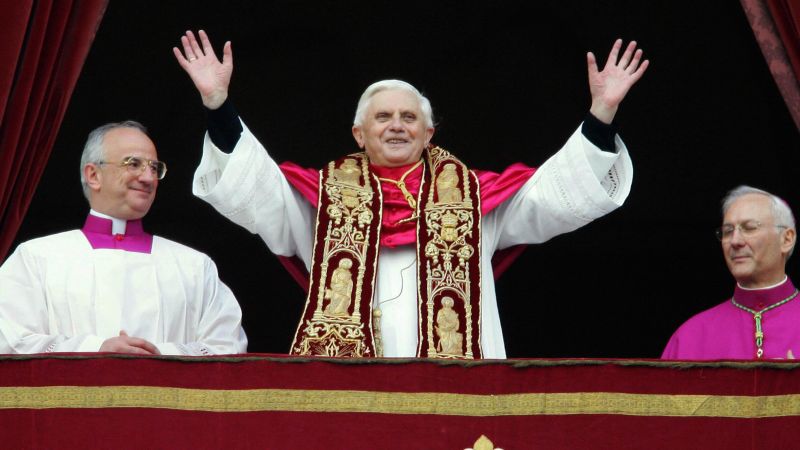
The funeral of the former pope, pictured on December 25, 2007, will take place on January 5.

News of Benedict’s death came days after Pope Francis asked the faithful to pray for him, saying he was “very sick.”

His health had been in decline for some time.

Benedict stunned the Catholic faithful and religious experts around the world on February 11, 2013, when he announced plans to step down from his position as Pope, citing his “advanced age.”

In his farewell address, the outgoing pope promised to stay “hidden” from the world, but he continued to speak out on religious matters in the years following his retirement, contributing to tensions within the Catholic Church.

Benedict was a powerful force in the Catholic Church for decades. Born Joseph Ratzinger in Germany in 1927, he was the son of a policeman. He was ordained as a priest in 1951, made a cardinal in 1977, and later served as chief theological adviser to Pope John Paul II.

One of his most significant steps up came in 1981 when he took over as head of the Congregation for the Doctrine of Faith, the Vatican office that oversees “the doctrine on the faith and morals throughout the Catholic world,” according to the Vatican.

Ratzinger became known as “Cardinal No” stemming from his efforts to crack down on the liberation theology movement, religious pluralism, challenges to traditional teachings on issues such as homosexuality, and calls to ordain women as priests.

He was elected pope in April 2005, following John Paul II’s death.

He was known to be more conservative than his successor, Pope Francis, who has made moves to soften the Vatican’s position on abortion and homosexuality, as well as doing more to deal with the sexual abuse crisis that has engulfed the church in recent years and clouded Benedict’s legacy.
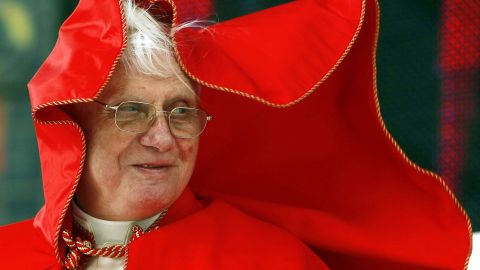
The former pope, pictured on September 9, 2007, was known to be more conservative than his successor, Pope Francis.

In April 2019, Benedict discussed the sex abuse crisis in a public letter, claiming that it was caused in part by the sexual revolution of the 1960s and the liberalization of the church’s moral teachings.

In January 2020, Benedict was forced to distance himself from a book widely seen as undercutting Francis as he considered whether or not to allow married men to become priests in certain cases. The book, “From the Depths of Our Hearts,” argued in favor of the centuries-old tradition of priestly celibacy within the Catholic Church. Benedict was originally listed as co-author, but later clarified that he had only contributed one section of the text.

A year later, Benedict came under fire over his time as archbishop of Munich and Freising, between 1977 and 1982, following the publication of a Church-commissioned report into abuse by Catholic clergy there.

The report found that while in the post he had been informed of four cases of sexual abuse involving minors – including two that had occurred during his time in office – but failed to act. It also revealed Benedict had attended a meeting about an abuser identified as Priest X. Following the report’s publication, Benedict pushed back against accusations that he knew in 1980 that this priest was an abuser.

In a letter released by the Vatican amid the furor, Benedict wrote that he was “of good cheer” as he faced “the final judge of my life,” despite his shortcomings. He also issued a general apology to survivors of abuse.

Global leaders paid homage to the former pope, following his death. Justin Welby, the Archbishop of Canterbury and head of the Church of England, said he is “mourning” the former pope.

“Pope Benedict was one of the greatest theologians of his age – committed to the faith of the Church and stalwart in its defence,” Welby said in a statement Saturday.

“In all things, not least in his writing and his preaching, he looked to Jesus Christ, the image of the invisible God. It was abundantly clear that Christ was the root of his thought and the basis of his prayer.

“In 2013 Pope Benedict took the courageous and humble step to resign the papacy, the first Pope to do so since the fifteenth century. In making this choice freely he acknowledged the human frailty that affects us all,” he added.

Cardinal Timothy Dolan, Archbishop of New York, said he will remember the former pope with “love and gratitude.”

“Saddened to learn of the demise of His Holiness Pope Emeritus Benedict XVI,” European Parliament President Roberta Metsola tweeted Saturday.

“Europe mourns him. May he rest in peace.”

The leader of the Russian Orthodox Church, Patriarch Kirill, on Saturday told Pope Francis he had received news of Benedict’s passing with “sorrow,” according to the message shared on the official website of the Moscow Patriarchate.

“His Holiness’s many years of life marked a whole epoch in the history of the Roman Catholic Church, which he led in a difficult historical period, associated with many external and internal challenges,” Kirill said of Benedict.

Kirill added relations between the Russian Orthodox Church and the Roman Catholic Church had “developed significantly” during Benedict’s tenure, in an effort to “overcome the sometimes-painful legacy of the past.”

“On behalf of the Russian Orthodox Church, I express my condolences to you and the flock of the Roman Catholic Church,” he continued.

US President Joe Biden said the late pontiff “will be remembered as a renowned theologian, with a lifetime of devotion to the Church, guided by his principles and faith.”

Biden, the second Catholic to serve as President of the United States, reflected on his meeting with Benedict at the Vatican in 2011, saying he remembered “his generosity and welcome as well as our meaningful conversation.”

“As he remarked during his 2008 visit to the White House, ‘the need for global solidarity is as urgent as ever, if all people are to live in a way worthy of their dignity.’ May his focus on the ministry of charity continue to be an inspiration to us all,” Biden added.

British Prime Minister Rishi Sunak also paid tribute. “I am saddened to learn of the death of Pope Emeritus Benedict XVI,” Sunak tweeted Saturday.

“He was a great theologian whose UK visit in 2010 was an historic moment for both Catholics and non-Catholics throughout our country.
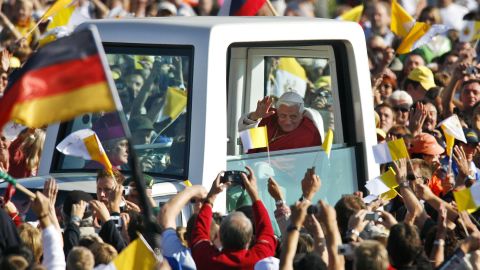
Global leaders have paid homage to the former German-born pope, pictured on September 12, 2006.

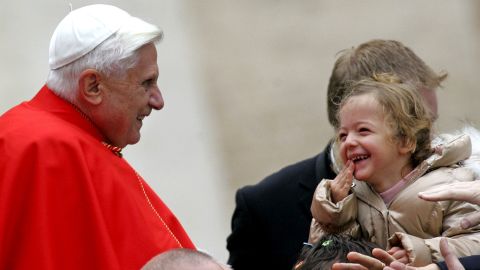
The Archbishop of Canterbury hailed the former Pope, pictured on November 30, 2005, as

Italy’s new Prime Minister Giorgia Meloni voiced her admiration for the former pope. “Benedict XVI was a giant of faith and reason. He put his life at the service of the universal Church and spoke, and will continue to speak, to the hearts and minds of men with the spiritual, cultural and intellectual depth of his Magisterium,” she tweeted Saturday.

Russian President Vladimir Putin, who is leading Moscow’s invasion of Ukraine, called the former pope “a staunch defender of traditional Christian values.”
Barbara Walters, trailblazing TV icon, dies at 93

Barbara Walters, trailblazing TV icon, dies at 93

Barbara Walters, the trailblazing television news broadcaster and longtime ABC News anchor and correspondent who shattered the glass ceiling and became a dominant force in an industry once dominated by men, died Friday. She was 93.

Walters joined ABC News in 1976, becoming the first female anchor on an evening news program. Three years later, she became a co-host of “20/20,” and in 1997, she launched “The View.”

Bob Iger, the CEO of The Walt Disney Company which is the parent company of ABC News, praised Walters as someone who broke down barriers.

“Barbara was a true legend, a pioneer not just for women in journalism but for journalism itself. She was a one-of-a-kind reporter who landed many of the most important interviews of our time, from heads of state to the biggest celebrities and sports icons. I had the pleasure of calling Barbara a colleague for more than three decades, but more importantly, I was able to call her a dear friend. She will be missed by all of us at The Walt Disney Company, and we send our deepest condolences to her daughter, Jacqueline,” Iger said in a statement Friday.

In a career that spanned five decades, Walters won 12 Emmy awards, 11 of those while at ABC News.

She made her final appearance as a co-host of “The View” in 2014, but remained an executive producer of the show and continued to do some interviews and specials for ABC News.

“I do not want to appear on another program or climb another mountain,” she said at the time. “I want instead to sit on a sunny field and admire the very gifted women — and OK, some men too — who will be taking my place.”

Barbara Jill Walters was born in Boston on Sept. 25, 1929, to Dena and Louis “Lou” Walters. Her father worked in show business as a booking agent and nightclub producer, and discovered comedians Fred Allen and Jack Haley, who would go on to star as the Tin Man in the classic film “The Wizard of Oz.”

Growing up around celebrities taught a young Barbara a lesson that she relied upon throughout her career.

“I would see them onstage looking one way and offstage often looking very different. I would hear my parents talk about them and know that even though those performers were very special people, they were also human beings with real-life problems,” Walters said in a 1989 interview with the Television Academy of Arts & Sciences. “I can have respect and admiration for famous people, but I have never had a sense of fear or awe.”

In her 2008 memoir “Audition,” Walters revealed that she got her ambition to succeed from her older sister, Jacqueline, who was born developmentally disabled.

“Her condition also altered my life,” Walters wrote. “I think I knew from a very early age that at some point Jackie would become my responsibility. That awareness was one of the main reasons I was driven to work so hard. But my feelings went beyond financial responsibility.

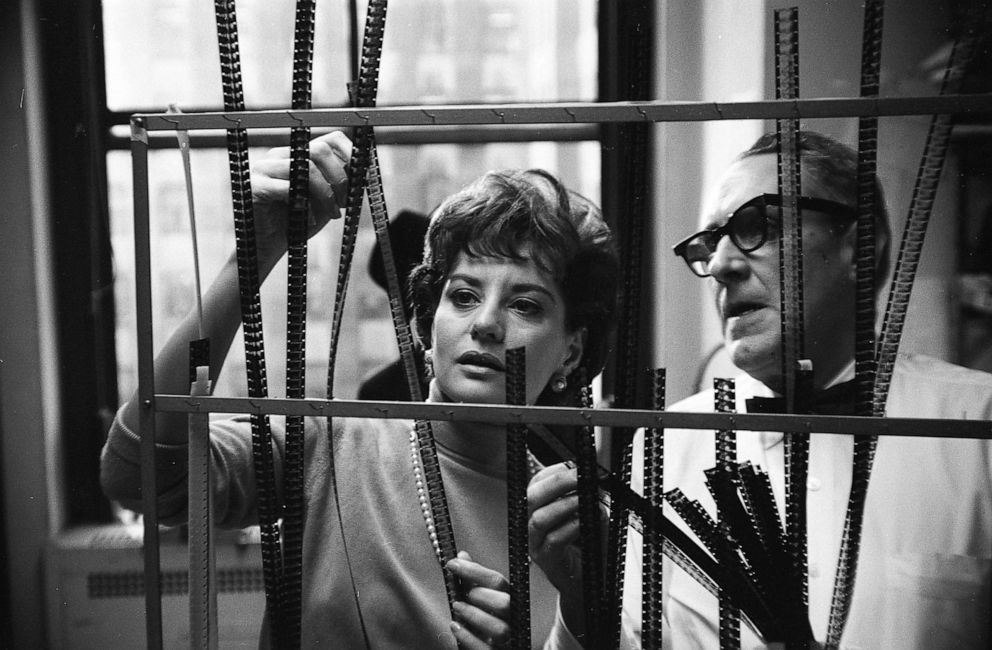
PHOTO: Broadcast journalist Barbara Walters looks at film negatives with an unidentified man behind the scenes at NBC Studios in New York, circa 1966.

Broadcast journalist Barbara Walters looks at film negatives with an unidentified man behind the scenes at NBC Studios in New York, circa 1966.

Rowland Scherman/Getty Images

“Much of the need I had to prove myself, to achieve, to provide, to protect, can be traced to my feelings about Jackie. But there must be something more, the ‘Something’ that makes one need to excel,” she added. “Some may call it ambition. I can live with that. Some may call it insecurity, although that is such a boring, common label, like being called shy, that means little. But as I look back, it feels to me that my life has been one long audition — an attempt to make a difference and to be accepted.”

After graduating from Sarah Lawrence College in Bronxville, New York, in the 1950s, Walters found work as a publicist and television writer, before landing a spot as a writer on NBC’s “Today” show in 1961. She would become the program’s first female co-host in 1974, and won her first Emmy award the following year for Outstanding Talk Show Host.

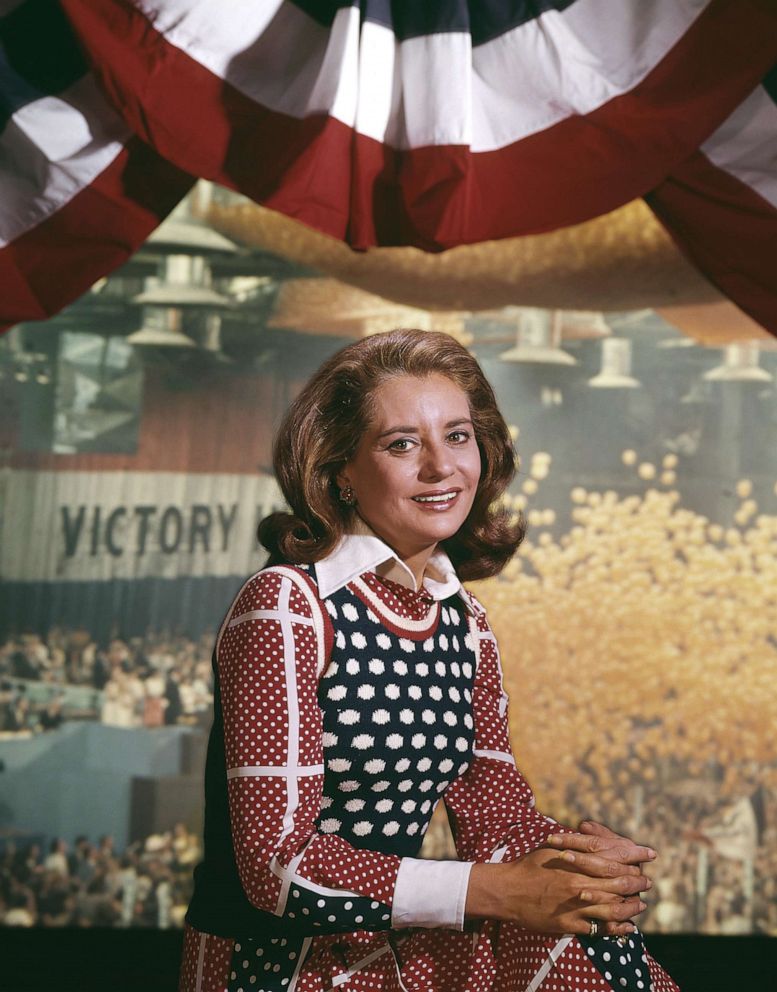
PHOTO: Today Show anchor Barbara Walters covers the Democratic National Convention in 1972.

Today Show anchor Barbara Walters covers the Democratic National Convention in 1972.

NBCUniversal via Getty Images

“No one was more surprised than I,” she said of her on-air career. “I wasn’t beautiful, like many of the women on the program before me, [and] I had trouble pronouncing my r’s.”

In her memoir, Walters wrote that she had dark hair, a sallow complexion and was often told she was skinny. She said her parents’ term of endearment for her was “Skinnymalinkydin.”

In 1976, Walters found a new home on ABC’s “Evening News,” making history as the first female co-anchor of an evening news program.

PHOTO: Barbara Walters and Harry Reasoner on the ABC News set, Sept. 30, 1976.

Barbara Walters and Harry Reasoner on the ABC News set, Sept. 30, 1976.

ABC News

In her inaugural broadcast on Oct. 4, 1976, with co-anchor Harry Reasoner, Walters scored an exclusive interview with Earl Butz, who had just resigned as President Gerald Ford’s Secretary of Agriculture after it was revealed he told a racist joke. She also conducted a satellite interview with Egyptian President Anwar Sadat on his plans to end his country’s fighting with Lebanon.

At ABC, her interviews were wide-ranging and her access to public figures, unparalleled; Walters crossed the Bay of Pigs with Fidel Castro and conducted the first joint interview with Sadat and Israel’s Prime Minister Menachem Begin. She also developed a reputation for asking tough questions.

“I asked Vladimir Putin if he ever ordered anyone to be killed,” she once recalled. “For the record, he said ‘no.'”

Upon the death of Castro in 2016, Walters released a statement saying the dictator had called her two interviews with him “fiery debates.”

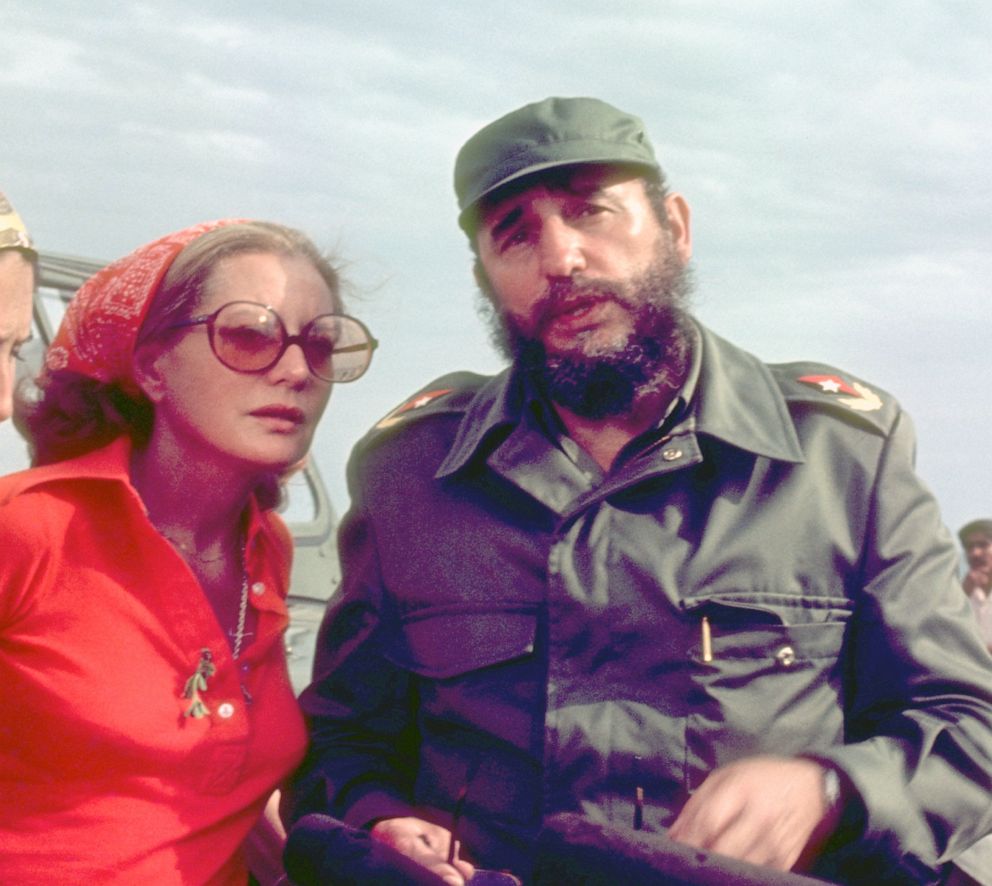
PHOTO: Barbara Walters interviewed Cuban president Fidel Castro as they crossed the Bay of Pigs on an ABC News Special which aired June 9, 1977, on the ABC Television Network.

Barbara Walters interviewed Cuban president Fidel Castro as they crossed the Bay of Pigs on an ABC News Special which aired June 9, 1977, on the ABC Television Network.

ABC Photo Archives

“During our times together, he made clear to me that he was an absolute dictator and that he was a staunch opponent of democracy,” Walters said in her statement. “I told him that what we most profoundly disagreed on was the meaning of freedom.”

There were lighter interviews, too. For years, she hosted an annual Oscars special, in which she interviewed Academy Award nominees and was known for making a number of them reveal deeply personal information and even cry. In 1994, she launched the “Most Fascinating People” special, which aired every December and afforded her the opportunity to chat with the year’s top newsmakers.

In 1999, an estimated 74 million viewers tuned in to watch Walters interview Monica Lewinsky about the former White House intern’s affair with then-President Bill Clinton. Toward the end of the interview, Walters asked Lewinsky, “What will you tell your children when you have them?” Lewinsky replied, “Mommy made a big mistake” to which Walters quipped, “And that is the understatement of the year.”

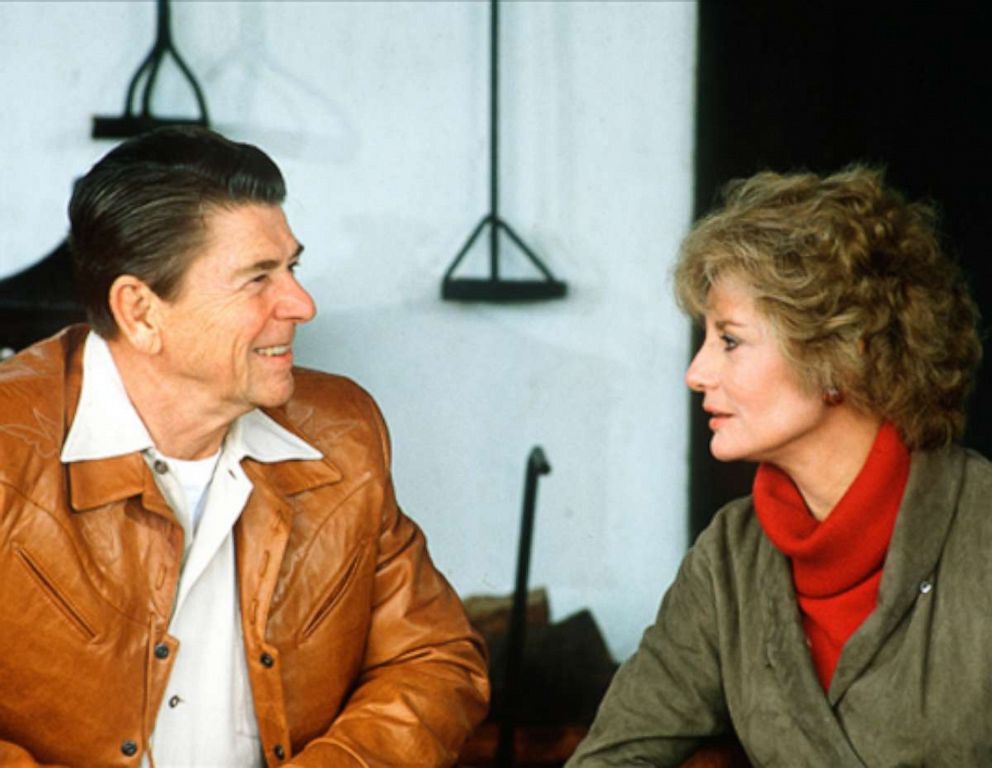
PHOTO: Barbara Walters interviews former President Ronald Reagan for ABC News' "20/20" at his Santa Barbara Ranch in 1981.

Barbara Walters interviews former President Ronald Reagan for ABC News’ “20/20” at his Santa Barbara Ranch in 1981.

ABC Photo Archives

Walters also interviewed every U.S. president and first lady from the Nixons to the Obamas. She interviewed President Donald Trump and First Lady Melania Trump before they entered the White House.

With “The View,” she created a forum for women of different backgrounds and views to come together and discuss the latest hot topics in the news, a format that has since been widely imitated by other networks. In a May 2019 New York Times Magazine cover story, “The View” was deemed “the most important political TV show in America.”

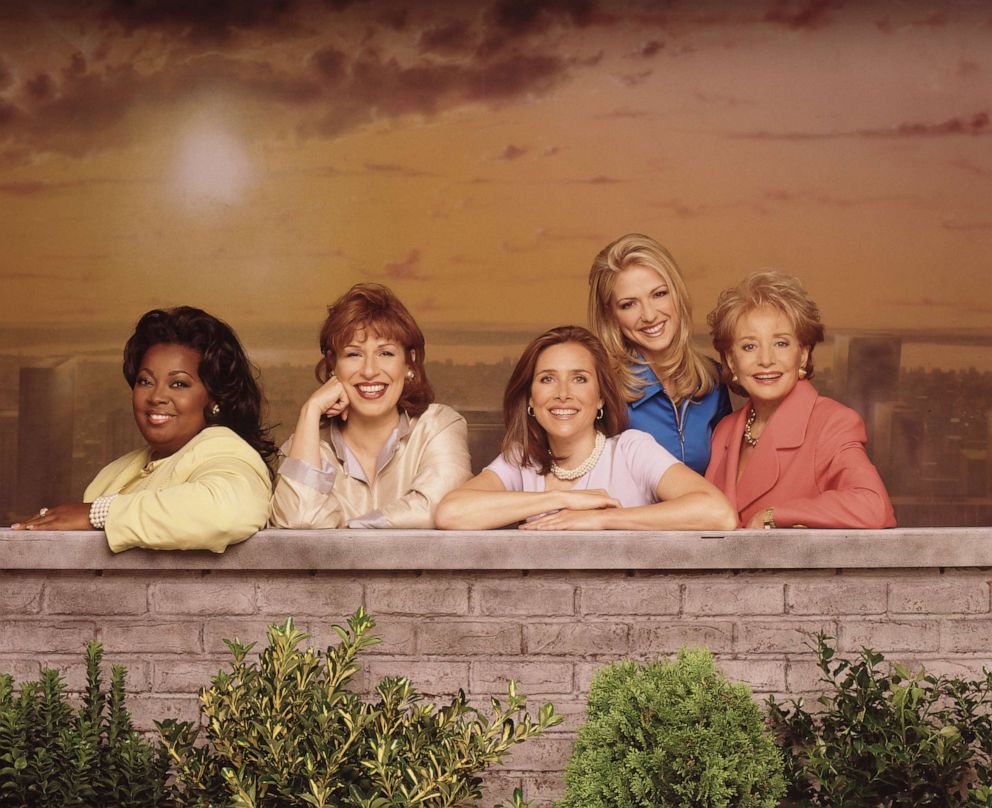
PHOTO: The original hosts of "The View" are seen here from left, Star Jones, Joy Behar, Meredith Vieira, Debbie Matenopoulos and Barbara Walters.

The original hosts of “The View” are seen here from left, Star Jones, Joy Behar, Meredith Vieira, Debbie Matenopoulos and Barbara Walters.

Andrew Eccles/ABC

Walters was married four times to three different men (she wed Merv Adelson, a television producer and real estate developer, twice) and adopted daughter Jacqueline Danforth with second husband Lee Guber, a theater producer and owner. She named her daughter after her sister, writing in her memoir that she “wanted Jackie to feel that she, too, has a child, because I knew by this time she never would.”

“She keeps me sane, she keeps me grounded,” Walters said of her daughter. “Children do that … I think a lot of working women struggle with the job and being home and there’s never a right answer. Whatever you do is wrong, but whatever you do will turn out eventually to be OK.”

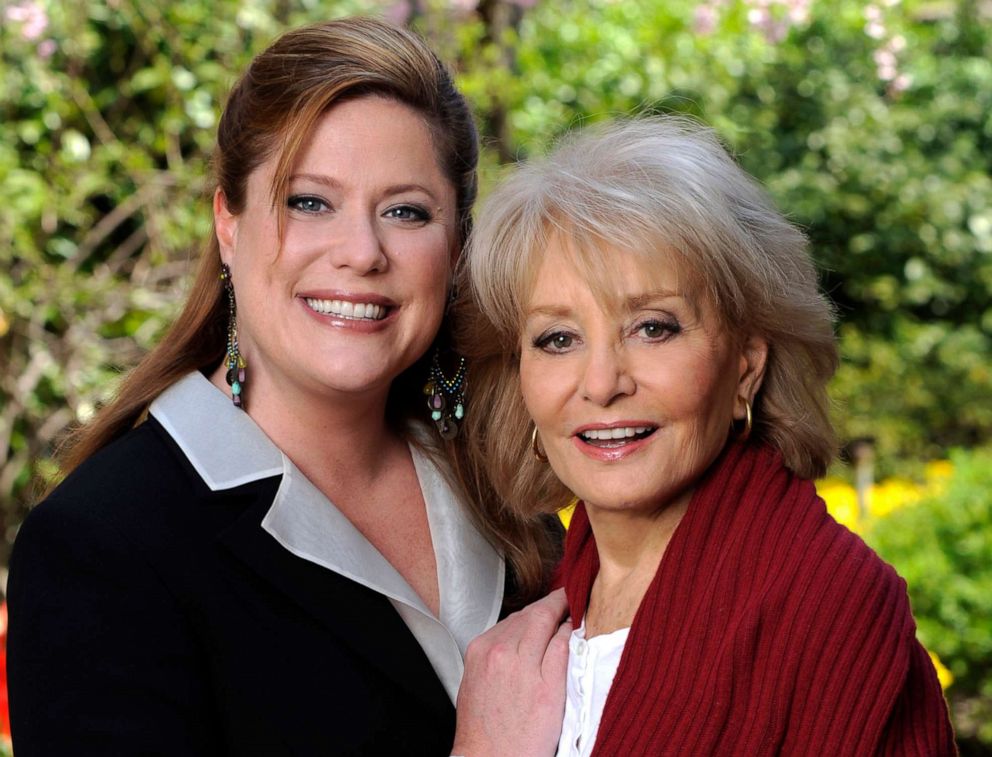
PHOTO: Barbara Walters is pictured with her daughter, Jackie Danforth, April 18, 2008.

Barbara Walters is pictured with her daughter, Jackie Danforth, April 18, 2008.

Donna Svennevik/Walt Disney Television

She was honored in 2001 with a wax portrait of her likeness at Madame Tussauds in New York City and in 2007 she was awarded a star on the Hollywood Walk of Fame.

She was also the recipient of honorary doctoral degrees from her alma mater Sarah Lawrence College, as well as Ohio State University, Temple University, Marymount College, Wheaton College, Hofstra University and Ben-Gurion University in Jerusalem.

After 25 years in television, she was inducted into the Television Academy Hall of Fame in 1989 and was presented the award by Peter Jennings, then the anchor and senior editor of ABC’s “World News Tonight.”

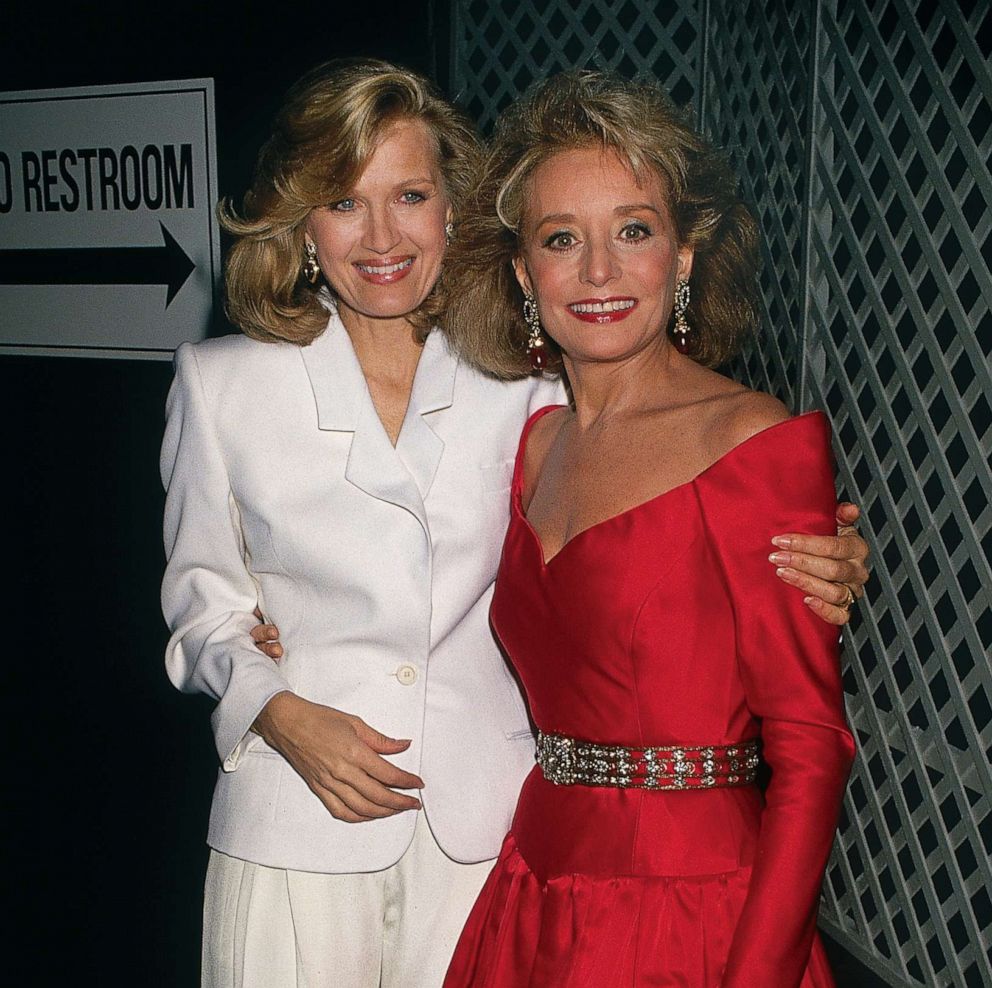
PHOTO: Television anchors Diane Sawyer and Barbara Walters arrive at the Television Hall of Fame awards in Century City, Calif., Jan. 7, 1990.

Television anchors Diane Sawyer and Barbara Walters arrive at the Television Hall of Fame awards in Century City, Calif., Jan. 7, 1990.

Frank Trapper/Corbis via Getty Images

“In all the years that Barbara has spent covering the world, those of us who have moved along in her wake have done better because she was there first setting standards, and she has taught us all something,” Jennings, who died in 2005, said at the time.

In 2000, Oprah Winfrey echoed Jennings’ speech when she presented Walters a Lifetime Achievement Award from the National Academy of Television Arts and Sciences. “Had there not been Barbara Walters, surely all of the other women who have followed in her footsteps, including myself, could not stand where we stand and do what we do in this industry today,” Winfrey said.

In her acceptance speech, Walters said, “I have been blessed with a life I never expected, and helping me up the steps of the ladder over the years have been hundreds of people.”

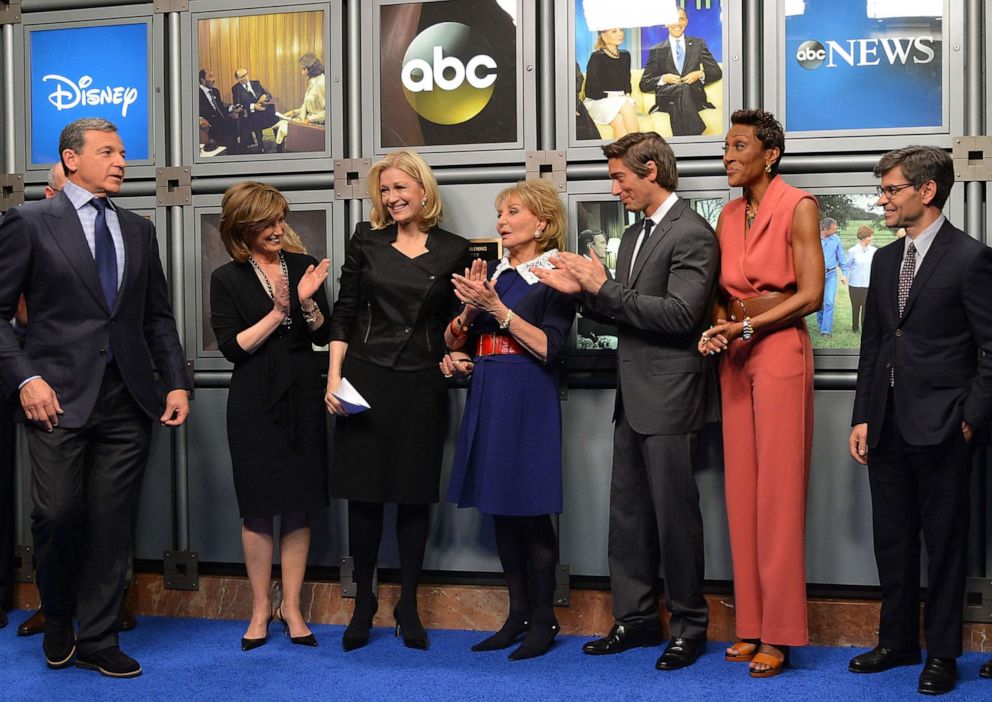
PHOTO: Disney and ABC Television executives and ABC News anchors join Barbara Walters at the dedication ceremony as ABC News headquarters in New York is proclaimed The Barbara Walters Building on May 12, 2014.

Bob Iger, chairman and CEO of The Walt Disney Company; Anne Sweeney, Co-chair, Disney Media Networks and President, Disney/ABC Television Group; ABC News anchor Diane Sawyer; Barbara Walters; ABC News anchor David Muir, “Good Morning America” anchor Robin Roberts and ABC News’ George Stephanopoulos attend the dedication ceremony as ABC News headquarters in New York is proclaimed The Barbara Walters Building on May 12, 2014.

Slaven Vlasic/Getty Images

Part of ABC News’ Headquarters in New York was renamed “The Barbara Walters Building” in May 2014. During the ceremony, Walters accepted the honor, saying, “People ask me very often, ‘what is your legacy?’ and it’s not the interviews with presidents, or heads of state, nor celebrities. If I have a legacy, and I’ve said this before and I mean it so sincerely, I hope that I played a small role in paving the way for so many of you fabulous women.”

5 things to know for Dec. 28: Immigration, Snowstorm, Southwest, Trump’s taxes, Gas

5 things to know for Dec. 28: Immigration, Snowstorm, Southwest, Trump’s taxes, Gas


CNN
 — 

In certain corners of the internet, some women are expressing nostalgia for an era they’ve never known. These millennials and zoomers are glamorizing the aesthetics of 1950s Americana – donning retro fit-and-flare dresses and posting vintage illustrations of aproned housewives who submit to their husbands.

Here’s what else you need to know to Get Up to Speed and On with Your Day.

(You can get “5 Things You Need to Know Today” delivered to your inbox daily. Sign up here.)

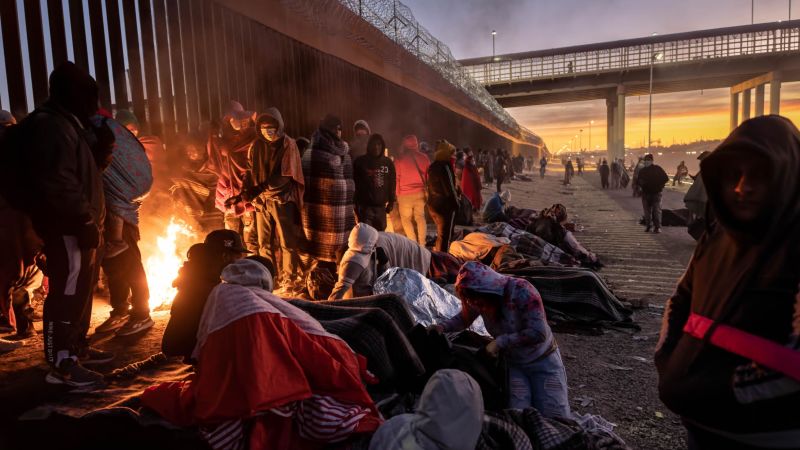
A controversial Trump-era border restriction will remain in effect while legal challenges play out, the Supreme Court said Tuesday, a decision that ensures federal officials will continue to swiftly expel migrants at US borders at least for the next several months. Since March 2020, the measure – known as Title 42 – has allowed border agents to immediately turn away migrants who have crossed the southern border in the name of Covid-19 prevention. The order is a win for Republican-led states that urged the Supreme Court to step in and block a lower court opinion that ordered the termination of the authority. Immigration advocates have denounced the use of the public health authority, arguing it was a pretext to stop migrants from entering the US. In its order, the high court said it would hear arguments in the case in February. Meanwhile, the Texas National Guard installed two miles of border fencing in the El Paso, Texas, area as a surging number of migrants face uncertainty.

Days into the deadly winter storm that pummeled much of the country, the challenges are far from over in Buffalo, New York. At least 31 people died in New York’s Erie County, and the number continues to rise as authorities check on homes and cars for anyone who was stranded in the snow. “We’re, unfortunately, finding bodies on the street and in snow banks,” Erie County Executive Mark Poloncarz said. “There’s a lot of roads that are completely blocked right now, that have no access whatsoever.” Military police are helping enforce a driving ban in Buffalo as more than 7,000 utility workers navigate through broken trees and poles around the clock to restore power. In one heartwarming story, a Buffalo woman answered a stranger’s cry for help and rescued a man with severe frostbite stuck in a snowbank outside her house. Nationwide, another 25 people have been reported dead in the storm across 11 states. 

Sha'Kyra Aughtry buffalo good samaritan

She heard cries for help during deadly winter storm. Her actions saved a life

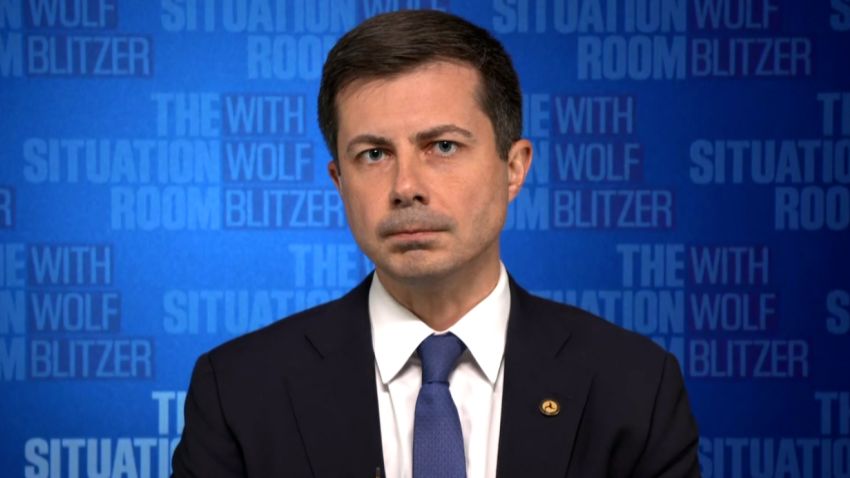
Southwest Airlines’ operational meltdown has put the Dallas-based carrier under serious scrutiny – not only from stranded passengers and the media but from Transportation Secretary Pete Buttigieg as well. Buttigieg spoke directly to Southwest CEO Bob Jordan about the thousands of flights that have been canceled this week with no immediate indication of when passengers can rebook. “Their system really has completely melted down,” Buttigieg told CNN. “I made clear that our department will be holding them accountable for their responsibilities to customers, both to get them through this situation and to make sure that this can’t happen again.” Passengers who booked with Southwest have been hoping for some much-needed relief on cancellations and delays. But those hopes are so far being dashed. Of the more than 2,700 cancellations already made for flights today, nearly all of them are operated by Southwest.

Buttigieg vpx

‘Completely melted down’: Buttigieg reacts to Southwest Airlines chaos

Former President Donald Trump’s tax returns will be released Friday morning, a source told CNN. The returns will be placed into the congressional record that day during a House pro forma session. The highly anticipated release comes after the panel asserted last week that the IRS failed to properly audit Trump’s taxes while he was in office. The committee released a report that detailed six years’ worth of his tax returns, including his claims of massive annual losses that significantly reduced his tax burden. Chairman Richard Neal and fellow Democrats have said that the records they obtained showed that the presidential audit program failed to work as intended. Neal charged Trump’s returns were only subjected to the mandatory audit once, in 2019, after Democrats inquired.

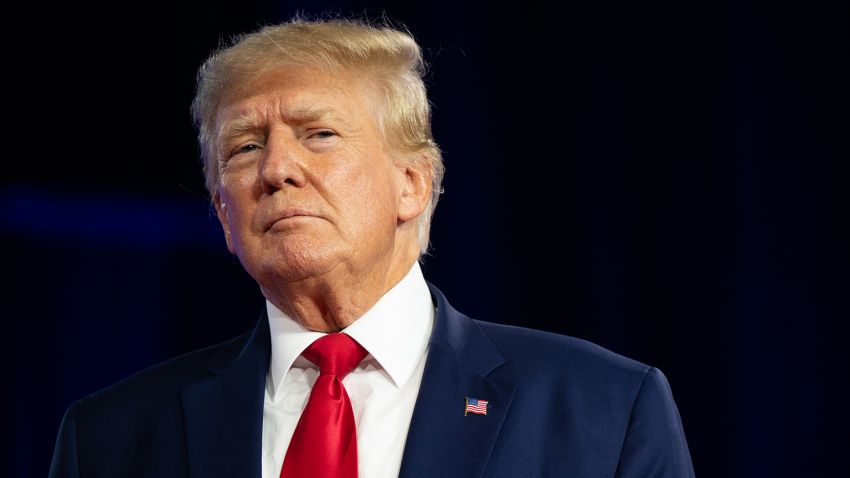
Former U.S. President Donald Trump speaks at the Conservative Political Action Conference (CPAC) at the Hilton Anatole on August 06, 2022 in Dallas, Texas.

What we know about Trump’s tax returns

Gas prices will likely be significantly cheaper next year – but the national average could still climb back above the $4-a-gallon threshold as soon as May, according to GasBuddy projections shared exclusively with CNN. The good news is that the price-tracking website doesn’t expect a repeat of this year’s wild swings that at one point sent gas prices above $5 a gallon for the first time. That spike set off recession alarm bells, worsened inflation and crushed consumer confidence. The national average for regular gas is expected to drop to $3.49 a gallon in 2023, down roughly 50 cents from the average this year, according to GasBuddy. 

Hugh Jackman’s frenemy dynamic with Ryan Reynolds is going big screen in ‘Deadpool 3’

They “hate” each other, and we love it.

Beef burger or plant-based meat substitutes? 

These labels encourage people to pick meals with a smaller climate footprint.

Vandals destroyed 22,000-year-old sacred cave art

An indigenous group is devastated and police are searching for the culprits.

A curious black bear in Connecticut got more than it bargained for

It wasn’t ready for an ambush by two pigs after it climbed into their pen.

Returning that ugly Christmas sweater could cost you 

Some chains are slapping on extra fees of up to $7 for online returns.

Pope Francis says Former Pope Benedict is ‘very sick’

Pope Francis said that his predecessor, Pope Benedict – the 95-year-old former pontiff who resigned from the post nine years ago – is “very sick.” “I want to ask you all for a special prayer for Pope Emeritus Benedict who sustains the Church in his silence,” Francis said during his general audience at the Vatican earlier today.

85{515baef3fee8ea94d67a98a2b336e0215adf67d225b0e21a4f5c9b13e8fbd502}

That’s the percentage of rural land in California that’s at “high” or “very high” risk for wildfires, according to a new analysis.

“Fentanyl is so potent that teens, particularly teens who have never used an opioid before and have no tolerance to them, can die really quickly. We’re talking within seconds to minutes.”

– Dr. Scott Hadland, chief of adolescent and young adult medicine at Boston’s Mass General for Children Hospital.

Check your local forecast here>>>

Buzzing beats

This beekeeper records bee sounds and turns them into electronic music. So people can dance to buzzing bees and learn about colony collapse disorder at the same time. (Click here to view)

News in review: Around the world

News in review: Around the world

MARY REICHARD, HOST: It’s Wednesday the 28th of December, 2022.

Thank you for joining us for today’s edition of The World and Everything in It. Good morning, I’m Mary Reichard.

NICK EICHER, HOST: And I’m Nick Eicher. First up today: Ukraine.

Russia’s full-scale war in Ukraine began ten months ago, and the consequences of this second invasion have been devastating.

At least 6,700 civilians have died and more than 13,000 Ukrainian soldiers have been killed in action.

In addition, nearly 13 million people have been displaced and the damage to Ukraine’s infrastructure amounts to more than 100 billion U.S. dollars.

REICHARD: WORLD’s Jill Nelson gives us a rundown of the key events of the war and how it’s affected the lives of Ukrainians.

AUDIO: [Bombings]

JILL NELSON, REPORTER: The sun had not yet risen on Feb. 24th, when Pastor Oleg Magdych realized Ukraine was on the brink of war. Russians were firing rockets less than a mile away.

OLEG: So this morning we were driving through Kharkiv. We heard this noise that you can’t get it wrong. So um the rocket shelling was in place.

Magdych was trying to deliver supplies to Ukrainian troops in eastern Ukraine. He and his friends quickly turned around to implement their Russian-invasion game plan: Get their families to safety and join the fight.

AUDIO: [Traffic]

A mass exodus of people created traffic jams and gas shortages, and many Ukrainians were trapped.

Four days later, a 40-mile long Russian military convoy stretched from Belarus to Kyiv. Washington offered to help evacuate Ukraine’s leader.

ZELENSKY: [Ukrainian]

But Ukrainian President Volodomyr Zelensky turned down the offer with his now-famous response: “I need ammunition, not a ride.”

The former comedian and TV star quickly became a global symbol of resistance and courage. He posted videos of himself unshaven and wearing khakis on the streets of Kyiv and called on Ukrainians and the world to stand up to Russia.

ZELENSKY: We all must stop Russia. The world must stop the war.

As Russian missiles fell on Kyiv, the Ukrainian military and ordinary citizens began fortifying the capital.

By then, Pastor Magdych was leading a civil defense unit stationed in Kyiv.

OLEGBRIDGE: So this is one of the bridges that is closed to public, and you can only cross it if you are military personnel (honk) or some kind of special force. The bridge is empty and it’s ready to be destroyed if the enemy comes close to the bridge.

Russia had more firepower, but Ukraine had grit, Western aid, and knowledge of the terrain. By March 25th, Russian troops pulled back from Kyiv and shifted to the east. Victory number one for Ukraine.

The Russian retreat exposed thousands of war crimes in cities just outside the capital and in northeastern Ukraine.

Oleksandra Matviichuk leads the Center for Civil Liberties. She sent teams in to document the atrocities and add them to their growing list of Russian war crimes.

MATVIICHUK: I asked to myself why such cruelty? Why such brutality? Even me, professional human rights lawyer who was documented war crimes, as I mentioned before, for 8 years, I wasn’t prepared because so much human pain.

And the war crimes continued.

AUDIO: [Mariupol bombing]

Bombings in the southern city of Mariupol killed more the 600 people in March. In April, a Russian missile struck a train station near Donetsk, killing 50 civilians. By then, Russia had taken over key regions in the south and northeast.

By May, Russia’s northern neighbors were getting nervous.

AUDIO: [Announcement]

Both Finland and Sweden announced plans to apply for NATO membership after two centuries of neutrality. Foundation for Defense of Democracy’s Bradley Bowman:

BOWMAN: NATO is not a threat to Russia. But I think the reason why Putin resents NATO is because when a country becomes a member of NATO, it prevents Putin from invading, bullying, and occupying that country.

Meanwhile, Magdych was injured when his unit came under fire in the eastern Donbas region in May. He had surgery on his arm, and two of his men died.

OLEG: I’m back from Kyiv where we had funerals for two of our fallen soldiers. I’m doing okay. My leg and my arm are healing well. I can hold the gun. Not for long, but I can hold the gun.

During the summer months, Russia completed its conquest of Luhansk in the east, and Ukraine began a massive counteroffensive in the south.

AUDIO: [Missiles]

Fall brought two more victories to Ukraine: They reclaimed 3000 square miles of the northeastern Kharkiv region in September and declared a November victory in the strategic southern region of Kherson. But renewed missile attacks on Kyiv rattled the capital. So did the presence of Iranian-supplied drones.

In December, Matviichuk traveled to Stockholm to deliver a speech on the world stage.

NOBEL PRIZE: I have the honor to call up Oleksandra Matviichuk representing the Center for Civil Liberties to deliver the Nobel Peace Prize lecture…

Her organization won the Nobel prize for their work documenting Russian war crimes in her country. During her speech she called out the democratic world for making concessions to dictatorships.

MATVIICHUK: And that is why the willingness of the Ukrainian people to resist Russian imperialism is so important. We will not leave people in the occupied territories to be killed and tortured.

Now, it’s winter in Ukraine. Pastor Magdych is back home with his family in Kyiv for a two-week break before he returns to the front lines. He says blackouts are common as Russia attacks the country’s infrastructure. They only have power for part of the day.

MAGDYCH: At the moment we are getting ready for the Russians and Belarusians to try to take Kyiv again. And It breaks my heart as a father because I know my son really wants to be with me and fight with me.

Magdych says a Russian takeover of Kyiv would put his family in danger.

MAGDYCH: If Russians advance, it would put under danger all Christian ministers because Russians hate two things. They hate all Ukrainians and they hate non-Russian Orthodox.

Russian forces have taken over churches and tortured and killed Christian leaders in occupied Ukrainian territory. Ukrainians have a long road ahead, but Magydych says God is at work, strengthening the church through these times of suffering.

MAGDYCH: I’ve been saying since 2014 that 10 minutes under heavy shelling in the bunker changes your theology, it changes the way you think about God and everything. And I know that after we win this war, the Protestant church would be much much better.

Reporting for WORLD, I’m Jill Nelson.


MARY REICHARD, HOST: Coming up next on The World and Everything in It: WORLD Tour with our reporter in Africa, Onize Ohikere. Today, significant international stories of 2022.

ONIZE OHIEKERE, REPORTER: The conflict in Ukraine spurred a food crisis in other parts of the world this year.

Ukraine is one of the world’s largest grain exporters, but the war stymied the export of wheat, other foodstuffs, and fertilizers.

AUDIO: [Iraq protest]

Worldwide, protesters crowded the streets, decrying rising food prices from Iraq and Tunisia, to Ghana. Lebanon was also hit hard by the shortage as it imports 80 percent of its wheat from Ukraine.

AUDIO: [Ship offloading]

In September, a cargo ship from Ukraine offloaded dried corn, other grains, and vegetable oil at a port in the northern Lebanese city of Tripoli.

A month earlier, a UN-chartered ship loaded with 23,000 tonnes of wheat docked in Djibouti. The UN’s World Food Program said the food brought much-needed support to the drought-hit Horn of Africa region, which is still in the throes of a record dry-spell.

AUDIO: [Sounds from Somalia’s streets]

Aid workers in the Horn of Africa sounded the alarm this year that a perfect storm of multiple crises will fuel unprecedented starvation.

Five consecutive rainy seasons have disappointed across Kenya, Somalia, and Ethiopia.The drought has destroyed crops, killed livestock, and forced millions of people to migrate in search of food and water. The region is facing its worst drought in at least 40 years.

The United Nations humanitarian office has projected that 1 in 23 people will need some form of emergency aid over the next year.

Meanwhile in Pakistan…

AUDIO: [Water rushing]

Record floods this year displaced more than 660,000 people and killed nearly 1,500—about a third of them children. The disaster left aid groups scrambling to provide emergency and long-term support to stop diseases from spreading.

We head over to Haiti, where teeming gang violence came to a head this year.

AUDIO: [Protesters chanting]

In September, Haitian Prime Minister Ariel Henry announced the government’s plans to withdraw fuel subsidies. That sparked street protests.

A powerful gang dug trenches and blocked access to the largest fuel terminal in the capital city of Port-au-Prince. The blockade forced gas stations to close, fueled a shortage of clean water, and limited operating hours for grocery stores and hospitals. A cholera outbreak also began during the blockade, triggering even more calls for a solution.

AUDIO: [Motorcycles queuing for fuel]

Haitian security regained control of the terminal last month allowing fuel to flow again.

But the unrest has taken a much larger toll. The UN said this month that gangs killed more than 1,400 people and kidnapped more than 1,000 others this year alone. Haiti was already battling instability that heightened last year after the former president’s assassination and an ongoing economic crisis.

Next, we remember the Christians who faced persecution for their faith. We begin in Nigeria.

AUDIO: [Choir singing]

Just before Mass ended, gunmen opened fire inside St. Francis Catholic Church in southwestern Ondo state. About 40 people died in the Pentecost Sunday attack in one of Nigeria’s more peaceful states.

The country has faced a surge in violence from Islamist insurgents to criminal gangs.

AUDIO: [Sound of protests]

An irate mob of Muslim students in Nigeria’s Sokoto state stoned to death Deborah Samuel, a Christian classmate who posted a social media message they found offensive.

AUDIO: [Worshippers singing]

In Nicaragua, President Daniel Ortega’s government shut down seven radio stations owned by the Catholic Church. Authorities also detained Rolando Álvarez, the Catholic bishop of Matagalpa. He was charged this month with undermining national security and propagating false news.

Relations between Ortega and the Catholic Church have been tense since the bloody suppression of anti-government protests in 2018 that left more than 350 people dead.

In China, authorities introduced regulations to control religious expression online. The measures implemented in March stop individuals from sharing religious content without a license among other measures.

AUDIO: [Evin fire aftermath]

There was some good news, Iran unexpectedly released two imprisoned Christians in October after a fire and clashes erupted at the notorious Evin prison. They were convicted on national security charges and for starting illegal house churches.

We wrap up this year looking back at the protests in Iran.

AUDIO: [Protesters chanting]

Nationwide demonstrations that began in September have persisted.

The protests began after a 22-year-old Iranian-Kurdish woman died in police custody. Iran’s morality police arrested Mahsa Amini for wearing her headscarf incorrectly.

AUDIO: [Protesters chanting]

Authorities have detained more than 18,000 people since the protests began and executed some of them.

Iran accused Majid Reza Rahnavard of stabbing to death two security officials last month. Authorities hanged him from a construction crane. In the first confirmed execution, authorities hanged Mohsen Shekari after sentencing him for attacking a security force member with a machete.

Activists warn others have already received death sentences.

That’s it for this week’s World Tour. Reporting for WORLD, I’m Onize Ohikere in Abuja, Nigeria.


WORLD Radio transcripts are created on a rush deadline. This text may not be in its final form and may be updated or revised in the future. Accuracy and availability may vary. The authoritative record of WORLD Radio programming is the audio record.

China’s COVID-19 surge raises odds of new coronavirus mutant

China’s COVID-19 surge raises odds of new coronavirus mutant

Could the COVID-19 surge in China unleash a new coronavirus mutant on the entire world?

Researchers do not know but be concerned that might materialize. It could be identical to omicron variants circulating there now. It could be a blend of strains. Or some thing entirely different, they say.

“China has a populace that is incredibly significant and there is limited immunity. And that appears to be the environment in which we may possibly see an explosion of a new variant,” reported Dr. Stuart Campbell Ray, an infectious sickness expert at Johns Hopkins College.

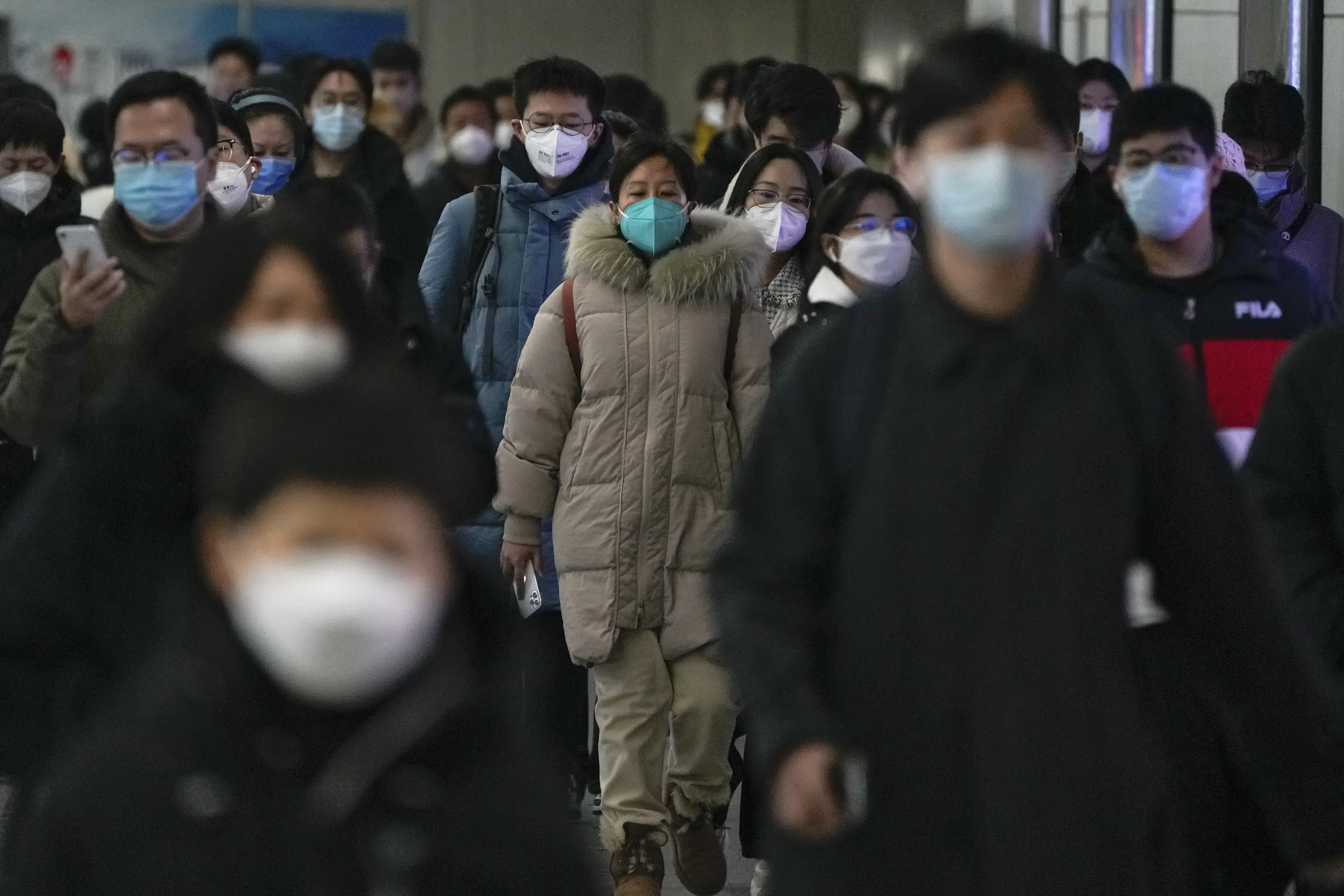
Just about every new an infection gives a probability for the coronavirus to mutate, and the virus is spreading fast in China. The state of 1.4 billion has mainly deserted its “zero COVID” policy. However all round claimed vaccination rates are large, booster concentrations are reduced, especially among more mature persons. Domestic vaccines have established fewer helpful in opposition to serious an infection than Western-manufactured messenger RNA variations. Numerous have been supplied additional than a year back, which means immunity has waned.

The final result? Fertile ground for the virus to alter.

“When we’ve witnessed massive waves of infection, it is frequently followed by new variants currently being created,” Ray stated.

About 3 a long time in the past, the first variation of the coronavirus unfold from China to the relaxation of the planet and was sooner or later changed by the delta variant, then omicron and its descendants, which go on plaguing the entire world today.

Dr. Shan-Lu Liu, who reports viruses at Ohio Condition University, explained numerous existing omicron variants have been detected in China, like BF.7, which is incredibly adept at evading immunity and is thought to be driving the recent surge.

Gurus reported a partially immune populace like China’s places specific strain on the virus to transform. Ray as opposed the virus to a boxer that “learns to evade the skills that you have and adapt to get all-around those.”

1 huge unknown is no matter if a new variant will lead to far more significant illness. Gurus say there is no inherent organic reason the virus has to grow to be milder in excess of time.

“Much of the mildness we’ve seasoned about the earlier six to 12 months in several components of the globe has been owing to gathered immunity either through vaccination or an infection, not for the reason that the virus has changed” in severity, Ray claimed.

In China, most people today have by no means been exposed to the coronavirus. China’s vaccines depend on an older know-how producing fewer antibodies than messenger RNA vaccines.

Supplied all those realities, Dr. Gagandeep Kang, who scientific studies viruses at the Christian Professional medical Higher education in Vellore, India, claimed it continues to be to be noticed if the virus will comply with the exact same pattern of evolution in China as it has in the rest of the planet right after vaccines arrived out. “Or,” she requested, “will the pattern of evolution be completely diverse?”

Recently, the Environment Overall health Business expressed issue about reports of intense sickness in China. All around the metropolitan areas of Baoding and Langfang outside Beijing, hospitals have operate out of intense treatment beds and staff members as critical circumstances surge.

China’s approach to monitor the virus facilities close to 3 metropolis hospitals in each and every province, where by samples will be gathered from walk-in clients who are extremely unwell and all all those who die each individual 7 days, Xu Wenbo of the Chinese Heart for Disease Management and Avoidance claimed at a briefing Tuesday.

He said 50 of the 130 omicron variations detected in China experienced resulted in outbreaks. The country is making a nationwide genetic database “to keep track of in actual time” how distinctive strains ended up evolving and the potential implications for public health and fitness, he said.

At this position, nevertheless, there’s restricted facts about genetic viral sequencing coming out of China, mentioned Jeremy Luban, a virologist at the University of Massachusetts Healthcare School.

“We really don’t know all of what is likely on,” Luban mentioned. But plainly, “the pandemic is not about.”

___

AP online video producer Olivia Zhang and reporter Dake Kang in Beijing contributed to this report.

___

The Affiliated Press Health and fitness and Science Division receives help from the Howard Hughes Health-related Institute’s Science and Educational Media Team. The AP is only accountable for all material.

Nation and world news at a glance

Nation and world news at a glance