

Henrik Fisker wants to sell you an EV you can actually afford

Henrik Fisker wants to sell you an EV you can actually afford

When Henrik Fisker talks about his company’s plans for this year, like possibly sharing the platform for the new Fisker Ocean electric crossover with other automakers or unveiling the Fisker Ronin EV grand tourer, he tends to be circumspect. The design mogul turned EV startup founder seems reluctant to make the bombastic promises that have worked against other new automotive ventures.

But when he is asked about the short-seller report that claimed Fisker Inc.’s finances are largely tied up in a deal with its contract factory, he does not mince words. 

“The guy is a simple crook,” Fisker said in a recent interview with The Verge. “You can quote me on that… I was surprised that anybody even printed that stuff.”

“The guy is a simple crook”

At the beginning of December, short seller Fuzzy Panda Research released a report alleging that Fisker Inc.’s current cash balance is tied up in undisclosed bank guarantees to its Austrian factory partner, Magna Steyr. It also claimed the Ocean’s platform is based on that of a Chinese crossover also made by Magna Steyr.  

The claim was met with a forceful denial from Fisker Inc. It also precipitated a 5 percent drop in shares of the company, which went public by merging with a special purpose acquisition company in 2020. (Fuzzy Panda Research did not respond to a request for comment from The Verge.)
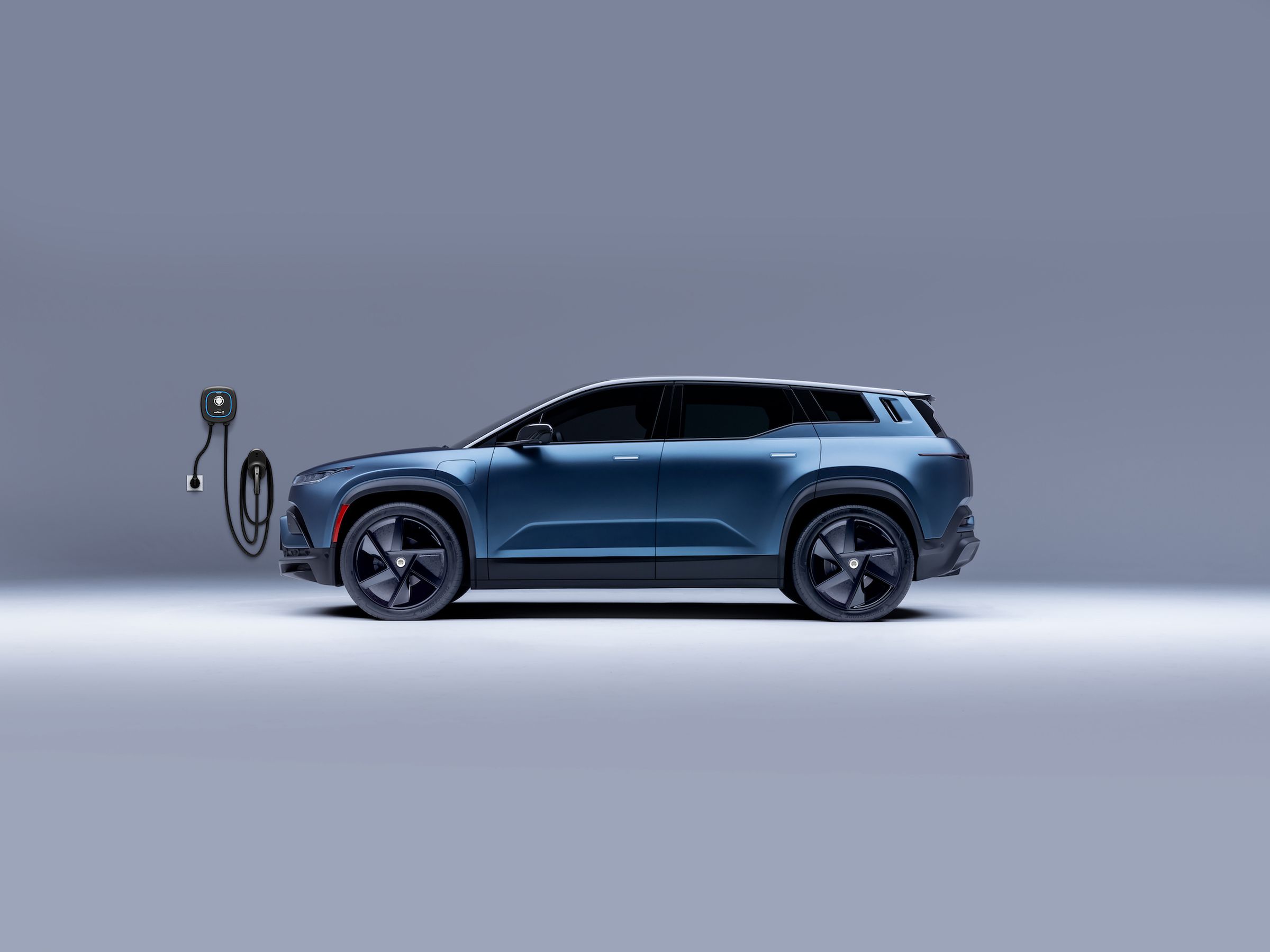
Fisker Ocean

The Fisker Ocean will come with 350 miles of range.
Image: Fisker

This year will end amid an uneasy time for many EV and mobility startups. Investments in those firms are beginning to cool off, a trend that is likely to continue into 2023 amid an uncertain economy and car market. Additionally, Fuzzy Panda’s report is not the first time an activist short-seller firm has gone after an automotive startup. In 2020, a report from Hindenburg Research threw EV and hydrogen semi truck startup Nikola into chaos, ultimately leading to the conviction of its founder on fraud charges. 

All of this is a moment Fisker seems eager to move past so he can get some cars into the hands of his customers. Known for his design work on the BMW Z8 and various Aston Martins and leading Ford’s global advanced design studio, this is his second go as a car company CEO. His first venture, Fisker Automotive, which produced the Karma plug-in hybrid sedan, threw in the towel when its battery supplier went bankrupt. (It’s complicated: Fisker Inc. has the same logo as the original Fisker Automotive, but that company was reborn as Chinese-owned Karma Automotive, which kept the Karma going as the Karma Revero.)

Fisker seems eager to move on so he can get some cars into the hands of his customers

This year will be a make-or-break one for both Fisker and the company that bears his name. It will test Fisker Inc.’s “asset-light” approach to building EVs: outsourcing production to third-party manufacturers across the globe while Fisker Inc. itself focuses on design, engineering, and customer service. 

It’s a fairly unique approach for any car company that eventually seeks to be a big, global, high-volume player. Contract manufacturers are often used to make special models or to augment production capacity when needed. But most automakers want to own their production process; Rivian, for example, produces the R1T and R1S at its plant in Normal, Illinois, and is building an even bigger plant in Georgia.

For now, at least, Fisker Inc. will depend on outside companies, with each model produced at a different location.

That starts with the production of the Fisker Ocean, a roughly Tesla Model Y-size electric crossover with an estimated 350-mile range. The Ocean will be built by Magna Steyr, which has a long track record of supplementing manufacturing capacity for stalwarts like the BMW 5 Series sedan as well as lower-volume specialty cars like the BMW Z4 and Toyota Supra. 

Fisker Ocean

Fisker says his company will produce 42,000 Oceans by the end of 2023.
Image: Fisker

Production of the Ocean started in small batches at Magna Steyr in November. The crossover has already garnered early positive reviews when tested in “85 percent done” form by journalists this fall. If things go according to plan, Magna Steyr will build 300 Ocean crossovers in Q1 2023 before ramping up to a total of 42,000 by the year’s end. 

Earlier this year, Fisker faced a choice between delaying production to correct software issues related to its driver-assistance system or going ahead and fixing the software later on. It chose the latter. Some early Ocean models will receive over-the-air updates early next year. 

The Ocean will then join an increasingly crowded field of higher-range EV crossovers, competing against the Tesla Model Y, the Volkswagen ID.4, the Cadillac Lyriq, and more. The launch spec Ocean One model is aiming for a top-of-the-class 350 miles of range and is priced at $68,999; later, the base Ocean Sport will launch at $37,499 with 250 miles of range. Several Ocean trims are already sold out for 2023.

Besides the range, Fisker says the Ocean has a design edge over competitors with features like a rotating 17.1-inch touchscreen and “California Mode,” which opens all the windows and the optional SolarSky roof. A significant amount of the interior is made from recycled plastic as well.

Next up is the Fisker PEAR, or “Personal Electric Automotive Revolution,” a smaller EV Fisker Inc. claims will launch with a remarkably competitive price of $29,900. That’s before any tax incentives, which it does stand to receive because it’s due to be built at Foxconn’s plant in Lordstown, Ohio. 

Fisker PEAR

The Fisker PEAR will start below $30,000.
Image: Fisker

If Fisker Inc. pulls this off, it will be one of the very few players even bothering with more affordable EVs in the current market. Most automakers are going for luxury buyers to offset the high R&D and manufacturing costs involved with battery power. 

But this is where Fisker says he sees an opening. “I think the biggest opportunity is actually in the more affordable segment right now,” he said. “We need everyone to own an EV. And everyone cannot afford an $80,000 electric SUV or a $120,000 electric sedan, no matter how cool they are.”

The company thinks it can meet that target by dramatically reducing the number of parts involved in the car, even by the more austere standards set by the Tesla Model 3’s interior. 

After that, there’s the Fisker Ronin, a callback to Fisker’s own sports car roots. Named after the car chase-heavy John Frankenheimer action classic, Fisker says the Ronin will be a four-door convertible grand tourer EV targeting a range of more than 550 miles and a price tag of around $200,000. The Ronin would be one of the only EV convertibles on the market; the upcoming Polestar 6 is about the only similar thing in the pipeline. 

But even without announcements of cars powered by rocket thrusters, it’s a very aspirational lineup for a startup — especially one that will depend, for now, on outside entities for production. Fisker likens it to a marathon and one that starts next year. 

This interview has been condensed and lightly edited for clarity.
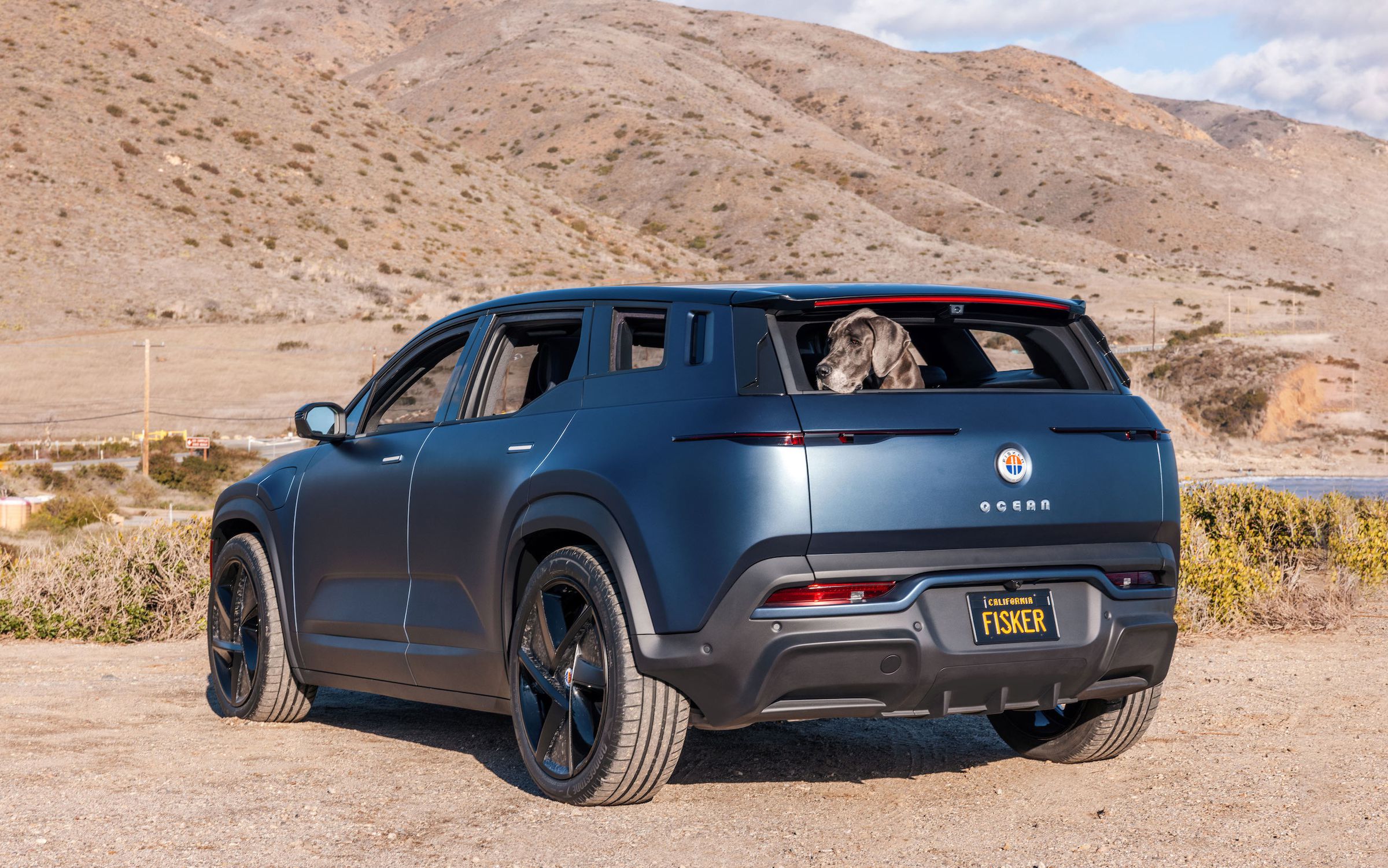
Fisker Ocean

Several Ocean trims are already sold out for 2023.
Image: Fisker

How is Ocean production going at Magna Steyr? You have been estimating the ramp-up to 42,000 cars by the end of next year. Any updates to that? What have the biggest headaches been?

The 42,000 is still the same. That hasn’t changed. We developed the Ocean in record time. We have developed it in less than two and a half years, which is sort of unusual in the car industry, where you normally spend four to five years developing a vehicle.

One of the negatives about that is we couldn’t really convince any of the authorities to [certify the car for safety and emissions] faster. So we’re actually starting production and still waiting for some homologation, which we should be getting in February. 

I think we’re not immune to supply chain issues, either. We also have to work with our suppliers to figure out how we get them to ramp up. Probably from now until the end of Q1, the whole goal here is to get all of the suppliers lined up, some a little slower than others. So that’s why we set a very low ramp of 300 vehicles by the end of Q1 next year.

“I think we’re not immune to supply chain issues, either.”

Magna could probably produce several thousand vehicles, but we just didn’t want to take that risk and have some suppliers that couldn’t follow that speed. In this environment, maybe the most difficult thing is to make sure that you get all suppliers to the same speed. Once in a while, some car makers have to stop production just because of one or two parts — and you can’t finish a car unless you’ve got all of the parts. You don’t want to be standing with thousands of cars that can’t ship because one supplier can’t deliver the parts. So that’s what we’re working on right now. 

After that, it’s actually a very steep ramp-up compared to, I think, any other startup. We are planning around 8,000 vehicles in Q2 next year, which is quite a lot. But we are comfortable with that because we have taken more time to align suppliers. We didn’t want to jump out claiming to do thousands of cars in the first quarter and then end up with much less, and then it’s sort of a disappointment. We are trying to mitigate the risk here.

Let’s talk more about manufacturing. Your company has an unusual approach to it. You’ve extolled the benefits of your “asset-light” model. In 2020, you wrote that the industry has an overcapacity problem. Sitting where you are now, two years later, how do you feel about that after a year or two where that has very much not been the case? 

Overcapacity, meaning there is too much manufacturing capacity versus the cars [being produced.] And that is still the case today. I saw the other day that Stellantis is closing a [Jeep] factory in Illinois. 

I think we did the right thing. It’s not just about capacity, quite frankly, it’s really about the difficulty of manufacturing. I mean, you’ve heard even Elon [Musk] talk about manufacturing hell and how difficult that was.

And I think that especially if you’re not from the car industry, I don’t think people are aware of how difficult it is to manufacture a car. It’s not just putting the parts together, but it’s getting all these parts just in time, in the right quality. 

A milled-out aluminum block is used by Fisker Inc. for zero-tolerance testing.

A milled-out aluminum block is used by Fisker Inc. for zero-tolerance testing.
Image: Henrik Fisker

One of the things we did at Magna is we spent $750,000 on a zero-tolerance model. It’s basically three solid blocks of aluminum milled out with almost zero tolerance. And what we do is we take parts from suppliers and put them on this milled-out aluminum block. 

What that does is, you’re checking if suppliers delivered the part in the quality and measurement they’re supposed to. Sometimes some suppliers may have a little bending issue with something and a part is two or three millimeters off.

The problem with that is if something doesn’t fit the next panel, then that moves, and that moves, and it’s a domino effect. And that’s where you see a lot of rework happening. We want to avoid that because that’s expensive. That happens many times in the new vehicles, specifically for startups, and that’s why you see this slow production. It takes you, instead of hours, days to make a car because people have to go in and manually adjust things. That’s when you don’t get the ramp-up.

This is really where I feel we have done the right thing because we are on the right path to ramp up manufacturing. And we are the only ones who didn’t announce a delay in our manufacturing. As far as I know, we’re the only startup that has not announced a reduction in our forecast of sales.

Do you see your production model as a long-term plan for the company? 

I think that when you have an agile fast-moving startup company, you should want to use the advantages of being agile and fast moving. 

I’m not making any 10-year plans. I want to be able to move with whatever is happening in the world. If my 10-year plan was to source everything out of Russia, I would be in deep trouble right now. 

“As far as I know, we’re the only startup that has not announced a reduction in our forecast of sales.”

The contract manufacturers are a part of our plan. And it was a part of our plan to get fast to market with high-quality cars. I think we have proved that worked.

You will see the quality of the cars that just came from Magna. I did personal quality inspections of the vehicles. It’s absolutely amazing. I’ve never seen quality vehicles like this right out of the gate. And I’m really, really impressed with Magna on this. They’ve definitely lived up to the expectations. 

Now, does that mean that we will only use contract manufacturers in the future? No, because we are a growth company. If you go to somebody like a large car company that’s made their own cars for 100 years, I mean, of course, why would they go and change to contract manufacturing? They’re sitting there owning all of these plants.

But in our case, we didn’t own any plants. Now, when we mature and we start having more vehicles on the road, yeah, I think it’s very possible we will have our own manufacturing plant — when the time is right. I think it would be a good mixture of both contract manufacturing and our own manufacturing plant. But it’s not something we wanted to start with. 

Are there any other partners you may look at for subsequent vehicles besides the PEAR at Foxconn? 

Well, the only thing I can say is we did have several OEMs interested in sharing both our Ocean platform and our PEAR platform. And I think sharing is something that is advantageous in the next few years. It may not be advantageous in 10 years when everyone has high-volume EVs. 

Look at the biggest companies in the world. You take the five or 10 biggest car companies in the world. None of them are making a quarter of a million EVs of one model, but they do it in all the gasoline cars. Now, that means they don’t have that volume advantage that they normally have with gasoline cars, which means that the pricing of their so-called volume models is a problem because they don’t have volume enough to get the pricing down. The only one that makes volume that high right now is Tesla. 

I think, for us, if we share a platform with an OEM, we think this is very beneficial because we both then get high-volume components into an EV and can be competitive — as long as we are not a direct competitor. We are talking to a couple of OEMs about that opportunity. And we’re not direct competitors. I think that could benefit Fisker a lot.

Are there any potential partners you can share? 

No, I can’t give you that information. But I can just give you a high-level idea of what we’re looking at.

I want to talk about PEAR. That $29,900 price point you’re claiming is very interesting. Why go after the affordable EV market, which is a pretty neglected one? And do you feel that car can be profitable at that price?

Why go after this market? Because I want to go into markets where I see opportunity. Would I love to design a $150,000 four-door sports sedan? Absolutely. Do I see an opportunity in that market? No, because there are already five or six or seven. It’s getting almost congested with luxury EVs. 

I think the biggest opportunity is actually in the more affordable segment right now. One of our brand pillars is sustainability. Our mission is a cleaner world for everyone, right? So if that truly is our mission, how do we create a clean world for everyone? We need everyone to own an EV and everyone cannot afford an $80,000 electric SUV or a $120,000 electric sedan, no matter how cool they are.

“Why go after this market? Because I want to go into markets where I see opportunity.”

We need to find out how to get EVs to the broader population that cannot afford these expensive vehicles. And there have been some attempts that have been pretty boring low-cost vehicles, and they didn’t take off. 

So our aim with our PEAR was two things. First, it had to be affordable. And second, it had to be exciting and innovative because you have to want this vehicle. You have to desire it. And I believe that even if you buy a $30,000 car, you still want that desire, that excitement, that innovation. 

We had to completely rethink how we develop a car in terms of how to get the cost down. We had to come up with new ideas, and one of the things we are heavily looking at is reducing the number of parts in the car dramatically to lower cost. 

Fisker PEAR

The PEAR required a complete “rethink,” Fisker said.
Image: Fisker

We have also decided to do a complete steel platform and steel body, again for lower cost. Yes, aluminum was lighter, but it’s more expensive and it’s more expensive to repair. So we went for old steel. And then we went very radical with the interior design in terms of simplifying it for a low cost.

We then also looked at innovations in the vehicle itself. We have a new way of getting into the trunk we call the Houdini trunk. It doesn’t open like a normal hatch or a normal trunk, which can be very beneficial specifically in tight places when you want to get into a trunk. 

We looked at how we could broaden the appeal of this car beyond private ownership. Can we make this vehicle ideal for ridehailing, car-sharing, and food delivery? So we looked at broadening the market for those vehicles so we can get super-high volume. 

We’re aiming at 250,000 volume, which is very high, annually. To do that, we have to get the price right, we have to make it desirable, and we have to broaden the potential market. 

Those are the three things we looked at, and right now, we’re on target. We want to make money on the base model as well. You’re never going to make as much money in the base model as in a fully optioned-out model; that’s just how the industry works. But we do expect the vehicle to still come in at $29,900, and we’re going to make money on it. 

“We’re aiming at 250,000 volume, which is very high, annually.”

Can you speak to the parts you’re trying to reduce in the PEAR? Is there anything else you feel is superfluous in car design that you’ve been able to cut down on?

If you look at an interior today, it’s hundreds and hundreds of parts. If you sit in your car, you will notice all the parting lines in your dash panel. You’ll see all the layers. And if you start counting, you’d look at your door panel, and it probably consists of seven or eight parts that are broken up. And it can come with different trims. Those are the things that we try to simplify, while still making a cool, exciting design. 

The other thing we did was we brought in advanced manufacturing right away. Normally, manufacturing comes in at a later stage in development. But we brought them in from the beginning. And we had discussions on certain parts, saying, “Hey, does that part really need to be in two? Can you make it into one part, and will it be easier to manufacture and assemble?” So we have these discussions very early. And I think that’s also a little unique.

We just basically looked at everything, even under the underbody. How can you simplify that, including how you put in the battery? Everything. 

I want to shift gears a little bit. You had the report from the short-seller firm earlier this month. Do you have anything to add since that’s happened? Do you see your company taking any sort of action as a result of that?

Well, the guy is a simple crook, right? You can quote me on that. 

You know the type of BS, quite frankly, he was coming out with — I was surprised that anybody even printed that stuff. It was just completely ridiculous. And I’ll mention again, we have no bank guarantee with Magna. Our vehicle is not based on a Chinese platform. Again, a full lie. 

So the guy was obviously just lying and coming up with completely unsubstantiated [claims]. I don’t think he’s shown any evidence, and I’m sure if you’re reporting on this, you would ask him for some evidence for what he’s claiming. He doesn’t have any. So that’s also why I think Reuters or Bloomberg, at the end of the day, changed their headlines — because when they asked for that evidence, there was none.

“So the guy was obviously just lying and coming up with completely unsubstantiated [claims].”

I just want to say, we have over 250,000 private little investors. Two hundred fifty thousand private people, mostly in America, have put their savings in Fisker. And that guy is able to wipe out their investment with a blatant lie. That is sad.

Now, are we going after this? Absolutely, and I won’t comment any more on that. It’s unfortunately not easy to do. But believe me, we’re doing it.

Let’s talk about the Ronin. A lot of your background is in designing sports cars, but why did you want to do that now, early on in the company’s story? And how do you balance things like that with delivering on all of these promises?

Let me start with striking the balance. We have divided the company up in an interesting way as we develop cars, which I don’t think anybody else has. We do a lot of simultaneous development. We actually move the teams around on different programs when they’re done on a certain part.

The Ocean is pretty much done. So we are moving teams over to PEAR. For Ronin, we set up a specific Fisker company in England, and they do low-volume development of vehicles. It’s run by an ex-Aston Martin engineer that I know well, who knows how to develop low-volume vehicles at a fairly low cost. It doesn’t have a negative impact on what we do [elsewhere].

Why are we doing the Ronin? At the end of the day, I’m a car guy. I love sports cars. But also, what it really does is it gives us the opportunity to explore new ideas that initially may be too expensive for a high-volume mass-market vehicle. 

We’re looking at a couple of new ideas for this vehicle. One is how to integrate the battery into the vehicle itself. That will mean we can have more energy density, targeting the 550- to 600-mile range. We don’t have a final number yet because it’s in development, but that will, at today’s standards, be probably the longest you have.

“At the end of the day, I’m a car guy.”

We want this to be a GT, where you really can jump in the car and drive from LA to Napa Valley, or something like that, or from Paris to Monaco or whatever. Doing this development allows us to look into the future, to try something out.

Secondly, we are looking at something we call a virtual B-pillar for crashes. That has been very difficult to deal with for many, many years. If you think about the old cars in the ‘60s, they have no B-pillars where the windows rolled down. It was really cool. And so we had to come up with some new technical solutions there. 

We are looking at a super lightweight, foldable hardtop roof while still doing unique packaging for the interior. So even though it’s a convertible with the roof up, it would have the interior space of a luxury sedan. When you look at any convertible, even a Rolls-Royce, it’s not very comfortable in the back of these cars. But we are aiming for a full five-seater, actually, and a full grown-up to be able to sit in the rear of this vehicle

So we are trying some new ideas in this vehicle and, of course, using exotic materials as well for [lighter weight]. We are also looking at taking sustainability to the next level using materials that today may be too expensive. 

Call this a “technology carrier.” We put all our technology ideas into this vehicle because we don’t have the constraints of costs that we have with a PEAR or an Ocean. 

Automakers Display New Models At The Los Angeles Auto Show

Photo by Mario Tama/Getty Images

Anything else you can tell us that maybe no one’s heard yet from Fisker?

I think our conversations with OEMs are going to be really interesting. 

I do believe next year is going to be a phenomenal year, not only for us because we’re in production with the Ocean but generally for EVs because we are seeing a lot more EVs coming to market. I think there’s going to be a lot more choices for people. I think that’s super exciting.

You know, we haven’t gotten our final EPA numbers [for EV range] or WLTP numbers. But if we hit those numbers, which we believe we will do, we will have the longest range in our segment. So I’m excited about that. 

I still don’t want to announce anything too early. It’s hard to give a scoop here. Maybe one thing I’ll say is, I still want to show the Ronin sometime later next year. I think that could be super exciting to show that car. It’s very radical. So I hope we manage to at least show that vehicle next year.

Damar Hamlin injury: NFL cardiologist offers insight into what may have happened to Bills safety, what’s next

Damar Hamlin injury: NFL cardiologist offers insight into what may have happened to Bills safety, what’s next

Bills safety Damar Hamlin suffered cardiac arrest after a tackle in Monday night’s game against the Bengals, prompting the NFL to indefinitely suspend and postpone the matchup. The 24-year-old Pittsburgh product was administered CPR and had his heartbeat restored before being transported to the University of Cincinnati Medical Center. He has been sedated and stabilized in the hospital’s intensive care unit since late Monday, the Bills announced, while listed in critical condition.

For more insight on Hamlin’s injury, potential recovery and other factors related to Monday’s traumatic incident, CBS Sports spoke with Dr. Aaron Baggish, of Mass General Brigham. A team cardiologist for the Patriots, Harvard University Athletics, U.S. Soccer and other organizations, Baggish is the director of the cardiovascular performance program at Massachusetts General Hospital Heart Center, and also serves as medical director for the Boston Marathon.

The following interview has been edited for content and clarity.

What was your initial reaction and assessment when watching the play that left Damar Hamlin injured Monday?

Dr. Baggish: When I saw what had happened, the type of collapse he had, where his body went completely limp, is the type of collapse that has a very, very high likelihood of the heart stopping. That’s a really concerning thing. The real good-news story is how promptly the medical team on the sideline was at his side performing resuscitation. That is not always the case.

How much did the quick response by the medical teams affect Hamlin’s diagnosis?

Dr. Baggish: Well, the diagnosis, which refers to the reason the cardiac arrest happened, is still unclear. But when something like this happens, the heart stops pumping blood, and one of the 100-percent certainties, if resuscitation isn’t done, is automatic death. So it was imperative they responded so quickly.

From your perspective, what are the possible causes of Hamlin’s cardiac arrest?

Dr. Baggish: There’s a long list: there are genetic and congenital abnormalities which could be at play, I know there’s been speculation about the blunt force from the tackle, but I would say that it’s really premature to make any speculation. In fact, to jump to a conclusion would be a mistake. The diagnosis of commotio cordis, for example [which refers to a fatal disruption of the heart rhythm from a blow to the chest], is what we call a diagnosis of exclusion, meaning other things have been eliminated. We would never conclude that unless other factors have been ruled out.

Are there potential causes that you deem more likely in this case?

Dr. Baggish: It would be irresponsible to attach any kind of diagnosis until we’re sure. The majority of cardiac arrests that occur in young athletes occur because of some genetic heart condition. That is independent of getting a blow to the chest. This is why, to come up with a short list is really not possible.

Generally how long does it take to diagnose the actual cause?

Dr. Baggish: The usual sequence would be to first get him stable, and I can’t comment on the timeframe without being at his bedside. But the diagnostic part of this is usually second in line.

From the outside, then, what happens next?

Dr. Baggish: I think one of the things that can start now is to watch how the resuscitation effort was conducted and to learn from that. It was an exceptionally effective resuscitation effort. And it speaks to the planning that goes into it. They rehearse for emergencies like this. They have to be ready. … With each day, the athlete’s status will be updated, and the recovery trajectory will probably depend a lot on the next 48-72 hours.

If the blow to the chest is, in fact, ruled the cause, how common is such an occurrence?

Dr. Baggish: If this ends up being commotio cordis, this is not the first time it’s happened, though it’s not been a (common) style of sudden death in football compared with ball sports like lacrosse and baseball, or hockey, a puck sport. This would not be the first time it’s happened in sports, certainly. But I want to be clear that I’m not saying that is the diagnosis at this point.

Aside from your medical profession, as a fan, what are your hopes and expectations moving forward?

Dr. Baggish: The only thing I can say I hope this does is reinforce medical teams that they need to be ready for unexpected catastrophe. I don’t anticipate and wouldn’t be the right person to suggest any policy change or additional changes in the way the sport is played. But I hope it’s not a knee-jerk reaction if that’s the case, because oftentimes it’s worse to change policies in knee-jerk fashion based on one problem. … First and foremost, of course, my hope is the young man recovers fully. And as a fan who also happens to be a doctor, I’m cognizant of the risk these athletes assume when they decide to play these sports, and I support their decisions to do so, but it’s always sad when something like this occurs.

One third of world economy expected to be in recession in 2023, says IMF chief

One third of world economy expected to be in recession in 2023, says IMF chief


New Delhi
CNN
 — 

This calendar year is likely to be harder on the world-wide economy than the a person we have still left behind, the Global Financial Fund’s (IMF) chief Kristalina Georgieva has warned.

“Why? Due to the fact the three big economies, US, EU, China, are all slowing down at the same time,” she stated in an interview that aired on CBS Sunday.

“We expect a person 3rd of the entire world economy to be in recession,” she said, adding that even for nations that are not in economic downturn: “It would really feel like recession for hundreds of hundreds of thousands of men and women.”

Although the US might finish up staying away from a recession, the predicament seems much more bleak in Europe, which has been hit really hard by the war in Ukraine, she mentioned. “Half of the European Union will be in recession,” Georgieva additional.

The IMF currently jobs international growth to be at 2.7{515baef3fee8ea94d67a98a2b336e0215adf67d225b0e21a4f5c9b13e8fbd502} this yr, slowing from 3.2{515baef3fee8ea94d67a98a2b336e0215adf67d225b0e21a4f5c9b13e8fbd502} in 2022.

The deceleration in China will have a dire impression globally. The world’s next most significant economic system weakened considerably in 2022 due to the fact of its rigid zero-Covid policy, which remaining China out of sync with the relaxation of the globe, disrupting provide chains and harmful the movement of trade and expenditure.

Chinese chief Xi Jinping claimed this weekend that he expected China’s economy to have expanded by at least 4.4{515baef3fee8ea94d67a98a2b336e0215adf67d225b0e21a4f5c9b13e8fbd502} past yr, a determine a lot stronger than numerous economists experienced predicted but considerably lower than the 8.4{515baef3fee8ea94d67a98a2b336e0215adf67d225b0e21a4f5c9b13e8fbd502} development charge seen in 2021.

“For the 1st time in 40 decades China’s advancement in 2022 is likely to be at or down below international expansion,” Georgieva said. “Before Covid, China would deliver 34, 35, 40{515baef3fee8ea94d67a98a2b336e0215adf67d225b0e21a4f5c9b13e8fbd502} of world growth. It is not executing it anymore,” she claimed, incorporating that it is “quite a stressful” period of time for Asian economies.

“When I speak to Asian leaders, all of them begin with this problem, ‘What is heading to occur with China? Is China heading to return to a greater amount of growth?’ ” she reported.

Beijing deserted Covid limitations in early December, and though its reopening might give some a lot-wanted reduction to the worldwide economy, the recovery is likely to be erratic and unpleasant.

China’s haphazard reopening has unleashed a wave of Covid instances that have confused the health care process, dampening intake and creation in the method.

The upcoming pair of months will “be challenging for China, and the impact on Chinese progress would be negative,” Georgieva reported, introducing that she expects the country to shift little by little to a “higher stage of economic functionality, and end the calendar year much better off than it is heading to get started the year.”

Opportunities in 2023 in Top Pandemic Markets

Opportunities in 2023 in Top Pandemic Markets
  • Kenny Simpson and Krystle Moore have amassed a $19 million, 47-device real estate portfolio.
  • They shared why you can find “important alternatives” for buyers in the 1- to four-device area.
  • The couple also broke down how to find the top housing markets to acquire in for 2023.

With a economic downturn on the horizon, inflation remaining at many years-large concentrations, and swiftly climbing curiosity costs, the foreseeable future of the real estate marketplace heading into 2023 looks bleak.

But it is not all doom and gloom for investors, reported married true estate gurus Kenny Simpson and Krystle Moore, who collectively have 35 years of business expertise among them. “I assume the common concept of 2023 is going to be substantial options for men and women in genuine estate,” Moore told Insider in a modern job interview.

Nowadays, the 42-year-previous Simpson and 38-calendar year-old Moore reside with their two daughters in San Diego, the place they have amassed a true estate portfolio that spans 47 units and is well worth a put together overall of practically $19 million, in accordance to paperwork confirmed by Insider. Simpson and Moore estimated that these investments net them in excess of $360,000 in annual income stream. Combined with the couple’s partial ownership in a few other attributes, their total dollars stream amounts to almost $400,000 yearly.

Outside of their private investments, Moore focuses on professional real estate funding at her organization, Pacific Shore Money, while Simpson heads his individual agency, The Simpson Staff, focused to household financing. Each individual company has funded about $1 billion in loans, in accordance to their sites.

Though Simpson and Moore acknowledged that 2023 will definitely be plagued by its very own set of troubles, they urged traders to look previous these discouraging macroeconomic traits to the much more optimistic information brewing beneath the surface. “It truly is far more like the again half of 2023 we are heading to see more opportunity,” Moore stated. “It’s likely to be distressing the initial 50 percent of the yr.”

Opportunities abound in one- to four-unit residential attributes

Inflation will nonetheless be the major problem facing investors in the new yr, Simpson instructed Insider, even though he expects it to fairly abate. But at the time it does start off coming down, he predicts the next most-significant topic will be a Federal Reserve pivot toward a dovish stance someday in the latter 50 {515baef3fee8ea94d67a98a2b336e0215adf67d225b0e21a4f5c9b13e8fbd502} of the calendar year.

Simpson and Moore also hope the labor marketplace to bring additional poor news, predicting additional layoffs and much less new occupation postings, in particular within the technological innovation business. Likely hand-in-hand with this concept, they also believe that that retail sales will fall as consumers begin sensation much more and much more squeezed. “Buyer paying out could slide off a cliff,” Simpson added.

But when it may well look counterintuitive, Simpson and Moore say that these themes are really setting the authentic estate market up for improved offers and chances in 2023, whilst they is not going to appear close to the “property runs” you could obtain immediately after 2008.

As rates start off to pattern down, so as well will actual estate selling prices, especially in the second 50 percent of 2023 as shoppers sensation the recessionary squeeze start out offering their attributes to recognize their residence equity. A Fed pivot will also help stimulate the genuine estate sector given that the field is very delicate to rates, boosting jobs in building and lending.

“In 2023, you might be going to see builders and flippers possibly have to get rid of stock by fire income,” Simpson claimed, including that he’s now observed customers get made available savings.

The most alternatives in advance lie in 1- to four-unit residential homes, especially as the pair foresees rents being potent since would-be buyers were priced out of the market. Simpson also thinks chances exist in the place of work room and for multifamily properties with more units, despite the fact that both of those of these have a increased barrier to entry, and loan providers have lately turn out to be additional rigorous on borrowing necessities for multifamily homes.

But finally, Moore believes that multifamily homes continue being the ideal buy owing to the economies of scale, which she termed a “massive gain” in residential true estate.

“It is a good prospect to obtain one- to four-unit homes when the market place is down and have a program that this is not a tremendous extended-phrase hold,” Moore mentioned. “For the reason that let us say a great deal of people want to get started with residences, but it truly is not realistic. So this could be a time for you to purchase a a single- to 4-device, create some equity, and then trade into greater homes and at some point residences.”

But it really is a race from time for fascinated buyers, specifically because the couple anticipates that Wall Avenue establishments will seize the possibility in 2023 to sweep up a lot more stock as perfectly. “The time is now — in the up coming 3 or 4 months — for the reason that it’s likely to get super aggressive. It usually does,” Moore reported.

Leading markets to acquire in

Strategically, the pair believes that investors could be properly-served by moving into regular boom-and-bust markets like Las Vegas and other folks in Arizona and Texas through the lows. Another tactic could be to locate the marketplaces that were overwhelmingly well-known throughout the pandemic like Boise, Idaho, where transplants overpaid greatly for qualities.

“Seem at the markets that actually have been by no means incredibly hot and people today went to simply because we were being in lockdown and they plowed dollars in and now they are like, ‘Hmm, do I want to dwell listed here any longer?'” Simpson described, citing other locations these as Utah and specific elements of Florida that will be “fed for good” by a nutritious inflow of out-of-towners going from New York and New Jersey.

But Moore’s most important idea in conditions of locating emerging marketplaces, which she outlined as areas on the upswing that haven’t necessarily been solidified presently, is to abide by the place big-box merchants these kinds of as Walmart and Concentrate on are putting down new destinations. Discovering rising markets can be a goldmine for authentic estate investors, considering that these parts are oftentimes less costly than their extra set up counterparts.

“If you want to glimpse for a new market place, you glimpse wherever major-box corporations are going. Then you get all-around all of those people places and wherever they are creating an airport,” Moore explained. “That’s what persons really should aim on likely into this if you want to be on the upcoming upswing — the place you have a ton of fairness building just via appreciation and expanding revenue.”

Five issues to watch in Kansas’ 2023 legislative session

Five issues to watch in Kansas’ 2023 legislative session

Five

Democratic Gov. Laura Kelly will begin her second term next week as lawmakers return to Topeka for the 2023 legislative session under the Capitol dome in Topeka.

jtoyoshiba@kcstar.com

On the heels of a contentious election cycle, Kansas lawmakers will return to Topeka next week with dynamics largely unchanged from the past two years.

The GOP retained its supermajority in both legislative chambers despite losing one seat in the Kansas House, but the party will continue to clash with Democratic Gov. Laura Kelly, fresh off a tight but successful reelection bid.

As Kelly seeks to push her agenda – increased funding for special education, a food sales tax cut and medicaid expansion – Republican lawmakers will pursue their own goals including school choice expansions and steeper long term tax cuts.

Though both sides have indicated some appetite for compromise, Kelly has made it clear she plans to use her veto pen if necessary and legislative leaders have said her victory in November is not a sign Kansans support Democratic policies.

Here’s a preview of the issues to watch:

Education

Special education is all but guaranteed to dominate conversations about education in 2023.

A major point of Kelly’s reelection campaign was a promise to “fully fund” special education. State statute requires Kansas to fund 92{515baef3fee8ea94d67a98a2b336e0215adf67d225b0e21a4f5c9b13e8fbd502} of the excess costs of special education not covered by the federal government. However, the state has never fulfilled that obligation.

Public school advocates say the underfunding has stretched school budgets in an unsustainable manner, forcing districts to reallocate funds intended for the general student population to cover the needs of special education students.

While Kelly and Democrats have sought to steer surplus funds in other parts of the state budget to the issue, Republicans in the Legislature are resistant to sending more money to K-12 education, which already takes up around $6.4 billion in the state’s roughly $22 billion budget.

State Rep. Kristey Williams, an Augusta Republican who chairs the K-12 Budget Committee, advocated for taking a second look at the state statute surrounding special education and reallocating other funds going to schools for the purpose.

“I think the adjustment to the statute would solve a large percentage of the issue. I also think we can move money around in education,” Williams said. “If the districts feel like they want more money in special education then we can do some shifting.”

Williams and Kelly have said they plan to pressure the federal government to allocate more funds.

Republican lawmakers are also likely to, once again, pursue legislation that would allow parents to use public dollars to provide voucher-like-programs for private education. Williams said she hoped to pass legislation establishing educational savings accounts parents could use on private education, tutoring or homeschooling.

A “parents’ bill of rights,” which would grant more parental control over classroom curriculum, is also a priority for Republicans.

“I’m still hearing from parents throughout the state, I’m hearing from school board members who are concerned about how things are being controlled in the school board,” state Sen. Molly Baumgardner said. “I’ve already heard from Senate leadership that that’s something that they want to see addressed again so we’ll take a look at that.”

Kelly has been adamantly opposed to both, referring to the parents bill of rights as the “teacher demoralization act.”

Abortion

Though voters opted in August to preserve abortion as a protected right in Kansas, lawmakers are likely to pursue new legislation on the issue when they return to Topeka in January.

Lawmakers will seek policies that deal with the issue without dragging the state back into court including a constitutional amendment changing the way supreme court justices are appointed and funding of pregnancy centers.

In its December newsletter Kansans for Life, the state’s largest anti-abortion organization, outlined steps forward in the wake of their defeat.

The group’s primary legislative goal will be funding of crisis pregnancy centers, generally religiously affiliated centers focused on providing assistance to pregnant women and discouraging abortions. Crisis pregnancy centers are frequently criticized for deceiving women into thinking they provide abortions.

In the newsletter Jeanne Gawdun, the lobbyist for KFL, advocated for sending more money into the Stan Clark Pregnancy Maintenance Initiative, a small state grant program that provides funds to organizations providing services to pregnant women including crisis pregnancy centers.

“With ever-increasing numbers of abortion-seeking women coming to Kansas from out of state, it is more important than ever that PRCs have the financial support they need to reach out to these women,” Gawdun wrote.

Hawkins, the House speaker-elect, has indicated support for these policies. He also told reporters last month he anticipated pursuing legislation aimed at helping fetuses that survive an abortion.

The Wichita Republican said the Legislature would have to be mindful to pass bills that would not bring them into court.

“In all of my 10 years there’s always been an abortion ban bill every year, does it get heard, no. But there’s always a bill that’s introduced,” he said.

“You have to do something that you think has a chance of passing muster. There are some things out there that could be done that may have nothing to do with abortion bans.”

Medical marijuana

Kansas is one of 13 states that has not legalized marijuana for medicinal use. It is one of just three that does not have a program for CBD with low THC levels, according to the National Conference of State Legislatures.

Kansas is surrounded on three sides by states that permit either medicinal or recreational marijuana use but the issue has been stalled in the state Legislature. Missouri voters opted in November to legalize recreational marijuana statewide, which will likely put more pressure on Kansas to reconsider its strict prohibition.

In 2021 the Kansas House of Representatives approved a bill that would have legalized medical marijuana in a limited manner. When the bill moved to the Senate for the 2022 Legislative session, however, it stalled.

An interim committee spent the fall studying the issue but it is unclear whether it stands a reasonable chance at passing in 2023.

Masterson, the Senate president, has not ruled out acting on the issue but even has consistently said it is not a priority for him or the members of his caucus even as outside pressures increase.

Meanwhile, Hawkins told reporters earlier this year he did not plan to push the issue unless the Senate moved first.

“There’s no reason for the House to do it again and then have it go over to the Senate and sit there for two more years and nothing happens,” he said.

If a version of medical marijuana passes in Kansas it would be an extremely limited bill. Lawmakers are highly cautious of legislation that would open the door to recreational use and view the wide availability of medical marijuana in states like Oklahoma as a cautionary tale.

Budget

Kansas is projected to end the current fiscal year in June with $2.3 billion on hand. Like other states nationwide Kansas is benefiting from higher than expected revenues and windfalls from federal COVID-19 relief dollars.

Kelly and legislative leaders have advocated for a cautious approach to the surplus funds – funneling the money towards paying down debt in the state’s pension fund, funding one-time expenses and growing the state’s rainy day fund.

The Democratic governor will release her budget priorities at the start of session.

Her budget is expected to include funding for Medicaid expansion, Kelly’s biggest policy priority that went unfulfilled during her first term. Kansas is among the last 11 holdout states to expand coverage.

Kelly has long advocated for expansion, submitting various proposals to the Legislature. But the policy is considered dead on arrival in the conservative supermajority led in the Kansas House by Rep. Dan Hawkins, a Wichita Republican adamantly opposed to expansion.

Kansas Senate President Ty Masterson, an Andover Republican, told reporters last week he didn’t expect a compromise to be on the table this year even if the proposal included strict work requirements.

“I never say never,” Masterson said. “What the Legislature would accept as the best expansion would probably not be enough for the governor or vice versa.”

Taxes

Kelly’s budget is also certain to include funding allocations for tax cuts. Earlier this month, Kelly rolled out a tax cut package that included an immediate sales tax elimination for food, diapers and feminine hygiene products, reduced taxes on Social Security income and a sales tax holiday on school supplies in August.

Kelly advocated for an immediate cut to food sales tax in the 2022 session but lawmakers instead passed a gradual elimination that would begin to take effect in January.

Kelly characterized these cuts as strategic to provide the most relief to Kansans without harming the budget.

Masterson said he was pleasantly surprised by Kelly’s proposal but that the proposal to immediately eliminate the food sales tax was part of what would need to be discussed.

“She’s not too far off from what we have been talking about for a long time,” Masterson said about Kelly’s proposal to reduce income taxes on social security. “Looking at the nuts and bolts of what she’s proposed, there’s probably a solution.”

But Republicans may want to go further.

Republican lawmakers on the state’s interim tax committee recommended action earlier in December to eliminate the $75,000 cliff on Social Security taxes. Their full recommendation advocated for the eventual elimination of all taxes on Social Security and reduced — or eliminated — taxes on other retirement benefits.

State Sen. Caryn Tyson, a Parker Republican who chairs the Senate Taxation Committee, said she and Senate leadership plan to study and propose a bill changing Kansas’ income tax to a single tax bracket system.

“It does help move our tax formula into a simpler program,” she said. “You make $10,000, you make $100,000, you all pay the same percentage of that income.”

This story was originally published January 2, 2023 5:30 AM.

Related stories from Kansas City Star

Profile Image of Katie Bernard

Katie Bernard covers the Kansas Legislature and state government for the Kansas City Star. She joined the Star as a breaking news reporter in May of 2019 before moving to the politics team in December 2020. Katie studied journalism and political science at the University of Kansas.

Australia Mandates COVID Travel Tests for Travelers from China

Australia Mandates COVID Travel Tests for Travelers from China

Starting off on Thursday, January 5, travellers leaving China will have to undertake a COVID-19 examination in just 48 several hours of vacation to Australia and display evidence of a damaging final result.

Officers in Canberra mentioned the evaluate is in reaction to the considerable wave of infections in China and the “potential for rising viral variants in that country.”

Australia is subsequent other nations around the world in imposing the limits on vacationers leaving China. They include things like India, Malaysia, Spain, the United Kingdom and the United States.

The Canberra government has reported the arrangements are precautionary and short term.

Federal Health and fitness Minister Mark Butler told community media Monday that he was concerned about “an absence of complete information about the [COVID-19] condition in China,” in particular the lack of genomic sequencing currently being shared by authorities in the cash, Beijing.

Australia thinks that the sharing of info is critical if the emergence of new variants of the virus is to be recognized at an early phase.

Butler informed the Australian Broadcasting Corp. Monday that Canberra is in stage with other nations around the world, and that “There is no restriction on vacation from China. All we are inquiring is that there be a COVID exam submitted prior to departure.”

He explained this as a “modest, balanced evaluate in line with countries across North America, Europe and Asia — very significantly all of the nations around the world to which we would generally assess ourselves have done a little something related to what we have down, or exactly what we have finished, and we are assured will give us that obtain to facts that the Globe Wellbeing business has reported is at present lacking.”

Butler explained he was not informed of any reaction from China with regards to the mandatory testing plan that will occur into drive on January 5.

COVID-19 has beforehand been a supply of friction involving Australia and China. In 2020, the former middle-proper Prime Minister Scott Morrison demanded an inquiry into the origins of the virus that was first detected in China.

The connect with infuriated the governing administration in Beijing, and bilateral relations swiftly deteriorated. There are also disagreements about China’s stance on Taiwan, which it regards it as its very own territory, and China’s greater military tensions in the South China Sea. Australia has also been vital of China’s human rights history, like crackdowns on professional-democracy protests in Hong Kong and China’s abuse of its Uighur Muslim minority.

Limits had been imposed by China on Australian commodities, which includes coal, wine and barley. Beijing was accused of financial coercion, when claims of “anti-China hysteria” have been built in opposition to Australia.

Diplomatic ties seem to be bettering because the election in May possibly of a heart-left authorities in Canberra with quite a few superior-profile meetings of senior government officers.

Prime Minister Anthony Albanese said in December that while Australia sought security and cooperation with China, its most important buying and selling companion, there would also be disagreements.

The latest governing administration information has revealed about 15,000 COVID-19 infections are getting described each individual week in Australia.