Flash the flesh: why dressing sexy is back in fashion | Fashion

Flash the flesh: why dressing sexy is back in fashion | Fashion

Sex never goes out of fashion. The survival of the human race depends on it, for starters, so like sleeping and eating, sex isn’t going anywhere. But sexy? Sexy is different. Sexy has been kind of off-message, fashion-wise, for the past few years. Sexy has been uncool.

But lately sexy is, in the words of Justin Timberlake, very much back. The milkmaid dresses of summer are being mothballed in favour of corsets worn under your blazer (see Alexa Chung in a corset dress under leather jacket at Miu Miu’s Paris show) or thigh-high boots with your miniskirt, as seen on Kate Moss on the Tommy Hilfiger front row in New York. After a decade of flat shoes, the slingback kitten heel is a-dangling from bar stools everywhere. Where last year’s hot party-season look was a pair of fancy pyjamas, 2022 is all about the return of the cocktail dress.

The past decade in fashion has been bookended by the sleek minimalism of Old Céline – a funnel-neck knit, a wide-legged pant, a silhouette that hinted only obliquely at the body beneath – and Gucci’s baroque maximalism: nerdy tailoring under piles of bling, or costume-drama lace blouses with tracksuits. It was never really about sex appeal. Two powerful recent trends have been streetwear, which inclines toward the oversized, and athleisure, which presents the body as functional and pure, even when the clothing is skintight. For a long stretch, wholesomeness was the height of sophistication.

But now, the body is back. A glimpse of a lace bra is as much of an up-to-the-minute style touch as an extra huggie hoop or two on an earlobe. The fashion search engine Tagwalk reports that over the most recent round of fashion weeks, 59{515baef3fee8ea94d67a98a2b336e0215adf67d225b0e21a4f5c9b13e8fbd502} of collections included visible lingerie. Waists are cinched with belts for the first time in years. There is even such a thing as – wait for it – a brunch bustier, to be worn with low-slung jeans while you flirt with the waiter.

“I wanted it to be sexy again,” Stella McCartney told me after her most recent Paris catwalk show, which featured Bella Hadid in a catsuit that looked like the supermodel had been caught in a skintight, crystal-studded fishing net – with matching high heels. “I wanted to bring clothes back into the body, because fit is the key to making it sexy.”

Model in black panelled leggings and faux leather blazer
Black panelled leggings: Mugler from Selfridges. Vegan leather blazer: Nanushka

Victoria Beckham, who for a decade flew the flag for the pussy-bow blouse and midi-skirt as a date-night outfit, has pared back the layers when dressing both herself, and her catwalk models. “Suddenly it doesn’t feel modern, to be buried under all that wardrobe,” she said, as she put the finishing touches to a Paris collection that was suspended from the flimsiest of spaghetti straps and teetered on high sandals.

When I popped in to designer Roksanda Ilinčić’s east London studio a few days before her catwalk show, she pulled from the rail a series of gowns with bite-size cut-outs edged with padded silk tubing, framing glimpses of erogenous zones: a hipbone, a slice of thigh, the small of the back. “I wanted it to be sexy, this season,” she said.

Sexy went out of fashion because it had become a descriptor for a specific, narrow aesthetic. Sexy was shiny blow-dried hair and waxed, smooth skin everywhere else. It was cleavage and a flat tummy. It was pert and pouty and perma-tanned. Sexy was pitched squarely at the male gaze, averting its fluttering lashes from the eyerolling of the sisterhood. In other words, sexy just didn’t look modern. And looking modern is literally what fashion is all about.

And then came the pandemic, which most of us would agree was a low point for erotica. Without the prospect of a party or a date night or even after-work drinks, we swapped underwired bras for chaste-but-comfy bralettes. With nothing more thrilling than a box set on offer, we embraced elasticated waists as evening wear. The pandemic wardrobe reached its antiseptic nadir with the “nap dress”, a comfortable-enough-to-snooze-in, work-from-home look which encouraged grown women to spend their lockdown days dressed like sickly Victorian children.

There is no clearer sign that sexiness is back in fashion than the return of the push-up, padded or underwired bra. At John Lewis, sales of wired bras are up 45{515baef3fee8ea94d67a98a2b336e0215adf67d225b0e21a4f5c9b13e8fbd502} year on year, while soft bras are down 33{515baef3fee8ea94d67a98a2b336e0215adf67d225b0e21a4f5c9b13e8fbd502}. Kim Kardashian’s Skims brand, which galloped to a $3.2bn valuation in just three years by cornering the market in zeitgeist-undies, has recently launched underwired alternatives to its signature soft, seamless styles.

Bras are a flashpoint in sexual politics. The tagline of Wonderbra’s 1994 billboard campaign, starring Eva Herzigova, was “Hello Boys”, which made it pretty clear for whom the cantilevered cleavage on show was designed. The post-#MeToo downfall of Victoria’s Secret, the lingerie brand whose televised catwalk show went from 12.4 million viewers in 2001 to just 3.3 million in 2018 – and was cancelled the following year – was thanks in large part to its obsession with upholstered cleavage on a zero-body-fat frame falling out of step with a culture that was gradually embracing body diversity.

But in 2022, sexy doesn’t come with a waist measurement or a cup size. In high-fashion circles, a visible nipple – or Schiaparelli’s risqué-but-not-actually-rude gold breastplate, as worn by Lorde on the cover of Vogue – are a haute alternative to the push-up bra. Actor Florence Pugh and her Don’t Worry Darling director Olivia Wilde don’t agree on much, by all accounts, but they are united in their love for going bra-less under a sheer evening dress: Pugh in tissue-fine hot pink at Valentino’s haute couture show in Rome, and Wilde in a Tinkerbell-wisp of Alexandre Vauthier at the Academy Museum of Motion Pictures in LA.

“I’m grateful that I grew up in a household with strong, powerful, curvy women. We were raised to find power in the creases of our body,” Pugh wrote in an Instagram post responding to the trolls who criticised her for baring “two cute little nipples”.

Miuccia Prada, whose Miu Miu miniskirts have helped drive a short-skirt revival, told Harper’s Bazaar that they were intended to “invent a new way of being beautiful or sexy – not going with the cliche of it, but inventing your own way.” The most iconic image of the belt-sized Miu Miu skirt was not Hailey Bieber in the ad campaign, Zendaya in Interview magazine, Naomi Campbell in W, or even Nicole Kidman on the cover of Vanity Fair, but plus-size supermodel Paloma Elsesser on the cover of i-D. “I am sexy on my own terms,” Elsesser said at the time.

Designer Nensi Dojaka, 29, has become the go-to name in party dresses for London’s coolest It girls, with an unapologetically sexy aesthetic. Think bra-tops, heart-shaped cut-outs, belly chains, lace trims and sheer panels. The kind of clothes that, traditionally, were a fashion showcase for a very specific trophy body. But along with the ultra-slender Emily Ratajkowski and Sacha Quenby, this season’s models included Elsesser and Jill Kortleve, who is a UK size 12.

Model in Pink and red strappy dress
Pink and red dress: Nensi Dojaka from mytheresa.com

The new sexy is joyful. In a year of relentlessly bleak world events, Rihanna’s maternity wardrobe – bump dripping with crystals, or draped in red lace – was a hit of happiness. At seven months pregnant, she was partying in a black leather miniskirt and thigh-high boots; a month pre-partum, she was out for dinner in a hot pink minidress with turquoise feather trim and a matching feathered clutch. She was glorious, goddess-like, and unashamedly, unapologetically sexy.

The new sexy is for fun, not for show. “Today, ‘sexy’ is the same word but with another value,” designer Stefano Gabbana told Vogue recently. “In the 90s, you’d dress sexy for other people. Now, the new generations dress sexy for themselves, because they love it. It’s kind of a new hedonism.”

It is four years since Christopher Kane launched his More Joy range, which uses the typeface of the 1972 lovemaking manual The Joy of Sex on socks, mugs and bath mats, as well as knickers. In a relentlessly bleak news cycle, More Joy has found a clientele who see it not just as a brand but as a mantra. “Sex is part of life and it is important that it’s celebrated and talked about,” he says. “Pleasure brings joy.”

For Kane, whose most recent show went full throttle on thigh-high splits and sparkly bra-cups, inclusive is essential to modern sexiness. “As body positivity and diversity are becoming rightfully more prominent in fashion … sexy dressing has changed for the better,” he told Vogue. “Anyone and everyone can be sexy.” As Paris Hilton would have said: that’s hot.

Styling: Melanie Wilkinson. Makeup: Carol Morley at Carol Hayes Management. Hair: Rom Sartipi

10 ways to be sexier, with very little effort

Go bare-legged. For as long as you can
Don’t ask us why it looks sexier – bare skin is just a bit more animal, isn’t it? It will dictate what you wear (a longer skirt, mid-calf or more, with boots and hardy socks) but think of it as a doable way to flash the flesh without getting too cold.

If you must wear tights, go low
If going bare-legged is unthinkable, a pair of low-denier tights (20 or so) looks just as hot. Avoid colours, patterns unless they’re polka dots, anything over 60 denier, and fishnets unless you’re Julia Fox. As an aside, hold-ups are miles better than they used to be (M&S ones have a properly sticky band at the top so they don’t slip down) and deeply sexy.

Follow the unbutton rules
With buttons, it’s simple. Women should unbutton up to three (the last should sit just above your bra line) to give you a nice slice of Zoom-friendly décolletage. Men, try undoing one, or two at a stretch, but no more. You’re not a Bee Gee.

Try a not-so-naked dress
Naked dressing – a full-length dress in a sheer fabric, through which you can see your underwear (assuming you’re even wearing any) – is this year’s party mini. If you’re not game – and frankly, who is? – try a full-length jumper dress. It’s warmer, and if it’s fitted, you get the same level of body suggestion without actually flashing your knickers.

Gold jewellery
It’s just camper, ergo sexier, than silver.

Try wearing a bodysuit
What you wear underneath your clothes but over your underwear can make a huge difference to your silhouette (it just smooths things out, whatever your body shape) which in turn affects how you feel in your clothes which – yes – can make you feel sexier. A bodysuit with legs (Skims does a good one) or a not-too-tight slip dress (try M&S) can do wonders for your self-esteem.

Try a PG-rated lipstick
Red lipstick requires a certain lifestyle. Try wearing a lip colour that’s one shade darker (not lighter) than your own. It won’t look as if you’re wearing colour but acts as a great filler. Boots No7 has good shades in plum and raspberry that last the course.

Put Vaseline on your eyelids, and cheekbones
The first makes your eyes pop. The second helps accentuate your “natural scaffolding”. One of the few makeup tricks that lasts from day to night, yet works for both.

Moisturise your ankles
If your preferred uniform is trousers, socks and shoes or boots, apply a heavy-duty moisturiser on your ankles each morning. When you sit down, and your trousers ride up, it’s the bit of leg you’ll show.

Don’t wear pyjamas
Laughable perhaps, but trust us when we say a long nightdress – try something sleeveless in black or white, or chinoiserie rather than chintz (try skinworldwide.com) – with a dressing gown is just as cosy a double act, and so much sexier.
Morwenna Ferrier

New technology has hurt students, should be restricted in classrooms, educator says

New technology has hurt students, should be restricted in classrooms, educator says

Adding a lot more technology to school rooms has hurt students additional than helped them, a former trainer mentioned amid speculation about the results synthetic intelligence will have on education and learning. 

“We introduce a lot of technological innovation in the lecture rooms to appropriate issues that we see, and inevitably we close up producing far more problems with the alternative,” Peter Laffin, the founder of Crush the Faculty Essay and a crafting mentor, told Fox News. “Normally the remedy is worse than the ailment.”

EDUCATOR Describes HOW Technological innovation Could Damage Training: Observe Listed here

Look at More FOX Information Electronic ORIGINALS Below

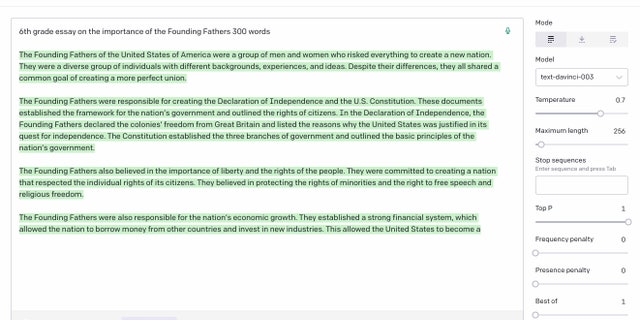
Previous 7 days, tech firm OpenAI unveiled an AI chatbot, ChatGPT, which has stunned end users with its state-of-the-art features like generating faculty essays for any quality level, answering open-finished analytical questions and writing jokes, poems and even laptop or computer code. The online is swirling with predictions about the implications of this complex know-how, but at the forefront of Laffin’s concern is the effect it will have on schooling.

“I personally assume that we need to be limiting all types of technological tools, and this 1 I assume for a quite distinct rationale,” explained Laffin, who was an English teacher of around 10 years. “We want to make absolutely sure that we are instructing young children, not just the issue but also values.”

A mock essay prompt inputted into OpenAI's ChatGPT shows student's as young as middle school age can take advantage of this new technology.

A mock essay prompt inputted into OpenAI’s ChatGPT exhibits student’s as youthful as center college age can take edge of this new technological innovation.
(OpenAI)

Industry experts Respond TO US MATH, Examining SCORES DIPPING FOR Students After COVID-19: ‘DISMAL’

Laffin fears the capacity of learners to use AI to comprehensive assignments will even more influence an already having difficulties U.S. education system.

Pandemic-relevant distant schooling took a toll students across the U.S., with 2022 countrywide examination scores showing the most significant lower at any time in math scores, even though looking at scores dropped to the cheapest concentrations considering the fact that 1992 for fourth and eighth graders, in accordance to the Nation’s Report Card. 

New technology has hurt students, should be restricted in classrooms, educator says

Former English teacher Peter Laffin stated much more technological innovation in school rooms finishes up triggering more complications than it aids. 
(Picture illustration)

Simply click In this article TO GET THE FOX News Application

“We introduced a whole lot of engineering to education to make our lives a lot easier. We have been undertaking that steadily for 20 many years,” Laffin said. “I believe educators would do well to request themselves, ‘how did any of this gain us? Are our youngsters more educated now that there is an iPad for every scholar in every classroom?’”

“If we are not able to say which is been a web constructive, why on earth would we inspire the use of these technologies likely ahead?” he additional. 

To view Laffin’s total interview, click listed here. 

Ramiro Vargas contributed to this report.

Book says Cubans are not refugees but ‘privileged’ immigrants

Book says Cubans are not refugees but ‘privileged’ immigrants

Book

The audience listens during a book discussion by Professor Susan Eckstein about her new book “Cuban Privilege: The Making of Immigrant Inequality in America,” at Florida International University’s Wertheim Performing Arts Center in Miami, Florida, on Friday, Dec. 9, 2022.

dvarela@miamiherald.com

It was supposed to be another routine event in the series of regular book presentations organized by Florida International University’s Cuban Research Institute: on the podium, a respected scholar authoritatively presenting her most recent research. In the audience, a few attendants asking polite questions.

Instead, the presentation Friday evening of “Cuban Privilege, the Making of Immigrant Inequality in America,” a book claiming that Cuban immigrants in the United States are not genuine refugees nor exiles, turned into an emotional rebuke of that premise by activists and members of the Cuban-American community who feel the book denies the tragic history of those fleeing communism.

A few protesters and police officers were among the first things those attending the event saw before going inside FIU’s Wertheim Performing Arts Center. Inside the packed venue, members of the public at times erupted in applause at mention of the achievements of the Cuban American community as others questioned the central assertions in the book.

In her presentation, the book’s author, Boston University sociology professor Susan Eckstein, summarized what she called “unique entitlements” for Cuban migrants for decades, including a path to U.S. citizenship and access to welfare benefits. Eckstein told the audience that the immigration policies favoring Cubans were rooted in the Cold War as successive American presidents aimed at defeating Fidel Castro. In later decades, she added, the reasons to continue treating Cubans differently shifted to domestic politics as Cuban Americans became a significant voting bloc in Florida.

BOOK_DISCUSSION_DAV11
Professor Susan Eckstein speaks about her new book “Cuban Privilege: The Making of Immigrant Inequality in America,” at Florida International University’s Wertheim Performing Arts Center in Miami, Florida, on Friday, December 9, 2022. D.A. Varela dvarela@miamiherald.com

“No other groups have ever received such benefits,” Eckstein said.

She argued that some of those benefits were undeserved, and that Cuban immigrants cannot legitimately claim to be refugees since most did not leave the island because they faced persecution.

Eckstein shared the stage with Orlando Gutierrez-Boronat, a longtime Cuban American human rights activist and author who was asked by the FIU organizers to provide a counterpoint and made his own presentation rebuking the conclusions in the book.

“You would have to ignore the massacres, the extrajudicial killings, the political prisoners, the civil war in the countryside, the concentration camps…. Only then you can conclude Cuban exiles were not persecuted,” Gutierrez-Boronat said.

That the discussion took place at all, as a debate between diametrically different points of view, was the result of a negotiation between FIU’s leaders and members of the Cuban American community.

Despite intense criticism by local politicians and on social media, where the book was labeled “anti-Cuban” and offensive, FIU resisted pressures to cancel the event, citing academic freedom. Eckstein was originally scheduled to talk about her book at an event at Books & Books in Coral Gables, but FIU changed the venue to one of its own auditoriums after the outcry. In a statement, FIU President Kenneth A. Jessell said the institution was “using these recent events as an opportunity to improve our processes and ensure we create programs that meet the highest academic standards while remaining sensitive to our community.”

In his opening comments, Professor Jorge Duany, the Cuban Research Institute director who brought Eckstein to FIU, said an invitation to present a book was not a university endorsement of its ideas.

And the event reflected that.

“I think that the book is deficient as social science,” Gutierrez-Boronat said, adding that the author failed to acknowledge the totalitarian nature of the regime installed by Fidel Castro and the insidious ways in which repression was embedded in everyday life, pushing people to leave the country.

“You didn’t need Eisenhower and Kennedy to tell [Cubans] to come” to the U.S.,” Gutierrez-Boronat said. “They were fleeing because of the massive oppression they were facing.”

BOOK_DISCUSSION_DAV13
Orlando Gutierrez-Boronat speaks during a book discussion by Professor Susan Eckstein about her new book “Cuban Privilege: The Making of Immigrant Inequality in America,” at Florida International University’s Wertheim Performing Arts Center in Miami, Florida, on Friday, Dec. 9, 2022. D.A. Varela dvarela@miamiherald.com

The book also advocates ending immigration benefits for what it labels “privileged” Cuban migrants as an effort to make immigration policies more equal.

During the question-and-answer section of the event, Eckstein denied having called for the elimination of such benefits.

“I never said that Cubans should not have received what they have gotten, but shouldn’t the Haitians receive the same treatment?” she asked.

Other audience members said her work was based on faulty research.

Radio host Ninoska Perez Castellón attended the event and after speaking about her experience and that of her parents fleeing Cuba called Eckstein’s work “insulting” to the community. An FIU student asked why the Cuban Research Center deleted comments on its Instagram account that had been critical of the book. Audience members shouted “Freedom for the political prisoners” and “Patria y Vida “ — Homeland and Life, which has become the slogan of Cuban anti-government protesters.

As the audience became more agitated, Eckstein said she found some of the comments offensive.

“I didn’t intend for the book to be political,” she replied to a question posed by a student. “I find some of the comments to be offensive and not related to the discussion. This is supposed to be a book talk.”

BOOK_DISCUSSION_DAV5
Professor Susan Eckstein speaks about her new book “Cuban Privilege: The Making of Immigrant Inequality in America,” at Florida International University’s Wertheim Performing Arts Center in Miami, Florida, on Friday, Dec. 9, 2022. D.A. Varela dvarela@miamiherald.com

She insisted she was not giving a personal opinion of whether Cubans were legitimate refugees, but using a recognized definition of what a refugee is supposed to be.

“I am a daughter of refugees, my parents were persecuted,” she said.

But to many, the subject of her research was too personal.

“The fact that someone in America has actually written a book saying that we are privileged is remarkable. We have lived under a communist dictatorship for over 60 years and not one thing has been done,” said María Capote, one of the protesters standing outside the auditorium as the debate unfolded. “I’m extremely insulted that she would come here to the heart of the exile community and present this book.”

book
Social media influencer Alex Otaola leads a protest by Cuban exiles on Friday in Miami-Dade against the book “Cuban Privilege: The Making of Immigrant Inequality in America,” by professor Susan Eckstein, a Boston University sociologist, at the Florida International University, on Friday December 09, 2022. Pedro Portal pportal@miamiherald.com

Inside the venue, an FIU student asked why some of the views expressed in the Cuban American community are so extreme.

“It’s the trauma, the pain,” Gutiérrez-Boronat replied.

Those were not the last words Friday evening.

As the event was ending, members of the audience shouted, “Down with communism! Freedom for Cuba!”

Miami Herald staff writer Lesley Cosme Torres contributed to this report.

This story was originally published December 9, 2022 10:18 PM.

Related stories from Miami Herald

Profile Image of Nora Gámez Torres

Nora Gámez Torres is the Cuba/U.S.-Latin American policy reporter for el Nuevo Herald and the Miami Herald. She studied journalism and media and communications in Havana and London. She holds a Ph.D. in sociology from City, University of London. Her work has won awards by the Florida Society of News Editors and the Society for Professional Journalists.//Nora Gámez Torres estudió periodismo y comunicación en La Habana y Londres. Tiene un doctorado en sociología y desde el 2014 cubre temas cubanos para el Nuevo Herald y el Miami Herald. También reporta sobre la política de Estados Unidos hacia América Latina. Su trabajo ha sido reconocido con premios de Florida Society of News Editors y Society for Profesional Journalists.

SEC sends letter to companies urging updated disclosures amid ‘widespread disruption’ in crypto markets

SEC sends letter to companies urging updated disclosures amid ‘widespread disruption’ in crypto markets

The Securities and Exchange Fee is sending a letter to U.S. community firms asking corporations consider their disclosure obligations, such as a “distinct tailor-made disclosure,” about how recent crypto bankruptcies and broader money distress across the digital asset market may have strike their business.

The letter is intended to illustrate the kind of opinions the securities agency may possibly ship to public organizations.

“In meeting their disclosure obligations, businesses ought to think about the have to have to handle crypto asset sector developments in their filings typically, such as in their business enterprise descriptions, risk things, and management’s dialogue and analysis,” the SEC’s division of corporate finance reported in its release.

In an hooked up sample letter, the agency asks for corporations to disclose their connection with other companies that have filed for bankruptcy, have professional too much redemptions (financial institution runs), have crypto belongings unaccounted for, or seasoned “material corporate compliance failures.”

Questioned regardless of whether cryptocurrencies needed their own set of customized procedures, SEC Chair Gary Gensler told Yahoo Finance on Wednesday the company would implement securities guidelines already in place.

Gensler famous the SEC has previously taken 100 enforcement steps versus crypto companies, with a handful of dozen coming under his tenure.

“The fundamental concept that I have experienced is the similar public information as non-public concept,” Gensler told Yahoo Finance. “Occur into compliance. Your field will not past very long exterior of community policy norms.”

U.S. Securities and Exchange Commission (SEC) Chairman Gary Gensler, testifies before the Senate Banking, Housing and Urban Affairs Committee during an oversight hearing on Capitol Hill in Washington, U.S., September 15, 2022. REUTERS/Evelyn Hockstein

U.S. Securities and Exchange Fee (SEC) Chairman Gary Gensler, testifies in advance of the Senate Banking, Housing and Urban Affairs Committee during an oversight listening to on Capitol Hill in Washington, U.S., September 15, 2022. REUTERS/Evelyn Hockstein

The letter goes on to motivate companies to share how they safeguard customer crypto property and what governance protocols they have established in location to prevent conflicts of interest.

The agency also proposed firms explore whether current market conditions have impacted how their small business is perceived, how pending crypto regulation could have an impact on economical ailments or company, particularly in the sort of a company’s share value, client demand, debt funding or authorized proceedings “pending or recognised to be threatened.”

The SEC’s letter arrives soon after offshore crypto trade FTX submitted for chapter 11 individual bankruptcy on November 11. The Bahamas-headquartered crypto firm, which has an estimated $8 billion gap on its harmony sheet, has sparked a wave of fiscal contagion among the industry’s other companies.

The $8 billion gap has arrive right after reports and bankruptcy court files counsel the business enterprise lent revenue to previous FTX CEO and founder Sam Bankman-Fried’s investing firm, Alameda Research. In a courtroom document, FTX’s new administration known as the company’s collapse “a total failure of company controls.”

The occasions encompassing FTX’s collapse have pushed crypto lender BlockFi to also declare individual bankruptcy, while others, such as the lending divisions of Genesis Buying and selling and crypto trade Gemini, have paused withdrawals and begun to organize as collectors.

A report from Coindesk unveiled in excess of the weekend Genesis owes collectors at least $1.8 billion, $900 million of which belongs to Gemini. The total sector value of all crypto assets plummeted by $200 billion to $860 million about the earlier thirty day period according to Coinmarketcap.

David Hollerith is a senior reporter at Yahoo Finance covering the cryptocurrency and stock marketplaces. Follow him on Twitter at @DsHollers

Click in this article for the most recent crypto news, updates, values, costs, and more relevant to Bitcoin, Ethereum, Dogecoin, DeFi and NFTs

Read the most current financial and enterprise information from Yahoo Finance

Down load the Yahoo Finance application for Apple or Android

Follow Yahoo Finance on Twitter, Facebook, Instagram, Flipboard, LinkedIn, and YouTube

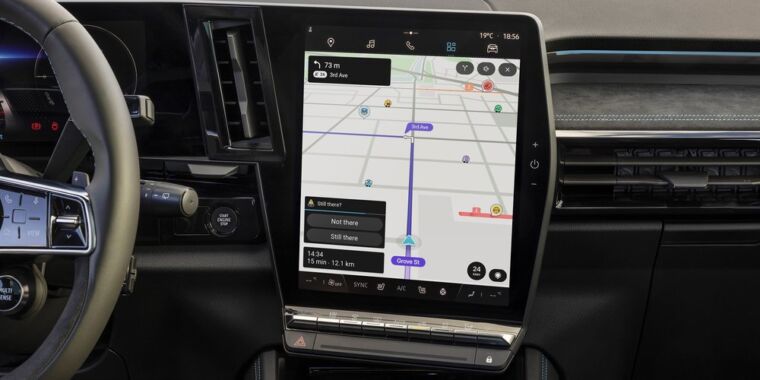
Android Automotive is getting its 38th app: Waze

Android Automotive is getting its 38th app: Waze
Waze for Android Automotive.
Enlarge / Waze for Android Automotive.

Waze

Google’s other big navigation application, Waze, is coming to Android Automotive. Today the firm declared the transfer on the Waze web site, saying, “The new focused Waze app for cars provides the most effective of Waze serious-time navigation, routing and alerts element[s] suitable in the car’s exhibit. When you push, you can knowledge safer and a lot more easy journeys when doing away with the headache of utilizing a smartphone.”

Google has two different car or truck products with genuinely complicated branding. The to start with is Android Vehicle. This is Google’s variation of CarPlay—an app that runs on your mobile phone but initiatives a unique auto interface to your vehicle’s dashboard show, demonstrating off Google Maps and appropriate Android Automobile apps on your phone. Waze has been on Android Vehicle since 2017. Present day announcement is for Android Automotive, a distinctive solution from Android Auto. Automotive, the completely spelled-out edition, is a entire functioning technique as an alternative of an application. Cars have infotainment personal computers in them, and Android Automotive OS (AAOS) has the vehicle operate Android. Even if there is an Iphone in your pocket, your car or truck runs Android on the car’s internal laptop or computer as an alternative of anything like Linux or QNX. AAOS has a auto edition of the Perform Keep, wherever you can obtain applications specifically to your motor vehicle, and it’s this system that Waze is arriving on. Android Automotive is fairly scarce out there in the planet, but you are going to see it on new Volvo/Polestar, Ford, and GM vehicles, mainly. From time to time Google or vehicle makers will phone AAOS “cars and trucks with Google constructed-in.”

The app condition on Android Automotive is difficult. In-automobile infotainment techniques are intensely regulated because of to security worries to the place that just about every app and personal interface requires to be vetted by regulatory bodies all around the earth. This is unbelievably difficult, highly-priced, and time-consuming for application developers, which is a big reason Android Automotive only has 37 apps appropriate now. You can see the complete checklist listed here. AAOS only allows for media and navigation apps, and even the media apps never get a customized interface—you just plug into Google’s interface with your personal branding and audio stream, which alleviates the regulatory load but limitations what apps can do.

Waze’s car or truck application appears a good deal like the telephone application, but even larger, with the all-crucial report button and tons of icons detailing consumer reviews for police, construction, and other street dangers. The screenshot even exhibits a “Nevertheless there?” prompt, asking the consumer to validate that a formerly documented hazard is however active.

In spite of making an application for Google’s motor vehicle OS, Waze is limiting the rollout to specific automobiles for now. The corporation suggests the app is distinctive to “the new Renault Austral Hybrid and Renault Megane E-Tech electric autos in Europe.” The strange rollout may possibly have to do with all those people regulatory difficulties car or truck apps have to deal with, and Waze says it will provide the new app to “a lot more consumers throughout the world in 2023.”

College football winners, losers of 2022 season: Alabama hits floor under Nick Saban, TCU shatters CFP mold

College football winners, losers of 2022 season: Alabama hits floor under Nick Saban, TCU shatters CFP mold

The regular season is over and the bowl schedule is set, so it’s time to look back at the teams and people that will stick with us from the 2022 college football season. If there’s one thing we learned this year — heck, if there’s one thing we learn every year — it’s that so little of what we expect to happen actually comes to fruition. 

Take the College Football Playoff race. A new era emerged as Alabama, Clemson and Oklahoma all missed the cut. Ohio State, which didn’t even win the Big Ten East for the second straight year, backed its way in as the No. 4 seed. Conversely, Michigan and Georgia clinched back-to-back spots, while TCU became just the second Big 12 school to earn a trip to the playoff. 

Looking back at the preseason AP Top 25 feels like a time machine. Notre Dame and Texas A&M ranked No. 5 and 6, respectively. Baylor and Oklahoma were top-10 teams, and Miami, Wisconsin and Arkansas weren’t far behind. Now, as many as 16 teams from that preseason poll could find themselves out of the final poll after a tumultuous season. That just created even more opportunities for the rest of the sport to rise. 

Here are the biggest winners and losers of the 2022 college football season. 

Winners

TCU: When TCU moved on from Gary Patterson after more than 20 years, bringing Power Five retread Sonny Dykes from cross-town rival SMU didn’t garner much excitement. One year later, Dykes has to go down as one of the smartest hires in recent memory as he became the first external coaching hire to lead his program to the College Football Playoff in his first season — and he did it at TCU. The Frogs also became the first school from Texas to make the field — and second from the Big 12 — beating flagships Texas and Texas A&M to the final four. Quarterback Max Duggan went from backup quarterback to Heisman finalist in one season. It was a Cinderella season for the ages. 

Tennessee: Expectations were high heading into Josh Heupel’s second season, but the Volunteers blasted through the ceiling. The offense hit the stratosphere behind quarterback Hendon Hooker, who finished as one of the most productive players in the nation. The headliner is obvious: The Vols knocked off Alabama for the first time during the Nick Saban era and pulled the goal posts to the ground. If not for a horrific November night at South Carolina, Tennessee would be in the College Football Playoff right now. Regardless, the vibes in Knoxville are impeccable. 

The Pac-12: Though it missed the College Football Playoff for the sixth straight season, the state of West Coast football hasn’t looked this good in years. Six teams finished in the final regular-season CFP Rankings, the most of any conference. Lincoln Riley’s ascent at USC gets the most attention, but don’t sleep on Jonathan Smith at Oregon State, Jake Dickert at Washington State and even what Jedd Fisch is doing at Arizona. If resurgent Washington had not stumbled against Arizona State, the Pac-12 Championship Game would have been a playoff play-in between the Huskies and USC. USC and UCLA will leave the conference in 2024, creating a massive hole, but the rest of the league is still in solid shape with Utah leading the way. Oh, and we haven’t even mentioned Deion Sanders at Colorado. 

Kansas: There’s almost no stat that can contextualize how deep a hole the Jayhawks were in during the 2010s. Kansas had not reached a bowl game since 2008 — which almost marked the last time it had even two conference victories. From 2010-2020, Kansas went a cool 21-108. Give Lance Leipold a billion dollars; he got Kansas to a bowl game in his second season! The Jayhawks put together one of the most dynamic offenses in the country behind star quarterback Jalon Daniels, starting 5-0 before Daniels missed some time with an injury.. With Leipold locked into a long-term contract, the future in Lawrence has never been brighter. 

Duke: Don’t look now, but Blue Devils coach Mike Elko built a contender in Durham in no time flat. Duke won more games in Elko’s first season (8) than the last two seasons combined (5). Every single loss came by one score, including three losses by eight total points in ACC play. Quarterback Riley Leonard jumped off the page with nearly 2,800 yards and 20 touchdowns as a first-year starter. if Elko beats UCF in the Military Bowl, he will join David Cutcliffe as the only coach since World War II to win nine games in Durham. It’s incredibly difficult to win at the major academic schools. Duke hit a home run. 

Troy: The Trojans didn’t make the flashiest hire by bringing in Kentucky linebackers coach Jon Sumrall — a former Neal Brown associate head coach — to lead the program. But after a three-year slog under Chip Lindsey, Troy was back to business with a massive 11-2 season and Sun Belt championship in Sumrall’s first year in charge. The Trojans will be a force to deal with in the Sun Belt for years to come. Don’t be surprised to see them enter the New Year’s Six conversation in 2023. 

Losers

Texas A&M: The Aggies aren’t just the biggest loser of 2022; rather, they rank as one of the most disappointing teams in modern college football history. Texas A&M came into the season ranked No. 6 in the Preseason AP Top 25, but became the first squad since 2010 to go from the top six to missing a bowl game. The program had not missed a bowl game in any season since 2008, but picked the season after reeling in the No. 1 recruiting class of all time to hit the new low. There are a few bright spots. Quarterback Conner Weigman showed some intriguing tools in solid performances against then-No. 5 LSU. The disappointing season also means Fisher is likely to give up play calling duties for the first time in his career. Still, 2022 will be a black mark on a program that seemed to be on the upswing. 

Miami: The dark horse ACC championship contender was anything but during a miserable 5-7 campaign, headlined by double-digit losses to Middle Tennessee, Duke and Pitt. Budding quarterback star Tyler Van Dyke regressed under ex-Broyles Award offensive coordinator Josh Gattis, and coach Mario Cristobal complained that struggles were the media’s fault for setting expectations too high. Whatever the reason was, Miami won just one of its nine Power Five games by more than one score. Cristobal will lean on a strong recruiting class in 2023, but will it be enough? 

Preseason Big 12 contenders: Two Big 12 programs entered the year in the Preseason AP Top 10: No. 9 Oklahoma and No. 10 Baylor. Two Big 12 programs left the year ranked in the top 10 — and neither was Oklahoma nor Baylor. In fact, those teams picked No. 1 and No. 2 in the preseason Big 12 poll combined to finish 12-12, a shocking collapse after they combined for a 23-4 record in 2021. Oklahoma’s defense collapsed under first-year coach Brent Venables as the Sooners finished among the bottom 15 teams in the country in total defense. Baylor’s close game luck flipped as the Bears went 2-3 in one-score games. Some tough questions need to be asked in Norman and Waco. 

Alabama: The Crimson Tide received 54 of the 63 first-place votes in the preseason AP Top 25 and seemed to be the overwhelming favorite to win the national championship with the best offensive (Bryce Young) and defensive (Will Anderson) players in the nation. However, the Tide were not their usual selves during a middling 10-2 campaign — a program floor by Alabama standards. Alabama was 1-6 against the spread against winning teams and needed hectic finishes just to beat Texas and Texas A&M. It also ranked 127th out of 131 teams in penalties per game. Instead of ending with three straight SEC title, championship weekend featured Nick Saban pandering for a playoff spot. With Young, who is the heart and soul of a flawed team, likely off to the NFL, there will be plenty of soul-searching to do in Tuscaloosa. 

Ohio State WR Jaxon Smith-Njigba: Last season, Smith-Njigba put together perhaps the greatest season by a wide receiver in Ohio State history — and that’s saying something. He set single-season program records for receptions and yards, and capped it off with 347 yards receiving in a Rose Bowl victory over Utah to set another program record. With any luck, Smith-Njigba could have been the second wide receiver in three years to win the Heisman Trophy in 2022. Unfortunately, we never got to see it. Smith-Njigba suffered a hamstring injury during Week 1 and only played in three games. On Monday, he officially shut things down for the season and ended his collegiate career. Marvin Harrison Jr. and Emeka Egbuka ensured Ohio State’s offense was still generational, but Smith-Njigba’s career will make us wonder what could have been.