Tech tool offers police ‘mass surveillance on a budget’

Tech tool offers police ‘mass surveillance on a budget’

By GARANCE BURKE and JASON DEAREN

September 2, 2022 GMT

Local law enforcement agencies from suburban Southern California to rural North Carolina have been using an obscure cellphone tracking tool, at times without search warrants, that gives them the power to follow people’s movements months back in time, according to public records and internal emails obtained by The Associated Press.

Police have used “Fog Reveal” to search hundreds of billions of records from 250 million mobile devices, and harnessed the data to create location analyses known among law enforcement as “patterns of life,” according to thousands of pages of records about the company.

Sold by Virginia-based Fog Data Science LLC, Fog Reveal has been used since at least 2018 in criminal investigations ranging from the murder of a nurse in Arkansas to tracing the movements of a potential participant in the Jan. 6 insurrection at the Capitol. The tool is rarely, if ever, mentioned in court records, something that defense attorneys say makes it harder for them to properly defend their clients in cases in which the technology was used.

The company was developed by two former high-ranking Department of Homeland Security officials under former President George W. Bush. It relies on advertising identification numbers, which Fog officials say are culled from popular cellphone apps such as Waze, Starbucks and hundreds of others that target ads based on a person’s movements and interests, according to police emails. That information is then sold to companies like Fog.

“It’s sort of a mass surveillance program on a budget,” said Bennett Cyphers, a special adviser at the Electronic Frontier Foundation, a digital privacy rights advocacy group.

_____

This story, supported by the Pulitzer Center on Crisis Reporting, is part of an ongoing Associated Press series, “Tracked,” that investigates the power and consequences of decisions driven by algorithms on people’s everyday lives.

____

The documents and emails were obtained by EFF through Freedom of Information Act requests. The group shared the files with The AP, which independently found that Fog sold its software in about 40 contracts to nearly two dozen agencies, according to GovSpend, a company that keeps tabs on government spending. The records and AP’s reporting provide the first public account of the extensive use of Fog Reveal by local police, according to analysts and legal experts who scrutinize such technologies.

Federal oversight of companies like Fog is an evolving legal landscape. On Monday, the Federal Trade Commission sued a data broker called Kochava that, like Fog, provides its clients with advertising IDs that authorities say can easily be used to find where a mobile device user lives, which violates rules the commission enforces. And there are bills before Congress now that, if passed, would regulate the industry.

“Local law enforcement is at the front lines of trafficking and missing persons cases, yet these departments are often behind in technology adoption,” Matthew Broderick, a Fog managing partner, said in an email. “We fill a gap for underfunded and understaffed departments.”

Because of the secrecy surrounding Fog, however, there are scant details about its use and most law enforcement agencies won’t discuss it, raising concerns among privacy advocates that it violates the Fourth Amendment to the U.S. Constitution, which protects against unreasonable search and seizure.

What distinguishes Fog Reveal from other cellphone location technologies used by police is that it follows the devices through their advertising IDs, unique numbers assigned to each device. These numbers do not contain the name of the phone’s user, but can be traced to homes and workplaces to help police establish pattern-of-life analyses.

“The capability that it had for bringing up just anybody in an area whether they were in public or at home seemed to me to be a very clear violation of the Fourth Amendment,” said Davin Hall, a former crime data analysis supervisor for the Greensboro, North Carolina, Police Department. “I just feel angry and betrayed and lied to.”

Hall resigned in late 2020 after months of voicing concerns about the department’s use of Fog to police attorneys and the city council.

While Greensboro officials acknowledged Fog’s use and initially defended it, the police department said it allowed its subscription to expire earlier this year because it didn’t “independently benefit investigations.”

But federal, state and local police agencies around the U.S. continue to use Fog with very little public accountability. Local police agencies have been enticed by Fog’s affordable price: It can start as low as $7,500 a year. And some departments that license it have shared access with other nearby law enforcement agencies, the emails show.

Police departments also like how quickly they can access detailed location information from Fog. Geofence warrants, which tap into GPS and other sources to track a device, are accessed by obtaining such data from companies, like Google or Apple. This requires police to obtain a warrant and ask the tech companies for the specific data they want, which can take days or weeks.

Using Fog’s data, which the company claims is anonymized, police can geofence an area or search by a specific device’s ad ID numbers, according to a user agreement obtained by AP. But, Fog maintains that “we have no way of linking signals back to a specific device or owner,” according to a sales representative who emailed the California Highway Patrol in 2018, after a lieutenant asked whether the tool could be legally used.

Despite such privacy assurances, the records show that law enforcement can use Fog’s data as a clue to find identifying information. “There is no (personal information) linked to the (ad ID),” wrote a Missouri official about Fog in 2019. “But if we are good at what we do, we should be able to figure out the owner.”

Fog’s Broderick said in an email that the company does not have access to people’s personal information, and draws from “commercially available data without restrictions to use,” from data brokers “that legitimately purchase data from apps in accordance with their legal agreements.” The company refused to share information about how many police agencies it works with.

“We are confident Law Enforcement has the responsible leadership, constraints, and political guidance at the municipal, state, and federal level to ensure that any law enforcement tool and method is appropriately used in accordance with the laws in their respective jurisdictions,” Broderick said in the email.

“Search warrants are not required for the use of the public data,” he added Thursday, saying that the data his product offers law enforcement is “lead data” and should not be used to establish probable cause.

___

Kevin Metcalf, a prosecutor in Washington County, Arkansas, said he has used Fog Reveal without a warrant, especially in “exigent circumstances.” In these cases, the law provides a warrant exemption when a crime-in-process endangers people or an officer.

Metcalf also leads the National Child Protection Task Force, a nonprofit that combats child exploitation and trafficking. Fog is listed on its website as a task force sponsor and a company executive chairs the nonprofit’s board. Metcalf said Fog has been invaluable to cracking missing children cases and homicides.

“We push the limits, but we do them in a way that we target the bad guys,” he said. “Time is of the essence in those situations. We can’t wait on the traditional search warrant route.”

Fog was used successfully in the murder case of 25-year-old nurse Sydney Sutherland, who had last been seen jogging near Newport, Arkansas, before she disappeared, Metcalf said.

Police had little evidence to go on when they found her phone in a ditch, so Metcalf said he shared his agency’s access to Fog with the U.S. Marshals Service to figure out which other devices had been nearby at the time she was killed. He said Fog helped lead authorities to arrest a farmer in Sutherland’s rape and murder in August 2020, but its use was not documented in court records reviewed by AP.

Cyphers, who led EFF’s public records work, said there hasn’t been any previous record of companies selling this kind of granular data directly to local law enforcement.

“We’re seeing counties with less than 100,000 people where the sheriff is using this extremely high tech, extremely invasive, secretive surveillance tool to chase down local crime,” Cyphers said.

One such customer is the sheriff’s office in rural Rockingham County, North Carolina, population 91,000 and just north of Greensboro, where Hall still lives. The county bought a one-year license for $9,000 last year and recently renewed it.

“Rockingham County is tiny in terms of population. It never ceases to amaze me how small agencies will scoop up tools that they just absolutely don’t need, and nobody needs this one,” Hall said.

Sheriff’s spokesman Lt. Kevin Suthard confirmed the department recently renewed its license but declined to offer specifics about the use of Fog Reveal or how the office protects individuals’ rights.

“Because it would then be less effective as criminals could be cognizant that we have the device and adjust their commission of the crimes accordingly. Make sense?” Suthard said.

Fog has aggressively marketed its tool to police, even beta testing it with law enforcement, records show. The Dallas Police Department bought a Fog license in February after getting a free trial and “seeing a demonstration and hearing of success stories from the company,” Senior Cpl. Melinda Gutierrez, a department spokeswoman, said in an email.

Fog’s tool is accessed through a web portal. Investigators can enter a crime scene’s coordinates into the database, which brings back search results showing a device’s Fog ID, which is based on its unique ad ID number.

Police can see which device IDs were found near the location of the crime. Detectives or other officers can also search the location for IDs going forward from the time of the crime and back at least 180 days, according to the company’s user license agreement.

The emails and Fog’s Broderick contend the tool can actually search back years, however. Emails from a Fog representative to Florida and California law enforcement agencies said the tool’s data stretched back as far as June 2017. On Thursday Broderick, who had previously refused to address the question, said it “only has a three year reach back.”

While the data does not directly identify who owns a device, the company often gives law enforcement information it needs to connect it to addresses and other clues that help detectives figure out people’s identities, according to company representatives’ emails.

It is unclear how Fog makes these connections, but a company it refers to as its “data partner” called Venntel, Inc. has access to an even greater trove of users’ mobile data.

Venntel is a large broker that has supplied location data to agencies such as Immigration and Customs Enforcement and the FBI. The Department of Homeland Security’s watchdog is auditing how the offices under its control have used commercial data. That comes after some Democratic lawmakers asked it to investigate U.S. Customs and Border Protection’s use of Venntel data to track people without a search warrant in 2020. The company also has faced congressional inquiries about privacy concerns tied to federal law enforcement agencies’ use of its data.

Venntel and Fog work closely together to aid police detectives during investigations, emails show. Their marketing brochures are nearly identical, too, and Venntel staff has recommended Fog to law enforcement, according to the emails. Venntel said “the confidential nature of our business relationships” prevented it from responding to AP’s specific questions, and Fog would not comment on the relationship.

While Fog says in its marketing materials that it collects data from thousands of apps, like Starbucks and Waze, companies are not always aware of who is using their data. Venntel and Fog can collect billions of data points filled with detailed information because many apps embed invisible tracking software that follows users’ behavior. This software also lets the apps sell customized ads that are targeted to a person’s current location. In turn, data brokers’ software can hoover up personal data that can be used for other purposes.

Prior to publication, Fog’s Broderick refused to say how the company got data from Starbucks and Waze. But on Thursday, he said he did not know how data aggregators collected the information Fog Reveal draws from, or the specific apps from which the data was drawn.

For their part, Starbucks and Waze denied any relationship to Fog. Starbucks said it had not given permission to its business partners to share customer information with Fog.

“Starbucks has not approved Ad ID data generated by our app to be used in this way by Fog Data Science LLC. In our review to date, we have no relationship with this company,” said Megan Adams, a Starbucks spokesperson.

“We have never had a relationship with Fog Data Science, have not worked with them in any capacity, and have not shared information with them,” a Waze spokesperson said.

___

Fog Data Science LLC is headquartered in a nondescript brick building in Leesburg, Virginia. It also has related entities in New Jersey, Ohio and Texas.

It was founded in 2016 by Robert Liscouski, who led the Department of Homeland Security’s National Cyber Security Division in the George W. Bush adminstration. His colleague, Broderick, is a former U.S. Marine brigadier general who ran DHS’ tech hub, the Homeland Security Operations Center, during Hurricane Katrina in 2005. A House bipartisan committee report cited Broderick among others for failing to coordinate a swift federal response to the deadly hurricane. Broderick resigned from DHS shortly thereafter.

In marketing materials, Fog also has touted its ability to offer police “predictive analytics,” a buzzword often used to describe high-tech policing tools that purport to predict crime hotspots. Liscouski and another Fog official have worked at companies focused on predictive analytics, machine learning and software platforms supporting artificial intelligence.

“It is capable of delivering both forensic and predictive analytics and near real-time insights on the daily movements of the people identified with those mobile devices,” reads an email announcing a Fog training last year for members of the National Fusion Center Association, which represents a network of intelligence-sharing partnerships created after the Sept. 11 attacks.

Fog’s Broderick said the company had not invested in predictive applications, and provided no details about any uses the tool had for predicting crime.

Despite privacy advocates’ concerns about warrantless surveillance, Fog Reveal has caught on with local and state police forces. It’s been used in a number of high-profile criminal cases, including one that was the subject of the television program “48 Hours.”

In 2017, a world-renowned exotic snake breeder was found dead, lying in a pool of blood in his reptile breeding facility in rural Missouri. Police initially thought the breeder, Ben Renick, might have died from a poisonous snake bite. But the evidence soon pointed to murder.

During its investigation, emails show the Missouri State Highway Patrol used Fog’s portal to search for cellphones at Renick’s home and breeding facility and zeroed in on a mobile device. Working with Fog, investigators used the data to identify the phone owner’s identity: it was the Renicks’ babysitter.

Police were able to log the babysitter’s whereabouts over time to create a pattern of life analysis.

It turned out to be a dead-end lead. Renick’s wife, Lynlee, later was charged and convicted of the murder.

Prosecutors did not cite Fog in a list of other tools they used in the investigation, according to trial exhibits examined by the AP.

But Missouri officials seemed pleased with Fog’s capabilities, even though it didn’t directly lead to an arrest. “It was interesting to see that the system did pick up a device that was absolutely in the area that day. Too bad it did not belong to a suspect!” a Missouri State Highway Patrol analyst wrote in an email to Fog.

In another high-profile criminal probe, records show the FBI asked state intelligence officials in Iowa for help with Fog as it investigated potential participants in the events at the U.S. Capitol on Jan. 6.

“Not definitive but still waiting to talk things over with a FOG rep,” wrote Justin Parker, deputy director of the Iowa Department of Public Safety, in an email to an FBI official in September 2021. It was unclear from the emails if Fog’s data factored into an arrest. Iowa officials did not respond and the FBI declined to comment.

___

Metcalf, the Arkansas prosecutor, has argued against congressional efforts to require search warrants when using technologies like Fog Reveal.

He believes Americans have given up any reasonable expectation of privacy when they use free apps and likens EFF’s objections to tech like Fog to a “cult of privacy.”

“I think people are going to have to make a decision on whether we want all this free technology, we want all this free stuff, we want all the selfies,” he said. “But we can’t have that and at the same time say, ‘I’m a private person, so you can’t look at any of that.’ That just seems crazy.”

Although he is not an official Fog employee, Metcalf said he would step in to lead training sessions including the tool for federal prosecutors, federal agencies and police, including the Chicago Police Department, the emails show.

That kind of hands-on service and word-of-mouth marketing in tight-knit law enforcement circles seems to have helped increase Fog’s popularity.

The Maryland State Police is among the many agencies that have had contracts for Fog Reveal, and records show investigators believed it had a lot of potential.

“Companies have receptors all over. Malls, shopping centers, etc. They’re all around you,” wrote Sgt. John Bedell of the Criminal Enforcement Division, in an email to a colleague. The agency purchased a year of access to Fog in 2018.

“Picture getting a suspect’s phone then in the extraction being able to see everyplace they’d been in the last 18 months plotted on a map you filter by date ranges,” wrote Bedell. “The success lies in the secrecy.”

Elena Russo, a spokesperson for the agency, confirmed it had a Fog license previously but that it had lapsed. “Unfortunately, it was not helpful in solving any crimes,” she wrote in an email.

Still, as more local policing agencies sign up for Fog, some elected officials said they have been left in the dark. Several officials said there wasn’t enough information to grasp what services Fog actually provides.

“Who is this company? What are the track records? What are the privacy protections?” asked Anaheim council member Jose Moreno, remembering his confusion about Fog during a 2020 council meeting. “That night our chief had very little information for us.”

In Anaheim, the Fog license was paid for by a federal “Urban Area Security Initiative,” DHS grants that help localities fund efforts to prevent terrorism. A police spokesman said the department has not used it.

Defense attorneys worry there are few legal restrictions on law enforcement’s use of location data.

It’s a gap police agencies exploit, and often don’t disclose in court, said Michael Price, litigation director of the National Association of Criminal Defense Lawyers’ Fourth Amendment Center.

“(Fog) is exceedingly rare to see in the wild because the cops often don’t get warrants,” said Price.

“Even if you do ask for (information) sometimes they say ‘We don’t know what you are talking about.’”

Privacy advocates worry Fog’s location tracking could be put to other novel uses, like keeping tabs on people who seek abortions in states where it is now illegal. These concerns were heightened when a Nebraska woman was charged in August with helping her teenage daughter end a pregnancy after investigators got hold of their Facebook messages.

Government’s use of location data is still being weighed by the courts, too. In 2018, the Supreme Court ruled that police generally need a warrant to look at records that reveal where cellphone users have been.

Nearly two years after walking off the crime data supervisor job with the Greensboro police force, Hall still worries about police surveillance in neighboring communities.

“Anyone with that login information can do as many searches as they want,” Hall said. “I don’t believe the police have earned the trust to use that, and I don’t believe it should be legal.”

___

AP National Writer Allen G. Breed contributed from Greensboro, North Carolina. Dearen reported from New York and Burke reported from San Francisco.

___

This reporting was produced in collaboration with researchers Janine Graham, Nicole Waddick and Jane Yang as well as the University of California, Berkeley’s Human Rights Center Investigations Lab and School of Law.

___

Follow Garance Burke and Jason Dearen on Twitter at @garanceburke and @jhdearen. Contact AP’s global investigative team at Investigative@ap.org or https://www.ap.org/tips/


Understanding reality through algorithms | MIT News

Understanding reality through algorithms | MIT News

Whilst Fernanda De La Torre nevertheless has numerous decades still left in her graduate reports, she’s by now dreaming massive when it will come to what the long term has in shop for her.

“I dream of opening up a university just one working day in which I could bring this entire world of understanding of cognition and perception into spots that would by no means have make contact with with this,” she says.

It is that sort of formidable imagining that is gotten De La Torre, a doctoral university student in MIT’s Division of Mind and Cognitive Sciences, to this place. A new recipient of the prestigious Paul and Daisy Soros Fellowship for New Americans, De La Torre has discovered at MIT a supportive, creative research setting that is permitted her to delve into the slicing-edge science of artificial intelligence. But she’s nevertheless pushed by an innate curiosity about human creativeness and a desire to bring that information to the communities in which she grew up.

An unconventional route to neuroscience

De La Torre’s to start with publicity to neuroscience wasn’t in the classroom, but in her daily lifestyle. As a youngster, she watched her youthful sister wrestle with epilepsy. At 12, she crossed into the United States from Mexico illegally to reunite with her mother, exposing her to a full new language and lifestyle. The moment in the States, she had to grapple with her mother’s shifting character in the midst of an abusive partnership. “All of these distinct issues I was observing about me drove me to want to superior understand how psychology works,” De La Torre states, “to fully grasp how the thoughts will work, and how it is that we can all be in the same setting and sense quite unique matters.”

But acquiring an outlet for that intellectual curiosity was tough. As an undocumented immigrant, her obtain to fiscal support was limited. Her substantial college was also underfunded and lacked elective choices. Mentors alongside the way, even though, inspired the aspiring scientist, and as a result of a plan at her school, she was equipped to just take local community college or university programs to fulfill essential educational needs.

It took an inspiring total of determination to her instruction, but De La Torre produced it to Kansas Condition University for her undergraduate scientific tests, where she majored in laptop or computer science and math. At Kansas State, she was ready to get her very first true flavor of exploration. “I was just fascinated by the issues they were being asking and this entire space I hadn’t encountered,” says De La Torre of her encounter working in a visible cognition lab and finding the field of computational neuroscience.

Whilst Kansas Condition didn’t have a focused neuroscience system, her study experience in cognition led her to a device studying lab led by William Hsu, a laptop science professor. There, De La Torre grew to become enamored by the opportunities of working with computation to design the human brain. Hsu’s assist also convinced her that a scientific job was a chance. “He normally manufactured me really feel like I was capable of tackling significant issues,” she claims fondly.

With the self esteem imparted in her at Kansas Condition, De La Torre arrived to MIT in 2019 as a write-up-baccalaureate pupil in the lab of Tomaso Poggio, the Eugene McDermott Professor of Mind and Cognitive Sciences and an investigator at the McGovern Institute for Mind Analysis. With Poggio, also the director of the Center for Brains, Minds and Equipment, De La Torre started functioning on deep-learning idea, an area of equipment learning centered on how artificial neural networks modeled on the brain can master to realize styles and discover.

“It’s a pretty exciting concern since we’re starting up to use them almost everywhere,” claims De La Torre of neural networks, listing off illustrations from self-driving automobiles to medicine. “But, at the very same time, we don’t fully fully grasp how these networks can go from knowing almost nothing and just becoming a bunch of quantities to outputting items that make perception.”

Her practical experience as a write-up-bac was De La Torre’s 1st true chance to apply the technological laptop or computer abilities she produced as an undergraduate to neuroscience. It was also the very first time she could entirely focus on analysis. “That was the initial time that I experienced obtain to wellness insurance plan and a secure income. That was, in itself, sort of life-altering,” she suggests. “But on the study aspect, it was very scary at to start with. I was nervous, and I wasn’t confident that I belonged here.”

The good news is, De La Torre states she was ready to prevail over people insecurities, both equally by means of a developing unabashed enthusiasm for the area and by means of the support of Poggio and her other colleagues in MIT’s Section of Brain and Cognitive Sciences. When the option came to implement to the department’s PhD system, she jumped on it. “It was just knowing these sorts of mentors are in this article and that they cared about their college students,” claims De La Torre of her selection to keep on at MIT for graduate research. “That was truly significant.”

Growing notions of reality and creativity

In her two a long time so much in the graduate application, De La Torre’s do the job has expanded the comprehending of neural networks and their apps to the examine of the human mind. Functioning with Guangyu Robert Yang, an associate investigator at the McGovern Institute and an assistant professor in the departments of Brain and Cognitive Sciences and Electrical Engineering and Laptop or computer Sciences, she’s engaged in what she describes as additional philosophical issues about how 1 develops a sense of self as an unbiased becoming. She’s interested in how that self-consciousness develops and why it may be useful.

De La Torre’s principal advisor, however, is Professor Josh McDermott, who sales opportunities the Laboratory for Computational Audition. With McDermott, De La Torre is making an attempt to realize how the mind integrates eyesight and audio. When combining sensory inputs may perhaps feel like a standard system, there are lots of unanswered concerns about how our brains merge many alerts into a coherent perception, or percept, of the planet. Several of the queries are elevated by audiovisual illusions in which what we hear modifications what we see. For example, if a single sees a video clip of two discs passing each individual other, but the clip includes the seem of a collision, the brain will understand that the discs are bouncing off, alternatively than passing via each and every other. Specified an ambiguous graphic, that uncomplicated auditory cue is all it requires to make a diverse notion of truth.

“There’s anything fascinating occurring in which our brains are acquiring two signals telling us diverse points and, nonetheless, we have to incorporate them in some way to make feeling of the planet,” she says.

De La Torre is employing behavioral experiments to probe how the human brain helps make perception of multisensory cues to build a distinct notion. To do so, she’s developed several scenes of objects interacting in 3D room above various seems, inquiring study contributors to explain qualities of the scene. For case in point, in a person experiment, she combines visuals of a block relocating across a floor at various speeds with numerous scraping sounds, inquiring participants to estimate how rough the floor is. Inevitably she hopes to acquire the experiment into virtual actuality, the place contributors will physically thrust blocks in response to how rough they perceive the area to be, somewhat than just reporting on what they experience.

When she’s gathered knowledge, she’ll transfer into the modeling phase of the analysis, assessing no matter whether multisensory neural networks perceive illusions the way humans do. “What we want to do is model particularly what’s happening,” claims De La Torre. “How is it that we’re acquiring these two signals, integrating them and, at the very same time, employing all of our prior knowledge and inferences of physics to seriously make sense of the environment?”

Despite the fact that her two strands of study with Yang and McDermott may appear distinct, she sees distinct connections in between the two. Each tasks are about grasping what artificial neural networks are able of and what they notify us about the mind. At a far more elementary degree, she suggests that how the mind perceives the environment from unique sensory cues may be section of what provides persons a perception of self. Sensory perception is about developing a cohesive, unitary perception of the environment from many resources of sensory knowledge. Likewise, she argues, “the perception of self is definitely a mix of actions, plans, objectives, feelings, all of these diverse items that are components of their individual, but somehow create a unitary getting.”

It can be a fitting sentiment for De La Torre, who has been performing to make sense of and combine unique elements of her individual existence. Doing the job in the Computational Audition lab, for illustration, she’s started experimenting with combining electronic music with folks new music from her native Mexico, connecting her “two worlds,” as she claims. Getting the house to undertake all those kinds of intellectual explorations, and colleagues who persuade it, is 1 of De La Torre’s favourite elements of MIT.

“Beyond professors, there’s also a ton of pupils whose way of contemplating just amazes me,” she claims. “I see a lot of goodness and exhilaration for science and a little bit of — it is not nerdiness, but a like for really niche issues — and I just kind of adore that.”

Monday, September 26, 2022 | Kaiser Health News

Monday, September 26, 2022 | Kaiser Health News

WHO Adviser: Abundant Nations Ought to Help Poorer Defeat Incoming Covid Waves

In an job interview, World Overall health Firm senior adviser Bruce Aylward applied potent language, indicating richer nations would have “blood on [their] hands” if they held back on helping stamp out the pandemic all around the environment. This arrives as some experiences say covid is under manage in the U.S.


Reuters:
‘Blood On Your Hands’ If Earth Actions Back On Tackling COVID Now, WHO Formal Suggests


If prosperous nations think the pandemic is around, they need to support reduce-income nations around the world attain that point as well, a senior Planet Wellbeing Firm formal explained to Reuters. In an job interview, WHO senior adviser Bruce Aylward warned that richer nations will have to not move again from tackling COVID-19 as a world trouble now, forward of future possible waves of an infection. (Rigby, 9/23)

KHN and PolitiFact:
Is Covid ‘Under Control’ In The US? Gurus Say Yes 

President Joe Biden brought on a stir in a “60 Minutes” interview on Sept. 18 when he declared that the covid-19 pandemic is about. “We still have a trouble with covid — we’re even now carrying out a whole lot of function on it,” Biden reported. “But the pandemic is about.” Critics countered that the U.S. is however averaging about 400 fatalities everyday from the virus, that almost 30,000 People continue to be hospitalized, and that quite a few other people are suffering from “long covid” indications stemming from prior bacterial infections. (Jacobson and Cercone, 9/26)


The Washington Put up:
Is The Pandemic In excess of? Pre-Covid Actions Americans Are (And Are Not) Resuming


Us residents are coming out of the pandemic in the similar kind of dynamic disarray that marked its commencing, with a crazyquilt of contradictory conclusions about how to invest their discretionary time and funds: People in america are flying all over again, but they are not too eager on finding again aboard buses, subways and other public transit. Live performance tickets are currently being snapped up, but theater tickets, not so considerably. In-individual visits to health-related health professionals have returned to pre-pandemic amounts, but mental health counseling stays overwhelmingly digital. (Fisher and Telford, 9/24)


The Washington Put up:
10 Strategies For Co-Current With Covid And Living A Typical-Ish Life 


Whether you concur with President Biden that the pandemic is about or you agree with most experts who say it’s certainly not around, it doesn’t truly subject. The reality is that all all over us, pandemic precautions have disappeared. But finding on with daily life doesn’t have to indicate throwing caution to the wind. … Dwelling with covid can be quick if you just take simple, regular safeguards. (Parker-Pope, 9/22)


San Francisco Chronicle:
COVID Is In A Lull, Once more. Industry experts Say It’s Still A Time Of ‘Trade-Offs’


What numerous people are struggling with now is a sort of pandemic doldrums — a second in time when COVID is no longer a risk that overshadows all other existence priorities but nevertheless cannot be overlooked. “We’re in this middle floor, which is difficult,” claimed Dr. Susan Philip, the San Francisco health officer. “We’re not at the total close, but we’re not in the throes of getting to be concerned and be conscious just about every working day about what the virus is carrying out.” (Allday, 9/24)

KHN:
Journalists Dissect Professional medical Coding And Parse The President’s Words 

KHN freelancer Helen Santoro discussed insurance protection for transgender professional medical treatment on KCRW’s “Press Engage in with Madeleine Brand” on Sept. 21. … KHN main Washington correspondent Julie Rovner discussed President Joe Biden’s statement that the covid-19 “pandemic is over” on Axios’ “Axios Today” podcast on Sept. 19. … KHN senior editor Andy Miller talked over the strategy to restore the track record of the Facilities for Illness Manage and Avoidance on WUGA’s “The Health Report” on Sept. 18. (9/24)

In other covid updates —


CIDRAP:
European Countries See Early Symptoms Of Autumn COVID-19 Rise 


Health officials in the United Kingdom and the European location as a whole are viewing early signs of increasing COVID activity, designs that US gurus intently check out as a harbinger of how the upcoming months might unfold. Illness modeling specialists have warned of a rise in infections in Northern Hemisphere countries as cooler temperature delivers extra persons indoors, as schools resume, and as vaccine safety wanes. (Schnirring, 9/23)


Reuters:
Pfizer CEO Exams Constructive For COVID For A Next Time


Pfizer Inc. Main Government Officer Albert Bourla reported on Saturday he experienced examined constructive for COVID-19.”I’m sensation effectively and symptom no cost,” Bourla explained in a statement. Bourla, 60, back in August experienced contacted COVID and experienced started a program of the firm’s oral COVID-19 antiviral remedy, Paxlovid. (9/24)


CIDRAP:
Analyze Reveals Earlier Omicron Infection Most Protective Versus BA.2


A examine in The Lancet Infectious Ailments demonstrates that past Omicron BA.1 infection was the most protective element from BA.2 an infection (affiliated with a danger reduction of 72{515baef3fee8ea94d67a98a2b336e0215adf67d225b0e21a4f5c9b13e8fbd502}) and gave better security than main an infection with pre-Omicron SARS-CoV-2 (38{515baef3fee8ea94d67a98a2b336e0215adf67d225b0e21a4f5c9b13e8fbd502}) or three doses of an mRNA vaccine in men and women with no prior an infection (46{515baef3fee8ea94d67a98a2b336e0215adf67d225b0e21a4f5c9b13e8fbd502}). (9/22)


The Wall Avenue Journal:
Covid-19 Has Adjusted Funeral Organization Forever 


Brian Myers invested numerous evenings during the pandemic embalming 1 individual soon after another—some of them near friends—until morning dawned. His small business, Myers Mortuary & Cremation Companies in Columbia, S.C., was booming. Nevertheless Mr. Myers, 45, stated the further function was marked by stretches of exhaustion and sorrow. (Mosbergen, 9/25)

In similar news —


CIDRAP:
COVID-Like Virus In Bats Resistant To SARS-CoV-2 Antibodies


A sarbecovirus uncovered in Russian bats evades SARS-CoV-2 antibodies in men and women who have been vaccinated versus COVID-19, in accordance to a study yesterday in PLOS Pathogens. The virus, Khosta-2, belongs to the similar category of coronaviruses as the virus that will cause COVID-19. It was determined in bats sampled in the vicinity of Sochi Countrywide Park in October 2020. Scientists at the College of Washington, who done the study, said Khosta-2 would possible be equipped to infect people, dependent on experiments working with human cells from individuals vaccinated against SARS-CoV-2. (9/23)

Fitbit, Google Cloud unveil wearable data analytics service for healthcare

Fitbit, Google Cloud unveil wearable data analytics service for healthcare

On Tuesday, Fitbit Overall health Answers and Google Cloud declared they are launching a new assistance to help healthcare and daily life science businesses make use of info from wearables.

The company reported that Gadget Hook up for Fitbit makes it possible for sufferers to make their Fitbit details accessible to vendors, supplying these patients control above who they share their facts with and for what function. The resource also involves a “facts connector,” so info can be built-in with Google Cloud’s BigQuery analytics motor or mapped to rising data expectations. The connector can also make use of the Cloud Health care API, earning Fitbit details interoperable with clinical details. 

The new support will also include things like an analytics dashboard and can use synthetic intelligence and device understanding. Fitbit and Google Cloud reported the resources could be made use of to monitor individuals just before and following surgical treatment, treatment for persistent situations, handle inhabitants health and fitness, address health and fitness disparities and acquire details for medical scientific tests.

“With this remedy, healthcare corporations will be significantly able to get a extra holistic watch of their clients outside the house of clinical care configurations,” Alissa Hsu Lynch, worldwide direct for medtech strategy and methods at Google Cloud, and Amy McDonough, running director of Fitbit Wellbeing Solutions, wrote in the annoucement.

“These insights can increase being familiar with of patient behaviors and traits whilst at home, enabling healthcare and daily life science businesses to superior assist treatment teams, researchers and patients by themselves.”

THE Greater Craze

Fitbit was officially obtained by Google early previous year after the deal was held up for months by regulatory probes. The firm just lately been given Fda clearance for its photoplethysmography atrial fibrillation (AFib) detection algorithm and unveiled a new line of health and fitness and health-monitoring wearables. 

Meanwhile, Google is nearing the start of its very own branded smartwatch, named the Pixel Observe. The tech giant explained the new wearable will integrate Fitbit’s well being and health and fitness capabilities.

Remotely checking clients is a rising pattern in just the healthcare and lifetime science sectors. A recent study published in JAMA Inside Drugs located remote affected individual checking use between Medicare beneficiaries greater from 91 statements per 100,000 enrollees in February 2020 to 594 promises for each 100,000 enrollees in September 2021. 

But a critique posted in JMIR found some obstacles to elevated adoption. Although health and fitness-tracking wearables could inspire behavioral modify between clients and deliver more extensive data for vendors, they might demand extra clinician education and increase to their workloads.

Montana health officials call out hospitals for too little charity : Shots

Montana health officials call out hospitals for too little charity : Shots

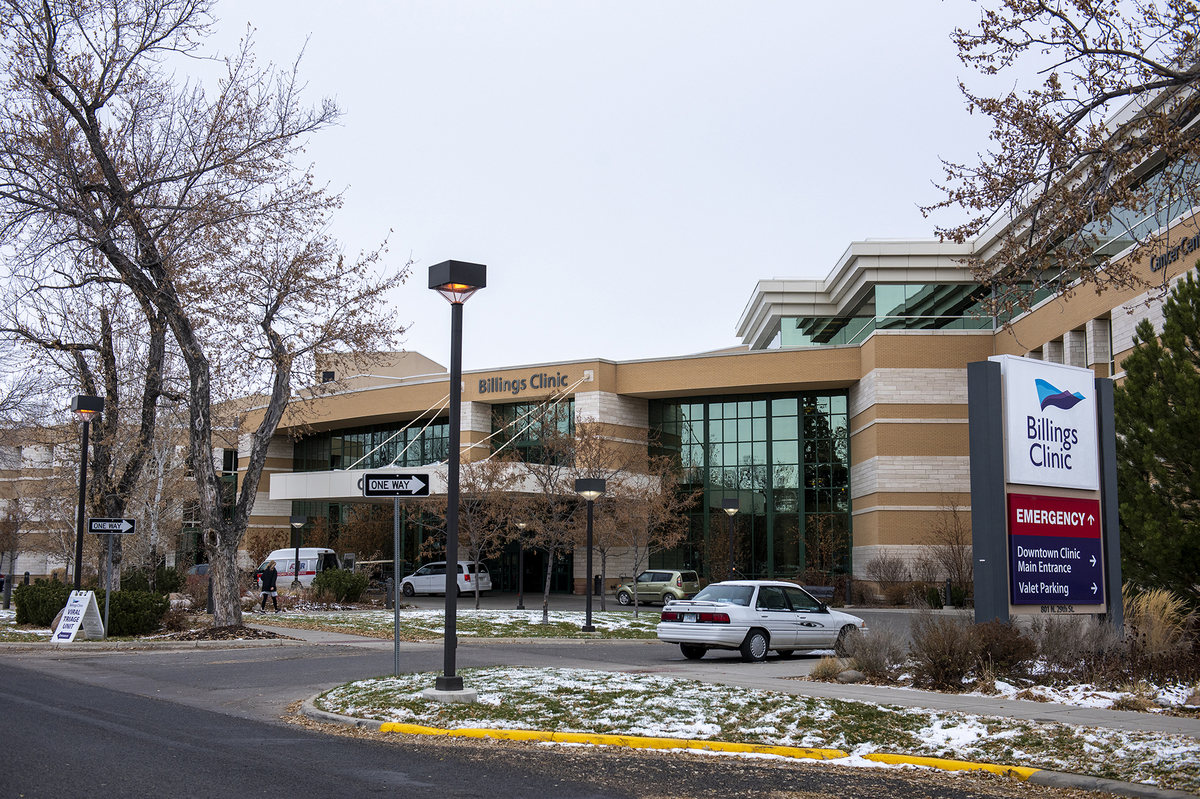
Montana health officials are seeking to increase oversight of nonprofit hospitals amid debate about whether they pay their fair share. The proposal comes nine months after a KHN investigation found that some of Montana’s wealthiest hospitals, such as the Billings Clinic, lag behind state and national averages in community giving.

Lynn Donaldson/Bloomberg via Getty Images


hide caption

toggle caption

Lynn Donaldson/Bloomberg via Getty Images


Montana health officials are seeking to increase oversight of nonprofit hospitals amid debate about whether they pay their fair share. The proposal comes nine months after a KHN investigation found that some of Montana’s wealthiest hospitals, such as the Billings Clinic, lag behind state and national averages in community giving.

Lynn Donaldson/Bloomberg via Getty Images

Montana health officials are proposing to oversee and set standards for the charitable contributions that nonprofit hospitals make in their communities each year to justify their access to millions of dollars in tax exemptions.

The proposal is part of a package of legislation that the state Department of Public Health and Human Services will ask lawmakers to approve when they convene in January. It comes two years after a state audit called on the department to play more of a watchdog role and nine months after a KHN investigation found some of Montana’s wealthiest hospitals lag behind state and national averages in community giving.

A call for more transparency in what counts as charity

Montana state Sen. Bob Keenan, a Republican who has questioned whether nonprofit hospitals deserve their charity status, calls the proposal a start that could be expanded on later.

“Transparency is the name of the game here,” Keenan says.

The IRS requires nonprofit hospitals to tally what they spend to “promote health” to benefit “the community as a whole.” How hospitals count such contributions to justify their tax exemptions is opaque and varies widely. National researchers who study community benefits have called for tightening standards for what counts toward the requirement.

Montana is one of the most recent states to consider imposing new rules or increasing oversight of nonprofit hospitals amid questions about whether they pay their fair share. Dr. Vikas Saini, president of the national health care think tank Lown Institute, says that both at a state and local level, people in California are exploring whether to monitor hospital community benefits and enforce new standards. Last year, Oregon initiated a minimum amount that nonprofit hospitals must spend on community benefits. And Massachusetts has updated its community benefits guidelines in recent years, pushing hospitals to give more detailed assessments of how the spending lines up with identified health needs.

Montana hospital industry officials say they want to work with the state to shape the proposed legislation, which they say the industry would support if it doesn’t conflict with federal rules. Saini says that to have an impact, any legislation would have to go beyond federal requirements.

Major tax breaks are at stake

In recent years, more people, like Keenan and Saini, have questioned whether nonprofit hospitals are contributing enough to their communities to deserve the major tax breaks they get while becoming some of the largest businesses in town.

“The hospitals are sort of the pillars of communities, but people are starting to ask these questions,” Saini says.

Saini’s institute reviews hospitals’ giving each year and has found that the majority of nonprofit systems nationwide spend less on what the institute calls “meaningful” benefits than the estimated value of their tax breaks. Actions the institute counts include financial aid to patients and community investments such as food assistance, health education or services offered at a loss, including addiction treatment.

The 2020 Montana audit found that hospitals in the state report benefits vaguely and inconsistently, making it difficult to determine whether their charity status is justified. However, state lawmakers didn’t address the issue in their 2021 biennial legislative session, and a Legislative Audit Division memorandum issued in June found the state health department had “made no meaningful progress” toward developing oversight of nonprofit hospitals’ charitable giving since then.

KHN found that Montana’s nearly 50 nonprofit hospitals directed roughly 8{515baef3fee8ea94d67a98a2b336e0215adf67d225b0e21a4f5c9b13e8fbd502} of their total annual expenses, on average, toward community benefits in the tax year that ended in 2019. The national average was 10{515baef3fee8ea94d67a98a2b336e0215adf67d225b0e21a4f5c9b13e8fbd502}.

In some cases, hospitals’ giving percentages have declined since then. For example, in the tax year that ended in 2019, Logan Health-Whitefish — a small hospital that’s part of the larger Flathead Valley health system — reported that less than 2{515baef3fee8ea94d67a98a2b336e0215adf67d225b0e21a4f5c9b13e8fbd502} of its overall spending went toward community benefits. In its latest available documents, for the period ending in 2021, the hospital reported spending less than 1{515baef3fee8ea94d67a98a2b336e0215adf67d225b0e21a4f5c9b13e8fbd502} of its expenses on community benefits while it made $15 million more than it spent.

An alternative to oversight?

Logan Health spokesperson Mellody Sharpton says the medical system’s overall community benefit is equal to nearly 9{515baef3fee8ea94d67a98a2b336e0215adf67d225b0e21a4f5c9b13e8fbd502} of its spending, reaching across its six hospitals. It also has clinics throughout the valley. “It’s important to consider our organization’s community benefit as a whole,” Sharpton says, “as our facilities collaborate to ensure the appropriate care is provided at the appropriate facility to meet our patients’ health needs.”

State health officials asked lawmakers to allow the agency to draft a bill that would give the health department clear authority to require hospitals to submit annual reports that include data on community benefit and charity care. The measure also would allow the department to develop standards for that spending on community benefit, according to the department’s description of its proposal.

“We see a great need here to move the ball forward,” state health department leader Charlie Brereton told lawmakers in August.

Montana Hospital Association President Rich Rasmussen says his organization wants to work with the health department in honing the legislation but says the definition of what counts as benefits should remain broad so hospitals can respond to their area’s most pressing needs.

Furthermore, he says, hospitals are already working on their own reporting standards. This year, the association created a handbook for members and set a 2023 goal for hospitals to uniformly report their community benefits, Rasmussen says. The association declined to provide a copy of the handbook, saying it would be available to the public once hospitals are trained on how to use it later this fall.

The association also plans to create a website that will serve as a one-stop shop for people who want to know how hospitals are reporting community benefits and addressing local health concerns, among other things.

Republican state Rep. Jane Gillette says she supports increased health department oversight and the idea behind the association’s website, but doesn’t think the hospital industry should produce that public resource alone. Gillette says she plans to introduce legislation to require hospitals to report community benefits data to a group outside the industry — such as the state — which would then post the information online.

Hospitals have resisted new rules like these in the past

In the past, hospitals have resisted attempts to impose new rules on community benefit spending. In an interview with KHN last year, Jason Smith, then Bozeman Health’s chief advancement officer, said the system supported efforts to improve reporting contributions “outside of new legislation,” adding that hospitals can do better work without “state oversight bodies being placed in the arena with us.”

Asked whether the health system still stands by that statement, Denise Juneau, Bozeman Health’s chief government and community affairs officer, says hospital officials hope any new legislation will align with existing federal guidelines. She says Bozeman Health will continue to work with the Montana Hospital Association to define and provide better information on community benefit, with or without new legislation.

A lawmaker would have to back the state’s proposal by mid-December to keep it alive.

KHN (Kaiser Health News) is a national, editorially independent project of the Kaiser Family Foundation.

Hospitals often reap profits in places where many patients carry medical debt : Shots

Hospitals often reap profits in places where many patients carry medical debt : Shots

Aerial view of downtown Fort Worth, Texas. Some hospitals in Texas and around the U.S. are seeing high profits, even as their bills force patients into debt. Of the nation’s 20 most populous counties, none has a higher concentration of medical debt than Tarrant County, home to Fort Worth.

Jupiterimages/Getty Images


hide caption

toggle caption

Jupiterimages/Getty Images


Aerial view of downtown Fort Worth, Texas. Some hospitals in Texas and around the U.S. are seeing high profits, even as their bills force patients into debt. Of the nation’s 20 most populous counties, none has a higher concentration of medical debt than Tarrant County, home to Fort Worth.

Jupiterimages/Getty Images

PROSPER, Texas — Almost everything about the opening of the 2019 Prosper High School Eagles’ football season was big.

The game in this Dallas-Fort Worth suburb began with fireworks and a four-airplane flyover. A trained eagle soared over the field. And some 12,000 fans filled the team’s new stadium, a $53 million colossus with the largest video screen of any high school venue in Texas. Atop the stadium was also a big name: Children’s Health.

Business has been good for the billion-dollar pediatric hospital system, which agreed to pay $2.5 million to put its name on the Prosper stadium. Other Dallas-Fort Worth medical systems have also thrived. Though exempt from taxes as nonprofit institutions, several, including Children’s, notched double-digit margins in recent years, outperforming many of the area’s Fortune 500 companies.

But patients aren’t sharing in the good times. Of the nation’s 20 most populous counties, none has a higher concentration of medical debt than Tarrant County, home to Fort Worth. Second is Dallas County, credit bureau data show.

The mismatched fortunes of hospitals and their patients reach well beyond this corner of Texas. Nationwide, many hospitals have grown wealthy, spending lavishly on advertising, team sponsorships, and even spas, while patients are squeezed by skyrocketing medical prices and rising deductibles.

A KHN review of hospital finances in the country’s 306 hospital markets found that several of the most profitable markets also have some of the highest levels of patient debt.

Overall, about a third of the 100 million adults in the U.S. with health care debt owe money for a hospitalization, according to a poll conducted by KFF for this project. Close to half of those owe at least $5,000. About a quarter owe $10,000 or more.

Many are pursued by collectors when they can’t pay their bills or hospitals sell the debt.

“The fact is, if you walk into a hospital today, chances are you are going to walk out with debt, even if you have insurance,” said Allison Sesso, chief executive of RIP Medical Debt, a nonprofit that buys debt from hospitals and debt collectors so patients won’t have to pay it.

A community shadowed by debt

Across the Dallas-Fort Worth metro area — the nation’s fourth-largest — the impact has been devastating.

“Medical debt is forcing people here to make incredibly agonizing choices,” said Toby Savitz, programs director at Pathfinders, a Fort Worth nonprofit that assists people with credit problems. Savitz estimated that at least half their clients have medical debt. Many are scrimping on food, neglecting rent, even ending up homeless, she said, “and this is not just low-income people.”

David Zipprich, a Fort Worth businessman and grandfather, was forced out of retirement after hospitalizations left him owing more than $200,000.

Zipprich, 64, had spent a career in financial consulting. He owned a small bungalow in a historical neighborhood near the Fort Worth rail yards. His daughters, both teachers, and his four grandchildren lived nearby. He had health insurance and some savings, and he’d paid off his mortgage.

Then in early 2020, Zipprich landed in the hospital. While driving, his blood sugar dropped precipitously, causing him to black out and crash his car.

Three months later, after he was diagnosed with diabetes, another complication led to another hospitalization. In December 2020, covid-19 put him there yet again. “I look back at that year and feel lucky I even survived,” Zipprich said.

David Zipprich, a Fort Worth financial consultant and grandfather, was forced out of retirement after hospitalizations left him owing more than $200,000.

Laura Buckman for KHN and NPR


hide caption

toggle caption

Laura Buckman for KHN and NPR


David Zipprich, a Fort Worth financial consultant and grandfather, was forced out of retirement after hospitalizations left him owing more than $200,000.

Laura Buckman for KHN and NPR

But even with insurance, Zipprich was inundated with debt notices and calls from collectors. His credit score plummeted below 600, and he had to refinance his home. “My stress was off the charts,” he said, sitting in his neatly kept living room with his Shih Tzu, Murphy.

Overall in Tarrant County, 27{515baef3fee8ea94d67a98a2b336e0215adf67d225b0e21a4f5c9b13e8fbd502} of residents with credit reports have medical debt on their records, credit bureau data analyzed by KHN and the nonprofit Urban Institute shows. In Dallas County, it’s 22{515baef3fee8ea94d67a98a2b336e0215adf67d225b0e21a4f5c9b13e8fbd502}.

That’s more than five times the rate in the largest counties in New York, data shows. The Texans also owe a lot more — the median amount of medical debt on credit records in Tarrant and Dallas counties is nearly $1,000, compared with $400 or less in New York.

Last year, Zipprich returned to work, taking a job in New Jersey that required he commute back and forth to Texas. He recently quit, citing the strain of so much travel. He’s now job hunting again. “I never thought this would happen to me,” he said.

Who is responsible?

Even small debts can have potentially dangerous consequences, discouraging patients from seeking needed care. Angie Johnson, a 28-year-old schoolteacher, cut short her honeymoon so she and her husband could pay off more than $1,100 she owed a physical therapy center owned by Baylor Scott & White, a mammoth Dallas-based hospital system.

Johnson said the center, where she’d gone after a knee injury, initially said her visits would cost $60. “Then they billed me hundreds,” she said. “I don’t go to the doctor unless I absolutely have to because it’s so expensive.”

Angie Johnson of Waxahachie, Texas, says the physical therapy center she went to after a knee injury initially told her visits would cost $60. “Then they billed me hundreds,” she says.

Laura Buckman for KHN and NPR


hide caption

toggle caption

Laura Buckman for KHN and NPR


Angie Johnson of Waxahachie, Texas, says the physical therapy center she went to after a knee injury initially told her visits would cost $60. “Then they billed me hundreds,” she says.

Laura Buckman for KHN and NPR

Hospital industry leaders blame the patient debt on health insurers, citing the rise of high-deductible plans and other efforts that limit coverage. “The last thing that hospitals want is for their patients to face financial barriers,” said Molly Smith who leads public policy at the American Hospital Association. “Hospitals are in there trying to work on behalf of patients.”

Despite repeated requests from KHN, none of the medical systems around Dallas-Fort Worth would discuss their finances or the debt carried by patients.

But Smith and other hospital leaders point to billions of dollars of free or discounted care that hospitals nationwide provide every year. “Hospitals have been pretty darn generous,” said Stephen Love, president of the Dallas-Fort Worth Hospital Council. “If other parts of the community did as much as hospitals, we wouldn’t be in this problem.”

Unlike drug companies, device makers, and many physician practices, most U.S. hospitals are nonprofit and must provide charity care as a condition of their tax-exempt status.

Regardless of tax status, medical centers in markets with high medical debt do provide more charity care, according to an analysis by KHN and the Urban Institute, a Washington think tank. That’s important, said Dr. Vikas Saini, president of the Lown Institute, a nonprofit that grades hospitals on their quality and community benefits.

But Saini asked: “Is a hospital truly serving its community if it’s pushing so many into debt?”

Around Dallas-Fort Worth, major medical systems frequently tout their commitment to the region and its patients.

When Texas Health Resources, a Dallas-based nonprofit system with more than $5 billion in annual revenue, opened a new hospital tower in Fort Worth earlier this year, Barclay Berdan, the system’s chief executive, said the building “reinforces Texas Health’s long-standing commitment to the Fort Worth community.” The nine-story, $300 million tower is one of more than a half-dozen new hospitals and major expansions around the Dallas-Fort Worth area since 2018.

The big building spree has been accompanied by big bottom lines.

From 2018 to 2021, Texas Health, which owns hospitals in North Texas, had an average operating margin of almost 6{515baef3fee8ea94d67a98a2b336e0215adf67d225b0e21a4f5c9b13e8fbd502}, according to a KHN analysis of publicly available financial reports.

Other major systems in the area, including Baylor, Children’s Health, and HCA, the nation’s largest for-profit hospital company, did even better, KHN found. Cook Children’s, the region’s second major pediatric system, had an average operating margin of nearly 12{515baef3fee8ea94d67a98a2b336e0215adf67d225b0e21a4f5c9b13e8fbd502}.

By comparison, profits at most of the 25 Fortune 500 companies based around Dallas-Fort Worth, such as ExxonMobil, were less than 6{515baef3fee8ea94d67a98a2b336e0215adf67d225b0e21a4f5c9b13e8fbd502} in 2019, according to Fortune data.

Approaching a tipping point

Hospitals have thrived in other markets with high patient debt, KHN found.

In Charlotte, N.C., where a quarter of residents have medical debt on their credit reports, hospitals recorded an average operating margin of 13.6{515baef3fee8ea94d67a98a2b336e0215adf67d225b0e21a4f5c9b13e8fbd502} from 2017 to 2019.

The average margin at hospitals in and around Gainesville and Lakeland, two central Florida markets where a quarter of residents also carry medical debt, topped 9{515baef3fee8ea94d67a98a2b336e0215adf67d225b0e21a4f5c9b13e8fbd502}. In Tulsa, Okla., which has the same level of debt, margins have averaged 8.5{515baef3fee8ea94d67a98a2b336e0215adf67d225b0e21a4f5c9b13e8fbd502}.

Overall, U.S. hospitals recorded their most profitable year on record in 2019, with an aggregate operating margin of 6.5{515baef3fee8ea94d67a98a2b336e0215adf67d225b0e21a4f5c9b13e8fbd502}, according to the federal Medicare Payment Advisory Commission. Total margins, which include income from investments, were even higher.

“You might think that hospitals in communities where patients have a lot of debt would be less profitable, but that doesn’t seem to be the case,” said Anuj Gangopadhyaya, a senior Urban Institute researcher who worked with KHN on an analysis of hospital finance and consumer debt data in U.S. hospital markets.

In fact, the analysis found, there is no apparent relationship between the profits of hospitals in a market and how much medical debt residents have. So while hospitals in places like Charlotte and Tulsa may be comfortably in the black, in other places with high patient debt such as Amarillo, Texas, and Columbia, S.C., hospitals are struggling, data shows.

Industry experts say the most profitable medical centers — like those around Dallas-Fort Worth — have developed business models that allow them to prosper even if their patients can’t pay.

One key is prices. These hospitals maximize what they charge for everything from a complex surgery to a dose of aspirin. Most of those charges are picked up by health insurers, which still pay a much larger share of hospital bills than patients do, even those with the highest deductibles.

Across the country, many medical systems have strengthened their market power in recent years by consolidating, buying up smaller hospitals and physician practices, which enable the hospital systems to charge even more.

Dallas-Fort Worth has the highest medical prices in Texas, according to the Health Care Cost Institute, a nonprofit that tracks costs nationwide. And in a state where most markets have relatively low medical prices, in-patient care at Dallas-Fort Worth hospitals was 13{515baef3fee8ea94d67a98a2b336e0215adf67d225b0e21a4f5c9b13e8fbd502} more expensive than the national median in 2020.

In addition to charging more, the most profitable hospitals frequently squeeze more savings from their operations, holding down what they pay workers, for example, and securing better contracts from suppliers. “Hospitals have had to get leaner and meaner,” said Kevin Holloran, a senior director at Fitch Ratings who tracks nonprofit health systems for the bond rating firm.

It’s unclear how much longer this business model can endure.

Across the country, many small and rural hospitals have closed in recent years. Even some larger systems are now losing money, as inflation and rising labor costs put new pressure on bottom lines.

As bills rise, hospitals are having a harder time collecting. Last year, nearly 1 in 5 patient bills generated by hospitals for people with insurance topped $7,500, according to an analysis of hospital billing records by Crowe LLP, a Chicago-based accounting and consulting firm. That was more than triple the rate in 2018.

“These are bills that fewer and fewer patients out there can afford,” said Brian Sanderson, a senior Crowe health care consultant and former hospital executive. Indeed, hospitals manage to collect less than 17{515baef3fee8ea94d67a98a2b336e0215adf67d225b0e21a4f5c9b13e8fbd502} of patient balances that exceed $7,500, according to Crowe’s analysis.

“The rates at which patient balances are growing is just unsustainable for our health systems,” Sanderson said, predicting that most will never be able to collect bills of this size. “It’s trending to the ridiculous.”

Robert Earley, a former Texas state legislator who used to head Fort Worth’s public health system, compared today’s hospitals to shrimpers in the Gulf Coast district he once represented.

“They wanted to pull so much shrimp out of the bay that they didn’t think about whether there’d be any there long term,” Earley said, recalling his constituents’ struggles. “I worry that those of us in health care aren’t asking ourselves enough if this system is sustainable.”

Diagnosis: Debt is a reporting partnership between KHN and NPR exploring the scale, impact, and causes of medical debt in America.

KHN (Kaiser Health News) is a national newsroom that produces in-depth journalism about health issues. It is an editorially independent operating program of KFF (Kaiser Family Foundation).