A slight decrease in home loan premiums in December and January contributed to an advancement in pending property profits for a second consecutive thirty day period, in accordance to details launched Monday by the National Affiliation of Realtors.
The Pending Dwelling Income Index – a forward-searching indicator of dwelling gross sales dependent on deal signings – improved 8{515baef3fee8ea94d67a98a2b336e0215adf67d225b0e21a4f5c9b13e8fbd502} in January. 12 months-more than-year, pending transactions dropped by 24{515baef3fee8ea94d67a98a2b336e0215adf67d225b0e21a4f5c9b13e8fbd502}.
The previous time pending contracts registered an above 8{515baef3fee8ea94d67a98a2b336e0215adf67d225b0e21a4f5c9b13e8fbd502} regular monthly maximize was three months immediately after the pandemic lockdown, when showings came to a standstill. In June 2020, pending property gross sales speed increased 17{515baef3fee8ea94d67a98a2b336e0215adf67d225b0e21a4f5c9b13e8fbd502} in contrast to the past thirty day period.
“Buyers responded to superior affordability from falling mortgage loan costs in December and January,” mentioned NAR Chief Economist Lawrence Yun.
NAR anticipates the financial state will continue to include positions during 2023 and 2024, with the 30-12 months set home loan rate steadily dropping to an average of 6.1{515baef3fee8ea94d67a98a2b336e0215adf67d225b0e21a4f5c9b13e8fbd502} in 2023 and 5.4{515baef3fee8ea94d67a98a2b336e0215adf67d225b0e21a4f5c9b13e8fbd502} in 2024.
Understand much more: Ideal personalized loans
What is the Pending Houses Income Index?
The Pending Household Income Index, a primary indicator of housing exercise, measures housing agreement activity, and is based mostly on signed genuine estate contracts for current solitary-family residences, condos, and co-ops. Because a home goes below contract a thirty day period or two ahead of it is offered, the Pending Residence Product sales Index typically sales opportunities current-house sales by a thirty day period or two.
What does the new housing facts imply for purchasers and sellers?
The housing market is likely to remain in flux. Sellers are offering some rate concessions. But, thanks to higher desire premiums, that would not be more than enough to get some purchasers off the fence.
The new pending revenue knowledge for January gives even more evidence that the housing marketplace might have bottomed out at the close of final yr, says Shiny MLS Chief Economist Lisa Sturtevant.
“However, it most likely will not be a V-formed rebound. In its place, be expecting a bumpy highway on the way to a more ordinary housing marketplace in 2023,” she suggests.
Why is there so a great deal uncertainty in the housing current market?
Mortgage charges have been trending better above the previous couple of months and the Federal Reserve has indicated it will raise rates at minimum two, and quite possibly 3, much more moments this 12 months, which could send mortgage costs larger continue to.
House loan programs have been down in February as premiums strike their maximum levels because late November. Weekly info on housing market activity reveals a pullback in purchaser interest above the previous a few weeks.
“In the current housing sector, it is a struggle amongst the rational, money calculus of homebuying and the instinctive, psychological aspect. The head compared to the coronary heart,” claims Sturtevant.
“For some potential buyers, greater property finance loan prices simply just signifies shopping for a household is out of the query until household price ranges fall,” she says. “For many others, bigger home loan prices will be a hurdle but in the long run will not continue to keep them from having back into the sector just after sitting down on the sidelines for months.”
Greatest mortgage lenders: Who has the most competitive costs?
Most effective on-line home loan lenders: On the net loan providers often give lower fees and charges
Current mortgage prices:What is actually the latest
Will present house product sales carry on to drop?
Even with improving upon interest fees and job gains, Yun continue to expects yearly current-house income to drop 11{515baef3fee8ea94d67a98a2b336e0215adf67d225b0e21a4f5c9b13e8fbd502} in 2023 to a whole of 4.5 million units right before leaping 18{515baef3fee8ea94d67a98a2b336e0215adf67d225b0e21a4f5c9b13e8fbd502} in 2024 to 5.2 million models. NAR tasks new-residence sales will tumble 4{515baef3fee8ea94d67a98a2b336e0215adf67d225b0e21a4f5c9b13e8fbd502} year-around-year in 2023 before increasing 19{515baef3fee8ea94d67a98a2b336e0215adf67d225b0e21a4f5c9b13e8fbd502} in 2024.
“Home sales action appears to be bottoming out in the initially quarter of this yr, before incremental enhancements will occur,” Yun mentioned. “But an yearly get in residence income will not arise until 2024. In the meantime, house rates will be continuous in most sections of the country with a minimal transform in the nationwide median property value.”
Regional breakdown of the housing sector
The Northeast PHSI rose 6{515baef3fee8ea94d67a98a2b336e0215adf67d225b0e21a4f5c9b13e8fbd502} from previous thirty day period, a decrease of 20{515baef3fee8ea94d67a98a2b336e0215adf67d225b0e21a4f5c9b13e8fbd502} from January 2022. The Midwest index grew 8{515baef3fee8ea94d67a98a2b336e0215adf67d225b0e21a4f5c9b13e8fbd502}, a fall of 21{515baef3fee8ea94d67a98a2b336e0215adf67d225b0e21a4f5c9b13e8fbd502} from a person yr in the past.
The South PHSI amplified 8{515baef3fee8ea94d67a98a2b336e0215adf67d225b0e21a4f5c9b13e8fbd502}, dipping 25{515baef3fee8ea94d67a98a2b336e0215adf67d225b0e21a4f5c9b13e8fbd502} from the prior calendar year. The West index rose 10{515baef3fee8ea94d67a98a2b336e0215adf67d225b0e21a4f5c9b13e8fbd502} in January, down 29{515baef3fee8ea94d67a98a2b336e0215adf67d225b0e21a4f5c9b13e8fbd502} from January 2022.
“An more bump happened in the West location for the reason that of reduced residence price ranges, even though gains in the South had been due to much better task progress in that area,” Yun added.
Swapna Venugopal Ramaswamy is a housing and financial system correspondent for United states of america These days. You can follow her on Twitter @SwapnaVenugopal and indication up for our Daily Funds newsletter here.
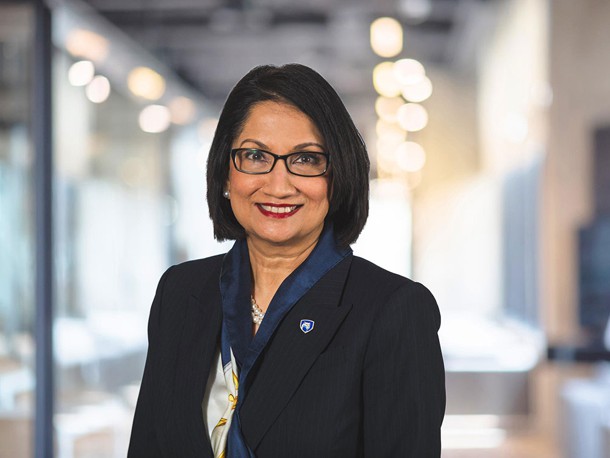
Momentum is clearly on Penn State President Neeli Bendapudi’s side, as evidenced by benchmarks like the university conducting $1 billion in research last year and the recent announcement of a major investment in diversity, equity, inclusion and belonging initiatives, as well as a working plan to reduce the university’s carbon emissions toward a 100{515baef3fee8ea94d67a98a2b336e0215adf67d225b0e21a4f5c9b13e8fbd502} reduction goal. In addition to her administrative duties, she teaches a weekly seminar for the university’s Presidential Leadership Academy.
2. John Fry
President, Drexel University
John Fry
/
Drexel University
“Ambition Can’t Wait,” declares the Drexel University slogan – and it’s embodied by its president, John Fry, whose high-profile initiatives include collaborating on the $3.5 billion Schuylkill Yards development, partnering with the Academy of Natural Sciences of Philadelphia and spearheading the Charles D. Close School of Entrepreneurship. Fry is currently positioning Drexel as a research leader through the Drexel Applied Innovation initiative and the Innovation Fund, which will support Drexel-driven startups and help commercialize university research through $150,000 grants.
3. Liz Magill
President, University of Pennsylvania
Liz Magill
/
Lisa J. Godfrey
Whether lauding Penn Libraries’ recent acquisition of the Philadelphia Orchestra archives or spotlighting service projects on social media, Liz Magill has been a highly visible cheerleader since assuming the presidency of the University of Pennsylvania last fall. She’s currently overseeing a flurry of campus initiatives, including the planned Basser Cancer Interception Institute, the Stuart Weitzman Theatre and the McGraw Center for Educational Leadership. Magill was previously executive vice president and provost at the University of Virginia and, prior to that, dean of Stanford Law School.
4. Jason Wingard
President, Temple University
Jason Wingard
/
Joseph V. Labolito/Temple University
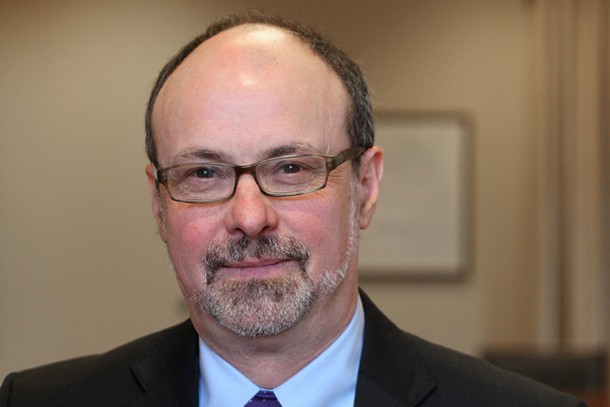
As he celebrates Temple University’s most diverse class in its history, President Jason Wingard knows 21st-century academia can’t be business as usual. A year after assuming leadership of Temple, Wingard, an education scholar, published “The College Devaluation Crisis: Market Disruption, Diminishing ROI and an Alternative Future of Learning,” a call to action for a relevant, affordable college experience. Wingard also inaugurated the university’s Center for Anti-Racism and, more recently, relocated his family to a dwelling one block from campus, signaling personal investment in community safety as the Temple neighborhood grapples with a rash of violence.
5. Farnam Jahanian
President, Carnegie Mellon University
Farnam Jahanian
/
Carnegie Mellon University
Whether watching an AI robot paint or unveiling an on-campus Sustainability Studio, computer scientist-turned-university president Farnam Jahanian is ensuring that Carnegie Mellon remains at the forefront of contemporary trends. Since becoming president in 2017, Jahanian has led a prodigious fundraising campaign, with major gifts funding the largest-ever campus facilities expansion. Jahanian, who recently served on the Shapiro transition team, previously oversaw a $900 million budget as head of the National Science Foundation Directorate for Computer and Information Science and Engineering.
6. Patrick Gallagher
Chancellor, University of Pittsburgh
Patrick Gallagher
/
Provided
After nearly a decade leading the University of Pittsburgh, Chancellor Patrick Gallagher is stepping down later this year. Gallagher, a physicist who previously directed The National Institute of Standards and Technology, steered Pitt through the COVID-19 pandemic while promoting the university’s powerhouse research – including a novel partnership with Elevate Bio, a biotech company, on Pitt Bioforge, a cell and gene therapy startup. Gallagher also launched the Pitt Success Pell Match program to increase tuition affordability and oversaw an expansion of campus athletic facilities.
7. Ken Gormley
President, Duquesne University
Ken Gormley
/
Duquesne University
Duquesne University President Ken Gormley recently celebrated a $50 million gift from top-ranked attorney and alumnus Thomas Kline. Kline’s donation prompted the renaming of Duquesne’s law school, where Gormley formerly served as dean. Gormley’s own legal analyses, on display in his 2010 bestseller about the Bill Clinton impeachment, are again sought after as former president Donald Trump faces his own high-profile legal troubles. The institution Gormley heads is stronger than ever, as evidenced by its consistently high rankings.
8. Khalid Mumin
Acting Secretary, Pennsylvania Department of Education
Dr. Khalid Mumin
/
Commonwealth Media Services
As the school district superintendent in Reading and, more recently, Lower Merion, Khalid Mumin earned a reputation for results; he was even named 2021 Superintendent of the Year by the Pennsylvania Association of School Administrators. Mumin brings that expertise to Harrisburg, where Gov. Josh Shapiro recently appointed him acting secretary of the state’s Department of Education. Mumin is tasked with translating his successful approach statewide, with both achievement and equity at the fore.
9. Dan Greenstein
Chancellor, Pennsylvania State System of Higher Education
Dan Greenstein
/
Amanda Berg
Chancellor Dan Greenstein had reason to smile when first-year student enrollment rose 7{515baef3fee8ea94d67a98a2b336e0215adf67d225b0e21a4f5c9b13e8fbd502} in 2022 at the State System of Higher Education, reversing a 14-year decline exacerbated by the COVID-19 pandemic. Greenstein has steered PASSHE since 2018, working with its powerful board of governors to stabilize finances and ensure relevant education for roughly 100,000 students. He recently oversaw the consolidation of six universities into two, celebrated a historic increase of $75 million in state funding, and is planning significant future investments in workforce education.
10. Mark L. Tykocinski
President, Thomas Jefferson University
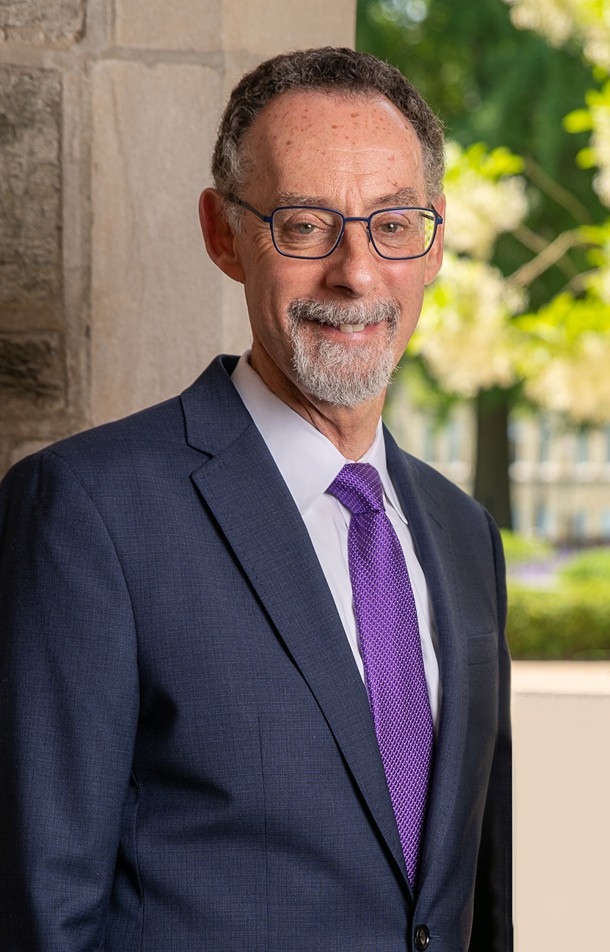
After guiding Thomas Jefferson University through a global expansion and the tripling of its annual research expenditures – now more than $200 million – Mark Tykocinski was appointed university president late last year. The molecular immunologist, who also serves as dean of Jefferson’s Sidney Kimmel Medical College, was previously TJU’s provost and executive vice president for academic affairs. In that role, Tykocinski managed Jefferson’s historic 2017 merger with Philadelphia University, creating an institution with more than 200 programs across 10 colleges and three schools.
11. Bashar W. Hanna
President, Commonwealth University of Pennsylvania
Bashar W. Hanna
/
Commonwealth University
After a multi-year consolidation process, former Bloomsburg University President Bashar Hanna recently took over leadership of the new Commonwealth University of Pennsylvania. Hanna now presides over a three-campus institution born of the merger of three state universities – Bloomsburg, Lock Haven and Mansfield. With university finances stabilized, Hanna is launching a new strategic plan and touting the merger’s opportunities for everyone from varsity athletes to local community college students.
12. Dale-Elizabeth Pehrsson
President, Pennsylvania Western University
From historic retention rates to prodigious fundraising efforts, Dale-Elizabeth Pehrsson had a lot to be proud of as president of Clarion University. Now she heads PennWest University, the institution formed last year out of the merger between Clarion, California and Edinboro universities. Already, Pehrsson has spearheaded PennWest initiatives around diversity and inclusion, announced new academic programs and launched a community engagement initiative that includes career workshops for local school students.
13. Peter Donohue
President, Villanova University
Peter Donohue
/
Villanova University
During the 16-year tenure of Rev. Peter Donohue, Villanova has launched a historic fundraising campaign, initiated two 10-year strategic plans, celebrated record admissions and seen its campus transformed by renovation. Donohue, a longtime theater professor who has chaired the university’s theater department, has also directed local productions that have garnered dozens of Barrymore Awards. Known for his convivial dinners and lively liturgies, Donohue is the longtime chaplain for the university’s Naval ROTC program and serves on the board of the American Council on Education.
14. Valerie Smith
President, Swarthmore College
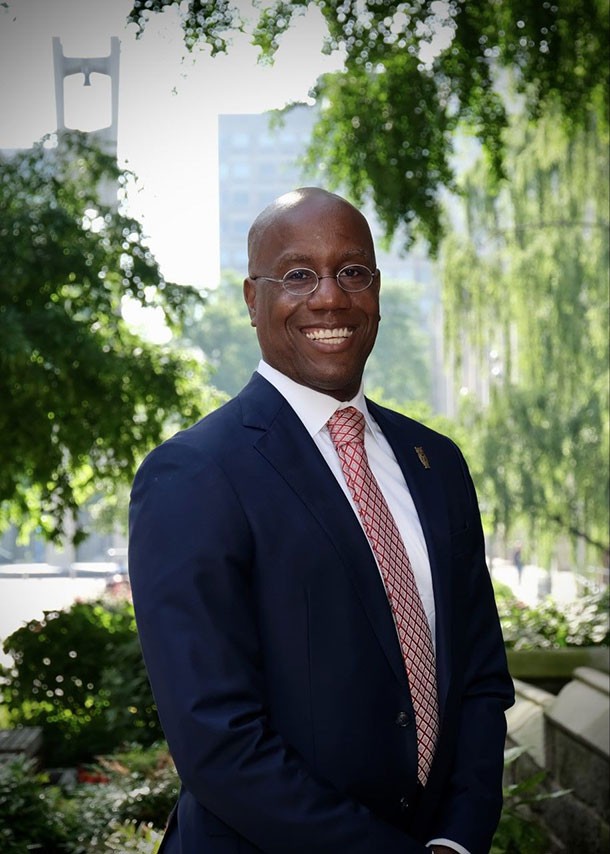
The first African American to serve as president of Swarthmore, Valerie Smith brings a modern sensibility to her role. She banned campus Greek life in 2019 after racist and sexist incidents and, a year later, established the Swarthmore President’s Fund for Racial Justice to promote initiatives around equity, inclusion and diversity. The Black literature scholar also oversaw a $440 million capital campaign and masterminded campus facility upgrades.
15. Wendy Raymond
President, Haverford College
Wendy Raymond
/
Patrick Montero, Haverford College
Haverford College is 190 years old, but President Wendy Raymond ensures the institution responds to contemporary currents. Having resolved a 2020 student strike over anti-racism initiatives – for which Raymond dedicated $150,000 to anti-bias and ethnic programs – she recently announced that the college’s pandemic-era test-optional policy would become permanent, a move seen as enhancing equity. Raymond, a molecular biologist, also recently welcomed a historically diverse first-year class to a campus transformed by investment from a recent $270 million campaign.
16. Kimberly Wright Cassidy
President, Bryn Mawr College
At Bryn Mawr College, President Kimberly Wright Cassidy makes the case for women’s education in the 21st century. Cassidy, who previously served as Bryn Mawr’s provost, is a former chair of its psychology department and a prominent voice for women in STEM fields – including the college’s recently debuted programs in biochemistry and data science. Cassidy has also solidified academic partnerships with neighboring colleges and spoken publicly on issues of racial and gender inclusion.
17. Isabelle Bajeux-Besnainou
Dean, Tepper School of Business, Carnegie Mellon University
Isabelle Bajeux-Besnainou
/
Tepper School of Business, Carnegie Mellon University
Diversity is a priority for Dean Isabelle Bajeux-Besnainou at Carnegie Mellon’s Tepper School of Business, which recently welcomed the latest cohort of its Executive Leadership Academy, a training program for Black professionals. Bajeux-Besnainou, a professor of finance, also just appointed the school’s inaugural associate dean of diversity, equity, inclusion and belonging: David Major, previously a global strategy professor at the University of Miami’s Herbert Business School. In her three years at Tepper, Bajeux-Besnainou has also introduced new master’s programs, online offerings and research investment.
18. Barbara Altmann
President, Franklin & Marshall College
Barbara Altmann
/
Deb Grove
Barbara Altmann is passionate about her field, French medieval literature, as well as the liberal arts tradition she champions at Franklin & Marshall College, which she has led since 2018. In addition to fostering community on the residential campus, Altmann has prioritized connection with the Lancaster-area community – including a new transfer agreement with HACC students. The Canada-born scholar previously served as provost at Bucknell University, where she earned a reputation for successful fundraising.
19. Zack Moore
Vice President for Government and Community Relations, Penn State University
Zack Moore
/
Steve Tressler
Veteran Penn State lobbyist Zack Moore has secured tens of millions of dollars in state and federal funds for his alma mater since 2016, when he became vice president for government and community relations. Moore worked in lobbying and legislative roles in both the U.S. House and Senate before joining Penn State in 2007. Moore, who now leads a public affairs team that represents the state’s sole land grant university, also founded Lion Caucus, a Penn State student advocacy organization.
20. James H. Steeley
President and CEO, Pennsylvania Higher Education Assistance Agency
James H. Steeley
/
PHEAA
James Steeley leads the Pennsylvania Higher Education Assistance Agency, the commonwealth’s student loan servicer. Having served as CFO and COO before assuming the top job in 2018, Steeley most recently managed the strategic divestment of FedLoan, the agency’s federal student loan program. PHEAA recently boosted the PA State Grant maximum award to an all-time high of $5,750, which benefits approximately 106,000 students. He is a board member of the Elizabethtown College School of Business, Graduate and Professional Studies and the Central PA Chapter of Financial Executives International.
21. Tom Foley & Nichole Duffy
President; Vice President of Government Relations, Association of Independent Colleges and Universities of Pennsylvania
Tom Foley & Nichole Duffy
/
AICUP; Casey Trinkaus
The commonwealth’s muscular private college sector has champions in Tom Foley and Nichole Duffy, who respectively head and oversee government relations for the 90-member Association of Independent Colleges and Universities of Pennsylvania.
Foley’s advocacy includes recent efforts to secure $3 billion in federal funds for Pennsylvania higher-education pandemic relief. He currently co-chairs the state Early Learning Investment Commission under Gov. Josh Shapiro, on whose transition team he served.
Duffy’s resume includes stints in the Governor’s Budget Office, the Pennsylvania Department of Education and the state House of Representatives. A first-generation college graduate, she also volunteers with the nonprofit Girls on the Run.
22. Jim Cawley
President, Rosemont College
Jim Cawley
/
Michael Jachimski
Attorney Jim Cawley brings more than 25 years of experience in public service to the presidency of Rosemont College. Cawley recently launched Rosemont’s strategic plan, reopened historic Mayfield Residence Hall after a $7.5 million renovation, and announced plans to renovate Alumnae Hall and update the college’s athletic facilities. Before coming to Rosemont last year, Cawley served as a vice president at Temple University, as CEO of the United Way of Greater Philadelphia and Southern New Jersey, and as lieutenant governor of Pennsylvania from 2011 to 2015.
23. Amid Ismail
Dean and Laura H. Carnell Professor, Temple University Kornberg School of Dentistry
Amid Ismail
/
Temple University
Under the 14-year leadership of Dean Amid Ismail, Temple University’s Kornberg School of Dentistry has evolved into one of the nation’s – and the world’s – preeminent centers of dental education, patient care, dental research and cutting-edge medicine. Ismail’s tenure has upgraded America’s second-oldest dental school to an R1 (highest research activity) institution and engaged Kornberg in global partnerships, including with Al-Quds and Hadassah Hebrew universities in the Middle East. Closer to home, Ismail partnered with Greater Philadelphia Health Action to launch a community clinic that serves 22,000 patients annually. He has also recently collaborated with the Philadelphia School District to open the first dental clinic for Temple University and William D. Kelley Public School in North Philadelphia. Temple Dental is one of the largest providers of dental care for Holocaust Survivors in the U.S.
24. Kathleen P. Gallagher
Executive Vice President and COO, Jefferson Health and Thomas Jefferson University
Kathleen P. Gallagher
/
Thomas Jefferson University
As a nurse, Kathleen Gallagher once kept an eye on patients in Jefferson Hospital’s emergency department. Now Jefferson’s chief operating officer, Gallagher keeps a steady hand on the books, overseeing operations, finances and strategy for Thomas Jefferson University and its fast-growing regional health system, Jefferson Health. Gallagher is also tasked with steering partnerships, including Jefferson’s recent acquisition of Philadelphia University and its merger with the Einstein Health Network, and she continues to lead its global operations as well.
25. Nicole Hurd
President, Lafayette College
As President Nicole Hurd steers Lafayette College toward its 2026 bicentennial, she’s spearheading both a master plan to reimagine campus facilities and the College’s first strategic plan in more than a dozen years. The religious scholar also hired Lafayette’s first climate action manager and is planning a campaign to raise funds for increased financial aid, enrollment and faculty. Hurd, a former University of Virginia dean, previously founded College Advising Corps, now the nation’s largest college access nonprofit.
26. Anantha Shekhar
Dean, University of Pittsburgh School of Medicine
Anantha Shekhar
/
Pitt preferred
As dean of the University of Pittsburgh School of Medicine, neuroscientist Anantha Shekhar introduced a cutting-edge MD/Ph.D. program, updated the medical curriculum and assumed guidance of the Pittsburgh Cancer Institute. As senior vice chancellor for the health sciences, Shekhar leads Pitt’s six health sciences schools, from medicine and dentistry to nursing, pharmacy, public health and rehabilitation. Under his leadership, Pitt ranks consistently among the nation’s top universities in securing NIH grants and other federal support.
27. John Bravman
President, Bucknell University
Fresh off a decade of historically successful fundraising at Bucknell University, President John Bravman celebrated with a new contract extension, the largest first-year class in history and the inauguration of a seven-acre solar farm – a major step toward his goal of making the school carbon-neutral by 2030. Bravman, a former engineering professor, has transformed the campus through a major infrastructure investment – including several new academic, residence and dining facilities – and added new degree programs, like the Freeman College of Management.
28. Donald Guy Generals
President, Community College of Philadelphia
Donald Guy Generals
/
Elizabeth Field
At the Community College of Philadelphia, President Donald Guy Generals knows success is a combination of opportunity and resources. He recently opened the $40 million Career and Advanced Technology Center, which expanded workforce preparation programs; inked a transfer agreement with Thomas Jefferson University for an accelerated pharmacy program; and launched the Octavio Catto scholarship to fill funding gaps for low-income Philadelphians. It’s all part of Generals’ strategic plan to increase CCP’s enrollment by 20{515baef3fee8ea94d67a98a2b336e0215adf67d225b0e21a4f5c9b13e8fbd502}, double the graduation rate and reduce achievement disparities.
29. Cynthia Shapira & Denise Pearson
Chair, Board of Governors; Vice Chancellor and Chief Diversity, Equity and Inclusion Officer, Pennsylvania State System of Higher Education
Cynthia Shapira & Denise Pearson
/
Jonas Photography; Provided
Since 2016, when she became chair of the Pennsylvania State System of Higher Education Board of Governors, Cynthia Shapira has led a review and redesign of the system aimed at financial sustainability, lower student costs and debt, higher enrollment and better outcomes. For her success in masterminding this transformation – which has also included large-scale university consolidations – the Board of Governors awarded Shapira its 2022 John W. Nason Award for Board Leadership. Shapira, a former management consultant, recently served on Gov. Josh Shapiro’s transition advisory committee for higher education.
From Black History Month events to last year’s inaugural Harrisburg Citizens Equity Roundtable, Denise Pearson is a frequent presence at social action events around the commonwealth. Pearson is the inaugural chief diversity, equity and inclusion officer for the Pennsylvania State System of Higher Education, where she is also vice chancellor.
Having surveyed students on 14 campuses about racism, representation and the challenges of being first-generation or underrepresented – as she herself was – Pearson is leading efforts to diversify faculty, boost student retention and improve outcomes across the entire system.
30. Erika H. James
Dean, Wharton School
Erika H. James
/
The Wharton School
Whether testing the classroom potential of ChatGPT or overseeing the first Wharton Global Forum since the COVID-19 pandemic, Wharton Dean Erika James is a model of contemporary leadership. Like her, that leadership is increasingly Black and female, as exemplified by Wharton’s majority-female MBA enrollment and “The Prepared Leader,” a crisis-management manifesto James co-authored with Simmons University President Lynn Perry Wooten. Like Wooten, James is the first person of color in her position – and after just three years at Wharton, she is already ensuring a legacy of diversity.
31. Kevin Black
Interim Dean, Penn State College of Medicine
Kevin Black
/
Penn State Health
Last year, Interim Dean Kevin Black celebrated Penn State College of Medicine’s most successful fundraising year in history: Together with Penn State Health, the College raised $316 million over a six-year campaign. Under Black’s leadership, the college also secured $5 million in state funds toward its $37 million facility expansion to support comparative medicine research. Black, a knee expert who has chaired the college’s department of orthopedics and rehabilitation, is also the team physician for the Hershey Bears hockey team.
32. Christopher M. Fiorentino
President, West Chester University
Christopher M. Fiorentino
/
West Chester University
Defying a statewide trend, enrollment is up at West Chester University under the leadership of President Christopher Fiorentino, who is celebrating his 40th year at the school. As president, he spearheaded professional accreditation for WCU’s College of Business and Public Affairs, where he spent 20 years as dean; he also guided the university’s 2021 reclassification as an R2 (high research activity) doctoral university. More recently, Fiorentino announced the creation of a new diversity, inclusion and equity endowment supporting West Chester’s Frederick Douglass Institute.
33. Vibhas Madan
Dean, Drexel University LeBow College of Business
Economist Vibhas Madan was named dean of Drexel University’s LeBow College of Business in 2020; he previously served as interim dean and, prior to that, as senior associate dean for academic programs. Madan, an Indian American expert in international trade policy and multinational companies, will prioritize diversity and inclusion with help from a $10 million gift to fund scholarships for underrepresented students. Madan has a long history at Drexel LeBow, having led the economics department and having served as founding director of its School of Economics.
34. Valerie Kinloch
Professor and Renée and Richard Goldman Endowed Dean, University of Pittsburgh School of Education
Valerie Kinloch
/
University of Pittsburgh
Racial equity, justice and innovation are priorities at the University of Pittsburgh School of Education, thanks to the initiatives of Dean Valerie Kinloch. As chief investigator for the Shifting Power in Educational Research and Development Initiative, she is creating a model that centers Black and Hispanic perspectives in educational research. Kinloch has also led two initiatives aimed at increasing the pipeline of Black teachers: Practices of Freedom, a training program, and the Genius, Joy, and Love summer academy.
35. Joseph J. Helble
President, Lehigh University
Two years into his tenure as president of Lehigh University, Joseph Helble is celebrating a record number of applications for 2023 and spearheading a $1 billion campaign to fund financial aid, research, facilities and interdisciplinary programs. On his watch, upgrades are already underway in the form of a University Center renovation and the recent acquisition of three local church properties. Helble, a chemical engineering alum of Lehigh, previously served as provost of Dartmouth College, where he also headed the Thayer School of Engineering.
36. Ron Darbeau, Margo DelliCarpini, Ralph Ford, John Mason Jr. & Todd Migliaccio
Penn State Chancellors, Penn State Altoona; Abington; Behrend; Harrisburg; Berks
From top left to right: Ron Darbeau, Margo DelliCarpini, Ralph Ford, John Mason Jr. & Todd Migliaccio
/
Penn State; Penn State Abington; Penn State Behrend; Gini Woy Photography; Penn State
Progress is flourishing across Penn State’s campuses under the leadership of its chancellors.
Ron Darbeau took over leadership of Penn State Altoona this year, having most recently helped merge three state universities on four campuses as a vice president at the recently created Commonwealth University of Pennsylvania. A native of Trinidad and Tobago, Darbeau is also an organic chemist with $2 million in career research grants.
At Penn State Abington, Chancellor Margo DelliCarpini recently hired the school’s first director of diversity, equity, inclusive excellence and belonging, and created a dedicated residence hall community for Abington’s first-generation students. A first-generation student herself, DelliCarpini leads a campus with more than 3,000 students, more than 320 faculty members and 27 bachelor’s degree programs.
Penn State Behrend Chancellor Ralph Ford led a recent $75 million campaign that helps fund the school’s open-laboratory model, where campus partnerships encourage research collaborations between students, faculty and external stakeholders like the Biomedical Translational Research Lab, an outgrowth of Ford’s partnership with the Magee Women’s Research Institute.
In December, sociologist Todd Migliaccio became interim chancellor of Penn State Berks, the 2,300-student campus where he had served as associate dean of academic affairs since 2021. Prior to that, Migliaccio spent nearly 20 years in leadership roles at California State University Sacramento, where he steered the implementation of online courses.
And at Penn State Harrisburg, John Mason Jr. returned to his alma mater four years ago to lead the campus where he first discovered civil engineering as a first-generation student. Mason has prioritized real-world learning programs like the school’s new Launchbox, a Center for Innovation and Entrepreneurship initiative promoting campus-community business partnerships.
37. Jill Murray
President and Chief Innovation Officer, Lackawanna College
Jill Murray
/
Todd Hiller Photography
Lifelong Scrantonian and Chief Innovation Officer Jill Murray became Lackawanna College’s first female president in 2020, having previously served as its executive vice president. Under her leadership, Lackawanna was named by Fast Company Magazine as one of the World’s Most Innovative Companies for its Level Up program, which compresses the bachelor’s degree timeline. Murray’s professional training initiatives include the Center for Technology Innovation, offering STEM degree programs and corporate training, and a pop-up bar in the student-run restaurant that provides culinary students with real-world experience.
38. John Jones III
President, Dickinson College
Following a distinguished career as U.S. district judge of the Middle District Court of Pennsylvania, John Jones III left the bench for academia in 2021, returning to lead his alma mater, Dickinson College – where he also graduated from law school. Under his leadership, Dickinson graduates boast acceptance rates of well over 90{515baef3fee8ea94d67a98a2b336e0215adf67d225b0e21a4f5c9b13e8fbd502} for medical, law and other professional schools, prompting Bloomberg BusinessWeek to rank Dickinson among its 50 top low-cost, high-return colleges. Jones has also chaired the politically powerful Pennsylvania Liquor Control Board.
39. Brenda Allen
President, Lincoln University
Brenda Allen
/
Brian Bernas (Lincoln University)
At Lincoln University, the culture of persistence starts with President Brenda Allen, whose grassroots support made the case for her reinstatement after the board attempted to oust her in 2020. Two-thirds of Allen’s students rely on financial assistance – a cause bolstered by Mackenzie Scott’s historic $20 million gift in 2020, which also paid for investments in education and facilities. For Allen’s leadership of the nation’s first degree-granting HBCU, she was named one of 2021’s Ten Most Dominant HBCU Leaders by the HBCU Campaign Fund.
40. Charles Patterson
President, Shippensburg University
Charles Patterson
/
Lisa Rhinehart, Shippensburg University
Last year, Charles Patterson’s interim presidency was made permanent at Shippensburg University, where he arrived in 2021 after having been president at Mansfield University and a federal student aid executive with the U.S. Department of Education. Working closely with the Shippensburg University Foundation, Patterson has boosted fundraising by 113{515baef3fee8ea94d67a98a2b336e0215adf67d225b0e21a4f5c9b13e8fbd502}, including a major initiative that renamed the Milton and Doreen Morgan School of Engineering. Patterson also led a credentialing program aimed at enhancing workforce development and celebrated increases in enrollment, retention and graduation rates.
41. Betty Rider
President, Elizabethtown College
Betty Rider
/
Elizabethtown College
Prior to her appointment as president in 2022, Betty Rider served as Elizabethtown College’s provost and senior vice president of academic affairs. In that role, Rider oversaw record enrollment and led an academic reorganization resulting in new physician assistant and nursing programs, as well as a transformed graduate division with online offerings. A psychologist by training, Rider also led fundraising efforts that boosted the school’s endowment past $100 million, unveiled the region’s first public human performance laboratory and championed diversity, equity and belonging.
42. Quintin Bullock
President, The Community College of Allegheny County
Quintin Bullock
/
CCAC Marketing and Public Relations
To better prepare the Community College of Allegheny County’s 40,000 students for the modern workforce, Quintin Bullock advanced a one-college operating model for the multi-campus institution, debuted job-focused academic programs, built a new workforce facility and will soon unveil a Teaching and Learning Center to enhance the student experience. To fund all this, Bullock recently oversaw a $65 million campaign – the college’s largest ever – and has secured new state and federal grants. Bullock, a dental surgeon by training, previously led Schenectady County Community College.
43. Robyn Hannigan
President, Ursinus College
Robyn Hannigan
/
Ursinus College
Last year, Robyn Hannigan became Ursinus College’s first female president – and promptly made it the first liberal arts college to join the International Health Promoting Universities & Colleges Network. Hannigan, an accomplished geologist and entrepreneur, arrived at Ursinus with a record of securing over $32 million in external research funding on several start-up companies. She was named one of the Top 50 Women Leaders of New York for 2022 by Women We Admire and is currently a member of the National Research Council, a government entity.
44. Ajay Nair
President, Arcadia University
Ajay Nair
/
Arcadia University
One of the U.S.’s first university presidents of Indian American descent, Arcadia University’s Ajay Nair has prioritized social justice and racial equity throughout his career. Nair joined Arcadia in 2018 and has guided the diversification of both the university’s board and its executive leadership, as well as spearheading the campus initiative known as Combating Anti-Black Racism. Regularly consulted on diversity in higher education, Nair previously held leadership positions at the University of Pennsylvania and Columbia University.
45. Robert W. Iuliano
President, Gettysburg College
With politicians like Gov. Josh Shapiro increasingly calling for the abolition of degree requirements for careers, Robert Iuliano makes the case for the critical thinking and historical perspective offered at institutions like Gettysburg College, which he heads. His leadership emphasizes small classes and varied learning opportunities – including tangible Civil War-era history around campus – leading to a No. 61 U.S. News & World Report ranking among national liberal arts colleges. Prior to joining Gettysburg, Iuliano was a federal prosecutor in the Boston U.S. Attorney’s Office.
46. Jonathan Green
President, Susquehanna University
Jonathan Green
/
Gordon Wenzel
At Susquehanna University, President Jonathan Green has prioritized marginalized and first-generation students, leading to recognition by the American Talent Initiative for the school’s enrollment of students from low- and moderate-income households. In 2021, Green exceeded the $160 million goal for the university’s largest-ever capital campaign, helping fund an Innovation Center for recruitment and retention, and The Build Collaborative, a hands-on learning facility. Former Gov. Tom Wolf recently appointed Green to the board of the Pennsylvania Higher Education Assistance Agency as an executive committee member.
47. Jay S. Feldstein
President and CEO, Philadelphia College of Osteopathic Medicine
Jay S. Feldstein
/
PCOM: Melissa Kelly
As the longtime president of the Philadelphia College of Osteopathic Medicine, Jay Feldstein heads an institution with 3,000 students, five health care centers and annual revenue exceeding $170 million. Feldstein recently presided over the acquisition of Chestnut Hill Hospital in a joint deal with Temple Health and Redeemer Health, as well as an affiliation with St. Christopher’s Hospital for Children – moves aimed at expanding residency and training. Feldstein also served on Gov. Josh Shapiro’s transition advisory committee on health and human services.
48. Victoria L. Bastecki-Perez
President, Montgomery County Community College
Montgomery County Community College’s class of 2022 wasn’t just its largest ever; it was also comprised of 25{515baef3fee8ea94d67a98a2b336e0215adf67d225b0e21a4f5c9b13e8fbd502} students of color and first-generation graduates – details that affirmed the commitment to diversity and inclusion of new president Victoria Bastecki-Perez, who held successive leadership positions at MCCC for a quarter-century. She is emphasizing workforce preparation, announcing plans to invest more heavily in apprenticeships. She recently opened a new student-focused Wellness Center as well as the Challenger Learning Center, a space-based simulation resource, at the College’s Pottstown campus.
49. Michael Driscoll
President, Indiana University of Pennsylvania
Michael Driscoll of Indiana University is the longest-serving president in Pennsylvania’s State System of Higher Education, having served in the role since 2012 and, since 2017, chaired PASSHE’s Commission of Presidents/Commission for the Universities. Driscoll oversaw IU’s largest-ever fundraising campaign, with an $81 million haul and record-setting gifts. Under his leadership, IU has invested in students with a new, dedicated scholarship office, a reduced-tuition affordability plan and an emphasis on diversity, embodied by the recently unveiled Center for Multicultural Student Leadership and Engagement.
50. Cheryl A. McConnell
Interim President, Saint Joseph’s University
In her first year as interim president at St. Joseph’s University, Cheryl McConnell steered St. Joseph’s 2022 merger with the University of the Sciences as both institutions transitioned through the disruptions of the COVID-19 pandemic. A certified public accountant who previously served as St. Joseph’s provost and senior vice president for academic affairs, McConnell is spearheading a second merger in two years – this time with the Pennsylvania College of Health Sciences in Lancaster, which would add in-demand nursing programs to the Philadelphia Catholic institution.
51. John J. “Ski” Sygielski
President, HACC
John J. “Ski” Sygielski
/
Office of College Advancement
HACC President John “Ski” Sygielski wants students at his community college and beyond to have the same types of opportunities that catapulted him from first-generation higher education student to academic leader. Over the past year, Sygielski finalized a dual admissions agreement with Indiana University of Pennsylvania, a transfer agreement with Franklin & Marshall College, and a collaboration with Mid Penn Bank to offer financial education to bank employees and high school students. Before joining HACC in 2011, Sygielski was president of Mt. Hood Community College in Oregon.
52. Kathleen Harring
President, Muhlenberg College
Kathleen Harring
/
Maggie Ewald
After having led Muhlenberg College’s largest-ever capital campaign, President Kathleen Harring recently cut the ribbons on the Fahy Commons for Public Engagement and Innovation and appointed Muhlenberg’s first diversity chief. Since assuming her post in 2019, Harring has also expanded graduate and continuing education programs and forged partnerships with area community colleges. Harring, a former provost who joined Muhlenberg’s psychology faculty nearly 40 years ago, currently serves on the steering committee of the American Talent Initiative, a higher education consortium dedicated to increasing college access.
53. Pedro Rivera II
President, Thaddeus Stevens College of Technology
Pedro Rivera II
/
Thaddeus Stevens College of Technology
Since taking the helm of Thaddeus Stevens College of Technology in 2020, Pedro Rivera II has prioritized increasing student retention and graduation rates and workforce outcomes. The lifelong educator has also expanded high-demand career programs and spearheaded a new community learning center to offer experiential STEM opportunities for schools and organizations. Rivera previously served as Pennsylvania’s secretary of education and currently chairs the Council of Higher Education for the Pennsylvania State Board of Education.
54. Felicia Ganther
President, Bucks County Community College
Felicia Ganther
/
Alison Dunlap
After becoming president of Bucks County Community College last year, Felicia Ganther raised $90,000 for a student emergency fund at a first-ever fall gala and celebrated the college’s largest-ever corporate gift – $200,000 from the Estée Lauder Companies, which has a nearby facility, for supply chain education. Ganther’s commitment to making Bucks County a pipeline for local workforce opportunities – and reversing its enrollment decline – is also evident in the college’s forthcoming $9.9 million Center for Advanced Technologies, a manufacturing training facility that aligns education with labor needs.
55. David L. Finegold
President, Chatham University
David L. Finegold
/
Chatham University
Having assumed leadership of Chatham University a year into its transition to coeducation, David Finegold will retire this year to pen books on higher education. He’s certainly an expert, having doubled Chatham’s undergraduate enrollment, raised more than $101 million in the university’s largest-ever capital campaign and overseen the school’s advancement from regional to national university in U.S. News and World Report rankings. Finegold also restored Chatham’s faculty tenure system and focused on new programming in fields like neuroscience and social justice.
56. James A. Troha
President, Juniata College
James A. Troha
/
Megan Brenneman
Juniata College President James Troha is a leader on campus and beyond. At Juniata, Troha raised $129 million in a goal-exceeding campaign, founded a nationally ranked mock trial team, added five new athletic teams, overhauled the curriculum with new degree programs, and invested nearly $25 million in campus facility upgrades. Troha, who also pushed for Juniata’s membership in the Pennsylvania Consortium for the Liberal Arts and the American Talent Initiative, was recently named vice-chair of the National Collegiate Athletic Association Division III President’s Council.
57. John Knapp
President, Washington & Jefferson College
John Knapp
/
Washington & Jefferson College
Over his six years leading Washington & Jefferson College, John C. Knapp has focused on students’ professional readiness. He established the college’s Center for Ethical Leadership and Center for Professional Pathways, and launched the now-annual W&J Symposium on Democracy. Knapp also introduced a simplified pricing initiative to emphasize affordability and value. He previously served as president of Hope College and founded and directed centers for professional ethics at Samford and Georgia State universities.
58. Daniel Wubah
President, Millersville University of Pennsylvania
Daniel Wubah
/
Kevin Nash
Last month, Daniel Wubah celebrated raising $100 million – and counting – for Millersville University. Wubah’s vision, laid out in a multi-year strategic plan, includes a dramatic expansion of both new scholarships and scholarship endowments. Under Wubah’s leadership, Millersville also established its first-ever named college, the Lombardo College of Business, and first-ever named school, the Wehrheim School of Nursing. Before Millersville, Wubah was previously provost and senior adviser to the president at Washington and Lee University.
59. Dave Argall
State Senator
Dave Argall
/
Senate of Pennsylvania
After the 2018 Parkland school shooting, as chair of the Pennsylvania Senate’s Majority Policy Committee, Dave Argall held a series of statewide roundtables that led to hundreds of millions of dollars in school safety investment. More recently, the Schuylkill County Republican secured a $3 million state grant to fund Pottsville CollegeTowne, a branch campus of Alvernia University. Now Argall, a longtime college instructor of public policy, brings his decades of educational commitment to his new role as chair of the Senate’s Education Committee.
60. Lindsey Williams
State Senator
Newly reelected to represent her Pittsburgh-area district, Democrat Lindsey Williams, a former union attorney, serves as minority chair of the Senate Education Committee. Williams, a longtime proponent of more equitable public school funding, is currently fighting for legislation she sponsored to provide universal school meals. She has also championed bills providing grants for student mental health programs, internship stipends and student loan forgiveness for school mental health workers, and measures protecting LGBTQ students from discrimination.
61. Robert Landy, Robert Smith & Rich Paganie
Training Directors, Eastern Atlantic States Carpenters Technical College; Keystone Mountain Lakes Carpenters Apprenticeship and Training Fund
Robert Landy
/
Desiree Miller
Robert Landy and Robert Smith oversee training at the Eastern Atlantic States Carpenters Technical College in Philadelphia, where aspiring craftspeople learn under experienced eyes. After five years of supervising instruction at the Northeast Regional Council of Carpenters Training Fund, Smith assumed the post of executive training director at EAS earlier this year. Landy, a 1992 apprenticeship graduate, leads training at four schools across the tri-state area and recently oversaw a curriculum overhaul. Rich Paganie, a 24-year union carpenter, has directed training at the KML Carpenters Apprenticeship and Training Fund since 2021, overseeing three Pittsburgh-area centers that educate 1,300 apprentices.
62. Stacey Robertson
President, Widener University
Stacey Robertson
/
Widener University
Widener University’s newest leader is the historian Stacey Robertson, who assumed leadership last July. One of her first projects was the Belonging campaign, an inclusion initiative befitting the author of four books on social justice; she also joined the executive committee of the Riverfront Alliance. Robertson previously served as provost at SUNY Geneseo and, prior to that, as a dean at Central Washington University and at Bradley University, where she directed the women’s studies program and chaired the history department.
63. Kenneth Long
President, East Stroudsburg University
Kenneth Long
/
East Stroudsburg University of Pennsylvania
After serving in an interim capacity at East Stroudsburg University since 2020, Kenneth Long was named president last year, becoming the first African American to lead the 130-year-old state institution. Long, who had previously served as vice president for administration and finance, has prioritized the student experience with the construction of new campus housing and a student counseling center. He also partnered with an area medical system to improve student health care, and with community agencies to establish a local sports facility.
64. Ann Bieber
President, Lehigh Carbon Community College
Ann Bieber
/
Courtesy of LCCC
Over four decades at Lehigh Carbon Community College, Ann Bieber, president since 2014, has aligned the interests of 11,000 students with the workforce needs of the surrounding community. Bieber has accomplished this through education as well as strategic partnerships – including LCCC’s designation as one of Amazon’s five U.S. advanced manufacturing training providers. Under Bieber’s leadership, the U.S. Department of Education named LCCC a Hispanic Serving Institution, and the Hispanic Chamber of Commerce awarded the college its Lifetime Achievement Award.
65. Ronald Matthews
President, Eastern University
Ronald Matthews
/
Eastern University
This past December, Ron Matthews heralded $1 million in federal grant money to upgrade Eastern University’s gym facilities – the first step in what Matthews envisions as an ambitious fundraising campaign that will fund its strategic plan and in an expansion of Eastern’s athletic program, which includes new football and wrestling teams. Matthews, a renowned choral conductor who assumed his current role in 2018, previously directed the Christian university’s fine and performing arts division and chaired its music department.
66. Malik Brown
President and CEO, Graduate Philadelphia
Malik Brown
/
Chris Sanders
As head of Graduate Philadelphia, Malik Brown’s goal is to keep others learning through programs that promote degree completion, workforce credentialing and community empowerment. And when it comes to learning, Brown leads by example: He recently completed Harvard Business School’s executive education program in nonprofit management and participated in Bridgespan’s 18-month capacity-building project for nonprofit organizations. His commitment to championing social and economic mobility for vulnerable populations is evident in his myriad board commitments, including the Economy League, Girard College and City Year.
67. Kenneth M. Mash
President, Association of Pennsylvania State College and University Faculties
In an era of enrollment declines and consolidations, East Stroudsburg University political science professor Kenneth Mash advocates on behalf of 5,000 higher education colleagues. Mash returned last year to head the Association of Pennsylvania State College and University Faculties, which he had previously led from 2014 to 2020 through a strike, contract negotiations and state funding debates. He also recently served on the Shapiro transition team’s higher education subcommittee.
68. Kathy Humphrey
President, Carlow University
Having relied on Pell grants as a first-generation college student, Kathy Humphrey identifies with the nearly half of Carlow University students who are low-income. When she assumed the presidency of the Catholic school in 2021, Humphrey emphasized a mission of diversity, equity and inclusion that includes recruiting underrepresented faculty and students, and prioritizing affordability and workforce preparation. Humphrey, a former education professor, previously held leadership roles at the University of Pittsburgh.
69. John Ferretti
President and CEO, Lake Erie College of Osteopathic Medicine
Dr. John Ferretti
/
LECOM
Internist John Ferretti has led the Lake Erie College of Osteopathic Medicine since shortly after its founding in 1993. In the three decades since, Ferretti has overseen the training of 5,400 doctors and built LECOM into one of the nation’s largest medical training institutions, adding schools of pharmacy and dental medicine and launching branch campuses in Bradenton, Florida and Greensburg, Pennsylvania. For his commitment to medical education, Ferretti, a longtime clinical professor at LECOM, was inducted into the American Osteopathic Association Mentors Hall of Fame.
70. William Behre
President, Slippery Rock University
When President William Behre retires from Slippery Rock University in June, his legacy will include stabilizing the public institution through several turbulent pandemic years. A highlight was Behre’s 2020 unveiling of the Center for Community Engagement, Empowerment and Development, which partners Slippery Rock with its surrounding community to share learning and essential resources. Having restored the campus climate, and with succession plans already underway, Behre is now focused on finances, infrastructure and supporting the work of Slippery Rock’s recently hired diversity chief.
71. Mary Ellen Caro
President and CEO, Peirce College
Mary Ellen Caro
/
Peirce College
At Peirce College, President Mary Ellen Caro champions programs that serve underrepresented populations and position the Philadelphia region for recovery. She serves as co-chair of the Regional College and University Presidents’ Alliance, an initiative of the Chamber of Commerce for Greater Philadelphia’s CEO Council for Growth, and recently testified at a House Democratic Policy Committee hearing on accessible online higher education. Caro, a former telecommunications executive, was previously the founding dean of the School of Business at Thomas Edison State University.
72. Pamela Gunter-Smith
President, York College of Pennsylvania
When she retires this June after a decade at the helm of York College, Pamela Gunter-Smith will leave an institution with stronger ties to York City in the form of several college-initiated downtown arts and cultural facilities. Gunter-Smith also launched York College’s first comprehensive campaign to fund scholarships and spearheaded opportunities for community-based learning, including the Graham Center for Collaborative Innovation and the forthcoming York College Knowledge Park, a town-gown educational collaborative.
73. Daniel Allen
President, LaSalle University
In his first year as LaSalle University’s president, Daniel Allen cheered a 13{515baef3fee8ea94d67a98a2b336e0215adf67d225b0e21a4f5c9b13e8fbd502} increase in first-year enrollment and announced a $15 million overhaul of LaSalle’s basketball arena. Fundraising for that project is nearly complete, thanks to skills Allen honed as a senior vice president overseeing development at DePaul University, another Catholic institution. A vocal proponent of social justice, Allen is focused on increasing access for traditionally underserved communities at the Philadelphia university, where 42{515baef3fee8ea94d67a98a2b336e0215adf67d225b0e21a4f5c9b13e8fbd502} students are of color and more than a third are low-income.
74. Jeffrey Doshna & Daniel Carsello
Presidents, Temple Association of University Professionals; Temple University Grad Students Association
When Temple University graduate assistants went on strike for the first time ever last month, Jeffrey Doshna and Daniel Carsello were front-and-center in supporting them. As presidents of the unions representing Temple’s professionals and graduate students, respectively, Doshna and Carsello look out for the interests of their fellow academics – who, in this case, are demanding better pay, health coverage and paid leave.
Doshna, who heads the university’s planning and community development program, represents faculty and academic staff at Temple’s 13 undergraduate schools and colleges. He also chairs the Flemington, New Jersey planning board.
Carsello, a Temple doctoral student in music who directs the University of Pennsylvania Glee Club, has been an organizer for his 750-strong union since 2020.
75. Joseph G. Marina
President, University of Scranton
Balancing the spiritual and moral with the intellectual, Rev. Joseph Marina presides over one of the nation’s top-ranked business schools at the University of Scranton – a Jesuit institution that the Princeton Review also lauded this year for its overall college experience and commitment to sustainability. Marina was ordained only a decade ago but has already earned a reputation for Catholic academic leadership, including stints as provost and vice president at LeMoyne College, a Jesuit institution, and as dean of Providence College’s School of Continuing Education.
76. Paul Taylor
President, Saint Vincent College
Paul Taylor
/
Liz Palmer, Saint Vincent College
Father Paul R. Taylor is president of Saint Vincent College – but to many of the students he guides at the nation’s first Benedictine school, Taylor’s most impressive role is as the Pittsburgh Steelers’ longtime priest-chaplain. Taylor recently oversaw a $118 million comprehensive campaign supporting a library renovation, a new dining hall and a planned athletic and recreation center. He also introduced a new core curriculum that reflects Saint Vincent’s renewed commitment to liberal arts alongside new STEM offerings.
77. Kim Phipps
President Messiah University
Messiah University’s new admissions and welcome center is named for its longtime president, Kim Phipps, which is fitting: Phipps is known for her engaging style, as befits the leader of an evangelical Christian campus. She oversaw Messiah’s 2020 transition from college to university, reflecting expanded academic programs as well as a global vision encompassing research, study and service opportunities. Under Phipps’ leadership, Messiah provides funding to all of its 3,100 students, who can choose from five dozen off-campus study options and accelerated degree options.
78. Kathy Richardson
President, Westminster College
Kathy Richardson
/
Westminster College
Since assuming leadership of Westminster College in 2016, Kathy Richardson has overseen $40 million in campus improvements – including a new cultural center, three new athletic fields, upgraded campus WiFi, and renovations of the Hoyt Science Center and several residence halls. Richardson also launched the federally funded TRIO Student Success program and celebrated high four-year graduation rates among low-income students, which helped land Westminster in U.S. News & World Report’s No. 9 spot for social mobility among national liberal arts colleges last year.
79. Eric Darr
President, Harrisburg University
Eric Darr
/
Harrisburg University
Eric Darr brought a deep knowledge of Harrisburg University to the presidency, which he assumed in 2012 after serving as founding vice president of finance and as provost. Under Darr’s leadership, enrollment has grown from 500 to 9,000 students and the university has added 33 new academic programs along with the Market Street Education Tower. This year, Darr unveiled the $100 million Chestnut Street Education Center in downtown Harrisburg to train health sciences and manufacturing professionals, and he will open a Dubai campus later this spring.
80. Ron Cole
Acting President, Allegheny College
Longtime geology professor Ron Cole became acting president of Allegheny College last fall. As provost and dean before that, Cole took a data-driven approach to improving student outcomes – spearheading curriculum overhauls, initiating research partnerships and launching new areas of study. For his notable work on student retention and diversity, Cole was recognized with the Chief Academic Officer Award from the Council of Independent Colleges.
81. Kenneth Hawkinson
President, Kutztown University
Kutztown University is on the upswing under President Kenneth Hawkinson. He recently announced that men’s swimming – a victim of Great Recession-era budget cuts – will be reinstated, fortifying an athletics program whose rugby team celebrated last year’s national title. Hawkinson also dedicated the new campus headquarters of the Pennsylvania German Cultural Heritage Center, partnered with the Kutztown Community Partnership to establish a Keith Haring Fitness Park, and signed a dual admissions agreement with Reading Area Community College, which should help further Hawkinson’s goal of boosting enrollment.
82. Jamie Kosh
President, Pennsylvania Association of Student Financial Aid Administrators
When Jamie Kosh looks at this year’s historic Pell Grant funding increase, he sees growing support for the industry he champions as president of the Pennsylvania Association of Student Financial Aid Administrators. It’s a victory for Kosh and his group, whose attention now turns to President Joe Biden’s federal student loan forgiveness proposal. As the ground continually shifts under the financial aid landscape, Kosh is a high-profile advocate both nationally and at home, where he represents 300 commonwealth schools, lenders and other organizations.
83. Michael J. Reed
President, Pennsylvania College of Technology
Michael J. Reed
/
Cindy D. Meixel, Penn College
Michael Reed knows about seizing opportunity: The youngest of 10, he was a first-generation college student who eventually earned a doctorate. Last year, Reed became president of the Pennsylvania College of Technology, where he envisions similar opportunities for its 4,200 students – nearly half of whom are also first-generation. Reed, who previously held several academic leadership positions at Penn College, is off to a strong start in fundraising, including the Howley Foundation Scholarship, which is expected to provide more than $3 million in funding to qualified students over the first 10 years of the program.
84. Paul McNulty
President, Grove City College
Paul McNulty
/
Grove City College
After 30 years in Washington – including stints as deputy U.S. attorney general and as a senior attorney for the U.S. Congress – Paul McNulty returned in 2015 to lead his alma mater, Grove City College. With applications at a 20-year high at the conservative Christian school, McNulty has prioritized campus upgrades, including a $9 million library renovation and a planned $40 million science hall remodel. He also created a new business school and introduced new undergraduate and graduate degree programs.
85. Thomas P. Looney
President, Kings College
Thirty-five years after he took his vows in the Kings College chapel, the Rev. Thomas Looney became president of the Catholic institution. Looney most recently served as Kings’ vice president for academic success, campus ministry director and college chaplain, and has also chaired the department of theology. For his contributions, Looney was recognized with the college’s 2001 teaching award and its All College Administration Award in 2016 and 2020.
86. Wesley Fugate
President, Wilson College
Wesley Fugate
/
Wilson College
Wilson College President Wesley Fugate is passionate about innovation, fundraising, opportunity – he was a first-generation college student – and animals: The college has 400 animals on campus, including Fugate’s social media-famous cat, and notable animal-related programs. Since Fugate assumed the presidency in 2020, Wilson has launched a series of affordable online degree programs, grown its unrestricted fund by nearly 75{515baef3fee8ea94d67a98a2b336e0215adf67d225b0e21a4f5c9b13e8fbd502} and increased first-year student retention. Fugate has also celebrated Wilson teams’ conference championships in several sports and raised the profile of the school’s arts programs.
87. Tuesday Stanley
President, Westmoreland County Community College
Tuesday Stanley
/
Westmoreland County Community College
Community colleges are an increasingly attractive and popular option – and at Westmoreland County Community College, President Tuesday Stanley is maximizing the attention. Under her leadership, WCCC athletes recently became eligible for scholarships when the school joined the National Junior College Athletic Association Division II. Stanley also secured a $2.5 million federal grant to beef up Westmoreland’s educational offerings, added new study programs and collaborations with four-year colleges, and raised funds for the recent $6.5 million renovation of WCCC’s Youngwood campus.
88. Kent C. Trachte
President, Lycoming College
Kent C. Trachte
/
Lycoming College
During a decade spent heading Lycoming College, Kent Trachte has pushed for several new academic programs and invested $50 million in campus facilities, including centers for science and music, an athletic field, and upgraded academic and residence buildings. He also recently partnered with government and private developers to secure $37 million in public and private grants to revitalize Williamsport’s East End. Trachte, who previously worked at Franklin and Marshall College, serves as government liaison for the board of the Association of Independent Colleges & Universities of Pennsylvania.
89. Eric Pryor
President, Pennsylvania Academy of the Fine Arts
Eric Pryor
/
JEH Creative
When Eric Pryor was hired as the Pennsylvania Academy of the Fine Arts’ first Black president last year, the organization was hoping for transformation and diversity. Pryor has certainly delivered: He recently announced the 218-year-old institution would shelve its historic collection until 2026, when it will relaunch with a more inclusive focus. Meanwhile, Pryor, who previously headed the Harlem School of the Arts, is gearing up for a major 2023 collaboration with Philadelphia’s African American Museum: the provocative contemporary exhibit “Rising Sun.”
90. Bryon Grigsby
President, Moravian University
Bryon Grigsby
/
Moravian University
Moravian College alumnua Bryon Grigsby returned to lead his alma mater in 2013, guiding its 2022 transition into Moravian University, as well as its merger with Lancaster Theological Seminary. Grigbsy, a historian who also oversees Moravian Theological Seminary, headed up the institution’s strategic plan, adding and expanding degree programs and upgrading campus facilities. He also guided Moravian’s recent partnership with St. Luke’s University Health Network, establishing an outpatient psychiatric clinic and a graduate clinical counseling program.
91. Helen Drinan
Interim President, Cabrini University
When she assumed interim leadership of financially troubled Cabrini University last May, Helen Drinan resolved to diversify its revenue streams and increase transparency around finances, admissions and other critical matters. Drinan retired in 2020 as president of Simmons University, a nationally ranked women’s institution, where she emphasized financial stability and strategic planning. At Cabrini, Drinan is exploring non-tuition ways to increase revenue while positioning the university for success under its eventual permanent leader.
92. Kathleen A. Getz
President, Mercyhurst University
Kathleen A. Getz
/
Mercyhurst University
Known for her financial acumen and focus on communities both local and global, Kathleen Getz has been president of Mercyhurst University since 2021. Getz, who holds both an MBA and a Ph.D., previously raised $80 million over a decade as dean of the business schools at Loyola University Maryland and Loyola University Chicago, which, like Mercyhurst, are Catholic institutions. At Mercyhurst, she recently led the $4 million divestment of the University’s North East campus and is cultivating strategic partnerships to bolster both revenue and academics.
93. Aaron A. Walton
President, Cheyney University
When he arrived at Cheyney University in 2017, President Aaron Walton brought four decades of corporate, health and education experience to the leadership of America’s oldest HBCU. Under his leadership, Cheyney unveiled the Institute for the Contemporary African American Experience, partnered with AtlantiCare Health System to offer educational opportunities, and secured $5 million in state funding for a bioscience innovation center. Walton previously held leadership positions at Highmark and with the Pennsylvania State System of Higher Education.
94. James MacLaren
President, Lebanon Valley College
Academic life felt tenuous when James MacLaren assumed the presidency of Lebanon Valley College in 2020. But MacLaren kept the campus open for in-person classes – and by Fall 2021, both first-year and graduate enrollment were way up. More recently, MacLaren created new programs in nursing and counseling, and appointed the college’s first officer for diversity, equity, inclusion and institutional success. The London-born physicist spent 28 years in leadership roles at Tulane University and later at Saint Xavier University in Chicago, where he set fundraising records.
95. James Greenfield
President, DeSales University
James Greenfield
/
DeSales University
In 2018, Rev. James Greenfield became the first alumnus to lead DeSales University, the Lehigh Valley’s only Catholic institution of higher education.
Since then, Greenfield has led DeSales to five rankings on the U.S. News and World Report list of best online programs while maintaining the university’s traditionally strong athletics and small faculty-to-student ratio. Greenfield, who previously served as George Washington University’s campus chaplain, is currently overseeing a new strategic plan that will prioritize teaching excellence and external partnerships.
96. Deborah Waxman
President, Reconstructionist Rabbinical College
Deborah Waxman
/
Jordan Cassway
Whether speaking at a Jewish abortion rights rally at the Capitol, calling for reparations for Black Americans or decrying Israel’s right-wing government, Rabbi Deborah Waxman models her values at the Reconstructionist Rabbinical College. The first woman to lead the seminary of the progressive Reconstructing Judaism movement, Waxman has prioritized racial inclusion with high-profile appointments of Jews of color, including a Black Bible scholar as vice president for Academic Affairs and RRC’s first-ever director of racial diversity, equity and inclusion.
97. Mary Persico
President, Marywood University
Mary Persico
/
Julie Jordan
At Marywood University, Sister Mary Persico, a former health system executive, has expanded health science facilities and partnered with local institutions, providing the Catholic school’s 2,500 students with opportunities to learn in community settings. Persico spearheaded the 2019 acquisition of Marywood Heights, a Catholic nursing facility where students practice clinical skills, as well as the 2021 collaboration with the Susquehanna Valley Community Education Project on a new community college. She also chairs the Association of Independent Colleges and Universities of Pennsylvania.
98. Elizabeth Bolden
President and CEO, Pennsylvania Commission for Community Colleges
Elizabeth Bolden heads the nonprofit Pennsylvania Commission for Community Colleges, a coalition advocating for the commonwealth’s 15 community colleges and their 236,000 students. Bolden leads an agenda that includes increased funding, transfer programs and dual admissions agreements with four-year colleges and workforce preparation. Bolden, who previously led policy for the Pennsylvania Department of Education, is currently the vice chair of the executive committee of Community College Association Executives.
99. Todd Spaulding
President, State College and University Professional Association
As head of the State College and University Professional Association, Todd Spaulding crusaded against the merger of California and Edinboro universities with Clarion University, where he was associate director of residential life and housing. But he now holds the same position at PennWest – the consolidated institution – and continues to fight on behalf of Pennsylvania universities’ administrative, financial and residential workers by opposing furloughs and layoffs, and by representing employees’ interests in collective bargaining at contract time.
100. Roberto Díaz
President, Curtis Institute of Music
Roberto Díaz keeps up a brisk tempo as president of the Curtis Institute of Music. He recently debuted the Curtis Studio record label – featuring students, faculty and alumni – with multimedia that will expand the global influence of this storied Philadelphia conservatory. Since taking the helm of his alma mater, Díaz, a former principal violist at the Philadelphia Orchestra, has also focused on a major campus expansion; added new guitar, conducting and ensemble programs; and established Curtis on Tour, sending students and faculty on overseas exchanges.
How would you characterise your members’ sales in the second half of 2022?
Marcel Forns, GEBTA Business travel experienced a strong recovery during the second half of 2022. In terms of number of trips, the figures from September to December 2022 recorded a significant increase and closed at 82 per cent compared with the figures of 2019 – or 75 per cent for the whole year. In terms of sales, the figures equalled those of 2019 due to the average price increase of products and services, mainly accommodation and air tickets.
James Stevenson, GlobalStar Positive. That’s how I’d characterise our members sales in the second half of 2022. Business has either returned to 2019 levels or in some cases has extended beyond to create a new, higher level for the latter half of 2022. There are of course some exceptions, notably in Asia due to the late lifting of travel and quarantine restrictions. Other areas of interest that have marked anomalies include the type of business. Where members have a mix of leisure and corporate travel, sales figures show greater bounce back. As does domestic versus international travel, which is especially true in North America. Also, SME travel came back far quicker than that of the large, multinational corporations. Outside of transient travel we experienced significant uplift in meetings and events volume.
Guy Snelgar, Advantage The speed and scale of the return to travel has varied across different sectors of the industry. But on average, members have reported that while the number of transactions may still have been 10 to 20 per cent below 2019 levels [in the second half of 2022], revenue levels had returned, or in some cases, exceeded 2019. This has come from a combination of higher fares and rates, but also from TMCs being asked to book more elements of the trip, especially around accommodation and ground transport or transfers.
Clive Wratten, BTA: We are seeing a strong recovery of business travel. Most of our members gained around 80 to 90 per cent of 2019 revenue levels by the close of 2022.
What’s your assessment of TMCs’ staffing levels right now?
Marcel Forns, GEBTA In Spain, the situation concerning staffing problems experienced some improvement by the end of last year. The current situation is much better than it was six months ago. According to our TMCs, the situation differs depending on the company. In most of the cases the staffing problems seem to affect predominantly frontline consultants.
James Stevenson, GlobalStar The biggest challenge right now is resourcing. Staffing levels are woefully low. We saw so many brilliant people laid off during the pandemic, predominantly by the mega TMCs, and re-hiring and new hire is slow to pick up. Some of our partners kept their staff on during the pandemic, sometimes outsourcing them to provide resource to Covid-related call centres, pivoting their businesses to survive. As a result they have highly trained, experienced and knowledgeable teams in play. Something some of the larger businesses aren’t able to do, consistently for all clients, because they simply don’t have the staff. It comes as no surprise to see the competition for staff right now. There are signing bonuses being offered as normal and candidates are receiving multiple offers and taking their time to make a decision.
Guy Snelgar, Advantage Our members tell us that this is certainly remains an ongoing challenge, but not at the critical level it was in the second half of 2022. We are seeing some old colleagues deciding to return to the industry, having left during the pandemic, and some TMCs are starting to benefit from trainee and apprenticeship schemes that have brought in new, young talent. However, competition for good, experienced staff remains high, as does the cost of recruiting them.
Clive Wratten, BTA The majority of the BTA’s members are at approximately 90 per cent of pre-pandemic staffing levels although recruiting continues. The general feedback we’ve received tells us that service levels are now back within acceptable levels as the industry returns to normality.
In which areas do you think TMCs are investing the most currently?
Marcel Forns, GEBTA We do not see a general pattern applicable to the whole TMC community as their profile is quite diverse and so is their market approach. Sustainability reporting, however, seems to be at an embryonic stage for part of the market, while content integration is a major topic for most of the players.
James Stevenson, GlobalStar There are four key areas enjoying TMC investment right now. Firstly, technology, and specifically single booking platforms that provide a consistent source of content for both agents and travellers whilst maintaining reliable policy management. TMCs have to invest in this to ensure access and full servicing capabilities for both GDS and non-GDS content, including NDC. Secondly, people, from wellbeing and development initiatives through to signing bonuses. Every tactic to attract and retain people is enjoying TMC investment. Thirdly, ESG unsurprisingly remains a focusinvestment as clients demand more support for their company initiatives. Lastly, meetings and events and live availability venue finders. In today’s world of remote and hybrid working, canny TMCs are investing to speed up client requests for meeting space that enables teams to be brought together.
Guy Snelgar, Advantage Many TMCs continued investing through the pandemic, particularly in technology, and we are now seeing the fruits of that investment being launched for customers. Tools delivering sustainability information and calculation to the corporate traveller have been the most prominent. There has also been a lot of work behind the scenes by TMCs refining the operational processes – a combination of technology, recruitment and organisational change to support new booking patterns and service expectations that have emerged post-pandemic.
Clive Wratten, BTA This will vary depending on the TMC’s business model and the market segment they operate in. On the whole, all TMCs continue to invest in technology, but I actually believe the biggest investment is in their staff. Recruiting, retaining and re-training employees is critical, especially as the industry is making a promising return to pre-pandemic levels. It is clear that people are at the heart of the business travel industry.
What do you think is the TMC community’s biggest challenge at the moment?
Marcel Forns, GEBTA Sustainability and content. Both issues are without doubt major concerns for the TMC community. As we have seen a certain decrease in staffing problems in the last months, we believe that access to content will now become the main challenge for the vast majority of TMCs.
James Stevenson, GlobalStar As I’ve said before, staffing has to come high on this list because as we have seen, it is detrimental to meetings service level agreements. Probably followed by – and these are in no particular order – content fragmentation, supplier capacity and inflation, with the last of these affecting the cost of fuel and in some regions the eye-watering costs of air fares, which both prevents travel or uses up budget quickly.
Guy Snelgar, Advantage Managing the different processes and workflows that come from the content fragmentation has driven new challenges on resource and staffing. For example, a process that might have been a largely automated through traditional GDS content could now be a more manual one via NDC. Delivering a smooth, consistent booking experience, change management and payment across so many distribution channels can mean TMCs having to do a lot of manual work in the background. This has an increased resource cost which is not always reflected in existing client fees or supplier revenues.
Clive Wratten, BTA As the last three years have shown, predicting the future is tough. Nevertheless, I believe that content fragmentation is a key issue that TMCs face in the future. There has never been a more important time for the industry supply chain to collaborate and respect each other. TMCs are the integral conduit, and they need to be recognised and appreciated. Collaboration across the industry is vital to tackling big and small challenges. We need to take a proactive stance on sustainability and reducing our carbon footprint. As a contributor to greenhouse gas emissions, sectors across the industry must work together to develop innovative long-term solutions that are financially viable.
There was much talk of subscription fees during the pandemic as a model that better protects TMCs but, for all the hype, has there been much change in the way corporates remunerate their TMC partners?
Marcel Forns, GEBTA In general terms the Spanish market is based on a transactional model. However, we do see some shift to complementary and more balanced business models that seem to be more adequate in remunerating the added value offered by TMCs, namely when it comes to consultancy, for example.
James Stevenson, GlobalStar There’s no evidence of that change. I’ve seen the subscription model on a domestic level, pushed for by the TMC, but nothing more than that. It can be an expensive option for clients when their travellers’ volumes vary so much.
Guy Snelgar, Advantage With so much uncertainty around travel volumes over the last couple of years, it is not surprising that there hasn’t been a big move to some of the new fee models like subscription fees – it was hard for a corporate travel manager to make any commercial comparison while people weren’t travelling. However, they have not gone away and we have seen more TMCs announcing alternative models recently. There is still a disconnect between the value that a TMC delivers from the total management of a company’s travel programme and a fee structure which is based heavily around the booking of each individual transaction. As business travel establishes its ‘new normal’, I do expect see a move towards some more inclusive models that recognise the whole service a TMC provides.
Clive Wratten, BTA The BTA’s role is to ensure the industry and its customers are educated on the mechanics of the sector of which commercial models are just one part. During the pandemic, we worked closely with all elements of the supply chain to look at different transactional models. It is now up to each TMC to take this information and apply it as they best see fit.
Do you think there is a discernible shift in the way TMCs make money?
James Stevenson, GlobalStar I think many TMCs would like there to be a shift in how they make money! The management fee model is usually always the preferred option, but in reality, clients are asking for a transaction fee model. It’s interesting as the mix between supplier revenue and client fee revenues will vary depending on the TMC – and those who weight towards earning from supplier revenue are always providing less choice for their clients. But the landscape has changed. Suppliers simply don’t have the same amount of cash in their model today that they had pre-pandemic. Costs and margins are irrevocably altered. TMCs can no longer rely as heavily on a blend of listing fees, marketing revenue and performance-driven incentives. Suppliers are more willing to give clients negotiated deals at lower volumes today. For example, the volume threshold for route deals from airlines is significantly lower. Similarly, hotels are keen to drive volume and are giving corporates better performance-driven rates.
Guy Snelgar, Advantage There’s not so much a sea-change here, as a gradual evolution that has been happening for some time. Certainly, some suppliers, post-pandemic, are reviewing how they incentivise and remunerate agents, but as always that varies across the industry. While many supplier partners are offering new commercial incentives, others are reducing or limiting access to these. The impact of these changes varies from TMC to TMC, depending on their model, which is leading many to review the profitability of some products and whether existing client fee levels are sustainable in some cases.
Clive Wratten, BTA: This very much depends on the model the TMC uses as the industry continuously adapts to market conditions. TMCs are adept at adjusting their business models to reflect the commercial landscape which explains the shifting emphasis on where the profit is derived from.
Are TMCs’ increasingly long and complex fee menus and surcharges damaging customer relations, or is it a case of ‘needs must’ for TMCs’ welfare?
James Stevenson, GlobalStar It is definitely not a ‘needs must’. It’s a choice. We choose to not entertain it, preferring to place emphasis on great customer relations. Our model is pretty simple. Our fee menus are neither long nor complex, and we don’t have surcharges, unless it is a third party surcharge, such as NDC, which we pass through at cost, obviously. Our makeup adds to the simplicity of our model. We are able to provide clients with a fee structure that is adapted, where it needs to be, on a market by market basis. We put our clients’ needs front and centre. Complexity is created because the industry doesn’t have a standard way to book. That means that larger TMCs and especially the mega TMCs can and will charge extra for anything and everything that is outside standard service. They have to try to cover all bases as far as client needs – today and in the future – are concerned. A ‘pay as you go’ menu that is long and complex is their solution.
Guy Snelgar, Advantage There is a necessity for TMCs to cover the changing – and often increasing – costs associated with processing different booking types and content sources. In a model where corporate buyers are looking to achieve the absolute minimum cost for each different transaction type, that is inevitably going to lead to a complex fee structure to match. For example, if a booking fee has been sliced so thinly on a product that might not deliver any commission back to the TMC, then the removal of a GDS incentive, or additional costs incurred from having to manually process changes to the booking, can make that fee unsustainable without a surcharge or increase. I would say that is part of the rationale behind a move towards more rounded and inclusive management or subscription fees that look at the total service that TMCs provide.
Basic safety is integral to all the things we do throughout our functions at Amazon—every working day, in each and every region, and in particular on the road. As we get the job done to provide for our shoppers, we continue on to innovate and advance security features in the vans and vans we deploy, retaining the security of our associates and communities the place we supply as our major priority.
A obstacle as elaborate as roadway security necessitates robust leadership across both the general public and personal sectors. Amazon has served direct the way in investments and innovations, and I’m proud to share some highlights of how Amazon is by now working toward the targets outlined in the U.S. Department of Transportation’s National Roadway Security Technique (NRSS). The examples below are each and every component of a $200 million financial investment in new security technologies, and part of our continuing perform to ensure Amazon cars and our shipping companions are secure on the street. It is our perception that the technological know-how we generate, together with improvements spearheaded by our field associates, can increase the bar on protection and reduce crash frequency and severity. And in numerous instances, these improvements are far better for the setting, far too.
As we follow by way of on our ongoing determination to basic safety, here are some of the tech-primarily based protection and sustainability options we’re continuing to make investments in this year:
We have outfitted our middle mile trucking network, which is liable for delivery packages to and from our functions sites before they’re dispatched for final mile delivery to consumers, with leading safety technology, including automated unexpected emergency braking, front-collision warning, stability management, lane-departure warning, aspect-object detection, adaptive cruise control, and pace limiters. Given that 2017, Amazon tractors have also been equipped with driver-experiencing cameras that can enable recognize unsafe behaviors, like distracted driving, so motorists can be coached to reduce all those behaviors from happening once more. Our trailers are outfitted with sensors to observe lights, anti-lock braking systems, cargo and doorway sensors, and more. Centered on our complete know-how deal, tools brands have indicated that Amazon is a pioneer in incorporating the most advanced security capabilities. And outside of our fleet, we have invested seriously in our route arranging navigation methods and predictive analytics software to better check fleet basic safety. All of this is embedded into our cell technological innovation, referred to as Relay, that connects carriers and motorists to Amazon, and offers them with navigation support, real-time driver-experiencing alerts, protection efficiency summaries, and extra security mastering.
We’re also investing to increase in-auto digicam security technological know-how across our final mile delivery community, which is verified to help cut down unsafe behavior in actual time by decreasing driver-controllable basic safety incidents. This technologies identifies basic safety activities and presents real-time alerts. We began outfitting Amazon-branded shipping vans in the U.S. with this engineering in 2020 and, because rolling it out, we have noticed a 35 {515baef3fee8ea94d67a98a2b336e0215adf67d225b0e21a4f5c9b13e8fbd502} reduction in accident costs across our network. This technological innovation is a activity-changer and will be in just about 100 p.c of Amazon branded cars by April 2023. This know-how is just 1 of the basic safety attributes in our custom electric shipping automobiles (EDVs) from Rivian, which are now delivering Amazon packages in a lot more than 100 cities nationwide. In addition, these vans include things like a 360-degree camera detection procedure so motorists can see accurately what’s following to them as they again up and flip, emergency braking, rollaway detection, and additional. Beyond these in-auto systems, our Fleet Edge technological innovation leverages details to strengthen our routing program to fix for widespread roadway concerns these types of as design, exact lane navigation, and unsafe maneuvers. This know-how has enhanced GPS precision by over 2.5 times considering the fact that we commenced screening it, which aids our motorists be each safer and more efficient—benefitting them, our communities, and our world.
As we seem to the future, we keep on to pilot chopping edge systems in the transportation area. For case in point, we’re presently piloting strobing brake gentle technology in some of our trailers to present larger visibility throughout braking to other people on the highway. This technologies has the potential to decrease rear-conclude collisions by as much as 30 p.c. And later this yr we’ll start off deploying an modern new security characteristic in our trucking fleet that uses electronic aspect mirror camera technologies to cut down blind spots and enhance the all round security of our now market-leading vehicles. As we pilot new systems and master about the safety efficacy, we’ll be equipped to make information-driven selections about no matter if and how to deploy these and other technologies broadly throughout our fleet of cars and trailers.
We’re energized about the development we’ve built to date and what our continued investments in 2023 will suggest as we work to constantly increase in the two protection and sustainability. We will continue on to devote and invent to make certain our vehicles, shipping vans, trailers, and motorists are among the the safest on the highway.
This story incorporates discussions of suicide. If you or somebody you know is in crisis, you can get help from the Suicide and Disaster lifeline by contacting or texting 988.
It truly is a relatable experience. You’re emotion unwell, have a number of symptoms, and you make a decision to Google what may ail you. Sometimes doom will take maintain and you self-diagnose with the worst-circumstance state of affairs. But it is not just actual physical illnesses. CBS Information located that as the mental wellness crisis between American teenagers deepens, they seek out out different forms of assist and info. Significantly younger folks convert to social media platforms like TikTok and diagnose themselves with major mental overall health problems.
With capable therapists high-priced and progressively challenging to obtain a lot of young persons look for for answers on social media platforms where by the solutions are considerable and totally free but not essentially correct.
According to a the latest Pew Investigation survey, 1 in 6 Gen Zers use TikTok as a look for motor — a location not only to view dance films and lip synching, but to come across bite-sized chunks of informational articles.
“If I am hoping to figure out how to do a thing, I sense like it is a lot easier to go on TikTok,” mentioned Alexis Diomino, a third-calendar year psychology student.
Browse extra: Inside of America’s youth mental overall health disaster
It is really not just a lookup motor. It can be a area to give tips, share thoughts and activities and converse about severe psychological wellness ailments.
“Social media treatment”
At an early age, 19-calendar year-outdated Samantha Fridley was identified with stress and despair. By the time she was in fifth quality she started getting suicidal views. Even with therapy her struggles with anxiousness and ideas about self-damage designed her sense on your own.
“I felt like there was no 1 that could assistance me. And I felt mainly because I experienced been as a result of so substantially that there is just no remedy for me,” claimed Fridley. “I began searching for other people today by means of social media. Then I seemed by Instagram — any social media I could. And then Tik Tok.”
It was on TikTok that Fridley mentioned she began seeking for mental health advocacy and commitment. It’s not unusual. On TikTok the hashtag “mental well being” has been searched more than 67 billion times.
The phenomenon now getting traction is referred to as social media remedy.
“What they are executing is they are likely into the interactive media house to soothe them selves, to make on their own really feel much better, to make by themselves the grasp of that surroundings when they never really feel that they’ve mastered the surroundings of the outside world,” said Dr. Michael Wealthy, director of the Digital Wellness Lab at Boston Kid’s Healthcare facility.
“There is a demand that’s remaining crammed by people now. The dilemma seriously is, is how perfectly and how securely is it getting stuffed?”
Industry experts like Rich say that open dialogue about mental well being can present aid and decrease stigma. But there are issues that turning to social media influencers as de facto therapists is risky.
How the social media “echo chamber” can damage teens’ psychological wellbeing
12:18
“I feel that we require to understand why persons are coming to these influencers for support. But we also have to have some variety of excellent management,” mentioned Wealthy. “However, when these youthful men and women, normally younger individuals, are untrained and with the most effective of intentions, are attempting to be there for their peers, they are, initially of all, not in a position to automatically detect how a great deal distress someone is in or how substantially how close another person is to essentially harming by themselves. And so, I imagine there is a genuine situation below of the need considerably outstripping the require.”
The algorithm feeding frenzy
Fridley claims her look for for psychological health and fitness similar information led her down a risky rabbit gap. She was presently viewing a therapist for her diagnosed panic and melancholy but began observing many films of influencers sharing views on serious psychological overall health conditions — and says TikTok flooded her feed with hundreds more.
“As you glimpse by TikTok and as the algorithm strengthens, it turned into analysis and turned into other matters like ADHD and borderline identity dysfunction and a lot more despair and stress,” claimed Fridley.
The material showing in her “For You” feed was the outcome of TikTok’s one of a kind algorithm which sends advised movies primarily based on what you’ve searched, shared or favored. Fridley states being bombarded with vague signs or symptoms of many psychological ailments led to her diagnosing herself.
“It just acquired to a point wherever I was shedding snooze since of it. I would be up right up until like 3 a.m. on TikTok, just like researching,” she mentioned. But Fridley was under no circumstances professionally diagnosed with any of individuals disorders.
In an e-mail to CBS Information TikTok mentioned the “For You” feed “…reflects preferences exceptional to just about every person. The method recommends articles by rating videos centered on a combination of components, which include movies you like or share, accounts you follow, comments you put up, and information you build.”
TikTok explained to CBS Information it started testing methods to prevent recommending a series of similar information on subjects to customers and is checking to see if their process inadvertently feeds a narrower array of information to its viewers.
But there are fears about what the unintended repercussions of supplying a regular stream of mental overall health written content can direct to — in particular, when it is really inaccurate or misinformed.
In a single current study by the Centre for Countering Electronic Detest, scientists posed as 13-year-previous end users and searched and “favored” psychological well being video clips. They observed that TikTok pushed perhaps destructive written content to these users on common every single 39 seconds. Some customers been given recommendations for articles about suicide in 2.6 minutes of becoming a member of the application.
“What is actually on the net is a no cost-for-all. There truly is no accountability for this and there is no accountability taken,” said Abundant.
In accordance to one particular examination revealed in The Canadian Journal of Psychiatry of common TikTok videos about ADHD, 52{515baef3fee8ea94d67a98a2b336e0215adf67d225b0e21a4f5c9b13e8fbd502} ended up deemed deceptive.
TikTok wouldn’t agree to an interview but in a assertion to CBS News a spokesperson wrote: “We will take away misinformation that brings about sizeable hurt to individuals, our group, or the larger general public no matter of intent.”
The organization also wrote: “We care deeply about the well-becoming of our group, which is why we continue on to devote in digital literacy education aimed at serving to people today evaluate and have an understanding of information they interact with online. We strongly persuade folks to find qualified health care advice if they are in need to have of help.”
Debunking misinformation
“I’ve talked even to men and women at TikTok, and I held expressing, ‘you know, at some level, I know you only care about misinformation if it is really COVID, or politics. You will not care about misinformation, about psychology, but you have to comprehend this is mental wellbeing,'” explained Dr. Inna Kanevsky, a professor of psychology at San Diego Mesa School.
For the final handful of a long time, Kanevsky has been battling psychological misinformation on TikTok, debunking faulty mental wellness info 1 movie at a time.
“You can give persons assistance centered on your practical experience as extended as you are clear that that is wherever you’re coming from,” claimed Kanevsky.
With a million followers and a lot more than 36 million sights, Kanevsy has turn into a TikTok star and reverse influencer herself. But her candid will take on psychological health and fitness misinformation is not constantly perfectly received — specially from people consumers who locate them selves on the obtaining finish of a debunking movie.
“If I proper people… men and women get pretty mad at me because they [say] they are just speaking about their private working experience. They are not performing any individual any damage.”
But Kanevsky says there can be real harm which is why she methods in.
“Folks imagine all sorts of factors that are not basically legitimate since somebody they uncover relatable reported it, and they discover this man or woman a lot more relatable than some healthcare medical professional or some Ph.D. with science content articles. And they want to price the individual expertise.”
Social media specialists say that is at the heart of the difficulty.
“There are content material creators who are skilled physicians, educated clinicians persons functioning in disinformation in this place making an attempt to counter it. But it’s nearly like being a salmon and swimming upstream,” reported Robin Stevens, an associate professor of communications at the College of Southern California in Los Angeles.
“To see authentic improve, it actually does have to occur at the system degree and requires pretty a bit of material moderation,” she said.
Stevens runs the Wellbeing Fairness and Media Lab at USC. She commonly functions with Black and Latinx youth and scientific studies how they are making use of social media to obtain options to the public health and fitness issues they deal with — such as mental ailment.
For most of her vocation, Stevens studied and critiqued social media platforms. But this previous year she began working with Instagram’s Very well-becoming Creator Collective — a pilot plan aimed at influencers and written content creators to teach and coach them on how to make accountable mental well being content.
Meta, the dad or mum business of Fb and Instagram, not long ago held a two-day summit with these material creators in Los Angeles. Stevens is one particular of their specialist advisers.
“As they designed Reels, we content-analyzed them to see what the amount of disinformation was. What was the stage of how a great deal the teens react to it? What was the content material that teens ended up viewing around and about?” she said. “And then we would feed that back to them to aid them create greater Reels.”
“I was a little skeptical to see what they would truly be executing. Was this just PR? And I will say that doing work in the Wellness Collective, they actually experienced a amazing approach of how to convey more supportive information that showed they recognized how youth use media,” stated Stevens.
But right up until far more information moderation transpires at the platform-stage how youth use media indicates people will have to be conscious of the means in which their feeds are populated.
Samantha Fridley claims it took a whole detox for her to at last totally free herself from the grips of psychological wellbeing influencers and self-prognosis. She used 56 times in household rehab absent from her cellphone and TikTok. And while she nonetheless takes advantage of the app, the way she makes use of it has changed dramatically. She stopped watching psychological well being films and searched for written content that would reset her feed, like K-pop and comedy.
“It truly is a great resource for amusing films,” mentioned Fridley. “But it’s not a great resource for diagnosing your self. And if you commence diagnosing by yourself, you happen to be heading to fall into a spiral that you will definitely have a challenging time acquiring out of.”
Advice for teens and mothers and fathers
Both of those Dr. Kanevsky and Dr. Loaded say mother and father have to have to play an energetic portion in how their small children are engaging with psychological health-associated social media posts. Dr. Abundant states it truly is like a power instrument — utilizing it securely must be taught.
A pair of techniques teenagers can use if their feeds are flooded with destructive posts is to try out and reset the algorithm by modifying the varieties of films they check out, like and comment on. Seeing constructive posts can assist displace the detrimental material. They can even delete their accounts and commence from scratch.
TikTok, Snapchat, YouTube and Meta are named in a federal lawsuit joined by households close to the country boasting the platforms’ algorithms have brought about despair, feeding on disorders and suicide in youthful folks. Statements from Snapchat, YouTube operator Google and Meta to CBS News can be found in this article.
The Transportation Department’s internal watchdog explained Monday that it will overview the use of governing administration jets by its major official, Pete Buttigieg, and his predecessor from the Trump administration.
The inspector standard designs to “conduct an audit to identify irrespective of whether the Business of the Secretary complied with Federal regulations, policies, and procedures” connected to government journey on the department’s plane, according to a memo released Monday.
The audit, which was asked for by Sen. Marco Rubio, will concentration on official outings taken given that Jan. 31, 2017, when former Transportation Secretary Elaine Chao was sworn into business office, the memo says.
Rubio, R-Fla., requested in December that the watchdog establish whether Buttigieg has complied with federal guidelines and office procedures for domestic and international journey.
In his letter to the watchdog, Rubio cited a Fox Information article that claimed Buttigieg experienced taken 18 flights on “taxpayer-funded private jets.”
The Transportation Office mentioned Monday that Buttigieg took 18 flights on FAA planes around the system of seven outings.
Sen. Chuck Grassley, R-Iowa, in January, also questioned Buttigieg’s air vacation in a letter to the transportation secretary very last thirty day period.
Buttigieg reported Monday that the audit would aid debunk “misleading narratives.”
“Bottom line: I typically fly on commercial flights, in financial system course. And when I do use our agency’s plane, it is generally a condition exactly where carrying out so saves taxpayer revenue,” he tweeted.
A Transportation Division spokesperson added that the office welcomed the audit “in order to set some of the bogus, outlandish, and cynical statements about the Secretary’s method of journey to relaxation.”
“The fact remains that he flies commercially the huge majority of the time,” the spokesperson said. “The exceptions have been when the Department’s career ethics officials, who have served beneath each Democratic and Republican administrations, determined that the use of a 9-seat FAA aircraft would be either more charge effective or really should be authorised for excellent scheduling or safety good reasons.”
Buttigieg has faced criticism pursuing widespread professional flight cancellations and delays very last yr. A lot more a short while ago, congressional Republicans like Rubio have identified as on Buttigieg to resign about his response to the Norfolk Southern prepare that derailed in East Palestine, Ohio, previously this thirty day period, triggering a toxic chemical spill that’s endangered residents and wildlife.