

CNN
—
Traditionally billions of viewers watch the World Cup, and as they concentrate on what is happening on the pitch, the names of some of the world’s biggest companies flash behind the players on a rolling, technicolored loop – Budweiser, Visa, Coca-Cola, Qatar Airways, Adidas, McDonalds, Wanda, Vivo, Hyundai Kia.
But Qatar 2022 is different. Many of these brands, particularly those with Western world roots, have become caught in the geopolitical crosshairs of this tournament, balancing their sponsorship with criticisms levelled at FIFA, soccer’s world governing body, and Qatar, the host, notably around human rights issues.
Not that it is affecting FIFA’s bottom line.
FIFA President Gianni Infantino said on Friday at a news conference that the organization has earned a record $7.5 billion in revenue through commercial deals tied to the 2022 World Cup, $1 billion more than what it earned from the 2018 World Cup.
And during the next cycle building up to the 2026 World Cup held in the United States, Mexico and Canada, Infantino forecasts a revenue of $11 billion.
It is not just companies who have aligned their ‘brand’ to this World Cup.
There are many ex-players, including Tim Cahill, Cafu, Samuel Eto’o and Xavi, who have accepted ambassador roles for the tournament.
Most prominently, David Beckham has been criticized for becoming a tournament ambassador, facing accusations that it could tarnish his own ‘brand.’
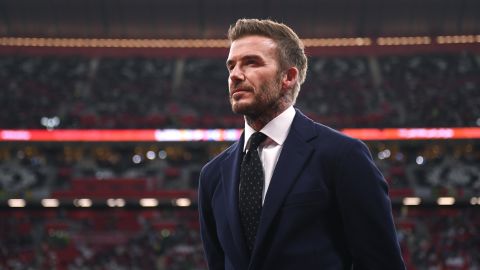
Beckham’s brand is arguably as recognizable as many multinationals. As well as his ambassadorship with Qatar, Beckham has endorsements with Adidas, the Tudor watch brand and his own whiskey brand, Haig Club. Beckham is also part of the ownership team at MLS soccer club Inter Miami.
“I think when engaging in any form of commercial relationship, but certainly a sponsorship or an endorsement [or] an ambassadorial role, carries with it geopolitical risk,” Simon Chadwick, professor of sport and geopolitical economy at SKEMA Business School, tells CNN Sport.
Ever since it was named in 2010 as the host nation of the 2022 World Cup, Qatar’s human rights record has been in the spotlight – from the death and conditions endured by migrant workers to LGBTQ and women’s rights.
Much of the criticism towards FIFA and Qatar has come from countries more able to freely do so, in Western Europe and North America, but only a fraction of the tournament’s sponsors are headquartered in these regions.
Brands associated with these countries, such as Adidas or McDonald’s, have consumer bases all around the world, encompassing consumers with varying freedoms to criticize human rights issues.
“When the marketing teams within these big global brands are looking at the split of their customer base, ethical consumers in Western Europe or in North America, as an example, only form a part of that. And they would have gone into the tournament knowing that,” Ben Peppi, head of sports services at JMW Solicitors, tells CNN Sport.
FIFA’s shift towards companies based outside of Western Europe and North America was accelerated by the exodus of some sponsors following the 2015 corruption scandal involving FIFA, but also reflects the globalization of Asian consumer brands, Peppi adds.
Wanda, a conglomerate based in China, Qatar Airways and Qatar Energy all belong to FIFA’s top tier of sponsors and are unlikely to be balancing the same brand perception dilemmas as their Western counterparts.
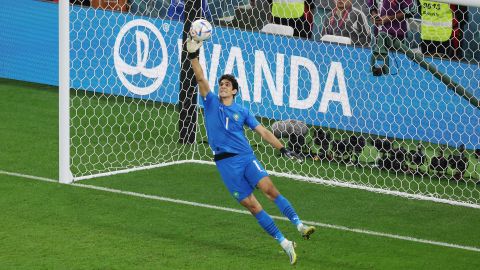
As Chadwick points out, Qatar Airways is state owned and “not going to start engaging in a consumer activism campaign against its own government.”
The four Chinese brands that sponsor the tournament – Wanda, Vivo, Mengniu Dairy and Hisense – are unlikely to take a particularly strident activist stance on an issue such as LGBTQ rights since that “turns a spotlight on China,” Chadwick adds.
Some brands, however, have addressed the human rights issues surrounding Qatar 2022. Denmark’s kit manufacturer Hummel provided the team with “toned down” kits in response to the alleged human rights violations that have occurred in Qatar, although FIFA later forbade the Danish national team from wearing these shirts at the World Cup.
Meanwhile, German supermarket chain Rewe ended its partnership with the German Football Association after FIFA’s decision to punish players wearing “OneLove” armbands that aimed to promote inclusivity.
But aside from these examples – notably taken by national team sponsors rather than tournament sponsors – companies have remained relatively quiet during this month-long competition, one of the biggest, most lucrative events in sport.
FIFA divides its tournament sponsors into three tiers – “partners” composed of Coca-Cola, Adidas, Visa, Wanda, Qatar Airways, Qatar Energy and Hyundai Kia; “World Cup sponsors,” including Budweiser, McDonald’s, Mengniu Dairy and Hisense; and “regional supporters.”
“The reality is, a lot of [FIFA’s partners] have stayed very quiet,” Peppi says.
“The FIFA World Cup is one of the most valuable pieces of intellectual property within sport, if not the most valuable and, as a result of that, is very tightly controlled and governed,” Peppi adds.
In July, three human rights organizations – Amnesty International, Human Rights Watch and Fair Square – wrote to FIFA’s 14 corporate partners and World Cup sponsors “urging them to call on the football body to remedy abuses of migrant workers linked to preparations for the World Cup.”
It is difficult to verify how many migrant workers have died as a result of work done on projects connected to the tournament.
The Guardian reported last year that 6,500 South Asian migrant workers have died in Qatar since the country was awarded the World Cup in 2010, most of whom were involved in low-wage, dangerous labor, often undertaken in extreme heat.
The report did not connect all 6,500 deaths with World Cup infrastructure projects and has not been independently verified by CNN.
In an interview with Piers Morgan, which aired on TalkTV in November, Hassan Al-Thawadi, Secretary General of the Supreme Committee, an organization charged with organizing the World Cup, said that between 400 and 500 migrant workers have died as a result of work done on projects connected to the tournament – a greater figure than Qatari officials have cited previously.
Al-Thawadi said in the same interview that three migrant workers had died in incidents directly connected with construction of World Cup stadiums, and 37 deaths were attributed to other reasons.
According to Amnesty, four sponsors – AB InBev/Budweiser, Adidas, Coca-Cola, and McDonald’s – stated their support for financial compensation to migrant workers and their families who suffered death or injury, wage theft or debt from illegal recruitment while preparing the tournament.
The other 10, Amnesty says, did not respond to written requests to discuss tournament-related abuses.
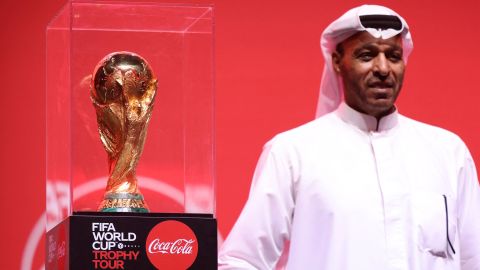
CNN has reached out to McDonald’s, Hyundai, Visa, Budweiser, Qatar Airways, Wanda and Vivo for comment as to how they balance these sponsorship campaigns in relation to the discussion of human rights’ issues surrounding Qatar 2022, but at the time of publication had not yet received a response.
However, Adidas told CNN that it had “been engaged with partners – including the Qatari government, the Supreme Committee for the delivery of the World Cup, the International Labor Organization (ILO), international human rights and labor advocacy groups, and trade unions – to improve the human rights situation. The progress achieved includes the establishment of an independent ILO office as a local monitoring body, strengthening the rights of migrant workers and a national minimum wage.”
Coca-Cola said in a statement to CNN that “it has played an instrumental role in the creation of the FIFA Human Rights Advisory Board, the first such entity created by a global sports governing body.”
“Today, we continue to work with FIFA and the Supreme Committee for Delivery and Legacy to build on Qatar’s development of a regulatory and remedy framework for the protection of migrant worker rights…While these efforts have been groundbreaking, we recognize that more can be done to ensure respect for the human rights of all workers involved in the Qatar World Cup, including providing effective remedy to those who are unable to access avenues for redress.”
Former England captain David Beckham is another ex-player who has performed an ambassadorial role for Qatar 2022. Beckham’s association with this World Cup was brutally put under the spotlight by British comedian Joe Lycett, who last month challenged the widely held assumption that the former England captain was an LGBTQ ally.
“Beckham was the commercialization of late 20th century sports personified. If he was doing then what he’s doing now, I would be concerned about the value of his brand but … now, he’s a sports entrepreneur, and his brand is not consumer brands,” Chadwick says.
“He’s trying to market himself to decision makers and financiers who are involved in elite professional sport around the world. What he’s interested in is making sure that his [Inter Miami] franchise in the United States is financially sustainable.”
Beckham’s spokesperson told CNN via a statement Friday that: “David has been involved in a number of World Cups and other major international tournaments both as a player and an ambassador and he’s always believed that sport has the power to be a force for good in the world.”
“We hope that these conversations will lead to greater understanding and empathy towards all people and that progress will be achieved.”
Some brands sponsoring the Qatar World Cup drape their logos in rainbow flags and run inclusive campaigns during Pride Month – when LGTBQ communities celebrate the freedom to be themselves – as a show of support towards LGBTQ people.

Coca-Cola was an official sponsor of London and Brighton Pride 2022. Earlier this year, the Visa Everywhere Initiative LGBTQ+ Special Edition Competition recognized LGBTQ+ founders transforming the FinTech Industry.
Adidas has produced rainbow clothing ranges for Pride; McDonald’s has committed itself to “supporting and championing the LGBTQ+ community during Pride and beyond”; Budweiser has produced Pride cups; while Hyundai-Kia said in an advert that it supports “the journey of the LGBTQ+ community. Not just during Pride Month, but 365 days a year.”
Adidas said in a statement to CNN that: “We have strongly advocated for unrestricted access for all visitors regardless of nationality, religion, sexual orientation or ethnic background. We expect the World Cup to be fully accessible to all visitors. If there are any infringements, we are pursuing the matter.”
Coca-Cola said in a statement to CNN that it strives for “diversity, inclusion and equality in our business, and we support these rights throughout society as well. Our experience has shown that change takes time and must be achieved through sustained collaboration and active involvement. We have long supported the LGBTQI+ community, and we will continue our work to respectfully advocate for our values through our policies and practices throughout the world.”
Although human rights issues have dominated much of this tournament, the sport itself has not been overshadowed.
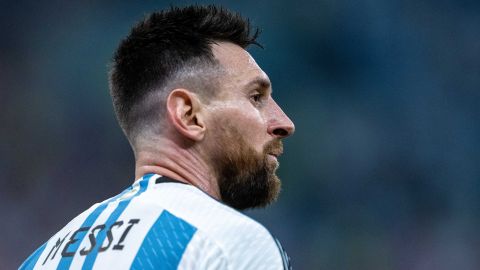
FIFA says that this World Cup has drawn in a record-breaking television audience, captivated by the storylines that have unfolded on the pitch, from Saudi Arabia’s shock victory over Argentina and Messi’s quest for a World Cup trophy, to Morocco’s historic run to the semifinals.
“The core product is the football,” Chadwick says. “And so I think they [companies] will see that as the easy way out.”
With this enormous audience, Adidas expects World Cup sales of around €400 million ($421million), a company spokesperson told Reuters.
Meanwhile, McDonald’s launched its “largest global marketing campaign ever,” to coincide with the 2022 World Cup, its Global Chief Marketing Officer said in a statement.
And on the day the World Cup began, FIFA announced it had “sold out all sponsorship tiers” and that the tournament would be backed by a “full quota of Partners, Sponsors and Regional Supporters.”
Aside from Budweiser, which made headlines two days before the tournament began when FIFA confirmed that no alcohol would be sold inside stadiums, brands associated with FIFA have maintained a relatively low profile throughout the World Cup.
With this World Cup nearing its grand finale, the brands betting on its success will be focusing on the football and after two consecutive tournament posing geopolitical challenges for global brands to navigate, the association with the product on the pitch seems to be enough, for now, to override the controversies off it.

