Hospitals and health care facilities should drop mask requirements, medical experts say

Hospitals and health care facilities should drop mask requirements, medical experts say

Even after mask mandates were dropped across the country amid dwindling COVID-19 cases and deaths, face coverings have still been required in many doctors’ offices, hospitals and other health care settings.

Now, a group of esteemed medical experts is calling for a change.

In an April 18 journal entry in the Annals of Internal Medicine, an academic medical journal, several physicians — including infectious disease specialists — wrote that it’s time to remove masking requirements in health care facilities.

“While critically important in the earlier phases of the pandemic, we’ve entered a more stable phase, with substantial population-level immunity, durable protection against severe disease, a series of less virulent variants, and other important and favorable changes,” said corresponding author Erica S. Shenoy, M.D., PhD, in a press release. 

FACE MASKS MADE ‘LITTLE TO NO DIFFERENCE’ IN PREVENTING SPREAD OF COVID, SCIENTIFIC REVIEW FINDS

She is the medical director of infection control for Mass General Brigham and an infectious diseases physician at Massachusetts General Hospital in Boston. 

“As conditions change, we need to re-evaluate our infection prevention policies, including masking requirements in health care settings, and adapt,” she added.
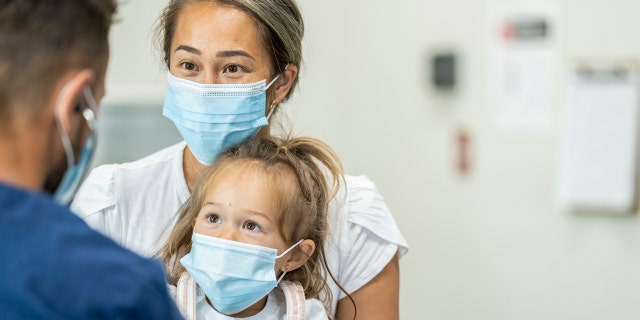
Patients in masks

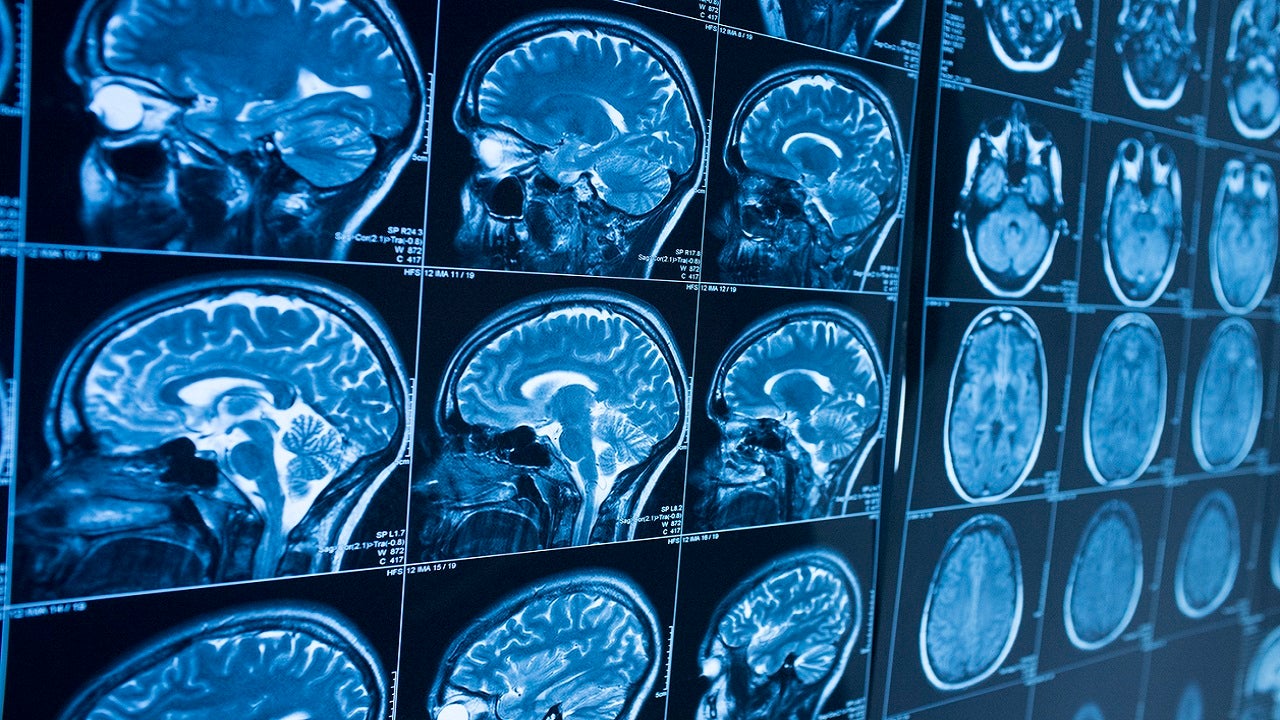
Even after mask mandates were dropped across the country amid dwindling COVID-19 cases and deaths, face coverings have still been required in many doctors’ offices, hospitals and other health care settings. Now, a group of doctors is calling for this to end.  (iStock)

Other contributing physicians came from Harvard Medical School, Washington University School of Medicine, University of Iowa College of Medicine, Dartmouth Hitchcock Medical Center, Tufts University School of Medicine and Trinity Health Michigan. 

“Masking requirements in health care have continued longer than in the community because these settings have a higher proportion of individuals at high risk for complications of infection,” the authors wrote in the journal entry.

“However, the context and conditions of the pandemic have changed dramatically and favorably since masking requirements in health care were initially adopted, and evidence-based public health policy should also adapt in response.”

‘Makes complete sense’

Dr. Marc Siegel, a professor of medicine at NYU Langone Medical and a Fox News contributor, agreed with the decision.

“It makes complete sense to remove the universal mask requirements for medical centers — and NYU did it weeks ago,” he told Fox News Digital. “It hasn’t made sense for a while.”

“We should adapt mask policies to reflect this new reality.”

Dr. Shana Johnson, a physical medicine and rehabilitation physician in Scottsdale, Arizona, reviewed the doctors’ recommendations.

“As we transition to the place where SARS-CoV-2 is a constant and stable presence in our community, we should adapt mask policies to reflect this new reality,” she told Fox News Digital. 

Weighing costs, benefits

In the journal entry, the authors pointed out that masking in health care settings was appropriate early in the pandemic as a means of limiting spread among medical personnel, patients and visitors.

Photo shows piles of face masks, including surgical masks and N95 masks

Dr. Marc Siegel of New York City said he continues to wear a KN95 or N95 mask in the room with most patients, especially those with respiratory symptoms. He said, however, that it “makes complete sense to remove the universal mask requirements for medical centers.” (iStock)

But as the population has achieved greater immunity and COVID has entered a “more stable phase” — and as public health agencies and the U.S. government have declared that the public health emergency is over — the physicians stated in the findings that the small benefits of continuing to require masks don’t justify the costs.

“Masks do have downsides, such as impaired communication and disrupted human connection.”

“After three years of universal masking in health care, the risk-benefit calculation has shifted,” said Shira Doron, M.D., chief infection control officer for Tufts Medicine health system and hospital epidemiologist at Tufts Medical Center, in the press release announcing the paper. 

“Masks do have downsides, such as impaired communication and disrupted human connection.  We are at a stage of the pandemic where it now makes sense to end mandatory masking,” she added.

PARENTS NOW QUESTION WHETHER COVID MASK MANDATES DID MORE HARM THAN GOOD

Among the drawbacks of masks, the study authors cited an “increased cognitive load” for doctors who are trying to listen to patients wearing face coverings. 

This is particularly difficult for patients who do not speak fluent English or who are hard of hearing, they added.

“Masks obscure facial expression; contribute to feelings of isolation; and negatively impact human connection, trust and perception of empathy,” the authors wrote.

“Masking is not without its downsides,” Dr. Johnson said. “Masks make it more difficult to hear, understand and communicate with your provider. Some choice makes sense.”

‘Standard precautions’ should be used

In lieu of universal masking, the study authors suggested that health care settings should follow “Standard Precautions and Transmission-Based Precautions,” as outlined by the Centers for Disease Control and Prevention (CDC).
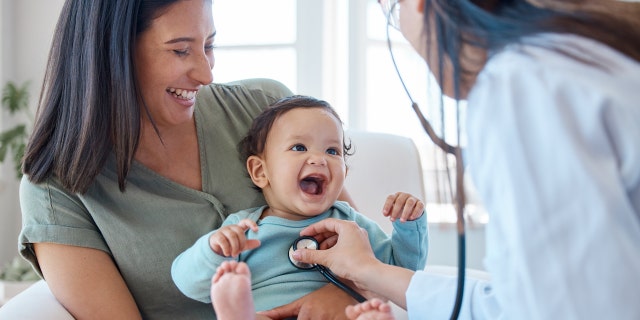
Patients without masks

“Masks obscure facial expression; contribute to feelings of isolation; and negatively impact human connection, trust and perception of empathy,” the authors wrote. (iStock)

Health care personnel should wear masks to prevent exposure as needed, according to those guidelines. 

Also, any people with respiratory symptoms (namely, coughing or sneezing) should use a face covering.

Additionally, if a medical worker is “caring for patients with suspected or confirmed respiratory infection, they should use personal protective equipment and other interventions.”

Rather than having universal masking requirements, Dr. Siegel believes the decision should be “based on individual risk.”

“Universal masking in health care is a policy whose time has come and gone … for now.”

“It should be reserved for patients who are immunocompromised or severely or chronically ill or the doctors that care for them,” he told Fox News Digital. “Patients who are acutely ill and those with chronic lung problems should continue to wear masks.”

The doctor said he continues to wear a KN95 or N95 mask in the room with most patients, especially those with respiratory symptoms.

“Certain health care settings with high-risk patients could still choose to use universal masking, but it would not be required in other areas of normal risk,” added Dr. Johnson.

Reconsidering other early-pandemic precautions

Along with dropping mask requirements in health care settings, the physicians wrote that other protocols should be reconsidered.

COVID testing

The doctors wrote that in addition to universal masking, other early pandemic strategies, such as asymptomatic testing and contact tracing, should also be reconsidered. (AP)

“Moving away from universal masking policies should be accompanied by reconsideration of other pandemic-era strategies (for example, asymptomatic testing, resource-intensive contact tracing), which similarly have experienced a shift in their risk-benefit balance over the course of the pandemic,” they stated in the discussion.

Potential for masking to return

The latest commentary doesn’t mean that masking policies won’t return sometime in the future, the physicians noted.

“Future pandemics or significant localized outbreaks may justify more widespread or targeted masking policies, respectively, as part of a bundled response,” they wrote, noting that it’s important to educate health care personnel and patients as policies change.

COVID-19’S LASTING IMPACT: ‘LESS ATTRACTIVE’ PEOPLE WEAR MASKS MORE OFTEN THAN OTHERS, STUDY FINDS

“Change and adaptation are expected,” said senior author Dr. Westyn Branch-Elliman, an infectious diseases specialist and clinical investigator at VA Boston Healthcare System. 

“That does not mean ‘the science has changed,’ but almost everything around it has.”

The doctors called for “focused research” to “ensure requirements are not maintained longer than necessary and are reinstated when needed.”

Additionally, the authors noted that the Healthcare Infection Control Practices Advisory Committee (HICPAC) at the Centers for Disease Control and Prevention (CDC) “is currently reevaluating existing approaches to Transmission-Based Precautions, which is likely to inform future considerations for health care transmission mitigation strategies.”
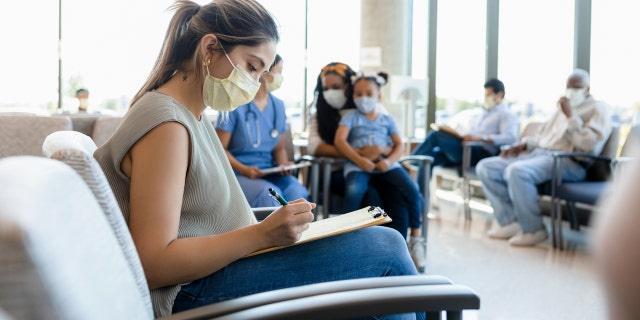
Hospital waiting room

The authors pointed out that masking in health care settings was appropriate early in the pandemic as a means of limiting spread among medical personnel, patients and visitors. Now, however, they said that “universal masking in health care is a policy whose time has come and gone … for now.” (iStock)

“The time has come to de-implement policies that are not appropriate for an endemic pathogen when the expected benefits of such policies are low,” they concluded. 

“Universal masking in health care is a policy whose time has come and gone … for now.”

CLICK HERE TO SIGN UP FOR OUR HEALTH NEWSLETTER

COVID cases and deaths continue to decline. 

As of April 19, the CDC reported 94,142 weekly deaths in the U.S., down from a peak of 5.5 million in January 2022. 

Weekly deaths from COVID were down to 1,160; the highest count was 23,629 in January 2021.

CLICK HERE TO GET THE FOX NEWS APP

The World Health Organization released updated masking guidelines in January 2023. 

Despite the decreasing COVID numbers, the agency stated that “masks are recommended following a recent exposure to COVID-19, when someone has or suspects they have COVID-19, when someone is at high risk of severe COVID-19, and for anyone in a crowded, enclosed or poorly ventilated space.”
Adults with Down syndrome face a health care system that often treats them as kids

Adults with Down syndrome face a health care system that often treats them as kids

MONTROSE, Mo. — It took Samantha Lesmeister’s spouse and children 4 months to locate a medical qualified who could see that she was struggling with a little something much more than her Down syndrome.

The youthful lady, identified as Sammee, had become unusually unfortunate and lethargic just after falling in the shower and hitting her head. She misplaced her minimal skill to talk, stopped laughing, and no extended preferred to go away the home.

Typical-observe physicians and a neurologist said this sort of mental deterioration was regular for a human being with Down syndrome getting into adulthood, recalled her mother, Marilyn Lesmeister. They reported nothing at all could be performed.

The family members didn’t purchase it.

Marilyn researched on-line and uncovered the University of Kansas Health and fitness Process has a exclusive medical clinic for grown ups with Down syndrome. Most other Down syndrome programs nationwide target on kids, even although a lot of individuals with the problem now stay into center age and normally acquire health problems typically associated with seniors. And most of the clinics that focus on grownups are in city locations, building access hard for a lot of rural clients.

The clinic Marilyn discovered is in Kansas City, Kansas, 80 miles northwest of the family’s cattle farm in central Missouri. She manufactured an appointment for her daughter and drove up.

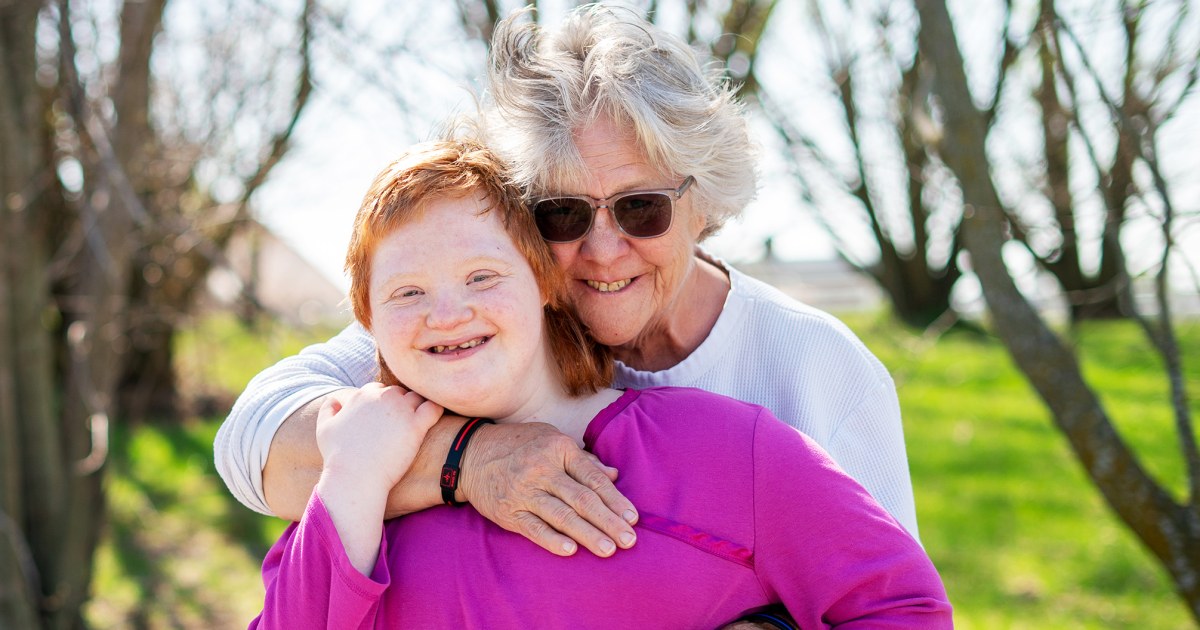
Samantha “Sammee” Lesmeister
Sammee with instructors Rike Mueller, still left, and Samantha Richardson at Try to remember to Desire, a therapeutic riding heart in Cole Camp, Mo.Christopher Smith for KFF Health and fitness Information

The program’s leader, nurse practitioner Moya Peterson, carefully examined Sammee Lesmeister and requested a lot more checks.

“She reassured me that, ‘Mom, you are right. Something’s completely wrong with your daughter,’” Marilyn Lesmeister explained.

With the support of a next neurologist, Peterson determined Sammee Lesmeister experienced experienced a traumatic brain injuries when she strike her head. Given that that diagnosis about nine yrs in the past, she has regained a great deal of her strength and spirit with the assistance of therapy and steady support.

Sammee, 26, can all over again converse a several words and phrases, like “hi,” “bye,” and “love you.” She smiles and laughs. She likes to go out into her rural local community, the place she helps pick out meals at dining establishments, attends horse-riding sessions at a secure, and folds linens at a nursing household.

Without Peterson’s insight and encouragement, the relatives probable would have presented up on Sammee’s recovery. “She possibly would have ongoing to wither in herself,” her mother stated. “I think she would have been a stay-at-property individual and a recluse.”

“A entire diverse ballgame”

The Lesmeisters want Peterson’s software was not this sort of a rarity. A listing posted by the Global Down Syndrome Foundation lists just 15 health care applications nationwide that are housed outdoors of children’s hospitals and that take Down syndrome clients who are 30 or older.

The United States experienced about 3 situations as several older people with the situation by 2016 as it did in 1970. Which is generally since youngsters born with it are no lengthier denied lifesaving care, like surgical procedures to proper birth defects.

Grown ups with Down syndrome usually create serious wellness troubles, these as serious sleep apnea, digestive issues, thyroid circumstances, and being overweight. A lot of acquire Alzheimer’s disease in middle age. Researchers suspect this is relevant to more copies of genes that cause overproduction of proteins, which construct up in the brain.

“Taking care of young ones is a total distinct ballgame from having care of older people,” mentioned Peterson, the College of Kansas nurse practitioner.

Sammee Lesmeister is an case in point of the development towards extended lifetime spans. If she’d been born two generations back, she likely would have died in childhood.

Samantha “Sammee” Lesmeister
Marilyn Lesmeister and her daughter Sammee. Christopher Smith for KFF Well being Information

She experienced a hole in a wall of her heart, as do about fifty percent of babies with Down syndrome. Surgeons can repair those people dangerous defects, but in the earlier, medical practitioners recommended most people to forgo the functions, or explained the youngsters did not qualify. A lot of people today with Down syndrome also had been denied care for major respiration concerns, digestive complications, or other long-term conditions. People today with disabilities ended up frequently institutionalized. Numerous have been sterilized with out their consent.

Such mistreatment eased from the 1960s into the 1980s, as persons with disabilities stood up for their legal rights, healthcare ethics progressed, and courts declared it unlawful to withhold treatment. “Those landmark rulings sealed the offer: Small children with Down syndrome have the suitable to the exact same lifesaving treatment that any other child would are worthy of,” mentioned Brian Skotko, a Harvard University health care geneticist who leads Massachusetts Standard Hospital’s Down Syndrome System.

The median life expectancy for a toddler born in the U.S. with Down syndrome jumped from about 4 years in 1950 to 58 yrs in the 2010s, according to a new report from Skotko and other researchers. In 1950, fewer than 50,000 People ended up dwelling with Down syndrome. By 2017, that selection topped 217,000, together with tens of thousands of persons in center age or outside of.

The populace is predicted to go on increasing, the report suggests. A couple of thousand expecting ladies a 12 months now select abortions following studying they’re carrying fetuses with Down syndrome. But those reductions are offset by the escalating selection of gals starting to be expecting in their late 30s or 40s, when they are extra probably to give beginning to a toddler with Down syndrome.

Skotko reported the clinical method has not retained up with the incredible maximize in the number of adults with Down syndrome. Numerous healthcare students understand about the problem only when training to take care of pediatric sufferers, he stated.

Couple individuals can vacation to specialized clinics like Skotko’s method in Boston. To support individuals who can’t, he started an on the net company, Down Syndrome Clinic to You, which assists households and professional medical practitioners understand the issues and attainable treatment plans.

“If they say it hurts, I pay attention”

Charlotte Woodward, who has Down syndrome, is a prominent advocate for enhanced care. She counts herself between the tens of 1000’s of grown ups with the condition who probably would have died decades ago without the need of appropriate remedy. Woodward, 33, of Fairfax, Virginia, had four heart surgical procedures as a little one and then a coronary heart transplant in her 20s.

Woodward, who is an training plan affiliate for the Countrywide Down Syndrome Society, has campaigned to conclusion discrimination in opposition to individuals with disabilities who have to have organ transplants.

She stated her major treatment doctor is great. But she has felt treated like a youngster by other health treatment suppliers, who have spoken to her parents as an alternative of to her in the course of appointments.

She reported several standard-observe medical practitioners feel to have little awareness about grown ups with Down syndrome. “That’s some thing that should really alter,” she reported. “It shouldn’t just be pediatricians that are knowledgeable of these points.”

Woodward said older people with the ailment need to not be anticipated to request treatment at systems housed in children’s hospitals. She mentioned the place ought to established up far more specialized clinics and finance far more investigate into wellness complications that influence people with disabilities as they age. “This is definitely an challenge of civil rights,” she mentioned.

Advocates and clinicians say it’s very important for wellness treatment companies to talk as much as achievable with clients who have disabilities. That can lead to long appointments, explained Brian Chicoine, a relatives observe physician who leads the Grownup Down Syndrome Heart of Advocate Aurora Wellness in Park Ridge, Illinois, close to Chicago.

“It’s extremely important to us that we include things like the people today with Down syndrome in their care,” he said. “If you’re performing that, you have to get your time. You have to explain points. You have to enable them course of action. You have to permit them solution. All of that will take extra time.”

Time prices dollars, which Peterson thinks is why lots of medical center techniques never set up specialized clinics like the types she and Chicoine operate.

Peterson’s methodical tactic was apparent as she observed new patients on a modern afternoon at her Kansas City clinic. She normally spends an hour on every initial appointment, talking specifically to patients and offering them a likelihood to share their ideas, even if their vocabularies are constrained.

Her clients that day integrated Christopher Yeo, 44, who lives 100 miles absent in the tiny city of Hartford, Kansas. Yeo experienced develop into not able to swallow stable food stuff, and he’d dropped 45 pounds above about 1½ a long time. He complained to his mom, Mandi Nance, that something “tickled” in his upper body.

Nurse practitioner Moya Peterson with Christopher Yeo.
Nurse practitioner Moya Peterson with patient Christopher Yeo.Tony Leys for KFF Health and fitness Information

During his test, he lifted his shirt for Peterson, revealing the scar where he’d experienced coronary heart operation as a baby. He grimaced, pointed to his chest, and regularly explained the term “gas.”

Peterson appeared Yeo in the eye as she asked him and his mom about his soreness.

The nurse practitioner takes severely any this kind of issues from her individuals. “If they say it hurts, I hear,” she explained. “They’re not heading to explain to you about it till it hurts lousy.”

Yeo’s mother experienced taken him to a cardiologist and other specialists, but none had decided what was wrong.

Peterson requested several inquiries. When does Yeo’s distress seem to crop up? Could it be linked to what he eats? How is his slumber? What are his stools like?

Just after his appointment, Peterson referred Yeo to a cardiologist who specializes in adults with congenital heart complications. She ordered a swallowing examination, in which Yeo would drink a particular liquid that appears on scans as it goes down. And she advised a exam for Celiac condition, an autoimmune disorder that interferes with digestion and is frequent in individuals with Down syndrome. No one had formerly told Nance about the threat.

Nance, who is a registered nurse, reported afterward that she has no strategy what the future retains for their household. But she was struck by the patience and notice Peterson and other clinic staff members associates gave to her son. This sort of treatment is uncommon, she mentioned. “I really feel like it’s a godsend. I do,” she mentioned. “I sense like it’s an answered prayer.”

“Like a man or woman, and not a ailment”

Peterson serves as the most important care provider for some of her sufferers with Down syndrome. But for many other individuals, specifically people who dwell considerably away, she is an individual to consult when difficulties arise. That is how the Lesmeisters use her clinic.

Mother Marilyn is optimistic Sammee can live a satisfying life in their community for years to appear. “Some persons have explained I want to set her in a household. And I’m like, ‘What do you signify?’ And they say, ‘You know ― a house,’” she reported. “I’m like, ‘She’s in a home. Our home.’”

Sammee’s sister, who life in Texas, has agreed to get her in when their dad and mom turn into way too outdated to treatment for her.

Marilyn’s voice cracked with emotion as she expressed her gratitude for the enable they have received and her hopes for Sammee’s future.

“I just want her to be taken treatment of and loved like I adore her,” she reported. “I want her to be taken treatment of like a individual, and not a issue.”

KFF Wellbeing News, previously recognized as Kaiser Health Information (KHN), is a nationwide newsroom that generates in-depth journalism about health and fitness issues and is one of the main functioning plans at KFF — the unbiased supply for health and fitness coverage investigate, polling, and journalism.

Follow NBC Well being on Twitter & Fb. 

Artificial intelligence in health care: New product acts as ‘copilot for doctors’

Artificial intelligence in health care: New product acts as ‘copilot for doctors’

America’s healthcare local community appears to be embracing artificial intelligence products in an effort to pace up individual treatment and prevent burnout amongst wellbeing care specialists.

AI engineering is previously rolling out in doctors’ places of work, hospitals and clinics nationwide via a selection of formats. 

California-primarily based Regard has released its AI product, a system that enables medical professionals to automate program responsibilities, in 30 hospitals, its CEO stated.

Artificial INTELLIGENCE Will not Ever BE In a position TO Comprehend THIS One particular Matter

“What we started creating was fundamentally an AI copilot for physicians,” Eli Ben-Joseph, co-founder and CEO of Regard, instructed Fox News.

The company’s software program makes it possible for computer systems to diagnose a patient, guide with doctors’ notes and inform experts when a thing may perhaps have been missed. 

Doctors can automate routine tasks in a number of hospitals, thanks to a California-based company called Regard, which has launched an AI product.

Health professionals can automate plan tasks in a selection of hospitals, many thanks to a California-primarily based company termed Regard, which has introduced an AI products. (iStock)

The organization advised Fox Information that the solution’s ability to streamline workflows may well enable physicians to spend fewer time on paperwork and administrative tasks.

AI AND Coronary heart Health: Machines DO A Far better Career OF Reading ULTRASOUNDS THAN SONOGRAPHERS DO, Says Examine

“We like to say it is nearly like owning an AI med scholar or an AI healthcare resident that allows the doctors with their day-to-working day,” additional Ben-Joseph. 

AI is predicted to mature considerably

The AI healthcare field is predicted to grow significantly in the next many decades.

Regard's software (not pictured) allows computers to diagnose a patient, assist with doctors' notes and alert professionals when something may have been overlooked. 

Regard’s software (not pictured) lets personal computers to diagnose a patient, assist with doctors’ notes and warn professionals when a thing may have been neglected.  (iStock)

The know-how may perhaps help you save U.S. taxpayers hundreds of billions of bucks in health care expenditures on an yearly basis, researchers discovered.

Individual reports, having said that, have indicated that the community continues to be cautious about embracing AI when it will come to health care treatment. 

AI technology may save U.S. taxpayers hundreds of billions of dollars in health care costs on an annual basis, researchers found.

AI technological innovation could conserve U.S. taxpayers hundreds of billions of dollars in health care charges on an annual basis, scientists uncovered. (iStock)

A study posted by Pew Exploration found that 60{515baef3fee8ea94d67a98a2b336e0215adf67d225b0e21a4f5c9b13e8fbd502} of Us citizens would be “uncomfortable” with their wellbeing care companies relying on AI when administering companies.

Simply click Below TO Sign UP FOR OUR Health Publication

Medical gurus informed Fox News they’re not stunned that men and women have reservations about AI remaining tied to their professional medical information and remedies.

Click In this article TO GET THE FOX News App

“Patients merely never belief a machine about a human staying, but they are welcoming of a machine to guide a surgeon or a doctor in making a diagnosis or remedying treatment,” claimed Dr. Marty Makary, a professor of surgical procedures at Johns Hopkins College and a Fox News health-related contributor.

5 best telemedicine apps for virtual health care

5 best telemedicine apps for virtual health care

Since the start of the pandemic, virtual visits with doctors have grown increasingly in popularity. These online visits were originally meant to keep people from contracting COVID-19, but now, many people opt to use telemedicine apps because of convenience and low costs.

Let’s dive in and see if telemedicine is the right option for you and what great apps you can start using today.

SIGN-UP FREE FOR KURT’S CYBERGUY REPORT NEWSLETTER WITH QUICK TIPS, TECH REVIEWS, SECURITY ALERTS AND EASY HOW-TO’S SENT TO YOUR INBOX

Why should I use a telemedicine app?

Telemedicine apps offer lots of benefits that could immensely help people who live in rural areas or those who don’t have great insurance (or even no insurance at all).

For those who live far away from a major town or city and would have a hard time getting to a doctor’s office, telemedicine apps provide convenience by eliminating the need to physically travel, find parking and wait in a crowded waiting room when you’re sick. Instead, you can see a doctor from the comfort of your own home.

There is also the benefit of being able to connect with a specialist from anywhere in the world. If you need to see certain doctors and do not live anywhere near where they’re located, you can simply schedule virtual appointments to meet with them instead.

ARE YOUR STEPS TOTALLY OFF FOR YOUR 2023 FITNESS GOALS?

Saving money is another huge advantage of telemedicine apps, as telemedicine visits are typically less expensive than in-person visits.

Are there disadvantages to using a telemedicine app?

Perhaps the biggest disadvantage of using a telemedicine app is that not every doctor’s visit can be done virtually. Depending on your health needs, some doctors need you to come to their offices so that they can perform bloodwork, imaging tests and other procedures that require hands-on work.

There is also the concern of what your insurance plan covers. Although telemedicine apps often make doctor visits cheaper and most health insurance companies do cover Telehealth costs, there isn’t a guarantee that your insurance will cover everything. It’s a good idea for you to reach out to your health insurance company if you have one and see what they can and cannot cover before making an appointment.

The other risk is security. Because everything with telemedicine apps gets transferred digitally, there’s always a risk of your information getting hacked by the wrong person. Make sure that the app you’re using has good security measures and that the device you’re using for your virtual appointments has antivirus software installed.

What are some of the best telemedicine apps available?

Now that we’ve gone over the pros and cons of using a telemedicine app, here are five of the best ones that can be used both on iPhones and Androids.

1. Teladoc

iPhone: 4.8 stars (at the time of publishing) 

Android: 4.0 stars (at the time of publishing) 

Teladoc offers virtual consultations with doctors and other health care providers.

Teladoc offers virtual consultations with doctors and other health care providers. (Kurt Knutsson)

Teladoc is a popular telemedicine app that offers virtual consultations with doctors and other health care providers. You can connect with licensed physicians 24/7 for non-emergency medical issues such as colds and the flu, pink eye, sore throats and more. Depending on your coverage, you can also be eligible for programs that help manage conditions like diabetes and high blood pressure. They even offer specialists for mental health needs, nutrition and dermatology.

2. Doctor on Demand

iPhone: 4.9 stars(at the time of publishing) 

Android: 4.8 stars(at the time of publishing) 

Doctor on Demand connects users with physicians, psychiatrists and therapists.

Doctor on Demand connects users with physicians, psychiatrists and therapists. (Kurt Knutsson)

Doctor on Demand is a telemedicine app that connects users with board-certified physicians, psychiatrists and licensed therapists. The app is available 24/7, 365 days per year including weekends and holidays, and consultations are conducted via video chat. They can cover pretty much anything from acne to screenings for high cholesterol and even headaches and migraines. Services through the app are available whether you have insurance or not and they can even partner with many top employers and health plans to reduce the cost of your appointment.

3. Amwell

iPhone: 4.9 stars(at the time of publishing) 

Android: 4.3 stars(at the time of publishing) 

Amwell offers virtual consultations with licensed health care providers.

Amwell offers virtual consultations with licensed health care providers. (Kurt Knutsson)

Amwell is a telemedicine app that offers virtual consultations with licensed health care providers, including doctors, therapists and nutritionists. You can access the app 24/7 and receive care for a variety of non-emergency medical conditions. You can tell them your insurance provider, or if you do not have insurance, they give a list of what each type of visit costs so that you know before committing to an appointment. Depending on your needs, a visit with Amwell can cost anywhere from $70-$269 without insurance. They also stress on their page that the patient’s privacy is taken very seriously and all visits are HIPAA-compliant.

4. MDLIVE

iPhone: 4.7 stars(at the time of publishing) 

Android: 4.7 stars(at the time of publishing) 

MDLIVE provides virtual consultations with physicians and therapists.

MDLIVE provides virtual consultations with physicians and therapists. (Kurt Knutsson)

MDLIVE is a telemedicine app that provides virtual consultations with board-certified physicians and licensed therapists. You can access the app 24/7 and receive care for over 80 non-emergency medical issues, including allergies, COVID-19 assessments and more. They also support a wide variety of mental health issues, including panic disorders, post-traumatic stress disorder (PTSD) and more. MDLIVE is not available in every state, however, it’s a great option if covered in your state.

5. PlushCare

iPhone: 4.9 stars(at the time of publishing) 

Android: 4.6 stars(at the time of publishing) 

PlushCare boasts hundreds of thousands of users, as well as physicians from top U.S. medical schools.

PlushCare boasts hundreds of thousands of users, as well as physicians from top U.S. medical schools. (Kurt Knutsson)

PlushCare has over 300,000 users, and its physicians come from the top 50 U.S. medical schools. According to their app’s page, 97{515baef3fee8ea94d67a98a2b336e0215adf67d225b0e21a4f5c9b13e8fbd502} of conditions are treated on the first visit and if the online doctor is unable to treat you, the appointment is free. They offer virtual primary care for ongoing conditions and virtual urgent care for non-emergency conditions. They can also prescribe a wide variety of medicines.

SLEEP BETTER TONIGHT WITH THESE TOP-RATED APPS AND ACCESSORIES

Final thoughts

Telemedicine apps have become increasingly popular since the start of the pandemic, providing convenience and cost savings. However, not every doctor’s visit can be done virtually, and insurance coverage can vary. Additionally, security risks should be considered when using these apps.

Have you tried these telemedicine apps yet? Let us know how they work for you.

CLICK HERE TO GET THE FOX NEWS APP

For more of my tips, subscribe to my free CyberGuy Report Newsletter by clicking the “Free newsletter” link at the top of my website.

Copyright 2023 CyberGuy.com. All rights reserved.  

Less staff, longer delays and fewer options: Rural America confronts a health care crisis

Less staff, longer delays and fewer options: Rural America confronts a health care crisis

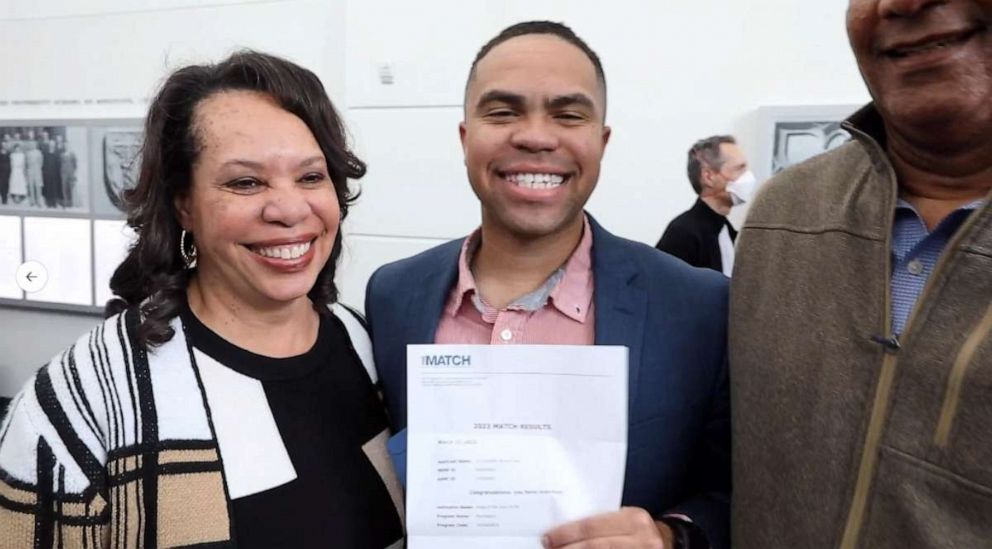
A lot more than 40,000 graduating medical learners uncovered Friday exactly where they will expend the next three to 7 years of their health care training.

With the United States grappling with a simultaneous scarcity of primary care doctors and a rural well being treatment disaster, quite a few of the graduating pupils are established to enter the front traces of the country’s overall health treatment shortage.

At minimum 136 rural hospitals and health units closed amongst 2010 and 2021, and over 40{515baef3fee8ea94d67a98a2b336e0215adf67d225b0e21a4f5c9b13e8fbd502} of rural hospitals operate with unfavorable financial gain margins. Inspite of billions of bucks in investment in health treatment, hospitals through the United States encounter the probability of shutting down.

“I would say it is most likely the worst time for health treatment that we ever seasoned,” Joanne Conroy, the chief govt officer and president of Dartmouth Well being, told ABC Information. She mentioned that improved costs, inflation, limited housing, and workforce shortages have designed working rural hospitals more tough.

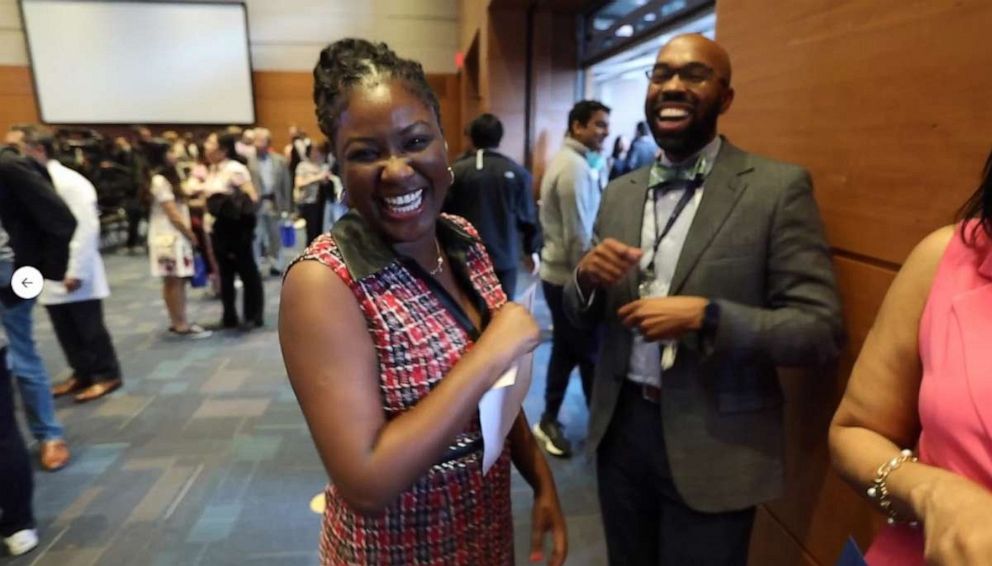
PHOTO: Duke students express joy on Match Day learning where they would spend the next three to seven years for their residency program.

Duke pupils convey pleasure on Match Day studying where by they would invest the future a few to 7 a long time for their residency system.

Duke University University of Drugs

“We know what to do if we deal with one more pandemic,” Conroy explained. “The problem is no matter if or not we have the monetary resilience in buy to endure it.”

Lots of hospitals that remain open up have reduce costs to endure, offering less services and beds.

In 2020, 47{515baef3fee8ea94d67a98a2b336e0215adf67d225b0e21a4f5c9b13e8fbd502} of rural community hospitals did not offer obstetric expert services, with 89 obstetric units closing involving 2015 and 2019. Seven million women reside in counties with limited or no access to maternity care, impacting fifty percent a million newborns every year.

According to Conroy, patients can currently experience the impression of the crisis, noting that some girls in New Hampshire will need to drive two hours to deliver their infants. Other effects consist of less out there beds in emergency rooms, delays for elective surgical treatment and for a longer time wait around periods for prescriptions or ambulance pickups.

For new healthcare industry experts moving into their residency, especially those people joining rural systems, the instances of the battling wellness devices are out of their regulate.

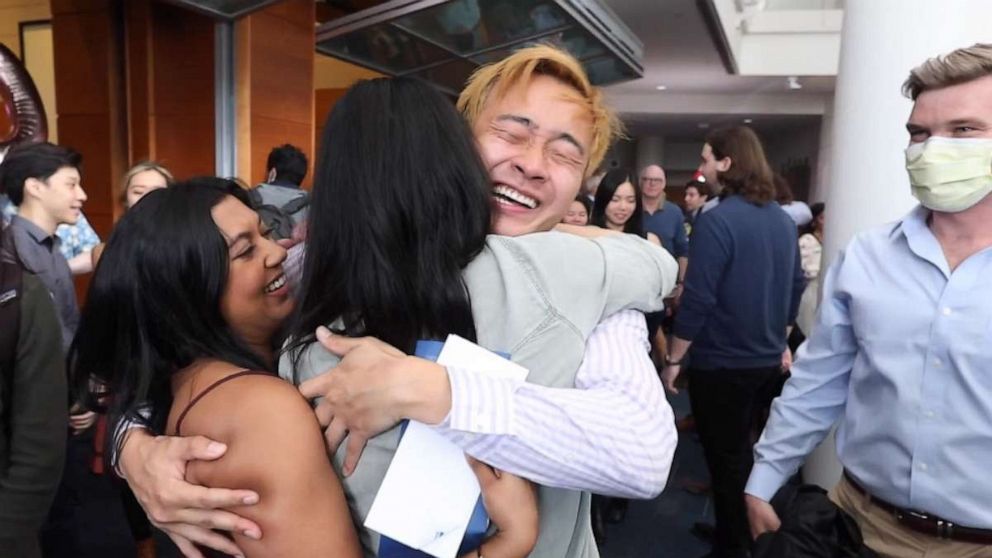
PHOTO: Duke students express joy on Match Day learning where they would spend the next three to seven years for their residency program.

Duke pupils express pleasure on Match Working day learning exactly where they would spend the future a few to 7 yrs for their residency system.

Duke University School of Drugs

“It is not my task to fix all of the issues for an full local community, which is extremely hard. When you experience like that is your duty, burnout is essentially inescapable,” reported Katie Stevenson, a Tufts medical university student. “When you truly feel like your goal is to do the most effective you can with the sources you have, you are in a position to suitable-dimensions your anticipations a little bit.”

An rising amount of college students are coming into clinical school programs that aim on rural medication. In 2019, the Overall health Methods and Products and services Administration issued grants to build 32 recently accredited rural residency packages, supplementing the preexisting systems.

This 12 months, Tufts College of Medication will graduate its tenth class of students from its Maine Keep track of MD application – a partnership with Maine Clinical Heart that makes it possible for pupils to pursue a community-dependent curriculum and attain money incentives to inspire principal-care specialties.

STOCK PHOTO: A teacher gestures as she lectures a class of college students.

A teacher gestures as she lectures a class of college college students.

Inventory Image/Getty Photos

Graduating approximately 40 learners per year, 27{515baef3fee8ea94d67a98a2b336e0215adf67d225b0e21a4f5c9b13e8fbd502} of Maine Keep track of pupils have been matched to courses in Maine and 47{515baef3fee8ea94d67a98a2b336e0215adf67d225b0e21a4f5c9b13e8fbd502} have been matched into major treatment systems, according to Dena Whitesell, an assistant dean for college students at Tufts and psychiatrist at Maine Medical Center.

“We know that students and inhabitants who are living in an spot [and] who train in an space are more likely to exercise in that region in the upcoming,” Whitesell mentioned.

Liv Fauver, a Tufts university student who matched with a University of Vermont residency plan, grew up in rural New Hampshire and stated she felt determined to get the job done in a related group where she could positively impact the neighborhood people.

“I assume for me, my purpose is to are living and do the job in the local community that I serve,” she mentioned. “So I’m truly in a place where by I go home or go to the grocery store and see my sufferers all the time, since that’s the earth that I reside in and perform in.”

Even though rural hospitals have closed in history numbers, PCPs – professional medical experts who individuals frequently use for checkups and other routine treatment – confront more worries, especially in rural places, according to specialists.

Greg Sawin, a PCP who has practiced in Massachusetts and Maine as well as Duke University College of Medicine professor, mentioned he concerns that the objectives of primary and long-phrase preventative treatment can occasionally be at odds with greater health care programs.

“We get paid to do issues to persons. We do not get paid out to retain populations healthful,” he reported.

Moreover, he thinks the prices connected with medical faculties – like the significant price, the probability of incurring personal debt and substantially higher pay to go after competitive specialties like orthopedic operation or dermatology, for case in point – disincentivize most important care solutions like relatives or inner medication.

PHOTO: Duke students express joy on Match Day learning where they would spend the next three to seven years for their residency program.

Duke pupils specific joy on Match Working day studying where by they would spend the next 3 to seven yrs for their residency software.

Duke University Faculty of Medicine

“It can be quite captivating to want to go into a specialty where you’re guaranteed to make far more money and spend that financial debt off more easily,” Stevenson mentioned.

Owen Foster lives in rural Vermont and has felt the effects of the diminished selection of out there PCPs, spending 6 months to e book an appointment with a health practitioner. Living in a rural area, Foster shares his predicament with thousands and thousands of People in rural regions impacted by the lack of PCPs.

“You require simple things at particular intervals in your existence,” he informed ABC Information. “If you don’t have a main treatment company, you can’t get that and you won’t be able to get the referrals you want, so it is really, really tough.”

What tends to make Foster’s experience unique is his position as the point out of Vermont’s top rated health and fitness care regulator. As chair of Vermont’s Eco-friendly Mountain Treatment Board, he oversees the good quality and price tag of the state’s health and fitness treatment program.

Learning about the scarcity of main-care doctors in Vermont, Foster resolved to use the prospect to find a PCP as a probability to take a look at the market as a “solution shopper.”

PHOTO: Duke students express joy on Match Day learning where they would spend the next three to seven years for their residency program.

Duke pupils specific joy on Match Working day learning where they would commit the upcoming 3 to 7 decades for their residency method.

Duke University Faculty of Drugs

“What I observed was I was completely incapable of receiving a health care provider,” he reported. “I termed 8 locations and the very best I bought was on an indefinite hold out listing, which never ever arrived to fruition.”

Rural parts comprise about two-thirds of the major care wellbeing skilled scarcity parts nationwide, even even though only 20{515baef3fee8ea94d67a98a2b336e0215adf67d225b0e21a4f5c9b13e8fbd502} of Us citizens reside in rural locations.

The issue is also most likely to worsen about time. Projections indicate that the United States will most likely undergo a lack of involving 17,800 and 48,000 PCPs by 2034.

Furthermore, well being care industry experts think that the lack of PCPs can make other components of health and fitness treatment extra expensive and worsen general patient results. Sawin gave the example of a human being getting strep throat. Without a PCP, the individual may go to a area hospital unexpected emergency area, which is substantially additional high priced than other remedy solutions.

“In phrases of mismatch of assets, you know, a child with strep throat demonstrating up in the ER is like reducing butter with a chainsaw,” Sawin claimed.

Foster additional that main treatment providers are “vital to managing the costs of a health care method” because of to their role in the early identification of challenges, their capability to diagnose mental health challenges, and their method to preventative medication.

According to Foster, PCPs in rural locations, nonetheless, battle to discover and keep staff members, negotiate with insurance policies providers and stop burnout. The shortage of PCPs, combined with the improved well being care requirements of the more mature inhabitants in rural areas, produces a about combination.

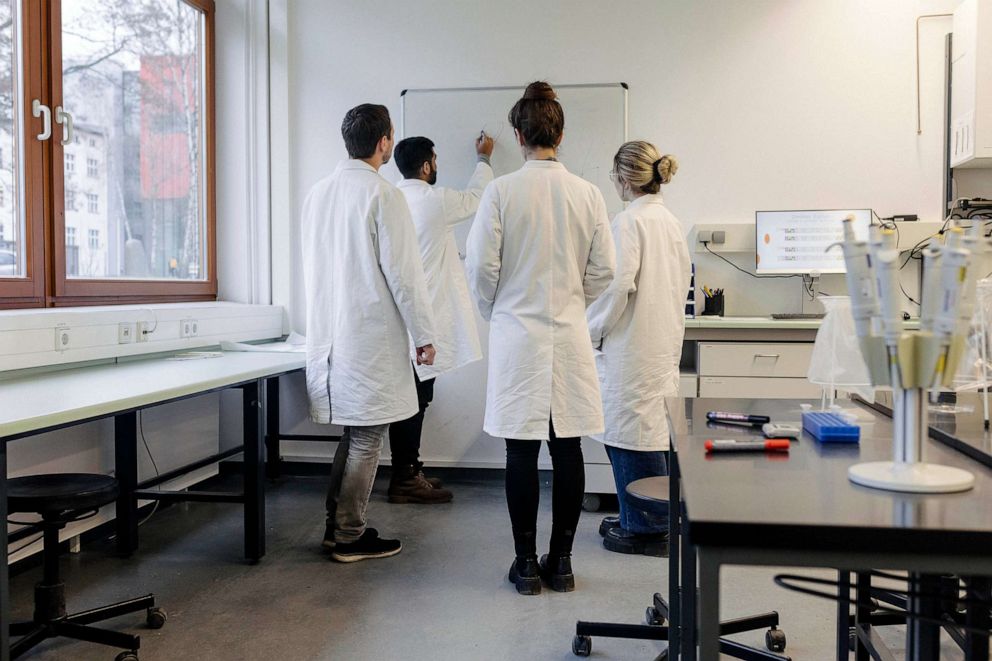
STOCK PHOTO: A group of medical students discussing some work while huddled around a whiteboard at the lab together.

A group of healthcare learners discussing some function whilst huddled about a whiteboard at the lab collectively.

Inventory Image/Getty Visuals

Inspite of these troubles, Foster claimed he was optimistic about some methods to make principal treatment more fiscally feasible, like incorporating a ground for PCP investing in health strategies and federal government involvement in fee environment.

A new era of students graduating from rural monitor packages also has the opportunity to reverse the tide of the PCP shortage in rural regions, with 571 further principal care matches this 12 months. Stevenson, for illustration, matched with the Swedish Cherry Hill rural software in Washington condition.

“I think we have an possibility in this place to do a substantially improved occupation of having treatment of our individuals if we do a improved position of funding principal care and preventative treatment and generating wholesome environments,” Stevenson stated.

Children languish in emergency rooms awaiting mental health care

Children languish in emergency rooms awaiting mental health care

This story includes discussions of suicide. If you or someone you know is in crisis, you can get help from the Suicide and Crisis lifeline by calling or texting 988.


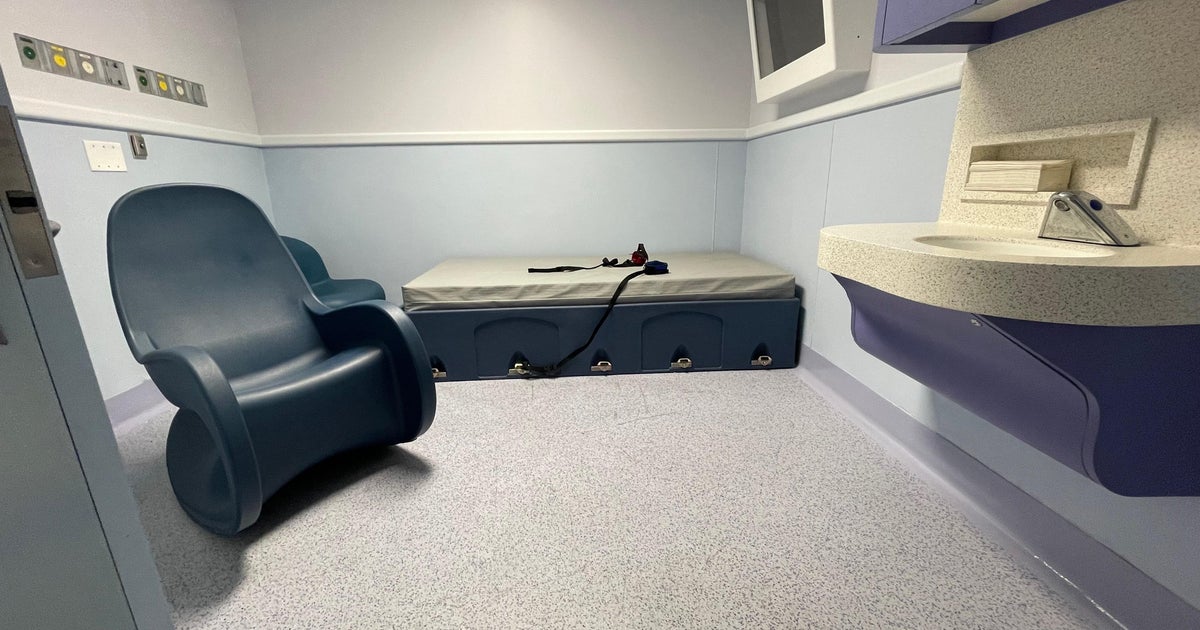
While most kids his age were wrapping up their junior year of high school, Daniel was in a box. 

“It was like I was sitting in a gigantic FedEx box being shipped somewhere,” he said. “But like, add one bed and the door had to be closed at all times.” 

Daniel’s years of mental health struggles, stretching back into his early childhood, came to a head in early 2022. His often-uncontrollable emotional outbursts became unmanageable; he was “unraveling,” his parents said. 

CBS News is only using the first names of former patients interviewed for this story to protect their privacy. 

Fearing Daniel might harm himself, his parents took him to the only place they could: the emergency room. After seven days in the ER, Daniel was discharged; hospital staff felt he was no longer in danger. His parents disagreed.  

“We were like no, no, no, he is so not ready,” his mom Kathe said. “We’ve been waiting and waiting, but he is not ready.” 

Daniel’s therapist even wrote a letter to the hospital saying he wasn’t ready to be released. But the hospital said he needed to go home.  

Ten days later, he was back in the ER — this time at another nearby hospital, where he would stay for 19 days.  

“There’s barely any room in the [hospital] room to walk around,” Daniel, now 18, said. “So I was just sitting on my bed all of the time. I had some rough times there, like it was really difficult to, like, stay put, you know, and that’s what they expected [me] to do.”

Read more: Inside America’s youth mental health crisis 

Instead of the intensive mental health care he needed, Daniel said he got very little help while in the room.  

“Dan, rightfully so, he was like, what am I doing here?” Kathe said. “This is not help. You promised help. Where’s the help?” 

“Severe shortage”

Stories similar to Daniel’s are growing more common in the U.S., fueled by a critical shortage of doctors, therapists and resources to address the needs of kids in crisis. 

In Massachusetts, the number of kids landing in ERs for mental health treatment soared 200{515baef3fee8ea94d67a98a2b336e0215adf67d225b0e21a4f5c9b13e8fbd502}-400{515baef3fee8ea94d67a98a2b336e0215adf67d225b0e21a4f5c9b13e8fbd502} during the pandemic. That same trend is reflected across the country: a 2021 study found the number of kids stuck in ERs awaiting treatment tripled between 2019 and 2021. 

“I do think it is very bad,” said Dr. Muniya Khanna, research scientist at Children’s Hospital Philadelphia and a former faculty member at the University of Pennsylvania’s Department of Psychiatry. “Suicide is now the number two leading cause of death in children 10 to 24. And this trajectory is only getting worse after the COVID pandemic. And so, we are absolutely in a crisis.” 

Experts say it’s a demand and supply issue: demand for mental health services has increased after the pandemic and the supply of trained staff hasn’t increased enough to fulfill the needs. 

Forty U.S. states and Puerto Rico all have “severe” shortages of child psychiatrists, according to data from the American Academy of Child and Adolescent Psychiatry (AACAP) analyzed by CBS News. Only the District of Columbia reported having enough child and adolescent psychiatrists to meet AACAP standards.

RELATED: Half of all Texas school districts have no mental health services 

Amid this lack of formal mental health treatment options, ERs have become the last and only option for many families, according to numerous mental health experts interviewed by CBS News.  

“Kids languish for days, weeks, sometimes even over a year in children’s hospitals around the country,” said Zach Zaslow, vice president of advocacy and community health at Children’s Hospital Colorado. “This is not just a Colorado problem, and it happens because there’s nowhere else that’s safe for them to go.” 

In Colorado, Michaela, who grew up in foster homes, told CBS News she tried get a special therapist to address her anger, anxiety and depression nearly a dozen times. 

“I would be crying out for help,” Michaela said. “I would say I need support. And it wouldn’t happen until I came to a point where it was too late to really come back and not make a bad decision that in the end would hurt me.” 

Michaela said she tried to hurt herself, including several suicide attempts, over those years. She said the system in its current form does not do enough for young people until they reach a crisis point. 

“I think it’s really hard to get into a good therapist or just a therapist in general,” Michaela said. “It doesn’t matter if they’re good or bad.”  

Michaela said she had a total of eight ER visits for mental health crises, and often left the ER without seeing a therapist. The few times she did meet with a mental health expert, she said her therapy was cut short. 

“It did cause me to have to go back [to the ER] again like less than a year later just because I didn’t get the help that I needed,” said Michaela. “And I think it was partly because I left too early.”  

Michaela, who is now 20, said she is proud that she’s “beat the odds” and survived. She now sits on a youth advisory board as part of a partnership between the University of Colorado and Children’s Hospital Colorado. 

“It definitely made me feel like all of that pain and suffering that I had to go through wasn’t a waste,” said Michaela. “Because now I can be the voice of power for so many other young people who are stuck in the same situation that I was and give them hope that I didn’t have then.” 

A revolving door at ERs

Experts told CBS News the use of ERs as stopgap mental health treatment measures simply doesn’t work.  

“For anybody who’s been in an emergency department for more than a few hours, it is not an ideal place to be,” said Dr. Kevin Carney, an emergency room physician at Children’s Hospital Colorado.   

Massachusetts General Hospital in Boston, where Daniel stayed for 19 days, acknowledged the problem, saying in a statement to CBS News that “shortages [of proper mental health treatment options] have forced youth in crisis — and their families — to turn to their local emergency departments where ongoing capacity challenges may mean waiting for days or weeks for appropriate inpatient care to become available.” 

For kids in crisis, ER visits can make matters even worse.  

A December 2022 American Academy of Pediatrics study found more than a quarter of children who went to ERs for mental health issues were hospitalized — either in ERs or in mental health facilities — within six months. And about 26.5{515baef3fee8ea94d67a98a2b336e0215adf67d225b0e21a4f5c9b13e8fbd502} were back in the ER within a week.  

Dr. Sandra DeJong, a psychiatrist and the secretary with the American Psychiatric Association, said if kids don’t get proper care early, their condition can rapidly get worse. 

“My fear is that we really have significant risk for the future,” DeJong said. “Because if we don’t address the needs of particularly young people now, then they are going to grow up to be people who are diminished and don’t have the capacity to function in the way that they could have if they had gotten the treatment.  

“And frankly, they’re going to be expensive to care for because if they go untreated, there are situations that are likely to get worse and then they will need higher intensity care. It’s just not an effective way to approach the problem.” 

Meanwhile, more and more kids find themselves in crisis. Suicide attempts by teen girls jumped more than 51{515baef3fee8ea94d67a98a2b336e0215adf67d225b0e21a4f5c9b13e8fbd502} between 2019 and 2021, according to a study by the CDC. And a recent study published in the journal JAMA Pediatrics found the number of suicide attempts by overdose reported to poison control centers more than doubled between 2000 and 2020.

The number of kids with mental health issues coming to the ER “has been unrelenting,” said Zaslow.  

“And it’s not acceptable,” he added. “It means ultimately, at the end of the day, that there are kids waiting for those beds every single minute as soon as one frees up.”   

Dr. Taylor Louden, medical director at Cook Children’s Medical Center in Fort Worth, Texas, said that in recent years he’s seen more and more young patients come into his ER for mental health problems. 

“We are seeing even younger and younger kids, 8-, 9-year-olds — ages of my kids,” said Louden. “Some are expressing that they want to hurt themselves that they want to die and it’s really tough to hear.” 

Not only are there more kids showing up in ERs, Louden said, but they’re staying longer, too.  

“No one should ever be in an ER longer than a few hours,” he said. “That means that the system is broken, in my mind.” 


Inside an ER’s psych room

04:04

“It’s not acceptable” 

Numerous experts CBS News interviewed said serious investments are needed to increase the mental health resources available to kids in crisis.  

CBS News went to the person in charge of the system in the U.S.: Health and Human Services Secretary Xavier Becerra, who said “we have to do a lot” to fix the problem. 

“It wasn’t until recently that you could get an insurer who actually gave you access to mental health services,” Becerra said. “And we still have a system where mental health is what you get at a primary care physician when you go to a family doctor.  

“That’s got to change. Mental health, it’s got to be part of primary health, not something where you get a referral to a specialist.”  

When asked about children getting stuck in ERs rather than proper mental health treatment facilities, Becerra said it was “not acceptable.” 

“It’s not care,” Becerra said. “It’s housing them until we can get somebody who could give them professional help. They’re crying out and shame on us that we haven’t prepared.”  

Becerra pointed out that several states and the federal government are investing billions of dollars into mental health care. And last summer, the Biden White House announced $300 million to expand mental health services in schools. 

“That’s where the president last year in the State of the Union and again, double down this year has said, Congress, we’ve got to step up, we’ve got to finish the job of making sure that mental health is treated like any other aspect of health,” Becerra said.  

But doctors Khanna and DeJong both said much of this federal spending comes in the form of one-time grants that will eventually expire.  

“Now it’s really time to start investing time and resources on all levels for making that happen more on a regular basis,” said Khanna. 

Attracting more people to work in youth mental health must be part of the equation, DeJong said.  

“You can build all the beds and clinics in the world,” DeJong said. “But if you don’t have enough people to staff them, which is a real problem right now, we’re not going to meet the needs that we’re facing.”   

Secretary Becerra agreed.  

“You just got to put your money where your mouth is. And President Joe Biden is trying to put his money there,” Becerra said. “We need now the partnership with Congress to make it happen.”  


HHS Secretary Xavier Becerra speaks about youth mental health crisis

06:53

Some aren’t waiting on the federal government to help, instead trying new approaches in attempts to address this crisis and meet young people where they are.   

One of those approaches comes in the form of a youth advisory group at Children’s Hospital Colorado. The advisory group consists of teenagers who regularly meet to give advice to therapists and hospital officials about how to meet the needs of young people. 

Another new approach: construction of a new, first-of-its-kind facility at the Cherry Creek School District outside Denver that will combine a mental health medical facility and a school when it’s completed in the fall of 2023.  

When kids in crisis leave ERs 

Finding help after a hospital stay can be even more challenging. 

The Academy of Pediatrics study found just 31.2{515baef3fee8ea94d67a98a2b336e0215adf67d225b0e21a4f5c9b13e8fbd502} of children had a mental health follow-up visit within seven days of leaving the hospital and only about half had a mental health follow-up with a specialist within 30 days of leaving the hospital. 

“I think what is very distressing about this mental health crisis that we’re facing is that while we very much take as part of our responsibility to make sure that we are keeping kids safe and stabilizing them when they’re in crisis or have harmed themselves,” Dr. Carney said. “The very hard thing is knowing that at that point I can’t do anything else for that child.” 

Dr. Glenda Wrenn Gordon knows those statistics firsthand: she and her 18-year-old son lived them.  

Wrenn Gordon said even though she’s an Atlanta-area psychiatrist herself, she was surprised by the effort she had to put in to find help for her son in crisis after she got him to the ER. She said she thought she knew what to do, but still found the system of finding and getting care post-hospital visit to be daunting. 

“We moved very quickly through the ER because I knew exactly what to say and how to say it to get us where we needed to go,” she said. “I was extremely frustrated for how hard it was. I was thinking about these other families. What hope do they have and what it must be like?”  

When asked what she fears most if the system is not changed, Wrenn Gordon was blunt. 

“We will continue to bury our children,” she said. 


Atlanta psychiatrist struggles to find help for her son

02:56

If you or someone you know is in crisis, get help from the Suicide and Crisis Lifeline by calling or texting 988. 

In addition, help is available from the National Alliance on Mental Illness, or NAMI. Call the NAMI Helpline at 800-950-6264 or text “HelpLine” to 62640. There are more than 600 local NAMI organizations and affiliates across the country, many of which offer free support and education programs.