Disney (DIS) CEO Bob Iger declared the start out of the firm’s mass layoffs on Monday immediately after the company very last thirty day period outlined designs to lower 7,000 workers this year in an exertion to slash $5.5 billion in expenses.
“This 7 days, we get started notifying staff members whose positions are impacted by the company’s workforce reductions,” Iger wrote in an inside memo attained by Yahoo Finance. “Leaders will be communicating the information straight to the to start with group of impacted staff members in excess of the upcoming four times. A next, bigger round of notifications will take place in April with many thousand a lot more workers reductions.”
Iger, who said the final spherical of layoffs will get put right before the beginning of the summer time to reach the 7,000-job concentrate on, warned there will be “problems in advance” for the employees even now present at the business.
“For our workers who usually are not impacted, I want to admit that there will no doubt be troubles ahead as we go on creating the structures and capabilities that will allow us to be prosperous shifting forward. I check with for your continued comprehending and collaboration in the course of this time,” he wrote.
Disney stock was minimal adjusted on the heels of the news. Shares are up about 10{515baef3fee8ea94d67a98a2b336e0215adf67d225b0e21a4f5c9b13e8fbd502} considering the fact that the commence of the 12 months.
In addition to the layoffs introduced in February, Disney also disclosed ideas to restructure the organization into three main enterprise segments: Disney Leisure, ESPN, and Disney Parks, Activities and Products.
“The challenging reality of a lot of colleagues and mates leaving Disney is not a little something we acquire evenly,” Iger stressed.
In his organized remarks throughout the firm’s first quarter earnings report on Feb. 8, Iger explained the new strategic organization “will consequence in a a lot more expense-effective coordinated and streamlined technique to our operations, and we are committed to operating our organizations much more proficiently, primarily in a demanding economic environment.”
Alan Bergman and Dana Walden will be co-chairs of Disney Amusement, which will include the company’s complete portfolio of enjoyment media and written content companies globally, like streaming.
Jimmy Pitaro will continue on to serve as chairman of ESPN, which will involve ESPN Networks, ESPN+, and its intercontinental sports activities channels, though Josh D’Amaro will continue to be chairman of Disney Parks, Activities and Merchandise.
At the time, Iger underscored his motivation to building a immediate link amongst articles conclusions and money performance. He stated Disney+ is on monitor to realize profitability by the conclusion of fiscal 2024 just after losses inside the firm’s streaming division narrowed to $1.1 billion from $1.5 billion in its most current quarter.
Chairman and CEO of The Walt Disney Business Bob Iger speaks upcoming to the character of Minnie Mouse at the unveiling of her star on the Hollywood Stroll of Fame in Los Angeles, California, U.S., January 22, 2018. REUTERS/Mario Anzuoni
Alexandra is a Senior Reporter at Yahoo Finance. Observe her on Twitter @alliecanal8193 and electronic mail her at alexandra.canal@yahoofinance.com
Simply click in this article for the most current inventory industry news and in-depth analysis, including situations that shift shares
Examine the hottest fiscal and company information from Yahoo Finance
Just a year ago, Chukurah Ali had fulfilled a dream of owning her own bakery — Coco’s Desserts in St. Louis, Mo. — which specialized in the sort of custom-made ornate wedding cakes often featured in baking show competitions. Ali, a single mom, supported her daughter and mother by baking recipes she learned from her beloved grandmother.
But last February, all that fell apart, after a car accident left Ali hobbled by injury, from head to knee. “I could barely talk, I could barely move,” she says, sobbing. “I felt like I was worthless because I could barely provide for my family.”
As darkness and depression engulfed Ali, help seemed out of reach; she couldn’t find an available therapist, nor could she get there without a car, or pay for it. She had no health insurance, after having to shut down her bakery.
So her orthopedist suggested a mental-health app called Wysa. Its chatbot-only service is free, though it also offers teletherapy services with a human for a fee ranging from $15 to $30 a week; that fee is sometimes covered by insurance. The chatbot, which Wysa co-founder Ramakant Vempati describes as a “friendly” and “empathetic” tool, asks questions like, “How are you feeling?” or “What’s bothering you?” The computer then analyzes the words and phrases in the answers to deliver supportive messages, or advice about managing chronic pain, for example, or grief — all served up from a database of responses that have been prewritten by a psychologist trained in cognitive behavioral therapy.
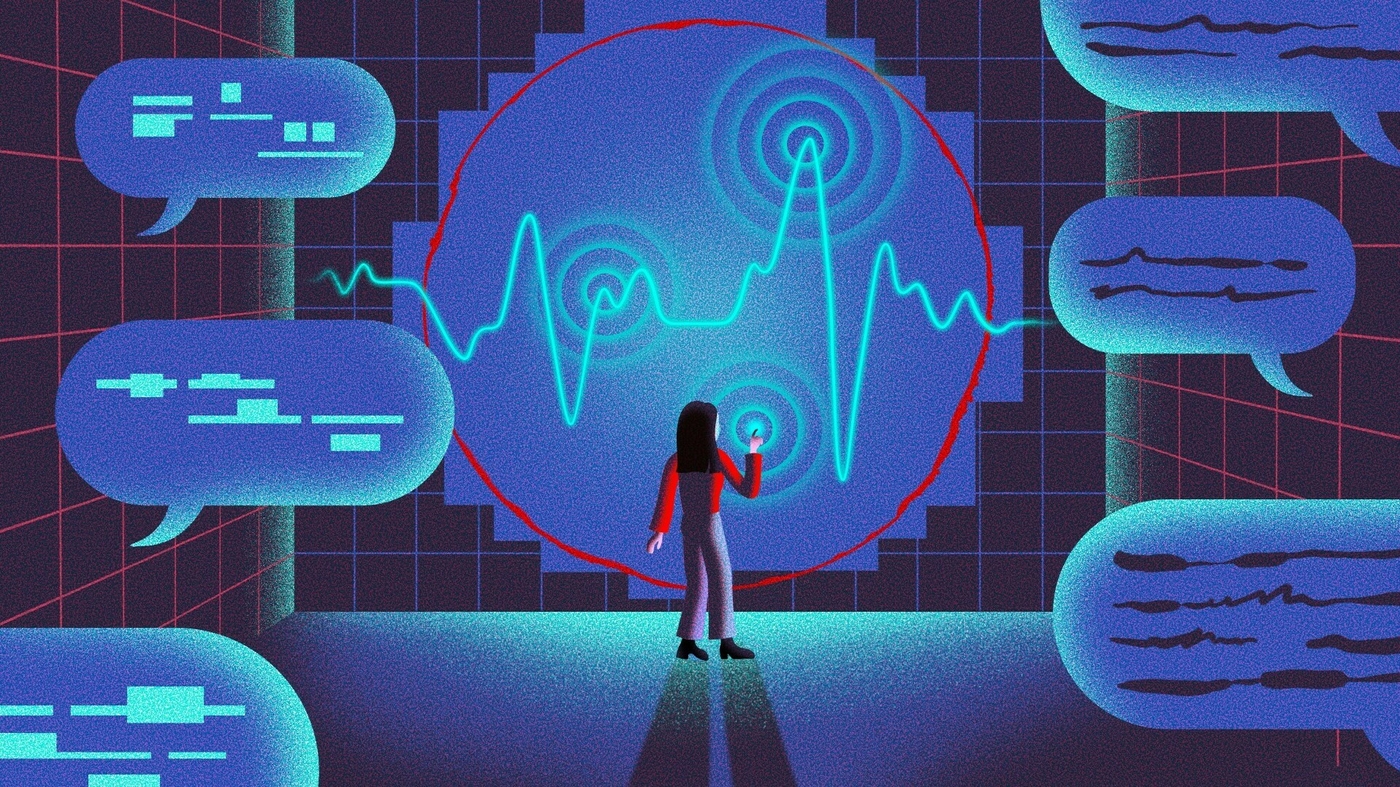
That is how Ali found herself on a new frontier of technology and mental health. Advances in artificial intelligence — such as Chat GPT — are increasingly being looked to as a way to help screen for, or support, people who dealing with isolation, or milddepression or anxiety. Human emotions are tracked, analyzed and responded to, using machine learning that tries to monitor a patient’s mood, or mimic a human therapist’s interactionswith a patient. It’s an area garnering lots of interest, in part because of its potential to overcome the common kinds of financial and logistical barriers to care, such as those Ali faced.
Potential pitfalls and risks of chatbot therapy
There is, of course, still plenty of debate and skepticism about the capacity of machines to read or respond accurately to the whole spectrum of human emotion — and the potential pitfalls of when the approach fails. (Controversy flared up on social media recently over a canceled experiment involving chatbot-assisted therapeutic messages.)
“The hype and promise is way ahead of the research that shows its effectiveness,” says Serife Tekin, a philosophy professor and researcher in mental health ethics at the University of Texas San Antonio. Algorithms are still not at a point where they can mimic the complexities of human emotion, let alone emulate empathetic care, she says.
Tekin says there’s a risk that teenagers, for example, might attempt AI-driven therapy, find it lacking, then refuse the real thing with a human being. “My worry is they will turn away from other mental health interventions saying, ‘Oh well, I already tried this and it didn’t work,’ ” she says.
But proponents of chatbot therapy say the approach may also be the only realistic and affordable way to address a gaping worldwide need for more mental health care, at a time when there are simply not enough professionals to help all the people who could benefit.
Someone dealing with stress in a family relationship, for example, might benefit from a reminder to meditate. Or apps that encourage forms of journaling might boost a user’s confidence by pointing when out where they make progress.
Proponents call the chatbot a ‘guided self-help ally’
It’s best thought of as a “guided self-help ally,” says Athena Robinson, chief clinical officer for Woebot Health, an AI-driven chatbot service. “Woebot listens to the user’s inputs in the moment through text-based messaging to understand if they want to work on a particular problem,” Robinson says, then offers a variety of tools to choose from, based on methods scientifically proven to be effective.
Many people will not embrace opening up to a robot.
ChukurahAli says it felt silly to her too, initially. “I’m like, ‘OK, I’m talking to a bot, it’s not gonna do nothing; I want to talk to a therapist,” Ali says, then adds, as if she still cannot believe it herself: “But that bot helped!”
At a practical level, she says, the chatbot was extremely easy and accessible. Confined to her bed, she could text it at 3 a.m.
“How are you feeling today?” the chatbot would ask.
“I’m not feeling it,” Ali says she sometimes would respond.
The chatbot would then suggest things that might soothe her, or take her mind off the pain — like deep breathing, listening to calming music, or trying a simple exercise she could do in bed. Ali says things the chatbot said reminded her of the in-person therapy she did years earlier. “It’s not a person, but, it makes you feel like it’s a person,” she says, “because it’s asking you all the right questions.”
Technology has gotten good at identifying and labeling emotions fairly accurately, based on motion and facial expressions, a person’s online activity, phrasing and vocal tone, says Rosalind Picard, director of MIT’s Affective Computing Research Group. “We know we can elicit the feeling that the AI cares for you,” she says. But, because all AI systems actually do is respond based on a series of inputs, people interacting with the systems often find that longer conversations ultimately feel empty, sterile and superficial.
While AI may not fully simulate one-on-one individual counseling, its proponents say there are plenty of other existing and future uses where it could be used to support or improve human counseling.
AI might improve mental health services in other ways
“What I’m talking about in terms of the future of AI is not just helping doctors and [health] systems to get better, but helping to do more prevention on the front end,” Picard says, by reading early signals of stress, for example, then offering suggestions to bolster a person’s resilience. Picard, for example, is looking at various ways technology might flag a patient’s worsening mood — using data collected from motion sensors on the body, activity on apps, or posts on social media.
Technology might also help improve the efficacy of treatment by notifying therapists when patients skip medications, or by keeping detailed notes about a patient’s tone or behavior during sessions.
Maybe the most controversial applications of AI in the therapy realm are the chatbots that interact directly with patients like Chukurah Ali.
What’s the risk?
Chatbots may not appeal to everyone, or could be misused or mistaken. Skeptics point to instances where computers misunderstood users, and generated potentially damaging messages.
But research also shows some people interacting with these chatbots actually prefer the machines; they feel less stigma in asking for help, knowing there’s no human at the other end.
Ali says that as oddas it might sound to some people, after nearly a year, she still relies on her chatbot.
“I think the most I talked to that bot was like 7 times a day,” she says, laughing. She says that rather than replacing her human health care providers, the chatbot has helped lift her spirits enough so she keeps those appointments. Because of the steady coaching by her chatbot, she says, she’s more likely to get up and go to a physical therapy appointment, instead of canceling it because she feels blue.
That’s precisely why Ali’s doctor, Washington University orthopedist Abby Cheng, suggested she use the app. Cheng treats physical ailments, but says almost always the mental health challenges that accompany those problems hold people back in recovery. Addressing the mental-health challenge, in turn, is complicated because patients often run into a lack of therapists, transportation, insurance, time or money, says Cheng, who is conducting her own studies based on patients’ use of the Wysa app.
“In order to address this huge mental health crisis we have in our nation — and even globally — I think digital treatments and AI can play a role in that, and at least fill some of that gap in the shortage of providers and resources that people have,” Cheng says.
Not meant for crisis intervention
But getting to such a future will require navigating thorny issues like the need for regulation, protecting patient privacy and issues of legal liability. Who bears responsibility if the technology goes wrong?
Many similar apps on the market, including those from Woebot or Pyx Health, repeatedly warn users that they are not designed to intervene in acute crisis situations. And even AI’s proponents argue computers aren’t ready, and may never be ready, to replace human therapists — especially for handling people in crisis.
“We have not reached a point where, in an affordable, scalable way, AI can understand every sort of response that a human might give, particularly those in crisis,” says Cindy Jordan, CEO of Pyx Health, which has an app designed to communicate with people who feel chronically lonely.
Jordan says Pyx’s goal is to broaden access to care — the service is now offered in 62 U.S. markets and is paid for by Medicaid and Medicare. But she also balances that against worries thatthe chatbot might respond to a suicidal person, ” ‘Oh, I’m sorry to hear that.’ Or worse, ‘I don’t understand you.’ ” That makes her nervous, she says, so as a backup, Pyx staffs a call center with people who call users when the system flags them as potentially in crisis.
Woebot, a text-based mental health service, warns users up front about the limitations of its service, and warnings that it should not be used for crisis intervention or management. If a user’s text indicates a severe problem, the service will refer patients to other therapeutic or emergency resources.
Cross-cultural research on effectiveness of chatbot therapy is still sparse
Athena Robinson, chief clinical officer for Woebot, says such disclosures are critical. Also, she says, “it is imperative that what’s available to the public is clinically and rigorously tested,” she says. Data using Woebot, she says, has beenpublished in peer-reviewed scientific journals. And some of its applications, including for post-partum depression and substance use disorder, are part of ongoing clinical research studies. The company continues to test its products’ effectiveness in addressing mental health conditions for things like post-partum depression, or substance use disorder.
But in the U.S. and elsewhere, there is no clear regulatory approval process for such services before they go to market. (Last year Wysa did receive a designation that allows it to work with Food and Drug Administration on the further development of its product.)
It’s important that clinical studies — especially those that cut across different countries and ethnicities — continue to be done to hone the technology’s intelligence and its ability to read different cultures and personalities, says Aniket Bera, an associate professor of computer science at Purdue.
“Mental-health related problems are heavily individualized problems,” Bera says, yet the available data on chatbot therapy is heavily weighted toward white males. That bias, he says, makes the technology more likely to misunderstand cultural cues from people like him, who grew up in India, for example.
“I don’t know if it will ever be equal to an empathetic human,” Bera says, but “I guess that part of my life’s journey is to come close.”
And, in the meantime, for people like Chukurah Ali, the technology is already a welcome stand-in. She says she has recommended the Wysa app to many of her friends. She says she also finds herself passing along advice she’s picked up from the app, asking friends, “Oh, what you gonna do today to make you feel better? How about you try this today?”
It isn’t just the technology that is trying to act human, she says, and laughs. She’s now begun mimicking the technology.
It was an in-house award from The Drum presented at the Christmas party: Patron Saint of Doomsday – for always reminding us that a financial crisis is nigh.
All jokes aside, we do live in a troubled world.
Last year saw an escalation of the climate change crisis, a war in Ukraine, soaring inflation, further phases of a global pandemic, the Bank of England rescue Britain from a major financial crisis, and the death of Queen Elizabeth II – to name but a few moments.
A turbulent year saw a number of major events occur, such as Queen Elizabeth II’s death. (Reuters: Tom Nicholson )
Aside from the pandemic, the inflation (or “cost of living”) crisis also troubled just about every single Australian.
They exposed our weaknesses, too.
We’re miles behind on the transition to renewable energy power generation, the federal government’s books will take over a decade to be brought back under control, too many Australians can’t afford a home or put food on the table, and women, particularly in the care sectors, are given a raw deal in terms of pay and working conditions.
But let’s take a breath here – a deep breath.
We also need to remember that Australia, as a country, does really well – relatively speaking.
We can still be proud of where we are as a nation. Here’s why.
Australia has a strong economy
Australia is one of the world’s best-performing developed economies.
As at the time of writing, the nation’s economy was growing at 5.9 per cent, supporting an unemployment rate of 3.4 per cent and enjoying a relatively stable currency.
Space to play or pause, M to mute, left and right arrows to seek, up and down arrows for volume.
Australia’s unemployment rate holds steady at 3.4 per cent
As of 2021, Australia had the second-highest amount of wealth per adult after Luxembourg, and the 13th-highest financial assets per capita.
At the onset of the pandemic, the government was able to use funds it had collected from taxpayers over the years to support households and businesses, and it did just that.
Fast forward to 2022 and households have amassed roughly $260 billion in savings.
Record low interest rates and booming property and share markets left middle- and upper-income families with unusually high levels of personal wealth.
Australians, by and large, are healthy and wealthy, especially when compared internationally
Australia is ranked eighth in its Human Development Index, which is a measure of a nation’s longevity, education, and income.
Australia plays a key role on the global stage
Prime Minister Anthony Albanese has been keen to make his mark on the international political scene and, in turn, promote Australia’s interests.
He travelled to the US, Tokyo, Indonesia, Spain, France, Ukraine, Fiji, and Britain – to name a handful of destinations.
He reinforced Australia’s “friendships” with key trading and strategic allies.
Anthony Albanese has met with a number of world leaders including Prime Minister of Japan Fumio Kishida.(Richard Wainwright: AAP)
Crucially, he had the attentive ears of all major global leaders. Other prime ministers who have gone before him enjoyed similar welcomes.
Why? Australia is a geographically large and strategically positioned nation in the Asia-Pacific.
Our natural wealth, developed economy, and stable political system makes us a credible and trustworthy economic and political partner on the world stage.
We can be proud of that.
But the gap is widening
Of course, there are key areas which need addressing.
For decades, governments have tried – and largely failed – to improve outcomes for Indigenous people.
In 2023 Australia will hold a referendum on a constitutionally-enshrined Indigenous Voice to Parliament.
Space to play or pause, M to mute, left and right arrows to seek, up and down arrows for volume.
Minister for Indigenous Affairs applauded in Parliament
There will be resistance.
The federal National Party says it will oppose a constitutionally-enshrined Indigenous Voice to Parliament because it will not “genuinely close the gap”.
The gap between economic and health outcomes for Indigenous and non-Indigenous Australians needs to be closed, but in fact it’s widening.
The data shows the gap is worsening across adult imprisonment rates, deaths by suicide, out of home care rates, and children being developmentally ready once they reach school age.
More broadly, according to the Australian Council of Social Service, the poverty rate of Australia exceeds 13 per cent of the population.
It means over 3 million Australians suffer through poverty every single day.
Space to play or pause, M to mute, left and right arrows to seek, up and down arrows for volume.
Rates, Russia and recession fears: 2022 in business news(Rachel Pupazzoni)
It also estimates that roughly 17 per cent of children under the age of 15 live in relative poverty.
Australians can dare to aspire
I’m as guilty as the next journalist for focusing on the “negatives”.
But there’s method behind the madness: the truth can often be inconvenient or uncomfortable to hear or read.
But there’s always hope, and on the road to hope you’ll find aspiration.
Former prime minister Paul Keating touched on this point in October, in the wake of Queen Elizabeth II’s death, during an online event hosted by La Trobe University.
“Who in their right mind could believe that the monarch of Great Britain could represent our aspirations here?
“We occupy one of the oldest land masses, the oldest continents on Earth, perhaps the oldest societies on Earth – it’s so pathetic. [Becoming a republic] barely [needs] an argument.”
There won’t be a referendum on an Australian republic during this term of parliament, and who knows if there will be one for the next? It’s unpredictable.
But Australia, for all its faults – and we have our fair share – can stand proud and strong.
We work hard, support each other and contribute meaningfully to the global political conversation.
It’s been said we punch above our weight, but why not say we stand tall with our global partners?
Because we do.
This country is capable of great things. How many of us truly believe that?
Almost three yrs back, the Covid-19 pandemic transformed the planet. Numerous are even now on the lookout to uncover a “new standard.”
“Instead of heading back to ordinary, [there’s a new generation that] desires to make again a thing different, anything far better,” suggests Jorge Sandoval, a 2nd-year graduate university student in MIT’s Engineering and Policy Program (TPP) at the Institute for Facts, Devices and Culture (IDSS). “How do we connect this attitude to others, that the environment can not be the identical as ahead of?”
This was the inspiration at the rear of “A New (Re)technology,” this year’s concept for the IDSS-university student-run MIT Plan Hackathon, which Sandoval assisted to arrange as the party chair. The Policy Hackathon is a weekend-prolonged, interdisciplinary levels of competition that delivers collectively contributors from all around the globe to check out probable methods to some of society’s best challenges.
Compared with other competitions of its form, Sandoval suggests MIT’s party emphasizes a humanistic technique. “The notion of our hackathon is to promote apps of know-how that are humanistic or human-centered,” he says. “We get the option to analyze elements of engineering in the spaces the place they have a tendency to interact with society and people, an opportunity most complex competitions really don’t provide for the reason that their primary emphasis is on the technologies.”
The opposition begun with 50 teams unfold throughout 4 challenge classes. This year’s groups provided Online and Cybersecurity, Environmental Justice, Logistics, and Housing and Town Setting up. Though some people occur into the obstacle with close friends, Sandoval said most teams kind organically all through an online networking conference hosted by MIT.
“We stimulate people to pair up with many others outside the house of their country and to sort groups of different numerous backgrounds and ages,” Sandoval says. “We try out to give folks who are generally not invited to the determination-generating table the chance to be a policymaker, bringing in people with backgrounds in not only law, policy, or politics, but also medication, and folks who have professions in engineering or experience operating in nonprofits.”
Once an in-particular person celebration, the Coverage Hackathon has gone as a result of its own regeneration approach these earlier three decades, in accordance to Sandoval. Following likely totally on the net for the duration of the pandemic’s height, previous yr they properly hosted the to start with hybrid variation of the event, which served as their product once more this 12 months.
“The hybrid variation of the event provides us the opportunity to allow folks to link in a way that is missing if it is only on line, when also preserving the large array of accessibility, permitting people to join from any place in the earth, no matter of nationality or money, to give their input,” Sandoval states.
For Swetha Tadisina, an undergraduate computer science main at Lafayette Higher education and participant in the world wide web and cybersecurity class, the hackathon was a exclusive chance to satisfy and function with people today substantially a lot more sophisticated in their occupations. “I was stunned how such a numerous workforce that experienced by no means satisfied right before was equipped to get the job done so effectively and creatively,” Tadisina says.
Erika Spangler, a public high college trainer from Massachusetts and member of the environmental justice category’s successful crew, claims that while every single member of “Team Slime Mold” arrived to the table with a various established of expertise, they managed to be in sync from the get started — even functioning across the nine-and-a-fifty percent-hour time variation the four-person group faced when functioning with policy advocate Shruti Nandy from Calcutta, India.
“We divided the task into information, plan, and research and dependable each and every other’s knowledge,” Spangler suggests, “Despite possessing different spots of aim, we built sure to have frequent test-ins to dilemma-remedy and cross-pollinate ideas.”
All through the 48-hour time period, her staff proposed the development of an algorithm to establish higher-quality brownfields that could be cleaned up and employed as websites for setting up renewable power. Their corresponding plan sought to mandate additional needs for renewable vitality businesses in search of tax credits from the Inflation Reduction Act.
“Their policy memo experienced the most in-depth complex evaluation, including deep dives in a handful of critical metropolitan areas to display the effect of their proposed method for web page assortment at a pretty granular degree,” says Amanda Levin, director of plan assessment for the Organic Resources Defense Council (NRDC). Levin acted as the two a choose and obstacle service provider for the environmental justice group.
“They also offered their coverage tips in the memo in a nicely-assumed-out way, plainly noting the appropriate actor,” she provides. This clarity all-around what can be performed, and who would be responsible for people steps, is extremely beneficial for those in policy.”
Levin claims the NRDC, a single of the premier environmental nonprofits in the United States, delivered five “challenge questions,” generating it obvious that groups did not need to tackle all of them. She notes that this gave teams sizeable leeway, bringing a large selection of recommendations to the table.
“As a obstacle husband or wife, the work set together by all the groups is already currently being applied to assistance inform discussions about the implementation of the Inflation Reduction Act,” Levin suggests. “Being able to faucet into the collective intelligence of the hackathon aided uncover new views and coverage answers that can assist make an effects in addressing the vital plan troubles we facial area nowadays.”
Though getting companions with practical experience in knowledge science and policy absolutely aided, fellow Team Slime Mould member Sara Sheffels, a PhD prospect in MIT’s biomaterials system, suggests she was amazed how a great deal her activities outside the house of science and plan had been pertinent to the challenge: “My knowledge organizing MIT’s Graduate Pupil Union formed my thoughts about extra meaningful neighborhood involvement in renewables tasks on brownfields. It is not meaningful to just educate folks about the value of renewables or ask them to indicator off on a pre-planned challenge with out addressing their other requirements.”
“I wanted to test my boundaries, get publicity, and broaden my planet,” Tadisina provides. “The exposure, friendships, and experiences you get in these kinds of a brief period of time are extraordinary.”
For Willy R. Vasquez, an electrical and computer system engineering PhD scholar at the College of Texas, the hackathon is not to be skipped. “If you are interested in the intersection of tech, modern society, and plan, then this is a will have to-do expertise.”