Credit Suisse whistleblowers say bank has been helping Americans dodge U.S. taxes

Credit Suisse whistleblowers say bank has been helping Americans dodge U.S. taxes

Senate Finance Committee: Credit Suisse helped Americans commit tax fraud

Credit Suisse, the collapsed Swiss bank taken over by UBS Group in a hastily arranged bailout earlier this month, may bring with it a fresh set of regulatory and legal problems for its new owner.

For years, the bank has provided a safe haven for wealthy American clients to hide assets from the IRS — even after it was caught and prosecuted for doing the same thing more than a decade ago, according two former Credit Suisse bankers who spoke in exclusive interviews with CNBC and are working with the U.S. government as whistleblowers.

The bank notoriously pleaded guilty in 2014 to criminal charges for “knowingly and willfully” helping thousands of U.S. clients conceal their offshore assets and income from the IRS. It admitted at the time that it used sham entities, destroyed account records, and hand delivered cash to American clients to avert IRS detection — agreeing to crack down on U.S. tax dodgers going forward as part of its plea deal. Credit Suisse also agreed at the time to a host of reforms, including disclosing its cross-border activities and cooperating with authorities when they request information, among other things.

The now troubled bank appears to have violated that agreement, according to a new report by the Senate Finance Committee that details ongoing and rampant abuse since then. The report, released Wednesday, details the findings of the panel’s two-year investigation and takes on more urgency given the looming banking crisis. The Swiss National Bank, the country’s central bank, injected more than $100 billion of liquidity into Credit Suisse to keep it afloat earlier this month, while the Swiss government agreed to provide UBS with some $9 billion to backstop losses resulting from the takeover.

‘Still ongoing’

Senate investigators say the new revelations raise questions about just how much American money remains hidden inside the vaults of a bank whose collapse rattled the foundations of the global banking system.

The Senate report, which was prepared by the panel’s Democratic staff, accuses the bank of violating the terms of its 2014 plea agreement, which could trigger a host of repercussions if the Justice Department presses the case. It is unclear how much potential liability UBS is exposed to as a result of the report, but a lawyer for the whistleblowers argues the bank should pay as much as $1.3 billion.

Senate Finance Committee Chairman Ron Wyden, D-Ore., said his committee had received new information just this week from Credit Suisse about additional American undisclosed accounts that the bank held after 2014.

“It is still going on as of just the last couple of days — even more money has been found to have been concealed and there are very substantial issues here,” Wyden said. “Clearly, it’s time to prosecute and ensure that there are penalties that send a strong message.”

“Credit Suisse employees aided and abetted a major criminal tax evasion scheme,” a finance committee aide said, asking not to be named because the report had not been released yet. “To date, no Credit Suisse employees involved in the scheme have faced any consequences from the United States government for their participation.”

Hiding fortunes

Senate investigators say they discovered that Credit Suisse enabled as many as 25 American families to hide fortunes totaling more than $700 million in the bank in the years after Credit Suisse’s plea agreement.

“They thought they could get away with it, and they largely did,” the aide said. “It’s not a question of whether Swiss banks continue to do this, it’s a question of which Swiss banks still do this.”

In a statement to CNBC, a Credit Suisse spokeswoman said it does not tolerate tax evasion.

“In its core, the report describes legacy issues, some from a decade ago, and we have implemented extensive enhancements since then to root out individuals who seek to conceal assets from tax authorities,” the spokeswoman said, asking not to be identified because she was not authorized to speak on the record. She said the bank’s new leadership team has been cooperating with the committee. Credit Suisse has “supported the work of Senator Wyden, including in respect of suggested policy solutions to help strengthen the financial industry’s ability to detect undisclosed US persons.” She said the bank’s policy requires it to close undeclared accounts when they’re identified and discipline employees who don’t follow its policy.

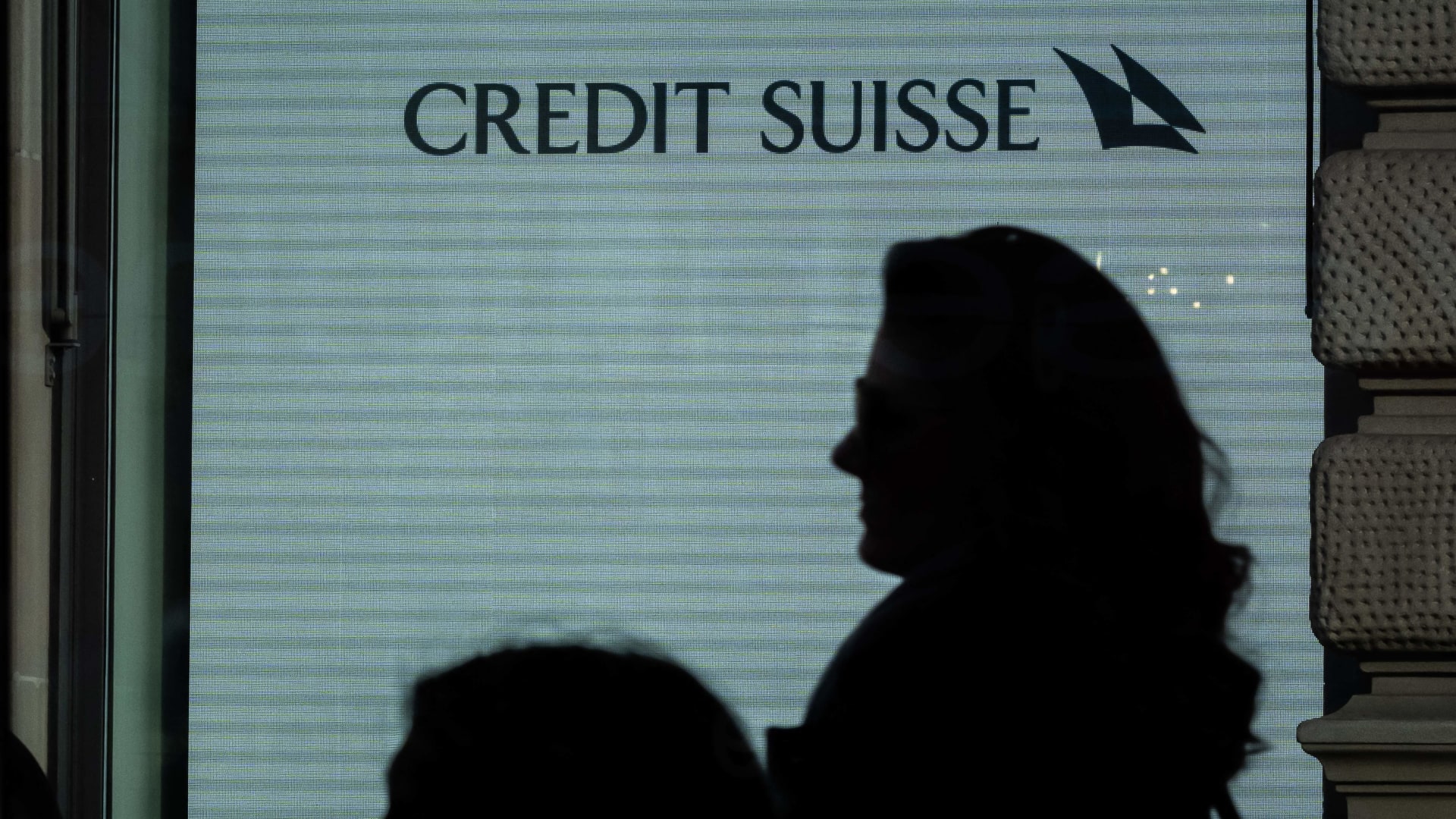
A sign of Credit Suisse bank is seen at their headquarters in Zurich on March 20, 2023.

Fabrice Coffrini | AFP | Getty Images

The two former Credit Suisse employees, who worked as whistleblowers with the U.S. government and Senate investigators, told CNBC some of the bad behavior continued long after Credit Suisse’s 2014 plea agreement. CNBC agreed to mask their identities on camera and to maintain their anonymity because they say they fear retaliation from the bank. They were interviewed in the weeks before Credit Suisse collapsed earlier this month.

Although the bank did disclose and close many American accounts after its 2014 plea agreement, some bankers worked with high net worth clients to keep certain Americans at the bank, by changing the nationalities listed on their accounts and ignoring evidence that the account holders were Americans. In other cases, they helped American clients move money to other banks, without reporting those transfers to U.S. authorities, the whistleblowers say.

‘Tremendous pressure’

The report and interviews offer a rare look at the inner workings of the secretive Swiss banking, a world rarely penetrated by outsiders. And they show how compliance systems inside Credit Suisse broke down in the years before its collapse this month and rescue by the Swiss government and rival bank UBS.

Bankers are under constant pressure, the whistleblowers said, to keep and bring in deposits at the bank.

“You’re under tremendous pressure to bring in these net new assets, which ultimately translate into revenue,” the first whistleblower said in describing a culture where bankers were expected to keep the assets of wealthy clients inside the bank, even if they had to cheat to do it. “And that’s the reason for the fraud. You don’t want to lose assets. So, what you do is you try to maintain them in any way, shape, or form.”

Senior executives would call out individual bankers at quarterly meetings where they would read out the asset numbers for each banker. If a banker’s number declined, the second whistleblower said, “you’d get exposed in front of your colleagues.” And as a result, he said, “there may come moments where people simply omit saying things.”

“‘Don’t Ask, Don’t Tell’ is maybe a good explanation to what happened,” he said. “They would have clients that are Americans, but they would switch their passports around to show and flag as if they are not.”

Credit Suisse bankers, for instance, repeatedly flew to Miami to meet with American clients and yet failed to flag them as U.S. citizens, Senate investigators said.

Secrecy drives the entire Swiss banking industry, the first whistleblower said – to a point that the sector may not be able to survive without it.

“Swiss banks are much more expensive, and there’s a reason for that,” he said. “If you could choose anywhere in the world you want to be, why would you pay more? Why would you be in a place which underperforms in terms of your return on assets?”

If a client isn’t hiding assets in Switzerland, the first whistleblower said, “there’s no other reason to be there.”

‘Congratulation!!!!!’

Emails obtained by the Senate Finance committee show just how far the bankers went to keep identities secret and to ensure wealthy Americans were able to switch nationalities — at least for the bank’s internal record-keeping.

In one email, one of Credit Suisse’s banker writes to another bank employee, “please don’t write or document these topics.”

One American client, an heir to a $200 million fortune deposited at Credit Suisse, emailed to say they renounced their U.S. citizenship.

“I tried to reach you, congratulation!!!!!” their private banker emailed back. “This is a big step for you and I know it was not easy.”

The heir to the fortune replied, “Thanks … hopefully this should also make Credit Suisse now more relaxed.”

The heir closed the message with a smiley face.

The Family

“The committee’s investigation uncovered major violations of Credit Suisse’s plea agreement, including an ongoing and potentially criminal tax conspiracy involving nearly $100 million dollars and undeclared offshore accounts belonging to a family of dual U.S./Latin American citizens,” a committee aide told CNBC.

The aide said Credit Suisse closed accounts held by that family worth nearly $100 million in 2013 and moved funds to other banks in Switzerland and elsewhere, but did not inform U.S. authorities about the transfer of assets until 2021 – which was months after whistleblowers informed U.S. authorities of the existence of the accounts.

In the Senate report the clients are not named, but simply referred to as “The Family.”

While it’s legal for Americans to hold funds in foreign bank accounts, they must file forms with the IRS disclosing the assets and pay taxes on any relevant gains. Americans must file a disclosure document called a Report of Foreign Bank and Financial Accounts, which is referred to in the industry as an “FBAR.”

The committee said the family held assets at Credit Suisse dating as far back as 1979, and they found evidence Credit Suisse bankers visited members in the family in Miami as early as 2000, holding meetings at the Mandarin Oriental hotel and enjoying meals at The Capital Grille restaurant in Miami’s fashionable Brickell neighborhood overlooking Biscayne Bay.

But aides say they didn’t find any evidence the family ever filed required paperwork with the U.S. government or paid taxes on their assets. Instead, the assets were held under one family member’s dual Latin American passport.

Legal jeopardy

As a result, the aide said, “They’re potentially in legal jeopardy, to put it mildly.”

Committee aides say the family’s assets were overseen by a high-level Credit Suisse executive in its Latin American division, and that official participated in the meetings in Miami. That’s notable, aides said, because that same official was the supervisor of several other Credit Suisse bankers who were previously indicted in connection with the 2014 American offshore accounts.

Committee aides complained that Credit Suisse declined to provide the names of any of the employees involved or the Swiss banks that received the funds – but said they were able to determine that information through other sources.

The Miami case “is not small potatoes,” a Senate aide said. If proven, it “would be one of the largest FBAR violations in United States history.”

Former Justice Department prosecutor Jeffrey Neiman, who is representing the whistleblowers, said he believes fraud is still ongoing and the DOJ should claw back hundreds of millions of dollars in fines that the bank agreed to pay in 2014, but ultimately didn’t have to pay. The bank agreed to pay $2.6 billion, but a federal judge only imposed a penalty of $1.3 billion at the time.

“I think Credit Suisse is aware of Americans who are still hiding money today. And I think the bank is doing whatever it can to contain whatever this damage is,” Neiman said.

$1.3 billion

“At a minimum, the U.S. government needs to collect that $1.3 billion for the American taxpayers. This bank needs to be made an example of,” he said. “We hear tough talk out of the Justice Department about holding repeat corporate offenders accountable. Let’s see if those words have actual meaning.”

The whistleblowers stand to gain financially if there are further payments to the U.S. government. Under the law, whistleblowers stand to collect between 15{515baef3fee8ea94d67a98a2b336e0215adf67d225b0e21a4f5c9b13e8fbd502} and 30{515baef3fee8ea94d67a98a2b336e0215adf67d225b0e21a4f5c9b13e8fbd502} of any money recovered by the U.S. government as a direct result of information they provide.

The Senate Finance Committee doesn’t think U.S. prosecutors have gone far enough in holding Credit Suisse accountable, the aide said. The report is part of a campaign to up the pressure on the DOJ to crack down on the Swiss bank, and the recent takeover of the bank puts it squarely in the spotlight.

“DOJ must correct its lax oversight of Credit Suisse and hold Credit Suisse accountable for any violations of its plea agreement,” he said.

The aide cited recent indications of a white-collar crackdown. “DOJ said we will go after anybody at banks who commits tax evasion,” the aide said. “Then do it. We’re going to drop you twelve names in this report. Go after them.”

The Justice Department declined to comment when contacted for this story.

‘Never say never’

CNBC Politics

Read more of CNBC’s politics coverage:

US ups interest rates, UBS buys Credit Suisse – this week’s economy news

US ups interest rates, UBS buys Credit Suisse – this week’s economy news
  • This weekly round-up brings you the latest stories from the world of economics and finance.
  • Top economy stories: US raises interest rates by 0.25 percentage points; UBS takes over Credit Suisse; IMF board approves Sri Lanka bailout.

1. US raises interest rates again as it weighs up banking crisis

The US Federal Reserve has raised interest rates by a quarter of a percentage point but indicated it is on the verge of pausing further increases. This is to help balance out inflation risks given the threat of banking-system instability and a potential credit crunch that could lead to a sharp economic slowdown.

The rate hike is the US central bank’s ninth in a row and lifts its key interest rate to 4.75-5.00{515baef3fee8ea94d67a98a2b336e0215adf67d225b0e21a4f5c9b13e8fbd502} – its highest level since 2007 and up from practically zero a year ago. But in a key shift driven by the sudden failures of Silicon Valley Bank (SVB) and Signature Bank this month, the Fed’s latest policy statement no longer says that “ongoing increases” in rates will likely be appropriate.

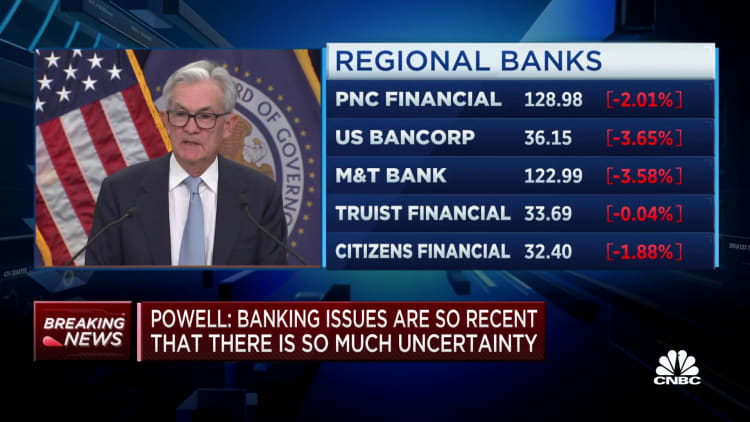
Fed Chair Jerome Powell sought to reassure investors about the soundness of the banking system, saying that the management of SVB “failed badly” but that the bank’s collapse this month does not indicate wider weaknesses in the banking system.

US ups interest rates, UBS buys Credit Suisse – this week’s economy news

Ongoing inflation has led to nine consecutive rises in US interest rates.

Image: US Bureau of Labor Statistics

However, Powell admitted that Fed officials still need to see how banks might change their lending behaviour in response to the SVB and Signature collapses. “It’s really … a question of not knowing at this point,” he said. “How significant will this credit tightening be, and how sustainable?”

Reuters says that the Fed’s relentless rate hikes to try and rein-in inflation are among the factors being blamed for the biggest banking sector meltdown since the 2008 financial crisis. In February, US regulators said the country’s banks had unrealized losses of more than $620 billion on securities, underscoring the hit from rising interest rates.

JPMorgan says the banking crisis and rising interest rates mean the US appears to be heading for a recession. “A soft landing now looks unlikely, with the airplane in a tailspin (lack of market confidence) and engines about to turn off (bank lending),” its strategists said in a note to clients. “Even if central bankers successfully contain the contagion, credit conditions look set to tighten more rapidly because of pressure from both markets and regulators.”

2. UBS takes over Credit Suisse as banks seek to stem crisis fears

Some of the world’s largest central banks came together last weekend to stop a potential banking crisis from spreading, as Swiss authorities persuaded UBS to buy rival bank Credit Suisse in an historic deal.

UBS will buy Credit Suisse for CHF3 billion ($3.23 billion) in stock and assume up to CHF5 billion ($5.4 billion) in losses. Credit Suisse’s share price slumped last week after its largest investor said it could not provide the bank with more money, prompting large falls in other banking stocks.

FTSE 100 performance

Stocks on the FTSE 100 have fallen because of the banking crisis.

Image: London Stock Exchange

The Swiss National Bank’s chairman says the UBS takeover prevented “extreme consequences for Switzerland but also the global economy”. The European Central Bank (ECB) described the rescue deal as “instrumental” for restoring calm, and vowed to support Eurozone banks with loans if needed.

Germany's DAX stock index

Germany’s DAX index of the 40 major German blue-chip companies has also wobbled.

Image: Borse Frankurt

In a global response not seen since the height of the pandemic, the ECB also joined forces with the US Federal Reserve and central banks in Canada, England, Japan and Switzerland to bolster the flow of cash around. The banks will offer daily currency swaps – an expansion from a previous weekly programme – in what is effectively a low-risk short-term loan offering to ensure the world’s major economies have adequate supply of US dollars to meet local demands.

However, the UBS takeover has not pleased distressed debt investors and corporate litigators in the US, who are preparing to fight the Swiss government over its move to write down $17bn of Credit Suisse bonds as part of the deal, The Financial Times reports.

3. News in brief: Stories on the economy from around the world

The International Monetary Fund (IMF) board has approved a nearly $3 billion bailout for Sri Lanka. The full programme will enable the country to access up to $7 billion in funding – but IMF Managing Director Kristalina Georgieva says Sri Lanka needs to undertake various reforms in return.

Japan’s core consumer inflation slowed in February, but an index stripping away energy costs hit a four-decade high, suggesting that cost-push pressures may persist longer than policy-makers thought. The core consumer price index rose by 3.1{515baef3fee8ea94d67a98a2b336e0215adf67d225b0e21a4f5c9b13e8fbd502} last month from a year earlier, down from a 41-year high of 4.2{515baef3fee8ea94d67a98a2b336e0215adf67d225b0e21a4f5c9b13e8fbd502} in January.

South Korea’s exports plummeted by 17.4{515baef3fee8ea94d67a98a2b336e0215adf67d225b0e21a4f5c9b13e8fbd502} in the first 20 days of March compared with a year earlier, with semiconductor shipments sliding by 44.7{515baef3fee8ea94d67a98a2b336e0215adf67d225b0e21a4f5c9b13e8fbd502}, Bloomberg reports. The country is one of the world’s biggest exporters, and its economic health is a key indicator of trends in the global economy.

Germany’s economy will shrink again in the first quarter and underlying inflation could prove to be stubborn, even if overall price growth is likely to slow sharply soon, the central bank says. This would put Europe’s biggest economy into recession, after it contracted by 0.4{515baef3fee8ea94d67a98a2b336e0215adf67d225b0e21a4f5c9b13e8fbd502} in the final quarter of 2022. Investor confidence in Germany has fallen for the first time in six months.

The World Economic Forum’s Centre for the Fourth Industrial Revolution Network has built a global community of central banks, international organizations and leading blockchain experts to identify and leverage innovations in distributed ledger technologies (DLT) that could help usher in a new age for the global banking system.

We are now helping central banks build, pilot and scale innovative policy frameworks for guiding the implementation of DLT, with a focus on central bank digital currencies (CBDCs). DLT has widespread implications for the financial and monetary systems of tomorrow, but decisions about its use require input from multiple sectors in order to realize the technology’s full potential.

“Over the next four years, we should expect to see many central banks decide whether they will use blockchain and distributed ledger technologies to improve their processes and economic welfare. Given the systemic importance of central bank processes, and the relative freshness of blockchain technology, banks must carefully consider all known and unknown risks to implementation.”

—Ashley Lannquist, Blockchain and Digital Assets Platform, World Economic Forum

Our Central Banks in the Age of Blockchain community is an initiative of the Platform for Shaping the Future of Technology Governance: Blockchain and Digital Assets.

Read more about our impact, and learn how you can join this first-of-its-kind initiative.

The Bank of England has raised interest rates by a further quarter of a percentage point following an unexpected rise in British inflation to 10.4{515baef3fee8ea94d67a98a2b336e0215adf67d225b0e21a4f5c9b13e8fbd502} in February. Rates now stand at 4.25{515baef3fee8ea94d67a98a2b336e0215adf67d225b0e21a4f5c9b13e8fbd502}, but the bank says its Monetary Policy Committee sees less urgency about maintaining its fast run of rate hikes, and that price growth is on course to fall sharply in April-June.

Nigeria’s central bank is likely to extend its sharp monetary tightening as it looks to contain rising inflation, according to a Bloomberg survey of economists. Annual inflation in Africa’s biggest economy rose to 21.91{515baef3fee8ea94d67a98a2b336e0215adf67d225b0e21a4f5c9b13e8fbd502} in February from 21.82{515baef3fee8ea94d67a98a2b336e0215adf67d225b0e21a4f5c9b13e8fbd502} in January. The bank hiked its key interest rate to 17.5{515baef3fee8ea94d67a98a2b336e0215adf67d225b0e21a4f5c9b13e8fbd502} in January, from 10.5{515baef3fee8ea94d67a98a2b336e0215adf67d225b0e21a4f5c9b13e8fbd502} last May.

Lebanon’s central bank will begin selling unlimited amounts of US dollars in a bid to halt the spiralling devaluation of the Lebanese pound. The currency has lost more than 98{515baef3fee8ea94d67a98a2b336e0215adf67d225b0e21a4f5c9b13e8fbd502} of its value since the economy began unravelling in 2019.

4. More on finance and the economy on Agenda

The failure of SVB has raised questions about financial safeguards. John Letzing, the World Economic Forum’s Digital Editor, Strategic Intelligence, explores why – and how – banks are regulated.

Why do bank runs happen? They are a result of a bank facing a loss of confidence, sparking customers to withdraw deposits, this blog says. It also explores how these fears and contagion can spread from one institution to another.

Financial regulation and supervision is in the spotlight as banking turmoil intensifies in the US and Europe. Could regulation technology – or “reg-tech” – help avert banking failures? World Economic Forum Lead Editor Gayle Markovitz explores.

Fed’s Powell says SVB collapse may slow the economy through tighter credit

Fed’s Powell says SVB collapse may slow the economy through tighter credit

Federal Reserve Board Chair Jerome Powell speaks through a news conference at the Federal Reserve in Washington, DC, on March 22, 2023.

Olivier Douliery | AFP | Getty Pictures

Federal Reserve Chair Jerome Powell reported Wednesday that the U.S. banking sector is powerful but that the current failure of some regional financial institutions could cause ripple effects that gradual down the financial state.

At a press meeting right after the most recent Federal Open Marketplaces Committee meeting, Powell described the banking technique as “audio and resilient” but said the central bank was monitoring a improve in the availability of credit score for customers and organizations.

“Monetary problems appear to have tightened, and possibly by a lot more than the regular indexes say. … The query for us although is how substantial will that be — what will be the extent of it, and what will be the period of it,” Powell explained.

“We are going to be looking to see how serious is this and does it glimpse like it is really likely to be sustained. And if it is, it could conveniently have a significant macroeconomic impact, and we would element that into our plan selections,” he extra.

Our response was how did this happen, says Fed Chair Powell of SVB failure

The Fed hiked its benchmark desire charge by a quarter of a percentage stage on Wednesday, but its projections referred to as for just just one extra hike above the relaxation of the 12 months. The central bank chief mentioned that tighter monetary conditions induced by more stringent lending choices from banking companies could have a very similar effects as further more hikes from the Fed.

Powell’s responses appear after regional financial institutions have appear less than significant tension this thirty day period. Silicon Valley Financial institution collapsed, making it the next premier failure in U.S. heritage, in part simply because the speedy increase in desire costs devalued its bond portfolio and designed significant paper losses for the financial institution.

SVB’s administration “unsuccessful poorly” in handling its desire amount dangers, even though other financial institutions have managed to deal with the hikes, Powell reported.

Other banking institutions like Very first Republic and PacWest have witnessed considerable outflows of deposits. The Fed set up a new Financial institution Phrase Funding Software to aid financial institutions entry funds, but the stocks for regional financial institutions have fallen in volatile buying and selling given that the facility was created on March 12.

Powell explained that deposit flows have stabilized more than the previous 7 days and that Americans really should sense confident that their money is harmless, however he stopped quick of explicitly stating that all deposits are now confirmed.

“What I am stating is you’ve got noticed that we have the applications to shield depositors when there is a risk of serious harm to the economy or to the financial technique, and we’re geared up to use individuals applications. I think depositors ought to assume that their deposits are risk-free,” he mentioned.

The collapse of Silicon Valley Financial institution has led to much more scrutiny on the Federal Reserve’s supervisory part in excess of banking companies, in particular from Sen. Elizabeth Warren (D-MA).

The Fed is conducting an internal critique of possible regulatory concerns all around SVB, led by Vice Chair for Supervision Michael Barr, and Powell mentioned he expects investigations from outdoors the central bank as effectively.

Stocks plummet, yields fall amid Credit Suisse turmoil

Stocks plummet, yields fall amid Credit Suisse turmoil

U.S. shares plummeted Wednesday as two economic prints showed a slowdown in the U.S. financial state in February, though fresh new turmoil at Credit history Suisse (CS) renewed investor issues about the banking sector.

The S&P 500 (^GSPC) dropped .7{515baef3fee8ea94d67a98a2b336e0215adf67d225b0e21a4f5c9b13e8fbd502}, whilst the Dow Jones Industrial Normal (^DJI) lost /9{515baef3fee8ea94d67a98a2b336e0215adf67d225b0e21a4f5c9b13e8fbd502}. Contracts with the technological innovation-hefty Nasdaq Composite (^IXIC) pared earlier losses and ended just earlier mentioned the flatline.

Bond yields plummeted. The yield on the benchmark 10-yr U.S. Treasury notice moved down to 3.49{515baef3fee8ea94d67a98a2b336e0215adf67d225b0e21a4f5c9b13e8fbd502} Wednesday from 3.6{515baef3fee8ea94d67a98a2b336e0215adf67d225b0e21a4f5c9b13e8fbd502} Tuesday. On the front end of the produce curve, two-12 months yields fell to 3.89{515baef3fee8ea94d67a98a2b336e0215adf67d225b0e21a4f5c9b13e8fbd502}. Oil fell to new lows on the yr, with WTI slipping below $70 a barrel.

All 3 important indexes rallied Tuesday as critical inflation info came in line with expectations. The S&P 500 shut up 1.7{515baef3fee8ea94d67a98a2b336e0215adf67d225b0e21a4f5c9b13e8fbd502}, although the Nasdaq climbed 2.3{515baef3fee8ea94d67a98a2b336e0215adf67d225b0e21a4f5c9b13e8fbd502}, marking the index’s most effective working day in 5 months. Shares of regional banking companies rebounded, clawing again some of the latest losses.

But clean difficulties at Credit rating Suisse injected a lot more jitters into marketplaces Wednesday morning. By the afternoon a Swiss regulator claimed the country’s central bank would offer further liquidity if essential. The European bank’s inventory fell more than 25{515baef3fee8ea94d67a98a2b336e0215adf67d225b0e21a4f5c9b13e8fbd502} at one particular stage, plunging to a document low after its largest backer explained it could not deliver any extra help. Credit rating Suisse on Tuesday disclosed in a report that it had discovered “materials weaknesses” in controls more than financial reporting.

On the financial facts side in the U.S., the Commerce Division said retail sales fell .4{515baef3fee8ea94d67a98a2b336e0215adf67d225b0e21a4f5c9b13e8fbd502} more than the very last thirty day period, in line with the economist consensus compiled by Bloomberg. Meanwhile, February’s producer-price index, which actions what suppliers are charging organizations, dropped .1{515baef3fee8ea94d67a98a2b336e0215adf67d225b0e21a4f5c9b13e8fbd502} in an unanticipated drop.

Wednesday’s knowledge arrived after Tuesday’s launch of the closely watched Buyer Rate Index (CPI), which the Commerce Office reported rose 6.{515baef3fee8ea94d67a98a2b336e0215adf67d225b0e21a4f5c9b13e8fbd502} in February over the last yr, the smallest improve considering the fact that September 2021. In the very same study, main CPI, which strips out foodstuff and power, grew 5.5{515baef3fee8ea94d67a98a2b336e0215adf67d225b0e21a4f5c9b13e8fbd502}, also in line with expectations.

The sudden collapse of Silicon Valley Lender and Signature Lender, as properly as the rising turmoil at Credit history Suisse, will come at a time when the economic system grapples with stickier, if declining, inflation. It has sparked a discussion among traders betting on whether or not the Fed will hike fascination charges just after its conference following week.

Ryan Sweet, Main US Economist at Oxford Economics, reported as anxiety is contained mainly in regional banking institutions, his workforce expects a quarter-percentage-issue level boost pursuing the Fed’s impending March assembly.

“With inflation continuing to operate effectively above the 2{515baef3fee8ea94d67a98a2b336e0215adf67d225b0e21a4f5c9b13e8fbd502} target, a pause in the tightening cycle or a price minimize would be premature,” Sweet wrote. “Policymakers can use instruments other than desire costs to alleviate pressures in the banking technique.”

A equivalent sentiment arrived from William Blair’s macro analyst Richard de Chazal, who reported in light-weight of latest occasions a quarter-stage improve will almost certainly be considered “more prudent.”

The banking sector been given a vote of no self-confidence Tuesday as Moody’s downgraded the complete U.S. sector’s outlook from secure to detrimental, citing “the swift deterioration in the running ecosystem.”

Lender sentiment continued to be bitter for members of the KBW Bank index (^BKX), as the index sank Wednesday. Significant-cap index members such as Lender of The united states (BAC), JPMorgan Chase (JPM), Wells Fargo (WFC) and Citigroup (C) all traded down Wednesday, even so.

Renewed jitters remained in the banking sector regional lender shares on Wednesday — To start with Republic Lender (FRC), PacWest Bancorp (PACW), Areas Financial (RF), and Zions Bancorporation (ZION) — all traded downward, while Western Alliance Bancorporation (WAL) traded up.

A logo is pictured on the Credit Suisse bank in Geneva, Switzerland, February 22, 2023. REUTERS/Denis Balibouse/

A emblem is pictured on the Credit score Suisse financial institution in Geneva, Switzerland, February 22, 2023. REUTERS/Denis Balibouse/

Right here are some of the stocks trending on Yahoo Finance on Wednesday:

  • Credit score Suisse (CS): The bank’s major shareholder ruled out giving further more economical aid to the loan company. The shareholder cited regulatory fears as the purpose at the rear of not getting open up to injecting more money into the lender.

  • UBS Team AG (UBS): UBS chief government officer Ralph Hamers said he will not respond to any “hypothetical issues” next the turmoil at his rival Credit score Suisse, Bloomberg reported.

  • Meta Platforms (META): Meta announced another 10,000 layoffs. The recruitment team is among individuals most influenced by the career cuts, as the company programs to near 5,000 vacancies it experienced still to fill. Citi boosted its concentrate on selling price to $260 from $228.

  • AMC Enjoyment (AMC): The enterprise claimed given a preliminary tally shareholders voted in favor of escalating the firm’s stock authorization and changing AMC Preferred Fairness Models into typical shares.

  • SentinelOne, Inc. (S): The cybersecurity corporation documented fourth-quarter earnings that showed whole earnings amplified 92{515baef3fee8ea94d67a98a2b336e0215adf67d225b0e21a4f5c9b13e8fbd502} to $126.1 million, up from the calendar year in advance of when it came in at $65.6 million.

  • 3M Enterprise (MMM): The stock is trading reduce ahead of the firm’s trader day celebration.

  • Innovative Micro Products (AMD): The stock outperformed on Tuesday general for huge-cap technologies stocks, pursuing 3 straight times of declines.

On the earnings front, Adobe (ADBE) Oatly (OTLY) UiPath (Route) Five Under (5) will report quarterly effects on Wednesday.

—

Dani Romero is a reporter for Yahoo Finance. Observe her on Twitter @daniromerotv

Simply click listed here for the hottest inventory current market information and in-depth assessment, which includes occasions that shift stocks

Examine the newest economical and business information from Yahoo Finance

Down load the Yahoo Finance app for Apple or Android

Comply with Yahoo Finance on Twitter, Fb, Instagram, Flipboard, LinkedIn, and YouTube

Treasury’s EV tax credit guidance delayed until March

Treasury’s EV tax credit guidance delayed until March

WASHINGTON — The U.S. Treasury Office on Monday explained it will situation proposed assistance for the essential mineral and battery ingredient needs in March, successfully delaying all those eligibility limits in the $7,500 tax credit for new electric cars.

Below the not long ago signed Inflation Reduction Act, the section was required to issue proposed guidance by Dec. 31 that will even further outline how to meet the revamped EV tax credit’s eligibility principles, which are designed to incentivize domestic EV generation, cut down reliance on overseas provide chains and prevent wealthy buyers from receiving a price reduction.

As an alternative, Treasury explained it will launch information and facts right before the finish of the calendar year that will define the “anticipated direction” of the critical mineral and battery ingredient specifications that new EVs should meet to qualify. The information and facts also will support automakers “put together to be capable to detect autos eligible for the tax credit score when the new requirements go into influence,” the section said.

As of the bill’s enactment in mid-August, suitable EVs should be assembled in North The united states. Below is how the hold off in guidance influences EV incentives heading ahead:

  • Limitations on sticker price and consumer revenue continue to acquire impact Jan. 1.
  • The important mineral and battery part demands do not take outcome right up until right after Treasury issues the proposed advice in March.

“Treasury will situation a detect of proposed rule-producing (NPRM) in March with proposed direction on the vital minerals and battery elements requirements,” the office claimed. “By statute, the critical mineral and battery element demands consider impact only after Treasury issues that proposed rule.”

The revamped $7,500 tax credit score for new EVs is parceled out in two halves for qualifying autos and customers. 50 {515baef3fee8ea94d67a98a2b336e0215adf67d225b0e21a4f5c9b13e8fbd502} is based on meeting escalating prerequisites for battery factors to arrive from North America, with none from “foreign entities of concern” as soon as 2024. The other 50 percent is based on vital minerals coming from the U.S. or free trade companions with no “entity of concern” sourcing from 2025.

For vital minerals, the law states that prior to 2024 and following Treasury difficulties the proposed steerage, 40 p.c have to be extracted or processed in the U.S. or in a nation where the U.S. has a absolutely free-trade arrangement in impact, or from products that ended up recycled in North The united states. By 2027, the law calls for 80 percent.

For battery parts, the legislation states that in advance of 2024 and just after Treasury issues the proposed guidance, 50 percent ought to be created or assembled in North The us. By 2029, the law calls for 100 percent.

Automakers had been asking Treasury for clarity on vital provisions in the tax credit rating and urging as significantly flexibility as attainable as they hurry to localize provide chains for EV batteries and significant minerals and assure motor vehicle eligibility.

“As substantially as automakers and policymakers would like this changeover to take place more rapidly, raising accessibility to essential uncooked supplies, growing manufacturing potential and broadening our domestic source chains will not take place overnight,” the Alliance for Automotive Innovation, which represents most significant automakers in the U.S., said in remarks filed to Treasury last thirty day period.

“We have said considering the fact that the starting the essential mineral and battery element necessities in the reworked 30D EV tax credit history had been massively advanced. This is a significant adjust, so it really is not surprising the Treasury Section is having this excess time to situation the procedures on minerals and batteries,” John Bozzella, CEO of the alliance, stated in a statement on Monday to Automotive News. “In any occasion, the credit score will incorporate some more constraints appear Jan. 1.”