Hospitals and health care facilities should drop mask requirements, medical experts say

Hospitals and health care facilities should drop mask requirements, medical experts say

Even after mask mandates were dropped across the country amid dwindling COVID-19 cases and deaths, face coverings have still been required in many doctors’ offices, hospitals and other health care settings.

Now, a group of esteemed medical experts is calling for a change.

In an April 18 journal entry in the Annals of Internal Medicine, an academic medical journal, several physicians — including infectious disease specialists — wrote that it’s time to remove masking requirements in health care facilities.

“While critically important in the earlier phases of the pandemic, we’ve entered a more stable phase, with substantial population-level immunity, durable protection against severe disease, a series of less virulent variants, and other important and favorable changes,” said corresponding author Erica S. Shenoy, M.D., PhD, in a press release. 

FACE MASKS MADE ‘LITTLE TO NO DIFFERENCE’ IN PREVENTING SPREAD OF COVID, SCIENTIFIC REVIEW FINDS

She is the medical director of infection control for Mass General Brigham and an infectious diseases physician at Massachusetts General Hospital in Boston. 

“As conditions change, we need to re-evaluate our infection prevention policies, including masking requirements in health care settings, and adapt,” she added.

Patients in masks

Even after mask mandates were dropped across the country amid dwindling COVID-19 cases and deaths, face coverings have still been required in many doctors’ offices, hospitals and other health care settings. Now, a group of doctors is calling for this to end.  (iStock)

Other contributing physicians came from Harvard Medical School, Washington University School of Medicine, University of Iowa College of Medicine, Dartmouth Hitchcock Medical Center, Tufts University School of Medicine and Trinity Health Michigan. 

“Masking requirements in health care have continued longer than in the community because these settings have a higher proportion of individuals at high risk for complications of infection,” the authors wrote in the journal entry.

“However, the context and conditions of the pandemic have changed dramatically and favorably since masking requirements in health care were initially adopted, and evidence-based public health policy should also adapt in response.”

‘Makes complete sense’

Dr. Marc Siegel, a professor of medicine at NYU Langone Medical and a Fox News contributor, agreed with the decision.

“It makes complete sense to remove the universal mask requirements for medical centers — and NYU did it weeks ago,” he told Fox News Digital. “It hasn’t made sense for a while.”

“We should adapt mask policies to reflect this new reality.”

Dr. Shana Johnson, a physical medicine and rehabilitation physician in Scottsdale, Arizona, reviewed the doctors’ recommendations.

“As we transition to the place where SARS-CoV-2 is a constant and stable presence in our community, we should adapt mask policies to reflect this new reality,” she told Fox News Digital. 

Weighing costs, benefits

In the journal entry, the authors pointed out that masking in health care settings was appropriate early in the pandemic as a means of limiting spread among medical personnel, patients and visitors.

Photo shows piles of face masks, including surgical masks and N95 masks

Dr. Marc Siegel of New York City said he continues to wear a KN95 or N95 mask in the room with most patients, especially those with respiratory symptoms. He said, however, that it “makes complete sense to remove the universal mask requirements for medical centers.” (iStock)

But as the population has achieved greater immunity and COVID has entered a “more stable phase” — and as public health agencies and the U.S. government have declared that the public health emergency is over — the physicians stated in the findings that the small benefits of continuing to require masks don’t justify the costs.

“Masks do have downsides, such as impaired communication and disrupted human connection.”

“After three years of universal masking in health care, the risk-benefit calculation has shifted,” said Shira Doron, M.D., chief infection control officer for Tufts Medicine health system and hospital epidemiologist at Tufts Medical Center, in the press release announcing the paper. 

“Masks do have downsides, such as impaired communication and disrupted human connection.  We are at a stage of the pandemic where it now makes sense to end mandatory masking,” she added.

PARENTS NOW QUESTION WHETHER COVID MASK MANDATES DID MORE HARM THAN GOOD

Among the drawbacks of masks, the study authors cited an “increased cognitive load” for doctors who are trying to listen to patients wearing face coverings. 

This is particularly difficult for patients who do not speak fluent English or who are hard of hearing, they added.

“Masks obscure facial expression; contribute to feelings of isolation; and negatively impact human connection, trust and perception of empathy,” the authors wrote.

“Masking is not without its downsides,” Dr. Johnson said. “Masks make it more difficult to hear, understand and communicate with your provider. Some choice makes sense.”

‘Standard precautions’ should be used

In lieu of universal masking, the study authors suggested that health care settings should follow “Standard Precautions and Transmission-Based Precautions,” as outlined by the Centers for Disease Control and Prevention (CDC).

Patients without masks

“Masks obscure facial expression; contribute to feelings of isolation; and negatively impact human connection, trust and perception of empathy,” the authors wrote. (iStock)

Health care personnel should wear masks to prevent exposure as needed, according to those guidelines. 

Also, any people with respiratory symptoms (namely, coughing or sneezing) should use a face covering.

Additionally, if a medical worker is “caring for patients with suspected or confirmed respiratory infection, they should use personal protective equipment and other interventions.”

Rather than having universal masking requirements, Dr. Siegel believes the decision should be “based on individual risk.”

“Universal masking in health care is a policy whose time has come and gone … for now.”

“It should be reserved for patients who are immunocompromised or severely or chronically ill or the doctors that care for them,” he told Fox News Digital. “Patients who are acutely ill and those with chronic lung problems should continue to wear masks.”

The doctor said he continues to wear a KN95 or N95 mask in the room with most patients, especially those with respiratory symptoms.

“Certain health care settings with high-risk patients could still choose to use universal masking, but it would not be required in other areas of normal risk,” added Dr. Johnson.

Reconsidering other early-pandemic precautions

Along with dropping mask requirements in health care settings, the physicians wrote that other protocols should be reconsidered.
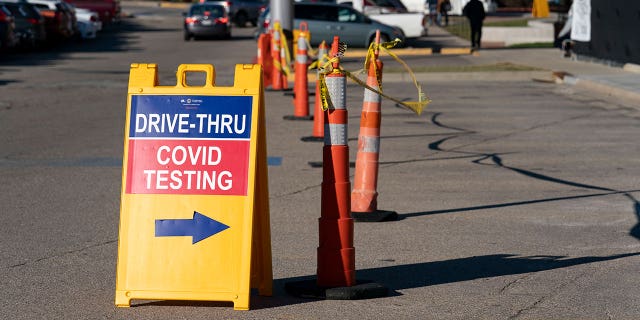
COVID testing

The doctors wrote that in addition to universal masking, other early pandemic strategies, such as asymptomatic testing and contact tracing, should also be reconsidered. (AP)

“Moving away from universal masking policies should be accompanied by reconsideration of other pandemic-era strategies (for example, asymptomatic testing, resource-intensive contact tracing), which similarly have experienced a shift in their risk-benefit balance over the course of the pandemic,” they stated in the discussion.

Potential for masking to return

The latest commentary doesn’t mean that masking policies won’t return sometime in the future, the physicians noted.

“Future pandemics or significant localized outbreaks may justify more widespread or targeted masking policies, respectively, as part of a bundled response,” they wrote, noting that it’s important to educate health care personnel and patients as policies change.

COVID-19’S LASTING IMPACT: ‘LESS ATTRACTIVE’ PEOPLE WEAR MASKS MORE OFTEN THAN OTHERS, STUDY FINDS

“Change and adaptation are expected,” said senior author Dr. Westyn Branch-Elliman, an infectious diseases specialist and clinical investigator at VA Boston Healthcare System. 

“That does not mean ‘the science has changed,’ but almost everything around it has.”

The doctors called for “focused research” to “ensure requirements are not maintained longer than necessary and are reinstated when needed.”

Additionally, the authors noted that the Healthcare Infection Control Practices Advisory Committee (HICPAC) at the Centers for Disease Control and Prevention (CDC) “is currently reevaluating existing approaches to Transmission-Based Precautions, which is likely to inform future considerations for health care transmission mitigation strategies.”
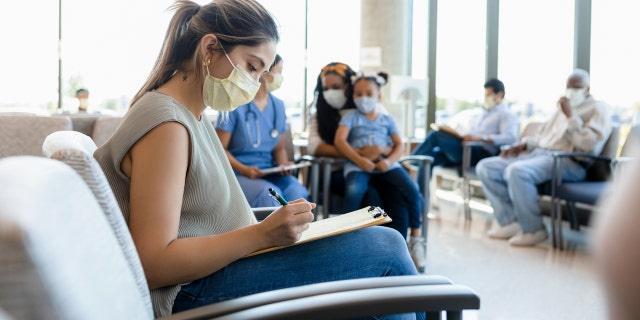
Hospital waiting room

The authors pointed out that masking in health care settings was appropriate early in the pandemic as a means of limiting spread among medical personnel, patients and visitors. Now, however, they said that “universal masking in health care is a policy whose time has come and gone … for now.” (iStock)

“The time has come to de-implement policies that are not appropriate for an endemic pathogen when the expected benefits of such policies are low,” they concluded. 

“Universal masking in health care is a policy whose time has come and gone … for now.”

CLICK HERE TO SIGN UP FOR OUR HEALTH NEWSLETTER

COVID cases and deaths continue to decline. 

As of April 19, the CDC reported 94,142 weekly deaths in the U.S., down from a peak of 5.5 million in January 2022. 

Weekly deaths from COVID were down to 1,160; the highest count was 23,629 in January 2021.

CLICK HERE TO GET THE FOX NEWS APP

The World Health Organization released updated masking guidelines in January 2023. 

Despite the decreasing COVID numbers, the agency stated that “masks are recommended following a recent exposure to COVID-19, when someone has or suspects they have COVID-19, when someone is at high risk of severe COVID-19, and for anyone in a crowded, enclosed or poorly ventilated space.”
Housing Fraud Is on the Rise Amid Tight Market Conditions, Experts Say

Housing Fraud Is on the Rise Amid Tight Market Conditions, Experts Say
  • Serious estate pros say they have noticed a surge in housing fraud more than the past year.
  • It can be a consequence of limited problems sparking desperation from both customers and sellers.
  • Some specialists say they expect the circumstance to get even worse as market place dynamics carry on to change.

When fraud victims speak to Mark Berman, an attorney at Ganfer Shore that usually specials with situations of serious estate fraud, they’re usually distraught. Numerous of them ended up shut to closing on a house when they obtained a legit-looking email or textual content asking them to wire a chunk of dollars to wrap up the offer.

It will become apparent later that the ask for was sent by a fraudster, part of a wave of equivalent cons seeking to acquire advantage of pissed off homebuyers and sellers clamoring to transact in a tricky current market. 

Berman and other market experts informed Insider that genuine estate fraud has surged, a development that is getting pushed by tight current market ailments. With large curiosity fees and anemic transaction volume, homebuyers, sellers, and brokers are often attempting to close offers as rapidly as feasible, experts say, and this can make it effortless to overlook a scammer. 

Analytics firm CoreLogic uncovered that the possibility for property fraud in which a seller misrepresents data about a home on the sector, increased 23{515baef3fee8ea94d67a98a2b336e0215adf67d225b0e21a4f5c9b13e8fbd502} in the next quarter of 2022 from the prior calendar year.

Wire fraud — when a fraudster siphons dollars from the customer at some point in the transaction — and title fraud — in which a scammer transfers a the title of a residence to an illicit 3rd party — have also spiked.

Transactions where by wire and title fraud had been a chance variable notched an all-time-substantial in the fourth quarter of 2022, in accordance to data from FundingShield, with a minor about 50 percent of all transactions bearing opportunity signs of wire and title fraud possibility. That is approximately double the possibility of this form of fraud noticed in 2021, FundingShield informed Insider.

Nevertheless Berman reported it was challenging to estimate an specific selection, he suggests that actual estate fraud situations have gone up “exponentially” in recent a long time, with his consumers typically like household customers, brokers, and actual estate attorneys. Nevertheless some of his consumers are industry professionals, they also slide into traps established by fraudsters merely since of how clever some of the ripoffs have grow to be.

“Some scams are so damn fantastic,” Berman said. “Scams are having incredibly sophisticated and true estate agents, brokers, they are not maintaining up.”

Why is this going on?

The spike in fraud arrives at time of shifting dynamics in the US housing current market. 

Charges on the 30-year set property finance loan soared from pandemic lows to touch 7{515baef3fee8ea94d67a98a2b336e0215adf67d225b0e21a4f5c9b13e8fbd502} in late 2022 and have hovered around that level since. Meanwhile, dwelling product sales, housing starts, and new house listings have all cratered, primary some experts around the very last 12 months to alert of a housing sector crash that could provide on a steep correction in residence selling prices.

But while some prospective purchasers have been sidelined, those people who are in the marketplace are progressively desperate to close, professionals say, leading to a rise in questionable offer-producing. 

According to CoreLogic’s principal of field options, Bridget Berg, it is becoming more challenging for individuals to provide households as the expense of borrowing stays near a report significant. That’s helped generate greater instances of assets fraud.

Wire fraud has greater for identical causes, according to FundingShield CEO Ike Suri. Higher curiosity fees and sluggish housing action make much more pressure for actual estate industry experts to shut on a offer, which can suggest they’re not properly verifying if an e-mail or a text is from a legit sender.

“Chaos results in a ideal time for cyber criminals to consider advantage of these, especially in the housing market,” he said, incorporating that each and every transaction among parties is an chance for a fraudster to strike.

“They stop up becoming exposed to phishing, hacking, spoofing, to title the different techniques out there.”

Berg told Insider that she envisioned to see an uptick in home loan fraud in coming several years, with CoreLogic’s Nationwide Property finance loan Application Fraud Index acquiring increased 30{515baef3fee8ea94d67a98a2b336e0215adf67d225b0e21a4f5c9b13e8fbd502} from its very low for the duration of the pandemic. The index is a predictive device, currently suggesting 30{515baef3fee8ea94d67a98a2b336e0215adf67d225b0e21a4f5c9b13e8fbd502} larger danger of fraud in property finance loan applications. 

Kip Medrygal, a companion at Locke Lorde who also usually encounters genuine estate fraud conditions, instructed Insider he much too is anticipating an maximize in ripoffs, though it is really also contingent on housing demand and other industry disorders.

He speculates that fraud could enhance as a lot as 20{515baef3fee8ea94d67a98a2b336e0215adf67d225b0e21a4f5c9b13e8fbd502}-25{515baef3fee8ea94d67a98a2b336e0215adf67d225b0e21a4f5c9b13e8fbd502} over the following couple decades if the market place stays limited. 

The shifting market dynamics have experts divided more than wherever US housing goes from in this article. The Fed is envisioned to pull back again on significant interest prices afterwards this calendar year, which could affect a decrease in home finance loan rates.

Nadia Evangelou, main economist at the National Association of Realtors, beforehand informed Insider that she thought easing desire rate anticipations would aid the sector stay away from a crash. She mentioned that housing sales probably bottomed out in early 2023, with the year all round set to be a “turning position” for the market place.

Biden administration gutting online education with new ‘harmful’ guidance, warn experts, lawmakers

Biden administration gutting online education with new ‘harmful’ guidance, warn experts, lawmakers

The Biden administration will now be able to crack down on private companies that contract with colleges and universities to help the schools run their online education programs, raising alarm bells among experts and lawmakers who warned the federal government could stifle remote learning for students.

The Education Department issued guidance last month saying online program managers (OPMs), which are outside contractors that recruit students for and operate schools’ online academic programs, are officially considered third-party servicers, or entities involved with the administration of “any aspect” of an institution’s federal student financial aid.

As a result, these companies can be subjected to stricter federal oversight in a manner that, critics argue, will hurt not only the schools and contractors, but also ultimately the students they serve.

One of the most prominent critics of the department’s new guidance is Rep. Virginia Foxx, R-N.C., chairwoman of the House Committee on Education and the Workforce.

President Biden with Education Secretary Miguel Cardona, right, on Aug. 24, 2022 in the Roosevelt Room of the White House in Washington, D.C.

President Biden with Education Secretary Miguel Cardona, right, on Aug. 24, 2022 in the Roosevelt Room of the White House in Washington, D.C. (OLIVIER DOULIERY/AFP via Getty Images)

GOP SENATORS ACCUSE EDUCATION DEPARTMENT OF ALLOWING ‘TAXPAYER-FUNDED ANTISEMITISM’ ON COLLEGE CAMPUSES

“The growth of technology and its applications in providing students with a well-rounded education is exciting and should be commended,” Foxx told Fox News Digital. “More options for students mean more opportunities for success. For the department to conflate access to online education with rising federal student loan debt diminishes that fact and ultimately hurts the partnerships between institutions, innovators, and the students they serve.”

“The department seems to be more interested in controlling the actions of private companies and creating unnecessary headaches for institutions than it is ensuring students have every tool to succeed academically,” Foxx continued. “I urge the Biden administration to reverse course on this harmful guidance.”

OPMs have long been the target of congressional Democrats and consumer groups, which believe the companies can, through their contractual arrangements, drive up the price of higher education and draw students to low-value academic programs.

Sen. Elizabeth Warren, D-Mass, for example, has raised “concerns about the impact of OPM partnerships on rising student debt loads.”

Under Secretary of Education James Kvaal echoed that sentiment in a statement when the department released its new guidance.

A girl participating in online education training class with teacher and other students using laptop at home.

A girl participating in online education training class with teacher and other students using laptop at home. (iStock)

NEW ONLINE PLATFORM HELPS CONNECT PARENTS WITH TEACHERS OF THEIR CHOICE

“Online education has the potential to meet the needs of many students and lower costs,” he said. “But we are concerned about the growth in loan debt and want to ensure students get value for their money.”

However, many colleges and universities do not have the in-house funding and expertise to develop the online programs they need and need outside help, according to experts familiar with the issue.

OPMs are not the only ones affected by the Education Department’s rules, which critics argue will have a broader negative impact than government officials may realize.

Local police departments helping to compile and analyze campus crime statistics and hospitals providing clinical experiences and “the related educational programing for nurses and other medical professionals” are among the outside entities helping schools through contractual agreements that are being considered third-party servicers, according to the American Council on Education.

The council recently wrote a letter to Education Secretary Miguel Cardona, outlining some of the problems it had with the department’s guidance.

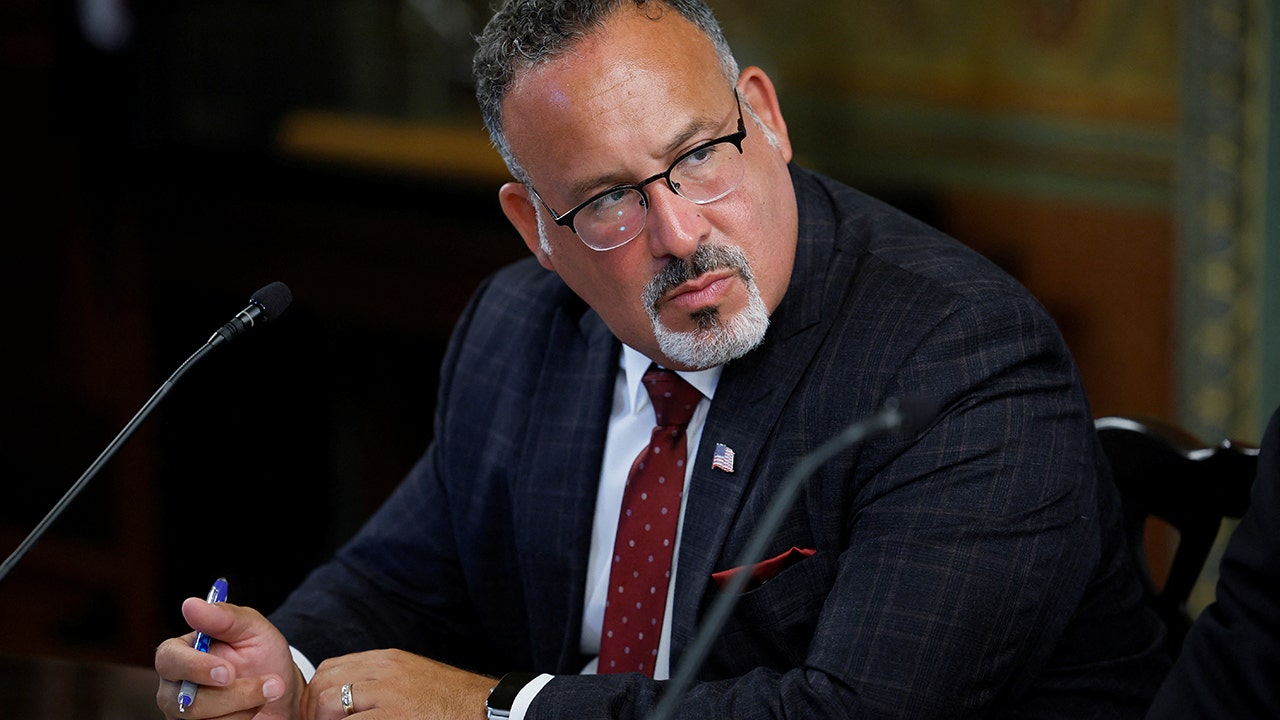
Secretary of Education Miguel Cardona in the Eisenhower Executive Office Building in Washington, D.C., Aug. 8, 2022. 

Secretary of Education Miguel Cardona in the Eisenhower Executive Office Building in Washington, D.C., Aug. 8, 2022.  (REUTERS/Evelyn Hockstein)

BIDEN’S EDUCATION SECRETARY LOBBIES COLLEGES TO DROP OUT OF US NEWS RANKING IN NAME OF EQUITY

“The broadened definition of a [third-party servicer] appears to cover entities that are beyond the common understanding of that term,” the letter states. “Our hope, if given appropriate time to comment, is to provide the department with a fuller picture of the variety of important institutional arrangements that exist so it may better understand the guidance’s impact … We believe the department would benefit from a deeper understanding of the potential that the guidance could trigger an unintended disruption of services to students currently provided by institutions through these entities.”

The letter was co-signed by 46 other higher education interest groups and associations, including accreditors.

Other experts see the department’s actions as not merely misguided but intentional overreach.

“The Department of Education’s crusade against for-profit colleges is now ensnaring a wide range of service providers,” Adam Kissel, visiting fellow at the Heritage Foundation, told Fox News Digital. “This is a classic case of overregulation by overzealous bureaucrats. Every new rule or interpretation like this makes it harder for colleges to serve their students.”

Whatever the department’s motivation, what is clear is the new guidance will present a host of new hurdles for both schools and companies.

A woman working form home with a laptop.

A woman working form home with a laptop. (iStock)

PRESIDENT BIDEN’S STUDENT DEBT RELIEF IS ‘COMFORTABLY WITHIN’ LAW, DOJ ARGUES TO SCOTUS

One challenge, according to legal experts, is that third-party servicers are legally required to sign a contract with their educational partner to be “jointly and severally liable” to the Education Department for any federal violations.

“Third-party OPMs have been able to hide behind really crafty language in their contracts that keeps them from being responsible for any violations,” Stephanie Hall, a senior fellow at the Center for American Progress, told Inside Higher Ed. “It places all the responsibility on the institution.”

Critics have countered that, beyond creating a major new legal hurdle to overcome, the liability requirements could hurt smaller companies, which unlike bigger players, may be unwilling or unable to indemnify their campus partners. Duane Morris, a law firm that works with colleges, has also noted that while a purpose of the guidance may be to hold OPMs liable, the reverse would also hold true; the school would be liable for any violation committed by the third-party servicer.

Another challenge is that third-party servicers are subject to regular audits, which would require these companies to make all their contracts available to federal regulators.

As a result, OPMs and educational institutions will need to take the extra time and effort to carefully redo all their contracts, and some may not even want to continue their partnerships, according to Tony Guida, an attorney at Duane Morris who focuses on education issues.

A tour group makes a stop at the Sterling Memorial Library on the Yale University campus in New Haven, Connecticut, June 12, 2015.

A tour group makes a stop at the Sterling Memorial Library on the Yale University campus in New Haven, Connecticut, June 12, 2015. (Photographer: Craig Warga/Bloomberg via Getty Images)

MARYMOUNT UNIVERSITY STUDENTS LAUNCH PROTESTS AFTER SCHOOL AXES MAJORS LIKE MATH, ENGLISH, RELIGIOUS STUDIES

“OPMs will have to be much more intentional about services they provide,” Guida told Fox News Digital. “With more liability, some companies won’t want to take the risk.”

All these changes would be disruptive to the service of providing online education, critics argue, and have a downstream negative effect on student learning and the quality of higher education.

However, in a statement to Fox New Digital, the Education Department defended its guidance, arguing its simply meant to ensure all parties are complying with federal law.

“The updated third-party servicer guidance is intended to provide much needed clarity and transparency on existing requirements regarding companies that work with colleges around the administration of federal student aid,” a department spokesperson said. “It will help ensure these companies are in compliance with federal rules and regulations so that students can make the best possible decisions about their education.”

“The department is seeking public comment on this guidance, and we will carefully review all comments received,” the spokesperson added. “In the meantime, we will work with colleges to ensure the requirements are clear and that they have ample time to meet reporting deadlines.”

The Department of Education Building.

The Department of Education Building. (iStock)

BIDEN EDUCATION OFFICIAL CLAIMS DEMOCRACY, FATPHOBIA BASED ON WHITE SUPREMACY

Perhaps most importantly, however, these voices argue expanding who falls under the umbrella of third-party servicers also increases the control of the federal government.

“If you’re a regulated entity, the Education Department has broad investigative powers over you,” said Guida. “They can request documents, other things of that nature that would make operating much more difficult. And if third-party servicers don’t comply, this guidance could be weaponized against them.”

Supporters of the department’s guidance counter that the current situation is too opaque.

“That will provide important transparency into what’s going on,” Robert Shireman, senior fellow at the Century Foundation, told Inside Higher Ed. “The Department of Education and then the rest of us will learn more about the contracts that institutions have, and there will be greater scrutiny and accountability for the OPM contractors if they are involved in recruiting students.”

A key issue for the Education Department and those critical of OPMs is how these companies share revenue with academic institutions. In many cases, the company receives a share of the schools’ tuition revenue. However, contractors are increasingly moving away from the revenue-sharing model, instead charging fixed fees for specific services. Some observers claim these companies are having the effect of increasing school tuition rates and profiting from it.

Education Secretary Miguel Cardona speaks during the 2022 National and State Teachers of the Year event in the East Room of the White House in Washington, April 27, 2022.

Education Secretary Miguel Cardona speaks during the 2022 National and State Teachers of the Year event in the East Room of the White House in Washington, April 27, 2022. (AP Photo/Susan Walsh, File)

RANDI WEINGARTEN CLAIMS CHILDREN ‘DO BETTER IN SCHOOLS UNDER TEACHERS UNIONS’

However, others see such arguments — and the department’s new guidance — as ultimately an effort to combat efforts to profit in the education space.

“With the new guidance released last month, the Biden administration seems to be following in the footsteps of President Obama in trying to extinguish private sector, profit seeking participation in higher education,” Beth Akers, senior fellow at the American Enterprise Institute, told Fox News Digital. “There seems to be an attitude that there is no place for profit seeking in higher education. It’s a nice idea to think that all service providers in education should be motivated by benevolence, but profit is what often motivates major innovation — something desperately needed in higher education.”

“Higher education,” continued Akers, “is a realm that has been remarkably stagnant. Instead of trying to stamp out profit seeking and the innovation that would come with it, the Department of Education should focus instead on ousting poorly performing institutions and programs of study from the federal dole by cutting off student aid (loans and grants) from colleges whose graduates fail to out-earn workers with just a high school diploma.”

CLICK HERE FOR THE FOX NEWS APP

The department initially gave colleges and universities until May 1 to report details of their agreements to the government and 30 days to submit comments on the changes. Following widespread outcry, however, the department said that in response to “confusion,” the guidance would not take effect until Sept. 1, rather than immediately as of last month. It also pushed back the end date of the public comment period through March 29.

“This seems to be a solution in search of a problem rather than the other way around. The department hasn’t identified what harm it’s trying to prevent,” said Guida. “It appears to be a broad regulatory grab.”

New Technology Increases Diversity of Experts Quoted in the News Media

New Technology Increases Diversity of Experts Quoted in the News Media

Rolli, has launched the 1st and only Newsroom as a Service™ providing journalists with progressive newsgathering resources to assistance them immediately locate vetted experts and information situations.

New Technology Increases Variety of Industry experts Quoted in the News Media

SANTA MONICA, CA, United states, March 8, 2023 /EINPresswire.com/ — Gals and people of color are grossly underrepresented as professionals quoted in the media. Southern California-based software system, Rolli, has launched a newsgathering resource to support journalists speedily obtain new, vetted, various voices and views for their reporting.

The Problem:

Fewer than 13{515baef3fee8ea94d67a98a2b336e0215adf67d225b0e21a4f5c9b13e8fbd502} of all guest appearances on the most influential Sunday morning exhibits in 2020 were ladies of colour, according to a review by the Women’s Media Middle.

68{515baef3fee8ea94d67a98a2b336e0215adf67d225b0e21a4f5c9b13e8fbd502} of all guest appearances on the reveals reviewed ended up men, 53{515baef3fee8ea94d67a98a2b336e0215adf67d225b0e21a4f5c9b13e8fbd502} ended up white males, according to the Females Media Heart.

Traditional general public relations is costly, favoring people with additional access to capital.

How Rolli Changes That:

Rolli’s 7-action skilled vetting system ignores accessibility to capital and “spin” in favor of deep experience.

Inexpensive subscriptions to the system lets any assumed-leader or organization with potent credentials to be uncovered by journalists throughout all formats and markets.

Purpose-built look for engine with customized information filters supercharges journalists’ speak to lists and permits them to swiftly look at competent experts throughout numerous communities and languages.

Rolli launched all through the pandemic and has by now assisted journalists at more than 300 neighborhood, countrywide, and digital news outlets reduce time expended on locating credible sources although maintaining the optimum journalistic reporting criteria.

Founder Quotation:

“During my time as a Senior Producer at CNN en Espanol, I saw how various voices and perspectives enriched our news coverage, but much too frequently industry experts and company getting pitched to us by PR reflected wealthier shoppers and corporations– and not the diversity that reflects our communities. Rolli supplies these diverse thought-leaders with the gains of deep media connections with no the prohibitive PR rate tag,” says Nick Toso, Founder and CEO of Rolli.

Make sure you go to rolliapp.com/media to use the provider and stay up to day on the hottest firm information.

About Rolli
Created for journalists by journalists, Rolli aggregates the prime, main professionals and news situations from hundreds of sources, on to one particular system without the need of any PR spin, pitching, email spam, or offering of journalist call details. With a 7-move vetting approach, sources are ready to promptly deliver top quality contributions to journalists’ tales. Founded by previous CNN producer and University of Southern California MBA, Nick Toso, the provider aims to do away with the suffering factors of a quickly-paced newsroom and assist improve the good quality and depth of rapidly-centered reporting. Follow us on Linkedin, Twitter at @Rolliapp, Fb at Rolli, or check out us at rolliapp.com for extra info and to keep up to date with enterprise news.

Alli
Ehrhardt
+1 541-973-1994
electronic mail us below

Is the housing market about to crash? Here’s what experts say

Is the housing market about to crash? Here’s what experts say
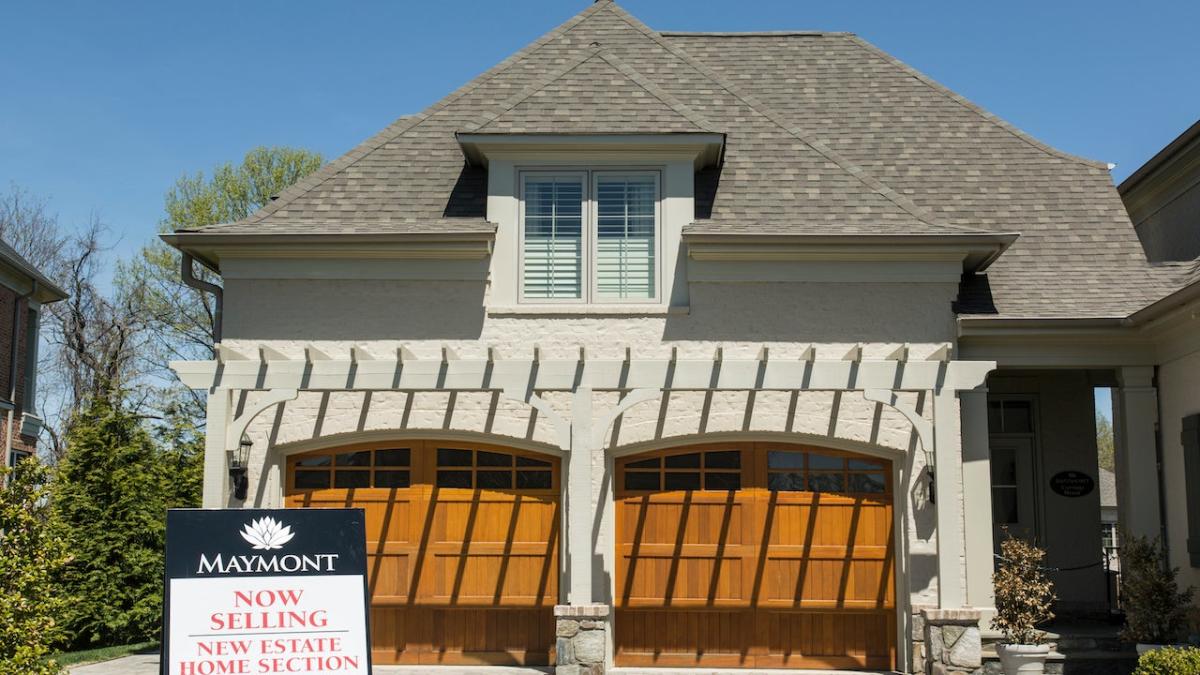
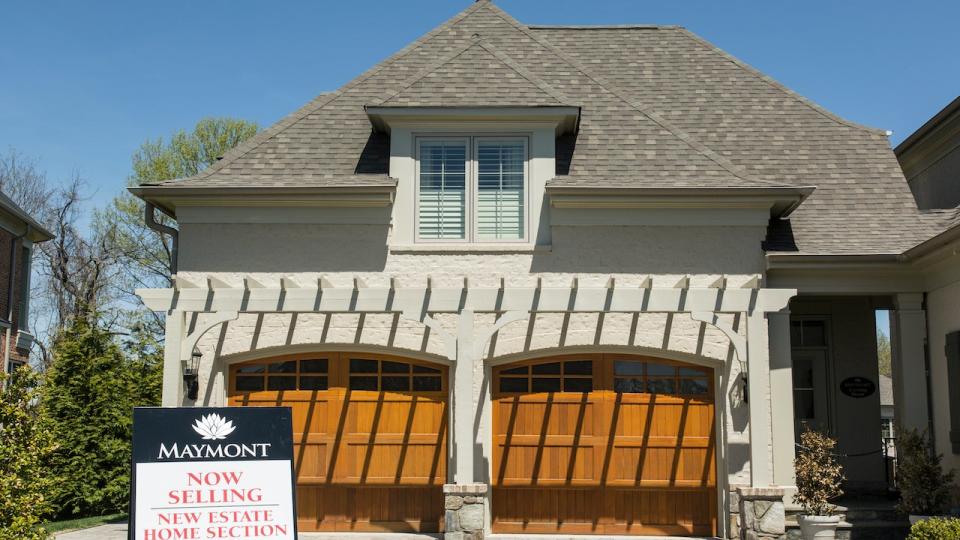
is the housing market about to crash? - the two-car garage and front door of a suburban home, with a maymont

Benjamin C. Tankersley/For The Washington Post via Getty Images

After a record-breaking run that saw mortgage rates plunge to all-time lows and home prices soar to new highs, the U.S. housing market is finally slowing. Home sales had declined for 11 consecutive months as of December 2022, and home values seem to have peaked.

While demand and price gains are cooling, any correction is likely to be a modest one, housing economists and analysts say. No one expects price drops on the scale of the declines experienced during the Great Recession.

Rob Dietz, chief economist at the National Association of Home Builders, sums up the consensus among housing experts: “We’re thinking this is going to be a moderate downturn,” he says.

The real estate party raged on longer than anyone expected. The National Association of Realtors reported that median prices in the spring of 2022 topped $400,000 for the first time ever. Even after a recent retreat, prices are up a robust 32 percent since the coronavirus pandemic began in March 2020, according to NAR data.

Now, bidding wars have largely faded, inventories are loosening and the feeling of frothiness is gone. “The market is clearly turning,” says NAR chief economist Lawrence Yun.

Is the housing market going to crash?

The last time the U.S. housing market looked so frothy was back in 2005 to 2007. Then home values crashed, with disastrous consequences. When the real estate bubble burst, the global economy plunged into the deepest downturn since the Great Depression.

Now that the housing boom is threatened by soaring mortgage rates and a potential recession, buyers and homeowners are asking a familiar question: Is the housing market so hot that it’s about to crash?

Housing economists agree that prices could fall, but the decline won’t be as severe as the one homeowners experienced during the Great Recession. One obvious difference between now and then is that homeowners’ personal balance sheets are much stronger today than they were 15 years ago. The typical homeowner with a mortgage has stellar credit, a ton of equity and a fixed-rate mortgage locked in at a rate well below 5 percent. So no foreclosure crisis looms.

“The wild ride known as the U.S. housing market slowed dramatically in the fall of 2022, as mortgage rates surged and home prices remained high,” says Molly Boesel, principal economist at CoreLogic. “Home sales started strong in early 2022 but took a nosedive later in the year. On the plus side, generous amounts of home equity will protect many borrowers from experiencing the type of foreclosure activity seen during the Great Recession.”

What’s more, builders remember the Great Recession all too well, and they’ve been cautious about their pace of construction. The result is an ongoing shortage of homes for sale.

“We simply don’t have enough inventory,” Yun says. “Will some markets see a price decline? Yes,” he says. “[But] with the supply not being there, the repeat of a 30 percent price decline is highly, highly unlikely.”

Lightbulb

Key housing market statistics

  • A total of 30,822 U.S. homes had foreclosure filings — default notices, scheduled auctions or bank repossessions — as of December 2022, according to ATTOM Data Solutions.

  • South Carolina had the highest foreclosure rate of any state in December, at one foreclosure filing for every 2,301 housing units, according to ATTOM. It was followed by New Jersey, where one in every 2,378 homes were in some stage of foreclosure.

  • Lenders repossessed 3,663 U.S. properties through completed foreclosures — known as “real estate owned,” or REO — in December 2022. Altogether, 42,854 properties were repossessed in 2022, according to ATTOM.

  • Home sales fell 34 percent from December 2021 to December 2022, the National Association of Realtors says. The median sale price in December 2022 was $366,900.

  • Existing home sales for 2022 totaled just over 5 million, per NAR — down 17.8 percent from 2021.

Existing home prices

For many months, economists have been predicting that the housing market would eventually cool as home values become a victim of their own success. Home prices have risen far more quickly than incomes, creating an affordability squeeze, and mortgage rates doubled since August 2021, before starting to retreat a bit.

Experts say home prices could fall

“Most markets are going to experience price declines in the high single digits,” Dietz predicts. Home price declines of 8 to 9 percent would create some economic pain, to be sure. But this correction will be nothing like the utter collapse of property prices during the Great Recession, when some housing markets experienced a 50 percent cratering of values.

Rick Sharga, executive VP of market intelligence at ATTOM Data Solutions, expects declines of 5 percent. “It’s almost inevitable we’re going to see home prices drop,” he says.

Yun says high-priced regions such as California are most vulnerable to a downturn in prices. The Midwest, on the other hand, is unlikely to see a decline in home prices. Overall, he expects national prices to remain flat next year.

5 reasons the housing market is not about to crash

Housing economists point to five compelling reasons that no crash is imminent.

  1. Inventories are still very low: The National Association of Realtors says there was a 2.9-month supply of homes for sale in December. In February, that figure was as low as a tiny 2.0-month supply. This ongoing lack of inventory explains why many buyers still have little choice but to bid up prices. And it also indicates that the supply-and-demand equation simply won’t allow a price crash in the near future.

  2. Builders didn’t build quickly enough to meet demand: Homebuilders pulled way back after the last crash, and they never fully ramped up to pre-2007 levels. Now, there’s no way for them to buy land and win regulatory approvals quickly enough to quench demand. While they are building as much as they can, a repeat of the overbuilding of 15 years ago looks unlikely. “The fundamental reason for the run-up in price is heightened demand and a lack of supply,” says Greg McBride, CFA, Bankrate’s chief financial analyst. “As builders bring more available homes to market, more homeowners decide to sell and prospective buyers get priced out of the market, supply and demand can come back into balance. It won’t happen overnight.”

  3. Demographic trends are creating new buyers: There’s strong demand for homes on many fronts. Many Americans who already owned homes decided during the pandemic that they needed bigger places, especially with the rise of working from home. Millennials are a huge group and in their prime buying years. And Hispanics are a young, growing demographic keen on homeownership.

  4. Lending standards remain strict: In 2007, “liar loans,” in which borrowers didn’t need to document their income, were common. Lenders offered mortgages to just about anyone, regardless of credit history or down payment size. Today, lenders impose tough standards on borrowers — and those who are getting a mortgage overwhelmingly have excellent credit. The typical credit score for mortgage borrowers in the the third quarter of 2022 was a high 768, the Federal Reserve Bank of New York says. “If lending standards loosen and we go back to the wild, wild west days of 2004-2006, then that is a whole different animal,” says McBride. “If we start to see prices being bid up by the artificial buying power of loose lending standards, that’s when we worry about a crash.”

  5. Foreclosure activity is muted: In the years after the housing crash, millions of foreclosures flooded the housing market, depressing prices. That’s not the case now. Most homeowners have a comfortable equity cushion in their homes. Lenders weren’t filing default notices during the height of the pandemic, pushing foreclosures to record lows in 2020.

All of that adds up to a consensus: Yes, home prices are still pushing the bounds of affordability. But no, this boom shouldn’t end in bust.

FAQs

  • Actually, economists do not think it will. Housing economists point to five main reasons that the market will not crash anytime soon: low inventory, lack of new-construction housing, large amounts of new buyers, strict lending standards and a drop in foreclosures.

  • Home prices rose sharply for years. And while the heated market has cooled down, it’s not likely to experience an equally sharp drop soon. Greg McBride, CFA, Bankrate’s chief financial analyst, says a plateauing of prices is more likely than a steep fall. Matthew Pointon, senior property economist at Capital Economics, also expects a slowdown rather than a freefall, predicting a 5 percent drop by mid-2023.

  • It depends on how much money you earn versus how much you pay out in debts and expenses each month. Many financial advisors recommend the 28/36 percent rule of home affordability, which states that you should spend no more than 28 percent of your gross monthly income on housing expenses, and no more than 36 percent on total debt. Bankrate’s home affordability calculator can help you crunch the numbers.

  • Different minimum credit scores are required by lenders for different types of mortgages. However, a score of at least 620 is typically required for a conventional loan — and if it’s as high as 740, all the better. Successful borrowers today tend to have outstanding credit, with a median score of 768.

[sc code=”alpine_collapse”]

FDA Experts Are Still Puzzled Over Who Should Get Which Covid Shots and When

FDA Experts Are Still Puzzled Over Who Should Get Which Covid Shots and When

At a conference to simplify the nation’s covid vaccination policy, the FDA’s panel of industry experts could agree on only a single thing: Details is woefully lacking about how generally distinctive teams of Americans have to have to be vaccinated. That info hole has contributed to prevalent skepticism, undervaccination, and in the end unnecessary deaths from covid-19.

The committee voted unanimously Thursday to aid the FDA’s proposal for all vaccine-makers to adopt the similar pressure of the virus when making variations in their vaccines, and proposed they might fulfill in May perhaps or June to find a pressure for the vaccines that would be rolled out this slide.

Nonetheless, the panel members disagreed with the FDA’s proposal that all people get at least just one shot a year, indicating much more facts was needed to make these types of a declaration. A number of panelists mentioned that in modern scientific studies, only about a 3rd of persons hospitalized with a favourable covid test actually were being there since of covid illness. That is due to the fact everybody entering a hospital is tested for covid, so fatalities of individuals with incidental infections are counted as covid fatalities even when it is not the bring about.

The professionals questioned the rationale for annual shots for everyone, specified that existing vaccines do not seem to secure from infection for far more than a handful of months. However even a solitary booster appears to be to prevent dying and hospitalization in most men and women, besides for the quite previous and men and women with particular medical problems.

“We want the CDC to convey to us accurately who is receiving hospitalized and dying of this virus — the ages, vulnerability, the kind of immune compromise, and whether or not they had been addressed with antivirals. And we require immunological info to indicate who’s at chance,” said Dr. Paul Offit, director of the Vaccine Education and learning Heart and a pediatrician at Children’s Clinic of Philadelphia. “Only then can we make a decision who gets vaccinated with what and when.”

Offit and other folks have expressed stress more than the absence of very clear federal government messaging on what the public can hope from covid vaccines. Though frequent boosters could be crucial for retaining the aged and medically frail out of the clinic, he stated, the annual boosters suggested by the Food and drug administration and the drug organizations might not be important for anyone.

“The goal is to keep men and women out of the healthcare facility,” he said. “For the vulnerable, it would be critical for vaccines to continue to keep up with circulating strains. But for the basic inhabitants, we presently have a vaccine that stops hospitalization.”

Other panelists mentioned the govt requirements to drive investigation harder to get better vaccines. Pamela McGinnis, a retired formal of the Nationwide Institutes of Overall health, claimed she had issues detailing to her two young-adult sons why they instantly got ill after venturing out to bars a single night time only weeks just after obtaining their bivalent booster.

“‘Think how sick you would have gotten if you weren’t absolutely vaccinated’ is not a fantastic concept,” she stated. “I’m not absolutely sure ‘You would have landed in the hospital’ resonates with recipients of the disorder.”

Associates of the FDA’s advisory committee have been irked in latest months, expressing the company didn’t current them with all the info it had on the bivalent vaccine before it was unveiled in September. And some critics have reported the Food and drug administration need to have instructed drug companies to include things like only the more recent strains of the virus in the shot.

Asked about that Thursday, Jerry Weir, a senior Food and drug administration vaccine officer, said his “gut feeling” was that a vaccine matched to a solitary omicron pressure would have executed superior than the bivalent shot, which also has the unique covid pressure. “But the true question is where by we’re headed,” he explained, “and I never know the remedy.”

Possibly the most essential presentation Thursday was from Heather Scobie, who keeps tabs on covid at the Centers for Disease Control and Avoidance. She noted that much less than fifty percent of People in america 65 and older experienced gotten the hottest booster, and that only two-thirds of that age team had gotten even a one booster.

Nonetheless proof continues to mount that it is mainly the elderly who are at major chance from covid. Death premiums from the disease have declined in just about every age team other than those people about 75 because April, inspite of the uptick in new strains. Other than for the quite aged, the demise rate has hovered around 1 in 100,000 due to the fact April. Previously in 2022, infants 6 months aged and young were being hospitalized and died at relatively large costs. Vaccination stages in the 4-and-beneath team hover at about 10{515baef3fee8ea94d67a98a2b336e0215adf67d225b0e21a4f5c9b13e8fbd502}.

Though acknowledging the FDA’s drive to regularize its covid vaccine policy, panel customers stated it is nevertheless far too early to know for certain whether or not covid will surge only in the wintertime, like flu, respiratory syncytial virus, and other respiratory bacterial infections.

“For the following handful of a long time we might not know how frequently we need to have to make a strain alter in the vaccine,” claimed Dr. Steven Pergam, medical director of infection prevention at the Seattle Most cancers Treatment Alliance. Or even if people today who are not in very poor health and fitness or aged will need additional boosters.

1 vaccine-maker represented at the meeting, Novavax, explained it would require to know by the stop of March which strain to include in its vaccine for tumble. Companies with mRNA vaccines like Pfizer and Moderna can change their formulas more quickly, but their solutions aren’t plainly better than Novavax’s.

All 3 of individuals vaccine-makers uncovered at the meeting that they are creating solitary-dose vials or prefilled syringes. Up to now, they’ve sent their vaccines in multidose vials, but given that the federal government has operate out of cash to invest in vaccines, person pediatricians might buy them in the long term. Because the vaccine have to be used swiftly at the time a vial is open, physicians are leery of throwing away vaccine and losing money.

Connected Topics

Call Us

Submit a Tale Suggestion