


Even after mask mandates were dropped across the country amid dwindling COVID-19 cases and deaths, face coverings have still been required in many doctors’ offices, hospitals and other health care settings.
Now, a group of esteemed medical experts is calling for a change.
In an April 18 journal entry in the Annals of Internal Medicine, an academic medical journal, several physicians — including infectious disease specialists — wrote that it’s time to remove masking requirements in health care facilities.
“While critically important in the earlier phases of the pandemic, we’ve entered a more stable phase, with substantial population-level immunity, durable protection against severe disease, a series of less virulent variants, and other important and favorable changes,” said corresponding author Erica S. Shenoy, M.D., PhD, in a press release.
FACE MASKS MADE ‘LITTLE TO NO DIFFERENCE’ IN PREVENTING SPREAD OF COVID, SCIENTIFIC REVIEW FINDS
She is the medical director of infection control for Mass General Brigham and an infectious diseases physician at Massachusetts General Hospital in Boston.
“As conditions change, we need to re-evaluate our infection prevention policies, including masking requirements in health care settings, and adapt,” she added.

Even after mask mandates were dropped across the country amid dwindling COVID-19 cases and deaths, face coverings have still been required in many doctors’ offices, hospitals and other health care settings. Now, a group of doctors is calling for this to end. (iStock)
Other contributing physicians came from Harvard Medical School, Washington University School of Medicine, University of Iowa College of Medicine, Dartmouth Hitchcock Medical Center, Tufts University School of Medicine and Trinity Health Michigan.
“Masking requirements in health care have continued longer than in the community because these settings have a higher proportion of individuals at high risk for complications of infection,” the authors wrote in the journal entry.
“However, the context and conditions of the pandemic have changed dramatically and favorably since masking requirements in health care were initially adopted, and evidence-based public health policy should also adapt in response.”
‘Makes complete sense’
Dr. Marc Siegel, a professor of medicine at NYU Langone Medical and a Fox News contributor, agreed with the decision.
“It makes complete sense to remove the universal mask requirements for medical centers — and NYU did it weeks ago,” he told Fox News Digital. “It hasn’t made sense for a while.”
“We should adapt mask policies to reflect this new reality.”
Dr. Shana Johnson, a physical medicine and rehabilitation physician in Scottsdale, Arizona, reviewed the doctors’ recommendations.
“As we transition to the place where SARS-CoV-2 is a constant and stable presence in our community, we should adapt mask policies to reflect this new reality,” she told Fox News Digital.
Weighing costs, benefits
In the journal entry, the authors pointed out that masking in health care settings was appropriate early in the pandemic as a means of limiting spread among medical personnel, patients and visitors.

Dr. Marc Siegel of New York City said he continues to wear a KN95 or N95 mask in the room with most patients, especially those with respiratory symptoms. He said, however, that it “makes complete sense to remove the universal mask requirements for medical centers.” (iStock)
But as the population has achieved greater immunity and COVID has entered a “more stable phase” — and as public health agencies and the U.S. government have declared that the public health emergency is over — the physicians stated in the findings that the small benefits of continuing to require masks don’t justify the costs.
“Masks do have downsides, such as impaired communication and disrupted human connection.”
“After three years of universal masking in health care, the risk-benefit calculation has shifted,” said Shira Doron, M.D., chief infection control officer for Tufts Medicine health system and hospital epidemiologist at Tufts Medical Center, in the press release announcing the paper.
“Masks do have downsides, such as impaired communication and disrupted human connection. We are at a stage of the pandemic where it now makes sense to end mandatory masking,” she added.
PARENTS NOW QUESTION WHETHER COVID MASK MANDATES DID MORE HARM THAN GOOD
Among the drawbacks of masks, the study authors cited an “increased cognitive load” for doctors who are trying to listen to patients wearing face coverings.
This is particularly difficult for patients who do not speak fluent English or who are hard of hearing, they added.
“Masks obscure facial expression; contribute to feelings of isolation; and negatively impact human connection, trust and perception of empathy,” the authors wrote.
“Masking is not without its downsides,” Dr. Johnson said. “Masks make it more difficult to hear, understand and communicate with your provider. Some choice makes sense.”
‘Standard precautions’ should be used
In lieu of universal masking, the study authors suggested that health care settings should follow “Standard Precautions and Transmission-Based Precautions,” as outlined by the Centers for Disease Control and Prevention (CDC).

“Masks obscure facial expression; contribute to feelings of isolation; and negatively impact human connection, trust and perception of empathy,” the authors wrote. (iStock)
Health care personnel should wear masks to prevent exposure as needed, according to those guidelines.
Also, any people with respiratory symptoms (namely, coughing or sneezing) should use a face covering.
Additionally, if a medical worker is “caring for patients with suspected or confirmed respiratory infection, they should use personal protective equipment and other interventions.”
Rather than having universal masking requirements, Dr. Siegel believes the decision should be “based on individual risk.”
“Universal masking in health care is a policy whose time has come and gone … for now.”
“It should be reserved for patients who are immunocompromised or severely or chronically ill or the doctors that care for them,” he told Fox News Digital. “Patients who are acutely ill and those with chronic lung problems should continue to wear masks.”
The doctor said he continues to wear a KN95 or N95 mask in the room with most patients, especially those with respiratory symptoms.
“Certain health care settings with high-risk patients could still choose to use universal masking, but it would not be required in other areas of normal risk,” added Dr. Johnson.
Reconsidering other early-pandemic precautions
Along with dropping mask requirements in health care settings, the physicians wrote that other protocols should be reconsidered.

The doctors wrote that in addition to universal masking, other early pandemic strategies, such as asymptomatic testing and contact tracing, should also be reconsidered. (AP)
“Moving away from universal masking policies should be accompanied by reconsideration of other pandemic-era strategies (for example, asymptomatic testing, resource-intensive contact tracing), which similarly have experienced a shift in their risk-benefit balance over the course of the pandemic,” they stated in the discussion.
Potential for masking to return
The latest commentary doesn’t mean that masking policies won’t return sometime in the future, the physicians noted.
“Future pandemics or significant localized outbreaks may justify more widespread or targeted masking policies, respectively, as part of a bundled response,” they wrote, noting that it’s important to educate health care personnel and patients as policies change.
COVID-19’S LASTING IMPACT: ‘LESS ATTRACTIVE’ PEOPLE WEAR MASKS MORE OFTEN THAN OTHERS, STUDY FINDS
“Change and adaptation are expected,” said senior author Dr. Westyn Branch-Elliman, an infectious diseases specialist and clinical investigator at VA Boston Healthcare System.
“That does not mean ‘the science has changed,’ but almost everything around it has.”
The doctors called for “focused research” to “ensure requirements are not maintained longer than necessary and are reinstated when needed.”
Additionally, the authors noted that the Healthcare Infection Control Practices Advisory Committee (HICPAC) at the Centers for Disease Control and Prevention (CDC) “is currently reevaluating existing approaches to Transmission-Based Precautions, which is likely to inform future considerations for health care transmission mitigation strategies.”
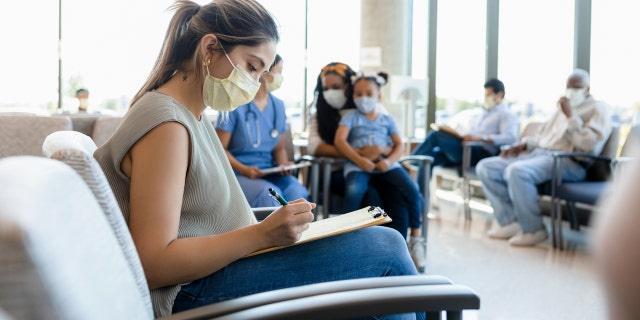
The authors pointed out that masking in health care settings was appropriate early in the pandemic as a means of limiting spread among medical personnel, patients and visitors. Now, however, they said that “universal masking in health care is a policy whose time has come and gone … for now.” (iStock)
“The time has come to de-implement policies that are not appropriate for an endemic pathogen when the expected benefits of such policies are low,” they concluded.
“Universal masking in health care is a policy whose time has come and gone … for now.”
CLICK HERE TO SIGN UP FOR OUR HEALTH NEWSLETTER
COVID cases and deaths continue to decline.
As of April 19, the CDC reported 94,142 weekly deaths in the U.S., down from a peak of 5.5 million in January 2022.
Weekly deaths from COVID were down to 1,160; the highest count was 23,629 in January 2021.
CLICK HERE TO GET THE FOX NEWS APP
The World Health Organization released updated masking guidelines in January 2023.
Despite the decreasing COVID numbers, the agency stated that “masks are recommended following a recent exposure to COVID-19, when someone has or suspects they have COVID-19, when someone is at high risk of severe COVID-19, and for anyone in a crowded, enclosed or poorly ventilated space.”
