What is the latest family history technology and innovation?

What is the latest family history technology and innovation?

Using terms like augmented reality, artificial intelligence, the cloud, blockchain, social media and 5G, the RootsTech 2023 Innovation and Tech Forum highlighted some of the latest innovations, technology and platforms available in the world of family history. 

The services and products go beyond the screen to connect families and friends to each other in the present and into the past — fitting into this year’s conference theme of “Uniting.”

Moderated by Dr. Nick Barratt, an author, broadcaster and historian best known for his work on BBC’s “Who Do You Think You Are?”, the event on March 2 allowed representatives from nine companies to take to the main stage and have a few minutes to highlight their latest offerings.

Marco Polo

Screen_Shot_2023_03_02_at_11.03.46_PM.png

Vlada Bortnik, co-founder and CEO of Marco Polo, speaks to the audience of the RootsTech Innovation and Tech Forum at the Salt Palace in Salt Lake City on March 2, 2023.

Screenshot from RootsTech.org broadcast

The forum’s featured speaker was Vlada Bortnik, co-founder and CEO of Marco Polo — a popular video messenger app which allows users to have face-to-face connections with their family members and friends on their own schedule.

Bortnik said in founding the company, she and her husband asked themselves, “What do we want for our kids?” The answer was more happiness. In her research on happiness, she found an 80-year Harvard study that concluded, “relationships are the only things that matter in life,” Bortnik said. Close relationships in particular made for happier and healthier people.

The company’s purpose was born from that idea: to help people feel close. When sending a “polo” or video to someone else, the app’s users have privacy, no ads, no algorithms, likes or followers. 

“Investing in your relationships is really important,” Bortnik said. “It’s important to you and to happiness. Take the time to invest. Take the time to prioritize using technologies that you trust.”

FamilySearch

Andy Gold from FamilySearch talked about how his team has worked hard to build technology to bring families closer together and be united. 

He explained Computer-Generated Trees (CGT) — “They’re family trees, built in specific locales around the world for richly indexed historical records.”

FamilySearch processes these in the cloud, using machine learning, AI tools and clustering. Then they layer audits on top of that to make sure the trees are accurate.

“CGTs build the necessary scaffolding to house all the data necessary in tree form,” Gold said. 

Complex connections are done in a matter of hours rather than thousands of hours of manual labor. 

“This quickly brings family structures into focus for people that are trying to discover their families, and these are from entire populations of people, they come from millions of different types of records,” he said.

IMG_4578.jpg

Andy Gold from FamilySearch presents during the RootsTech Innovation and Tech Forum at the Salt Palace in Salt Lake City on March 2, 2023.

Mary Richards, Church News

Gold showed images of birth, marriage and death records from several countries, and explained that the technology needed to be one system — like a pipeline — to process all that complex information, while following principles of the genealogical proof standard.

FamilySearch now has five new computer-generated collections online at familysearch.org/search/cgt — in Tasmania, Australia; Santa Catarina, Brazil; Pangasinan, Philippines; Nuevo Leon, Mexico; and Abruzzo, Italy. 

“At the end of the day, our goal is to build software that emulates expert thinking at scale to assist both experts and non-experts discover relationships more efficiently,” Gold said.

Storied

Finn Larson and Cody Mortensen presented from Storied, a company that helps people start a tree from scratch or upload their family tree from another site. 

They showed how to write stories on the site, by inputting a few details and then using AI to generate a draft. 

“From there I can edit anything, delete anything, add my own voice and really make it my own. Sometimes staring at a blank page can be intimidating. But ‘story assist’ is here to help you get the ball rolling,” said Mortensen.

Screen_Shot_2023_03_02_at_11.10.42_PM.png

Cody Mortensen, left, and Finn Larson, right, from the company Storied, share examples of adding different connections on the family history platform during the RootsTech Innovation and Tech Forum at the Salt Palace in Salt Lake City on March 2, 2023.

Screenshot from RootsTech.org broadcast

Larson said the relationship tab of the website allows people to add any relationships to their tree, even enemies, teammates, friends or pets. 

“Think about the characters in the stories in your lives. When we built a story-oriented family history service from the ground up, we knew we needed to support many types of relationships,” Larson said.

He said collaborative storytelling and relationships outside of the family tree will change the way that family history is both consumed and conducted. 

Bank of Memories

Iryna Savytska, the CEO of Bank of Memories, a pay service allowing people to keep their private family network on blockchain, said data is lost every day while data keeps growing. 

Between all the different apps and social media platforms, “there is no single place, for example, [where] my child can enter in 10 years from now and see something about my life,” Savytska said, while wearing a Ukrainian dress during her presentation to show how her country and family traditions are important to her. 

“When you analyze where data is stored, you understand it’s everywhere and nowhere at the same time,” she said. Therefore decentralization and blockchain technology can give power over data back to people in a secure and reliable way.

By uploading an existing family tree to blockchain, she said, people can access that tree many years into the future. 

Screen_Shot_2023_03_02_at_11.17.17_PM.png

Iryna Savytska, the CEO of Bank of Memories, speaks on the stage while wearing a Ukrainian dress for the RootsTech Innovation and Tech Forum at the Salt Palace in Salt Lake City on March 2, 2023.

Screenshot from RootsTech.org broadcast

KinSame

KinSame is a startup company that uses computer vision technology to identify family relationships or kinships from images. 

Looking at two photos, the software uses algorithms and machine learning to match and compare facial features, thus establishing familial connections — and the degree of kinship. 

The software can also identify people in family portraits and older pictures and see who is who in the picture. Using meta data from genealogy companies, KinSame identifies who the people are and fills in age and gender.

“We can structure the database and galleries in a way that a person who’s previously unidentified will find their way to the family,” said CEO Warren Stein. 

GENXT

Stas Nikolskiy with GENXT spoke about how his company uses a confidential computing network to search across databases without genetic data disclosure. 

The service allows companies to find relatives for their customers in each other’s databases without data disclosure.

“There are only five leading databases of which exceed 1 million individuals,” he said, “Databases of [an] average company range from 1,000 to 100,000 individuals, which is not enough for a reasonable number of matches.”

He said personal genomics companies can not access genetic data of others, but his company can communicate matches to its customers in their preferred format.

Ericsson

Oscar Johnson from Ericsson demonstrated the use of augmented reality and virtual reality in storytelling. 

“5G is the combinatorial effect to bring immersive content off the computer, out of the building, out of your home, off your Wi Fi network, and deliver that immersive content anywhere,” Johnson said.

Ericsson’s new platform is called, “Every Place Has a Story,” or EPHAS. Johnson showed a video of how the platform used maps, graphics, audio and visual features with augmented reality to tell the story of a battle in the former Soviet Union.

“When the limitations of technology disappear, the only thing that remains is your imagination,” Johnson said.

Screen_Shot_2023_03_02_at_11.21.30_PM.png

Oscar Johnson with Ericsson takes a selfie with the audience at the RootsTech Innovation and Tech Forum at the Salt Palace in Salt Lake City on March 2, 2023.

Screenshot from RootsTech.org broadcast

Synium Software

Benjamin Günther, the CEO of Synium Software, demonstrated the company’s MacFamilyTree app, which can be purchased for Macs, iPhones and iPads. 

“It has always been our core belief that family history is so much more than just a list of names,” Günther said. He said their app allows an immersive, engaging and innovative way to discover family history. 

It has built-in FamilySearch integration, and the user can scan for relatives or look for photos of families or people and then with one click, download the information. 

The app allows people to colorize black and white photos or enhance the quality of legibility on older documents with machine learning and artificial intelligence. Users also can sync with different devices, create visual family trees, family books, charts and visuals. 

MyHeritage

The company MyHeritage has had a lot of attention recently as people share the results of its “AI Time Machine” on social media. The senior vice president of product, Maya Lerner, showed on the screen a picture of herself depicted as a woman in many different historical periods. 

IMG_4580.jpg

Maya Lerner with MyHeritage shows the results of running her photo through the company’s “AI Time Machine,” which pictured her in various historical settings, during the RootsTech Innovation and Tech Forum at the Salt Palace in Salt Lake City on March 2, 2023.

Mary Richards, Church News

The technology uses the photos of one person to construct a model of that person in a variety of poses. Then, using a series of predefined historical themes, it synthesizes the model with motifs from the themes to create images from the past — casting that person as a historical figure.

As the AI Time Machine has gone viral on social media, Lerner said it has drawn new audiences into genealogy. 

“People are saying that it shows them how much they resemble their ancestors,” she said. “All of a sudden they see themselves in these historical things, and they feel like they look very much alike. This got them to pay tribute to their ancestors and post on social media all these beautiful stories about them.”

Lerner said the company noticed that the AI images actually also empowered women to feel good about themselves.  “Who knew the past could make you feel so good about the present?” she said.

More about RootsTech 2023

RootsTech is an annual family history and technology conference sponsored by FamilySearch, which is a nonprofit genealogical organization operated by The Church of Jesus Christ of Latter-day Saints.

RootsTech 2023 kicked off on March 2 and goes through March 4 in Salt Lake City. After two consecutive years of being held completely online, this year’s conference has events both in-person and online.

The first day’s events also included the 2023 Temple and Family History Leadership Instruction, and a keynote address from singer Jordin Sparks.
Long COVID diagnosis puts extra strain on family caregivers : Shots

Long COVID diagnosis puts extra strain on family caregivers : Shots

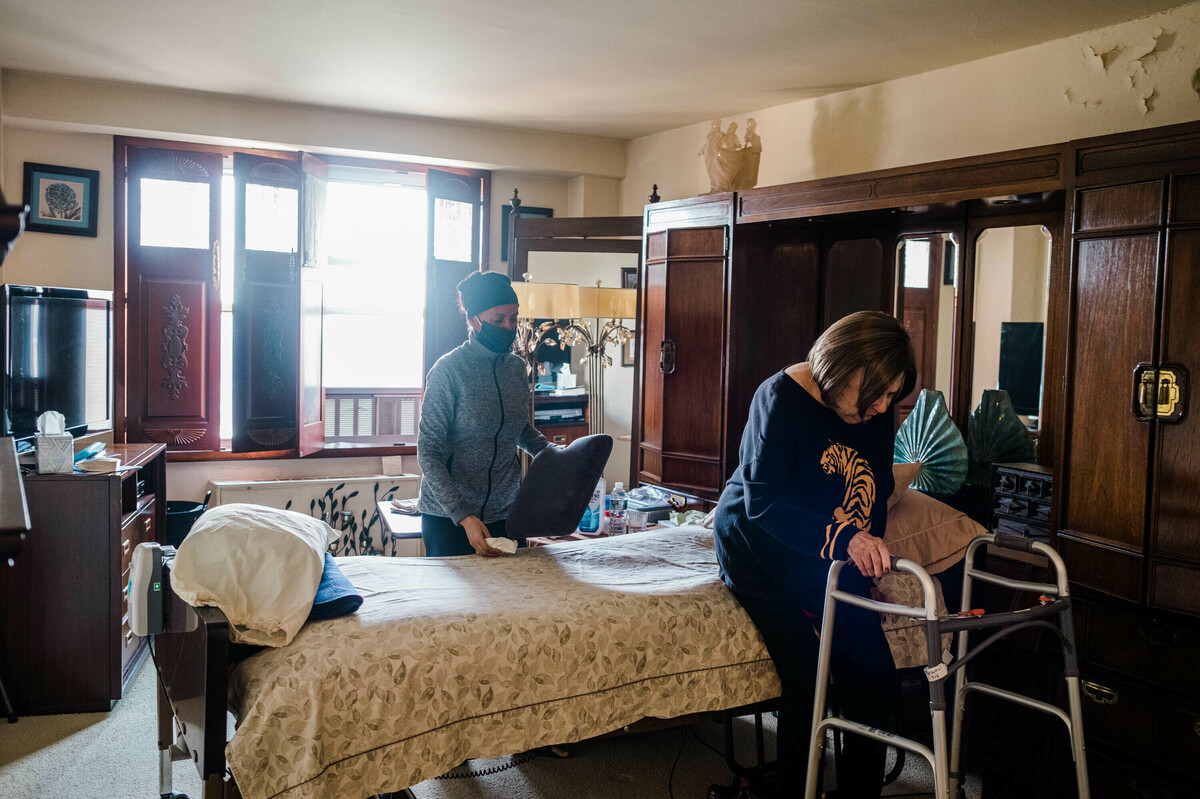
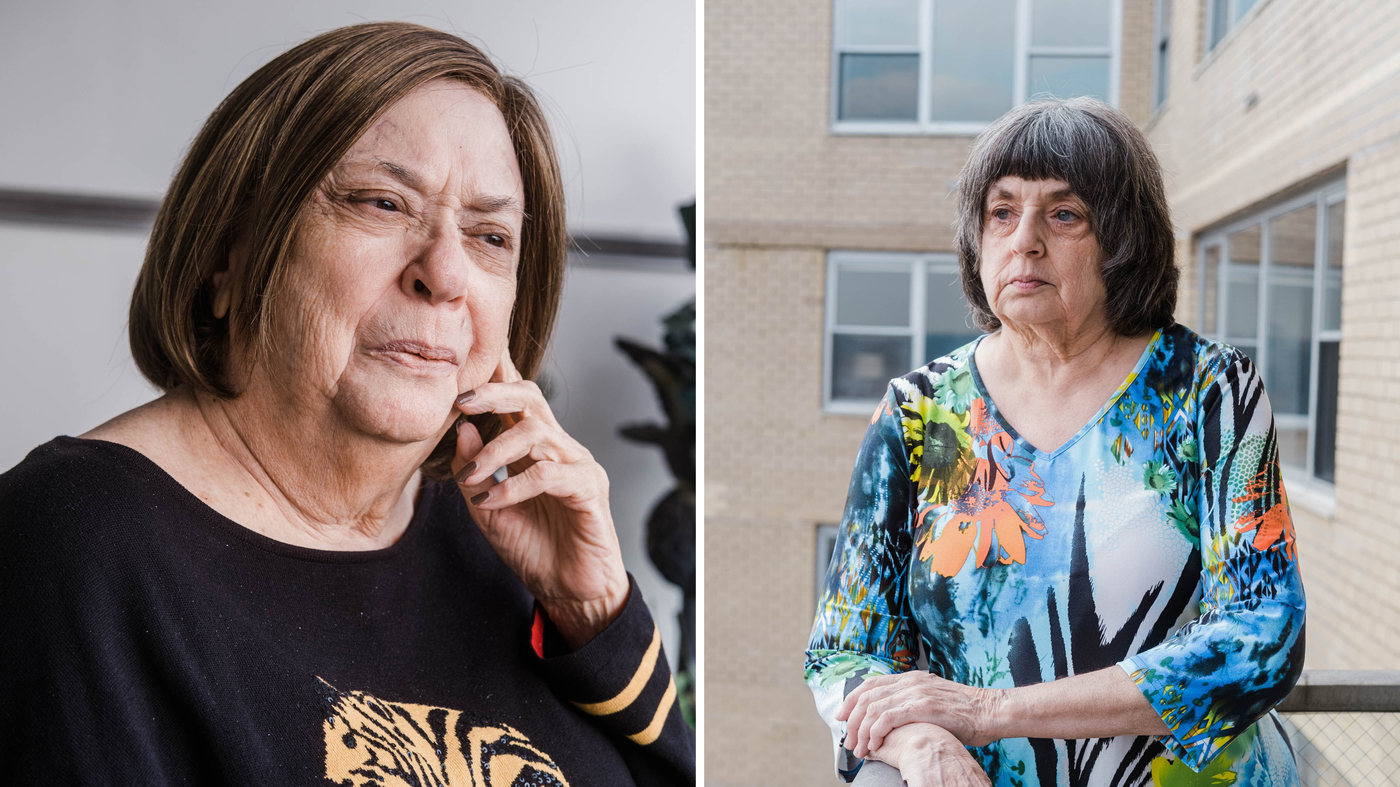
Louise Salant (right), 72, and her aunt Eileen Salant (center), 86, both got very sick with COVID-19 in 2020. And as Eileen developed long COVID symptoms, so too did Louise, who struggled with fatigue and shortness of breath while also managing her aunt’s care. Nearly three years later, home health aides like Elfnesh Legesse (left) help Louise take care of her aunt.

Gabriela Bhaskar for NPR


hide caption

toggle caption

Gabriela Bhaskar for NPR


Louise Salant (right), 72, and her aunt Eileen Salant (center), 86, both got very sick with COVID-19 in 2020. And as Eileen developed long COVID symptoms, so too did Louise, who struggled with fatigue and shortness of breath while also managing her aunt’s care. Nearly three years later, home health aides like Elfnesh Legesse (left) help Louise take care of her aunt.

Gabriela Bhaskar for NPR

For Louise Salant, long COVID has meant new stress, new responsibilities, and multiple medical crises to manage. It’s transformed her life.

But there’s a twist. She’s had to deal with this condition not just as a patient but also as a caregiver for her 86-year-old aunt Eileen Salant, who has coped with long COVID’s disabling symptoms for almost three years.

Eileen and Louise both caught an acute bout of COVID-19 in March of 2020. Eileen had been taking care of her brother, who was admitted to a New York City hospital with heart failure during those dark days of the early pandemic. He got COVID there, and died from his infection with the virus. Both aunt and niece also became very ill.

It was early days of the pandemic in New York, and hospitals were so crowded that Louise was told to stay home and fight out the illness on her own. Meanwhile, Eileen was hospitalized and stayed there all spring, including two months on a ventilator. After that, she spent five months at a rehab hospital. She finally came home to her apartment in Riverdale, the Bronx, the day before Thanksgiving in 2020 — but she was very weak.

Eileen and Louise both got COVID-19 in the early days of the pandemic in New York. Eileen ended up on a ventilator for two months and then spent five months in a rehab hospital. Louise fought the illness at home as hospitals started filling up.

Gabriela Bhaskar for NPR


hide caption

toggle caption

Gabriela Bhaskar for NPR


Eileen and Louise both got COVID-19 in the early days of the pandemic in New York. Eileen ended up on a ventilator for two months and then spent five months in a rehab hospital. Louise fought the illness at home as hospitals started filling up.

Gabriela Bhaskar for NPR

“She could barely sit up in bed, couldn’t hold a fork,” says Louise, who lives a 10-minute taxi ride away.

Over the years, Louise, now 72, has worked at various times as an art therapist, taught piano to children and adults and done medical interviewing for a cancer research team. But when COVID hit, all that ground to a halt. Though she hadn’t always been emotionally close to her aunt, she says, she took on the caregiving role, “because someone needed to” — even as she, too, dealt with her own symptoms of long COVID, including crushing fatigue and shortness of breath.

An overwhelming need

Louise Salant set about organizing home aides, occupational therapy and physical therapy for her aunt and oversaw all other aspects of the older woman’s care. She had to learn to deliver injections of blood thinning medicine, then trained the aides to do it too. For months, she kept track of Eileen’s expenses, maintained all her medical information and patient history, and ran all her errands.

She found that being a caregiver for someone with long COVID, as for other serious and chronic medical conditions, is not just being an aide. It’s running the patient’s life. “Every single day, there’s something she’d need,” Louise says. “I was dealing with the pharmacy, dealing with the doctor, keeping her schedule. And when I’m not there, I’d worry. I have to always be available on the phone.”

Louise began managing all aspects of her aunt’s life while dealing with her own debilitating fatigue. She hired and trained home health aides, made doctor’s appointments for Eileen, and picked up prescriptions from the pharmacy.

Gabriela Bhaskar for NPR


hide caption

toggle caption

Gabriela Bhaskar for NPR


Louise began managing all aspects of her aunt’s life while dealing with her own debilitating fatigue. She hired and trained home health aides, made doctor’s appointments for Eileen, and picked up prescriptions from the pharmacy.

Gabriela Bhaskar for NPR

Eileen recently got a new phone; Louise showed her how to use it.

Gabriela Bhaskar for NPR


hide caption

toggle caption

Gabriela Bhaskar for NPR


Eileen recently got a new phone; Louise showed her how to use it.

Gabriela Bhaskar for NPR

Between 8 and 23 million Americans are thought to have long COVID — meaning they have long-lasting symptoms that endure or arise months after infection, such as difficulty concentrating (“brain fog”), extreme tiredness, anxiety and shortness of breath. But there is no solid estimate of how many need caregiving help. Stats from one clinic hint at the size of the problem: Out of the 1,782 patients seen at the Penn Medicine Post-COVID Assessment and Recovery Clinic between June 2020 and January 2023, about one-fifth said they felt uncomfortable dealing with daily activities like driving, shopping, or using public transit, suggesting the need for a caregiver.

And, like roughly 40{515baef3fee8ea94d67a98a2b336e0215adf67d225b0e21a4f5c9b13e8fbd502} of U.S. caregivers, Louise had her own chronic health problems to manage. It was the exhaustion of long COVID that almost took her under, especially in the first months of caregiving. After three or so hours of helping her aunt, she says, “this sickening feeling would come over my whole body, and I’d have to go home. I’d be in bed sick for two or three days.” In August 2021, Louise got a new inhaler from her lung doctor that helped her breathe better and started to give her more energy.

Why caregiving is harder when the medical condition is new and poorly understood

Stories like the Salants’ reveal another unfortunate reality about dealing with a complex chronic disease like long COVID, in contrast to an illness with a more straightforward diagnosis: Meeting the demands of the health care system itself can be a major burden. Because the medical condition is new and poorly understood, patients often consult multiple specialists who order a long sequence of tests to rule out other illnesses. Caregivers must schedule each of those visits, often go with the patient to the test, and often need to follow up with multiple physicians about the results.

Louise sorts through Eileen’s medications. “She’s been wonderful to me,” Eileen says of Louise. “Like a daughter would help her mother.”

Gabriela Bhaskar for NPR


hide caption

toggle caption

Gabriela Bhaskar for NPR

With unpredictable symptoms that can wax and wane mysteriously, long COVID also requires exceptionally good record-keeping, in order to provide doctors with new clues. But because the disease often causes fatigue and brain fog, some patients can’t keep track for themselves. They rely on friends or family for help.

“The family caregiver becomes the care manager, advocating and managing the system,” the late John Schall, former CEO of the Caregiver Action Network, an education and advocacy nonprofit, told us last year. “And you’re doing it by guesswork. Nobody tells you what to look for.”

In interviews with a half-dozen family caregivers of people with long COVID, the complexity of managing care emerged again and again. Judith Friedman, a Brooklyn mom who is helping her adult daughter who has long COVID, maintains a list of 14 doctors she consults regularly or periodically and another list that includes 10 daily prescription drugs, plus supplements and other as-needed medications her daughter takes.

Slowly, over time, Eileen began regaining her strength. By March 2022, she was able to venture out with Louise, for adventures beyond the neighborhood.

Gabriela Bhaskar for NPR


hide caption

toggle caption

Gabriela Bhaskar for NPR


Slowly, over time, Eileen began regaining her strength. By March 2022, she was able to venture out with Louise, for adventures beyond the neighborhood.

Gabriela Bhaskar for NPR

The task can be overwhelming even for experts. Tonya LaGrange has helped her husband Brent LaGrange since 2020 through a huge range of problems stemming from long COVID, including heart arrhythmias, joint pain, neurological problems and difficulty breathing. During doctors’ appointments, she is his advocate and backstop, making sure nothing gets forgotten and details don’t get lost. “It’s probably why he’s still alive now,” LaGrange says. “I’ve been able to intervene when he slips through the cracks.”

In 2020, at the peak of her husband’s illness, she was always doing something for his care, she says, whether it was emailing case managers during the day, or monitoring his breathing at night to wake him up when he would especially struggle. It’s not quite as intense now as it once was, she says, but she is still always “on” — juggling phone calls, appointments and follow-ups in between the demands of her job as the director of rehabilitation at a skilled nursing facility.

Even though LaGrange works in health care herself (including training as a physical therapist), and all her husband’s doctors are in one health system she finds care management a challenge. “I know how the field works, I know the system, I know the terminology, and we’re having trouble,” she says. “What about people who don’t have the education I have? It’s devastating.”

Caregivers need support, too

Louise says her own long COVID symptoms have finally mostly eased. She says she took on the caregiving role for her aunt when COVID-19 hit them both, “because someone needed to.”

Gabriela Bhaskar for NPR


hide caption

toggle caption

Gabriela Bhaskar for NPR


Louise says her own long COVID symptoms have finally mostly eased. She says she took on the caregiving role for her aunt when COVID-19 hit them both, “because someone needed to.”

Gabriela Bhaskar for NPR

About half of all family caregivers say they take the lead in coordinating their ill loved one’s care, according to surveys from AARP. And while hands-on caregiving can be emotionally rewarding, dealing with forms, bills and scheduling generally isn’t, says Jennifer Olsen, CEO of the Rosalynn Carter Institute for Caregivers. “It’s challenging to spend half your day on the phone with insurance to make sure you have the right justification for the right test,” she says. “Caregiving project management is something we don’t talk about.”

These responsibilities add to the strain of worrying about a loved one’s health and keeping the household running too. It can be intense, says Sheria Robinson-Lane, assistant professor at the University of Michigan School of Nursing, who studies caregiving. “One family member might have taken care of paying the bills, and now this person has to learn all those tasks, which wasn’t part of the division of labor,” she adds. “That causes stress.”

Louise rests on the couch while visiting Eileen at her apartment in the Bronx. Naps were a regular part of each caregiving day a couple of years ago, when Louise could only function about three hours a day, she says. A new inhaler she was prescribed in August 2021 helped her breathe better, and gave her more energy.

Gabriela Bhaskar for NPR


hide caption

toggle caption

Gabriela Bhaskar for NPR


Louise rests on the couch while visiting Eileen at her apartment in the Bronx. Naps were a regular part of each caregiving day a couple of years ago, when Louise could only function about three hours a day, she says. A new inhaler she was prescribed in August 2021 helped her breathe better, and gave her more energy.

Gabriela Bhaskar for NPR

Robinson-Lane recommends that caregivers move quickly to reinforce their own emotional support systems, whether that’s friends, family or, ideally, a professional counselor. Local senior centers can often help people who aren’t necessarily elderly, she adds: Advice and connections may be available for those over 55, or for disabled people of any age. Simply talking to your insurance provider can also point the way to assistance: “In my experience they’re incredibly helpful once you get someone on the phone,” says Robinson-Lane.

The next chapter of care

By the late winter of 2021, months after she first came home from the rehab hospital, Eileen Salant started feeling stronger, and by April of that year she was able to venture out to the kosher deli in her neighborhood. By March of 2022, with the help of her niece Louise, the two took longer adventures — taxi trips to Nordstrom and Saks Fifth Avenue in Manhattan. “I was just determined to get out,” Eileen says.

Later that month, she had a major setback, and was hospitalized again for a week. But thanks to Louise’s help, and the support of paid caregivers at home, Eileen eventually bounced back.

Louise says that despite the difficult circumstances, she and her aunt have become closer these past few years.

Gabriela Bhaskar for NPR


hide caption

toggle caption

Gabriela Bhaskar for NPR


Louise says that despite the difficult circumstances, she and her aunt have become closer these past few years.

Gabriela Bhaskar for NPR

“She’s been wonderful to me,” Eileen says of Louise. “Like a daughter would help her mother.” Despite the difficulty of the last few years, the two are closer now, Louise says, and have come to respect and love each other.

Louise has advice for other long-COVID caregivers: Find a doctor who is knowledgeable about the disease, or at least willing to learn more about it. She also recommends the online patient-support group Survivor Corps. “The best resource is other people,” Louise says.

Other family caregivers praise the Body Politic COVID-19 support group. And LaGrange recommends simply finding someone to talk to who is not part of the family — perhaps a friend or a therapist.

Although specific treatments for long COVID are elusive so far, many people do eventually recover on their own. The biggest study so far found that long COVID symptoms endured an average of 9 months for people who’d been hospitalized with COVID-19, and 4 months for those who hadn’t needed hospitalization .

Louise also reports that her long-COVID symptoms have finally eased, and she, too, is feeling better. The overwhelming fatigue seems to be gone, although she’s still tired, and she even started teaching piano again for one nearby family.

She’s been able to step back a little bit from her daily responsibilities in caring for her aunt, although she knows that could change at any moment. She still sleeps with her phone by her bed, she says — but now at least she sleeps through the night.

Kat McGowan is a freelance writer in California focused on caregiving. This story was produced with support from the Alicia Patterson Foundation.

How to Use Debt to Build Wealth | Family Finance

How to Use Debt to Build Wealth | Family Finance

In accordance to the Federal Reserve Bank of New York, overall American household debt equaled $16.51 trillion in the 3rd quarter of 2022, a 2.2{515baef3fee8ea94d67a98a2b336e0215adf67d225b0e21a4f5c9b13e8fbd502} increase over the next quarter of the year. But while credit card debt frequently receives a poor rap in personal finance circles, it is not usually a detriment to own funds.

“Debt can be an really strong device when utilised correctly,” Michael Tanney, senior running director of New York-based mostly Magnus Financial Team, suggests.

But like most powerful applications, if you use it improperly it can damage you. It’s vital to just take on debt for the right motives and beneath the correct guidance, he suggests.

When you use debt responsibly it can assistance you attain financial security and develop your web worth. Keep reading to study how.

How Great Credit card debt Differs From Terrible Credit card debt

Fiscal gurus say you will find good financial debt and poor debt. Great credit card debt involves financial loans – like home loans, scholar financial loans and small company loans – that allow you to purchase an asset with the opportunity to obtain benefit about time. (In the situation of scholar financial loans, you’re gaining obtain to a vocation that will most likely afford you larger potential earnings.)

Undesirable credit card debt normally features high-curiosity monetary products – like credit history cards – you use to order items that decrease in worth or that you promptly eat. This form of debt can turn out to be a drag on your funds and prevent you from assembly other money goals.

Grant Sabatier, creator of the private finance web site Millennial Revenue and creator of “Fiscal Liberty,” suggests that when we hear about poor personal debt, it is commonly pertaining to credit history cards with superior desire rates.

When you make only minimum payments on credit history card accounts, the volume you owe continues to increase and compound promptly and can set you deep into debt ahead of you know it. Negative debt also features payday and other predatory loans, Sabatier claims.

How to Build Wealth When You’re in Debt

When you use debt house, it shouldn’t prevent you from growing your web really worth above time. Stick to these steps to take control of your financial debt and get ahead financially.

Shell out Down Significant-Interest Debt Initially

If you’re carrying balances on your credit history playing cards, halt applying them for a while. Direct your money toward spending down people balances each month, starting off with the best-desire card 1st.

Credit rating playing cards can serve as a fantastic software to improve your credit history rating, increase dollars flow and rack up rewards details. But if you are carrying a equilibrium just about every month, the curiosity price will commonly outweigh any of all those rewards. Switch to applying a debit card or income till you pay out off your playing cards.

Established Apart Savings

Location aside from three to six months of cost savings will assistance stop you from heading back into financial debt if an crisis – like an unforeseen dwelling maintenance or work decline – occurs. Goal to place some money into your unexpected emergency fund each thirty day period and at least more than enough into a retirement account to get benefit of your employer’s match.

“You really don’t want to use an all-or-almost nothing strategy to spending down personal debt that would alienate your other monetary targets,” John McCafferty, director, monetary arranging at Edelman Economic Engines, says.

Take On Supplemental Credit card debt Only if You Have a Plan to Pay back It Back again

Whether or not it’s a smaller small business financial loan, university student financial loan or mortgage loan, imagine diligently about the volume of cash you want to borrow and irrespective of whether you are going to have the sources to pay back it back again. For illustration, if you are likely back to school and using out a financial loan, make confident your projected salary immediately after graduation will help you to comfortably make the payments.

Never Eliminate Your ‘Good Debt’ Way too Rapidly

If you have been a single of the millions of Us citizens who took benefit of report low interest prices in the past 10 years and secured a home finance loan at a rock-base rate, don’t rush to pay out it off.

In its place, place that dollars you would use to spend down your property finance loan into a substantial-generate price savings account. You could generate up to 4{515baef3fee8ea94d67a98a2b336e0215adf67d225b0e21a4f5c9b13e8fbd502} desire that way, which would be a better return than you’d get paying out off a 3{515baef3fee8ea94d67a98a2b336e0215adf67d225b0e21a4f5c9b13e8fbd502} home finance loan. Or, make investments the cash in the stock sector. Even though it can be unpredictable suitable now, if you really do not need to have the cash in the near long term it could possibly be a great spot to set some dollars.

“The inventory industry has historically made an regular of 8{515baef3fee8ea94d67a98a2b336e0215adf67d225b0e21a4f5c9b13e8fbd502} to 10{515baef3fee8ea94d67a98a2b336e0215adf67d225b0e21a4f5c9b13e8fbd502} for each yr, depending on the time period of time that you search at,” Paul Dietrich, chief expenditure strategist at B. Riley Wealth, claims. “If your personal debt is less than that, you may well target on investing instead.”

More false claims from George Santos about his work, education and family history emerge

More false claims from George Santos about his work, education and family history emerge


CNN
 — 

Rep.-elect George Santos created additional phony claims more than the several years about his family members background, perform background and instruction in campaign appearances over the many years, a assessment of statements made in two of his strategies for Congress uncovered.

CNN’s KFile uncovered more falsehoods from Santos, including claims he was pressured to depart a New York City personal school when his family’s authentic estate belongings took a downturn and stating he represented Goldman Sachs at a top financial convention exactly where he berated the organization for investing in renewables.

CNN also reviewed a lot more instances of Santos providing more bogus heritage of his family’s qualifications. In a person job interview, Santos stated his mother’s family’s historic Jewish identify was “Zabrovsky,” and later on appeared to function a GoFundMe marketing campaign for a pet charity (which he falsely claimed was a 501(c)(3) nonprofit) below that alias. Genealogists CNN beforehand spoke with located no proof of Jewish or Ukrainian heritage in his relatives tree.

In a further, he claimed his mother, whose spouse and children has lived in Brazil due to the fact the late 1800s, was a White immigrant from Belgium.

Santos’ marketing campaign did not answer to CNN’s remark ask for.

Given that reports initially surfaced about his untrue statements, Santos has built endeavours to downplay his fabrications as mere “embellishments.” But the formerly unreported claims from Santos illustrate a pattern of fabricating aspects about his existence, typically in support of presenting a much more compelling or appealing private narrative. The Nassau County district attorney’s office environment mentioned Wednesday that it is wanting into Santos’ fabrications, although it did not specify the falsehoods it would explore.

In interviews above the previous couple times, Santos admitted to lying about pieces of his resume, which include graduating from university, but he explained to the New York Post that the misrepresentation of his function history at Goldman Sachs and Citigroup was a “poor alternative of text.” There is no file he labored at the major fiscal establishments in the state, as he experienced previously claimed.

Santos also denied that he falsely called himself Jewish, saying he “never claimed to be Jewish” but jokingly mentioned he was “Jew-ish” to the New York Publish. He also falsely claimed that his grandparents “survived the Holocaust” and fled Europe to escape Jewish persecution. But CNN discovered that Santos identified as himself an “American Jew” and “Latino Jew” on numerous instances. The Republican Jewish Coalition disinvited Santos from appearing at any of its functions simply because he “misrepresented his heritage.”

Despite the scandals, the New York Republican, who flipped his Long Island seat, mentioned he will just take place of work in January — spurring phone calls to resign from Democrats.

Here are some of the outright falsehoods CNN discovered:

In appearances, and in an old marketing campaign biography, Santos claimed his mothers and fathers sent him to Horace Mann, an elite private university in the Bronx.

“He commenced Horace Mann preparatory school in the Bronx, however, did not graduate from Horace Mann due to money issues for his family,” his biography read in 2019 for his initial marketing campaign for Congress that Santos lost. “He acquired a GED throughout his senior calendar year.”

Santos also built the same declare in an visual appeal on a YouTube display in 2020.

“They sent me to a very good prep college, which was Horace Mann Prep in the Bronx. And, in my senior yr of prep school, however my mothers and fathers fell on hard periods, which was something that would later grow to be recognized as the depression of 2008. But we were being hit a minimal earlier on with the overleveraging of serious estate. And the current market commenced to implode. Um, and the initially thing to go was the prep faculty. You know, you, you just can’t find the money for a $2,500 tuition at that issue, correct? So in any case, um, I remaining faculty, uh, four months to graduation.”

But the declare is phony, according to the university.

“We’ve searched the information and there is no proof that George Santos (or any alias) attended Horace Mann,” Ed Adler, a spokesman for the school, informed CNN.

“Have you at any time listened to of a Goldman Sachs personnel just take the stage at the premier non-public fairness meeting in the earth – SALT, operate by Anthony Scaramucci – and berate their employer? Very well, I did that,” Santos claimed on a regional podcast this summer time. “And I did it in the manner of renewable energy and international warming. This was the panel I was on. And they are all conversing about solar, wind, and this was back, what, 7 years in the past now? And I explained, you know what, this is a rip-off. It’s taxpayer dollars that receives backed.”

The assert is completely fictional, according to both of those Goldman Sachs – which has claimed Santos by no means labored there – and Scaramucci, who operates the convention.

Scaramucci advised CNN in a message there is not only no report of him appearing on a panel, but no history of him even attending the conference.

In an visual appeal on a Fox News electronic exhibit in February, Santos mentioned his maternal grandparents transformed their Jewish past identify from Zabrovsky – a assert for which there is no evidence and information contradict.

“We don’t carry the Ukrainian final title. For a lot of people today who are descendants of Planet War II refugees or survivors of the Holocaust, a great deal of names and paperwork had been changed in the identify of survival. So I never carry the spouse and children past identify that would’ve been Zabrovsky. I have my mother’s maiden title which is the Dutch side of the loved ones.”

Megan Smolenyak, an writer and professional genealogist who helped study Santos’ family members tree at CNN’s ask for, formerly instructed CNN, “There’s no indicator of Jewish and/or Ukrainian heritage and no sign of title modifications alongside the way.”

Santos deleted his former private Fb account past 7 days, but CNN’s KFile reviewed records indicating he applied the alias of “Anthony Zabrovsky” for fundraising for a pet charity. The GoFundMe website page underneath that alias no lengthier exists. CNN attained out to GoFundMe but did not acquire a response.

In one radio physical appearance from December 2020, Santos falsely claimed that his mother “fled socialism” in Europe and moved to the United States.

“My father fled socialism in Brazil. My mom fled socialism in Europe, and they arrived below and created a family members. And today they can be happy to have a son who is a effectively attained businessman, who is now jogging for United States Congress. Which is one thing that was not in the cards for my spouse and children,” Santos stated.

He also claimed in a different interview from 2020 that he “grew up with a White Caucasian mother, an immigrant from Belgium.”

But Santos’ mother was born in Brazil, in accordance to genealogical records.

Ex-NFL star Aqib Talib, brother, youth sports league face wrongful death lawsuit from family of late coach

Ex-NFL star Aqib Talib, brother, youth sports league face wrongful death lawsuit from family of late coach

Former NFL star Aqib Talib, his brother, Yaqub Talib, and a youth sports league encounter a wrongful death lawsuit from the relatives of a mentor who was killed in an altercation in August.

Michael Hickmon, 43, was shot and killed in Lancaster, Texas, in August right after a disagreement between coaches and officials through a youth soccer match escalated. The coaches had challenges with some calls designed by the officiating crew.

The suspect, later on discovered as Yaqub Talib, pulled out a gun and shot Hickmon many moments and fled the scene, law enforcement mentioned at the time. He later turned himself in immediately after a very first-degree felony murder warrant was issued for his arrest.

Simply click Here FOR Extra Sports activities Coverage ON FOXNEWS.COM

Yaqub Talib

Yaqub Talib
(Lancaster, Texas police)

On Tuesday, Hickmon’s loved ones submitted the lawsuit in opposition to the Talib brothers and Huge XII Youth Sports activities League and Spouse and children Companies. The lawsuit, attained by Fox News Digital, states tensions ended up significant all through the Aug. 13 sport between the Dragons Elite Academy 9U workforce, coached by Hickmon, and the North Dallas United Bobcats, coached by the Talib brothers.

During the game, the lawsuit states the Talib brothers “grew to become bodily and verbally abusive” when the Dragons scored adhering to a taunting penalty on the Bobcats. The game finished with time remaining in the video game. Viewing that the game was about, the lawsuit states Hickmon went above to grab his son’s ball, which was currently being made use of as the activity ball, and which is when Aqib Talib confronted Hickmon and allegedly threw a punch.

Ga Higher School Football CHAMPIONSHIP Finishes IN CONTROVERSY Over DISPUTABLE Touchdown Get in touch with

Hickmon was dazed following the punch, and when he received back to his toes, Yaqub Talib “pulled a handgun and fired around five shots from just a several toes absent,” according to the lawsuit.

The lawsuit claims Yaqub Talib was a convicted felon and not lawfully allowed to very own a handgun in the very first put.

The Hickmon household is looking for $1 million in damages and is demanding a jury trial.

Clark Birdsall, the lawyer for the Talib brothers, didn’t quickly answer to Fox Information Digital’s ask for for remark. He advised the Dallas Morning-News in September that Yaqub Talib experienced a situation for self-protection and the allegations versus Aqib Talib had been “absolutely 100{515baef3fee8ea94d67a98a2b336e0215adf67d225b0e21a4f5c9b13e8fbd502} hogwash.”

Realford Consulting, a league partner, was also named in the lawsuit. Raymond Alford, who’s a partial owner of the Huge XII League, claimed he hadn’t been notified of the lawsuit nevertheless but the league experienced no real involvement in the match given that it was a preseason fundraiser for the Bobcats.

Aqib Talib

Aqib Talib
(Katharine Lotze/Getty Visuals/File)

Click on Listed here TO GET THE FOX Information Application

“We have no control in excess of what occurs in the preseason,” Alford explained to the Dallas Morning Information. “We really do not operate the video games, we do not source the fields, we never supply the referees.”