The 10 Themes That Will Define the Fashion Agenda in 2023

The 10 Themes That Will Define the Fashion Agenda in 2023
state of fashion 2023 banner

The global fashion industry sharply rebounded in 2021 and much of 2022. But in today’s fragile market, expectations of a continued recovery can downshift quickly. Fashion executives are largely pessimistic about the year ahead, anticipating that a number of challenges will negatively impact their businesses and customers.

In the BoF-McKinsey State of Fashion 2023 Survey, 84 percent of industry leaders said they expect market conditions to decline or stay the same in 2023. The response stands in stark contrast to the cautious optimism the cohort felt heading into 2022, when 91 percent of executives predicted market conditions would improve or remain the same.

The effects of inflation are weighing heavy on executives as they look to 2023. With prices in Europe and the US reaching historic highs in late 2022 and central banks raising interest rates, consumer demand is expected to suffer. Inflation is also pressuring brands’ costs, as the industry encounters a competitive labour market and the consequences of climbing energy prices.

Beyond inflation, surveyed fashion executives identified a range of concerns that had not impacted the industry for the better part of a decade. In the year ahead, industry leaders are worried about geopolitical instability and conflict, supply chain disruptions, increased economic volatility, and rising energy prices.

Regarding geopolitical tensions, respondents specifically referenced the war in Ukraine that began in February 2022. At the same time, only 5 percent of executives listed Covid-19 among their top three concerns in 2023, demonstrating the public health crisis has been eclipsed by economic and geopolitical issues.

Outlooks for 2023 vary by region and continent, however. In the US, which is more insulated from the effects of the war in Ukraine and Covid-19, 61 percent of executives expected the same or better conditions in 2023 than 2022. European and Asian fashion leaders were the most pessimistic, with 64 percent and 53 percent anticipating worsening conditions, respectively.

The sober outlooks are warranted. In 2023, the industry’s sales are expected to grow at a slower rate than in 2022, when the gains from the first half of 2022 were largely diminished by the deceleration in spending in the second half. Industry growth figures in 2023 will also be distorted by inflation, with a significant share of sales affected by rising costs and prices. In this context, 2023 could witness year-on-year volume declines, which has not happened for many years.

The luxury segment should show more resilience in the months ahead than other categories. Its sales are projected to grow 1 percent to 3 percent in the second half of 2022 and 5 percent to 10 percent in 2023, based on McKinsey Fashion Growth Forecasts. For the rest of the industry, growth in 2023 looks likely to be flat or even negative. While the industry is expected to contract between 5 percent and 7 percent in the second half of 2022, it should see slight improvements in 2023, with growth projected between negative 2 percent and positive 3 percent.

European prospects in 2023 are particularly gloomy. Europe’s GDP is expected to grow by less than 1 percent in 2023, and inflation is expected to remain high, undermining consumer confidence, which is already at levels as low as 2020. McKinsey’s Quarterly Consumer Pulse Survey found 14 percent of Europeans were optimistic about their country’s economic recovery in the second quarter of 2022, compared to 15 percent during the same period in 2020.

Non-luxury fashion sales in Europe are forecast to grow between negative 4 percent and positive 1 percent. And apparel and footwear will likely continue to lose wallet share among many consumers who are feeling the pinch of high petrol and energy prices and the tapering of pandemic-era government support programmes. Luxury will remain an exception in the region as wealthy consumers and tourists from the US and Middle East will be less affected by inflation. European sales for the sector are projected to grow 3 percent to 8 percent in 2023.

Non-luxury fashion sales 2020-2023
Luxury fashion sales 2020-2023

The US fashion industry’s growth will also likely slow, but might show greater resilience than Europe. The already-strong US dollar is likely to peak in the first half of 2023, and inflation is projected to cool by the second half. GDP in 2023 is forecast to grow 1.5 percent, down from 3 percent in 2022. Non-luxury fashion companies are expected to grow modestly in 2023, between 1 percent and 6 percent, continuing the trend observed in the second half of 2022. Like the rest of the luxury industry, US luxury companies should outperform other categories in the country, with forecasted growth of 5 percent to 10 percent. Travel will be a driver for the industry. Domestic leisure travel spending has already surpassed pre-pandemic levels and business travel is projected to recover to 96 percent of its pre-pandemic levels in 2023.

China is expected to see a modest recovery in 2023 after a difficult 2022, when persistent coronavirus outbreaks and a real estate crisis undermined the fashion market. The country’s performance in 2023 will be heavily correlated to GDP, which is forecast to grow between 5 percent and 7 percent. Non-luxury sales are projected to end 2022 with limited growth of 1 percent to 3 percent in the second half but are forecast to deliver 2 percent to 7 percent growth in 2023. After moderate growth in the first half of 2022, China’s luxury market should grow 15 percent to 17 percent year on year in the second half, and 9 percent to 14 percent in 2023. The country’s fashion industry performance at the end of 2022 and through 2023 will be heavily dependent on Covid-19 outbreaks and health precautions. China’s substantial middle class will also be highly impacted by policy responses to the real estate crisis and international travel guidelines.

Strategic Actions

The majority of fashion leaders polled for the BoF-McKinsey State of Fashion 2023 Survey said they plan to focus on sales growth in the year ahead. But amid worsening economic conditions, 37 percent also said they plan to seek cost improvements. This marks the highest number of respondents looking to cut or better manage costs since The State of Fashion executive surveys began in 2016.

This comes as many of their biggest line-item costs are rising. More than 97 percent of respondents said they anticipate higher cost of goods sold as well as selling, general and administrative expenses in 2023. More than 50 percent of executives expect COGS to increase by over 5 percent, while 40 percent also expect SG&A to increase by over 5 percent. Furthermore, a higher number of leaders are planning to streamline their businesses in the year ahead than they were in late 2020 during the pandemic.

To protect margins, nearly three-quarters of executives stated that they plan to increase the prices of their products. Among respondents, 10 percent foresee price hikes of more than 10 percent.

To help mitigate the impacts of inflation on cost, over 60 percent of executives said they plan to optimise or re-negotiate sourcing agreements. In addition, approximately two-thirds of executives said they are considering nearshoring (moving production closer to their home markets) to adapt to unpredictable consumer demand. More than 60 percent of fashion leaders also said they were considering strategic partnerships with suppliers to increase their speed to market and create more efficient supply chains that will carry benefits for their businesses over the long term.

To reduce their own costs of inventory management and simplify sourcing agreements, nearly 75 percent of respondents aim to simplify inventory by reducing the number of products and styles, while 65 percent plan to adjust the balance between seasonal and basic items in assortments. Many fashion leaders are also anticipating customers will trade down to value products. As such, nearly 60 percent of respondents plan to increase the share of lower-priced items in their assortments, while 80 percent expect more than 10 percent of their sales in 2023 to be driven by promotions and discounts.

Fashion executives' expectations for conditions in 2023

Growth Priorities

In 2023, fashion leaders anticipate a continuation of the casualisation trend that took hold during the pandemic as more shoppers shifted to working from home. Casualwear, followed by sportswear and sneakers, are the highest-ranking categories in terms of where executives see the greatest growth potential. Accessories, jewellery and formal shoes ranked lowest, reflecting expectations that consumers will cut spending on non-essential items during the period of economic uncertainty. However, while executives believe consumers will continue dressing casually in their day-to-day, nearly 40 percent expect occasion wear to be one of their top three growth categories in 2023, as special events like weddings increase after having been postponed during the pandemic.

Despite the economic challenges ahead, some fashion executives said they remain focused on sustainability projects, which was cited as the most important opportunity for 2023 by 16 percent. Meanwhile, only 3 percent of respondents listed web3 as a top theme shaping 2023 and only 8 percent said it had been a major consideration for 2022. While metaverse-related initiatives will likely play a growing role in the industry in years to come, for now it is a nascent opportunity. Executives are more focused on addressing near-term challenges to their businesses.

Biggest opportunities and threats in 2023

As they consider where to invest in global markets, fashion executives cited the Middle East, North America and Asia Pacific (excluding China and India) as the most promising regions for 2023 compared to 2022. In line with more optimistic expectations in these regions, they were also among the top choices for respondents planning to increase their footprints in 2023.

While executives are divided on how long the economic slowdown might last, they agree the conditions ahead will be difficult for the industry to navigate. In addition to concerns about inflation, economic slowdowns and margin pressures, respondents cited changing consumer demand and declining confidence as key challenges in 2023.

All told, the state of the global fashion industry in 2023 will be characterised by a sober world that is unpredictable and fragile. Fashion leaders will be challenged to streamline costs, quickly sharpen their risk management strategies and modernise their operations to build resilience amid a tumultuous time ahead.

The 10 fashion industry themes that will set the agenda in 2023:

1. Global Fragility

Amid the highest inflation in a generation, rising geopolitical tensions, climate crises and sinking consumer confidence in anticipation of an economic downturn, the global economy is in a volatile state. Fashion brands will need careful planning to navigate the many uncertainties and recessionary risks that lie ahead in 2023.

2. Regional Realities

Understanding where to invest globally has never been easy but rising geopolitical uncertainty and uneven post-pandemic economic recoveries, among other factors, will likely make it even more challenging in 2023. Brands can re-evaluate regional growth priorities and hone their strategies so they are more tailored to the geographies in which they operate.

3. Two-Track Spending

Consumers may be impacted differently by the potential economic turbulence in 2023. Depending on factors including disposable income levels, some will postpone or curtail discretionary purchases; others will seek out bargains, increasing demand for resale, rental and off-price. Fashion executives should adapt their business models to protect customer loyalty and avoid diluting their brands.

4. Fluid Fashion

Gender-fluid fashion is gaining greater traction amid changing consumer attitudes towards gender identity and expression. For many brands and retailers, the blurring of the lines between menswear and womenswear will require rethinking their product design, marketing, and in-store and digital shopping experiences.

5. Formalwear Reinvented

Formal attire is taking on new definitions as shoppers rethink how they dress for work, weddings and other special occasions. While offices and events will likely become more casual, special occasions may be dominated by statement-making outfits that consumers rent or buy to stand out when they do decide to dress up.

6. DTC Reckoning

Though brands across price segments and categories have embraced digital direct-to-consumer channels, mounting digital marketing costs and e-commerce readjustments have put the viability of the DTC model into question. To grow, brands will likely need to diversify their channel mix, including wholesale and third-party marketplaces, alongside DTC.

7. Tackling Greenwashing

As the industry continues to grapple with its damaging environmental and social impact, consumers, regulators and other stakeholders may increasingly scrutinise how brands communicate about their sustainability credentials. If brands are to avoid “greenwashing,” they must show that they are making meaningful and credible change while abiding by emerging regulatory requirements.

8. Future-Proofing Manufacturing

Continued disruptions in supply chains are a catalyst for a reconfiguration of global production. Textile manufacturers can create new supply chain models based around vertical integration, nearshoring and small-batch production, enabled by enhanced digitisation.

9. Digital Marketing Reloaded

Recent data rules are spurring a new chapter for digital marketing as customer targeting becomes less effective and more costly. Brands will embrace creative campaigns and new channels such as retail media networks and the metaverse to achieve greater ROI on marketing spend and gather valuable first-party data that can be leveraged to deepen customer relationships.

10. Organisation Overhaul

Successful execution of strategies in 2023 will in part hinge on a company’s alignment around key functions. Fashion executives need a new vision for what the organisation of the future will require, focusing on attracting and retaining top talent, as well as elevating teams and critical C-suite roles to execute on priorities like sustainability and digital acceleration.

This article first appeared in The State of Fashion 2023, an in-depth report on the global fashion industry, co-published by BoF and McKinsey & Company.

state of fashion 2023 banner

Vivienne Westwood Dead: Fashion Designer Was 81

Vivienne Westwood Dead: Fashion Designer Was 81

Vivienne Westwood, the English style designer who brought punk fashion to the entire world, died on Thursday. She was 81.

“Vivienne Westwood died right now, peacefully and surrounded by her family, in Clapham, South London,” a publish on her official Twitter site reads. “The planet desires people like Vivienne to make a alter for the far better.”

The announcement consists of the subsequent quotation from Westwood: “Tao non secular program. There was by no means extra need to have for the Tao currently. Tao provides you a feeling that you belong to the cosmos and offers objective to your lifetime it presents you these types of a perception of identification and power to know you are dwelling the everyday living you can live and hence should to be living: make complete use of your character and total use of your existence on earth.”

1st rising to prominence in the 1970s as the co-operator of the boutique Intercourse along with Sex Pistols manager Malcolm McLaren, Westwood helped to form the design and style of the U.K. punk scene.

The shop grew to become a assembly position for punk bands, and Westwood’s creations, worn by London punk rockers, released a new design and style to the entire world that built use of pinned-together parts, rubber and plastic apparel, a lot of zippers, tartan bondage trousers, torn cloth and graffitied t-shirts. Chrissie Hynde and users of the Intercourse Pistols had been among the the influential shop’s staff.

The store was renamed Seditionaries – Clothing for Heroes and then World’s Conclude as Westwood’s passions moved away from the punk scene.

Associates of bands which includes Siouxsie and the Banshees and the Slits had been affected by her trend, and Viv Albertine of the Slits wrote in her memoir, “Vivienne and Malcolm use dresses to shock, irritate and provoke a reaction but also to inspire transform. Mohair jumpers, knitted on huge needles, so loosely that you can see all the way through them, T-shirts slashed and written on by hand, seams and labels on the outside, demonstrating the development of the piece these attitudes are reflected in the audio we make. It’s Okay to not be excellent, to show the workings of your daily life and your head in your music and your clothing.”

In addition to her fashion collections, she designed the uniforms for flight attendants from Virgin Atlantic and provided wardrobe for Elisabeth Shue in “Leaving Las Vegas” as perfectly as for “Shadowboxer” and “Twenty-A person.”

A 2018 documentary, “Westwood: Punk, Icon, Activist” lined her lifestyle and perform, and she was portrayed in the Forex mini-collection “Pistol” by Talulah Riley. Sarah Jessica Parker’s Carrie Bradshaw character wore 1 of Westwood’s marriage costume creations in the film variation of “Sex and the Town.”

Westwood was a longtime political activist, performing to struggle consumerism, defend the environment and protest triggers these kinds of as wage inequality.

She is survived by her husband, Andreas Kronthaler, and two sons.

Vivienne Westwood, iconic fashion designer, dies at 81

Vivienne Westwood, iconic fashion designer, dies at 81

Vivienne Westwood, an influential vogue maverick who performed a vital job in the punk motion, died Thursday at 81.

Westwood’s eponymous vogue house declared her loss of life on social media platforms, declaring she died peacefully. A lead to of demise was not disclosed in the statement.

Westwood’s fashion profession began in the 1970s with the punk explosion, when her radical technique to urban street design took the world by storm. But she went on to appreciate a very long occupation highlighted by a string of triumphant runway displays in London, Paris, Milan and New York.

The identify Westwood grew to become synonymous with type and attitude even as she shifted concentrate from year to year. Her assortment was vast and her work was by no means predictable.

As her stature grew, she appeared to transcend manner, with her types proven in museum collections through the globe. The youthful female who had scorned the British establishment at some point grew to become a single of its foremost lights, and she employed her elite placement to lobby for environmental reforms even as she stored her hair dyed the shiny shade of orange that became her trademark.

Vivienne Westwood
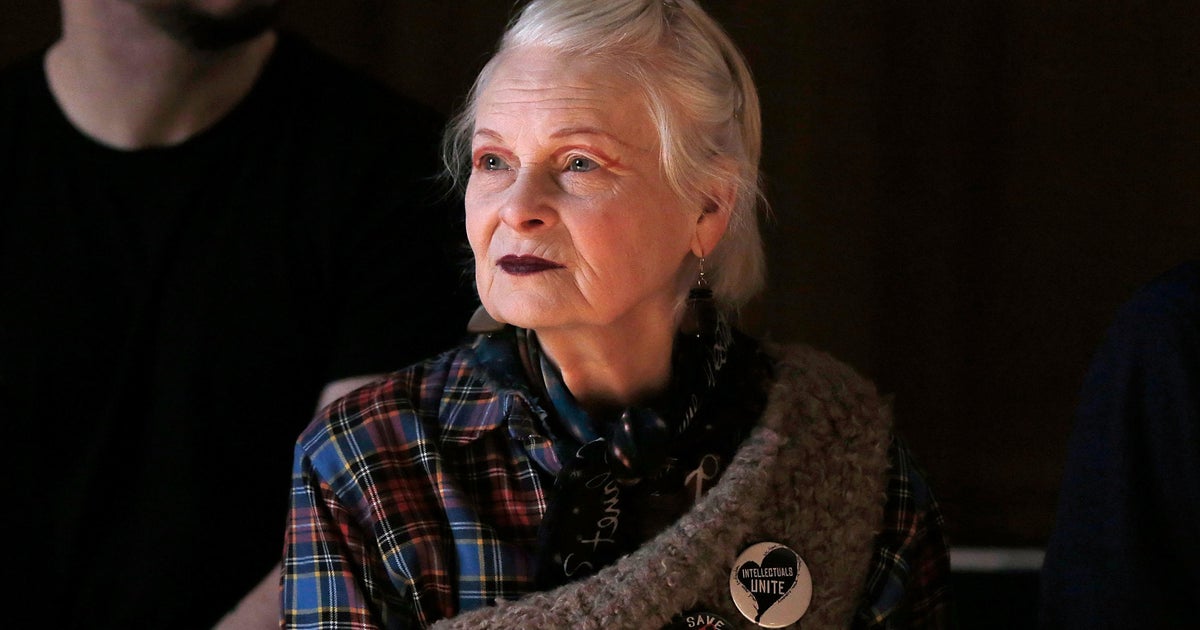
Vivienne Westwood watches rehearsals forward of her display throughout London Manner 7 days at Royal College of Surgeons on Feb. 21, 2016 in London, England.

John Phillips / Getty Photographs


Andrew Bolton, curator of the Costume Institute at the Metropolitan Museum of New York, claimed Westwood would be celebrated for pioneering the punk glimpse, pairing a radical style solution with the anarchic punk sounds created by the Intercourse Pistols, managed by her then-associate, Malcolm McLaren.

“They gave the punk motion a appear, a type, and it was so radical it broke from everything in the previous,” he explained. “The ripped shirts, the safety pins, the provocative slogans. She introduced postmodernism. It was so influential from the mid-70s. The punk motion has hardly ever dissipated — it is really come to be part of our vogue vocabulary. It can be mainstream now.”

Westwood’s extended career was total of contradictions: She was a lifelong rebel who was honored several occasions by Queen Elizabeth II. She dressed like a teenager even in her 60s and grew to become an outspoken advocate of battling global warming, warning of planetary doom if weather change was not controlled.

In her punk times, Westwood’s apparel ended up often deliberately surprising: T-shirts decorated with drawings of naked boys, and “bondage pants” with sadomasochistic overtones were being common fare in her well-known London retailers. But Westwood was in a position to make the changeover from punk to haute couture without having lacking a beat, maintaining her profession going without stooping to self-caricature.

“She was generally striving to reinvent vogue. Her operate is provocative, it can be transgressive. It really is incredibly significantly rooted in the English tradition of pastiche and irony and satire. She is really proud of her Englishness, and however she sends it up,” Bolton stated.

A person of individuals transgressive and contentious patterns featured a swastika, an inverted image of Jesus Christ on the cross and the phrase “Ruin.” In an autobiography composed with Ian Kelly, she reported it was meant as component of a statement against politicians torturing people, citing Chile’s Augusto Pinochet. When requested if she regretted the swastika structure in a 2009 job interview with Time journal, Westwood explained no.

“I don’t, since we have been just stating to the more mature generation, ‘We really don’t acknowledge your values or your taboos, and you’re all fascists,'” she responded.

She approached her operate with gusto in her early decades, but in excess of time appeared to tire of the clamor and buzz. Immediately after a long time of building, she in some cases spoke wistfully of going beyond trend so she could focus on environmental matters and academic jobs.

“Manner can be so monotonous,” she explained to The Involved Press soon after unveiling a person of her new collections at a 2010 exhibit. “I am making an attempt to obtain anything else to do.” At the time, she was talking up ideas to start off a tv series about art and science.

Vivienne Westwood, influential fashion maverick, dies at 81

Vivienne Westwood, influential fashion maverick, dies at 81

Andrew Bolton, curator of the Costume Institute at the Metropolitan Museum of New York, claimed Westwood would be celebrated for groundbreaking the punk seem, pairing a radical trend method with the anarchic punk appears formulated by the Sex Pistols, managed by her then-husband or wife, Malcolm McLaren.

“They gave the punk motion a glance, a design, and it was so radical it broke from everything in the earlier,” he explained. “The ripped shirts, the security pins, the provocative slogans. She introduced postmodernism. It was so influential from the mid-70s. The punk motion has under no circumstances dissipated — it is turn into part of our style vocabulary. It is mainstream now.”

Westwood’s long job was whole of contradictions: She was a lifelong rebel who was honored various instances by Queen Elizabeth II. She dressed like a teenager even in her 60s and grew to become an outspoken advocate of preventing global warming, warning of planetary doom if weather alter was not managed.

In her punk days, Westwood’s outfits have been usually deliberately stunning: T-shirts embellished with drawings of naked boys, and “bondage pants” with sadomasochistic overtones have been conventional fare in her well known London stores. But Westwood was equipped to make the changeover from punk to haute couture without missing a conquer, keeping her vocation likely without the need of stooping to self-caricature.

“She was normally seeking to reinvent manner. Her work is provocative, it is transgressive. It is pretty substantially rooted in the English custom of pastiche and irony and satire. She is quite proud of her Englishness, and continue to she sends it up,” Bolton said.

British fashion designer Vivienne Westwood poses with one of her creations on May 5 1999, on display at Christie's in Vienna with more than 20 dresses inspired by 18th century France.
British manner designer Vivienne Westwood poses with a single of her creations on Might 5 1999, on screen at Christie’s in Vienna with more than 20 dresses encouraged by 18th century France.Gerhard Gradwohl / AP file

A person of all those transgressive and contentious patterns featured a swastika, an inverted picture of Jesus Christ on the cross and the term “Destroy.” In an autobiography prepared with Ian Kelly, she stated it was meant as aspect of a statement against politicians torturing individuals, citing Chile’s Augusto Pinochet. When requested if she regretted the swastika structure in a 2009 job interview with Time magazine, Westwood mentioned no.

“I do not, due to the fact we were being just stating to the more mature era, ‘We never acknowledge your values or your taboos, and you are all fascists,’” she responded.

Vivienne Westwood attends a Cool Earth event in partnership with Lima Floral to help to Save Rainforest in Peru on Sept. 18, 2018 in London.
Vivienne Westwood at a Interesting Earth party in partnership with Lima Floral to assist Preserve Rainforest in Peru on Sept. 18, 2018, in London.Ki Selling price / WireImage file

She approached her operate with gusto in her early years, but around time seemed to tire of the clamor and excitement. Following a long time of designing, she often spoke wistfully of transferring outside of style so she could concentrate on environmental issues and educational tasks.

“Fashion can be so uninteresting,” she informed The Connected Push immediately after unveiling just one of her new collections at a 2010 show. “I’m making an attempt to uncover some thing else to do.” At the time, she was chatting up programs to start off a television series about artwork and science.

Her runway demonstrates have been always stylish gatherings, drawing stars from the glittery planet of film, music, and television who wanted to bask in Westwood’s reflected glory. But even now she spoke out in opposition to consumerism and conspicuous use, even urging individuals not to invest in her costly, fantastically made garments.

“I just explain to individuals, halt purchasing clothing,” she said. “Why not shield this present of daily life when we have it? I do not just take the mind-set that destruction is inescapable. Some of us would like to halt that and assist people endure.”

Westwood was a self-taught designer with no formal fashion training. She informed Marie Claire journal that she learned how to make her have clothing as a teenager by adhering to patterns. When she required to offer 1950s-type outfits at her initially store, she observed outdated outfits in marketplaces and took them aside to comprehend the minimize and development.

Vivienne Westwood Red Label - Backstage - LFW SS16
Vivienne Westwood ahead of the Vivienne Westwood Purple Label present during London Manner 7 days Spring/Summer 2016/17 on Sept. 20, 2015.Mike Marsland / WireImage file

“It was not a pretty effective way of making dresses, but it was a good way for me to create up my method,” she told the journal.

Westwood was born in the Derbyshire village of Glossop on April 8, 1941. Her spouse and children moved to London in 1957 and she attended artwork university for one particular time period.

She fulfilled McLaren in the 1960s whilst doing work as a most important university teacher immediately after separating from her 1st husband, Derek Westwood. She and McLaren opened a compact shop on the King’s Highway in Chelsea in 1971, the tail close of the “Swinging London” period ushered in by the Beatles and the Rolling Stones.

The store improved its name and concentration many occasions, working as “SEX” — Westwood and McLaren ended up fined in 1975 for an “indecent exhibition” there — and “World’s End” and “Seditionaries.”

“Vivienne is long gone and the globe is currently a considerably less attention-grabbing area. Appreciate you Viv,” tweeted Chrissie Hynde, the frontwoman of the Pretenders and a previous worker at the couple’s keep.

Westwood moved into a clean style of coming up with with her “Pirates” assortment, exhibited in her very first catwalk present in 1981. That breakthrough is credited with getting Westwood in a more conventional path, displaying her curiosity in incorporating historic British patterns into contemporary outfits.

It was also an critical stage in an ongoing rapprochement involving Westwood and the trend world. The rebel eventually became one of its most celebrated stars, known for reinterpreting opulent attire from the past and generally getting inspiration in 18th century paintings.

But she nevertheless found strategies to shock: Her Statue of Liberty corset in 1987 is remembered as the start off of “underwear as outerwear” craze.

She ultimately branched out into a assortment of company activities, which include an alliance with Italian designer Giorgio Armani, and designed her completely ready-to-dress in Purple Label line, her more exceptional Gold Label line, a menswear assortment and fragrances called Boudoir and Libertine. Westwood outlets opened in New York, Hong Kong, Milan and a number of other main cities.

The chaos theory of Gen Z fashion

The chaos theory of Gen Z fashion

In 2022, as America emerged from the pandemic, we got a glimpse at the wild energy of the next generational aesthetic

Alici Sol, 23, wears loose-fitting jeans and a white shirt (her post-pandemic go-to ensemble) with her favorite jacket. It was once her friend’s, she says, “and she got it from another girl who got in L.A. at a vintage market.” All photos were taken in Manhattan in November, unless marked otherwise. (Calla Kessler for The Washington Post)

Comment

The big mystery of “The White Lotus’s” second season was supposed to be who died at the end. But all season long, it was continually upstaged by a more urgent one: What the hell was Portia wearing?

Haley Lu Richardson’s fresh-out-of-undergrad character first appeared on-screen wearing a chartreuse-and-aquamarine patterned sweater vest with a choker; later, her cropped Tommy Hilfiger rugby shirt clashed spectacularly with her drawstring linen pants. Then she wore a … zebra-print bikini top? With a rainbow sweater-shrug over it? By the time she appeared on-screen in a Lee Pipes shirt — directly after a cosmic-psychedelic bandeau-and-flares set befitting of a Spice Girl — Twitter users were all-capsing about it. And what was the crocheted bucket hat about?

Younger and more fashion-conscious viewers insisted the outfits worked; older viewers’ brains broke. “Portia Is TV’s Best-Dressed Character,” declared Harper’s Bazaar, while the New York Times proclaimed “The Misfires Are the Point.” The show’s costume designer defended her style choices thusly in an interview with “W”: “Portia is consumed by TikTok and ‘the discourse.’ … So we thought it would make sense that she is trying hard, and that she follows the mish-mash trends.”

What much of America was seeing for the first time on-screen, Johnny Cirillo — the street-style photographer behind the popular @watchingnewyork Instagram account — had been seeing on young people in New York’s most stylish neighborhoods for months. “Pre-pandemic, I noticed a lot more monochrome. Top-and-bottom beige, top-and-bottom white, top-and-bottom black. After the pandemic, things got very loud,” Cirillo says. But his photos lately, he says, have been a parade of pleats and ’90s-style pattern-clashing, “an explosion of hot pinks and electric blues and bright reds” — not to mention more skin. Before, “you didn’t see as many bras as tops, or sheer clothing,” he says.

Portia, in other words, was many Americans’ first glimpse of a Gen Z aesthetic. When society got abruptly sucked into the covid-19 tunnel in 2020, millennials were still the dominant force in fashion; the oldest members of Generation Z were barely 23, fledgling independent consumers. Now, as many Americans stumble out into the light at the other end, their blinking, squinting eyes are adjusting to the sight of Gen Z assuming authority and relaxing the rules of presentable adult attire, smushing together discordant patterns and colors and silhouettes into chaotic combinations and putting lately-unseen body parts once again on display. On city streets all over the United States, the trendy young people look different; Kylie Jenner wannabes have ceded the habitat to Ella Emhoff disciples. They’ve emerged from the pandemic era simultaneously euphoric and world-weary, ready to both participate again in the world as they knew it before and burn it all down. As Cirillo puts it, “I think people have busted out of their shell.”

Maybe some people quietly felt it happen, the subtle change in the air. But it bowled over Emma McClendon like a gust of wind. McClendon is one of America’s few true authorities on cool pants; she literally wrote the book on them, “Denim: Fashion’s Frontier,” in 2016. So you can imagine McClendon’s dismay this fall when she emerged from her upstate pandemic hideaway, started a new job teaching fashion studies at St. John’s University in Queens and discovered her pants were uncool.

The 36-year-old former curator at the Museum of the Fashion Institute of Technology began class by engaging her students on the subject of denim. Immediately, the ooof of it all set in. Baggy fits, they said, were the ideal; flares, low waistbands, wide legs. And most importantly, enough length to send fabric cascading down and stacking on top of the shoes. Clearly, McClendon’s slim, tailored, cropped-at-the-ankle trousers, her go-to professional look, had been eclipsed by … well, a multitude of decidedly weirder and more theatrical styles. Listening to her students and looking at their clothes, “I was thinking” — McClendon falls silent for a moment, remembering it — “‘Wow, my pants are just not in.’”

Soon, she saw curated chaos all around her. Her students’ clothing choices were harsh, loud, strange; their outfits insouciantly casual, often juxtaposing the skimpy and delicate with the comically oversized. To McClendon, the student body — sometimes even the individual student — looked like a loud pastiche of late-20th century styles. There were miniskirts. Slip dresses. Bra tops, especially paired with gigantic blazers. Towering, chunky lug-sole boots and loafers. Skirts on men, cargo pockets on women. Thrifted items of every color, shape and era. “It’s like a costume for ‘Clueless’ meets a construction worker. In, like, ‘Working Girl.’ And then there’s also a grunge ’90s aspect,” McClendon says. “It’s a lot of stuff that, a few years ago, if you’d asked me, I would have been like, ‘That stuff’s never coming back.’ ”

Back in the monochrome before-times — the era of “mom jeans,” turtlenecks, androgynous straight-cut silhouettes and an overall convergence between menswear and womenswear — modest was, for a time, hottest. Even the crop tops were demure. Thanks to that era’s sky-high waistlines, “all you got was that sliver of the upper [midriff], rib-cage area,” McClendon says.

Post-pandemic, it is once again open season on belly buttons. And other body parts. Sex is back in style, and so is gender: Menswear and womenswear have diverged once again, though who wears which can no longer be safely assumed. “What we’re seeing are clothes that typically we would consider hyper-gendered,” McClendon says. “But they’re being played with in a way to eschew gender.” (See: Steve Lacy and Lil Nas X’s love of dresses. Emma Chamberlain’s baggy “dad jeans.” Bella Hadid and Kaia Gerber’s cargo pants.)

Many young people’s everyday styles are put together a la carte from both ends of the gender buffet. “When I wake up in the morning and I’m feeling … like, provocative or sexy and confident, I would want to wear something more feminine,” says Brenna Gentner, an 18-year-old from Chandler, Ariz., and a first-year student at the Parsons School of Design. When she’s feeling more casual, she gravitates toward more masculine styles for comfort.

On the day Gentner spoke to The Post, she was wearing a red lace lingerie top over a thrifted Ed Hardy shirt. “I definitely wanted to take those lingerie pieces and kind of like, give them a new meaning,” Gentner says. “And be sexy without having to be, you know, secluded to a sacred space.”

Cirillo posits that young adults in America’s urban centers got restless and started taking new risks during the pandemic. “People were revealing a little bit more when they had their masks on,” he says. “It was almost like this secret identity: Well, I’ve always wanted to do this, but I haven’t had the confidence to pull it off.” Then they ditched their streamlined, optimized, safe-for-work silhouettes in favor of daring, one-of-a-kind pieces, often found through thrifting. Which, perhaps not coincidentally, is a practice Gen Z has handily revitalized.

Dressing for exhilaration or to boost confidence — or, hell, just to feel something again — has lately been dubbed “dopamine dressing,” notes Rachel Tashjian, the fashion news director at Harper’s Bazaar and author of the popular newsletter Opulent Tips (as well as the Harper’s Bazaar story calling Portia the best-dressed character on TV). Or as Ditte Reffstrup, creative director of the Danish luxury brand Ganni, calls it, “covid revenge dressing.” Ganni has been working to keep up with a demand for “a sexier look,” Reffstrup says. “So many have a major urge to go a little wild because they have missed out on so much.”

Brands, to their credit, have done their best to keep up with dramatic changes in what consumers want: Ganni announced collaborations with popular ’90s and 2000s names like Levi’s, New Balance and Juicy Couture. At the first sign of a pendulum-swing back to baggy pants, J. Crew introduced its instantly beloved Giant Chino (made for men but beloved by everyone); Everlane began selling a casual Drape Pant for women (or as Vogue calls it, a “puddle pant”). Both brands confirm that they’ve had trouble keeping the styles in stock; Everlane’s waitlist has sometimes been 6,000 consumers long.

In short, after the pandemic, “A lot of people started dressing in this kind of exuberant and expressive way. Which is how I would very broadly define Gen Z style,” Tashjian says. “Now, even the minimalism is so freaky,” she adds with a laugh; it’s undulating, eccentric, personality-driven. “It’s gone from, like, Le Corbusier to Brancusi!”

Maybe this is how you dress when you’ve just emerged from a true fashion-inspo vacuum — the likes of which have been unprecedented in the modern era. As fashion historian Kimberly Chrisman-Campbell, the author of “Skirts: Fashioning Modern Femininity in the Twentieth Century,” points out, 2020 wiped out many of the pipelines between designers’ imaginations and consumers’ shopping carts. Fashion shows were off-limits for a while; then, Chrisman-Campbell says, they became prohibitively expensive for some of the brands that survived. Magazines shuttered. Red carpets disappeared when awards shows were canceled. “A lot of traditional arbiters of fashion went away,” or went missing for a while, she says. “So people were looking in new places for inspiration.”

Wandering in the fashion desert, Gentner, the 18-year-old from Arizona, spent the long, lonely stretches of 2020 thinking philosophically about her wardrobe. Now, “I look toward a lot of my clothing as, like, a collection of pieces,” says Gentner, a seasoned thrifter. “I’ve recently been enjoying not only choosing one aesthetic that people prescribe to ‘fashion’ … but mixing them all together, creating a different persona and experience every single day.”

Manhattan-based musician and model Alici Sol, 23, used to be an impulse shopper. In 2020, with nowhere to go and no one else to take cues from or impress, she became acutely aware that many of her purchases were sitting in her closet unworn while just a handful went into regular rotation. “Now I feel like I’ve found my personal style,” Sol says. In thrift shops especially, “I’ve found pieces that, like, whenever I put them on, I’ll feel good in them.”

Sean Monahan, a writer and co-founder of the now-defunct trend forecasting group K-HOLE, sees a lot of people making the same reevaluation. “What I notice about young people today is an interest in small things or secret things again,” Monahan says. Indeed, even Vogue recently extolled the experience of carrying an “anti-It Bag” — a nod to the notion that young people are once again asking, as Monahan puts it, “What’s something I can buy that no one’s gonna know where I got it, but it’s going to look really cool, and it’ll be unidentifiable, but uniquely mine?” (Earlier this year, to much fanfare, Monahan predicted a coming “vibe shift” in New York Magazine — away from the brand-conscious, performatively progressive attitude that dominated the late 2010s and toward … well, it wasn’t clear at the time. The vibe, he confirms, has now shifted.)

Or maybe this is how you dress when you and your peers have known your whole lives that the planet is boiling toward uninhabitability, and that thrift-shopping reduces the need for fast fashion. Thrifting is “usually very cheap and helps keep perfectly fine clothes out of landfills!” one high-schooler told the New York Times last fall. “Buying from your local thrift-store is not only environmentally and budget-friendly, but it is also how I avoid being ‘basic,’” said another.

That said: “Gen Z is absolutely the driving force behind companies like Shein, which is, like, fast fashion on a scale we’ve never seen before,” McClendon says. “So it’s really full of contradictions.”

Maybe this is simply how you dress when you were raised by Generation X — the generation that canonized the skirt-wearing, thrift-shopping Nirvana frontman Kurt Cobain, and channeled its burned-out, over-it worldview into chunky shoes, skimpy slip dresses, loosefitting pants and the “willful disharmony of the grunge style,” as FIT curator Colleen Hill describes it in her book “Reinvention & Restlessness: Fashion in the Nineties.”

“Gen X politics are so clearly a kind of slightly cynical take on the failures of boomer politics to achieve what it had set out to,” says Monahan. “I think similarly, Gen Z kind of looks at millennials and the politics that were surrounding them and are perhaps a little bit skeptical about the authenticity of everything behind it.”

McClendon has said before that in the back half of the 2010s, when America was reeling from a reckoning with sexism and harassment of women, Americans’ fashion sense tempered itself accordingly — and helped cement what’s now arguably seen as the millennial aesthetic.

“It was this period where there was an attempt to sort of perfect and polish the lines and edges off things. And, yes, be quite sober,” Tashjian says, pointing to the retailer Everlane as a near-perfect distillation: “That brand, that sort of look, was really dominant in a lot of offices: a smooth-lined pair of slacks and a tasteful cashmere sweater. Tastefulness — that was really kind of the dominant sense.” In the future, the late 2010s may be remembered as an era of lowest-common-denominator fashion; of mass-market athleisure, of hygge and Scandi-chic; of gentle neutrals like greige and oatmeal, optimal for long hours at the jobs where millennials diligently devoted themselves to finding meaning.

Indeed, Gen Z’s skepticism (to put it mildly) toward millennials is well-documented; they took aim at skinny jeans and side parts, they torched the unironic use of the cry-laughing emoji. “[Millennials] like Hamilton and Hogwarts houses. They’re #GirlBosses who wear ‘Nasty Woman’ T-shirts and stan establishment Democrats,” Jude Ellison S. Doyle wrote in Gen in 2021, in an essay explaining what exactly Gen Z loathes about their immediate elders. “And they do all these things earnestly, without any of the irony or nihilism or ennui required to make them cool.”

Similarly, Hill writes, grunge was in part a result of Generation X’s eye-rolling at the decadence, jingoism and preppy elitism of the ’80s. Joan Juliet Buck, then the editor of Vogue Paris, described the style as “a deliberate refusal of beauty, form, line.” Is it any wonder, then, that Gen Z — the born-skeptical children of Gen X — has similarly made “weird” its whole aesthetic? What was grunge, after all, if not freaky and exuberant and ironic and nihilistic? What were the many clashing, splintering youth styles of the 1960s if not a reaction to a fracturing society?

2022′s freaky exuberance is arguably the kind born of grief, despair, exhaustion, the bottom falling out of things. As Gen Z looks back on the pandemic that took away crucial years of their youth and simultaneously stare down a future on a planet that’s rapidly deteriorating, their noisy, sexy, provocative signature style looks like the sort of hysterical ecstasy born of impending doom. It’s manic-laughter-at-a-funeral wear. End-of-the-world chic. Entropycore.

Or, look. Maybe they’re just wearing what they see on TikTok.

Karisma Kapoor’s stylish midi dress serves a fashion fix for New Year’s Eve party look, here’s what it costs | Fashion Trends

Karisma Kapoor’s stylish midi dress serves a fashion fix for New Year’s Eve party look, here’s what it costs | Fashion Trends

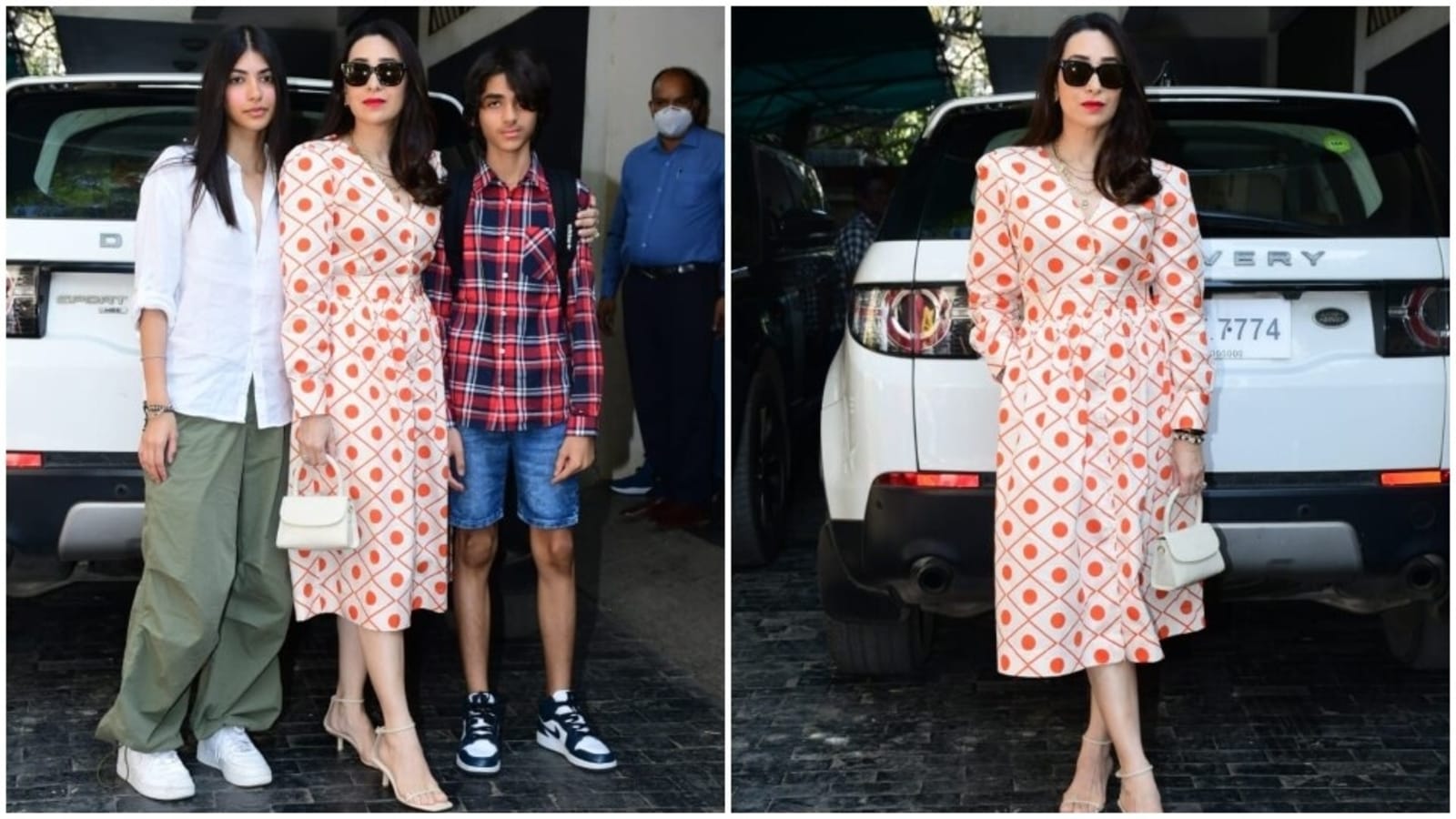
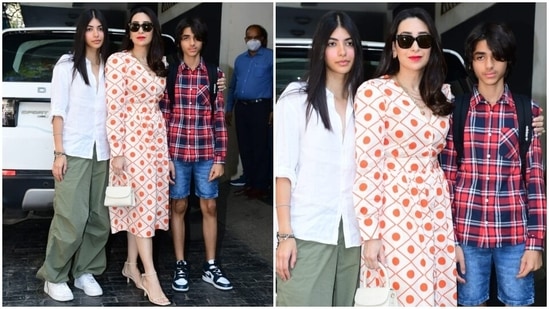
Actor Karisma Kapoor recently served followers with a beautiful model minute as she attended her family’s Christmas lunch. The Kapoor spouse and children gathered at Kunal Kapoor’s home on December 25 for an personal get-with each other. The paparazzi clicked Karisma Kapoor along with her young ones – Samaira and Kiaan, Ranbir Kapoor, Neetu Kapoor, Alia Bhatt, Randhir Kapoor, Babita Kapoor, Shweta Bachchan, Navya Naveli Nanda, Agastya Nanda and Shah Rukh Khan’s daughter Suhana Khan outdoors Kunal Kapoor’s property in Mumbai. Karisma built a spectacular look at the spouse and children affair in her printed button-down midi costume. Maintain scrolling to discover out the place you can get the actual glimpse. (Also Browse | Karisma Kapoor’s new pics exhibit beauty of the mountains and her gorgeous appear in pink anarkali: See below)

Karisma Kapoor’s style take care of for New Year’s Eve

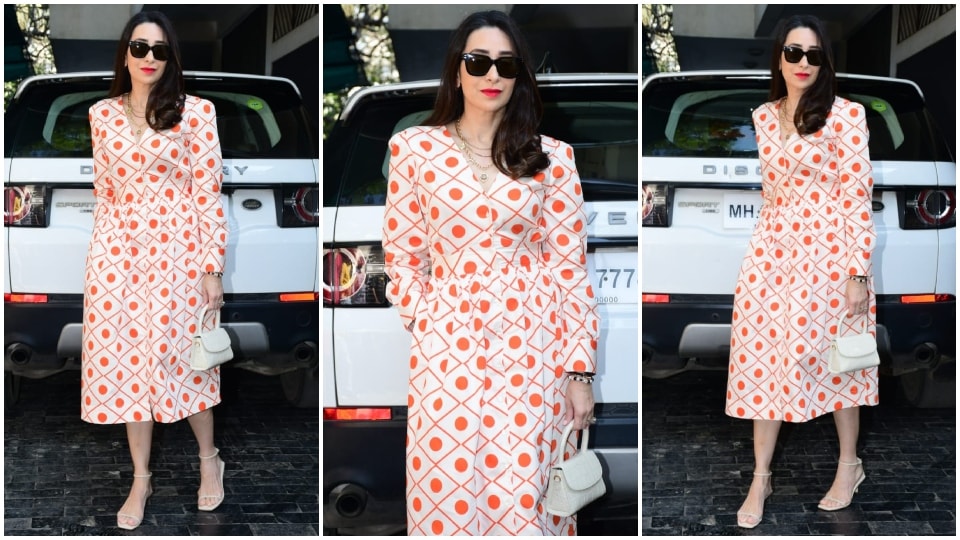
On Xmas Day, Karisma Kapoor slipped into a printed ensemble to show up at a family members lunch at Kunal Kapoor’s dwelling. For the occasion, Karisma slipped into a white and orange printed midi costume. The paparazzi clicked the star arriving at the celebration dressed in a gorgeous outfit with her children, Samaira and Kiaan. The outfit she wore is from the shelves of the clothing label The Summer months Household. She styled it with nominal equipment and bold glam picks. You can dress in the ensemble to attend New Year’s Eve functions with your mates. Look at out Karisma’s photos down below.

Karisma Kapoor attends Christmas lunch hosted by Kunal Kapoor with her young ones.(HT Picture/Varinder Chawla)

What is the value of Karisma’s ensemble?

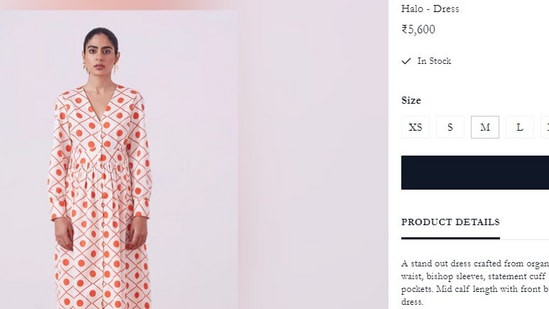
The midi gown is offered on The Summertime Dwelling web page and could simply elevate your New Year’s Eve get together closet. It is known as the Halo Dress, and adding it to your assortment will value you ₹5,600.

The value of the costume Karisma Kapoor wore. (mkr.bio/thesummerhouse)

Pertaining to the style and design things, the ensemble is crafted from natural and organic cotton embellished with an orange pattern on a white backdrop. It attributes an empire waistline, bishop sleeves, statement cuff with buttons, midi hem duration, a front button fastening by way of the total size of the costume, a V neckline, and a structured figure-skimming healthy.

Karisma Kapoor seems to be stunning in the printed ensemble. (HT Photograph/Varinder Chawla)

Karisma accessorised the printed dress with layered gold chains, strappy white kitten heels, black-tinted sunglasses, rings, quirky bracelets, and a white mini-prime deal with bag. In the finish, Karisma chose darkened brows, bold purple lip shade, glowing pores and skin and aspect-parted open tresses for the glam picks.