
Credit Suisse, the collapsed Swiss bank taken over by UBS Group in a hastily arranged bailout earlier this month, may bring with it a fresh set of regulatory and legal problems for its new owner.
For years, the bank has provided a safe haven for wealthy American clients to hide assets from the IRS — even after it was caught and prosecuted for doing the same thing more than a decade ago, according two former Credit Suisse bankers who spoke in exclusive interviews with CNBC and are working with the U.S. government as whistleblowers.
The bank notoriously pleaded guilty in 2014 to criminal charges for “knowingly and willfully” helping thousands of U.S. clients conceal their offshore assets and income from the IRS. It admitted at the time that it used sham entities, destroyed account records, and hand delivered cash to American clients to avert IRS detection — agreeing to crack down on U.S. tax dodgers going forward as part of its plea deal. Credit Suisse also agreed at the time to a host of reforms, including disclosing its cross-border activities and cooperating with authorities when they request information, among other things.
The now troubled bank appears to have violated that agreement, according to a new report by the Senate Finance Committee that details ongoing and rampant abuse since then. The report, released Wednesday, details the findings of the panel’s two-year investigation and takes on more urgency given the looming banking crisis. The Swiss National Bank, the country’s central bank, injected more than $100 billion of liquidity into Credit Suisse to keep it afloat earlier this month, while the Swiss government agreed to provide UBS with some $9 billion to backstop losses resulting from the takeover.
‘Still ongoing’
Senate investigators say the new revelations raise questions about just how much American money remains hidden inside the vaults of a bank whose collapse rattled the foundations of the global banking system.
The Senate report, which was prepared by the panel’s Democratic staff, accuses the bank of violating the terms of its 2014 plea agreement, which could trigger a host of repercussions if the Justice Department presses the case. It is unclear how much potential liability UBS is exposed to as a result of the report, but a lawyer for the whistleblowers argues the bank should pay as much as $1.3 billion.
Senate Finance Committee Chairman Ron Wyden, D-Ore., said his committee had received new information just this week from Credit Suisse about additional American undisclosed accounts that the bank held after 2014.
“It is still going on as of just the last couple of days — even more money has been found to have been concealed and there are very substantial issues here,” Wyden said. “Clearly, it’s time to prosecute and ensure that there are penalties that send a strong message.”
“Credit Suisse employees aided and abetted a major criminal tax evasion scheme,” a finance committee aide said, asking not to be named because the report had not been released yet. “To date, no Credit Suisse employees involved in the scheme have faced any consequences from the United States government for their participation.”
Hiding fortunes
Senate investigators say they discovered that Credit Suisse enabled as many as 25 American families to hide fortunes totaling more than $700 million in the bank in the years after Credit Suisse’s plea agreement.
“They thought they could get away with it, and they largely did,” the aide said. “It’s not a question of whether Swiss banks continue to do this, it’s a question of which Swiss banks still do this.”
In a statement to CNBC, a Credit Suisse spokeswoman said it does not tolerate tax evasion.
“In its core, the report describes legacy issues, some from a decade ago, and we have implemented extensive enhancements since then to root out individuals who seek to conceal assets from tax authorities,” the spokeswoman said, asking not to be identified because she was not authorized to speak on the record. She said the bank’s new leadership team has been cooperating with the committee. Credit Suisse has “supported the work of Senator Wyden, including in respect of suggested policy solutions to help strengthen the financial industry’s ability to detect undisclosed US persons.” She said the bank’s policy requires it to close undeclared accounts when they’re identified and discipline employees who don’t follow its policy.
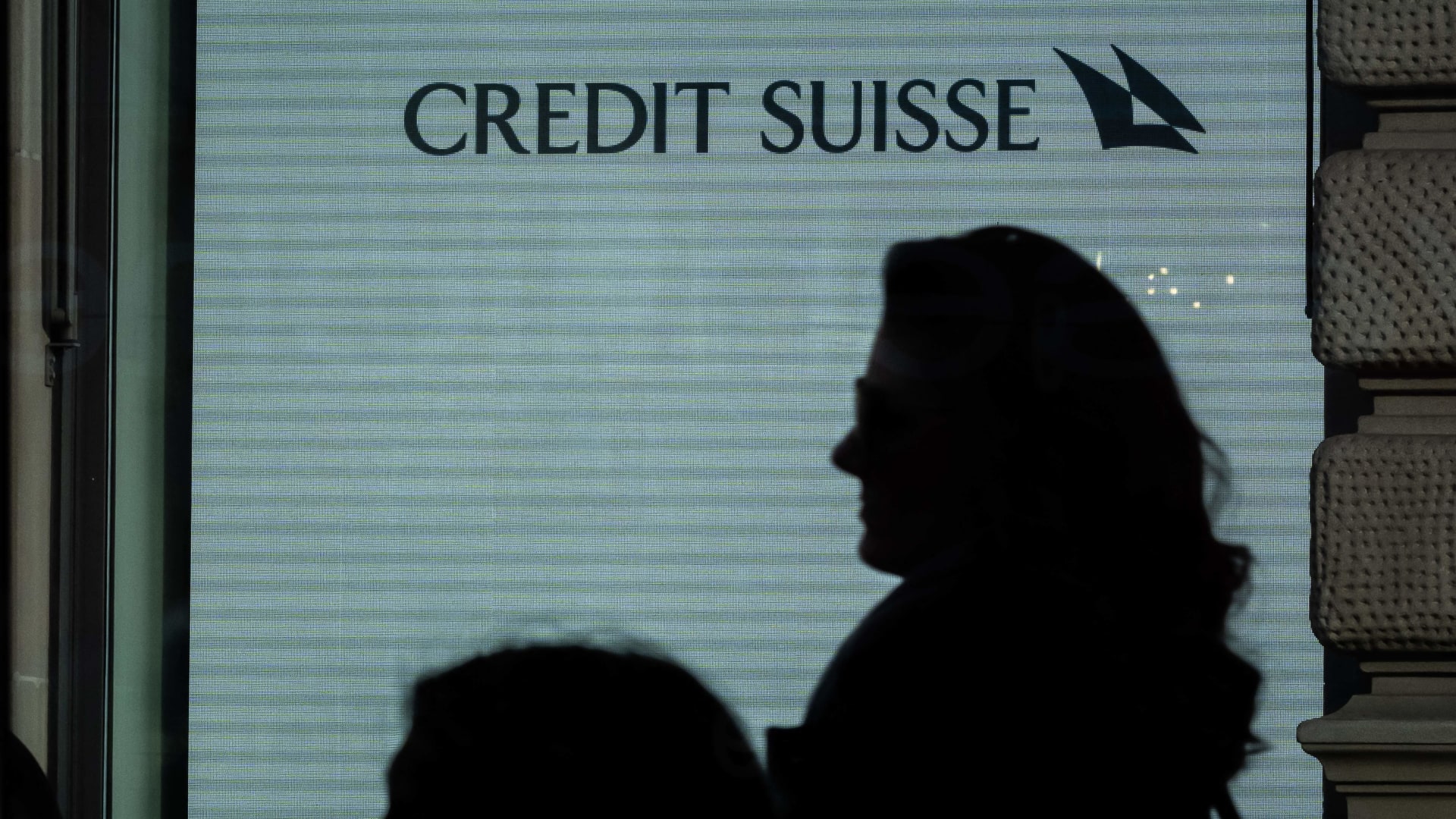
A sign of Credit Suisse bank is seen at their headquarters in Zurich on March 20, 2023.
Fabrice Coffrini | AFP | Getty Images
The two former Credit Suisse employees, who worked as whistleblowers with the U.S. government and Senate investigators, told CNBC some of the bad behavior continued long after Credit Suisse’s 2014 plea agreement. CNBC agreed to mask their identities on camera and to maintain their anonymity because they say they fear retaliation from the bank. They were interviewed in the weeks before Credit Suisse collapsed earlier this month.
Although the bank did disclose and close many American accounts after its 2014 plea agreement, some bankers worked with high net worth clients to keep certain Americans at the bank, by changing the nationalities listed on their accounts and ignoring evidence that the account holders were Americans. In other cases, they helped American clients move money to other banks, without reporting those transfers to U.S. authorities, the whistleblowers say.
‘Tremendous pressure’
The report and interviews offer a rare look at the inner workings of the secretive Swiss banking, a world rarely penetrated by outsiders. And they show how compliance systems inside Credit Suisse broke down in the years before its collapse this month and rescue by the Swiss government and rival bank UBS.
Bankers are under constant pressure, the whistleblowers said, to keep and bring in deposits at the bank.
“You’re under tremendous pressure to bring in these net new assets, which ultimately translate into revenue,” the first whistleblower said in describing a culture where bankers were expected to keep the assets of wealthy clients inside the bank, even if they had to cheat to do it. “And that’s the reason for the fraud. You don’t want to lose assets. So, what you do is you try to maintain them in any way, shape, or form.”
Senior executives would call out individual bankers at quarterly meetings where they would read out the asset numbers for each banker. If a banker’s number declined, the second whistleblower said, “you’d get exposed in front of your colleagues.” And as a result, he said, “there may come moments where people simply omit saying things.”
“‘Don’t Ask, Don’t Tell’ is maybe a good explanation to what happened,” he said. “They would have clients that are Americans, but they would switch their passports around to show and flag as if they are not.”
Credit Suisse bankers, for instance, repeatedly flew to Miami to meet with American clients and yet failed to flag them as U.S. citizens, Senate investigators said.
Secrecy drives the entire Swiss banking industry, the first whistleblower said – to a point that the sector may not be able to survive without it.
“Swiss banks are much more expensive, and there’s a reason for that,” he said. “If you could choose anywhere in the world you want to be, why would you pay more? Why would you be in a place which underperforms in terms of your return on assets?”
If a client isn’t hiding assets in Switzerland, the first whistleblower said, “there’s no other reason to be there.”
‘Congratulation!!!!!’
Emails obtained by the Senate Finance committee show just how far the bankers went to keep identities secret and to ensure wealthy Americans were able to switch nationalities — at least for the bank’s internal record-keeping.
In one email, one of Credit Suisse’s banker writes to another bank employee, “please don’t write or document these topics.”
One American client, an heir to a $200 million fortune deposited at Credit Suisse, emailed to say they renounced their U.S. citizenship.
“I tried to reach you, congratulation!!!!!” their private banker emailed back. “This is a big step for you and I know it was not easy.”
The heir to the fortune replied, “Thanks … hopefully this should also make Credit Suisse now more relaxed.”
The heir closed the message with a smiley face.
The Family
“The committee’s investigation uncovered major violations of Credit Suisse’s plea agreement, including an ongoing and potentially criminal tax conspiracy involving nearly $100 million dollars and undeclared offshore accounts belonging to a family of dual U.S./Latin American citizens,” a committee aide told CNBC.
The aide said Credit Suisse closed accounts held by that family worth nearly $100 million in 2013 and moved funds to other banks in Switzerland and elsewhere, but did not inform U.S. authorities about the transfer of assets until 2021 – which was months after whistleblowers informed U.S. authorities of the existence of the accounts.
In the Senate report the clients are not named, but simply referred to as “The Family.”
While it’s legal for Americans to hold funds in foreign bank accounts, they must file forms with the IRS disclosing the assets and pay taxes on any relevant gains. Americans must file a disclosure document called a Report of Foreign Bank and Financial Accounts, which is referred to in the industry as an “FBAR.”
The committee said the family held assets at Credit Suisse dating as far back as 1979, and they found evidence Credit Suisse bankers visited members in the family in Miami as early as 2000, holding meetings at the Mandarin Oriental hotel and enjoying meals at The Capital Grille restaurant in Miami’s fashionable Brickell neighborhood overlooking Biscayne Bay.
But aides say they didn’t find any evidence the family ever filed required paperwork with the U.S. government or paid taxes on their assets. Instead, the assets were held under one family member’s dual Latin American passport.
Legal jeopardy
As a result, the aide said, “They’re potentially in legal jeopardy, to put it mildly.”
Committee aides say the family’s assets were overseen by a high-level Credit Suisse executive in its Latin American division, and that official participated in the meetings in Miami. That’s notable, aides said, because that same official was the supervisor of several other Credit Suisse bankers who were previously indicted in connection with the 2014 American offshore accounts.
Committee aides complained that Credit Suisse declined to provide the names of any of the employees involved or the Swiss banks that received the funds – but said they were able to determine that information through other sources.
The Miami case “is not small potatoes,” a Senate aide said. If proven, it “would be one of the largest FBAR violations in United States history.”
Former Justice Department prosecutor Jeffrey Neiman, who is representing the whistleblowers, said he believes fraud is still ongoing and the DOJ should claw back hundreds of millions of dollars in fines that the bank agreed to pay in 2014, but ultimately didn’t have to pay. The bank agreed to pay $2.6 billion, but a federal judge only imposed a penalty of $1.3 billion at the time.
“I think Credit Suisse is aware of Americans who are still hiding money today. And I think the bank is doing whatever it can to contain whatever this damage is,” Neiman said.
$1.3 billion
“At a minimum, the U.S. government needs to collect that $1.3 billion for the American taxpayers. This bank needs to be made an example of,” he said. “We hear tough talk out of the Justice Department about holding repeat corporate offenders accountable. Let’s see if those words have actual meaning.”
The whistleblowers stand to gain financially if there are further payments to the U.S. government. Under the law, whistleblowers stand to collect between 15{515baef3fee8ea94d67a98a2b336e0215adf67d225b0e21a4f5c9b13e8fbd502} and 30{515baef3fee8ea94d67a98a2b336e0215adf67d225b0e21a4f5c9b13e8fbd502} of any money recovered by the U.S. government as a direct result of information they provide.
The Senate Finance Committee doesn’t think U.S. prosecutors have gone far enough in holding Credit Suisse accountable, the aide said. The report is part of a campaign to up the pressure on the DOJ to crack down on the Swiss bank, and the recent takeover of the bank puts it squarely in the spotlight.
“DOJ must correct its lax oversight of Credit Suisse and hold Credit Suisse accountable for any violations of its plea agreement,” he said.
The aide cited recent indications of a white-collar crackdown. “DOJ said we will go after anybody at banks who commits tax evasion,” the aide said. “Then do it. We’re going to drop you twelve names in this report. Go after them.”
The Justice Department declined to comment when contacted for this story.
‘Never say never’
It’s not clear what liability, if any, UBS assumed for all this as a result of its emergency government-brokered takeover of Credit Suisse on March 19. It is also not clear how much of this potential legal overhang was disclosed to UBS before its acquisition of Credit Suisse, although a source familiar with Credit Suisse’s thinking said UBS officials are aware of the situation.
Officials at UBS did not respond to a request for comment for this story.
A person familiar with Credit Suisse’s thinking told CNBC that it is “disquieting” for the Senate Finance Committee to release its report even as global regulators are trying to shore up the global banking system by facilitating the sale of Credit Suisse to UBS. “The financial services sector and its importance to the world economy has become blatantly obvious to everyone,” the person said.
When asked if he could say for certain that there are no undeclared American dollars in the bank today, the person said: “I don’t believe there is anything there that could be described in this way. Now, you can never say never.” He said Credit Suisse has investigated and not found any more illicit accounts. “I don’t believe there is anything there.”
— CNBC’s Bria Cousins contributed to this article.
Correction: Credit Suisse bankers enjoyed meals at The Capital Grille restaurant in Miami’s Brickell neighborhood. An earlier version misstated the name of the restaurant.