

A Progress Check on Hospital Price Transparency

A Progress Check on Hospital Price Transparency

For decades, U.S. hospitals have frequently stonewalled people who wished to know ahead of time how significantly their treatment would price tag. Now which is transforming — but there is a vigorous discussion over what hospitals are disclosing.

Underneath a federal rule in outcome given that 2021, hospitals nationwide have been laboring to post a mountain of knowledge on-line that spells out their costs for each individual support, drug, and product they offer, including the true costs they’ve negotiated with insurers and the amounts that money-having to pay individuals would be billed. They’ve finished so begrudgingly and only following dropping a lawsuit that challenged the federal rule.

How very well they’re undertaking is dependent on whom you check with.

The rule aims to pull back the curtain on opaque medical center costs that could differ commonly by hospital for the exact same company or even within just the very same healthcare facility. The expectation is that price tag transparency will raise competition, giving shoppers and employers a way to examine costs and make knowledgeable choices, ultimately driving down the value of treatment. No matter whether that will materialize is not nonetheless crystal clear.

Insurers and massive employers are also needed to publish their negotiated charges with all their suppliers, underneath independent rules that took effect very last summer time.

Hospitals have designed “substantial development,” according to an investigation by the federal Facilities for Medicare & Medicaid Services of 600 randomly picked hospitals that was printed in the journal Health Affairs final month. The company looked at no matter if hospitals experienced satisfied their obligation to publish selling price data on the internet in two critical formats: a “shoppable” listing of at the very least 300 solutions for buyers, and a thorough machine-readable file that incorporates all the services for which the healthcare facility has typical expenses. This file ought to be in a format that will allow scientists, regulators, and others to examine the info.

CMS discovered that 70{515baef3fee8ea94d67a98a2b336e0215adf67d225b0e21a4f5c9b13e8fbd502} of hospitals released both lists in 2022. An additional 12{515baef3fee8ea94d67a98a2b336e0215adf67d225b0e21a4f5c9b13e8fbd502} revealed a person or the other. By distinction, the agency’s prior progress assessment in 2021 uncovered that just 27{515baef3fee8ea94d67a98a2b336e0215adf67d225b0e21a4f5c9b13e8fbd502} of 235 hospitals experienced each styles of lists.

The 2022 analysis “represents a marked improvement,” explained Dr. Meena Seshamani, deputy administrator and director of the Centre for Medicare at CMS, in a assertion. But she also stated the advances are even now “not sufficient” and CMS will continue to use “technical support and enforcement activity” so that all hospitals “fully comply with the regulation.”

The American Clinic Association mentioned the CMS assessment shown the progress hospitals experienced designed below quite demanding conditions as they grappled with the covid-19 pandemic.

“These are complex policies that went into result in the most sophisticated time in hospitals’ heritage,” claimed Molly Smith, group vice president for coverage at the trade association. “And we have observed boosts in compliance around the past 18 months.”

Some groups that have looked at the hospitals’ posted cost facts, although, were being much less upbeat. In an examination released previous month, Individual Rights Advocate examined 2,000 hospitals’ listings and found that only 489 of them, 24.5{515baef3fee8ea94d67a98a2b336e0215adf67d225b0e21a4f5c9b13e8fbd502} of the overall, have been compliant with all the prerequisites of the rule. An previously evaluation in August 2022 observed that 16{515baef3fee8ea94d67a98a2b336e0215adf67d225b0e21a4f5c9b13e8fbd502} met all the needs.

The advocacy group’s assessment coated not only the two types of lists that CMS seemed for but also checked whether the hospitals incorporated required information on specific types of standard costs for each provider made available, these as the gross or “chargemaster” demand ahead of any discount rates are utilized, the discounted hard cash cost, and the negotiated demand by insurance company.

Even though most hospitals have published information online, much too typically the info is incomplete, illegible, or not clearly related with unique well being designs or insurers, claimed Cynthia Fisher, founder and chair of Individual Rights Advocate, which promotes health care price tag transparency.

“As hospitals continue to submit incomplete documents with swaths of missing prices, people are unable to properly compare costs throughout hospitals and throughout ideas to make the best well being treatment selections and safeguard by themselves from overcharges,” Fisher explained. This sort of hospitals were being regarded as noncompliant in the PRA assessment.

The clinic affiliation faulted PRA’s analysis. The contracts that hospitals have with wellbeing plans change substantially from a person to the upcoming, and rates are not always based on a simple greenback sum, mentioned Terry Cunningham, AHA’s director of plan. They could be dependent on a bundle of companies or on volume, for instance, he reported.

“It’s the two irritating and problematic for these other corporations to be weighing in, stating, ‘This mobile should not be blank,’” Cunningham explained.

In their 2020 lawsuit, hospitals argued that they need to not be demanded to disclose privately negotiated charges, and taken care of that performing so would confuse clients and direct to anti-aggressive habits by insurers.

Very last summer time, rate transparency necessities took result in the wellbeing insurance policies marketplace as properly, complementing and providing a cross-reference tool for what hospitals have posted. The insurer transparency requirements are even broader than all those for hospitals: Insurers and self-funded employers have to listing each individual negotiated level they have with every medical doctor, medical center, and other overall health treatment suppliers.

Some critics cost that details isn’t consumer-pleasant both. Sens. Maggie Hassan (D-N.H.) and Mike Braun (R-Ind.) sent a letter March 6 to CMS Administrator Chiquita Brooks-LaSure encouraging the company to consider steps to near “technical loopholes” such as huge documents and a lack of standardization that make it hard to use the facts they are reporting.

That’s where pricing platforms like Turquoise Overall health occur in. The data starting to be obtainable from hospitals and insurers is a vast treasure trove the business is mining to devise user-helpful equipment that customers and firms can use to explore and assess selling prices.

In its have examination of how successful hospital price tag transparency efforts had been in 2022’s third quarter, Turquoise Well being located that 55{515baef3fee8ea94d67a98a2b336e0215adf67d225b0e21a4f5c9b13e8fbd502} of the more than 4,900 acute care hospitals that posted device-readable data files ended up “complete,” this means they posted the funds, list, and negotiated costs for a “significant quantity” of products and services. 20-four percent of hospitals have been judged to be “mostly complete.” (The evaluation did not examine the second kind of posting, the record of shoppable services.)

According to Chris Severn, Turquoise Wellness co-founder and CEO, the company utilizes a scoring algorithm of 60 variables to evaluate how complete a hospital’s file is.

“What you finish up with is a a lot more nuanced search at these data files that ideally usually takes into thing to consider shades of grey,” Severn reported, somewhat than a straightforward go-fail rating.

Regardless of the variances in how the clinic disclosures are evaluated, experts typically agree that CMS need to have to have facts be described in a standardized structure for ease of comparison and enforcement. CMS has created a template, but hospitals are not demanded to use it.

For rate transparency to function, enforcement also demands steady attention, specialists say. The Biden administration improved the greatest possible penalty to more than $2 million on a yearly basis per healthcare facility for 2022. Nonetheless, final yr CMS penalized just two hospitals for noncompliance even even though 30{515baef3fee8ea94d67a98a2b336e0215adf67d225b0e21a4f5c9b13e8fbd502} of hospitals didn’t satisfy the need to publish both of those a equipment-readable file of price ranges as nicely as a shoppable list.

CMS offered specialized assistance to quite a few hospitals to assist them appear into compliance, mentioned Seshamani, and it also ideas much better enforcement steps.

She explained the agency will “continue to expedite” the time frame hospitals have to arrive at total compliance after submitting a corrective action prepare, which signifies they have fallen small on some submitting demands. “CMS also strategies to acquire intense extra actions to identify and prioritize action towards hospitals that have failed entirely to submit data files,” she stated.

KHN (Kaiser Wellness Information) is a national newsroom that generates in-depth journalism about well being difficulties. Together with Policy Examination and Polling, KHN is just one of the 3 important working packages at KFF (Kaiser Relatives Foundation). KFF is an endowed nonprofit business furnishing details on health challenges to the country.

USE OUR Articles

This story can be republished for cost-free (specifics).

‘The People’s Hospital’ doctor treats Houston’s uninsured and undocumented : Shots

‘The People’s Hospital’ doctor treats Houston’s uninsured and undocumented : Shots

Paramedics at Ben Taub General Hospital speed a patient with a gunshot wound to the trauma team for further care. Ben Taub is the largest safety-net hospital in Houston.

Gregory Smith/Corbis via Getty Images


hide caption

toggle caption

Gregory Smith/Corbis via Getty Images


Paramedics at Ben Taub General Hospital speed a patient with a gunshot wound to the trauma team for further care. Ben Taub is the largest safety-net hospital in Houston.

Gregory Smith/Corbis via Getty Images

As a doctor in a so-called “safety-net” hospital, Ricardo Nuila’s daily practice looks quite different from that of his colleagues who work in private or not-for-profit hospitals. That’s because safety-net hospitals treat everyone who walks in the doors — regardless of insurance status.

Many of Nuila’s patients at Houston’s Ben Taub Hospital are dealing with serious illnesses as a result of not being able to get access to basic preventive care. “What we see is that patients’ lack of health care has meant that the disease has been able to grow within their bodies,” he says. “Their cancer is widespread, or we find that they have an infection that has not been treated or discovered.”

In his new book, The People’s Hospital, Nuila writes about his experiences at Ben Taub, which is the largest safety-net hospital in Houston. He says despite the hospital’s budget constraints, the doctors and nurses there still manage to provide quality health care. By limiting the number of patients a practitioner can see in a day, Ben Taub allows physicians to spend more time with their patients than is typical.

“My cap is 15 patients in one day,” Nuila says. “That’s compared to some of my colleagues in the private world, who I’ve heard admit up to 24 patients in one night, or don’t carry a cap.”

Because resources are tight at Ben Taub, there is an emphasis on using them mindfully, Nuila says. Instead of ordering an MRI with the push of a button, for instance, he might talk to the radiologist directly, to find out if extra imaging is really called for. “There are benefits to further discussion between medical professionals about emergencies and how to deal with these emergencies,” he says.

Overall, Nuila says, working at a safety-net hospital allows him to keep his focus on medicine: “I like that I have the time to be able to hear my patients’ stories, that I don’t have to think about billing all the time, that I can sit with them and hear about why they came to the hospital and learn about their lives — and that, no matter what, we are going to be thinking about how best to help them, regardless of whether they have insurance or not.”

Interview highlights

The People's Hospital, by Ricardo Nuila

On treating undocumented people at the hospital

It’s not considered illegal. … The law EMTALA — the Emergency Medical Treatment & Labor Act — that was passed in the 1980s, that states that anybody in the United States, whether you’re a resident or not, whether you have health insurance or not, can go to a hospital and receive an exam and stabilizing treatment. So that’s a right that everybody in the United States has, regardless of citizenship. What’s different about the safety-net hospital is that we have clinics and we have chronic care also — and that was under question by certain politicians, who ultimately found that it didn’t make any sense to question that. Because when you get in the way of preventive care, when you get in the way of primary care, those patients end up coming to the emergency room and they become much more expensive. … So, [the politicians] decided that the financial gains were more important [than limiting care].

On explaining the American health care system to uninsured patients

The patients are all so different — some have had multiple family members in the United States before, so they understand the landscape a little bit better. But yeah, it can feel very, very contradictory when I tell patients that, well, “You need health insurance for that.” And they will say sometimes, “Well, in Mexico or in Guatemala (or whatever), I don’t necessarily.” And it’s hard to explain that in the richest country in the world, there’s little available for people without health care insurance.

Now, I’m happy that in Harris County [in Texas], where I work at Harris Health, we can provide a robust set of services. But somebody who lives outside of the county doesn’t have availability for those services. And that’s one of the things that I’ve argued, is that the line between Mexico and the United States is not as important as the line between Harris County and Fort Bend County, for instance, in some of the treatments that we give to patients.

On speaking Spanish with patients

That’s one of the reasons that I love my job and I love the hospital where I work — I can speak Spanish. … The people are so happy to hear somebody attempt to speak their language, and not just on a translation basis, but the flavor of the language and also thinking about the locations [they come from]. For instance, when I ask somebody where they’re from and they say Mexico or El Salvador, it’s never enough for me to hear just a country. I need to ask a region so I can situate it in my mind, the map, and draw a relationship that I have with that region. And so I think it helps a lot for building trust with patients.

On his reaction when very sick patients put their faith in God

I don’t dismiss it. Because I feel that science and medicine, we don’t know everything. There’s a lot of mystery in this world and I think faith is important. I’m not saying that faith in one particular religion is important, but faithfulness is important. I think that in my experience, when people demonstrate faith, whether it’s in their God or whether it’s in the treatment, they do better. It’s not my job to take away that person’s faith. What I tell people is that I’m just doing my job, which is [that] I’m a human being, and I need to tell you … the recommendation from doctor human beings for this illness and for the treatment, but that I’m just a person and I don’t know. And that’s the truth – we don’t know everything. We have very good ideas. When somebody is close to death, we can prognosticate quite accurately if that person’s going to die or not. But I can not tell exactly when that is going to happen. And I don’t want to rob somebody of their faithfulness.

On struggling with thoughts of suicide after the suicide of a friend and colleague

I think everything was a struggle. And I think that seeing somebody like Dave, who I admired so much, who was a friend, my best friend in the hospital, who I could speak with and who was so knowledgeable and intelligent — just to know that that is a risk for me as I grow older. Dave was also a very good father and it’s something that I’ve struggled with, parenting.

It felt so much like a pressure of trying to be a good father while trying to be a good doctor, while trying to be a good writer. They can work together, but there are moments where they feel like they can just implode on themselves. And I think that knowing that that had happened to my friend weighed on me and made me think, Is this going to be me? Is this the fate that so many of us who care a lot that we face? …

Therapy helped. I found a therapist who was very attuned to people who were creative types. … That listening really helped. My relationships improved. When I was at my lowest, I could look at my relationships with the people who were around me, who I valued the most, and I can see that at that moment they weren’t great relationships. And somehow over time, those relationships started to improve and that helped immensely. I think that writing also helped me too, at the end of the day.

On hospital staff losing their sense of meaning with their job because of burnout

For me that just demonstrates a real fundamental problem with how health care is administered in this country. If something like medicine, where you are helping people on a daily basis, if you can’t see the meaning behind that, that’s a bad omen. Whenever a patient tells me, “I’m thirsty” and I go get them ice water, I feel really good that day. Something as simple as that. With my Spanish-speaking patients, they can say one phrase to me and I will feel satisfied for that day — when they say, “Que amable,” which means you were very kind in the way you said that. And I feel that that gives me a lot of meaning for the day. But I feel that the pressures and the mechanism by which health care operates right now obfuscates that for so many people. And that’s sad to me. Now, I take a little bit of heart in that the medical field is really taking this seriously and is trying to do something about this. There is an added emphasis now on bringing in the arts and humanities into medicine.

Audio interview produced and edited by: Sam Briger and Thea Chaloner. Audio interview adapted for NPR.org by: Bridget Bentz, Molly Seavy-Nesper and Deborah Franklin.

Secrecy shrouds troubled state psychiatric hospital in Montana : Shots

Secrecy shrouds troubled state psychiatric hospital in Montana : Shots

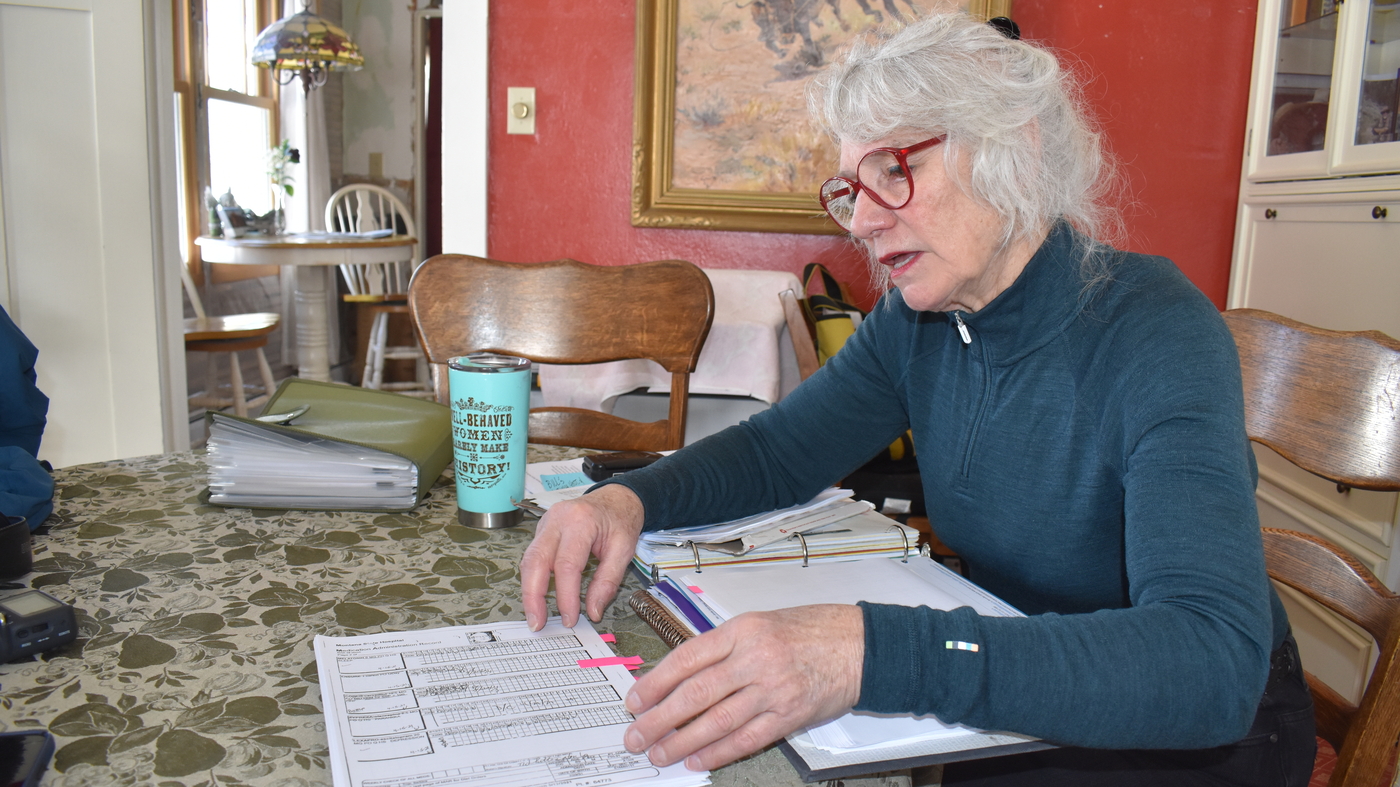
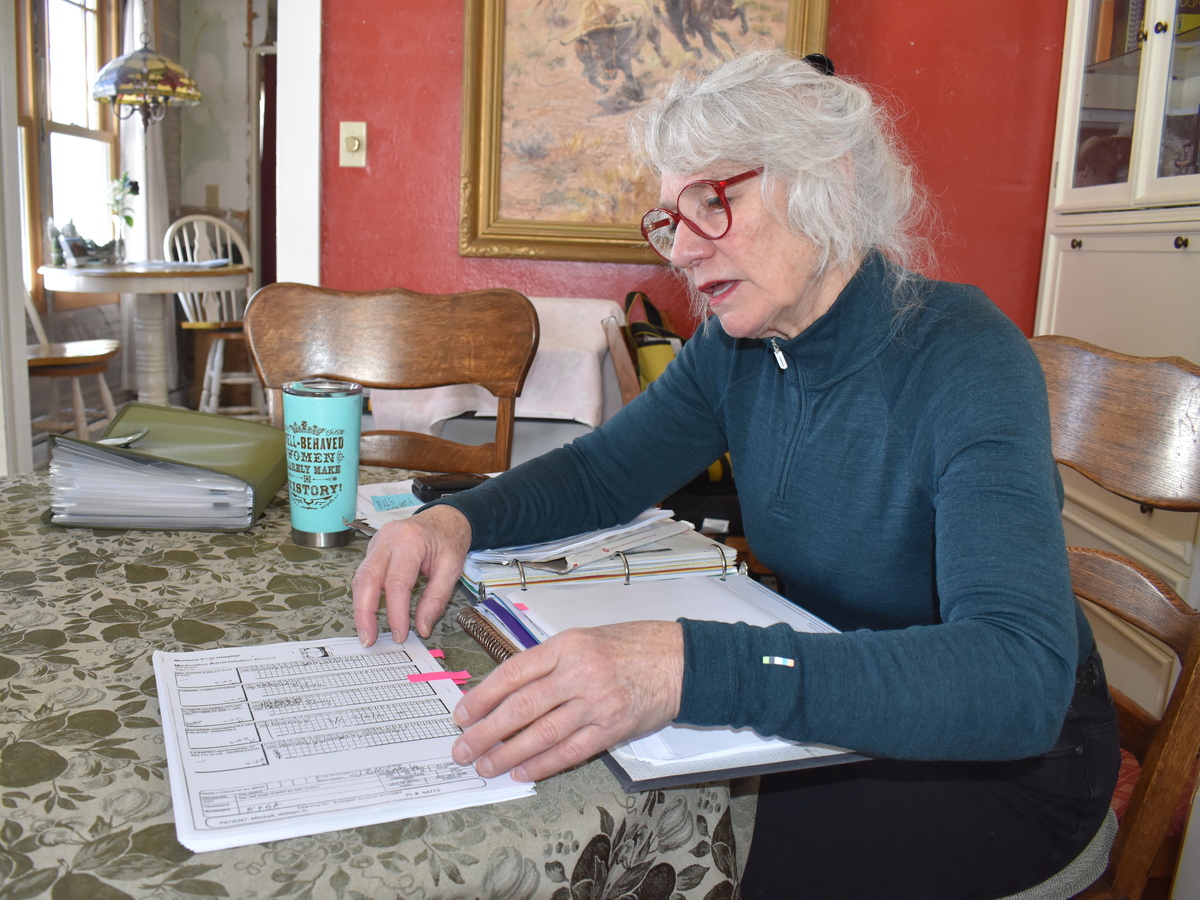
Jennifer Mitchell thumbs through her husband’s medical records from his time at the Montana State Hospital. Records show doctors took Mitchell’s husband off some of his congestive heart failure medications. Mitchell says she was never consulted.

Aaron Bolton/Montana Public Radio


hide caption

toggle caption

Aaron Bolton/Montana Public Radio


Jennifer Mitchell thumbs through her husband’s medical records from his time at the Montana State Hospital. Records show doctors took Mitchell’s husband off some of his congestive heart failure medications. Mitchell says she was never consulted.

Aaron Bolton/Montana Public Radio

BUTTE, Mont. — Jennifer Mitchell remembered getting a call nearly two years ago that her 69-year-old husband, Bill, had crashed his car and had been committed to the Montana State Hospital, the state-run psychiatric hospital for adults about 20 miles from their home in Butte.

Physicians thought Bill Mitchell had dementia and could be a danger to himself or others, according to medical records. But once he was admitted, his wife really began to worry. She couldn’t visit him because of covid-19 restrictions, and she couldn’t get details about the care or the medicine he was receiving.

“I tried to get an idea of what he was taking, not taking. I could not get answers,” Jennifer said.

When Bill was discharged after 60 days, Jennifer discovered he had been taken off some of his congestive heart failure medications. A month later, he went into cardiac arrest and was moved to hospice care. He died on July 30, 2021, a day after his 70th birthday.

The psychiatric hospital in southwestern Montana has been under scrutiny since the federal Centers for Medicare & Medicaid Services decertified it in April 2022 following investigations into patient deaths and assaults. Federal officials found in the investigations that the hospital had failed to meet Medicare’s “basic health and safety requirements.”

Mitchell said that she was infuriated by the lack of transparency around her husband’s care and that she hoped decertification would force a change for the better. But it’s had the opposite effect. When federal oversight and funding of the Montana State Hospital was removed, so too was the ability of the public to learn details surrounding patient deaths and injuries.

Between April’s decertification and the end of December, five Montana State Hospital patients have experienced severe injuries requiring immediate medical care or hospitalization, and there have been eight substantiated abuse and neglect reports, Montana Department of Public Health and Human Services spokesperson Jon Ebelt said.

Six patients died in that period in the 174-bed hospital, though Ebelt declined to say how many deaths were investigated or if any deaths were deemed preventable.

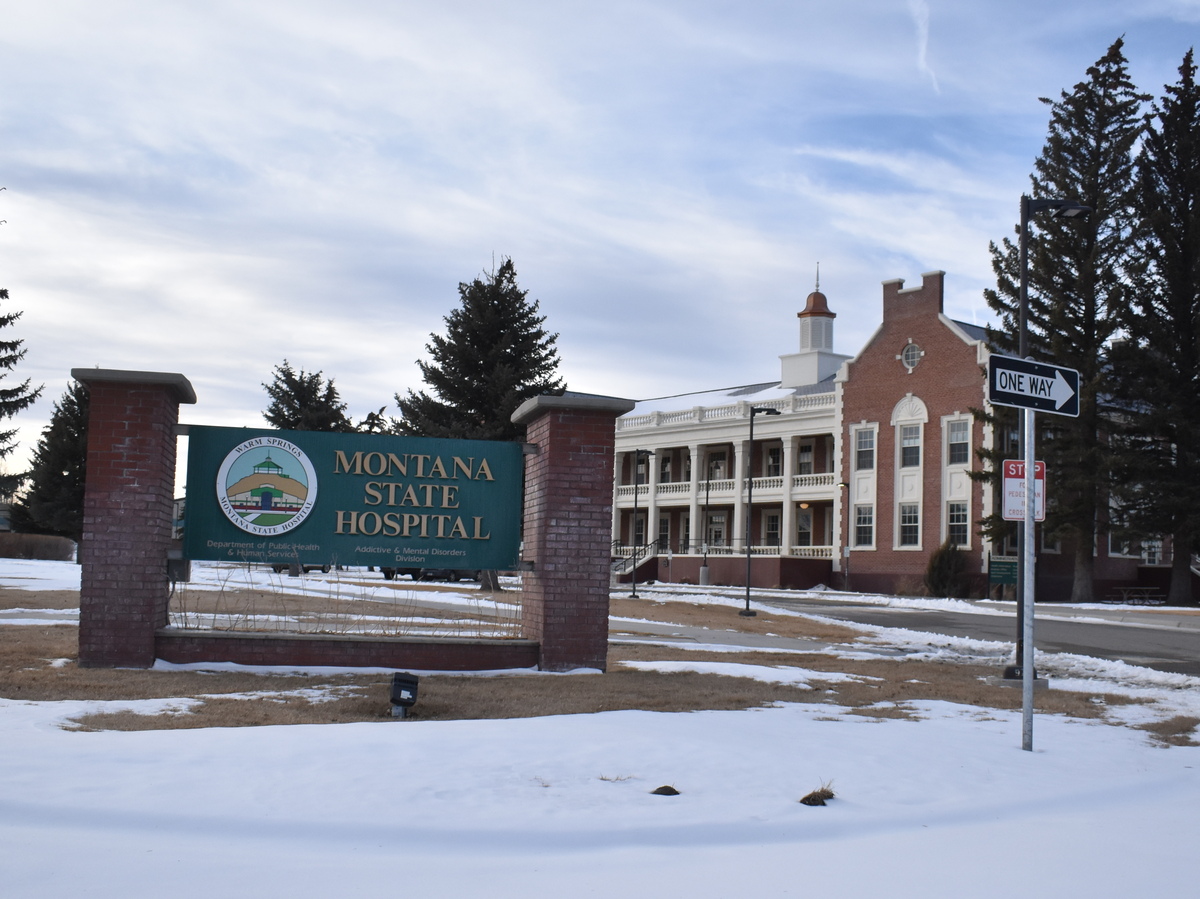
The Montana State Hospital in Warm Springs, Montana, lost federal funding in April 2022 after an investigation into four patient deaths and a violent patient-on-patient assault.

Aaron Bolton/Montana Public Radio


hide caption

toggle caption

Aaron Bolton/Montana Public Radio


The Montana State Hospital in Warm Springs, Montana, lost federal funding in April 2022 after an investigation into four patient deaths and a violent patient-on-patient assault.

Aaron Bolton/Montana Public Radio

The circumstances surrounding all those incidents are not publicly known. That’s because, unlike federal investigations, state-level investigations are not public record.

The state health department denied a public records request for all investigations into Montana State Hospital patient deaths, injuries, and assaults since losing federal certification. Ebelt cited a Montana law that says any records about providing treatment to the seriously mentally ill are confidential and privileged.

States vary widely in what information about abuse and neglect at state-run medical facilities is made public, said David Hutt, deputy executive director for legal services for the National Disability Rights Network.

Hutt noted that the lack of transparency at the Montana State Hospital is unique because it lost federal certification and oversight, which is extremely rare.

State-hired contractors have produced public reports highlighting improvements at the Montana State Hospital, such as a reduction in falls among geriatric patients. But those reports don’t disclose information related to patient deaths, severe injuries, or substantiated abuse and neglect cases, which had led to decertification in the first place.

The lack of information frustrates some lawmakers as they consider state health officials’ and Republican Gov. Greg Gianforte’s request for a $300 million appropriation to overhaul the state’s mental health system and a nearly $20 million request for capital improvements and CMS recertification efforts at the state hospital.

“We’ve stabilized MSH since that decertification with a change in leadership and with no significant increase in deaths, serious injuries, or substantiated abuse or neglect allegations,” state health department Director Charlie Brereton told state senators during his recent confirmation hearing.

State Democratic Rep. Mary Caferro, who serves on committees considering funding requests and other legislation to reform the state hospital, likened the current level of oversight at the state hospital to the fox watching the henhouse.

“The legislature, when we have good information, thorough information, we make better policy that’s in the best interest of the people we represent,” Caferro said.

Mental health experts agree with Caferro.

“We should know the answers to whether people in the hospital are safe,” said Ben Miller, a clinical psychologist and former president of Well Being Trust, a national foundation focused on mental health care.

A bill that passed through the Montana Senate and is before the House would automatically send all abuse and neglect reports at the state hospital to Disability Rights Montana within five days of an incident. The nonprofit is the federally designated advocacy and watchdog organization for people with disabilities in the state. It recently released a report detailing how some patients were discharged to homeless shelters.

Bernie Franks-Ongoy, the organization’s executive director, said that Disability Rights Montana hopes to be able to share general information from the reports with lawmakers and the public, but noted that state law significantly limits what can be made public. Caferro said she’ll seek to amend the bill to make redacted versions of the reports available to lawmakers and the public.

The Montana Mental Disabilities Board of Visitors also has regular access to the facility and patient records, but its last inspection of the state hospital was in 2019 and the next inspection isn’t expected until next year.

Some lawmakers call the oversight adequate.

“I don’t worry so much about the administration at the hospital hiding anything because they really do have the light shown on them constantly with [Disability Rights Montana] and the Board of Visitors,” said Republican Rep. Bob Keenan, who chairs the committee considering funding requests for the state hospital and the state’s mental health system.

Jennifer Mitchell looks through pictures of travels with her husband, Bill. After Bill was discharged from the Montana State Hospital, Jennifer discovered he was taken off some of his congestive heart failure medications. He later suffered a cardiac arrest and died in hospice care.

Aaron Bolton/Montana Public Radio


hide caption

toggle caption

Aaron Bolton/Montana Public Radio


Jennifer Mitchell looks through pictures of travels with her husband, Bill. After Bill was discharged from the Montana State Hospital, Jennifer discovered he was taken off some of his congestive heart failure medications. He later suffered a cardiac arrest and died in hospice care.

Aaron Bolton/Montana Public Radio

Keenan and Gianforte blame the current conditions at the facility and loss of CMS certification at the state hospital on prior Democratic administrations. Federal officials noted serious deficiencies at the Montana State Hospital in 2017, but federal officials later deemed those issues resolved.

If lawmakers approve the mental health funding requests, the administration plans to open two lower-level mental health facilities in the coming years to reduce demand at the state hospital. However, the hospital would remain a key fixture of Montana’s mental health system, according to state health officials. Mental health advocates and many lawmakers agree the state hospital should be saved.

Jennifer Mitchell, the woman whose husband died shortly after his discharge from the state hospital, thinks the hospital is beyond repair and worries more patients will die at the facility. She reflected on how hospital officials frequently changed her husband’s medication in response to his depression and refusal to eat, and said she believes her husband would still be alive today if he hadn’t been committed there.

“There were just so many little mistakes or little things that could have been different, and it would have been a totally different outcome,” she said.

This story is from of NPR’s partnership with Montana Public Radio and KHN. KHN (Kaiser Health News) is a national newsroom that produces in-depth journalism about health issues.

China Medical University Hospital ranks global third in 2022 HIMSS Digital Health Indicator

China Medical University Hospital ranks global third in 2022 HIMSS Digital Health Indicator

China Professional medical University Medical center in Taichung, Taiwan has established its capability in electronic wellness by scoring very well above the world-wide normal in the most current HIMSS Electronic Wellness Indicator.

The DHI actions an organisation’s development in building a digital health ecosystem in 4 dimensions: predictive analytics, interoperability, predictive analytics, man or woman-enabled wellness and governance and workforce.

Dependent on HIMSS’s assessment, CMUH scored 348/400 for the DHI, which was previously mentioned the worldwide median score of 170 and the Asia-Pacific median rating of 163 in 2022. The clinic did pretty well in enabling interoperability although it proved to be great in the places of man or woman-enabled wellness, predictive analytics, and governance and workforce.

CMUH attributes this achievement to its progress and implementation of 3 good platforms that have led to clinical follow improvements. One of them is the AI-driven Smart Anti-Microbial Method, which helps with the early and fast detection of a causative bacterial strain. Considering the fact that applying this know-how, it has diminished its close to-overlook price in antibiotic prescriptions from 12.1{515baef3fee8ea94d67a98a2b336e0215adf67d225b0e21a4f5c9b13e8fbd502} to {515baef3fee8ea94d67a98a2b336e0215adf67d225b0e21a4f5c9b13e8fbd502}. 

The clinic also credits its two other platforms, the Distant Myocardial Infarction Diagnostic Method and the Integrated Intelligent ARDS Lifesaver, to its large DHI ranking. 

HIMSS also recommended the clinic for its affected individual-centric solutions, such as its sensible wards which have realised performance in patient administration utilizing a solitary observe and the CMUH mobile app that streamlines affected person admission and permits remote care checking. 

WHY IT Issues

CMUH’s goal is to measure its electronic health ability in opposition to worldwide specifications and identify areas for advancement. The hospital views its DHI score as an prospect to partner with HIMSS and other foremost global wellness devices to generate its electronic transformation. 

In addition, CMUH seeks possibilities to boost its digital health ecosystem and acquire aid in building the proper expense conclusions by figuring out precedence regions. 

“We made a decision to go by way of the DHI assessment as we are certain that the scores and rating of intelligent hospitals by HIMSS will be objective and unbiased,” stated CMUH superintendent Professor Der-Yang Cho.

THE More substantial Pattern

A info-pushed treatment product underpins CMUH’s electronic transformation. Since introducing 5G throughout its community, it has been equipped to obtain information from wearable units through the cloud, enabling remote healthcare. It was also equipped to streamline its workflow and give personalised health care.

In 2019, CMUH attained Stage 7 accreditation for the HIMSS Electronic Healthcare Report Adoption Model, which has been a big contributor to its existing DHI ranking.

The healthcare facility has now positioned itself between the course of top world overall health devices – all coming from the Asia-Pacific – that have accomplished higher scores in the DHI. Based mostly on the scores of organisations that underwent the DHI evaluation in 2022, Samsung Health care Middle from South Korea qualified prospects the world wide position at 365/400, followed by Chang Gung Memorial Medical center (349/400), also from Taiwan.

Doctors at HCA hospital in Florida say patient care has suffered from cost cutting

Doctors at HCA hospital in Florida say patient care has suffered from cost cutting

On Dec. 7, 2021, more than a dozen surgeons convened a meeting at their hospital, HCA Florida Bayonet Point in Hudson, Florida. Their concerns about patient safety at the 290-bed acute care facility owned by HCA Healthcare Inc. had been intensifying for months and the doctors had requested the meeting to push management to address their complaints. 

Unsanitary surgical instruments, inadequate monitoring of ICU patients, an overflowing emergency department, anesthesiology errors that resulted in patients waking up while in surgery — all were allegations ripe for discussion. 

The meeting soon took an extraordinary turn, four doctors who attended told NBC News. With a hospital administration official on hand to hear the answers, the group was asked two questions. Is the hospital providing a safe environment in which to perform surgery? “No,” everyone in the group answered, according to the four doctors. Is it a dangerous place to practice? “Yes,” came the unanimous reply. 

Leaks and various medical equipment held together with medical tape and a roach inside an  operating room at Bayonet Point Hospital in 2022.
A roach inside an operating room, leaks and various medical equipment held together with medical tape at Bayonet Point Hospital in 2022.Obtained by NBC News

The hospital administrator promised to address the doctors’ issues, attendees told NBC News. But more than a year later, little has changed, they said. A spokeswoman for the hospital declined to comment on the meeting. 

HCA Healthcare Inc., owner of Bayonet Point, is America’s largest hospital company, operating 182 hospitals and 125 surgery centers across the nation and in the U.K. HCA is highly profitable — last year it earned $5.6 billion — and its stock is an investor favorite. 

But HCA’s laser focus on profits can put its patients at risk as it cuts costs and corners, say seven of the company’s doctors in California, Florida, Texas and Virginia, some of whom reached out to NBC News after our report last month about HCA. Nurses in five states concur. Most of HCA Florida’s that have been rated by the federal agency responsible for Medicare and Medicaid currently rank below average, and state regulators have raised issues about patient care at Bayonet Point at least twice in the past two years.

Four physicians at Bayonet Point shared recent experiences for this article; three requested anonymity to discuss the hospital because they said they feared retaliation by HCA. 

All four doctors said the quality of care at the facility has declined significantly since 2021, when HCA cut staff and began hiring contract workers. They said that the number of so-called sentinel events — patient safety incidents that result in death, permanent or severe temporary harm — have risen. In January 2022, there were 18 “near misses” among patients about to undergo surgery, said Dr. George Giannakopoulos, 65, a neurosurgeon and the hospital’s chief of staff at the time. One such “near miss” occurred, he said, when the wrong side of a patient was prepped for surgery — anesthetizing a left hip that should have been the right. 

Even as Bayonet Point celebrates the opening of a new $85 million tower with 102 additional beds, recent photos of the existing facility provided by doctors show ceiling leaks in a recovery room, oxygen equipment held together with tape, bloody and backed-up sinks, wires dangling from a hole in the wall and cockroaches in the operating room.

Regina Temple is chief executive officer of Bayonet Point. She declined an interview request by NBC News to discuss the doctors’ allegations. The hospital’s spokeswoman provided a statement that did not answer many of the questions posed by NBC News, including those about allegations of rising “sentinel events” at the hospital, the 18 “near misses” in the OR in a month, the decaying infrastructure or pests.

In her statement, the spokeswoman said: “As a learning hospital, we are continually looking for ways to improve patient safety and quality of care. We apply those learnings, including reports by both federal and state regulators, to ensure best practices for quality care are in place. HCA Florida Bayonet Point Hospital is appropriately staffed to ensure the safe care of our patients. We rely on feedback from our physicians, and when issues are validated we take necessary action.” 

Bayonet Point Hospital
Bayonet Point Hospital.NBC News

NBC News also asked for an interview with Samuel N. Hazen, HCA Healthcare’s chief executive officer. He declined but a spokesman for the company said in a statement that HCA Healthcare has more physicians — 45,000 — practicing at its facilities than ever. “We are able to attract physicians in part due to the systems we have in place to continually improve quality,” he said, adding that HCA’s most recent physician engagement survey showed “results at all-time highs, including their confidence in our quality initiatives. Our approach to ensuring high-quality care is rooted in our belief of always doing what is right for our patients.”

Complaint surveys filed by Florida’s Agency for Health Care Administration over the past two years buttress the physicians’ concerns about the hospital, however. Last September, for example, nurse-to-patient staffing ratios fell short at Bayonet Point, agency documents show, with one staff member telling government investigators that “she does not feel safe with the number of patients per nurse.”

In April 2021, AHCA determined that Bayonet Point had “failed to enforce the emergency department policy and procedures to protect the health and safety of all patients in the hospital’s ED.” AHCA said, for example, that staffers whose sole job was to watch electronic monitors for changes in patients’ vital signs were also acting as unit secretaries, “answering phones, transferring calls, taking written messages, and being distracted by other tasks that involved them not looking at the monitors for long periods of time.” 

The hospital’s spokeswoman confirmed in her statement that the surveys completed by AHCA had “identified issues, and we worked with AHCA to resolve those issues successfully.” 

Last November, officials from AHCA communicated with the hospital, two Bayonet Point doctors told NBC News, warning that the facility might stop receiving Medicare and Medicaid reimbursements if it did not correct its deficiencies. AHCA did not respond to requests for information about the interaction. Asked about this incident and its past deficiencies, the hospital spokeswoman did not respond except to say: “Today, our hospital is in good standing with all regulatory and accrediting bodies, including AHCA.” 

On its hospital comparison website, the federal Centers for Medicare and Medicaid Services (CMS), which administers health care for more than 60 million Americans, assigns Bayonet Point an overall one-star rating out of five, the lowest star ranking assigned by the government.

 “The CMS ratings are based on 2017-2019 data and we have since improved our performance,” the hospital’s spokeswoman said.

Waking up during brain surgery 

Florida, with its elderly population, is a big market for HCA, which has 49 hospitals there — the largest number of any state, according to its website. 

The CMS quality comparison website rates 37 of HCA’s Florida hospitals on its five-star system. Fully 70{515baef3fee8ea94d67a98a2b336e0215adf67d225b0e21a4f5c9b13e8fbd502} of them are rated below average, at one or two stars. None of the HCA Florida hospitals currently have a five-star rating.

Neurosurgeon George Giannakopoulos, a 29-year veteran at Bayonet Point and the hospital’s chief of staff for the past eight years, said he has grown increasingly disturbed —and vocal — about unsafe and unsanitary conditions at the hospital. He said he’s had criticisms over the years about how the hospital was run but that problems really accelerated in 2021. 

“I put patients first,” Giannakopoulos told NBC News. “I don’t care how far I have to go.” 

Dr. George Giannakopoulos
Dr. George Giannakopoulos.Anna Schecter / NBC News

But choosing to speak out seems to have put a target on his back, documents and interviews with fellow doctors indicate. Following his criticisms of the hospital and repeated pleas for improvements, its leadership took a remarkable step in January.

Though Giannakopoulos’s peers resoundingly re-elected him as Bayonet Point’s chief of staff for two more years last fall, the hospital’s board later rejected the election, documents show. In a move the doctors called unprecedented, the board installed another physician in the position. Meanwhile, the board accepted the election results for two additional officers — vice chief of staff and secretary. 

After the doctors objected to the move, a lawyer for the hospital’s board sent a letter to Giannakopoulos saying it had voted “not to approve” the election. “If Dr. Giannakopoulos attempts to attend meetings of the Medical Executive Committee, the Board of Trustees, or other Medical Staff Committees,” the letter continued, “he will be prevented from doing so by security and, if necessary, he will be escorted off the hospital’s property.” 

Dr. Christine Behan, a family medicine physician and contract employee of the hospital, chairs its board. She said the board’s invalidation of the election was “in the best interest of the hospital and its patients.” She cited “repeated instances of inappropriate and unprofessional behavior, including threatening, yelling at, and berating staff, physicians and hospital administrators,” by Giannakopoulos. “The board concluded that he could not work cooperatively and collegially with hospital administration and the board,” she said.

Giannakopoulos disputed Behan’s account. “All those charges were manufactured by the hospital administration to keep me from being chief of staff because I was calling them out on patient care,” he said. The three other doctors interviewed by NBC News said they also believed this to be the case. 

Bayonet Point’s new chief of staff is Dr. Rami Akel, a cardiologist who is also director of HCA Florida Bayonet Point’s Cardiology Fellowship Program. NBC News asked if Akel receives additional compensation for that position; the hospital spokeswoman did not respond. Akel did not return a phone call seeking comment. 

Patient risks really began to mount in 2021, doctors at Bayonet Point say, when the hospital slashed its anesthesiology staff — going from 15 providers to one — and began hiring contract employees affiliated with HCA’s Physician Services Group, an in-house staffing unit. The new employees were not as dedicated or talented as the staff they’d replaced, Giannakopoulos and other surgeons said, and terrifying errors began to occur. In one incident, Giannakopoulos said he had just begun a brain surgery procedure, placing the patient’s head on sharp instruments known as “pins” for support, when the patient woke up and tried to get off the operating table. 

“Those pins were about two centimeters away from the eye,” Giannakopoulos said. “So, you can imagine that could have been tragic.” 

The Bayonet Point spokeswoman did not respond to questions about this incident or the doctors’ anesthesiology concerns. 

Last October, almost a year after the extraordinary meeting at which the surgeons characterized the hospital as unsafe, Giannakopoulos sent a letter to Bayonet Point management. In it he detailed significant deficiencies he and his fellow physicians had observed at the hospital. 

“At the request of the medical staff by unanimous vote, I have been asked to contact you and appraise you of the dire and dangerous conditions at our hospital,” began the letter, which was reviewed by NBC News. In it he told of alleged deficiencies in the emergency department, the ICU, nurse staffing, and anesthesia, “leading to at least a couple deaths,” he wrote. 

Hazen, chief executive officer of HCA Healthcare, was copied on the letter along with other executives. Giannakopoulos said he received no responses at all about its contents. 

A few weeks after sending the letter, Giannakopoulos was re-elected chief of staff, the four doctors told us. By January, however, the board ruled he was out. 

Reduced surgery hours 

On an early evening in February 2022, a patient arrived at Bayonet Point’s emergency department with a ruptured aneurysm, Giannakopoulos said. Surgery to coil the aneurysm was scheduled for early the next morning, he said, and staff was instructed to monitor the patient closely overnight. 

Next morning, when it came time for the procedure, the patient was comatose, Giannakopoulos said. In the patient’s file, he said, there were no nurse’s notes detailing the monitoring that had been called for during the overnight hours. The patient later died.

“It was obvious what had happened,” Giannakopoulos said. “Nobody had seen the patient from 7 p.m. to 7 a.m.” 

Asked about this incident, the Bayonet spokeswoman did not respond. 

All seven of the HCA doctors interviewed by NBC News for this article said they believe the company’s hospitals are managed to maximize growth in financial metrics and shareholder returns and that patient care suffers as a result. The new $85 million building at Bayonet Point is an example, the doctors there say. Increasing admissions by adding 102 new beds seems more important than repairing broken equipment in the existing building, eradicating pests in the operating room, or hiring staff in the emergency department, they said. 

The Bayonet spokeswoman said the hospital is building the new tower “to meet the community’s needs for rehabilitation services, expanded medical and surgical services, and critical care. In the past three years we have invested an additional $123 million to improve and upgrade many areas of the hospital. Specifically, we renovated and expanded our ER and updated our Post-Anesthesia Care Unit, Preoperative/Holding Area, and Central Sterile Processing Unit. Additionally, we made upgrades to the cafeteria and common areas, invested in new equipment and general maintenance, including repairing minor roof damage.” 

Bayonet Point hospital is currently rated “A” for patient safety by Leapfrog Group, an organization that ranks hospitals and describes itself as a health care watchdog.  

Leapfrog also rated Bayonet Point “A” in November 2021, a month after the group of concerned surgeons had unanimously characterized the hospital as unsafe, Leapfrog’s website shows. “Receiving the ‘A’ grade validates our commitment to safety,” Bayonet Point’s CEO Temple said in a hospital press release.

Responding to questions from NBC News about the rating amid the Bayonet Point doctors’ grave concerns, Leah Binder, Leapfrog’s chief executive, said hospitals earn grades based on 30 measures of safety that come primarily from the federal government. 

“An ‘A’ grade means this hospital did better than a ‘B’- graded hospital — it does not mean they are perfectly safe,” she said. “What this story raises is we need better ways for patients and clinicians to report problems with safety to a federal entity that can use that data and follow up and do investigations.” 

HCA has some associations with Leapfrog. An HCA physician is one of 17 hospital members of Leapfrog’s Hospital Advisory Committee and another HCA employee is on one of Leapfrog’s 12 “expert panels.” HCA Healthcare is also member of Leapfrog’s 18-entity “Partners Advisory Committee” for which HCA pays $35,000 in annual dues. 

Binder said HCA’s involvement on Leapfrog committees or panels gives it no influence on ratings.

Last year, the National Labor Relations Board accused Bayonet Point of engaging in anti-union activity against its employees, as reported by the Tampa Bay Times. The federal agency, which protects workers’ rights to organize, concluded that hospital officials had questioned Bayonet Point workers about their union activity and threatened to fire them.

The hospital settled with the agency last November, documents show, agreeing to post notices detailing workers’ rights to unionize and saying that management would not threaten them with termination or “create the impression that we are engaging in surveillance of your union activities or other protected concerted activities.”

In a statement, Bayonet Point said it “respects the rights of our caregivers and, while we reject any allegation of wrongdoing, we agreed to post the flyer informing our colleagues of their rights.” 

Meanwhile, in addition to rejecting Giannakopoulos’ election last fall as chief of staff at Bayonet Point, the hospital has reduced his surgery hours — a measure of retaliation for speaking out, he believes. The hospital spokeswoman did not respond to a question about reducing the neurosurgeon’s surgery hours. 

Giannakopoulos continues to work at the hospital, a place he calls home after nearly three decades.

“I will survive,” he said. “What really bothers me the most — I care about what’s going to happen to Bayonet Point and the patients that are there. To drive Bayonet Point down to the ground because of money, because of profits ahead of patient care, it is not acceptable.”

A health insurance alternative left a pastor with a big hospital bill : Shots

A health insurance alternative left a pastor with a big hospital bill : Shots

Jeff and Kareen King received a hospital bill for $160,000 a few weeks after Jeff had a procedure to restore his heart rhythm.

Bram Sable-Smith/KHN


hide caption

toggle caption

Bram Sable-Smith/KHN


Jeff and Kareen King received a hospital bill for $160,000 a few weeks after Jeff had a procedure to restore his heart rhythm.

Bram Sable-Smith/KHN

Kareen King calls it “the ultimate paradox”: The hospital that saved her husband Jeff’s heart also broke it.

What Happened Jeff King, of Lawrence, Kan., needed his heart rhythm restored to normal with a procedure called an ablation — sooner rather than later, his doctor said. Jeff asked the hospital for a cost estimate, but said he didn’t hear back before his scheduled surgery in January 2021 at Stormont Vail Health in Topeka, Kan.

The real pain came when the bill arrived in the mail a few weeks later. The Kings, who were uninsured at the time, were on the hook for nearly all of the cost.

Jeff King, 63, Lawrence, Kan.

Approximate Medical Debt: $160,000

Medical Issue: Heart ablation

Jeff and Kareen King received the bill for $160,000 a few weeks after Jeff had the procedure to restore his heart rhythm. The Kings were initially on the hook for almost all of it.

Instead of signing up for traditional health insurance, the Kings had joined what’s called a “medical cost-sharing plan” with a company called Sedera, which describes its service as a “refreshing non-insurance approach to managing large and unexpected health care costs.” With this alternative to health insurance, members agree to share one another’s expenses. The plans are often faith-based and have surged in popularity in recent years because they can be cheaper than traditional insurance — the Kings said their plan cost $534 a month, plus an additional $118 a month to join a direct primary care medical practice.

But the sharing plans offer fewer protections than insurance and come with provisos. The Kings said their plan did not fully cover preexisting conditions like Jeff’s heart condition for the first two years of coverage — and he needed the surgery after 16 months.

In a statement a Sedera spokesperson said it’s important that members understand the cost-sharing model and membership guidelines. “Sedera members read and agree to these prior to joining,” the statement read.

The Kings have dabbled in all sorts of health coverage in their 42 years of marriage. Jeff’s work as an evangelical pastor in his hometown of Osage City, Kan., almost never provided insurance for the couple or their five children, all of whom are now grown. The exception came during Jeff’s most recent stint leading a congregation, starting in 2015. Kareen remembered feeling “unworthy” of the $1,800 a month the congregation paid for their insurance.

“We certainly had never come up with those kinds of premiums ourselves,” she recalled.

But Jeff decided he had to leave that job in 2018. He said he felt forced out over differences with some of his congregants on eternal damnation (“As a loving parent, I could never punish my child forever”) and gay marriage (“Maybe God is a whole lot more inclusive than we are”).

After Jeff resigned, the Kings briefly bought insurance through the Affordable Care Act marketplace, but later dropped it because they weren’t eligible for subsidies and felt they couldn’t afford it.

That’s when they joined the Sedera plan. They knew the preexisting condition clause was a gamble, but medication had managed Jeff’s heart condition for years, and they didn’t expect he’d need medical procedures to address it.

What’s Broken: Without employer-sponsored insurance or federal subsidies to help fund their coverage, the Kings felt priced out of traditional insurance. But being uninsured left them exposed to hospital charges that ordinary patients typically never see.

Hospital charges are generally understood by health economists to bear little resemblance to the actual prices that are typically paid. Instead, they are more of an opening salvo in the high-stakes negotiations between hospitals trying to get as much money as they can for providing care and insurance companies trying to pay as little as possible.

But patients lack the bargaining power of large insurers, which may cover hundreds of thousands of patients in any given hospital’s catchment area. For patients like Jeff, the main recourse is to go through a hospital’s financial assistance program, although even with that help many patients can’t afford the bills hospitals send them.

Stormont Vail’s assistance program eventually knocked about $107,000 off Jeff’s original bill a few months later. Sedera provided a negotiator to help him haggle over costs.

Stormont Vail provided $19.5 million in financial assistance in tax year 2020 and wrote off about $13 million in bad debt, according to tax filings. Its net revenue from patient services was $838.7 million.

Bill Lane, a Stormont Vail administrator, said that in addition to providing financial assistance, the hospital works with patients facing high bills and offers payment plans with zero interest. Payments are often in the range of 10{515baef3fee8ea94d67a98a2b336e0215adf67d225b0e21a4f5c9b13e8fbd502} of a person’s monthly income,” Lane said. For some patients the hospital has a “catastrophic discount” program that caps their balance at 30{515baef3fee8ea94d67a98a2b336e0215adf67d225b0e21a4f5c9b13e8fbd502} of their gross household income. The hospital also works with a local bank to provide loans to patients to pay their bills. And the hospital sometimes sends patient balances to debt collection agencies.

Lane said he generally recommends that patients carry traditional insurance. He also said the hospital offers a “patient estimates module” and suggests patients wait to schedule surgery, if possible, if they want an estimate “to make an informed decision.”

What’s Left: Despite Sedera’s two-year waiting period to cover preexisting conditions, the plan did give Jeff $15,000 to help with his bills. After Jeff paid that to the hospital and then negotiated for several months, his final balance was reduced to $37,859.34 in November 2021.

For his payment plan, Jeff said he was told the hospital would accept no less than $500 per month — the equivalent of an additional mortgage payment for the Kings. Jeff estimates it will take the family more than six years to pay it off.

“I never expected this to not cost me anything,” Jeff said, “but I wasn’t expecting what it turned out to be either.”

The Kings are piecing together the funds to pay what they owe the hospital. A few months after Jeff’s ablation, they sold their home in Osage City — where they raised five children and where Jeff grew up — and bought a smaller house in Lawrence. They had hoped to use that money to build their retirement account, since Jeff’s decades of pastoral work didn’t include a pension or 401(k).

Instead, the home sale is helping pay Jeff’s medical debt. Kareen has part-time jobs, and the couple leveraged their life insurance policy, as well.

Jeff began work as a hospice chaplain — for the extra income, but especially to qualify the couple for health insurance. That meant less time for his passion project, running a nonprofit called Transmuto through which he provides spiritual guidance.

In February, Kareen checked again on whether the couple could afford Affordable Care Act insurance so Jeff could get back to Transmuto full time. Her Google searches for the federal government’s health insurance marketplace (HealthCare.gov) instead unwittingly landed her on websites that sell consumer information to insurance brokers. Speaking to one of those brokers on the phone, she bought what she said she was told was an Aetna plan. But it turned out to be a membership in a cost-sharing plan with a company called Jericho Share, which has received over 160 complaints on the Better Business Bureau website in the past year.

Jericho Share spokesperson Mark Hubbard said in a statement that the organization is “issuing full refunds when there is consumer confusion” and is continuing to “evaluate and update our marketing efforts to increase transparency and awareness.”

Hubbard also said Jericho Share is cooperating with regulators in California and New Hampshire that have questioned whether the organization meets state requirements of a health care sharing ministry. California is also questioning whether Jericho Share has indeed received 501(c)(3) nonprofit status from the IRS.

After canceling that plan and getting their money back, the Kings eventually did sign up for an ACA marketplace plan. Jeff has reduced his hours as a chaplain, freeing up more time for Transmuto. All in all, the couple feels pretty fortunate.

“It’s just so tragic the way our system is,” Jeff said. “It puts so many people into impossible financial straits.

KHN (Kaiser Health News) is a national, editorially independent program of KFF (Kaiser Family Foundation).