President Joe Biden’s administration will enable Washington condition to give well being insurance plan to unlawful immigrants within its borders by rolling back needs for the Very affordable Care Act (ACA).
The Section of the Treasury and the Office of Well being and Human Services (HHS) permitted the state’s ask for through a Point out Innovation Waiver, which was asked for by Washington’s government in Could.
WA GOV. INSLEE’S Fairness SUMMIT TELLS State Organizations ‘OBJECTIVITY,’ ‘INDIVIDUALISM’ ROOTED IN ‘WHITE SUPREMACY’
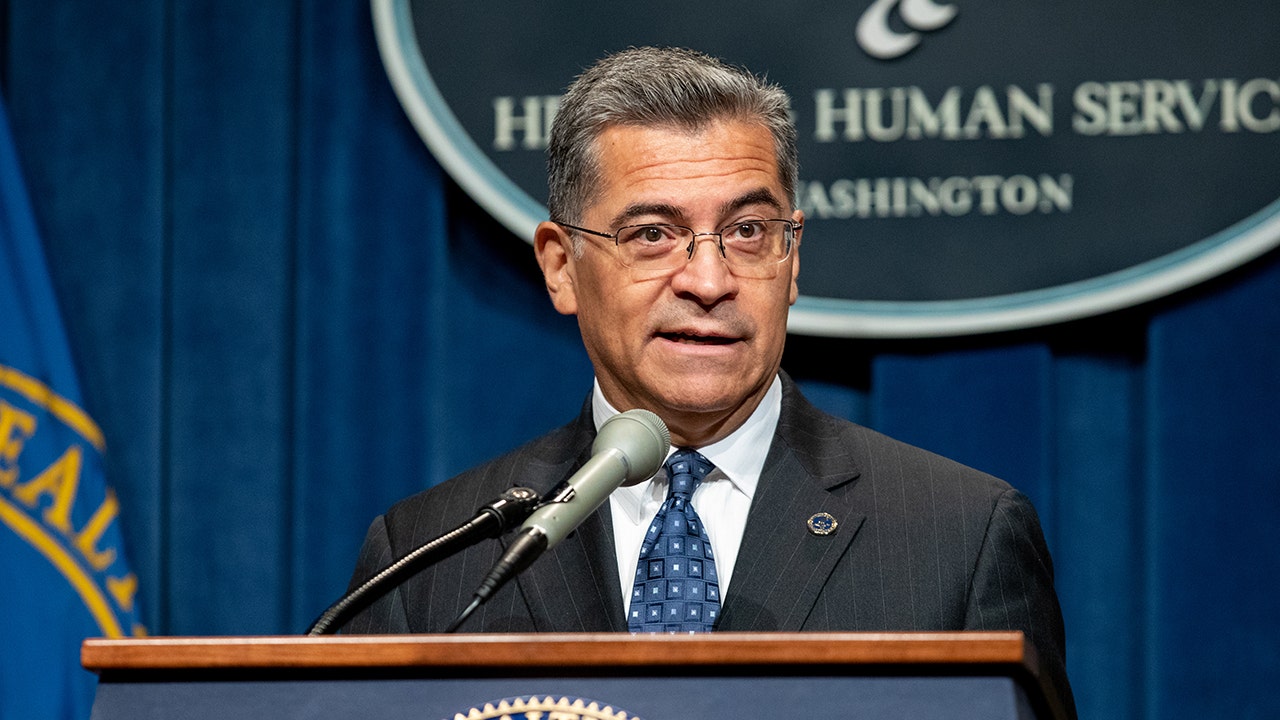
Xavier Becerra, secretary of Wellbeing and Human Solutions, speaks in the course of a news convention in Washington, D.C., on Tuesday, June 28, 2022. (Amanda Andrade-Rhoades/Bloomberg by way of Getty Pictures)
“Washington has asked for a waiver in get to develop entry to certified wellness options, stand-on your own qualified dental plans, and a state affordability application to Washington residents no matter of immigration status,” HHS and Treasury mentioned in a joint statement.
The assertion continued, “The waiver will help Washington work to its aims of enhancing health equity and lowering racial disparities by increasing access to protection for the uninsured inhabitants as a result of the state Exchange, all the although not expanding expenditures for people currently enrolled.”
BORDER Officers Viewing Huge MIGRANT Numbers, Significant Teams Forward OF TITLE 42’S Finish
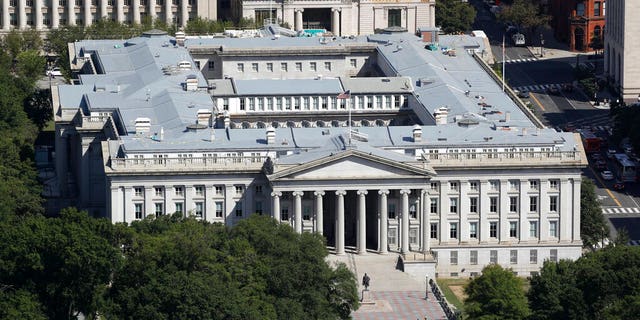
The U.S. Treasury Department developing seen from the Washington Monument, Wednesday, Sept. 18, 2019, in Washington. (AP Photo/Patrick Semansky, File)
The ACA’s usual rules explicitly exclude non-citizens dwelling in the U.S. illegally from gathering the advantages of the software.
Washington’s productive campaign to extend coverage to unlawful immigrants is the to start with of its sort since the ACA was launched.
TEXAS LAUNCHES Undertaking Drive WITH K9S, DRONES TO Cease Unlawful IMMIGRANT ‘GOTAWAYS’ AMID SPIKE IN Numbers
Point out Innovation Waivers are granted under the supervision of the HHS and Treasury for states seeking to modify existing ACA rules to go well with their specific desires.
Washington Condition Capitol (Dan Mihai/Getty Visuals)
“Section 1332 of the Cost-effective Care Act (ACA) permits a condition to utilize for a Condition Innovation Waiver (also referred to as portion 1332 waiver) to go after revolutionary techniques for delivering residents with obtain to large high quality, very affordable well being coverage even though retaining the fundamental protections of the ACA,” in accordance to the Centers for Medicare and Medicaid Products and services.
Click on Here TO GET THE FOX Information App
In their assertion, the departments claimed that the accepted modification of Washington’s ACA, contingent on the condition accepting “distinct phrases and circumstances,” would be valid from 2024 through 2028.
Timothy Nerozzi is a author for Fox Information Digital. You can adhere to him on Twitter @timothynerozzi and can e-mail him at timothy.nerozzi@fox.com
The audience listens during a book discussion by Professor Susan Eckstein about her new book “Cuban Privilege: The Making of Immigrant Inequality in America,” at Florida International University’s Wertheim Performing Arts Center in Miami, Florida, on Friday, Dec. 9, 2022.
D.A. Varela
dvarela@miamiherald.com
It was supposed to be another routine event in the series of regular book presentations organized by Florida International University’s Cuban Research Institute: on the podium, a respected scholar authoritatively presenting her most recent research. In the audience, a few attendants asking polite questions.
Instead, the presentation Friday evening of “Cuban Privilege, the Making of Immigrant Inequality in America,” a book claiming that Cuban immigrants in the United States are not genuine refugees nor exiles, turned into an emotional rebuke of that premise by activists and members of the Cuban-American community who feel the book denies the tragic history of those fleeing communism.
A few protesters and police officers were among the first things those attending the event saw before going inside FIU’s Wertheim Performing Arts Center. Inside the packed venue, members of the public at times erupted in applause at mention of the achievements of the Cuban American community as others questioned the central assertions in the book.
In her presentation, the book’s author, Boston University sociology professor Susan Eckstein, summarized what she called “unique entitlements” for Cuban migrants for decades, including a path to U.S. citizenship and access to welfare benefits. Eckstein told the audience that the immigration policies favoring Cubans were rooted in the Cold War as successive American presidents aimed at defeating Fidel Castro. In later decades, she added, the reasons to continue treating Cubans differently shifted to domestic politics as Cuban Americans became a significant voting bloc in Florida.
Professor Susan Eckstein speaks about her new book “Cuban Privilege: The Making of Immigrant Inequality in America,” at Florida International University’s Wertheim Performing Arts Center in Miami, Florida, on Friday, December 9, 2022. D.A. Varela dvarela@miamiherald.com
“No other groups have ever received such benefits,” Eckstein said.
She argued that some of those benefits were undeserved, and that Cuban immigrants cannot legitimately claim to be refugees since most did not leave the island because they faced persecution.
Eckstein shared the stage with Orlando Gutierrez-Boronat, a longtime Cuban American human rights activist and author who was asked by the FIU organizers to provide a counterpoint and made his own presentation rebuking the conclusions in the book.
“You would have to ignore the massacres, the extrajudicial killings, the political prisoners, the civil war in the countryside, the concentration camps…. Only then you can conclude Cuban exiles were not persecuted,” Gutierrez-Boronat said.
That the discussion took place at all, as a debate between diametrically different points of view, was the result of a negotiation between FIU’s leaders and members of the Cuban American community.
Despite intense criticism by local politicians and on social media, where the book was labeled “anti-Cuban” and offensive, FIU resisted pressures to cancel the event, citing academic freedom. Eckstein was originally scheduled to talk about her book at an event at Books & Books in Coral Gables, but FIU changed the venue to one of its own auditoriums after the outcry. In a statement, FIU President Kenneth A. Jessell said the institution was “using these recent events as an opportunity to improve our processes and ensure we create programs that meet the highest academic standards while remaining sensitive to our community.”
In his opening comments, Professor Jorge Duany, the Cuban Research Institute director who brought Eckstein to FIU, said an invitation to present a book was not a university endorsement of its ideas.
And the event reflected that.
“I think that the book is deficient as social science,” Gutierrez-Boronat said, adding that the author failed to acknowledge the totalitarian nature of the regime installed by Fidel Castro and the insidious ways in which repression was embedded in everyday life, pushing people to leave the country.
“You didn’t need Eisenhower and Kennedy to tell [Cubans] to come” to the U.S.,” Gutierrez-Boronat said. “They were fleeing because of the massive oppression they were facing.”
Orlando Gutierrez-Boronat speaks during a book discussion by Professor Susan Eckstein about her new book “Cuban Privilege: The Making of Immigrant Inequality in America,” at Florida International University’s Wertheim Performing Arts Center in Miami, Florida, on Friday, Dec. 9, 2022. D.A. Varela dvarela@miamiherald.com
The book also advocates ending immigration benefits for what it labels “privileged” Cuban migrants as an effort to make immigration policies more equal.
During the question-and-answer section of the event, Eckstein denied having called for the elimination of such benefits.
“I never said that Cubans should not have received what they have gotten, but shouldn’t the Haitians receive the same treatment?” she asked.
Other audience members said her work was based on faulty research.
Radio host Ninoska Perez Castellón attended the event and after speaking about her experience and that of her parents fleeing Cuba called Eckstein’s work “insulting” to the community. An FIU student asked why the Cuban Research Center deleted comments on its Instagram account that had been critical of the book. Audience members shouted “Freedom for the political prisoners” and “Patria y Vida “ — Homeland and Life, which has become the slogan of Cuban anti-government protesters.
As the audience became more agitated, Eckstein said she found some of the comments offensive.
“I didn’t intend for the book to be political,” she replied to a question posed by a student. “I find some of the comments to be offensive and not related to the discussion. This is supposed to be a book talk.”
Professor Susan Eckstein speaks about her new book “Cuban Privilege: The Making of Immigrant Inequality in America,” at Florida International University’s Wertheim Performing Arts Center in Miami, Florida, on Friday, Dec. 9, 2022. D.A. Varela dvarela@miamiherald.com
She insisted she was not giving a personal opinion of whether Cubans were legitimate refugees, but using a recognized definition of what a refugee is supposed to be.
“I am a daughter of refugees, my parents were persecuted,” she said.
But to many, the subject of her research was too personal.
“The fact that someone in America has actually written a book saying that we are privileged is remarkable. We have lived under a communist dictatorship for over 60 years and not one thing has been done,” said María Capote, one of the protesters standing outside the auditorium as the debate unfolded. “I’m extremely insulted that she would come here to the heart of the exile community and present this book.”
Social media influencer Alex Otaola leads a protest by Cuban exiles on Friday in Miami-Dade against the book “Cuban Privilege: The Making of Immigrant Inequality in America,” by professor Susan Eckstein, a Boston University sociologist, at the Florida International University, on Friday December 09, 2022. Pedro Portal pportal@miamiherald.com
Inside the venue, an FIU student asked why some of the views expressed in the Cuban American community are so extreme.
“It’s the trauma, the pain,” Gutiérrez-Boronat replied.
Those were not the last words Friday evening.
As the event was ending, members of the audience shouted, “Down with communism! Freedom for Cuba!”
Miami Herald staff writer Lesley Cosme Torres contributed to this report.
This story was originally published December 9, 2022 10:18 PM.
Related stories from Miami Herald
Nora Gámez Torres is the Cuba/U.S.-Latin American policy reporter for el Nuevo Herald and the Miami Herald. She studied journalism and media and communications in Havana and London. She holds a Ph.D. in sociology from City, University of London. Her work has won awards by the Florida Society of News Editors and the Society for Professional Journalists.//Nora Gámez Torres estudió periodismo y comunicación en La Habana y Londres. Tiene un doctorado en sociología y desde el 2014 cubre temas cubanos para el Nuevo Herald y el Miami Herald. También reporta sobre la política de Estados Unidos hacia América Latina. Su trabajo ha sido reconocido con premios de Florida Society of News Editors y Society for Profesional Journalists.