

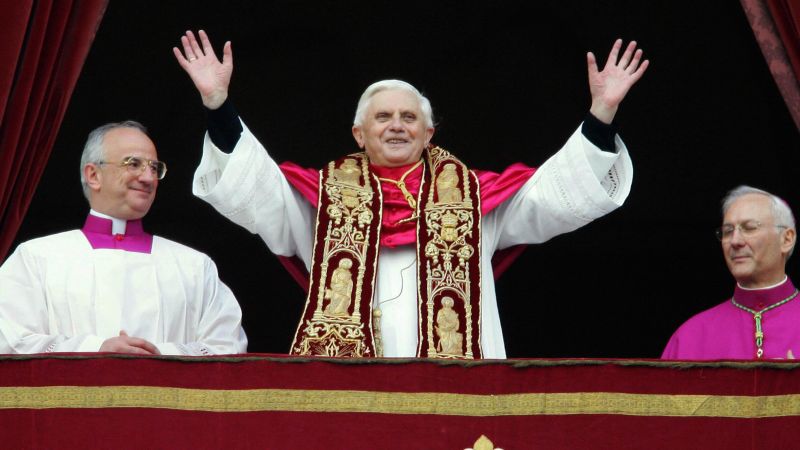
Former Pope Benedict XVI dies in Vatican monastery aged 95

Former Pope Benedict XVI dies in Vatican monastery aged 95


CNN
 — 

Pope Francis led tributes to his predecessor on Saturday, after Pope Emeritus Benedict XVI died in a monastery in the Vatican at the age of 95.

“We are moved as we recall him as such a noble person, so kind and we feel such gratitude in our hearts, gratitude to god for giving him to the church, and to the world,” Francis said in Saint Peter’s Basilica while leading traditional vespers ceremony ahead of New Year’s Day.

“Gratitude to him for all the good he accomplished and above all for his witness of faith and prayer, especially in these last years of his life. Only God knows the value of his sacrifices for the good of the church,” Francis added.

Benedict, who was the first pontiff in almost 600 years to resign his position, rather than hold office for life, passed away on Saturday, according to a statement from the Vatican.

“With sorrow I inform you that the Pope Emeritus, Benedict XVI, passed away today at 9:34 in the Mater Ecclesiae Monastery in the Vatican,” the Director of the Press Office of the Holy See, Matteo Bruni said.

The funeral of Pope Emeritus Benedict XVI will be held on Thursday in St. Peter’s Square in the Vatican City at 9:30 a.m. local time, Bruni said. The funeral will be led by Pope Francis.

The former pope’s body will lie in state in St. Peter’s Basilica in the Vatican from Monday for the faithful to bid farewell, Vatican News reported. As per the wish of Pope Emeritus, his funeral will be “simple,” Bruni said.
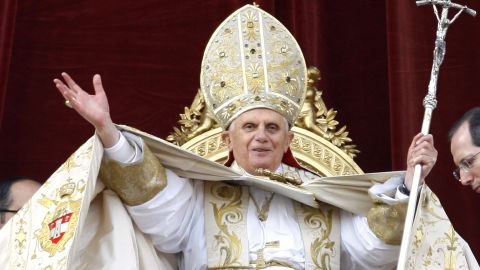
The funeral of the former pope, pictured on December 25, 2007, will take place on January 5.

News of Benedict’s death came days after Pope Francis asked the faithful to pray for him, saying he was “very sick.”

His health had been in decline for some time.

Benedict stunned the Catholic faithful and religious experts around the world on February 11, 2013, when he announced plans to step down from his position as Pope, citing his “advanced age.”

In his farewell address, the outgoing pope promised to stay “hidden” from the world, but he continued to speak out on religious matters in the years following his retirement, contributing to tensions within the Catholic Church.

Benedict was a powerful force in the Catholic Church for decades. Born Joseph Ratzinger in Germany in 1927, he was the son of a policeman. He was ordained as a priest in 1951, made a cardinal in 1977, and later served as chief theological adviser to Pope John Paul II.

One of his most significant steps up came in 1981 when he took over as head of the Congregation for the Doctrine of Faith, the Vatican office that oversees “the doctrine on the faith and morals throughout the Catholic world,” according to the Vatican.

Ratzinger became known as “Cardinal No” stemming from his efforts to crack down on the liberation theology movement, religious pluralism, challenges to traditional teachings on issues such as homosexuality, and calls to ordain women as priests.

He was elected pope in April 2005, following John Paul II’s death.

He was known to be more conservative than his successor, Pope Francis, who has made moves to soften the Vatican’s position on abortion and homosexuality, as well as doing more to deal with the sexual abuse crisis that has engulfed the church in recent years and clouded Benedict’s legacy.
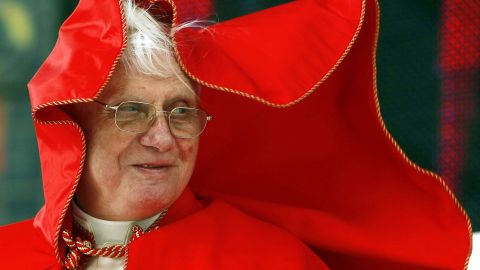
The former pope, pictured on September 9, 2007, was known to be more conservative than his successor, Pope Francis.

In April 2019, Benedict discussed the sex abuse crisis in a public letter, claiming that it was caused in part by the sexual revolution of the 1960s and the liberalization of the church’s moral teachings.

In January 2020, Benedict was forced to distance himself from a book widely seen as undercutting Francis as he considered whether or not to allow married men to become priests in certain cases. The book, “From the Depths of Our Hearts,” argued in favor of the centuries-old tradition of priestly celibacy within the Catholic Church. Benedict was originally listed as co-author, but later clarified that he had only contributed one section of the text.

A year later, Benedict came under fire over his time as archbishop of Munich and Freising, between 1977 and 1982, following the publication of a Church-commissioned report into abuse by Catholic clergy there.

The report found that while in the post he had been informed of four cases of sexual abuse involving minors – including two that had occurred during his time in office – but failed to act. It also revealed Benedict had attended a meeting about an abuser identified as Priest X. Following the report’s publication, Benedict pushed back against accusations that he knew in 1980 that this priest was an abuser.

In a letter released by the Vatican amid the furor, Benedict wrote that he was “of good cheer” as he faced “the final judge of my life,” despite his shortcomings. He also issued a general apology to survivors of abuse.

Global leaders paid homage to the former pope, following his death. Justin Welby, the Archbishop of Canterbury and head of the Church of England, said he is “mourning” the former pope.

“Pope Benedict was one of the greatest theologians of his age – committed to the faith of the Church and stalwart in its defence,” Welby said in a statement Saturday.

“In all things, not least in his writing and his preaching, he looked to Jesus Christ, the image of the invisible God. It was abundantly clear that Christ was the root of his thought and the basis of his prayer.

“In 2013 Pope Benedict took the courageous and humble step to resign the papacy, the first Pope to do so since the fifteenth century. In making this choice freely he acknowledged the human frailty that affects us all,” he added.

Cardinal Timothy Dolan, Archbishop of New York, said he will remember the former pope with “love and gratitude.”

“Saddened to learn of the demise of His Holiness Pope Emeritus Benedict XVI,” European Parliament President Roberta Metsola tweeted Saturday.

“Europe mourns him. May he rest in peace.”

The leader of the Russian Orthodox Church, Patriarch Kirill, on Saturday told Pope Francis he had received news of Benedict’s passing with “sorrow,” according to the message shared on the official website of the Moscow Patriarchate.

“His Holiness’s many years of life marked a whole epoch in the history of the Roman Catholic Church, which he led in a difficult historical period, associated with many external and internal challenges,” Kirill said of Benedict.

Kirill added relations between the Russian Orthodox Church and the Roman Catholic Church had “developed significantly” during Benedict’s tenure, in an effort to “overcome the sometimes-painful legacy of the past.”

“On behalf of the Russian Orthodox Church, I express my condolences to you and the flock of the Roman Catholic Church,” he continued.

US President Joe Biden said the late pontiff “will be remembered as a renowned theologian, with a lifetime of devotion to the Church, guided by his principles and faith.”

Biden, the second Catholic to serve as President of the United States, reflected on his meeting with Benedict at the Vatican in 2011, saying he remembered “his generosity and welcome as well as our meaningful conversation.”

“As he remarked during his 2008 visit to the White House, ‘the need for global solidarity is as urgent as ever, if all people are to live in a way worthy of their dignity.’ May his focus on the ministry of charity continue to be an inspiration to us all,” Biden added.

British Prime Minister Rishi Sunak also paid tribute. “I am saddened to learn of the death of Pope Emeritus Benedict XVI,” Sunak tweeted Saturday.

“He was a great theologian whose UK visit in 2010 was an historic moment for both Catholics and non-Catholics throughout our country.
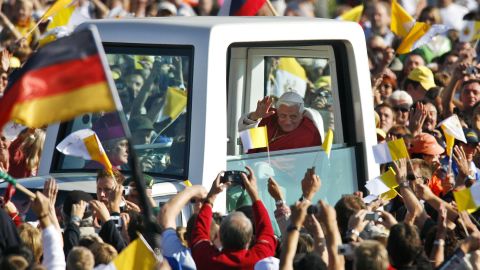
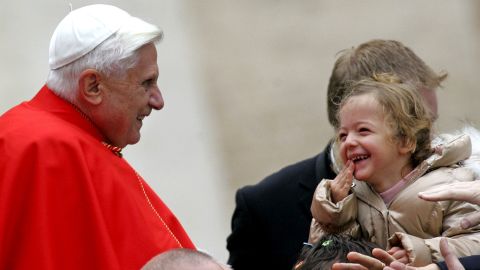
Global leaders have paid homage to the former German-born pope, pictured on September 12, 2006.

The Archbishop of Canterbury hailed the former Pope, pictured on November 30, 2005, as

Italy’s new Prime Minister Giorgia Meloni voiced her admiration for the former pope. “Benedict XVI was a giant of faith and reason. He put his life at the service of the universal Church and spoke, and will continue to speak, to the hearts and minds of men with the spiritual, cultural and intellectual depth of his Magisterium,” she tweeted Saturday.

Russian President Vladimir Putin, who is leading Moscow’s invasion of Ukraine, called the former pope “a staunch defender of traditional Christian values.”

Russia-Ukraine war live: Kyiv monastery raided amid Russian spying fears; Moscow ‘not aiming to change Ukraine regime’ | Ukraine

Russia-Ukraine war live: Kyiv monastery raided amid Russian spying fears; Moscow ‘not aiming to change Ukraine regime’ | Ukraine

1,000-year-old Kyiv monastery raided amid Russian spy fears

Ukraine’s SBU security service and police raided a 1,000-year-old Orthodox Christian monastery in Kyiv early on Tuesday as part of operations to counter suspected “subversive activities by Russian special services”, the SBU said.

The Kyiv Pechersk Lavra complex that was raided is a Ukrainian cultural treasure and the headquarters of the Russian-backed wing of the Ukrainian Orthodox church known as the Moscow Patriarchate, Reuters reported.

“These measures are being taken … as part of the systemic work of the SBU to counter the destructive activities of Russian special services in Ukraine,” the Security Service of Ukraine said in a statement.

It said the search was aimed at preventing the use of the cave monastery as “the centre of the Russian world” and carried out to look into suspicions “about the use of the premises … for sheltering sabotage and reconnaissance groups, foreign citizens, weapons storage”.

The SBU did not say what the result of the raid was. The Moscow Patriarchate did not immediately comment.

In May, the Ukrainian Orthodox church of the Moscow Patriarchate ended its ties with the Russian church over Russia’s invasion of Ukraine and condemned the support of Patriarch Kirill, the head of Russia’s church, for what Moscow calls its “special military operation”.

Key events

Summary

The time in Kyiv is 1pm. Here is a round-up of the day’s main stories so far:

  • Ukraine’s SBU security service and police raided a 1,000-year-old Orthodox Christian monastery in Kyiv early on Tuesday as part of operations to counter suspected “subversive activities by Russian special services”, the SBU said. The Kyiv Pechersk Lavra complex that was raided is a Ukrainian cultural treasure and the headquarters of the Russian-backed wing of the Ukrainian Orthodox church known as the Moscow Patriarchate, Reuters reported.

  • Ukrainians are most likely to live with blackouts at least until the end of March, the head of a major energy provider said on Monday, as the government started free evacuations for people in Kherson to other regions. Half of Ukraine’s energy infrastructure has been damaged by Russian attacks, President Volodymyr Zelenskiy said, leaving millions of people without electricity and water as winter sets in and temperatures drop below freezing.

  • Russian shelling hit a humanitarian aid distribution centre in the town of Orihiv in southeastern Ukraine on Tuesday, killing a volunteer and wounding two women, the regional governor said. Oleksandr Starukh, governor of the Zaporizhzhia region, gave no further details of the attack on Orihiv, about 70 miles east of the site of the Zaporizhzhia nuclear power station which has been shelled in the past few days.

  • Russians have murdered, tortured and kidnapped Ukrainians in a systematic pattern that could implicate top officials in war crimes, the US state department’s ambassador for global criminal justice said Monday. There is mounting evidence that Russia’s invasion of Ukraine “has been accompanied by systemic war crimes committed in every region where Russian forces have been deployed”, said ambassador at large Beth Van Schaack.

  • The Ukrainian government has been offering people in the recently liberated city of Kherson, which remains mostly without electricity and running water, free evacuations to regions with better infrastructure, as well as free accommodation. “Given the difficult security situation in the city and infrastructure problems, you can evacuate for the winter to safer regions of the country,” the deputy prime minister, Iryna Vereshchuk, said on the Telegram messaging app.

  • Russia has reiterated that it is not seeking a change of government in Ukraine. The Kremlin spokesperson, Dmitry Peskov, said his country “does not intend the ‘special operation’ to change the government in Ukraine”, Sky News reports.

  • The Kremlin said that no substantive progress had been made towards creating a security zone around the Russian-controlled Zaporizhzhia nuclear power plant in southeastern Ukraine. Zaporizhzhia nuclear power plant, which Russia seized shortly after its invasion, was rocked by shelling on Sunday, drawing condemnation from the UN nuclear watchdog which said such attacks risked a major disaster.

  • The Russian president, Vladimir Putin, will in coming days meet the mothers of soldiers amid fierce fighting in Ukraine, the Vedomosti newspaper reported, citing three unidentified sources in the presidential administration. Russia celebrates Mother’s Day on 27 November. The Kremlin has not officially announced any Putin meeting with soldiers’ mothers.

  • Ukraine president, Volodymyr Zelenskiy, will soon be able to add New Zealand to the list of parliaments he has addressed, after Wellington agreed to a request to do so. The prime minister, Jacinda Ardern, said the government had agreed to the request from the Canberra-based Ukrainian embassy which serves both countries.

  • Ukraine is to evacuate civilians from recently liberated areas of the Kherson and Mykolaiv regions. Residents of the two southern regions have been advised to move to safer areas in the central and western parts of the country, amid fears that the damage to infrastructure caused by the war is too severe for people to endure the winter.

  • The World Health Organization (WHO) has warned that Ukraine’s health system is “facing its darkest days in the war so far”. WHO regional director for Europe, Dr Hans Henri P Kluge, called for a “humanitarian health corridor” to be created to all areas of Ukraine newly recaptured by Kyiv, as well as those occupied by Russian forces.

  • Russian troops have been accused of burning bodies at a landfill on the edge of Kherson during their occupation. Residents and workers at the site told the Guardian they saw Russian open trucks arriving to the site carrying black bags that were then set on fire, filling the air with a large cloud of smoke and a stench of burning flesh.

That’s it from me, Tom Ambrose, for the time being. I’ll be back at 2pm UK time but my colleague Léonie Chao-Fong will be along shortly to bring you all the latest news from Russia’s invasion of Ukraine.

The Kremlin said that no substantive progress had been made towards creating a security zone around the Russian-controlled Zaporizhzhia nuclear power plant in southeastern Ukraine.

Zaporizhzhia nuclear power plant, which Russia seized shortly after its invasion, was rocked by shelling on Sunday, drawing condemnation from the UN nuclear watchdog which said such attacks risked a major disaster.

Russian shelling hit a humanitarian aid distribution centre in the town of Orihiv in southeastern Ukraine on Tuesday, killing a volunteer and wounding two women, the regional governor said.

Oleksandr Starukh, governor of the Zaporizhzhia region, gave no further details of the attack on Orihiv, about 70 miles east of the site of the Zaporizhzhia nuclear power station which has been shelled in the past few days.

Russia and Ukraine accused each other of firing the shells that fell near reactors and damaged a radioactive waste storage building at the plant, Reuters reported.

“Russian terrorists are shelling humanitarian delivery points, continuing nuclear blackmail – a pitiful tactic of military losers,” Andriy Yermak, chief of the presidential staff, wrote on the Telegram messaging app.

“Well, for every such action there is a Ukrainian counteraction,” he added.

An image shows the destruction of Kherson International airport in Chornobaivka, located in Kherson oblast, Ukraine.

The destruction of Kherson International airport in Chornobaivka, located in Kherson oblast in Ukraine.
The destruction of Kherson International airport in Chornobaivka, located in Kherson oblast in Ukraine. Photograph: Jose Hernandez/REX/Shutterstock

Russia reiterates that it does not want to topple Ukraine government

Russia has reiterated that it is not seeking a change of government in Ukraine.

The Kremlin spokesperson, Dmitry Peskov, said his country “does not intend the ‘special operation’ to change the government in Ukraine”, Sky News reports.

A reporter asked Peskov if one of the goals of the “special military operation” was regime change in Ukraine.

“No [it is not], the president has already spoken about this,” Peskov replied.

This is in contrast to the beginning of the invasion in February, when Moscow had appeared to be aiming to overthrow the Ukrainian government and install a Russia-friendly regime.

1,000-year-old Kyiv monastery raided amid Russian spy fears

Ukraine’s SBU security service and police raided a 1,000-year-old Orthodox Christian monastery in Kyiv early on Tuesday as part of operations to counter suspected “subversive activities by Russian special services”, the SBU said.

The Kyiv Pechersk Lavra complex that was raided is a Ukrainian cultural treasure and the headquarters of the Russian-backed wing of the Ukrainian Orthodox church known as the Moscow Patriarchate, Reuters reported.

“These measures are being taken … as part of the systemic work of the SBU to counter the destructive activities of Russian special services in Ukraine,” the Security Service of Ukraine said in a statement.

It said the search was aimed at preventing the use of the cave monastery as “the centre of the Russian world” and carried out to look into suspicions “about the use of the premises … for sheltering sabotage and reconnaissance groups, foreign citizens, weapons storage”.

The SBU did not say what the result of the raid was. The Moscow Patriarchate did not immediately comment.

In May, the Ukrainian Orthodox church of the Moscow Patriarchate ended its ties with the Russian church over Russia’s invasion of Ukraine and condemned the support of Patriarch Kirill, the head of Russia’s church, for what Moscow calls its “special military operation”.

The Russian president, Vladimir Putin, will in coming days meet the mothers of soldiers amid fierce fighting in Ukraine, the Vedomosti newspaper reported, citing three unidentified sources in the presidential administration.

Russia celebrates Mother’s Day on 27 November. The Kremlin has not officially announced any Putin meeting with soldiers’ mothers.

Kremlin spokesperson Dmitry Peskov refused to deny or confirm the meeting, Vedomosti said.

The UK Ministry of Defence’s update for today reports that Russian and Ukrainian media reported an attack at an oil terminal in Novorssiysk port on Russia’s Black Sea coast on 18 November.

More on the winter energy crisis in Ukraine: the Ukrainian government has been offering people in the recently liberated city of Kherson, which remains mostly without electricity and running water, free evacuations to regions with better infrastructure, as well as free accommodation.

“Given the difficult security situation in the city and infrastructure problems, you can evacuate for the winter to safer regions of the country,” the deputy prime minister, Iryna Vereshchuk, said on the Telegram messaging app.

Zelenskiy urged Ukrainians on Monday to conserve energy, saying they “should be mindful and redistribute their consumption throughout the day”.

Kremlin spokesperson Dmitry Peskov said the blackouts and Russia’s strikes on energy infrastructure are the consequences of Kyiv not willing to negotiate, the state Tass news agency reported late last week.

Temperatures in some of Ukraine’s regions have already dropped below freezing, including in the capital of Kyiv.

Kovalenko said the country should be prepared for all options, including lengthy power outages.

“Stock up on warm clothes, blankets, think about options that will help you wait a long outage,” Kovalenko said. “It’s better to do it now than to be miserable.”

That’s it from me for today. My colleague Tom Ambrose will take you through the news for the next while.

The Ukraine president, Volodymyr Zelenskiy, will soon be able to add New Zealand to the list of parliaments he has addressed, after Wellington agreed to a request to do so.

The prime minister, Jacinda Ardern, said the government had agreed to the request from the Canberra-based Ukrainian embassy which serves both countries.

“The ask has been made. Happy to accommodate that,” she said, adding that it would be over to a parliamentary committee to find the time. The address is likely to be in the final week of the sitting year, which begins on 13 December.

Zelenskiy has given Ardern an invitation to visit Kyiv, which she is yet to take-up. But the defence minister, Peeni Henare, made a 10-hour trip to the Ukrainian capital last weekend.

New Zealand has given tens of millions of dollars of aid in support of Ukraine’s resistance to Russia’s invasion, as well as donating military equipment and levying sanctions targeting Russian elites and trade.

US state department seeing ‘mounting evidence of systemic war crimes’

Russians have murdered, tortured and kidnapped Ukrainians in a systematic pattern that could implicate top officials in war crimes, the US state department’s ambassador for global criminal justice said Monday.

There is mounting evidence that Russia’s invasion of Ukraine “has been accompanied by systemic war crimes committed in every region where Russian forces have been deployed”, said ambassador at large Beth Van Schaack.

Evidence from liberated areas indicates “deliberate, indiscriminate and disproportionate” attacks against civilian populations, custodial abuses of civilians and POWs, forceful removal, or filtration, of Ukrainian citizens – including children – to Russia, and execution-like murders and sexual violence, she told reporters.

“When we’re seeing such systemic acts, including the creation of a vast filtration network, it’s very hard to imagine how these crimes could be committed without responsibility going all the way up the chain of command,” she said.

Van Schaack represents the US to global bodies investigating war crimes and other atrocities, and called the current situation a “new Nuremberg moment”, a reference to the war crimes trials held in the German city at the end of the second world war.

She said in a briefing for reporters that Russia’s nine-month-old assault on Ukraine has sparked an “unprecedented array of accountability initiatives”, involving numerous bodies, along with the international criminal court in The Hague.

The bodies are coordinating to develop priorities and approaches “under all available jurisdictional bases”, she said.

Van Schaack declined to say specifically if the Russian president, Vladimir Putin, could be prosecuted for war crimes in Ukraine.

But she said prosecutors will “follow the evidence where it leads”.

Under international law, the doctrine of superior responsibility allows for prosecutions “to go all the way up the chain of command”, she said.

She also said that rights officials are looking closely at a video that emerged over the weekend that suggests Ukrainian troops may have killed Russian prisoners of war.

Blackouts likely to last until March 2023

Ukrainians are most likely to live with blackouts at least until the end of March, the head of a major energy provider said on Monday, as the government started free evacuations for people in Kherson to other regions.

Half of Ukraine’s energy infrastructure has been damaged by Russian attacks, President Volodymyr Zelenskiy said, leaving millions of people without electricity and water as winter sets in and temperatures drop below freezing.

Sergey Kovalenko, head of the YASNO major private energy provider for Kyiv, said that workers are rushing to complete repairs before the winter cold arrives.

“I would like everyone to understand: Ukrainians will most likely live with blackouts until at least the end of March,” Kovalenko said in a post on his Facebook page. He added:

The basic scenario is that if there are no new attacks on the power grid, then under current conditions of electricity generation, the power deficit could be evenly distributed across the country. This means the outages will be everywhere but less lasting.

There are also different forecasts of the development of this situation, and they completely depend on attacks Russia.”

Summary

Hello and welcome to our live coverage of the war in Ukraine. My name is Helen Sullivan and I’ll be bringing you the latest for the next while.

Ukrainians are most likely to live with blackouts at least until the end of March, the head of a major energy provider said late on Monday.

Sergey Kovalenko, head of the YASNO major private energy provider for Kyiv, said that workers are rushing to complete repairs before the winter cold arrives.

“I would like everyone to understand: Ukrainians will most likely live with blackouts until at least the end of March,” Kovalenko said in a post on his Facebook page.

More on this soon. In the meantime, here are the key recent developments:

  • Ukraine is to evacuate civilians from recently liberated areas of the Kherson and Mykolaiv regions. Residents of the two southern regions have been advised to move to safer areas in the central and western parts of the country, amid fears that the damage to infrastructure caused by the war is too severe for people to endure the winter.

  • The Kremlin said it was concerned by what it claimed to be Ukrainian shelling of the Zaporizhzhia nuclear power plant, which is under Russian control. Yuriy Sak, an adviser to Ukraine’s defence minister, countered that the shelling of the Zaporizhzhia plant was a Russian tactic aiming to disrupt power supplies and “freeze Ukrainians to death”. Ukraine’s president, Volodymyr Zelenskiy, appealed to Nato members to guarantee the protection of his country’s nuclear power plants from “Russian sabotage”.

  • The UN nuclear watchdog was to conduct an assessment of the Zaporizhzhia plant on Monday. The International Atomic Energy Agency (IAEA) said the forces behind its shelling were “playing with fire” and such attacks risked a major disaster.

  • The World Health Organization (WHO) has warned that Ukraine’s health system is “facing its darkest days in the war so far”. WHO regional director for Europe, Dr Hans Henri P Kluge, called for a “humanitarian health corridor” to be created to all areas of Ukraine newly recaptured by Kyiv, as well as those occupied by Russian forces.

  • Ukraine’s prosecutor general office has said its officials have identified four locations where Russian forces tortured detainees in Kherson city. It said Russian forces “set up pseudo-law enforcement agencies” in pre-trial detention centres and a police station before troops withdrew from the southern Ukrainian city.

  • Russian troops have been accused of burning bodies at a landfill on the edge of Kherson during their occupation. Residents and workers at the site told the Guardian they saw Russian open trucks arriving to the site carrying black bags that were then set on fire, filling the air with a large cloud of smoke and a stench of burning flesh.