REVIEW Assessing the status quo

REVIEW Assessing the status quo

How would you characterise your members’ sales in the second half of 2022?

Marcel Forns, GEBTA Business travel experienced a strong recovery during the second half of 2022. In terms of number of trips, the figures from September to December 2022 recorded a significant increase and closed at 82 per cent compared with the figures of 2019 – or 75 per cent for the whole year. In terms of sales, the figures equalled those of 2019 due to the average price increase of products and services, mainly accommodation and air tickets.

James Stevenson, GlobalStar Positive. That’s how I’d characterise our members sales in the second half of 2022. Business has either returned to 2019 levels or in some cases has extended beyond to create a new, higher level for the latter half of 2022. There are of course some exceptions, notably in Asia due to the late lifting of travel and quarantine restrictions. Other areas of interest that have marked anomalies include the type of business. Where members have a mix of leisure and corporate travel, sales figures show greater bounce back. As does domestic versus international travel, which is especially true in North America. Also, SME travel came back far quicker than that of the large, multinational corporations. Outside of transient travel we experienced significant uplift in meetings and events volume.

Guy Snelgar, Advantage The speed and scale of the return to travel has varied across different sectors of the industry.  But on average, members have reported that while the number of transactions may still have been 10 to 20 per cent below 2019 levels [in the second half of 2022], revenue levels had returned, or in some cases, exceeded 2019. This has come from a combination of higher fares and rates, but also from TMCs being asked to book more elements of the trip, especially around accommodation and ground transport or transfers.

Clive Wratten, BTA: We are seeing a strong recovery of business travel. Most of our members gained around 80 to 90 per cent of 2019 revenue levels by the close of 2022.

What’s your assessment of TMCs’ staffing levels right now?

Marcel Forns, GEBTA In Spain, the situation concerning staffing problems experienced some improvement by the end of last year. The current situation is much better than it was six months ago. According to our TMCs, the situation differs depending on the company. In most of the cases the staffing problems seem to affect predominantly frontline consultants.

James Stevenson, GlobalStar The biggest challenge right now is resourcing. Staffing levels are woefully low. We saw so many brilliant people laid off during the pandemic, predominantly by the mega TMCs, and re-hiring and new hire is slow to pick up. Some of our partners kept their staff on during the pandemic, sometimes outsourcing them to provide resource to Covid-related call centres, pivoting their businesses to survive. As a result they have highly trained, experienced and knowledgeable teams in play. Something some of the larger businesses aren’t able to do, consistently for all clients, because they simply don’t have the staff. It comes as no surprise to see the competition for staff right now. There are signing bonuses being offered as normal and candidates are receiving multiple offers and taking their time to make a decision.

Guy Snelgar, Advantage Our members tell us that this is certainly remains an ongoing challenge, but not at the critical level it was in the second half of 2022. We are seeing some old colleagues deciding to return to the industry, having left during the pandemic, and some TMCs are starting to benefit from trainee and apprenticeship schemes that have brought in new, young talent.  However, competition for good, experienced staff remains high, as does the cost of recruiting them.

Clive Wratten, BTA The majority of the BTA’s members are at approximately 90 per cent of pre-pandemic staffing levels although recruiting continues. The general feedback we’ve received tells us that service levels are now back within acceptable levels as the industry returns to normality.

In which areas do you think TMCs are investing the most currently?

Marcel Forns, GEBTA We do not see a general pattern applicable to the whole TMC community as their profile is quite diverse and so is their market approach. Sustainability reporting, however, seems to be at an embryonic stage for part of the market, while content integration is a major topic for most of the players. 

James Stevenson, GlobalStar There are four key areas enjoying TMC investment right now. Firstly, technology, and specifically single booking platforms that provide a consistent source of content for both agents and travellers whilst maintaining reliable policy management. TMCs have to invest in this to ensure access and full servicing capabilities for both GDS and non-GDS content, including NDC. Secondly, people, from wellbeing and development initiatives through to signing bonuses. Every tactic to attract and retain people is enjoying TMC investment. Thirdly, ESG unsurprisingly remains a focusinvestment as clients demand more support for their company initiatives. Lastly, meetings and events and live availability venue finders. In today’s world of remote and hybrid working, canny TMCs are investing to speed up client requests for meeting space that enables teams to be brought together. 

Guy Snelgar, Advantage Many TMCs continued investing through the pandemic, particularly in technology, and we are now seeing the fruits of that investment being launched for customers. Tools delivering sustainability information and calculation to the corporate traveller have been the most prominent. There has also been a lot of work behind the scenes by TMCs refining the operational processes – a combination of technology, recruitment and organisational change to support new booking patterns and service expectations that have emerged post-pandemic.

Clive Wratten, BTA This will vary depending on the TMC’s business model and the market segment they operate in. On the whole, all TMCs continue to invest in technology, but I actually believe the biggest investment is in their staff.  Recruiting, retaining and re-training employees is critical, especially as the industry is making a promising return to pre-pandemic levels. It is clear that people are at the heart of the business travel industry. 

What do you think is the TMC community’s biggest challenge at the moment?

Marcel Forns, GEBTA Sustainability and content. Both issues are without doubt major concerns for the TMC community. As we have seen a certain decrease in staffing problems in the last months, we believe that access to content will now become the main challenge for the vast majority of TMCs.

James Stevenson, GlobalStar As I’ve said before, staffing has to come high on this list because as we have seen, it is detrimental to meetings service level agreements. Probably followed by – and these are in no particular order – content fragmentation, supplier capacity and inflation, with the last of these affecting the cost of fuel and in some regions the eye-watering costs of air fares, which both prevents travel or uses up budget quickly.

Guy Snelgar, Advantage Managing the different processes and workflows that come from the content fragmentation has driven new challenges on resource and staffing. For example, a process that might have been a largely automated through traditional GDS content could now be a more manual one via NDC.  Delivering a smooth, consistent booking experience, change management and payment across so many distribution channels can mean TMCs having to do a lot of manual work in the background. This has an increased resource cost which is not always reflected in existing client fees or supplier revenues.

Clive Wratten, BTA As the last three years have shown, predicting the future is tough. Nevertheless, I believe that content fragmentation is a key issue that TMCs face in the future. There has never been a more important time for the industry supply chain to collaborate and respect each other. TMCs are the integral conduit, and they need to be recognised and appreciated. Collaboration across the industry is vital to tackling big and small challenges. We need to take a proactive stance on sustainability and reducing our carbon footprint. As a contributor to greenhouse gas emissions, sectors across the industry must work together to develop innovative long-term solutions that are financially viable. 

There was much talk of subscription fees during the pandemic as a model that better protects TMCs but, for all the hype, has there been much change in the way corporates remunerate their TMC partners?

Marcel Forns, GEBTA In general terms the Spanish market is based on a transactional model. However, we do see some shift to complementary and more balanced business models that seem to be more adequate in remunerating the added value offered by TMCs, namely when it comes to consultancy, for example.

James Stevenson, GlobalStar There’s no evidence of that change. I’ve seen the subscription model on a domestic level, pushed for by the TMC, but nothing more than that. It can be an expensive option for clients when their travellers’ volumes vary so much.

Guy Snelgar, Advantage With so much uncertainty around travel volumes over the last couple of years, it is not surprising that there hasn’t been a big move to some of the new fee models like subscription fees – it was hard for a corporate travel manager to make any commercial comparison while people weren’t travelling. However, they have not gone away and we have seen more TMCs announcing alternative models recently. There is still a disconnect between the value that a TMC delivers from the total management of a company’s travel programme and a fee structure which is based heavily around the booking of each individual transaction. As business travel establishes its ‘new normal’, I do expect see a move towards some more inclusive models that recognise the whole service a TMC provides.

Clive Wratten, BTA The BTA’s role is to ensure the industry and its customers are educated on the mechanics of the sector of which commercial models are just one part. During the pandemic, we worked closely with all elements of the supply chain to look at different transactional models. It is now up to each TMC to take this information and apply it as they best see fit.

Do you think there is a discernible shift in the way TMCs make money?

James Stevenson, GlobalStar I think many TMCs would like there to be a shift in how they make money! The management fee model is usually always the preferred option, but in reality, clients are asking for a transaction fee model. It’s interesting as the mix between supplier revenue and client fee revenues will vary depending on the TMC – and those who weight towards earning from supplier revenue are always providing less choice for their clients. But the landscape has changed. Suppliers simply don’t have the same amount of cash in their model today that they had pre-pandemic. Costs and margins are irrevocably altered. TMCs can no longer rely as heavily on a blend of listing fees, marketing revenue and performance-driven incentives. Suppliers are more willing to give clients negotiated deals at lower volumes today. For example, the volume threshold for route deals from airlines is significantly lower. Similarly, hotels are keen to drive volume and are giving corporates better performance-driven rates.

Guy Snelgar, Advantage There’s not so much a sea-change here, as a gradual evolution that has been happening for some time. Certainly, some suppliers, post-pandemic, are reviewing how they incentivise and remunerate agents, but as always that varies across the industry.  While many supplier partners are offering new commercial incentives, others are reducing or limiting access to these. The impact of these changes varies from TMC to TMC, depending on their model, which is leading many to review the profitability of some products and whether existing client fee levels are sustainable in some cases.

Clive Wratten, BTA: This very much depends on the model the TMC uses as the industry continuously adapts to market conditions. TMCs are adept at adjusting their business models to reflect the commercial landscape which explains the shifting emphasis on where the profit is derived from. 

Are TMCs’ increasingly long and complex fee menus and surcharges damaging customer relations, or is it a case of ‘needs must’ for TMCs’ welfare?

James Stevenson, GlobalStar It is definitely not a ‘needs must’. It’s a choice. We choose to not entertain it, preferring to place emphasis on great customer relations. Our model is pretty simple. Our fee menus are neither long nor complex, and we don’t have surcharges, unless it is a third party surcharge, such as NDC, which we pass through at cost, obviously. Our makeup adds to the simplicity of our model. We are able to provide clients with a fee structure that is adapted, where it needs to be, on a market by market basis. We put our clients’ needs front and centre. Complexity is created because the industry doesn’t have a standard way to book. That means that larger TMCs and especially the mega TMCs can and will charge extra for anything and everything that is outside standard service. They have to try to cover all bases as far as client needs – today and in the future – are concerned. A ‘pay as you go’ menu that is long and complex is their solution.

Guy Snelgar, Advantage There is a necessity for TMCs to cover the changing – and often increasing – costs associated with processing different booking types and content sources. In a model where corporate buyers are looking to achieve the absolute minimum cost for each different transaction type, that is inevitably going to lead to a complex fee structure to match. For example, if a booking fee has been sliced so thinly on a product that might not deliver any commission back to the TMC, then the removal of a GDS incentive, or additional costs incurred from having to manually process changes to the booking, can make that fee unsustainable without a surcharge or increase. I would say that is part of the rationale behind a move towards more rounded and inclusive management or subscription fees that look at the total service that TMCs provide.
Face masks made ‘little to no difference’ in preventing spread of COVID, scientific review finds

Face masks made ‘little to no difference’ in preventing spread of COVID, scientific review finds

The stance by the Facilities for Illness and Management Avoidance (CDC) on deal with masks has taken many twists and turns all through the COVID pandemic.

Immediately after initially saying confront coverings weren’t necessary, the CDC adjusted course in April 2020, calling on all People in america — even little ones as young as 2 decades old — to mask up. 

That September, then-CDC Director Dr. Robert Redfield mentioned through a Senate listening to that “confront masks are the most crucial powerful wellbeing tool we have,” even suggesting that they might supply more security than vaccines.

COVID-19’S Long lasting Impression: ‘LESS ATTRACTIVE’ People Don MASKS A lot more Generally THAN Other individuals

People tips probable played a massive portion in 39 U.S. states ultimately enacting mask mandates.

Now, a new scientific evaluation — led by 12 researchers from esteemed universities all around the entire world — implies that popular masking could have completed little to almost nothing to curb the transmission of COVID-19.

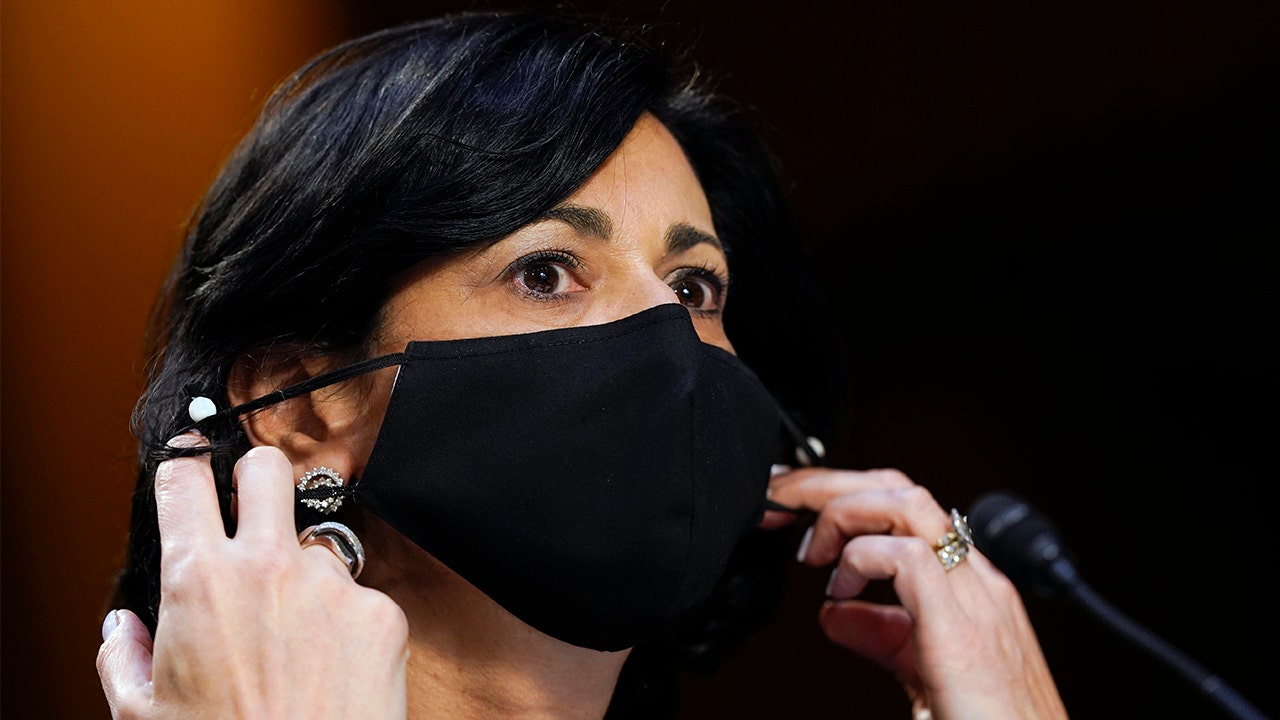
Shown here wearing a mask is Dr. Rachelle Walensky, current director of the Centers for Disease Control and Prevention. The CDC's stance on face masks has taken many twists and turns throughout the pandemic.

Demonstrated below sporting a mask is Dr. Rachelle Walensky, existing director of the Facilities for Ailment Handle and Avoidance. The CDC’s stance on facial area masks has taken many twists and turns throughout the pandemic. (AP Photograph/Susan Walsh, Pool, File)

Released by Cochrane Library, the overview dug into the findings of 78 randomized managed trials to identify no matter if “actual physical interventions” — together with deal with masks and hand-washing — lessened the unfold of respiratory viruses. 

A new scientific evaluate implies that widespread masking could have done minimal to absolutely nothing to curb the transmission of COVID.

When evaluating the use of healthcare/surgical masks to carrying no masks, the assessment uncovered that “carrying a mask might make minimal to no variation in how quite a few persons caught a flu-like illness/COVID-like sickness (nine experiments 276,917 individuals) and almost certainly can make little or no change in how quite a few people have flu/COVID confirmed by a laboratory test (six scientific studies 13,919 persons).”

NJ 3-Yr-Previous KICKED OUT OF SPEECH Remedy Because of TO MASK MANDATES: ‘CATASTROPHIC Ethical CRIME’

Subsequent, the review as opposed clinical/surgical masks to N95 respirators (or P2 respirators, which are utilised in Europe).

It observed that “putting on N95/P2 respirators almost certainly tends to make minimal to no difference in how many people today have confirmed flu (5 studies 8407 people) and may possibly make little to no variation in how quite a few men and women catch a flu-like health issues (five reports 8407 persons), or respiratory health issues (a few studies 7799 men and women).”

"It was the state and local authorities that took the CDC’s recommendations and implemented the mandates," Dr. Marc Siegel, a Fox News medical contributor based in New York City, told Fox News Digital. 

“It was the point out and neighborhood authorities that took the CDC’s recommendations and implemented the mandates,” Dr. Marc Siegel, a Fox News healthcare contributor based mostly in New York Town, informed Fox Information Digital.  (iStock)

The 78 reports appeared at participants from nations of all money levels. 

Information was collected throughout the H1N1 flu pandemic in 2009, non-epidemic flu seasons, epidemic flu seasons up to 2016 and the COVID-19 pandemic, the analyze authors wrote.

Physician suggests evaluation had some critical restrictions

The new conclusions seem to be to simply call into concern the CDC’s enthusiastic embrace of popular masking.

Girls Additional Likely TO Endure FROM ‘LONG COVID,’ BUT Healthy Routines CAN Lower THE Possibility

Having said that, Dr. Marc Siegel, professor of drugs at NYU Langone Health care Heart and a Fox Information healthcare contributor, pointed out a crucial limitation: “The researchers concentrate mainly on randomized trials, but most of the experiments that have been performed on masks are population scientific tests,” he reported. 

“There are really number of randomized trials on masks.”

“The suggestions may possibly have been improper, but the CDC does not have earned the blame for everything.”

— Dr. Marc Siegel

In a randomized demo, researchers area members in distinctive teams and notice the results in a controlled surroundings.

By distinction, inhabitants-centered research measure outcomes in a “true-entire world” location.

In April 2020, the CDC called on all Americans — even very young children — to mask up against the coronavirus. 

In April 2020, the CDC named on all Individuals — even quite young young children — to mask up in opposition to the coronavirus.  (REUTERS/Brendan McDermid/File Photograph)

The examine authors did acknowledge to some restrictions and a hazard of bias, which includes the lower variety of people who adopted mask steering and the large variation of results. 

“The effects might transform when further proof gets to be obtainable,” they wrote.

‘Be certain of consistency’ 

Dr. Siegel said he has never ever supported mask mandates. 

Response TO 4-Calendar year-Outdated Kid Pressured TO Depart Faculty FOR NOT Putting on A MASK: ‘COMPLETELY BAFFLING’

He believes that though masks could possibly be effective on an personal level, they really don’t operate as effectively on a population level.

“If you are likely to mandate a thing, you’d have to be positive of consistency across the population, and that is never transpired,” he said.

Simply click Listed here TO Sign UP FOR OUR Wellbeing Publication

Even so, the health practitioner pointed out that the CDC never ever basically mandated masks — with the exception of a public transportation mandate in January 2021. 

As of right now, no U.S. states have mask mandates in place. 

As of ideal now, no U.S. states have mask mandates in position.  (Getty Illustrations or photos)

“It was the point out and neighborhood authorities that took the CDC’s suggestions and executed the mandates,” Dr. Siegel said. 

“The suggestions may have been wrong, but the CDC does not ought to have the blame for every little thing. I imagine they were being knowledgeable that masks may perhaps have price on a personalized basis, but they received carried absent with the politics.”

Click Below TO GET THE FOX Information App

As of proper now, no U.S. states have mask mandates in area. 

On Sunday, New York dropped its condition-large mask prerequisite in hospitals — leaving the decision up to person facilities. A lot of well being treatment amenities are presently nonetheless requiring them. 

Android Automotive goes mainstream: A review of GM’s new infotainment system

Android Automotive goes mainstream: A review of GM’s new infotainment system

GMC

Android Automotive, Google’s functioning technique for vehicles, has traditionally been really specialized niche, and only a handful of significant-profile vehicles like the Polestar 2 have utilised it. Now, while, Android Automotive is going mainstream, and we are starting to see some of the largest car suppliers roll out Google’s operating system throughout total lineups.

Now, we’re looking at the 2022 GMC Yukon, but actually, this is Normal Motors’ Android Automotive method, and you will see it rolled out across most of GM’s lineup in the long run. The same primary setup powers the Hummer EV1, and with all of the pieces-sharing that goes on at GM, count on to see this program pop up in Chevys, GMCs, Cadillacs, and Buicks. With Ford and Honda jumping into the Android Automotive ecosystem in the in the vicinity of future, Google’s auto OS will shortly be everywhere.

Let us get the regular disclaimer out of the way: This posting is not about Android Automobile, Google’s tethered cell phone app and competitor to Apple’s CarPlay. Android Automotive, thoroughly spelled out (it can be in some cases branded as “Google Crafted-In”), signifies the car is one major Android system. A computer system runs the car’s infotainment system, and that computer operates Android. Even if you have an Iphone in your pocket, that would not modify the OS your car or truck operates (it does guidance CarPlay, however). For most versions, obtaining Typical Motors will mean shopping for an Android Auto. You are going to see an on-display screen concept pop up in the course of set up indicating, “By employing this car, you concur to Google’s phrases of assistance.”

The concept right here tends to make some kind of feeling. Customers want their car or truck infotainment process to seem and function more like a smartphone does, so why not just load the car with a smartphone OS? Then you can get all the sleek-scrolling, touchscreen-based mostly swipe navigation that persons have occur to expect from a modern laptop or computer. Android Automotive is a Google-blessed OS, and like phone providers, companies like Ford, GM, and Volvo signal bargains with Google to license the OS and a slew of Google apps. This motor vehicle has onboard Google Maps, likely the most important killer application in the automotive sector. You also get Google Assistant voice commands and the Google Participate in Retail outlet for cars and trucks, enabling uncomplicated entry to apps like Spotify and other media players.

The hardware: 4 screens, three operating devices

The main infotainment screen.
Enlarge / The main infotainment screen.

Ron Amadeo

Examining a auto laptop is a peculiar proposition since the components is constantly so outdated. Automobile improvement requires around five a long time, and when the cars ultimately get to market, the laptop components just isn’t that thrilling. The hardware for our Android Automobile system—which is internally named “Typical Motors Infotainment 3.7,” or “gminfo37″—is a 5-calendar year-previous Intel Atom A3960 SoC with an Intel Hd Graphics 500 GPU, 6GB of RAM, and 64GB of flash storage.

This is not uniquely a GM trouble, and the identical CPU exists in the Polestar 2—though that procedure has only 4GB of RAM—so we are going to classify both of those automobiles as “first-technology Android Automotive hardware.” The age of the hardware is notable, while. Android Automotive isn’t going to enable you sideload applications into a generation car, but appear up Atom A3960 Geekbench scores, and you’ll see that the pc in this $78,000 automobile is hardly a lot quicker than a $35 Raspberry Pi 4. The GMC Yukon and Polestar 2 equally aspect just one of the slowest CPUs you can buy these days in any variety aspect.

I’m absolutely sure the Atom A3960 went by means of a prolonged certification procedure to be certain it can survive the warmth and vibration of a challenging motor vehicle environment, but it truly is disappointing to see GMC shipping and delivery what are mainly finances Computer areas from 2016. Even if the 5-12 months components delay is unavoidable, the enterprise could have began with mid-selection or higher-stop 2016 Intel components fairly than cheap Atom sections.

News in review: Around the world

News in review: Around the world

MARY REICHARD, HOST: It’s Wednesday the 28th of December, 2022.

Thank you for joining us for today’s edition of The World and Everything in It. Good morning, I’m Mary Reichard.

NICK EICHER, HOST: And I’m Nick Eicher. First up today: Ukraine.

Russia’s full-scale war in Ukraine began ten months ago, and the consequences of this second invasion have been devastating.

At least 6,700 civilians have died and more than 13,000 Ukrainian soldiers have been killed in action.

In addition, nearly 13 million people have been displaced and the damage to Ukraine’s infrastructure amounts to more than 100 billion U.S. dollars.

REICHARD: WORLD’s Jill Nelson gives us a rundown of the key events of the war and how it’s affected the lives of Ukrainians.

AUDIO: [Bombings]

JILL NELSON, REPORTER: The sun had not yet risen on Feb. 24th, when Pastor Oleg Magdych realized Ukraine was on the brink of war. Russians were firing rockets less than a mile away.

OLEG: So this morning we were driving through Kharkiv. We heard this noise that you can’t get it wrong. So um the rocket shelling was in place.

Magdych was trying to deliver supplies to Ukrainian troops in eastern Ukraine. He and his friends quickly turned around to implement their Russian-invasion game plan: Get their families to safety and join the fight.

AUDIO: [Traffic]

A mass exodus of people created traffic jams and gas shortages, and many Ukrainians were trapped.

Four days later, a 40-mile long Russian military convoy stretched from Belarus to Kyiv. Washington offered to help evacuate Ukraine’s leader.

ZELENSKY: [Ukrainian]

But Ukrainian President Volodomyr Zelensky turned down the offer with his now-famous response: “I need ammunition, not a ride.”

The former comedian and TV star quickly became a global symbol of resistance and courage. He posted videos of himself unshaven and wearing khakis on the streets of Kyiv and called on Ukrainians and the world to stand up to Russia.

ZELENSKY: We all must stop Russia. The world must stop the war.

As Russian missiles fell on Kyiv, the Ukrainian military and ordinary citizens began fortifying the capital.

By then, Pastor Magdych was leading a civil defense unit stationed in Kyiv.

OLEGBRIDGE: So this is one of the bridges that is closed to public, and you can only cross it if you are military personnel (honk) or some kind of special force. The bridge is empty and it’s ready to be destroyed if the enemy comes close to the bridge.

Russia had more firepower, but Ukraine had grit, Western aid, and knowledge of the terrain. By March 25th, Russian troops pulled back from Kyiv and shifted to the east. Victory number one for Ukraine.

The Russian retreat exposed thousands of war crimes in cities just outside the capital and in northeastern Ukraine.

Oleksandra Matviichuk leads the Center for Civil Liberties. She sent teams in to document the atrocities and add them to their growing list of Russian war crimes.

MATVIICHUK: I asked to myself why such cruelty? Why such brutality? Even me, professional human rights lawyer who was documented war crimes, as I mentioned before, for 8 years, I wasn’t prepared because so much human pain.

And the war crimes continued.

AUDIO: [Mariupol bombing]

Bombings in the southern city of Mariupol killed more the 600 people in March. In April, a Russian missile struck a train station near Donetsk, killing 50 civilians. By then, Russia had taken over key regions in the south and northeast.

By May, Russia’s northern neighbors were getting nervous.

AUDIO: [Announcement]

Both Finland and Sweden announced plans to apply for NATO membership after two centuries of neutrality. Foundation for Defense of Democracy’s Bradley Bowman:

BOWMAN: NATO is not a threat to Russia. But I think the reason why Putin resents NATO is because when a country becomes a member of NATO, it prevents Putin from invading, bullying, and occupying that country.

Meanwhile, Magdych was injured when his unit came under fire in the eastern Donbas region in May. He had surgery on his arm, and two of his men died.

OLEG: I’m back from Kyiv where we had funerals for two of our fallen soldiers. I’m doing okay. My leg and my arm are healing well. I can hold the gun. Not for long, but I can hold the gun.

During the summer months, Russia completed its conquest of Luhansk in the east, and Ukraine began a massive counteroffensive in the south.

AUDIO: [Missiles]

Fall brought two more victories to Ukraine: They reclaimed 3000 square miles of the northeastern Kharkiv region in September and declared a November victory in the strategic southern region of Kherson. But renewed missile attacks on Kyiv rattled the capital. So did the presence of Iranian-supplied drones.

In December, Matviichuk traveled to Stockholm to deliver a speech on the world stage.

NOBEL PRIZE: I have the honor to call up Oleksandra Matviichuk representing the Center for Civil Liberties to deliver the Nobel Peace Prize lecture…

Her organization won the Nobel prize for their work documenting Russian war crimes in her country. During her speech she called out the democratic world for making concessions to dictatorships.

MATVIICHUK: And that is why the willingness of the Ukrainian people to resist Russian imperialism is so important. We will not leave people in the occupied territories to be killed and tortured.

Now, it’s winter in Ukraine. Pastor Magdych is back home with his family in Kyiv for a two-week break before he returns to the front lines. He says blackouts are common as Russia attacks the country’s infrastructure. They only have power for part of the day.

MAGDYCH: At the moment we are getting ready for the Russians and Belarusians to try to take Kyiv again. And It breaks my heart as a father because I know my son really wants to be with me and fight with me.

Magdych says a Russian takeover of Kyiv would put his family in danger.

MAGDYCH: If Russians advance, it would put under danger all Christian ministers because Russians hate two things. They hate all Ukrainians and they hate non-Russian Orthodox.

Russian forces have taken over churches and tortured and killed Christian leaders in occupied Ukrainian territory. Ukrainians have a long road ahead, but Magydych says God is at work, strengthening the church through these times of suffering.

MAGDYCH: I’ve been saying since 2014 that 10 minutes under heavy shelling in the bunker changes your theology, it changes the way you think about God and everything. And I know that after we win this war, the Protestant church would be much much better.

Reporting for WORLD, I’m Jill Nelson.


MARY REICHARD, HOST: Coming up next on The World and Everything in It: WORLD Tour with our reporter in Africa, Onize Ohikere. Today, significant international stories of 2022.

ONIZE OHIEKERE, REPORTER: The conflict in Ukraine spurred a food crisis in other parts of the world this year.

Ukraine is one of the world’s largest grain exporters, but the war stymied the export of wheat, other foodstuffs, and fertilizers.

AUDIO: [Iraq protest]

Worldwide, protesters crowded the streets, decrying rising food prices from Iraq and Tunisia, to Ghana. Lebanon was also hit hard by the shortage as it imports 80 percent of its wheat from Ukraine.

AUDIO: [Ship offloading]

In September, a cargo ship from Ukraine offloaded dried corn, other grains, and vegetable oil at a port in the northern Lebanese city of Tripoli.

A month earlier, a UN-chartered ship loaded with 23,000 tonnes of wheat docked in Djibouti. The UN’s World Food Program said the food brought much-needed support to the drought-hit Horn of Africa region, which is still in the throes of a record dry-spell.

AUDIO: [Sounds from Somalia’s streets]

Aid workers in the Horn of Africa sounded the alarm this year that a perfect storm of multiple crises will fuel unprecedented starvation.

Five consecutive rainy seasons have disappointed across Kenya, Somalia, and Ethiopia.The drought has destroyed crops, killed livestock, and forced millions of people to migrate in search of food and water. The region is facing its worst drought in at least 40 years.

The United Nations humanitarian office has projected that 1 in 23 people will need some form of emergency aid over the next year.

Meanwhile in Pakistan…

AUDIO: [Water rushing]

Record floods this year displaced more than 660,000 people and killed nearly 1,500—about a third of them children. The disaster left aid groups scrambling to provide emergency and long-term support to stop diseases from spreading.

We head over to Haiti, where teeming gang violence came to a head this year.

AUDIO: [Protesters chanting]

In September, Haitian Prime Minister Ariel Henry announced the government’s plans to withdraw fuel subsidies. That sparked street protests.

A powerful gang dug trenches and blocked access to the largest fuel terminal in the capital city of Port-au-Prince. The blockade forced gas stations to close, fueled a shortage of clean water, and limited operating hours for grocery stores and hospitals. A cholera outbreak also began during the blockade, triggering even more calls for a solution.

AUDIO: [Motorcycles queuing for fuel]

Haitian security regained control of the terminal last month allowing fuel to flow again.

But the unrest has taken a much larger toll. The UN said this month that gangs killed more than 1,400 people and kidnapped more than 1,000 others this year alone. Haiti was already battling instability that heightened last year after the former president’s assassination and an ongoing economic crisis.

Next, we remember the Christians who faced persecution for their faith. We begin in Nigeria.

AUDIO: [Choir singing]

Just before Mass ended, gunmen opened fire inside St. Francis Catholic Church in southwestern Ondo state. About 40 people died in the Pentecost Sunday attack in one of Nigeria’s more peaceful states.

The country has faced a surge in violence from Islamist insurgents to criminal gangs.

AUDIO: [Sound of protests]

An irate mob of Muslim students in Nigeria’s Sokoto state stoned to death Deborah Samuel, a Christian classmate who posted a social media message they found offensive.

AUDIO: [Worshippers singing]

In Nicaragua, President Daniel Ortega’s government shut down seven radio stations owned by the Catholic Church. Authorities also detained Rolando Álvarez, the Catholic bishop of Matagalpa. He was charged this month with undermining national security and propagating false news.

Relations between Ortega and the Catholic Church have been tense since the bloody suppression of anti-government protests in 2018 that left more than 350 people dead.

In China, authorities introduced regulations to control religious expression online. The measures implemented in March stop individuals from sharing religious content without a license among other measures.

AUDIO: [Evin fire aftermath]

There was some good news, Iran unexpectedly released two imprisoned Christians in October after a fire and clashes erupted at the notorious Evin prison. They were convicted on national security charges and for starting illegal house churches.

We wrap up this year looking back at the protests in Iran.

AUDIO: [Protesters chanting]

Nationwide demonstrations that began in September have persisted.

The protests began after a 22-year-old Iranian-Kurdish woman died in police custody. Iran’s morality police arrested Mahsa Amini for wearing her headscarf incorrectly.

AUDIO: [Protesters chanting]

Authorities have detained more than 18,000 people since the protests began and executed some of them.

Iran accused Majid Reza Rahnavard of stabbing to death two security officials last month. Authorities hanged him from a construction crane. In the first confirmed execution, authorities hanged Mohsen Shekari after sentencing him for attacking a security force member with a machete.

Activists warn others have already received death sentences.

That’s it for this week’s World Tour. Reporting for WORLD, I’m Onize Ohikere in Abuja, Nigeria.


WORLD Radio transcripts are created on a rush deadline. This text may not be in its final form and may be updated or revised in the future. Accuracy and availability may vary. The authoritative record of WORLD Radio programming is the audio record.