5 best telemedicine apps for virtual health care

5 best telemedicine apps for virtual health care

Since the start of the pandemic, virtual visits with doctors have grown increasingly in popularity. These online visits were originally meant to keep people from contracting COVID-19, but now, many people opt to use telemedicine apps because of convenience and low costs.

Let’s dive in and see if telemedicine is the right option for you and what great apps you can start using today.

SIGN-UP FREE FOR KURT’S CYBERGUY REPORT NEWSLETTER WITH QUICK TIPS, TECH REVIEWS, SECURITY ALERTS AND EASY HOW-TO’S SENT TO YOUR INBOX

Why should I use a telemedicine app?

Telemedicine apps offer lots of benefits that could immensely help people who live in rural areas or those who don’t have great insurance (or even no insurance at all).

For those who live far away from a major town or city and would have a hard time getting to a doctor’s office, telemedicine apps provide convenience by eliminating the need to physically travel, find parking and wait in a crowded waiting room when you’re sick. Instead, you can see a doctor from the comfort of your own home.

There is also the benefit of being able to connect with a specialist from anywhere in the world. If you need to see certain doctors and do not live anywhere near where they’re located, you can simply schedule virtual appointments to meet with them instead.

ARE YOUR STEPS TOTALLY OFF FOR YOUR 2023 FITNESS GOALS?

Saving money is another huge advantage of telemedicine apps, as telemedicine visits are typically less expensive than in-person visits.

Are there disadvantages to using a telemedicine app?

Perhaps the biggest disadvantage of using a telemedicine app is that not every doctor’s visit can be done virtually. Depending on your health needs, some doctors need you to come to their offices so that they can perform bloodwork, imaging tests and other procedures that require hands-on work.

There is also the concern of what your insurance plan covers. Although telemedicine apps often make doctor visits cheaper and most health insurance companies do cover Telehealth costs, there isn’t a guarantee that your insurance will cover everything. It’s a good idea for you to reach out to your health insurance company if you have one and see what they can and cannot cover before making an appointment.

The other risk is security. Because everything with telemedicine apps gets transferred digitally, there’s always a risk of your information getting hacked by the wrong person. Make sure that the app you’re using has good security measures and that the device you’re using for your virtual appointments has antivirus software installed.

What are some of the best telemedicine apps available?

Now that we’ve gone over the pros and cons of using a telemedicine app, here are five of the best ones that can be used both on iPhones and Androids.

1. Teladoc

iPhone: 4.8 stars (at the time of publishing) 

Android: 4.0 stars (at the time of publishing) 
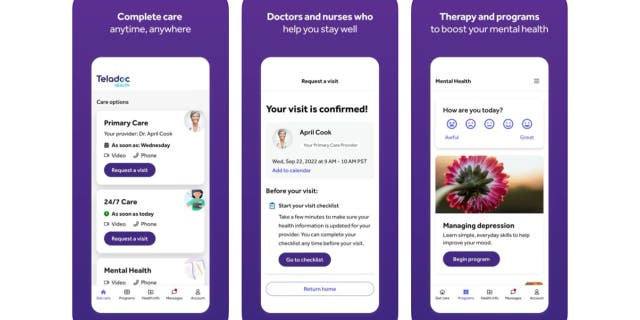
Teladoc offers virtual consultations with doctors and other health care providers.

Teladoc offers virtual consultations with doctors and other health care providers. (Kurt Knutsson)

Teladoc is a popular telemedicine app that offers virtual consultations with doctors and other health care providers. You can connect with licensed physicians 24/7 for non-emergency medical issues such as colds and the flu, pink eye, sore throats and more. Depending on your coverage, you can also be eligible for programs that help manage conditions like diabetes and high blood pressure. They even offer specialists for mental health needs, nutrition and dermatology.

2. Doctor on Demand

iPhone: 4.9 stars(at the time of publishing) 

Android: 4.8 stars(at the time of publishing) 
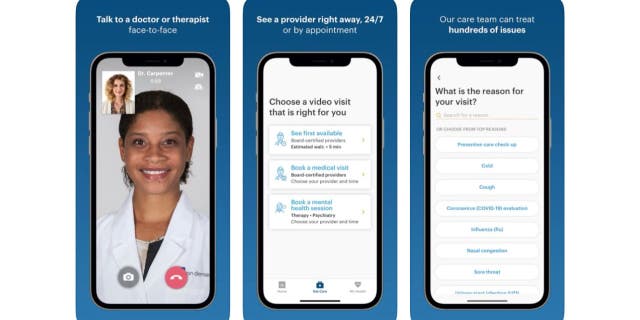
Doctor on Demand connects users with physicians, psychiatrists and therapists.

Doctor on Demand connects users with physicians, psychiatrists and therapists. (Kurt Knutsson)

Doctor on Demand is a telemedicine app that connects users with board-certified physicians, psychiatrists and licensed therapists. The app is available 24/7, 365 days per year including weekends and holidays, and consultations are conducted via video chat. They can cover pretty much anything from acne to screenings for high cholesterol and even headaches and migraines. Services through the app are available whether you have insurance or not and they can even partner with many top employers and health plans to reduce the cost of your appointment.

3. Amwell

iPhone: 4.9 stars(at the time of publishing) 

Android: 4.3 stars(at the time of publishing) 
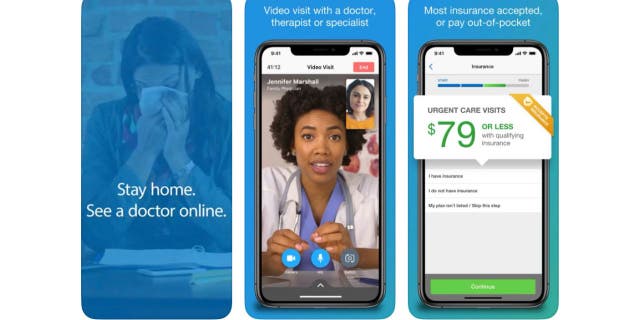
Amwell offers virtual consultations with licensed health care providers.

Amwell offers virtual consultations with licensed health care providers. (Kurt Knutsson)

Amwell is a telemedicine app that offers virtual consultations with licensed health care providers, including doctors, therapists and nutritionists. You can access the app 24/7 and receive care for a variety of non-emergency medical conditions. You can tell them your insurance provider, or if you do not have insurance, they give a list of what each type of visit costs so that you know before committing to an appointment. Depending on your needs, a visit with Amwell can cost anywhere from $70-$269 without insurance. They also stress on their page that the patient’s privacy is taken very seriously and all visits are HIPAA-compliant.

4. MDLIVE

iPhone: 4.7 stars(at the time of publishing) 

Android: 4.7 stars(at the time of publishing) 
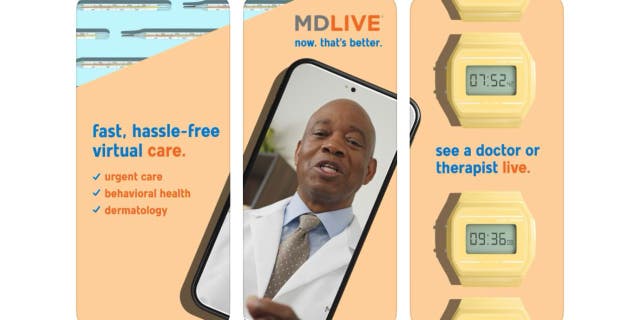
MDLIVE provides virtual consultations with physicians and therapists.

MDLIVE provides virtual consultations with physicians and therapists. (Kurt Knutsson)

MDLIVE is a telemedicine app that provides virtual consultations with board-certified physicians and licensed therapists. You can access the app 24/7 and receive care for over 80 non-emergency medical issues, including allergies, COVID-19 assessments and more. They also support a wide variety of mental health issues, including panic disorders, post-traumatic stress disorder (PTSD) and more. MDLIVE is not available in every state, however, it’s a great option if covered in your state.

5. PlushCare

iPhone: 4.9 stars(at the time of publishing) 

Android: 4.6 stars(at the time of publishing) 
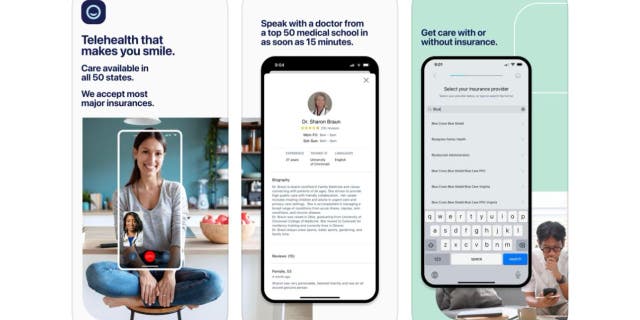
PlushCare boasts hundreds of thousands of users, as well as physicians from top U.S. medical schools.

PlushCare boasts hundreds of thousands of users, as well as physicians from top U.S. medical schools. (Kurt Knutsson)

PlushCare has over 300,000 users, and its physicians come from the top 50 U.S. medical schools. According to their app’s page, 97{515baef3fee8ea94d67a98a2b336e0215adf67d225b0e21a4f5c9b13e8fbd502} of conditions are treated on the first visit and if the online doctor is unable to treat you, the appointment is free. They offer virtual primary care for ongoing conditions and virtual urgent care for non-emergency conditions. They can also prescribe a wide variety of medicines.

SLEEP BETTER TONIGHT WITH THESE TOP-RATED APPS AND ACCESSORIES

Final thoughts

Telemedicine apps have become increasingly popular since the start of the pandemic, providing convenience and cost savings. However, not every doctor’s visit can be done virtually, and insurance coverage can vary. Additionally, security risks should be considered when using these apps.

Have you tried these telemedicine apps yet? Let us know how they work for you.

CLICK HERE TO GET THE FOX NEWS APP

For more of my tips, subscribe to my free CyberGuy Report Newsletter by clicking the “Free newsletter” link at the top of my website.

Copyright 2023 CyberGuy.com. All rights reserved.  

How virtual clothes could help solve fashion’s waste problem

How virtual clothes could help solve fashion’s waste problem


London
CNN
 — 

Fashion’s ephemeral character may well appear to be an odd bedfellow for the blockchain, an on-line ledger that’s developed to be everlasting. But the marketplace is getting strategies to harness it and other electronic resources to decrease waste and thrust manner into the future.

Italian enterprise Lablaco is doing the job with style residences and makes to digitize their collections in the burgeoning “phygital” trend marketplace — when customers purchase equally a physical fashion product and its electronic “twin,” created to be collected or worn by avatars in virtual environments like the metaverse.

Lablaco was launched in 2016 by Lorenzo Albrighi and Eliana Kuo. Both equally had backgrounds in luxury style, but were being seeking to enhance the industry’s sustainability credentials and advertise circular style — the apply of coming up with and developing outfits in a way that cuts down squander.

The pair introduced the Round Trend Summit in 2019 and Lablaco labored with retailer H&M to introduce a blockchain-based clothing rental provider in 2021.

Lablaco wants to use digital tools to revolutionize the fashion industry.

Pushing style into digital areas allows make facts that is critical in attempts to go toward round vogue, they argue. With Lablaco’s design, physical and electronic items continue being paired even following sale, so if a physical merchandise is resold, the electronic equivalent is transferred to the new owner’s electronic wallet. The transparency of blockchain know-how indicates the new owner can be assured of its authenticity and the item’s creator can follow its aftersales journey.

“If you do not digitize the products alone, you simply cannot have any details to evaluate, and you do not know what is the influence of the vogue,” Albrighi tells CNN Business.

The textile and manner market results in about 92 million tons of waste on a yearly basis, and digital vogue could have a job in minimizing that determine.

Kuo suggests digital spaces could be utilised as a testbed for the actual physical planet. For example, a designer could launch an product of electronic outfits in 10 shades in the metaverse, and use the profits information to notify which shades to use for the actual-environment model. “It turns into quickly an on-demand product, which seriously can lower the trend waste,” she claims.

Striving on virtual dresses could also lessen the volume of clothes that are returned in the bodily entire world, says Albrighi. He adds that staging trend reveals in digital areas lowers the need to have for the fashion globe to journey. The two interventions have the probable to lower the industry’s carbon footprint.

But for these improvements to develop into common, Albrighi claims incentivizing designers is crucial. With the phygital product, the transparency of the blockchain could make it possible for makes to acquire royalties when an product is resold all through its life time — a way to “produce less and essentially generate more.”

“It’s the commencing of a brand new market,” he suggests.

Virtual reality apps focus on mental health care, but effectiveness is unstudied

Virtual reality apps focus on mental health care, but effectiveness is unstudied

Immediately after his father died of Covid last slide, Donkan Martinez was overwhelmed by grief and turned to an unlikely outlet: digital fact. 

The 24-12 months-previous discovered himself wading into an rising field of digital psychological health and fitness care, by means of a service identified as Innerworld, which gives peer-led mental well being assistance as a result of its application. The idea is to convey the concepts of cognitive behavioral therapy, or CBT, into the metaverse and enable buyers to interact with other individuals as nameless avatars by means of voice- and text-centered chat.

CBT aims to enable patients adjust harmful considering or behavioral patterns by developing related competencies and coping strategies. The American Psychological Affiliation describes it as a type of cure that helps people today “learn to be their possess therapists.” 

Innerworld, nevertheless, gives each day users the opportunity to deliver help to a person an additional. Its founder, Noah Robinson, emphasizes that the assistance should not substitute specialist procedure. Upon registering, Innerworld users ought to acknowledge that they fully grasp the application is not treatment.

“It’s not therapy and we cannot present crisis intervention,” Robinson stated. “Our goal with Innerworld is to be a for a longer time-expression location that men and women can come to help them avoid by themselves from acquiring to the point of getting in disaster. Or we have individuals who are hospitalized who occur out and are looking for supplemental support.”

Upon entering Innerworld, buyers can select from a variety of settings that emulate environments like mountaineering trails or libraries. From there, they can engage with other avatars or browse a list of peer-led functions, this sort of as team meditation classes, dependancy support groups and workshops on navigating social stress. Martinez claimed that at the time, he joined a recreation in which people guessed what other folks had been drawing.

The efficacy of Innerworld’s tactic is unstudied, so collecting lengthy-term details is critical to assessing this or any similar application, mentioned Barbara Rothbaum, a psychologist at the Emory College College of Drugs. Rothbaum posted a paper on the use of VR to treat a fear of heights in 1995.

“As far as virtual actuality, most of the applications now have applied a serious therapist,” she reported. 

In truth, most therapeutic uses of VR so significantly have centered on clinician-led publicity treatment for circumstances like arachnophobia and claustrophobia, as effectively as for social nervousness and article-traumatic anxiety problem.

On the other hand, Rothbaum extra, “I do believe [VR] could be valuable for self-assist, but the packages that have been examined have not been made for that.”

Skip Rizzo, director of medical virtual reality at the College of Southern California Institute for Imaginative Technologies, said he to start with regarded VR’s likely for psychological overall health utilizes in the 1990s. Rizzo assisted pioneer the use of VR to handle PTSD among associates of the military. A 2005 report documented the case of a Vietnam war veteran handled with VR remedy who skilled a 34{515baef3fee8ea94d67a98a2b336e0215adf67d225b0e21a4f5c9b13e8fbd502} minimize in clinician-rated PTSD.

Innerworld
Innerworld.Innerworld

Rizzo said he sees the potential of Innerworld — as very long as the app proceeds to make distinct that it is not clinician-operate. 

“People that are concerned about stigma all-around whatsoever the difficulty is that they have, or they are ashamed, they may well not want to confess to another particular person specifically that they’re having these issues,” Rizzo explained. “But they may possibly be far more very likely to in an avatar-primarily based entire world wherever they can maintain their anonymity but still interact with men and women.”

Martinez said he and other users he is satisfied on Innerworld felt they weren’t receiving the empathy they required in the true world.

“My serious close friends don’t know that I’m really psychological. I’m quite conservative with my emotions with my authentic friends,” he mentioned. “I’m able to open up in Innerworld simply because I know I’m not going to be judged. I’m not heading to be attacked.”

Donkan Martinez
Donkan Martinez.NBC Information

Robinson explained he was inspired to develop Innerworld following obtaining solace in an on-line group in his own daily life. When he was 13, he said, he became depressed immediately after knowing he was homosexual, and he turned to the online game RuneScape. The anonymity created him more comfy discovering pieces of himself he was concerned to encounter in the real earth. Robinson stated he finally arrived out to his on the web pals.

Innerworld is not the only application attempting to use VR to enable people access psychological overall health guidance.

In his personal get the job done, Rizzo is piloting a clinician-facilitated VR undertaking that provides social assist to Ukrainian refugees. Refugees who have relocated to Bucharest, Romania, can enter a digital version of a town sq. in Kyiv, where they can converse with fellow refugees as nameless avatars.

A startup named BehaVR, meanwhile, released its application, known as Initially Vacation resort, past 7 days. The VR application guides consumers by way of “chapters” on abilities that would be taught in CBT sessions.

Risa Weisberg, a professor at the Boston University Chobanian and Avedisian College of Medication, is BehaVR’s main clinical officer. She stated that because people’s brains procedure VR encounters in the very same way they would a genuine-existence experience, “you do not expertise the interventions as one thing that you’re examining or listening to you expertise them as some thing which is occurring to you.”

Weisberg thinks that’s why VR exposure remedy has yielded outcomes in the past.

VR’s achieve could expand to 64 million individuals in the U.S. this yr, according to a 2021 estimate by eMarketer. Weisberg said that growth is taking place at a time when much more individuals are looking for mental health and fitness treatment, but also as lots of are obtaining it inaccessible because of to substantial prices.

“All that comes collectively at the same time to make the upcoming few years truly ripe for finding mental wellness procedures and interventions in VR,” she claimed. “I consider we’re heading to see a massive uptick in this.”

Rizzo reported his key issue about Innerworld, however, is that persons who require specialist aid may well try to substitute the app rather. Rothbaum, in the meantime, said considerably much more exploration is desired to ascertain irrespective of whether these varieties of plans really do the job. Ideally, she claimed, there really should be medical experiments with regulate groups that observe users’ outcomes.

PNCA students dream up real solutions using virtual technology -News

PNCA students dream up real solutions using virtual technology -News

Pacific Northwest School of Art pupils use their creativity and tech competencies to make environmental and social transform a reality at the Make+Consider+Code investigate studio.

This lab brings jointly members of Portland’s lively artistic, tech, civic and academic communities to develop impactful remedies to urgent difficulties — and offers pupils a prospect to target their ingenuity on enhancing the planet close to them.

Cat Ross
Cat Ross, BFA’18 at do the job.

“The software presents workshops, connections to professionals, and emerging and resourceful technologies capabilities for students — in addition to what’s currently embedded in the curriculum,” states Megan McKissack, assistant director of Make+Imagine+Code. “It has provided some speedy upskilling to college students, permitting them experiment and check out out competencies, and check out subject areas that can aid them in their art and style apply.”

The lab emphasizes fluency with rising technologies and artistic collaboration, emphasizing a 21st century product of education that centers on inclusion.

Alums Cat Ross BFA’18 and Marin Vesely BFA’18 participated in the application and obtained a Unity for Humanity Surroundings and Sustainability grant. With this funding, they made a virtual fact system to assist a Southern California local community struggling with critical environmental issues.

“We formulated our task throughout the pandemic to establish immersive activities to emphasize environmental and social injustices,” Ross informed a Unity for Humanity panel.

The digital fact storytelling challenge, called “Gone to Water” (Ido Al Aqua in Spanish), “takes urgent motion towards localized hydrocarbon pollution and its group overall health impacts,” she explained.

The tale represents District 64 in South Los Angeles, which faces health and fitness hazards, generational health and fitness impacts, social wellbeing impacts, poor drinking water high quality, and environmental degradation, Ross added.

“We’re seeking to use this new medium to convey awareness in a digital room of protest along with these folks who are most affected by environmental injustice,” she informed the panel. “That local community is mainly low cash flow, and 90{515baef3fee8ea94d67a98a2b336e0215adf67d225b0e21a4f5c9b13e8fbd502} of the people are Black and Latinx.”

Ross, a imaginative researcher in Portland, and Vesely, an interactive designer and activist in L.A., have designed Appreciate Dying Design studio to go after potential style and design endeavors aimed at addressing environmental and wellbeing challenges.