
Is Your Trash Talk Violating The Code Of Ethics?

Is Your Trash Talk Violating The Code Of Ethics?

In these times, double down — on your skills, on your knowledge, on you. Join us Aug. 8-10 at Inman Connect Las Vegas to lean into the shift and learn from the best. Get your ticket now for the best price.

REALTORS shall not knowingly or recklessly make false or misleading statements about other real estate professionals, their businesses, or their business practices. (Amended 1/12)

Imagine you’re working with an agent or broker, either within your own brokerage or across the negotiating table. The two of you don’t see eye to eye, and you simply can’t stand the sight of this person. Now, you’re at happy hour, clutching onto anyone who’ll listen to talk about your dislike of this other Realtor and speculating on what nefarious misdeeds they’re (probably) up to.

Congratulations. You may have just violated the Realtor Code of Ethics. Article 15 lays out a comprehensive list of ways in which you must refrain from attacking the character or business practices of another Realtor.

Some of the specifics include:

  • Not initiating false or misleading statements about another Realtor, their business or their business practices (15-2)
  • Not passing on gossip that’s false or misleading about another Realtor, their business or their business practices (15-2)
  • Not posting false or misleading statements about another Realtor, their business or their business practices on social media nor passing them along in writing (via email or text, for example) (15-2)
  • Correcting false or misleading statements you’ve made in person or in writing once you’ve found out that they’re false or misleading (15-3)

You may think of Article 15 as being primarily about making statements to clients or potential clients about a competitor, and much of the case law pertains to this. However, the Article does not specify that, and much of the shit-talking that Realtors frequently engage in, whether in the office or socially, constitutes a potential violation.

There are many ways to run afoul of Article 15

While this part of the Code of Ethics isn’t more important than any other, it’s the one that we have the most control over — because we can control running our mouths. Furthermore, it impacts the reputation of the industry by undermining the professional reputation of both the speaker and the subject. 

In addition, Article 15 is probably the one that everyone has violated at one time or another. Whether you’ve told a “funny” story at a dinner party about what a friend-of-a-friend (incorrectly) said about an agent or you’ve hurled misleading accusations at a broker when leaving their brokerage, you’ve been in violation.

Remember, this is about more than agent-on-agent crime. It’s also brokers talking about the “weak link” in their brokerage. It’s team leaders complaining and speculating about an annoying team member. It’s agents who spread rumors about higher-ups in their organization out of a sense of grievance.

“Another issue we commonly see that agents aren’t always aware of is that many of the real estate portals out there are also Realtor members. We’ve all heard complaints about the portals, but these negative comments are Article 15 violations ever since the portals have become brokerages,” managing broker of California at Side and a local professional standards chair, Casey McLoed says.

What does it mean to be a professional under Article 15?

Everybody has personal preferences. Maybe there’s someone in your brokerage who just irritates you or someone you hate sitting across from at the closing table. Maybe there’s a big-time Realtor in your market who you feel has taken money out of your pocket. 

You’re allowed to dislike that person. You’re allowed to say they’re ugly or a bad dresser, whether to their face or behind their back. What you’re not allowed to do is falsely call them dishonest. Call them uncommitted to their job or their clients. Call them crooked or inept. All of these speak to their business and business practices.

Addressing it the right way

If you think someone has acted in a way that’s dishonest or that they’ve done something that’s against the law or the Code of Ethics, there are ways to address that.

File a complaint with their broker or with the Board of Realtors. If you wouldn’t take that step, if you couldn’t substantiate your allegations to that degree, you have no business passing that gossip along.

NAR provides extensive resources regarding the process for filing a complaint as well as the subsequent arbitration process. Before you run your mouth, check it out here.

One place Article 15 takes a beating is when a disgruntled agent is leaving a brokerage. They may take that as a free pass to say terrible things about the broker, the brokerage or the agents they worked with.

Resist this temptation.

If you have an issue with your broker or another agent, reach out to them directly. If it’s personal, address it — or get over it. If it’s professional, find out the process for filing a complaint or what internal process exists to address your concerns.

Most of all, be honest with yourself about the root of your problem.

Are you mad that the other agent is more successful than you are? Are you resentful that your production is down this year? Are you having personal problems that are making you overly sensitive and angry — then bleeding over into your professional perceptions?

Consider how trash-talking makes you look

Most of all, think about how talking this way makes you look: 

  • Think about how you look when you’ve had one too many and can’t stop talking. 
  • Think about what it says when you’re sending texts and emails around blasting another Realtor, especially if your allegations are demonstrably untrue. 
  • Think about the impact on your reputation if that Realtor decides to invoke Article 15 and file a complaint against you for your words and actions.

In the moment, you may think that you are justified, but playing the victim or being a gossip-monger will never make you look good. Consider whether broadcasting your personal grievance is going to be worse for you or the object of your wrath.

“Being heated or upset over a situation is something we all experience whether personally or professionally, McLoed said. “We all know that very regrettable statements or actions can be made in these situations as well. But you need to keep your composure in those scenarios.” 

McLoed tells agents to open an email — address it to themselves — write out their complaint or whatever thoughts they have, and then leave that email as a draft and wait a day before returning to it. 

“Now imagine this message sitting in front of the tribunal at an ethics hearing, or worse, projected up on the wall in a courtroom, then ask yourself: ‘Do I really want to say this? Do I really want my colleagues, my peers to see me communicate in this way?’” McLoed said. 

“The answer is no. You vented, but only to yourself, you’ve had time to cool down. Delete the draft, and continue on in a professional manner.”

If you think you’ve been the victim of an Article 15 violation

On the other side of the coin, if you have been the subject of an Article 15 violation, you may be considering filing a complaint. Talk to your manager first to find out if you have recourse within your brokerage and to determine what the process looks like. 

Talk to the representative at your local association, as well. Find out what evidence you’d need to prove your claim, and make sure you have it. You don’t want to file a grievance and then find out that you can’t make your charges stick.

Before you go through channels, you may want to explore other options, like a cease-and-desist letter from your attorney. In addition, if you have proof that the violation has had a material impact on your business and earnings, you may choose to seek legal recourse and compensation.

According to Sandra Miller, president of Engel & Völkers Santa Monica and a member of the professional standards committee, presiding officer, ethics advocate and mediator for the Greater Los Angeles Association of Realtors: “Agents should be held accountable for inappropriate behavior, and the only way to ensure that they are is to file an ethics complaint. Do not be afraid of the process, most of the country has adopted the usage of an ethics advocate who can walk you through the process. Call your local Association Professional Standards Administrator, and they will walk you through the process.”

Troy Palmquist is the founder and broker of DOORA Properties in Southern California. Follow him on Instagram or connect with him on LinkedIn.

Goldman Sachs makes a bold housing market call

Goldman Sachs makes a bold housing market call

The U.S. housing market could possibly finally be nearing the bottom. At minimum that is in accordance to Goldman Sachs.

Just two weeks after Goldman Sachs downgraded its outlook for the U.S. housing industry in a paper titled Obtaining Even worse Ahead of Getting Better, the financial investment lender reversed study course on Jan. 23 in a paper titled 2023 Housing Outlook: Discovering a Trough.

Instead of U.S. house charges slipping 6.1{515baef3fee8ea94d67a98a2b336e0215adf67d225b0e21a4f5c9b13e8fbd502} in 2023, which was their Jan. 10 prediction, researchers at the investment lender now expect nationwide home selling prices to conclude 2023 down just 2.6{515baef3fee8ea94d67a98a2b336e0215adf67d225b0e21a4f5c9b13e8fbd502}.

By the time U.S. property price ranges base out this summertime, Goldman Sachs suggests, national home costs will be down about 6{515baef3fee8ea94d67a98a2b336e0215adf67d225b0e21a4f5c9b13e8fbd502} from its June 2022 peak. Formerly, Goldman Sachs scientists have been anticipating that peak-to-trough decline to arrive in closer to 10{515baef3fee8ea94d67a98a2b336e0215adf67d225b0e21a4f5c9b13e8fbd502}.

“We assume a peak-to-trough decline in countrywide home prices of approximately 6{515baef3fee8ea94d67a98a2b336e0215adf67d225b0e21a4f5c9b13e8fbd502} and for rates to prevent declining all over midyear. On a regional basis, we project much larger declines across the Pacific Coast and Southwest regions—which have noticed the biggest raises in inventory on average—and more modest declines throughout the Mid-Atlantic and Midwest—which have taken care of increased affordability about the earlier pair years,” wrote the researchers.

Why the upward revision? Modern info, Goldman Sachs suggests, factors to an uptick in homebuyer demand from customers.

“Home sales surface set to change bigger. Home loan buy purposes have averaged 9{515baef3fee8ea94d67a98a2b336e0215adf67d225b0e21a4f5c9b13e8fbd502} higher than their October trough so considerably in January, and survey-primarily based steps of purchasing intentions have rebounded sharply,” wrote Goldman Sachs scientists.

To get a far better thought of where by both of those national and regional household charges could be headed, Fortune requested Goldman Sachs to give us with its full forecast.

Let us consider a glimpse.

As opposed to KPMG, Goldman Sachs does not be expecting a double-digit residence selling price correction. The investment lender suggests there are three explanations why a steeper correction won’t take place this cycle.

“Very first, the speedy buildup of untapped house fairness around the past pair several years suggests that even if price ranges declined extra sharply than we count on, only a little share of home loan debtors would be underwater,” wrote Goldman Sachs researchers. “2nd, in excess of 90{515baef3fee8ea94d67a98a2b336e0215adf67d225b0e21a4f5c9b13e8fbd502} of remarkable home loans are set level, meaning that the increase in interest charges will not direct to a spike in personal debt provider expenditures for most house owners. And third, house equilibrium sheets continue being strong, with low combination leverage and sizeable remaining pent-up savings from the COVID-19 pandemic.”

All those a few components, Goldman Sachs states, need to protect against the prospective “for the cascading defaults that contributed to the post-GFC drawdown.” That previous correction—after the 2007–2008 World Economic Disaster (GFC), which saw U.S. house price ranges slide 26{515baef3fee8ea94d67a98a2b336e0215adf67d225b0e21a4f5c9b13e8fbd502} among 2007 and 2012—is four occasions increased than the 6{515baef3fee8ea94d67a98a2b336e0215adf67d225b0e21a4f5c9b13e8fbd502} peak-to-trough decline Goldman Sachs is predicting this time about.

Whilst Goldman Sachs expects nationwide dwelling costs to tumble 2.6{515baef3fee8ea94d67a98a2b336e0215adf67d225b0e21a4f5c9b13e8fbd502} in 2023, not each and every market place will be so fortunate.

In 2023, Goldman Sachs expects double-digit household selling price declines only in overheated markets like Austin (-16{515baef3fee8ea94d67a98a2b336e0215adf67d225b0e21a4f5c9b13e8fbd502}), San Francisco (-14{515baef3fee8ea94d67a98a2b336e0215adf67d225b0e21a4f5c9b13e8fbd502}), San Diego (-13{515baef3fee8ea94d67a98a2b336e0215adf67d225b0e21a4f5c9b13e8fbd502}), Phoenix (-13{515baef3fee8ea94d67a98a2b336e0215adf67d225b0e21a4f5c9b13e8fbd502}), Denver (-11{515baef3fee8ea94d67a98a2b336e0215adf67d225b0e21a4f5c9b13e8fbd502}), Seattle (-11{515baef3fee8ea94d67a98a2b336e0215adf67d225b0e21a4f5c9b13e8fbd502}), Tampa (-11{515baef3fee8ea94d67a98a2b336e0215adf67d225b0e21a4f5c9b13e8fbd502}), and Las Vegas (-11{515baef3fee8ea94d67a98a2b336e0215adf67d225b0e21a4f5c9b13e8fbd502}). On the beneficial side, Goldman Sachs expects household charges will rise in marketplaces like Baltimore (+.5{515baef3fee8ea94d67a98a2b336e0215adf67d225b0e21a4f5c9b13e8fbd502}) and Miami (+.8{515baef3fee8ea94d67a98a2b336e0215adf67d225b0e21a4f5c9b13e8fbd502}).

“Metro-amount trends will be dictated by a tug-of-war concerning housing need and source. MSAs [metros] with much better affordability like Chicago and Philadelphia—for which payments on new mortgages only price tag roughly a quarter of month to month income—should see scaled-down home value declines than metros with weak affordability like lots of towns in the West—some of which are seeing home finance loan payments claim three-quarters of monthly income,” wrote Goldman Sachs scientists in their most recent be aware.

On the mortgage loan amount front, Goldman Sachs states potential buyers should not anticipate considerably reduction. By the conclude of 2023, the financial commitment lender expects the common 30-year preset mortgage charge will tick back up to 6.5{515baef3fee8ea94d67a98a2b336e0215adf67d225b0e21a4f5c9b13e8fbd502}. As of Thursday, the average 30-yr fastened mortgage level sits at 6.09{515baef3fee8ea94d67a98a2b336e0215adf67d225b0e21a4f5c9b13e8fbd502}.

Newsletter-Gold-Line

On the lookout for more housing predictions? Observe me on Twitter at @NewsLambert.

Find out how to navigate and reinforce have confidence in in your organization with The Have confidence in Variable, a weekly publication analyzing what leaders need to have to thrive. Signal up right here.

6 leading real estate economists and pros on what to expect from the housing market this winter

6 leading real estate economists and pros on what to expect from the housing market this winter

Getty Photos

Some aspiring homebuyers are in for some a great deal-desired aid. “Right now could look much more pleasing to some customers for the reason that, not long ago, the housing market has been cooling. Charges are dropping in quite a few regions, housing source is growing, sellers are giving far more concessions and mortgage costs are falling,” claims Jacob Channel, senior economist at LendingTree. (See the best property finance loan costs you may well get now listed here.)

But no question, right after swift escalations in dwelling price ranges and mortgage premiums in the previous couple a long time (nevertheless the two have eased not long ago), quite a few potential buyers are wary of what is to occur. So we requested economists and true estate professionals for their housing market place predictions this wintertime. 

Prediction 1: Property finance loan premiums will “continue their downward trek”

“With the Fed switching to a scaled-down level hike in February, house loan costs will continue on their downward trek and a reduce home loan fee improves affordability, bringing far more purchasers again to the market place,” suggests Nadia Evangelou, senior economist and director of true estate investigation at the National Association of Realtors (NAR).

For his section, Channel also states reduce rates also may well bring at least some potential buyers back. “There may well be a lot more consumer demand from customers assuming prices go on to fall, or at the pretty the very least do not start off climbing yet again, but it doesn’t seem like there is a higher likelihood that demand from customers will radically increase back again to the place it was at the commence of last calendar year. All in all, February’s housing industry will possible remain more helpful to prospective buyers than it was just a couple of months back,” claims Channel.

Kate Wood, property specialist at NerdWallet, delivers a related sentiment: “Buyers could possibly be additional inspired if costs appear to stabilize and individuals who have been priced out when fees speedily amplified last drop could be inclined to give household shopping for a different shot.”

Prediction 2: Residence rate gains will sluggish even further more

Realtor.com information demonstrates that the progress of median inquiring rates for properties nationwide eased back into solitary-digits in December for the initially time in 12 months and virtually held that pace transferring into January.

“The milestone of one-digit price expansion is seriously a continuation of the moderation that started in the summer season when charges ended up escalating at a rate of 18{515baef3fee8ea94d67a98a2b336e0215adf67d225b0e21a4f5c9b13e8fbd502} yr more than calendar year,” suggests Danielle Hale, main economist at Realtor.com. The report reveals that the median price tag of houses for sale has amplified by 8.1{515baef3fee8ea94d67a98a2b336e0215adf67d225b0e21a4f5c9b13e8fbd502} every year in January, which is a bit fewer than December’s advancement rate with the countrywide median list price tag remaining stable at $400,000 in January, down from a file significant of $449,000 in June.

Assume even slower development this month, claims Evangelou. “Home value gains will slow even additional in February. Mortgage loan costs are at last moving down, easing affordability, but a lot of customers proceed to be priced out of the marketplace, particularly initial time potential buyers,” states Evangelou.

That explained, rate adjustments will vary involving markets. “Markets with the major imbalance between supply and demand from customers will see better softness in selling prices, though for the the greater part of some others it is more a leveling out in charges,” claims Greg McBride, chief monetary analyst at Bankrate. 

Prediction 3: Buyers have far more area to negotiate

Hale states: “It will not be all irritation for buyers. A surging variety of residences for sale may perhaps not necessarily mean falling  dwelling charges, but it is enabling consumers to gain again a measure of negotiating energy and along with a longer time on sector when compared to a 12 months ago, prospective buyers are much more probable to see houses with a list cost that has been reduced underneath unique inquiring price,” states Hale.

Prediction 4: The market place is on a sluggish path to normalcy

“The housing market place is continuing its return back to a much more typical-hunting marketplace soon after the pandemic-fueled frenzy. We are significantly from out of the woods with the affordability disaster that has been weighing heavily on residence gross sales, but we are starting off to see some inexperienced shoots pushing up as price ranges and mortgage charges have fallen. That dip in home finance loan premiums has started to catch the attention of renewed curiosity from prospective buyers and sales are climbing yet again as opposed to past yr, but demand remains considerably reduce than the earlier two several years,” says Nicole Bachaud, senior economist at Zillow.

The suggestions, suggestions or rankings expressed in this short article are individuals of MarketWatch Picks, and have not been reviewed or endorsed by our industrial partners.

Is the housing market about to crash? Here’s what experts say

Is the housing market about to crash? Here’s what experts say
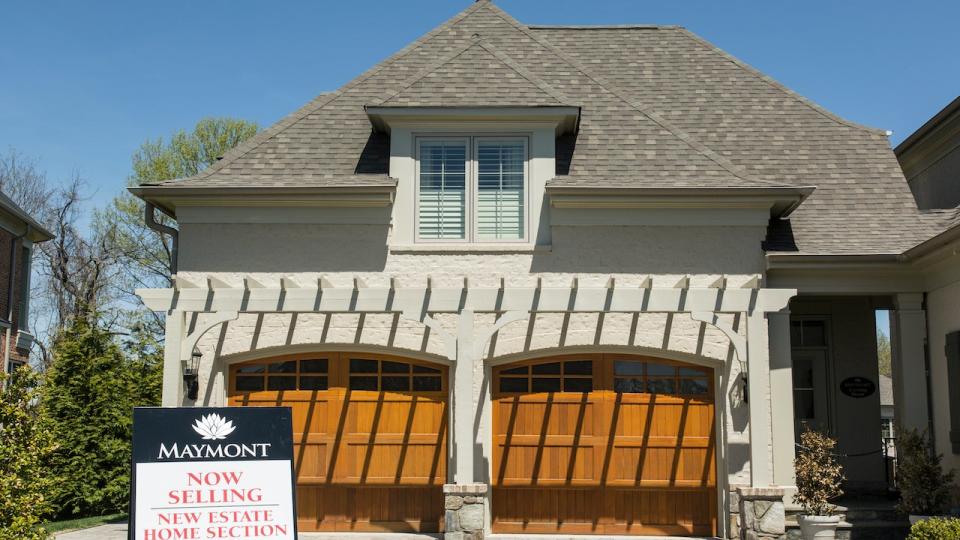
is the housing market about to crash? - the two-car garage and front door of a suburban home, with a maymont

Benjamin C. Tankersley/For The Washington Post via Getty Images

After a record-breaking run that saw mortgage rates plunge to all-time lows and home prices soar to new highs, the U.S. housing market is finally slowing. Home sales had declined for 11 consecutive months as of December 2022, and home values seem to have peaked.

While demand and price gains are cooling, any correction is likely to be a modest one, housing economists and analysts say. No one expects price drops on the scale of the declines experienced during the Great Recession.

Rob Dietz, chief economist at the National Association of Home Builders, sums up the consensus among housing experts: “We’re thinking this is going to be a moderate downturn,” he says.

The real estate party raged on longer than anyone expected. The National Association of Realtors reported that median prices in the spring of 2022 topped $400,000 for the first time ever. Even after a recent retreat, prices are up a robust 32 percent since the coronavirus pandemic began in March 2020, according to NAR data.

Now, bidding wars have largely faded, inventories are loosening and the feeling of frothiness is gone. “The market is clearly turning,” says NAR chief economist Lawrence Yun.

Is the housing market going to crash?

The last time the U.S. housing market looked so frothy was back in 2005 to 2007. Then home values crashed, with disastrous consequences. When the real estate bubble burst, the global economy plunged into the deepest downturn since the Great Depression.

Now that the housing boom is threatened by soaring mortgage rates and a potential recession, buyers and homeowners are asking a familiar question: Is the housing market so hot that it’s about to crash?

Housing economists agree that prices could fall, but the decline won’t be as severe as the one homeowners experienced during the Great Recession. One obvious difference between now and then is that homeowners’ personal balance sheets are much stronger today than they were 15 years ago. The typical homeowner with a mortgage has stellar credit, a ton of equity and a fixed-rate mortgage locked in at a rate well below 5 percent. So no foreclosure crisis looms.

“The wild ride known as the U.S. housing market slowed dramatically in the fall of 2022, as mortgage rates surged and home prices remained high,” says Molly Boesel, principal economist at CoreLogic. “Home sales started strong in early 2022 but took a nosedive later in the year. On the plus side, generous amounts of home equity will protect many borrowers from experiencing the type of foreclosure activity seen during the Great Recession.”

What’s more, builders remember the Great Recession all too well, and they’ve been cautious about their pace of construction. The result is an ongoing shortage of homes for sale.

“We simply don’t have enough inventory,” Yun says. “Will some markets see a price decline? Yes,” he says. “[But] with the supply not being there, the repeat of a 30 percent price decline is highly, highly unlikely.”

Lightbulb

Key housing market statistics

  • A total of 30,822 U.S. homes had foreclosure filings — default notices, scheduled auctions or bank repossessions — as of December 2022, according to ATTOM Data Solutions.

  • South Carolina had the highest foreclosure rate of any state in December, at one foreclosure filing for every 2,301 housing units, according to ATTOM. It was followed by New Jersey, where one in every 2,378 homes were in some stage of foreclosure.

  • Lenders repossessed 3,663 U.S. properties through completed foreclosures — known as “real estate owned,” or REO — in December 2022. Altogether, 42,854 properties were repossessed in 2022, according to ATTOM.

  • Home sales fell 34 percent from December 2021 to December 2022, the National Association of Realtors says. The median sale price in December 2022 was $366,900.

  • Existing home sales for 2022 totaled just over 5 million, per NAR — down 17.8 percent from 2021.

Existing home prices

For many months, economists have been predicting that the housing market would eventually cool as home values become a victim of their own success. Home prices have risen far more quickly than incomes, creating an affordability squeeze, and mortgage rates doubled since August 2021, before starting to retreat a bit.

Experts say home prices could fall

“Most markets are going to experience price declines in the high single digits,” Dietz predicts. Home price declines of 8 to 9 percent would create some economic pain, to be sure. But this correction will be nothing like the utter collapse of property prices during the Great Recession, when some housing markets experienced a 50 percent cratering of values.

Rick Sharga, executive VP of market intelligence at ATTOM Data Solutions, expects declines of 5 percent. “It’s almost inevitable we’re going to see home prices drop,” he says.

Yun says high-priced regions such as California are most vulnerable to a downturn in prices. The Midwest, on the other hand, is unlikely to see a decline in home prices. Overall, he expects national prices to remain flat next year.

5 reasons the housing market is not about to crash

Housing economists point to five compelling reasons that no crash is imminent.

  1. Inventories are still very low: The National Association of Realtors says there was a 2.9-month supply of homes for sale in December. In February, that figure was as low as a tiny 2.0-month supply. This ongoing lack of inventory explains why many buyers still have little choice but to bid up prices. And it also indicates that the supply-and-demand equation simply won’t allow a price crash in the near future.

  2. Builders didn’t build quickly enough to meet demand: Homebuilders pulled way back after the last crash, and they never fully ramped up to pre-2007 levels. Now, there’s no way for them to buy land and win regulatory approvals quickly enough to quench demand. While they are building as much as they can, a repeat of the overbuilding of 15 years ago looks unlikely. “The fundamental reason for the run-up in price is heightened demand and a lack of supply,” says Greg McBride, CFA, Bankrate’s chief financial analyst. “As builders bring more available homes to market, more homeowners decide to sell and prospective buyers get priced out of the market, supply and demand can come back into balance. It won’t happen overnight.”

  3. Demographic trends are creating new buyers: There’s strong demand for homes on many fronts. Many Americans who already owned homes decided during the pandemic that they needed bigger places, especially with the rise of working from home. Millennials are a huge group and in their prime buying years. And Hispanics are a young, growing demographic keen on homeownership.

  4. Lending standards remain strict: In 2007, “liar loans,” in which borrowers didn’t need to document their income, were common. Lenders offered mortgages to just about anyone, regardless of credit history or down payment size. Today, lenders impose tough standards on borrowers — and those who are getting a mortgage overwhelmingly have excellent credit. The typical credit score for mortgage borrowers in the the third quarter of 2022 was a high 768, the Federal Reserve Bank of New York says. “If lending standards loosen and we go back to the wild, wild west days of 2004-2006, then that is a whole different animal,” says McBride. “If we start to see prices being bid up by the artificial buying power of loose lending standards, that’s when we worry about a crash.”

  5. Foreclosure activity is muted: In the years after the housing crash, millions of foreclosures flooded the housing market, depressing prices. That’s not the case now. Most homeowners have a comfortable equity cushion in their homes. Lenders weren’t filing default notices during the height of the pandemic, pushing foreclosures to record lows in 2020.

All of that adds up to a consensus: Yes, home prices are still pushing the bounds of affordability. But no, this boom shouldn’t end in bust.

FAQs

  • Actually, economists do not think it will. Housing economists point to five main reasons that the market will not crash anytime soon: low inventory, lack of new-construction housing, large amounts of new buyers, strict lending standards and a drop in foreclosures.

  • Home prices rose sharply for years. And while the heated market has cooled down, it’s not likely to experience an equally sharp drop soon. Greg McBride, CFA, Bankrate’s chief financial analyst, says a plateauing of prices is more likely than a steep fall. Matthew Pointon, senior property economist at Capital Economics, also expects a slowdown rather than a freefall, predicting a 5 percent drop by mid-2023.

  • It depends on how much money you earn versus how much you pay out in debts and expenses each month. Many financial advisors recommend the 28/36 percent rule of home affordability, which states that you should spend no more than 28 percent of your gross monthly income on housing expenses, and no more than 36 percent on total debt. Bankrate’s home affordability calculator can help you crunch the numbers.

  • Different minimum credit scores are required by lenders for different types of mortgages. However, a score of at least 620 is typically required for a conventional loan — and if it’s as high as 740, all the better. Successful borrowers today tend to have outstanding credit, with a median score of 768.

[sc code=”alpine_collapse”]

The housing market correction, as told by 4 charts

The housing market correction, as told by 4 charts

Speaking to consumers in spring 2022, researchers at John Burns Serious Estate Consulting built their circumstance for why the crimson-incredibly hot U.S. housing market place would shortly plunge into a correction in which rates would drop by double digits in numerous overheated marketplaces. The connect with was daring, looking at that at the time Zillow economists were predicting that U.S. household values would skyrocket an additional 17.8{515baef3fee8ea94d67a98a2b336e0215adf67d225b0e21a4f5c9b13e8fbd502} in between February 2022 and February 2023.

It turns out JBREC scientists weren’t just proper, they had been location-on.

Not extended just after the Fed commenced increasing curiosity prices, spiked house loan charges prompted the U.S. housing industry to slip into what Fed Chair Jerome Powell calls a “difficult [housing] correction.” That abrupt slowdown prompted dwelling transaction volumes to crash across the country in the second half of 2022. Furthermore, U.S. dwelling selling prices as calculated by the seasonally adjusted Situation-Shiller National Property Price Index, which prior to 2022 hadn’t fallen on a month to month basis because 2012, declined 2.5{515baef3fee8ea94d67a98a2b336e0215adf67d225b0e21a4f5c9b13e8fbd502} among June and November.

On one particular hand, a 2.5{515baef3fee8ea94d67a98a2b336e0215adf67d225b0e21a4f5c9b13e8fbd502} drop in U.S. property selling prices could look insignificant contemplating U.S. residence rates roared 41{515baef3fee8ea94d67a98a2b336e0215adf67d225b0e21a4f5c9b13e8fbd502} through the Pandemic Housing Increase. On the other hand, the reality that researchers at companies like Lender of America and KPMG feel property price declines will go on through 2023 usually means the correction should really unquestionably be viewed.

To get a improved comprehending of what’s going on regionally, Fortune reached out to researchers at John Burns True Estate Consulting. They supplied us with obtain to their proprietary Burns House Benefit Index (BHVI).

Even though nationwide property price ranges deflated a little bit in the next 50 {515baef3fee8ea94d67a98a2b336e0215adf67d225b0e21a4f5c9b13e8fbd502} of 2022, the tale varies significantly by industry. You could even call it a bifurcated house price correction: Some regional markets have fallen sharply, although other individuals have scarcely moved.

Among the the 150 significant housing marketplaces tracked by Burns Residence Price Index, 100 markets finished 2022 with local dwelling price ranges down below their 2022 peak. In the meantime 50 marketplaces, together with spots like Milwaukee and Miami, ended 2022 with area property selling prices remaining at all-time highs.

Amongst the down markets, 24 regional housing markets ended 2022 with home costs down at minimum 5{515baef3fee8ea94d67a98a2b336e0215adf67d225b0e21a4f5c9b13e8fbd502} from their respective 2022 peak price tag.

The large bulk of the marketplaces with sharp cost drops, like areas like Seattle (-8.7{515baef3fee8ea94d67a98a2b336e0215adf67d225b0e21a4f5c9b13e8fbd502}) and Santa Cruz (-8.2{515baef3fee8ea94d67a98a2b336e0215adf67d225b0e21a4f5c9b13e8fbd502}), are on the West Coast. One particular explanation is affordability: Quite a few West Coast housing markets ended up now strained affordability-wise, and spiked property finance loan charges only pushed those people marketplaces above the edge.

There is a further explanation: A higher share of homes in overheated West Coastline housing marketplaces are owned by iBuyers and homebuilders. Not like most important owners, investors and builders are extra most likely to slash rates if income prevent.

The best illustration of the bifurcated housing correction could possibly be the distinction amongst Chicago and San Francisco.

For the duration of the Pandemic Housing Boom, Chicago and San Francisco had equivalent paths. The two marketplaces observed a surge of outmigration as distant perform took keep. Both equally markets also even now had a massive operate-up in residence selling prices as demand for “room” soared in the course of the lockdowns.

Nonetheless, the trajectory of property costs in Chicago (down .1{515baef3fee8ea94d67a98a2b336e0215adf67d225b0e21a4f5c9b13e8fbd502}) and San Francisco (down 10.5{515baef3fee8ea94d67a98a2b336e0215adf67d225b0e21a4f5c9b13e8fbd502}) diverged just as mortgage charges crossed 5{515baef3fee8ea94d67a98a2b336e0215adf67d225b0e21a4f5c9b13e8fbd502} in 2022. It all boils down to affordability: Homebuyers in San Francisco ended up previously in the vicinity of their economic restrictions, though Chicago purchasers continue to had a little much more breathing area to absorb the level shock.

The sharp house price tag corrections aren’t just happening in superior-expense West Coast markets. They’re also happening in “bubbly” housing marketplaces, including places like Austin (-9.5{515baef3fee8ea94d67a98a2b336e0215adf67d225b0e21a4f5c9b13e8fbd502} from its 2022 peak), Boise (-8.1{515baef3fee8ea94d67a98a2b336e0215adf67d225b0e21a4f5c9b13e8fbd502}), Las Vegas (-8.3{515baef3fee8ea94d67a98a2b336e0215adf67d225b0e21a4f5c9b13e8fbd502}), and Phoenix (-8.9{515baef3fee8ea94d67a98a2b336e0215adf67d225b0e21a4f5c9b13e8fbd502}).

All through the pandemic boom, household prices in these so-referred to as Zoomtowns soared far outside of what fundamental fundamentals (i.e. local incomes) would traditionally support. At the time distant migration slowed and mortgage loan fees spiked, individuals “bubbly” or “frothy” boomtowns slipped into sharp corrections.

Exactly where does the home price tag correction go future? When true estate scientists continue being divided, they do agree that the trajectory of home loan premiums in excess of the coming yr is the greatest uncertainty. If house loan rates remain elevated, it only will increase the odds that national house prices will drop even further.

“Household costs are ordinarily the final indicator to find a flooring in a housing downturn, and we nonetheless think there’s a great amount of money of time forward of us right until that transpires as extended as [mortgage] charges keep 6{515baef3fee8ea94d67a98a2b336e0215adf67d225b0e21a4f5c9b13e8fbd502}-as well as,” Rick Palacios Jr, director of analysis at John Burns Real Estate Consulting, tells Fortune. The new-home facet, he states, will proceed acquiring hit the toughest. “The price tag cuts considering that the 2022 peak for homebuilders are generally substantially more significant than resale, specially if you take into account the expenditures incurred by builders spending to acquire down the charge for homebuyers.”

Hunting for extra housing details? Adhere to me on Twitter at @NewsLambert.

Study how to navigate and improve have confidence in in your enterprise with The Belief Component, a weekly e-newsletter examining what leaders need to triumph. Sign up here.

China’s real estate crisis isn’t over yet, IMF says

China’s real estate crisis isn’t over yet, IMF says

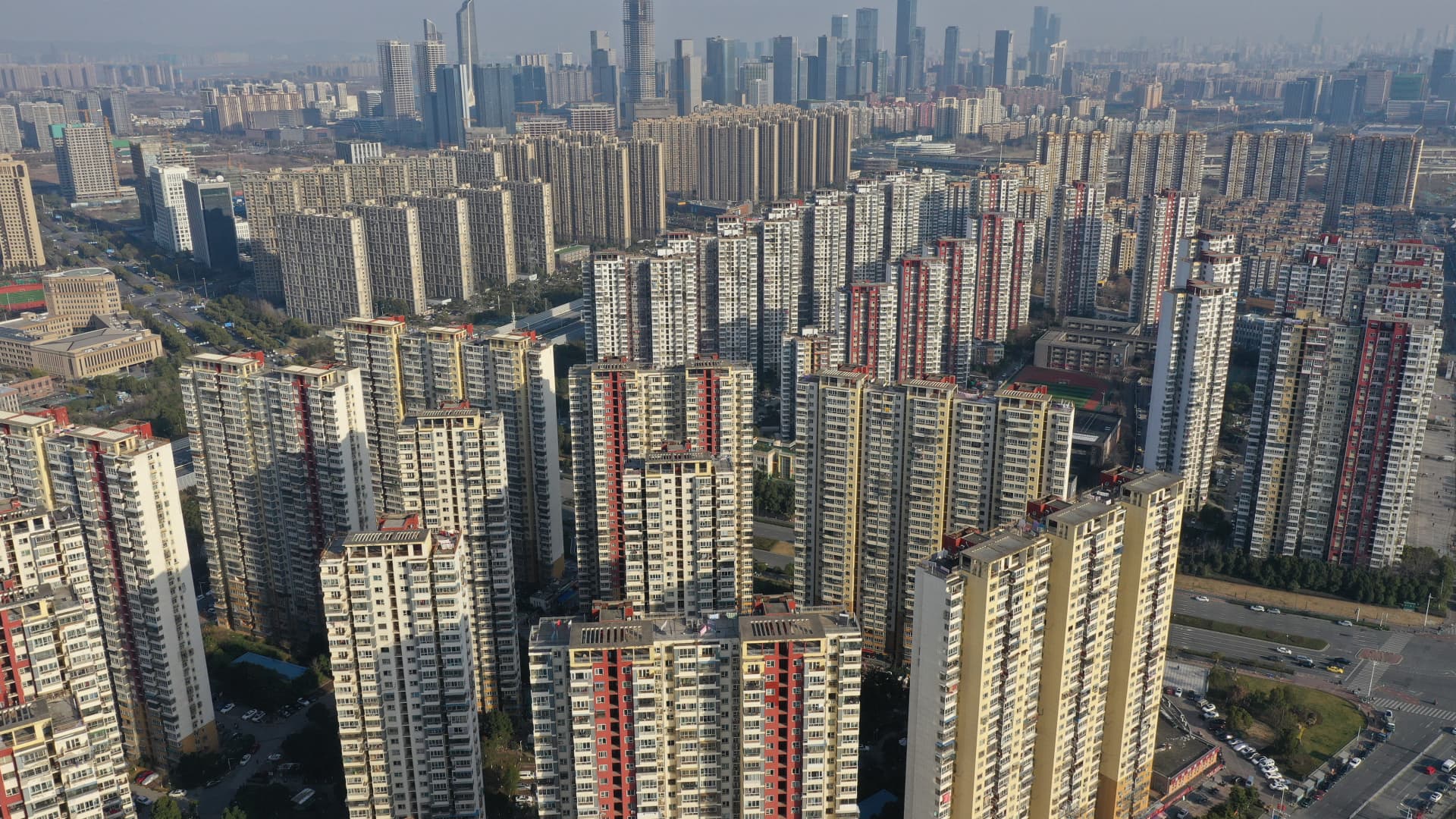
China’s authentic estate industry has slumped in the last two decades soon after Beijing cracked down on developers’ significant reliance on debt for advancement.

Long term Publishing | Upcoming Publishing | Getty Pictures

BEIJING — China demands to do extra in get to correct its authentic estate issues, the Global Financial Fund reported Friday.

The residence sector contributes to about a quarter of China’s GDP and has been a drag on growth, particularly given that Beijing cracked down on developers’ superior reliance on financial debt in 2020.

Chinese authorities started off to simplicity limitations on funding for the sector over the last quite a few months.

“Authorities’ modern coverage measures are welcome, but in our look at added motion will be required in purchase to stop the real estate crisis,” Thomas Helbling, deputy director in the IMF’s Asia Pacific Department, explained in a briefing.

“If you glimpse at the steps, a large amount of them handle funding problems for the builders that are nonetheless in comparatively superior financial health and fitness, so that will enable,” he extra in an job interview with CNBC. “But the difficulties of the property developers’ dealing with critical monetary difficulties are not nonetheless dealt with. The difficulty of the big inventory of unfinished housing much more broadly is not however resolved.”

China is slowly coming back, Dassault Systemes CEO says

Apartments in China are usually bought to homebuyers ahead of completion. Covid and monetary issues slowed development so substantially that some homebuyers halted their mortgage payments previous summer season in protest.

Chinese authorities subsequently emphasised the need to assist builders end constructing people pre-bought residences. Continue to, household floor room offered in China dropped by nearly 27{515baef3fee8ea94d67a98a2b336e0215adf67d225b0e21a4f5c9b13e8fbd502} previous calendar year, when real estate investment decision fell by 10{515baef3fee8ea94d67a98a2b336e0215adf67d225b0e21a4f5c9b13e8fbd502}, according to official quantities.

“I consider it would be helpful to point to a way out and … how the restructuring could be accomplished and who will soak up losses if there are any losses,” Helbling claimed. He also known as for added measures to address the huge inventory of unfinished residences.

Read more about China from CNBC Professional

“If not the sector will carry on to slump and continue to be a risk and also constrain households that are overexposed to the residence sector, and will have hard cash tied up and their discounts tied up which will be a handicap for the broader financial restoration,” he said.

Helbling declined to title a particular timeframe in just which authorities wanted to act ahead of the problem got much even worse.

“The quicker you handle draw back hazards the better.”

China suggests it is not a crisis

The IMF investigation was portion of the organization’s most up-to-date report on China, pursuing annual conversations with Chinese officials that ended in November.

The officials pushed back on the IMF’s authentic estate assessment, according to a statement in the IMF report by Zhengxin Zhang, govt director for People’s Republic of China, and Xuefei Bai, senior advisor to the government director, dated Jan. 12.

China’s home market has commonly operated effortlessly and “is not in a ‘crisis’ circumstance,” the assertion mentioned, casting the sector’s condition as “a organic evolution of ‘deleveraging and destocking’ in the previous several years.”

“The relevant pitfalls are regional and only concern unique firms, and their effect on the rest of the globe has been rather compact,” the central financial institution representatives claimed. Searching ahead, the Chinese aspect reported they would function toward making certain the shipping of completed apartments, and merging builders.

Study far more about China from CNBC Professional

“The sector’s contraction is also leading to strains in local governments. Falling land sale revenues have lessened their fiscal capability at the same time as community authorities financing motor vehicles (LGFVs) have also substantially improved land buys.”

The IMF on Monday lifted its world-wide growth expectations for the calendar year due to superior-than-predicted growth in significant international locations late past 12 months, softening inflationary pressures and the conclusion of China’s Covid controls.

The new 2.9{515baef3fee8ea94d67a98a2b336e0215adf67d225b0e21a4f5c9b13e8fbd502} forecast for the environment is .2 share points superior than expected in Oct. But it really is nevertheless a slowdown from 3.4{515baef3fee8ea94d67a98a2b336e0215adf67d225b0e21a4f5c9b13e8fbd502} growth in 2022.

For China, the IMF jobs progress of 5.2{515baef3fee8ea94d67a98a2b336e0215adf67d225b0e21a4f5c9b13e8fbd502} this calendar year, faster than the 3{515baef3fee8ea94d67a98a2b336e0215adf67d225b0e21a4f5c9b13e8fbd502} rate in 2022.

— CNBC’s Silvia Amaro contributed to this report.