How the Medicare political wars could hurt seniors : Shots

How the Medicare political wars could hurt seniors : Shots

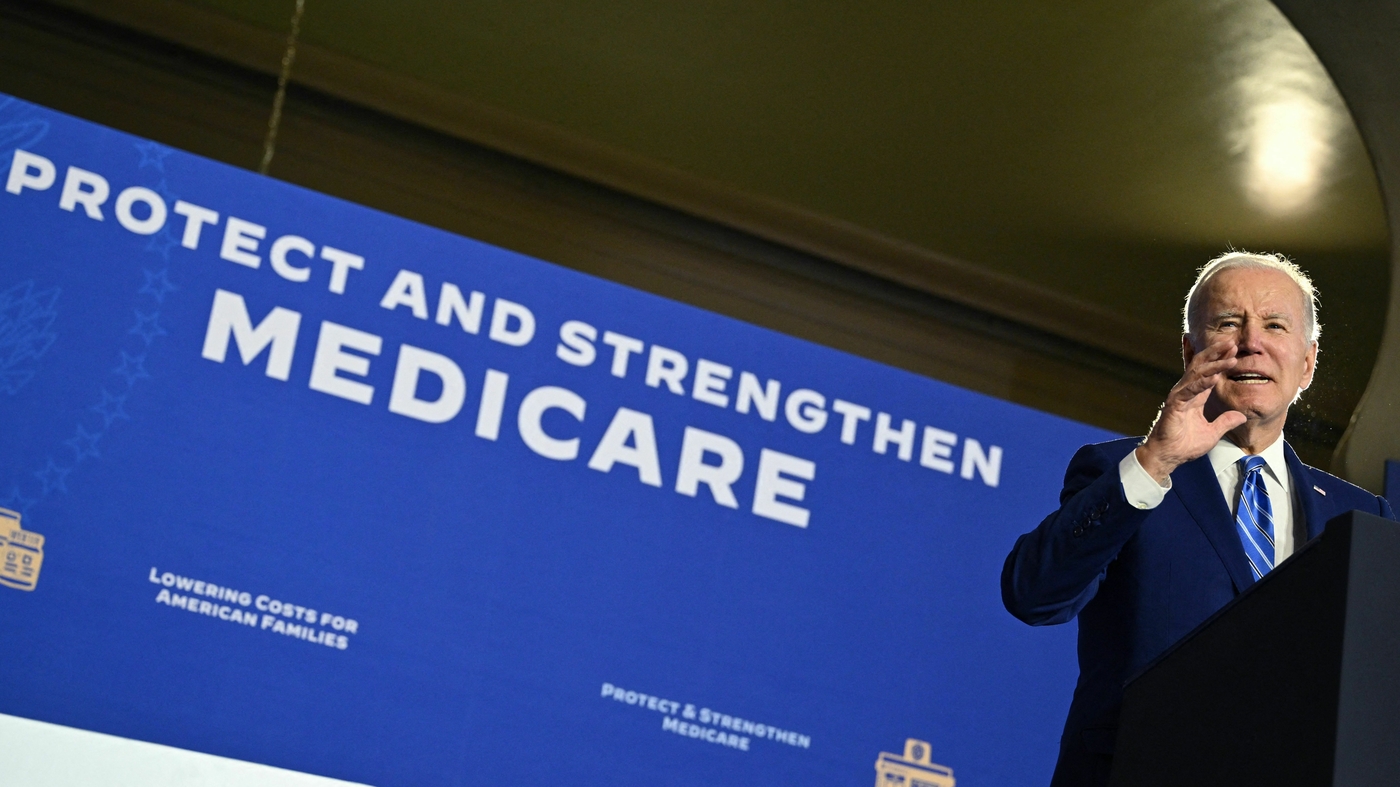
Last week in Florida, at the University of Tampa, President Joe Biden promised to protect and strengthen Social Security and Medicare, as well as lower health care costs.

Mandel Ngan/AFP via Getty Images


hide caption

toggle caption

Mandel Ngan/AFP via Getty Images


Last week in Florida, at the University of Tampa, President Joe Biden promised to protect and strengthen Social Security and Medicare, as well as lower health care costs.

Mandel Ngan/AFP via Getty Images

The Medicare wars are back, and almost no one in Washington is surprised.

This time it’s Democrats accusing Republicans of wanting to maim the very popular federal health program that covers 64 million seniors and people with disabilities. In the past, Republicans have successfully pinned Democrats as the threat to Medicare.

Why do politicians persistently wield Medicare, as well as Social Security, as weapons? Because history shows that works at the ballot box. Generally, the party accused of menacing the sacrosanct entitlements pays a price — although it’s the millions of beneficiaries relying on feuding lawmakers to keep the programs funded who stand to lose the most.

Republicans have repeatedly warned they would hold raising the federal debt ceiling hostage unless Democrats negotiated changes to Medicare, Medicaid, and Social Security. The three programs together, along with funding for the Affordable Care Act and Children’s Health Insurance Program, account for nearly half of the federal budget.

The political bomb that went off during President Joe Biden’s State of the Union speech had been ticking for weeks. In his speech, Biden threatened to veto any Republican efforts to cut Social Security or Medicare. It was one of only three veto threats he made that night. During a trip to Florida after the speech, he said it more forcefully: “I know a lot of Republicans, their dream is to cut Social Security and Medicare. Well, let me say this: If that’s your dream, I’m your nightmare.”

Senior Republicans have distanced themselves from the proposals Biden was referencing, notably ideas from the House Republican Study Committee and Sen. Rick Scott, R-Fla., to make cuts or even let Medicare expire unless Congress votes to keep it going.

“That’s not the Republican plan; that’s the Rick Scott plan,” Senate Minority Leader Mitch McConnell said on a Kentucky radio show Feb. 9, echoing his opposition to the plan last year.

“Cuts to Social Security and Medicare are off the table,” House Speaker Kevin McCarthy declared the day before Biden’s veto threat.

McConnell and McCarthy know something that Rick Scott apparently does not: Politicians threaten big, popular entitlement programs at their peril. And, usually, it’s been Republicans who suffer the electoral consequences.

How Medicare fights have shaped elections

This dates at least to 1982, when Democrats used threats of Republican cuts to Social Security to pick up more than two dozen House seats in President Ronald Reagan’s first midterm elections. In 1996, President Bill Clinton won reelection in part by convincing voters that Republicans led by House Speaker Newt Gingrich wanted to privatize Medicare and Social Security.

At the beginning of his second term, in 2005, President George W. Bush made it his top priority to “partially privatize” Social Security. That proved singularly unpopular. In the following midterm elections, Democrats won back the House for the first time since losing it in 1994.

In 2010, Republicans turned the tables, using what they described as “Medicare cuts” in the Affordable Care Act to sweep back to power in the House. (Those “cuts” were mostly reductions in payments to providers; beneficiaries actually got extra benefits through the ACA.)

The use of the Medicare cudgel likely reached its zenith in 2012, when Democrats took aim at Medicare privatization proposals offered by Paul Ryan, the House Budget Committee chair and Republican vice presidential candidate. That debate produced a controversial political ad, paid for by the progressive Agenda Project Action Fund and recalled by many in Washington, that showed a suited man in a red tie – presumably, Ryan – dumping a wheelchair-bound “granny” off a cliff as the words flashed, “Is America Beautiful without Medicare?”

The reality is that Medicare’s value as a political weapon also sabotages any effort to come together in a bipartisan way to solve the program’s financing problems. The last two times the Medicare Hospital Insurance Trust Fund was this close to insolvency — in the early 1980s and late 1990s — Congress passed bipartisan bills to keep the program afloat.

One person’s ‘cut’ can be another’s ‘benefit’

Even the word “cut” can be political. One stakeholder’s Medicare “cut” is another’s benefit. Reducing payments to medical providers (or, more often, reducing the size of payment increases to doctors and hospitals) may reduce premiums for beneficiaries, whose payments are based on total costs of the Medicare program.. Meanwhile, raising premiums or cost sharing for beneficiaries is a benefit to all taxpayers, who help fund Medicare. Increasing available benefits helps doctors, hospitals and other health providers, as well as beneficiaries, but costs more for taxpayers. And on, and on.

There are fundamental differences between the parties that can’t be papered over. Many Republicans want Medicare to shift from a “defined benefit” program — in which beneficiaries are guaranteed a certain set of services and the government pays whatever they cost — to a “defined contribution” program, in which beneficiaries would get a certain amount of money to finance as much as they can — and would be on the hook for the rest of their medical expenses.

This would shift the risk of health inflation from the government to seniors. And while it clearly would benefit the taxpayer, it would disadvantage both providers and the people on Medicare.

But there are many, many intermediate steps Congress could take to at least delay insolvency for both Medicare and Social Security. Some are more controversial than others (raising the payroll tax that funds Medicare, for example), but none are beyond the steps previous Congresses have taken every time the programs have neared insolvency.

Republicans are correct about this: Medicare and Social Security can’t be “fixed” until both sides lay down their weapons and start talking. But every time a politician unsheathes their talking points about “Medicare cuts,” that truce seems less and less possible.

Johns Hopkins University to shut down its COVID tracker : Shots

Johns Hopkins University to shut down its COVID tracker : Shots

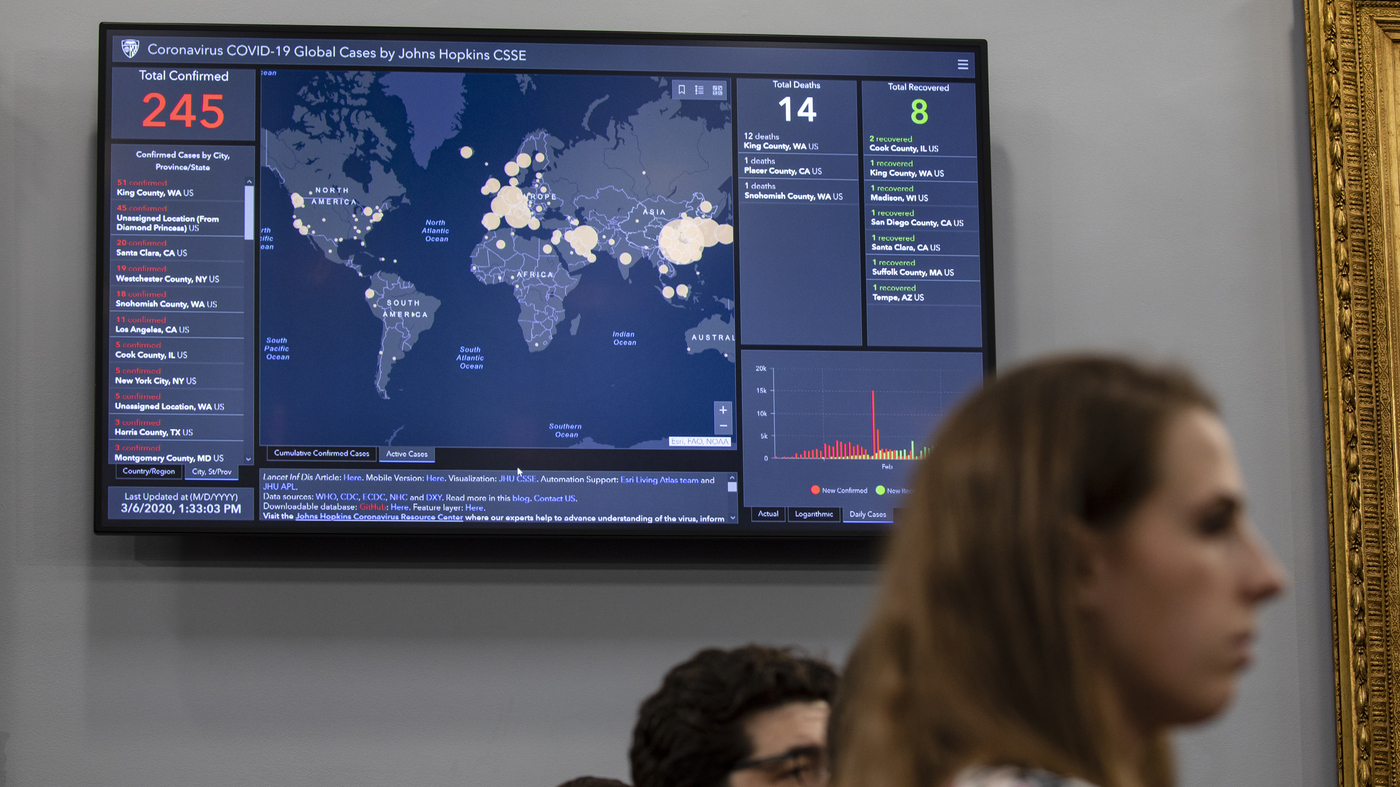
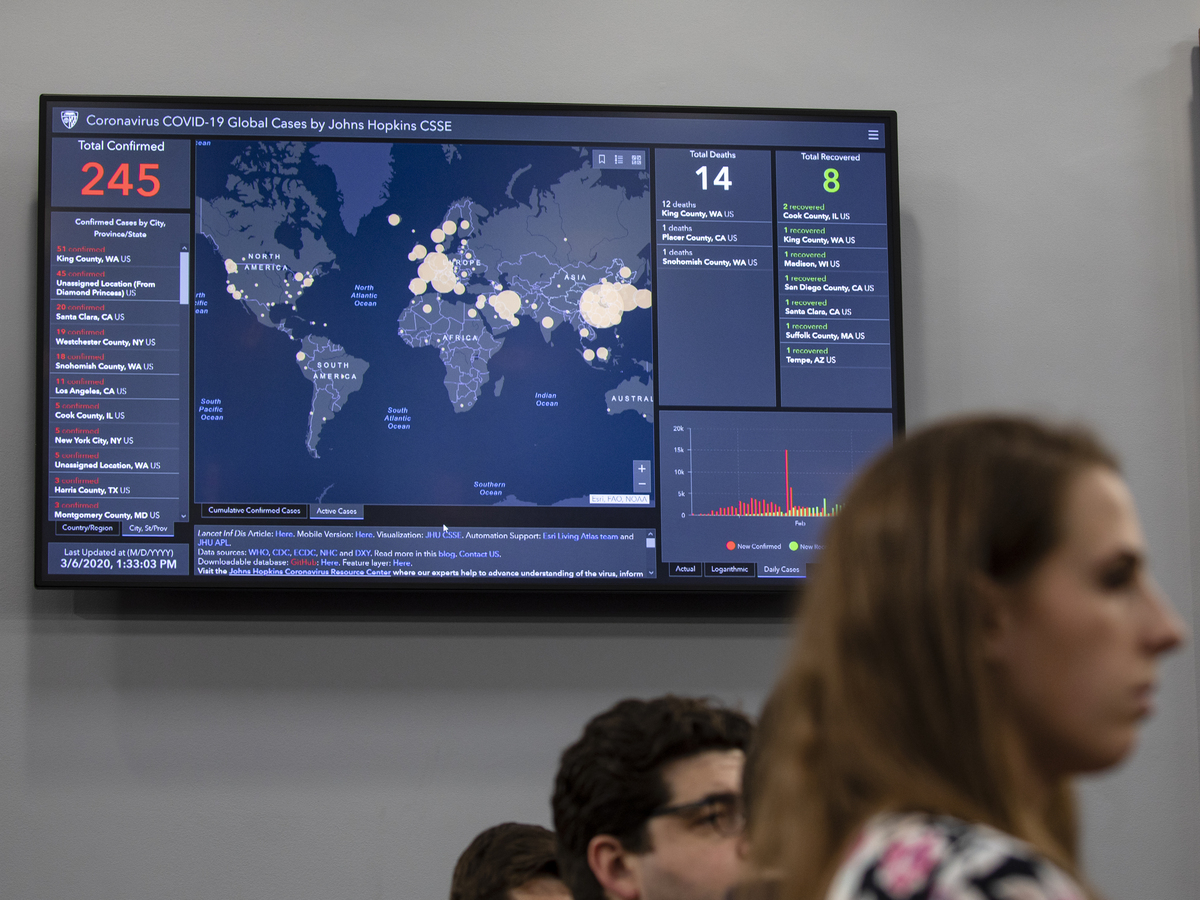
The COVID-19 dashboard made by the Johns Hopkins Middle for Devices Science and Engineering is displayed through a briefing on Capitol Hill in early March 2020, when only 245 confirmed conditions had been reported in the U.S.

Samuel Corum/Getty Visuals


conceal caption

toggle caption

Samuel Corum/Getty Visuals


The COVID-19 dashboard designed by the Johns Hopkins Heart for Units Science and Engineering is exhibited through a briefing on Capitol Hill in early March 2020, when only 245 confirmed situations had been noted in the U.S.

Samuel Corum/Getty Photographs

In an additional signal of the altering state of the pandemic, an priceless resource of information and facts about the virus above the last 3 years is shutting down, NPR has acquired.

The Johns Hopkins Coronavirus Source Center programs to stop operations March 10, officers advised NPR.

“It really is bittersweet,” states Lauren Gardner, an engineering professor who introduced the job with one of her pupils on March 3, 2020. “But it truly is an appropriate time to move on.”

When the pandemic erupted, no just one realized much of something about the virus and how to answer. Was it harmless to go grocery buying? How very easily could an individual get infected on a bus or teach? Could runners get sick just by passing a different jogger in the park?

“As anyone can recall, there was very small data, notably at the beginning of the pandemic,” suggests Beth Blauer, an affiliate vice provost at Johns Hopkins who has aided run the center.

“And when we started to see the conditions move out of China and in by means of Europe and headed towards our shores, we knew that there ended up going to be a collection of general public policy conclusions that would have to be built,” Blauer says.

Those people choices provided where by to impose dramatic but important public wellness steps. Really should mayors near colleges? Really should governors mandate masks? Should really CEOs shut down factories? Need to heads of point out seal borders?

But there was no great details readily available to make all those conclusions. Neither the Centers for Disorder Command and Prevention nor the Environment Wellness Firm were supplying adequate helpful numbers in actual time. So journalists and educational scientists at locations like Johns Hopkins jumped in to fill the void.

NPR launched its possess tracker in March, 2020, drawing data from Johns Hopkins. It was considered more than 52 million instances about the previous 3 several years as readers sought to stay up-to-date on COVID metrics. On Feb. 1, NPR ceased updating the webpage, recognizing that People in america can find the facts they have to have on the CDC’s COVID internet site. This was not the scenario early in the pandemic.

“I know CDC has the capacity to do this and has carried out it numerous events in the earlier,” says Dr. Ali Khan, a previous CDC official who is now dean of the College or university of Public Overall health at the University of Nebraska Healthcare Middle. “So it was uncommon that at the beginning of this COVID pandemic that they did not gather this details and put it out in a well timed manor. Very uncommon and incredibly surprising.”

Johns Hopkins “effectively filled the vacuum,” Khan states, “That was a must have to have an understanding of what was heading on.”

After Johns Hopkins launched the project, the web site speedily turned crucial for deciding almost everything from wherever drug firms must examination vaccines to wherever Hollywood need to movie motion pictures. Even the White Residence and the British prime minister ended up relying on Hopkins details.

Gardner recalls numerous discussions “with individuals that had been just out about doing their career — traveling in Japan, here and there — who would explain to me the dashboard was the driving pressure in determination-earning for them … about quitting their position and then coming dwelling so that they wouldn’t get trapped.”

The site’s maps of the earth and personal international locations grew to become an legendary way of monitoring the virus’s inexorable unfold.

“I would refresh my personal computer display screen over and more than once more above the training course of the work day seeking to see what the most up-to-date figures ended up,” states Dr. Celine Gounder from the Kaiser Household Basis, who was working as an infectious ailment expert at the Bellevue Hospital in New York when the pandemic began.

“It was definitely startling to see even around the program of the working day how the numbers were evolving. I feel my colleagues considered I was a very little obsessive,” Gounder says. “But it was also observing background unfold in true time on your screen.”

The web-site, which Blauer and Gardner notice was developed and run mostly by females, expense $13 million and sooner or later drew much more than 2.5 billion views, Blauer claims.

“It is a staggering sum of traffic,” she says. “These are figures I never feel I am going to at any time see yet again in my skilled job.”

But now that the risk of the pandemic is receding, states are reporting information much less usually and the CDC has ramped up the agency’s details reporting, the college determined it was time to shut it down.

“There’s surely a bitter sweetness about the finish,” Blauer states. “But we are at an inflection issue.”

Both equally Blauer and Gardner say they hope the CDC and the general public health and fitness process will proceed to commit in information assortment so the nation will be far better ready in the foreseeable future. But they’re geared up to stage back in if essential.

“There will be a further pandemic,” Gardner states. “And, so we are going to have to see.”

Long COVID diagnosis puts extra strain on family caregivers : Shots

Long COVID diagnosis puts extra strain on family caregivers : Shots

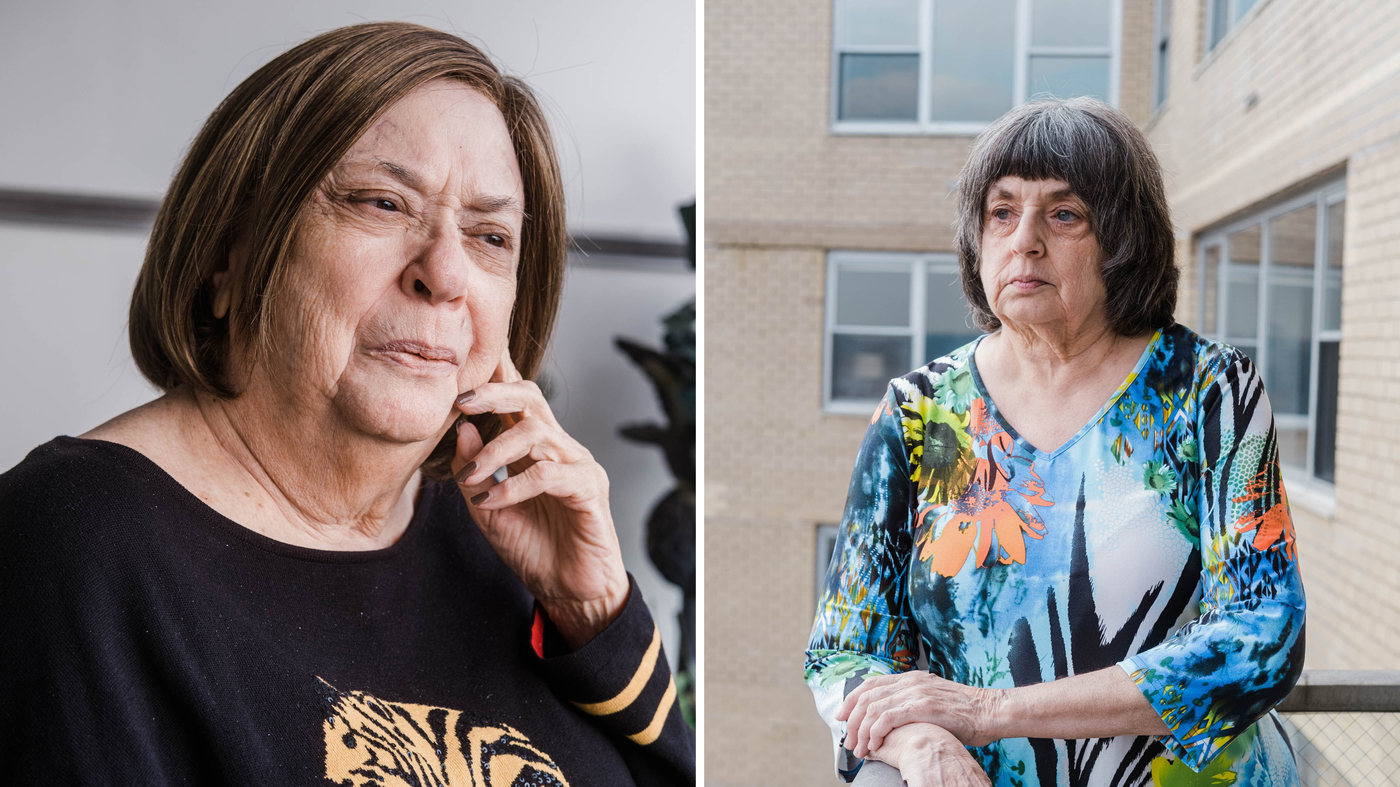
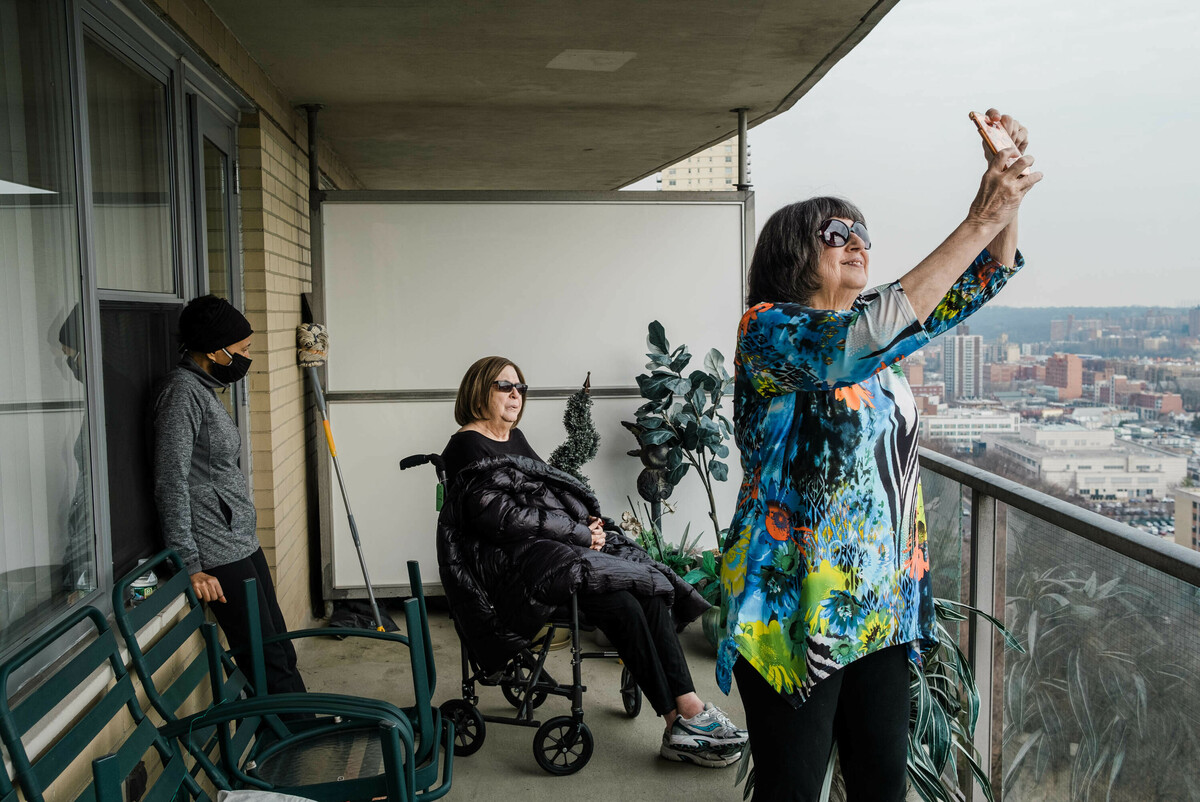
Louise Salant (right), 72, and her aunt Eileen Salant (center), 86, both got very sick with COVID-19 in 2020. And as Eileen developed long COVID symptoms, so too did Louise, who struggled with fatigue and shortness of breath while also managing her aunt’s care. Nearly three years later, home health aides like Elfnesh Legesse (left) help Louise take care of her aunt.

Gabriela Bhaskar for NPR


hide caption

toggle caption

Gabriela Bhaskar for NPR


Louise Salant (right), 72, and her aunt Eileen Salant (center), 86, both got very sick with COVID-19 in 2020. And as Eileen developed long COVID symptoms, so too did Louise, who struggled with fatigue and shortness of breath while also managing her aunt’s care. Nearly three years later, home health aides like Elfnesh Legesse (left) help Louise take care of her aunt.

Gabriela Bhaskar for NPR

For Louise Salant, long COVID has meant new stress, new responsibilities, and multiple medical crises to manage. It’s transformed her life.

But there’s a twist. She’s had to deal with this condition not just as a patient but also as a caregiver for her 86-year-old aunt Eileen Salant, who has coped with long COVID’s disabling symptoms for almost three years.

Eileen and Louise both caught an acute bout of COVID-19 in March of 2020. Eileen had been taking care of her brother, who was admitted to a New York City hospital with heart failure during those dark days of the early pandemic. He got COVID there, and died from his infection with the virus. Both aunt and niece also became very ill.

It was early days of the pandemic in New York, and hospitals were so crowded that Louise was told to stay home and fight out the illness on her own. Meanwhile, Eileen was hospitalized and stayed there all spring, including two months on a ventilator. After that, she spent five months at a rehab hospital. She finally came home to her apartment in Riverdale, the Bronx, the day before Thanksgiving in 2020 — but she was very weak.

Eileen and Louise both got COVID-19 in the early days of the pandemic in New York. Eileen ended up on a ventilator for two months and then spent five months in a rehab hospital. Louise fought the illness at home as hospitals started filling up.

Gabriela Bhaskar for NPR


hide caption

toggle caption

Gabriela Bhaskar for NPR


Eileen and Louise both got COVID-19 in the early days of the pandemic in New York. Eileen ended up on a ventilator for two months and then spent five months in a rehab hospital. Louise fought the illness at home as hospitals started filling up.

Gabriela Bhaskar for NPR

“She could barely sit up in bed, couldn’t hold a fork,” says Louise, who lives a 10-minute taxi ride away.

Over the years, Louise, now 72, has worked at various times as an art therapist, taught piano to children and adults and done medical interviewing for a cancer research team. But when COVID hit, all that ground to a halt. Though she hadn’t always been emotionally close to her aunt, she says, she took on the caregiving role, “because someone needed to” — even as she, too, dealt with her own symptoms of long COVID, including crushing fatigue and shortness of breath.

An overwhelming need

Louise Salant set about organizing home aides, occupational therapy and physical therapy for her aunt and oversaw all other aspects of the older woman’s care. She had to learn to deliver injections of blood thinning medicine, then trained the aides to do it too. For months, she kept track of Eileen’s expenses, maintained all her medical information and patient history, and ran all her errands.

She found that being a caregiver for someone with long COVID, as for other serious and chronic medical conditions, is not just being an aide. It’s running the patient’s life. “Every single day, there’s something she’d need,” Louise says. “I was dealing with the pharmacy, dealing with the doctor, keeping her schedule. And when I’m not there, I’d worry. I have to always be available on the phone.”

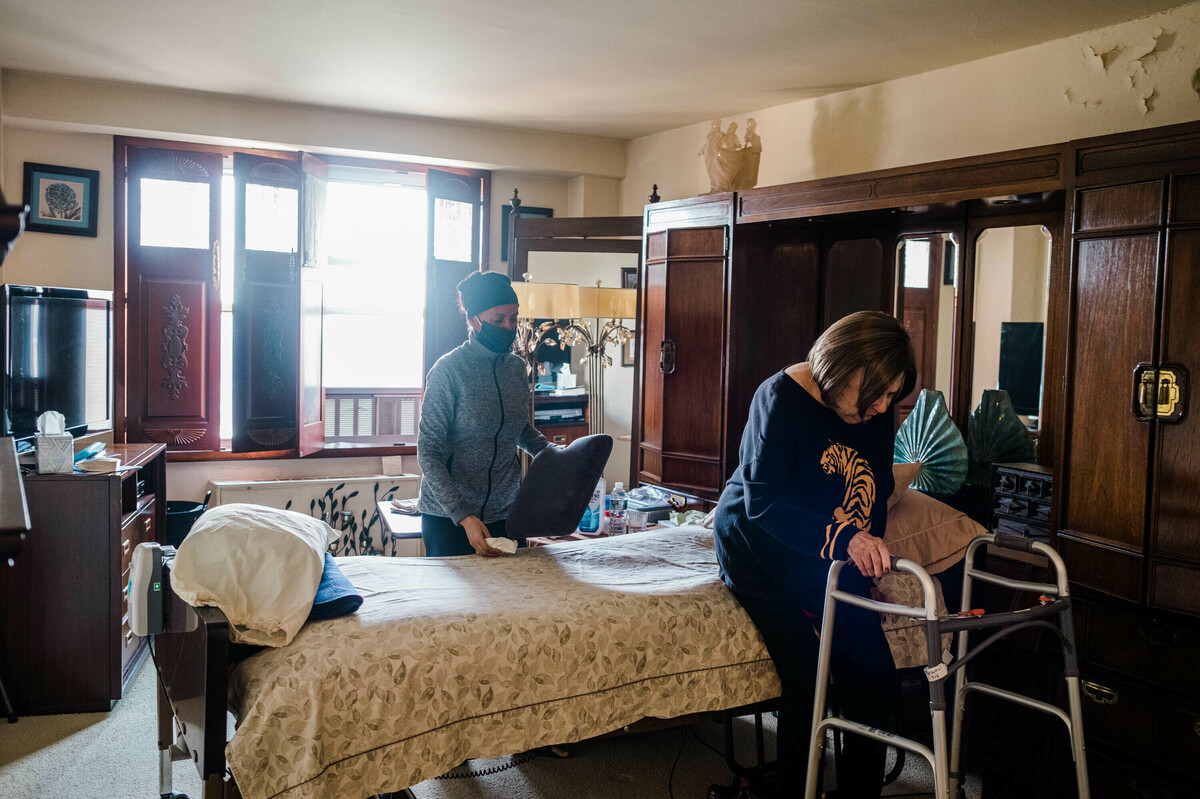
Louise began managing all aspects of her aunt’s life while dealing with her own debilitating fatigue. She hired and trained home health aides, made doctor’s appointments for Eileen, and picked up prescriptions from the pharmacy.

Gabriela Bhaskar for NPR


hide caption

toggle caption

Gabriela Bhaskar for NPR


Louise began managing all aspects of her aunt’s life while dealing with her own debilitating fatigue. She hired and trained home health aides, made doctor’s appointments for Eileen, and picked up prescriptions from the pharmacy.

Gabriela Bhaskar for NPR

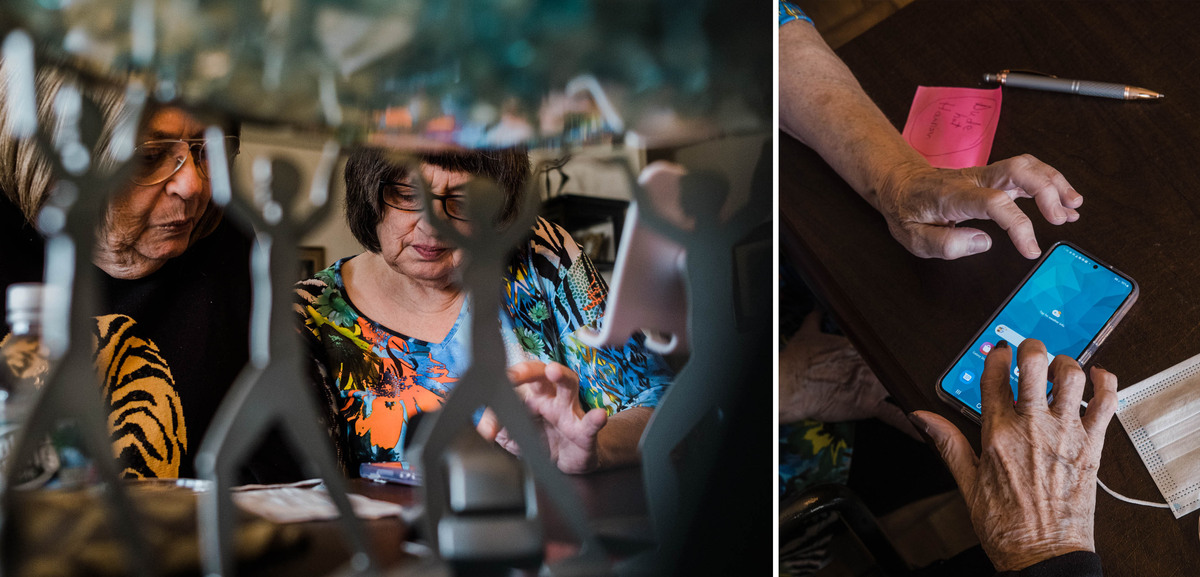
Eileen recently got a new phone; Louise showed her how to use it.

Gabriela Bhaskar for NPR


hide caption

toggle caption

Gabriela Bhaskar for NPR


Eileen recently got a new phone; Louise showed her how to use it.

Gabriela Bhaskar for NPR

Between 8 and 23 million Americans are thought to have long COVID — meaning they have long-lasting symptoms that endure or arise months after infection, such as difficulty concentrating (“brain fog”), extreme tiredness, anxiety and shortness of breath. But there is no solid estimate of how many need caregiving help. Stats from one clinic hint at the size of the problem: Out of the 1,782 patients seen at the Penn Medicine Post-COVID Assessment and Recovery Clinic between June 2020 and January 2023, about one-fifth said they felt uncomfortable dealing with daily activities like driving, shopping, or using public transit, suggesting the need for a caregiver.

And, like roughly 40{515baef3fee8ea94d67a98a2b336e0215adf67d225b0e21a4f5c9b13e8fbd502} of U.S. caregivers, Louise had her own chronic health problems to manage. It was the exhaustion of long COVID that almost took her under, especially in the first months of caregiving. After three or so hours of helping her aunt, she says, “this sickening feeling would come over my whole body, and I’d have to go home. I’d be in bed sick for two or three days.” In August 2021, Louise got a new inhaler from her lung doctor that helped her breathe better and started to give her more energy.

Why caregiving is harder when the medical condition is new and poorly understood

Stories like the Salants’ reveal another unfortunate reality about dealing with a complex chronic disease like long COVID, in contrast to an illness with a more straightforward diagnosis: Meeting the demands of the health care system itself can be a major burden. Because the medical condition is new and poorly understood, patients often consult multiple specialists who order a long sequence of tests to rule out other illnesses. Caregivers must schedule each of those visits, often go with the patient to the test, and often need to follow up with multiple physicians about the results.

Louise sorts through Eileen’s medications. “She’s been wonderful to me,” Eileen says of Louise. “Like a daughter would help her mother.”

Gabriela Bhaskar for NPR


hide caption

toggle caption

Gabriela Bhaskar for NPR

With unpredictable symptoms that can wax and wane mysteriously, long COVID also requires exceptionally good record-keeping, in order to provide doctors with new clues. But because the disease often causes fatigue and brain fog, some patients can’t keep track for themselves. They rely on friends or family for help.

“The family caregiver becomes the care manager, advocating and managing the system,” the late John Schall, former CEO of the Caregiver Action Network, an education and advocacy nonprofit, told us last year. “And you’re doing it by guesswork. Nobody tells you what to look for.”

In interviews with a half-dozen family caregivers of people with long COVID, the complexity of managing care emerged again and again. Judith Friedman, a Brooklyn mom who is helping her adult daughter who has long COVID, maintains a list of 14 doctors she consults regularly or periodically and another list that includes 10 daily prescription drugs, plus supplements and other as-needed medications her daughter takes.

Slowly, over time, Eileen began regaining her strength. By March 2022, she was able to venture out with Louise, for adventures beyond the neighborhood.

Gabriela Bhaskar for NPR


hide caption

toggle caption

Gabriela Bhaskar for NPR


Slowly, over time, Eileen began regaining her strength. By March 2022, she was able to venture out with Louise, for adventures beyond the neighborhood.

Gabriela Bhaskar for NPR

The task can be overwhelming even for experts. Tonya LaGrange has helped her husband Brent LaGrange since 2020 through a huge range of problems stemming from long COVID, including heart arrhythmias, joint pain, neurological problems and difficulty breathing. During doctors’ appointments, she is his advocate and backstop, making sure nothing gets forgotten and details don’t get lost. “It’s probably why he’s still alive now,” LaGrange says. “I’ve been able to intervene when he slips through the cracks.”

In 2020, at the peak of her husband’s illness, she was always doing something for his care, she says, whether it was emailing case managers during the day, or monitoring his breathing at night to wake him up when he would especially struggle. It’s not quite as intense now as it once was, she says, but she is still always “on” — juggling phone calls, appointments and follow-ups in between the demands of her job as the director of rehabilitation at a skilled nursing facility.

Even though LaGrange works in health care herself (including training as a physical therapist), and all her husband’s doctors are in one health system she finds care management a challenge. “I know how the field works, I know the system, I know the terminology, and we’re having trouble,” she says. “What about people who don’t have the education I have? It’s devastating.”

Caregivers need support, too

Louise says her own long COVID symptoms have finally mostly eased. She says she took on the caregiving role for her aunt when COVID-19 hit them both, “because someone needed to.”

Gabriela Bhaskar for NPR


hide caption

toggle caption

Gabriela Bhaskar for NPR


Louise says her own long COVID symptoms have finally mostly eased. She says she took on the caregiving role for her aunt when COVID-19 hit them both, “because someone needed to.”

Gabriela Bhaskar for NPR

About half of all family caregivers say they take the lead in coordinating their ill loved one’s care, according to surveys from AARP. And while hands-on caregiving can be emotionally rewarding, dealing with forms, bills and scheduling generally isn’t, says Jennifer Olsen, CEO of the Rosalynn Carter Institute for Caregivers. “It’s challenging to spend half your day on the phone with insurance to make sure you have the right justification for the right test,” she says. “Caregiving project management is something we don’t talk about.”

These responsibilities add to the strain of worrying about a loved one’s health and keeping the household running too. It can be intense, says Sheria Robinson-Lane, assistant professor at the University of Michigan School of Nursing, who studies caregiving. “One family member might have taken care of paying the bills, and now this person has to learn all those tasks, which wasn’t part of the division of labor,” she adds. “That causes stress.”

Louise rests on the couch while visiting Eileen at her apartment in the Bronx. Naps were a regular part of each caregiving day a couple of years ago, when Louise could only function about three hours a day, she says. A new inhaler she was prescribed in August 2021 helped her breathe better, and gave her more energy.

Gabriela Bhaskar for NPR


hide caption

toggle caption

Gabriela Bhaskar for NPR


Louise rests on the couch while visiting Eileen at her apartment in the Bronx. Naps were a regular part of each caregiving day a couple of years ago, when Louise could only function about three hours a day, she says. A new inhaler she was prescribed in August 2021 helped her breathe better, and gave her more energy.

Gabriela Bhaskar for NPR

Robinson-Lane recommends that caregivers move quickly to reinforce their own emotional support systems, whether that’s friends, family or, ideally, a professional counselor. Local senior centers can often help people who aren’t necessarily elderly, she adds: Advice and connections may be available for those over 55, or for disabled people of any age. Simply talking to your insurance provider can also point the way to assistance: “In my experience they’re incredibly helpful once you get someone on the phone,” says Robinson-Lane.

The next chapter of care

By the late winter of 2021, months after she first came home from the rehab hospital, Eileen Salant started feeling stronger, and by April of that year she was able to venture out to the kosher deli in her neighborhood. By March of 2022, with the help of her niece Louise, the two took longer adventures — taxi trips to Nordstrom and Saks Fifth Avenue in Manhattan. “I was just determined to get out,” Eileen says.

Later that month, she had a major setback, and was hospitalized again for a week. But thanks to Louise’s help, and the support of paid caregivers at home, Eileen eventually bounced back.

Louise says that despite the difficult circumstances, she and her aunt have become closer these past few years.

Gabriela Bhaskar for NPR


hide caption

toggle caption

Gabriela Bhaskar for NPR


Louise says that despite the difficult circumstances, she and her aunt have become closer these past few years.

Gabriela Bhaskar for NPR

“She’s been wonderful to me,” Eileen says of Louise. “Like a daughter would help her mother.” Despite the difficulty of the last few years, the two are closer now, Louise says, and have come to respect and love each other.

Louise has advice for other long-COVID caregivers: Find a doctor who is knowledgeable about the disease, or at least willing to learn more about it. She also recommends the online patient-support group Survivor Corps. “The best resource is other people,” Louise says.

Other family caregivers praise the Body Politic COVID-19 support group. And LaGrange recommends simply finding someone to talk to who is not part of the family — perhaps a friend or a therapist.

Although specific treatments for long COVID are elusive so far, many people do eventually recover on their own. The biggest study so far found that long COVID symptoms endured an average of 9 months for people who’d been hospitalized with COVID-19, and 4 months for those who hadn’t needed hospitalization .

Louise also reports that her long-COVID symptoms have finally eased, and she, too, is feeling better. The overwhelming fatigue seems to be gone, although she’s still tired, and she even started teaching piano again for one nearby family.

She’s been able to step back a little bit from her daily responsibilities in caring for her aunt, although she knows that could change at any moment. She still sleeps with her phone by her bed, she says — but now at least she sleeps through the night.

Kat McGowan is a freelance writer in California focused on caregiving. This story was produced with support from the Alicia Patterson Foundation.


U.S. winter COVID surge is mild and fading fast : Shots

U.S. winter COVID surge is mild and fading fast : Shots

Immunity People obtained via vaccination or through prior an infection with the SARS-CoV-2 virus may perhaps account for the lighter than anticipated COVID surge in the U.S. this winter, scientists say.

David Ryder/Getty Illustrations or photos


conceal caption

toggle caption

David Ryder/Getty Illustrations or photos


Immunity Us citizens acquired by means of vaccination or through prior an infection with the SARS-CoV-2 virus may account for the lighter than predicted COVID surge in the U.S. this wintertime, researchers say.

David Ryder/Getty Images

This winter’s COVID-19 surge in the U.S. appears to be fading with out hitting almost as difficult as numerous had feared.

“I assume the worst of the winter season resurgence is more than,” claims Dr. David Rubin, who’s been tracking the pandemic at the PolicyLab at Children’s Healthcare facility of Philadelphia.

No one particular expected this winter’s surge to be as terrible as the previous two. But each the flu and RSV arrived roaring again genuinely early this fall. At the similar time, the most contagious omicron subvariant however took off just as the vacations arrived in late 2022. And most individuals have been performing like the pandemic was more than, which authorized all three viruses to unfold promptly.

So there had been huge fears of hospitals finding fully confused all over again, with several people having severely unwell and dying.

But which is not what transpired.

“This virus continues to toss 210-mile-per-hour curve balls at us. And it appears to defy gravity or logic often,” states Michael Osterholm, who heads the Center for Infectious Disease Analysis and Plan at the College of Minnesota.

“People today all assumed we would see important transmission. Well, each and every time we imagine we have some rationale to believe that we know what it can be likely to do, it will not do that,” Osterholm suggests.

‘The worst’ of the surge of COVID, flu and RSV may possibly be above

Bacterial infections, hospitalizations and fatalities did increase in the U.S. after New Year’s. But the selection of individuals catching the virus and obtaining hospitalized and dying from COVID soon started to tumble all over again and have all been dropping now for weeks, according to the most current knowledge from the Facilities for Disease Management and Prevention.

The slide flu and RSV waves continue on to fade far too. And so the worst appears like it’s almost certainly over, quite a few community well being professionals say.

“I’m happy to say that we didn’t have as substantially of a crush of infections as numerous thought was attainable, which is incredibly welcome news,” claims Jennifer Nuzzo, who heads the Pandemic Centre at Brown College.

The major dilemma is: Why? Quite a few factors may possibly have performed a job.

A person probability could be that men and women averted crowds, wore a mask and took other safeguards a lot more than community health and fitness experts had expected they would. But that won’t truly surface to be the case.

May possibly ‘viral interference’ play a job?

A further possibility is “viral interference,” which is a concept that occasionally when a man or woman receives contaminated with one virus, their immune response might guard them from getting contaminated with a further virus. So maybe RSV and flu crowded out COVID in the same way COVID crowded out these other viral infections at a variety of periods around the final two yrs.

“At this stage, I believe that is extra of a guess rather than really strong proof,” Nuzzo says. “But if it is correct, that may well imply we could be a lot more inclined to viewing a rise in bacterial infections when those people viruses are not about.”

Nuzzo and other professionals suspect instead that the principal motive the COVID surge is ebbing is all the immunity we have all constructed up from prior infections, and/or the COVID vaccinations several of us have acquired.

“We have what I would connect with now a superior immunity barrier,” suggests Dr. Carlos Del Rio, an infectious disease expert at Emory University who heads the Infectious Condition Society of The united states.

“Concerning vaccinations and prior an infection I assume all of us are in a unique position than we had been ahead of,” he states. “All of us, if not fully protected, we are to some degree superior safeguarded. And that immunologic wall is true.”

Why COVID-19 continues to be a considerable danger

But none of this indicates the region won’t have to worry about COVID any more. Much more than 400 individuals are nonetheless dying each and every day from COVID-19. That’s significantly much less than the countless numbers who died through the darkest days of the past two winter surges. But it can be nevertheless lots of more individuals than die from the flu each individual day, for illustration.

“Make no blunder: COVID-19 remains a sizeable general public overall health danger,” Nuzzo suggests. “That has not changed. And the truth that we are however losing hundreds of individuals a day to this virus is deeply troubling. So we should not have to accept that level of sickness and death that we are viewing.”

William Hanage, an epidemiologist at the Harvard T.H. Chan University of Public Health and fitness, agrees.

“It really is beyond issue that culture has moved into a phase where the pandemic is for most of us if not in excess of then certainly silent. And that’s a terrific thing. Extended may well it stay so,” Hanage says. “Is it the case that there is no preventable suffering? No. There is however preventable struggling and demise.”

Most of the individuals dying are aged, many of whom have not gained the latest booster from COVID-19. So receiving them boosted could aid a great deal. And the immunity the relaxation of us have built up could preserve fading. That indicates many of the relaxation of us might at some level need to have to get yet another booster to help further more lessen the menace from COVID.

Another wave of flu could however strike this yr, general public health and fitness industry experts notice, and the hazard proceeds that but one more new, even additional risky variant of SARS-CoV-2 could emerge.

“This virus isn’t finished with us nonetheless,” Osterholm says.

Flu, RSV and COVID: Families wonder if this winter’s viral stew will ever end : Shots

Flu, RSV and COVID: Families wonder if this winter’s viral stew will ever end : Shots
Sick kids

I wished to report this tale final month, but I was much too ill with COVID. My child gave it to me.

My colleagues on the wellness reporting crew would have tackled the tale, but they have been unwell, as well, many thanks to their kids. (Just past 7 days, a person colleague dropped off her daughter for her 1st day back at preschool right after recovering from a bug, only to decide on her up that exact afternoon, sniffling from a new sickness. Yikes.)

And we’re much from on your own in our woes.

“Like so a lot of mom and dad out there, you know, my spouse and I have been unwell all winter season. We have been sneezing, coughing, had fevers. It really is gross,” suggests Dr. Rachel Pearson, a pediatrician at The College of Texas Health Science Center at San Antonio and College Hospital. She’s also the mom of 2-year-aged Sam.

“I feel like fifty percent the time he has a virus, has a runny nose, is coughing – to the position where my dad was like, ‘Is there anything wrong with Sam?’ ” she states.

With flu, RSV, colds and COVID all coming at at the time, it can really feel like points could be worse than ever for mothers and fathers of minimal children. But as Pearson tells her father – and the mother and father of her very own youthful clients – this seemingly never-ending cycle of sniffles is normal, if depressing.

“When I counsel mothers and fathers, I say you can have a viral infection just about every month. Some young ones are going to cough for 4 months to 6 months following a virus. And so they are likely to catch their subsequent virus just before they even prevent coughing from the past just one.”

In truth, if you’ve ever described your youngster as an cute tiny germ vector, you might be not incorrect, says Dr. Carrie Byington, a pediatric infectious illness expert and government vice president for the College of California Wellbeing Technique. And she’s acquired tough knowledge to again that up.

“We all imagine it, but it was definitely unbelievable to have the definitive proof of it,” suggests Byington.

The “proof” she’s referring to will come from a review she and her colleagues started again in 2009, when she was at the College of Utah. They needed to realize the role youngsters play in the transmission of respiratory viruses in their residences. So they recruited 26 homes to just take nasal samples of all people residing in the dwelling, each and every 7 days, for an complete yr. What they identified was eye-opening.

“We observed as before long as a kid entered the household, the proportion of months that an grownup experienced an an infection greater significantly,” Byington claims.

And more youngsters meant much more infections. For households with two, a few or four young ones, another person at property experienced an infection a minor much more than 50 percent the yr. Families with six kids had a viral detection a whopping 87{515baef3fee8ea94d67a98a2b336e0215adf67d225b0e21a4f5c9b13e8fbd502} of the yr. Childless homes, on the other hand, only experienced a viral detection 7{515baef3fee8ea94d67a98a2b336e0215adf67d225b0e21a4f5c9b13e8fbd502} of the yr.

(Correctly adequate, the examine was referred to as Utah Significant-Enjoy – an acronym for Better Identification of Germs-Longitudinal Viral Epidemiology.)

The findings also suggest that the youngest young ones are the kinds bringing germs household most frequently: Young children underneath age 5 have been contaminated with some form of respiratory virus a whole 50{515baef3fee8ea94d67a98a2b336e0215adf67d225b0e21a4f5c9b13e8fbd502} of the yr – two times as often as more mature youngsters and grownups. And though a viral detection didn’t usually translate into ailment, when they were being infected, the littlest little ones ended up 1.5 times additional possible to have signs, like fever or wheezing.

And that is just respiratory viruses. As Byington notes, the examine was not even wanting at other varieties of bacterial infections, this sort of as strep throat, which is induced by bacteria. “So clearly, there could be other points that occurred during the year to even make it seem worse,” she suggests.

Byington states all of this signifies that, in the grand scheme of issues, it’s normal for young ones to be receiving all these viruses. But it truly is all far more powerful appropriate now mainly because of the disruptions of the pandemic. Young children had been saved at residence in its place of heading to daycare or faculty, where by they would ordinarily be uncovered to viruses and bacteria just one soon after a further, she states.

As children returned to common routines, “there had been lots of youngsters ages 1, 2 and 3 who experienced never ever genuinely witnessed a good deal of viruses or bacteria,” Byinton says. “And so what might have been unfold out in the past about 12 months, a calendar year, they were now looking at it all at as soon as in this pretty concentrated time.”

Byington states the pandemic also disrupted the seasonality of viruses. Flu year hit before than common this yr, as RSV and COVID were being also circulating. Younger little ones without prior publicity to these viruses had been hit especially tough.

Pearson notes that is mainly because young ones are very likely to have a extra severe class of health issues the very first time they come across a virus like RSV, prior to they have some stage of immunity. She states there is a bigger cohort of kids this calendar year that failed to have that prior exposure.

And there is evidence that younger children who get numerous bacterial infections – say, COVID and RSV– at the similar time can end up with much more extreme illness than if they’d gotten just one particular virus at a time.

The conclusion result is that a lot of pediatric hospitals and care units have seen a surge in unwell young children about the tumble and winter season. That consists of University Hospital in San Antonio, where Pearson sees hospitalized kids in the acute treatment unit.

Nationwide, “pediatric care right now is at this level of strain,” Pearson states, not just because of the present-day surge but for the reason that of an underinvestment that predates the pandemic.

And “the children who get admitted to the medical center are the idea of the iceberg,” Pearson states. For just about every kid ill sufficient to be hospitalized, there are probable many more with the very same virus recuperating at home, she suggests.

The superior news is that the viral stew looks to be easing up. Recent facts from the CDC display the selection of emergency section visits for flu, COVID and RSV dropped to the cheapest they have been considering that September for all age groups.

But of course, the respiratory virus period is just not around yet.

As for households who are currently dwelling in what 1 headline memorably dubbed “virus hell,” Byington hopes the conclusions of the Big-Like study ought to provide some ease and comfort that eventually this, too, shall move.

“It can be great to have accomplished the research and to offer you some real-environment details to families that what they are dwelling as a result of is normal and will go and their little ones will be perfectly,” she says.

FDA Experts Are Still Puzzled Over Who Should Get Which Covid Shots and When

FDA Experts Are Still Puzzled Over Who Should Get Which Covid Shots and When

At a conference to simplify the nation’s covid vaccination policy, the FDA’s panel of industry experts could agree on only a single thing: Details is woefully lacking about how generally distinctive teams of Americans have to have to be vaccinated. That info hole has contributed to prevalent skepticism, undervaccination, and in the end unnecessary deaths from covid-19.

The committee voted unanimously Thursday to aid the FDA’s proposal for all vaccine-makers to adopt the similar pressure of the virus when making variations in their vaccines, and proposed they might fulfill in May perhaps or June to find a pressure for the vaccines that would be rolled out this slide.

Nonetheless, the panel members disagreed with the FDA’s proposal that all people get at least just one shot a year, indicating much more facts was needed to make these types of a declaration. A number of panelists mentioned that in modern scientific studies, only about a 3rd of persons hospitalized with a favourable covid test actually were being there since of covid illness. That is due to the fact everybody entering a hospital is tested for covid, so fatalities of individuals with incidental infections are counted as covid fatalities even when it is not the bring about.
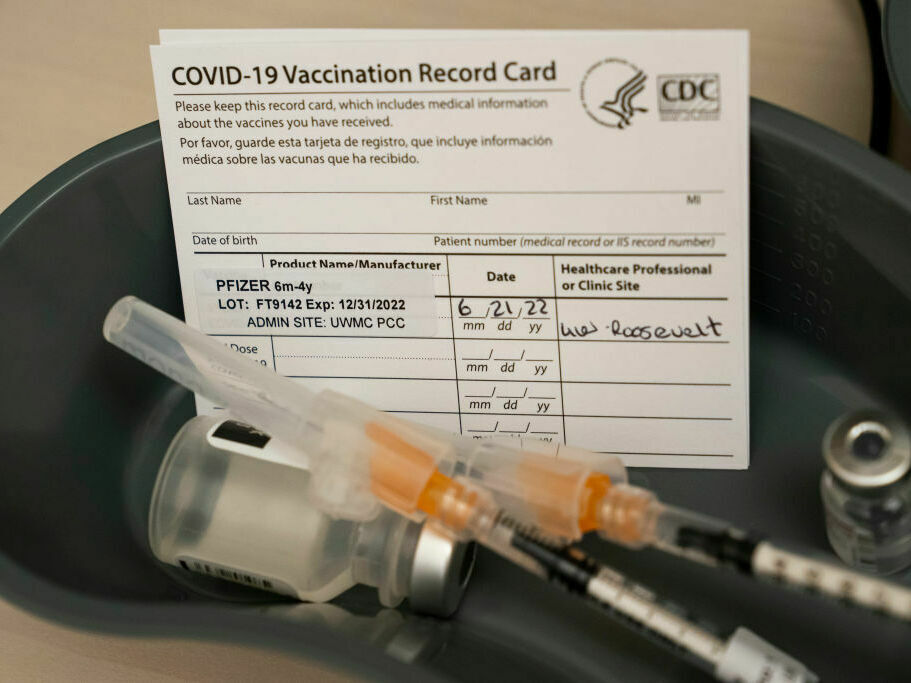
The professionals questioned the rationale for annual shots for everyone, specified that existing vaccines do not seem to secure from infection for far more than a handful of months. However even a solitary booster appears to be to prevent dying and hospitalization in most men and women, besides for the quite previous and men and women with particular medical problems.

“We want the CDC to convey to us accurately who is receiving hospitalized and dying of this virus — the ages, vulnerability, the kind of immune compromise, and whether or not they had been addressed with antivirals. And we require immunological info to indicate who’s at chance,” said Dr. Paul Offit, director of the Vaccine Education and learning Heart and a pediatrician at Children’s Clinic of Philadelphia. “Only then can we make a decision who gets vaccinated with what and when.”

Offit and other folks have expressed stress more than the absence of very clear federal government messaging on what the public can hope from covid vaccines. Though frequent boosters could be crucial for retaining the aged and medically frail out of the clinic, he stated, the annual boosters suggested by the Food and drug administration and the drug organizations might not be important for anyone.

“The goal is to keep men and women out of the healthcare facility,” he said. “For the vulnerable, it would be critical for vaccines to continue to keep up with circulating strains. But for the basic inhabitants, we presently have a vaccine that stops hospitalization.”

Other panelists mentioned the govt requirements to drive investigation harder to get better vaccines. Pamela McGinnis, a retired formal of the Nationwide Institutes of Overall health, claimed she had issues detailing to her two young-adult sons why they instantly got ill after venturing out to bars a single night time only weeks just after obtaining their bivalent booster.

“‘Think how sick you would have gotten if you weren’t absolutely vaccinated’ is not a fantastic concept,” she stated. “I’m not absolutely sure ‘You would have landed in the hospital’ resonates with recipients of the disorder.”

Associates of the FDA’s advisory committee have been irked in latest months, expressing the company didn’t current them with all the info it had on the bivalent vaccine before it was unveiled in September. And some critics have reported the Food and drug administration need to have instructed drug companies to include things like only the more recent strains of the virus in the shot.

Asked about that Thursday, Jerry Weir, a senior Food and drug administration vaccine officer, said his “gut feeling” was that a vaccine matched to a solitary omicron pressure would have executed superior than the bivalent shot, which also has the unique covid pressure. “But the true question is where by we’re headed,” he explained, “and I never know the remedy.”

Possibly the most essential presentation Thursday was from Heather Scobie, who keeps tabs on covid at the Centers for Disease Control and Avoidance. She noted that much less than fifty percent of People in america 65 and older experienced gotten the hottest booster, and that only two-thirds of that age team had gotten even a one booster.

Nonetheless proof continues to mount that it is mainly the elderly who are at major chance from covid. Death premiums from the disease have declined in just about every age team other than those people about 75 because April, inspite of the uptick in new strains. Other than for the quite aged, the demise rate has hovered around 1 in 100,000 due to the fact April. Previously in 2022, infants 6 months aged and young were being hospitalized and died at relatively large costs. Vaccination stages in the 4-and-beneath team hover at about 10{515baef3fee8ea94d67a98a2b336e0215adf67d225b0e21a4f5c9b13e8fbd502}.

Though acknowledging the FDA’s drive to regularize its covid vaccine policy, panel customers stated it is nevertheless far too early to know for certain whether or not covid will surge only in the wintertime, like flu, respiratory syncytial virus, and other respiratory bacterial infections.

“For the following handful of a long time we might not know how frequently we need to have to make a strain alter in the vaccine,” claimed Dr. Steven Pergam, medical director of infection prevention at the Seattle Most cancers Treatment Alliance. Or even if people today who are not in very poor health and fitness or aged will need additional boosters.

1 vaccine-maker represented at the meeting, Novavax, explained it would require to know by the stop of March which strain to include in its vaccine for tumble. Companies with mRNA vaccines like Pfizer and Moderna can change their formulas more quickly, but their solutions aren’t plainly better than Novavax’s.

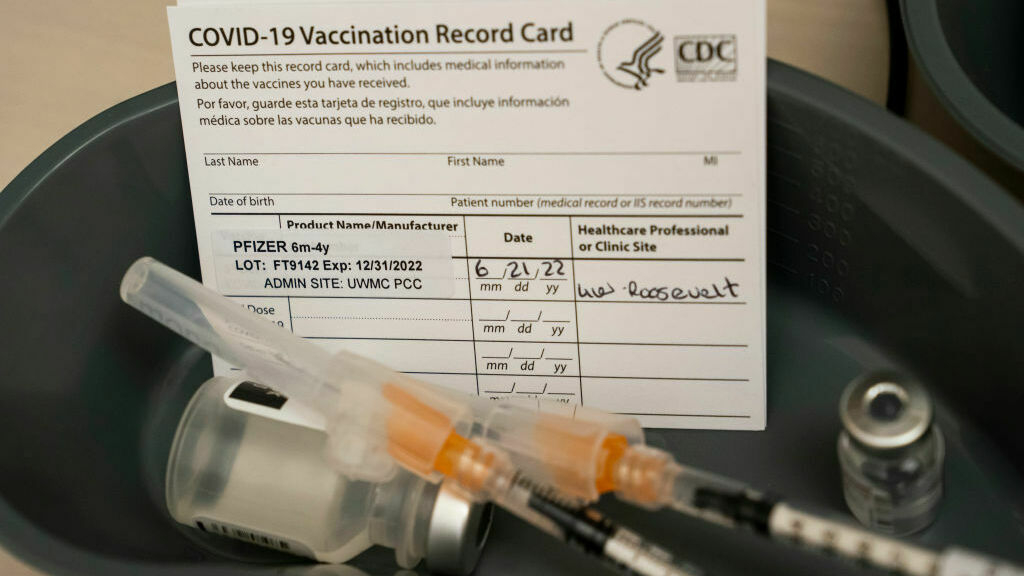
All 3 of individuals vaccine-makers uncovered at the meeting that they are creating solitary-dose vials or prefilled syringes. Up to now, they’ve sent their vaccines in multidose vials, but given that the federal government has operate out of cash to invest in vaccines, person pediatricians might buy them in the long term. Because the vaccine have to be used swiftly at the time a vial is open, physicians are leery of throwing away vaccine and losing money.

Connected Topics

Call Us

Submit a Tale Suggestion